Weaning the Pacifier at Night

Sarah Mitchell
Sarah Mitchell is a Registered Pediatric Nurse and a mother of three who has spent over a decade helping families navigate the beautiful, chaotic early years of childhood. She combines evidence-based medical knowledge with real-world parenting experience to offer practical, compassionate advice. At Awesome Parent, Sarah's mission is to help exhausted parents find solutions, trust their instincts, and finally get some sleep.
If you have ever tiptoed into your baby’s room for the fifth time before midnight to retrieve a dropped pacifier, welcome. You are not doing anything wrong. You just have a tiny human who has learned a very effective sleep trick.
The good news is that the “binky retrieval game” is fixable. And you can fix it without harshness, without hours of crying, and without setting a 2:00 AM alarm for yourself in the process.
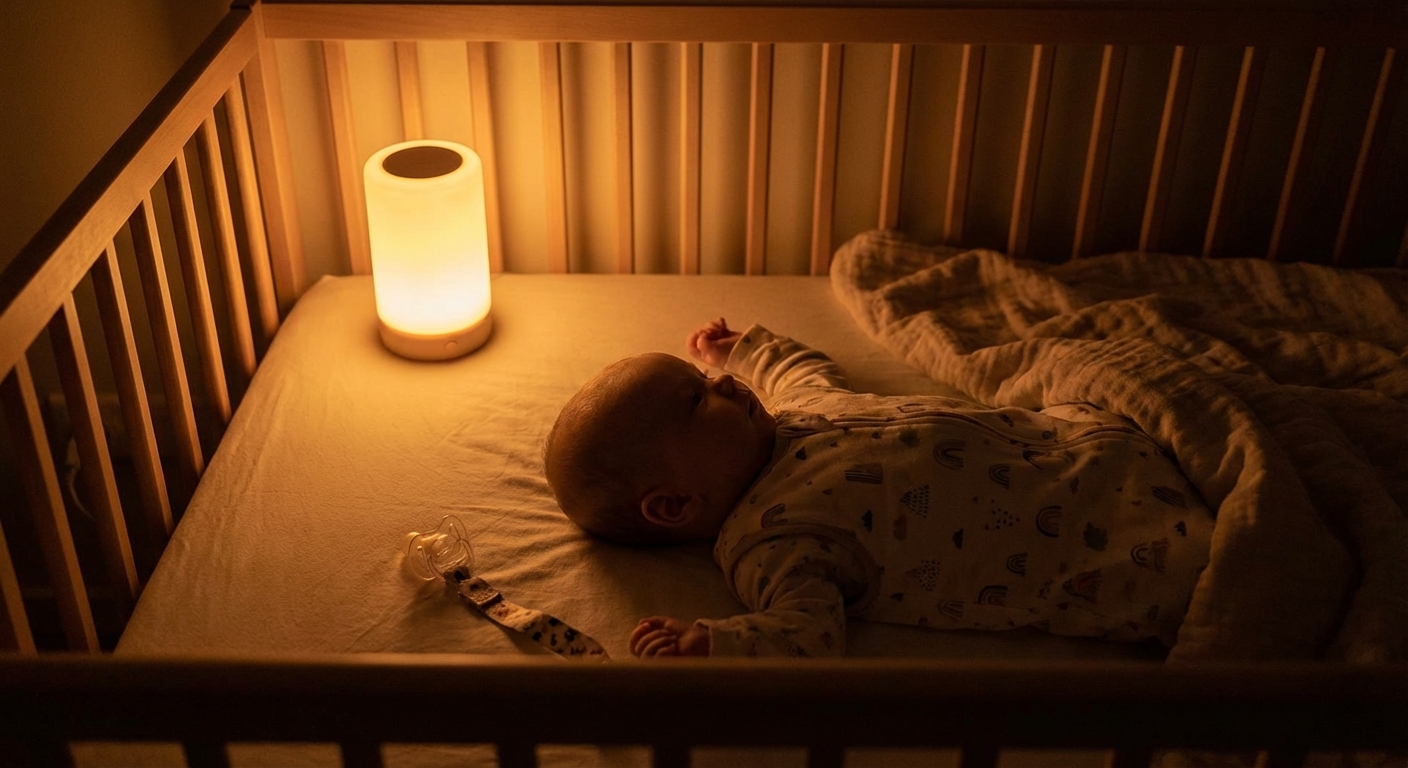
Why the pacifier becomes a nighttime problem
Pacifiers are wonderful tools. They can soothe fussiness, help some babies settle faster, and the American Academy of Pediatrics (AAP) notes an association between pacifier use at sleep and a lower risk of SIDS in the first year. The issue is not the pacifier itself. The issue is what happens when your baby needs it every time they transition between sleep cycles.
Most babies naturally stir and partially wake several times a night. If your baby falls asleep with a pacifier and then wakes without it, they may signal for you to “restore the usual sleep setup.” That can look like:
- Waking every 45 to 90 minutes
- Crying until someone replaces the pacifier
- Needing the pacifier to fall back asleep, even if they are not hungry
This is classic sleep association territory. Again, totally common. Also totally exhausting.
When to wean the pacifier at night
There is no single “right” week to do it. The best time is when it feels doable for your family and your baby is ready to learn a new way to settle.
Many families find it easiest between 4 and 8 months
This tends to be a workable window for a lot of babies: sleep stretches are often getting longer, and separation anxiety has not always peaked yet. If the pacifier is causing frequent wakings, this is a very reasonable time to gently break the association.
After 8 to 10 months can still work
Older babies are smart, persistent, and often more vocal about change. You can still be calm, consistent, and successful. You might just need a clearer plan and a bit more stamina for the first few nights.
18 months to 3 years: think dental, go gentle
If your toddler uses a pacifier mostly at sleep, many pediatric dentists encourage weaning by around age 2, with flexibility depending on the child and their bite. Some kids do fine closer to 3. If you are seeing bite changes or you have speech concerns, bring it up with your pediatric dentist sooner so you can make a plan that fits your child.
Times to pause (if you can)
- Acute illness with significant congestion or ear pain
- Right after travel or a big schedule disruption
- A major life change (new daycare, moving, new sibling) unless the pacifier is truly wrecking sleep
Real life is messy, so do not wait for “perfect.” Just avoid stacking too many hard things at once if you have the choice.
Before you start: set yourself up
Pacifier weaning goes better when the rest of the sleep foundation is steady. You do not need a Pinterest routine. You need predictable cues and a baby who is not wildly overtired.
Quick readiness checklist
- Schedule: Age-appropriate wake windows and a consistent bedtime (wake windows simply mean the typical time your baby can comfortably stay awake between sleeps)
- Feeding: Baby is getting enough calories during the day
- Sleep space: Safe sleep setup with a firm crib mattress and no loose items for babies under 12 months
- Plan: You and your partner (if you have one) agree on the approach for at least 3 nights
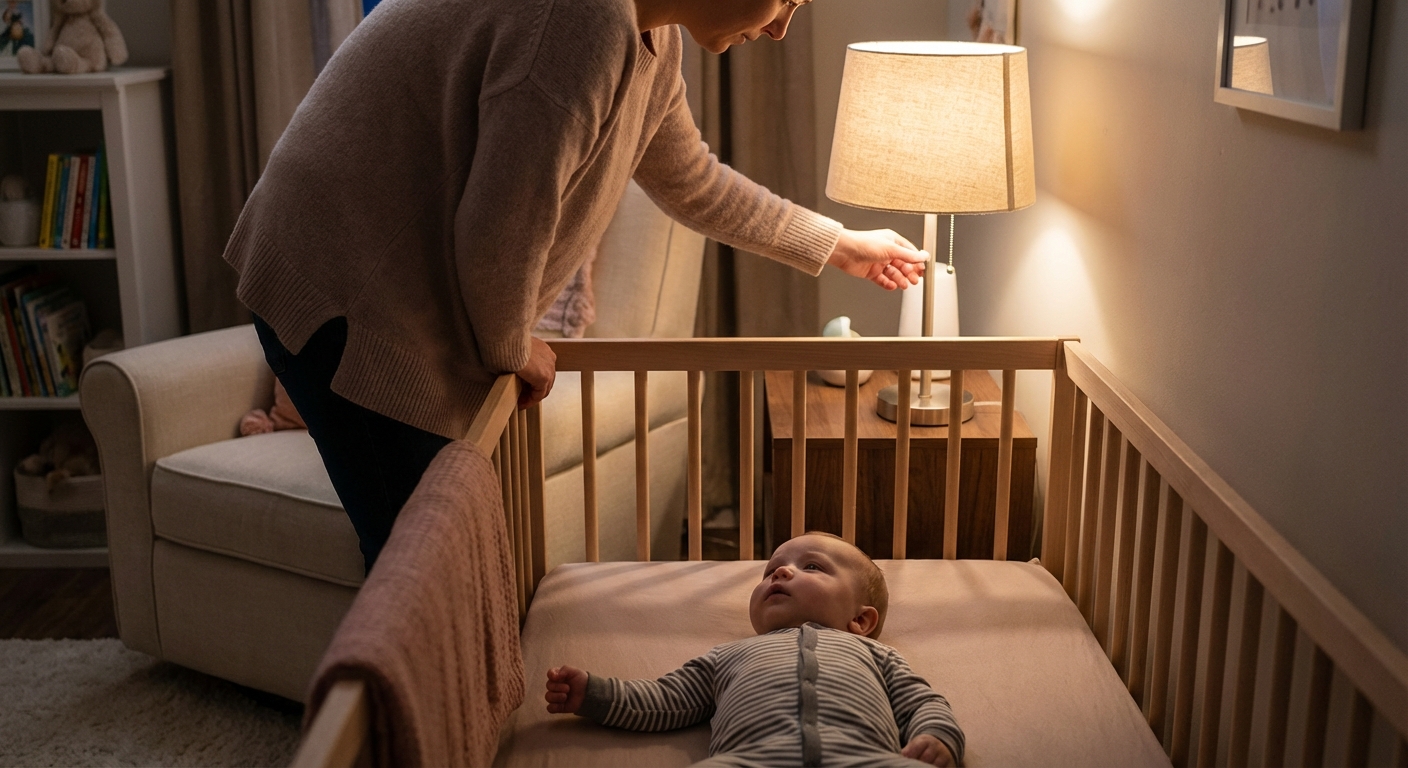
Choose your goal first
Before you pick a method, decide what “success” looks like for your family:
- Goal A: Keep the pacifier for falling asleep, but stop replacing it all night
- Goal B: Remove the pacifier from sleep entirely
Both are valid. Goal A is often a bridge that buys everyone more sleep. Goal B is usually the fastest way to end the wake-ups tied to pacifier replacement.
3 parent-tested ways to wean at night
Pick one method and commit for several nights. Mixing methods night to night is where parents tend to get stuck, because your baby keeps “checking” which version of you shows up at 1:00 AM.
Option 1: Cold turkey at bedtime (fastest)
This is the cleanest approach for frequent night wakings. You remove the pacifier from the sleep equation completely.
- Night 1: Do your normal calming routine, then put baby down without the pacifier.
- When baby protests: Comfort in your preferred way (patting, shushing, verbal reassurance, brief pick-up) but do not reintroduce the pacifier.
- Overnight: Respond consistently the same way each wake.
What to expect: 2 to 4 rough nights is common, with a big improvement by nights 3 to 7 for many babies.
Option 2: Fade it out (gentler, slower)
If your baby is sensitive or you are not ready for a sharper change, fading can work well.
- Step 1: Offer the pacifier at bedtime to settle.
- Step 2: Once baby is drowsy but still awake, gently remove it.
- Step 3: If baby fusses, soothe without putting it back. If you put it back in, you restart the cycle.
- Step 4: After 3 to 5 nights, stop offering it at bedtime.
What to expect: Less intense crying, but more “two steps forward, one step back” nights if you are inconsistent.
Option 3: Keep it, but teach independent access (best for babies who can replace it)
If your baby is old enough to pick up and replace the pacifier, you can stop being the pacifier concierge without fully weaning right away.
- This tends to work best once babies can reliably grasp, roll, and bring the pacifier to their mouth on their own (often later in the first year, but it varies).
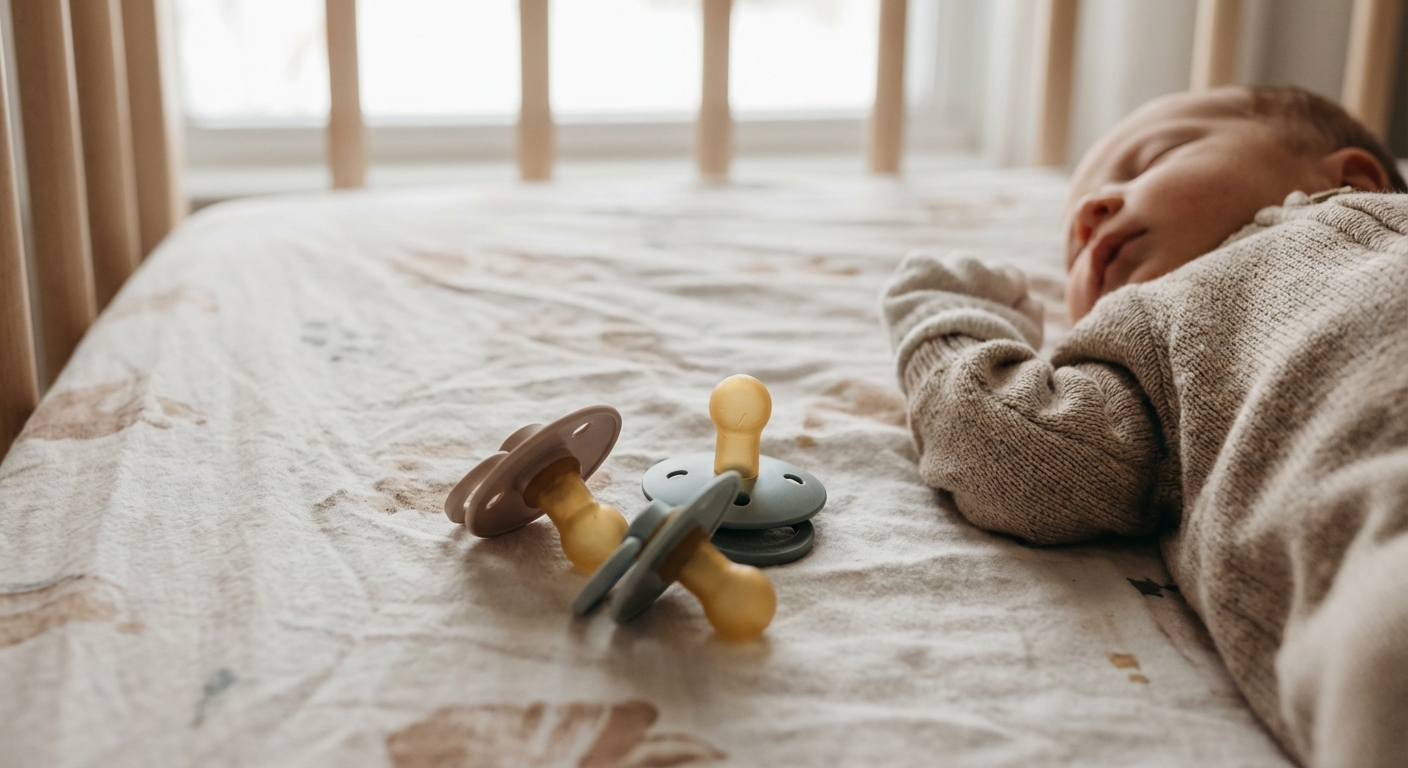
- At bedtime, place 3 to 6 pacifiers around the crib (only if your baby can move and grasp well).
- Practice during the day: play “find the paci” for 30 seconds at a time.
- If baby wakes overnight, pause 1 to 2 minutes to give them a chance to resettle and locate one.
Important safety note: Do not add pacifier clips, strings, or anything that attaches to the crib for sleep. Keep the sleep space simple and safe.
Also important: This option is a bridge strategy. If you want to be fully done with the pacifier, Options 1 or 2 are usually a better fit.
A simple 7-night plan
If you want a straightforward plan, here is one I have seen work again and again. It uses the cold turkey method, with lots of comfort and clear limits.
Nights 1 to 2: Remove pacifier, add calm
- Do a calming routine: feeding, diaper, pajamas, book, song, into crib.
- Use consistent soothing: hand on chest, gentle patting, shushing, calm voice.
- If you pick up, keep it brief: calm, then back down. Repeat as needed.
Nights 3 to 5: Same response, fewer extras
- Same routine, same bedtime.
- Give baby a moment before you go in (about 60 to 90 seconds) if they are fussing but not escalating.
- When you do go in, keep it boring and predictable.
Nights 6 to 7: Give a little more space
- Increase the pause to about 2 to 3 minutes for mild fussing.
- Use your voice first, then touch if needed.
- Try to avoid bright lights or a full reset unless you truly need to.
A note for younger babies and big cries: These pause times are optional, not a rule. If your baby is very young, your gut says “go now,” or crying is escalating, respond sooner.
Most families see major improvement within a week. Some babies take closer to two. If you are trending better, stay the course.
Still waking? Check these
Sometimes the pacifier is only part of the story. If you remove it and the wake-ups keep rolling in, here is what I would check next.
1) Hunger or too many night calories
If your baby is under 6 months or still needs night feeds, you can absolutely wean the pacifier without night weaning. Just keep feeds purposeful and avoid letting the pacifier become the “finisher” that puts them back to sleep every time.
If your baby is older and taking lots of calories overnight, talk with your pediatrician about a gradual night feed reduction plan.
2) Overtiredness
An overtired baby often wakes more. Ironically, dropping the pacifier can temporarily worsen sleep, which can create more overtiredness. Consider an earlier bedtime for a few nights while you transition.
3) Sleep environment
- Room dark enough
- Continuous white noise (if you use it) at a safe volume. Many pediatric sleep sources suggest keeping it around 50 dB or lower and placing the machine across the room, not right next to the crib.
- Comfortable temperature
- Appropriate sleepwear
4) Development and separation anxiety
If your baby is in a clingy phase, you can still wean the pacifier. Add connection during the day and keep nighttime responses calm and consistent.
Safety notes (nurse hat on)
- Pacifiers and SIDS: The AAP notes an association between offering a pacifier at sleep and a lower SIDS risk, especially in the first 6 to 12 months. If you choose to wean earlier because sleep is truly falling apart, double down on the other proven safe sleep steps (back to sleep, firm flat surface, no loose bedding, smoke-free environment).
- Do not modify pacifiers: Avoid cutting the tip or poking holes. Damaged pacifiers can become choking hazards.
- Check size and condition: Replace pacifiers regularly, and use the right size for age.
- Stick to safe sleep rules: For babies under 12 months, keep the crib free of loose blankets, pillows, and stuffed animals. If you want warmth, consider a wearable sleep sack instead.
- No clips or strings in the crib: Skip anything that attaches a pacifier to clothing or the crib during sleep.
If your child is older: gentle goodbye
For toddlers, it can help to make the change feel empowering rather than like a nighttime ambush.
- Limit first, then eliminate: “Pacifier stays in the crib” for a week, then “pacifier is for bedtime only,” then phase out.
- Offer a replacement comfort: A special bedtime book, a new lovey (for 12 months and up), or a cozy sleep sack.
- Use a simple script: “The pacifier helped when you were little. Now your mouth can rest at night.”
- Create a goodbye ritual: Some families do a “paci fairy” trade where the pacifiers are collected and swapped for a small toy the next morning.
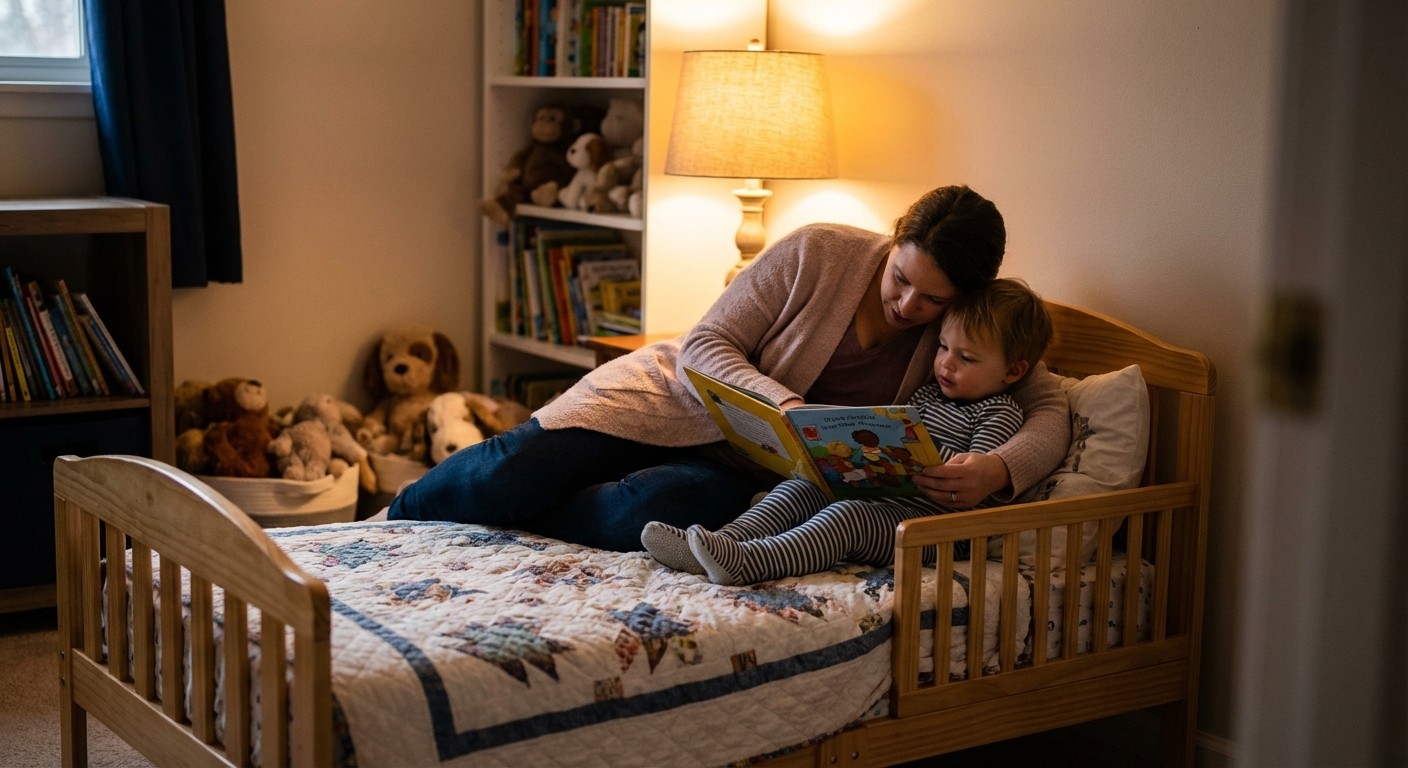
Troubleshooting the hard moments
“My baby is screaming and I’m panicking.”
Take a breath. Check the basics (safe, dry, not hungry, not in pain). Then choose one soothing strategy and repeat it calmly. Babies are allowed to be mad about change. Your job is to keep them safe and keep the boundary steady.
“We caved and gave it back. Did we ruin it?”
No. You are human. Decide what you want to do starting tonight. If you want to proceed, commit to 3 consistent nights before judging progress.
“What about naps?”
Many families start with nights first because sleep pressure is higher. Once nights are stable for 5 to 7 days, tackle naps using the same method. If daycare naps require a pacifier, you can still wean at home and slowly reduce dependence elsewhere.
“My baby is teething.”
Teething can disrupt sleep, but by itself it does not always explain constant hourly wakings for weeks on end. If your baby seems truly uncomfortable, ask your pediatrician about appropriate pain relief. You can still wean the pacifier while supporting comfort.
When to call your pediatrician
Most pacifier weaning hiccups are normal. Reach out if:
- Your baby has signs of illness (fever, trouble breathing, dehydration, persistent vomiting)
- Night waking is sudden and severe, especially with ear pulling or significant congestion
- Sleep is not improving at all after 10 to 14 consistent nights and you want help tailoring a plan
- You have concerns about your child’s teeth, bite, or speech related to prolonged pacifier use
- Your child was born prematurely or has complex medical needs and you want individualized sleep guidance
The bottom line
If you are tired of the hourly pacifier retrieval game, you are not alone, and you are not stuck. Pick a goal, pick a method, stay consistent for a week, and give your baby lots of calm reassurance while they learn a new way to fall back asleep.
And if you need permission to stop being a full-time binky delivery service, here it is. Your sleep matters, too.
Quick note: This article is general education, not medical advice. When in doubt, your pediatrician and pediatric dentist are your best sources for guidance tailored to your child.