When Can Babies Have Water, Juice, and Honey?

Sarah Mitchell
Sarah Mitchell is a Registered Pediatric Nurse and a mother of three who has spent over a decade helping families navigate the beautiful, chaotic early years of childhood. She combines evidence-based medical knowledge with real-world parenting experience to offer practical, compassionate advice. At Awesome Parent, Sarah's mission is to help exhausted parents find solutions, trust their instincts, and finally get some sleep.
If you have ever been handed a sippy cup by a well-meaning relative or stared at a “just a little honey” suggestion at 2 AM, you are in excellent company. These three questions come up constantly in pediatric triage for a reason: they are common, they feel urgent, and the internet loves to make them scary.
Here is the calm, evidence-based bottom line by age. We will cover when babies can have water, why water before 6 months can be risky, why juice is rarely needed (and how to use it safely when you do), and why honey is unsafe before 12 months.
Quick note: This is general education for healthy, full-term babies. If your baby was born preterm, has kidney or heart disease, growth concerns, or is on thickened feeds, ask your clinician for personalized guidance.
Quick answers by age
If you only read one section, make it this one.
- 0 to 6 months: Generally no water (except small amounts if specifically directed by your clinician). No juice. No honey. Breast milk and or formula provide all needed fluid and nutrition.
- Around 6 months (when solids start): You can offer small sips of water with meals. Juice is still not recommended routinely. Honey is still not safe.
- 6 to 12 months: Water is fine in modest amounts alongside breast milk or formula. Juice is best avoided, but if used for constipation, keep it tiny and occasional. Honey remains unsafe.
- 12 months and up: Water is the main drink. Whole cow’s milk is typically recommended from 12 to 24 months unless your clinician advises otherwise. Honey is safe after 12 months. Juice should stay limited.
When can babies have water?
Start: around 6 months
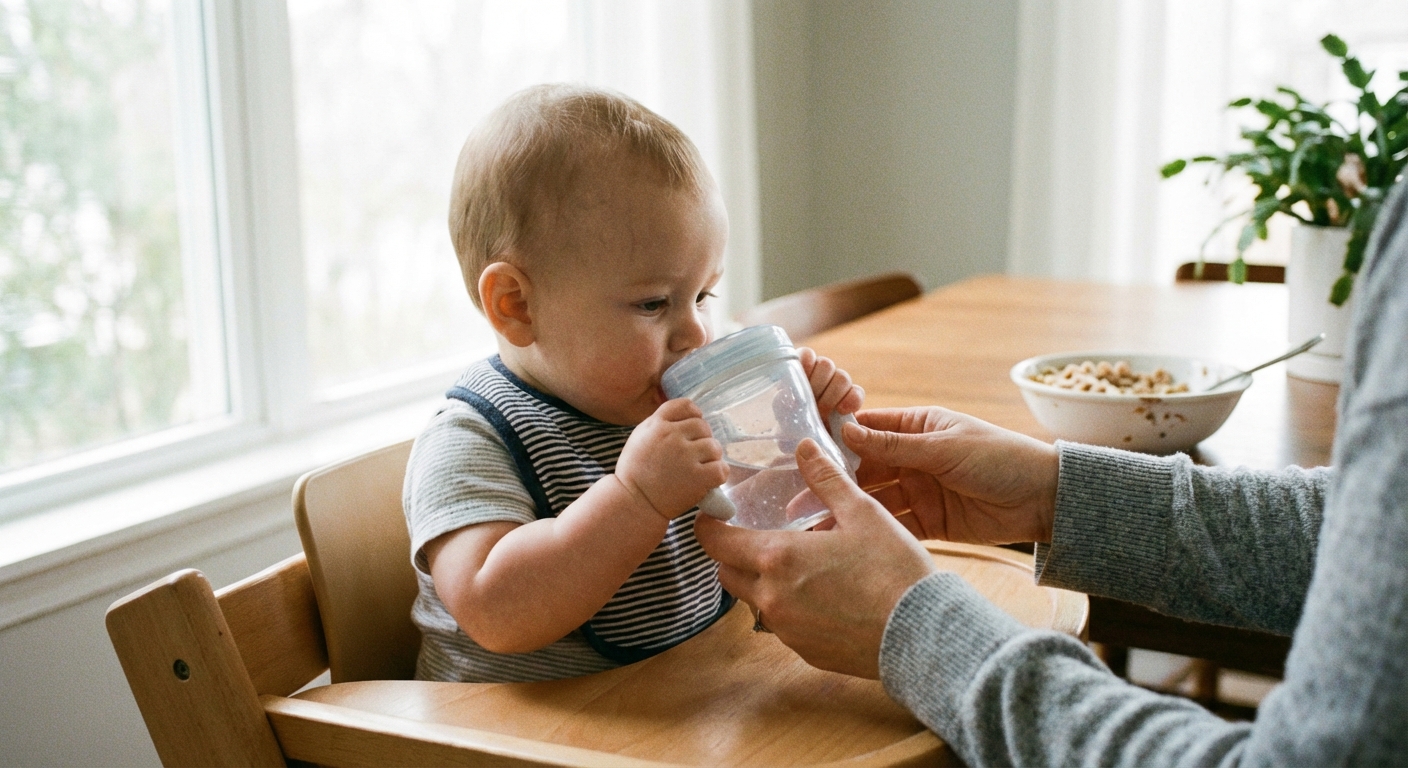
Most babies can start having a little water around 6 months, typically when they begin solids. Think of water at this stage as practice: learning to sip from an open cup or straw cup, and helping wash food down during meals. It is not meant to replace breast milk or formula.
If your baby is formula-fed or breastfed and growing well, they do not routinely need water before solids. Their usual milk feeds already cover hydration. (CDC and many children’s hospitals give similar guidance: breast milk or formula only in early months, then small amounts of water with solids.)
Why water before 6 months can be risky
Water feels harmless, but for young infants it can cause real problems. Here is why we take it seriously in pediatrics:
- It can dilute sodium in the blood (hyponatremia), which can lead to sleepiness (lethargy), irritability, vomiting, and in severe cases seizures.
- Tiny stomachs fill up fast. Water can crowd out the breast milk or formula your baby needs for calories and nutrients, which can impact growth.
- Kidneys are still maturing. Babies under 6 months are not built to handle extra free water the way older kids are.
If someone tells you to “just give water” for hiccups, fussiness, or sleep, you can confidently skip it.
How much water is okay by age?
There is no single perfect number for every baby. For most healthy infants, the goal is a few ounces at most, offered in small sips with meals, while keeping breast milk or formula as the main drink until 12 months.
- 6 to 9 months: Often 1 to 4 ounces total per day, mainly as sips with meals.
- 9 to 12 months: Often up to about 4 to 8 ounces total per day, depending on solids intake, climate, and thirst.
- 12 months and up: Offer water throughout the day. Let thirst guide you and aim for pale yellow urine.
Tip from the clinic: A few sips from an open cup at meals is plenty early on. If your baby is drinking lots of water and then refusing bottles or nursing, scale the water back.
Hot weather, fever, or vomiting
This is where parents understandably worry about dehydration.
- Under 6 months: Focus on more frequent breast milk or formula, not water. If your baby is sick or cannot keep feeds down, call your pediatrician. In some situations they may recommend an oral rehydration solution.
- 6 months and up: Small sips of water can help, but breast milk or formula (or oral rehydration solution when advised) is usually more effective than water alone.
Dehydration red flags
Call your pediatrician promptly if your baby has signs of dehydration, especially during illness:
- Fewer wet diapers than usual (or no wet diaper for 8 hours)
- Very dry mouth, no tears when crying
- Sunken soft spot (fontanelle)
- Persistent vomiting, cannot keep feeds down
- Marked sleepiness, hard to wake
When can babies have juice?
Start: ideally after 12 months
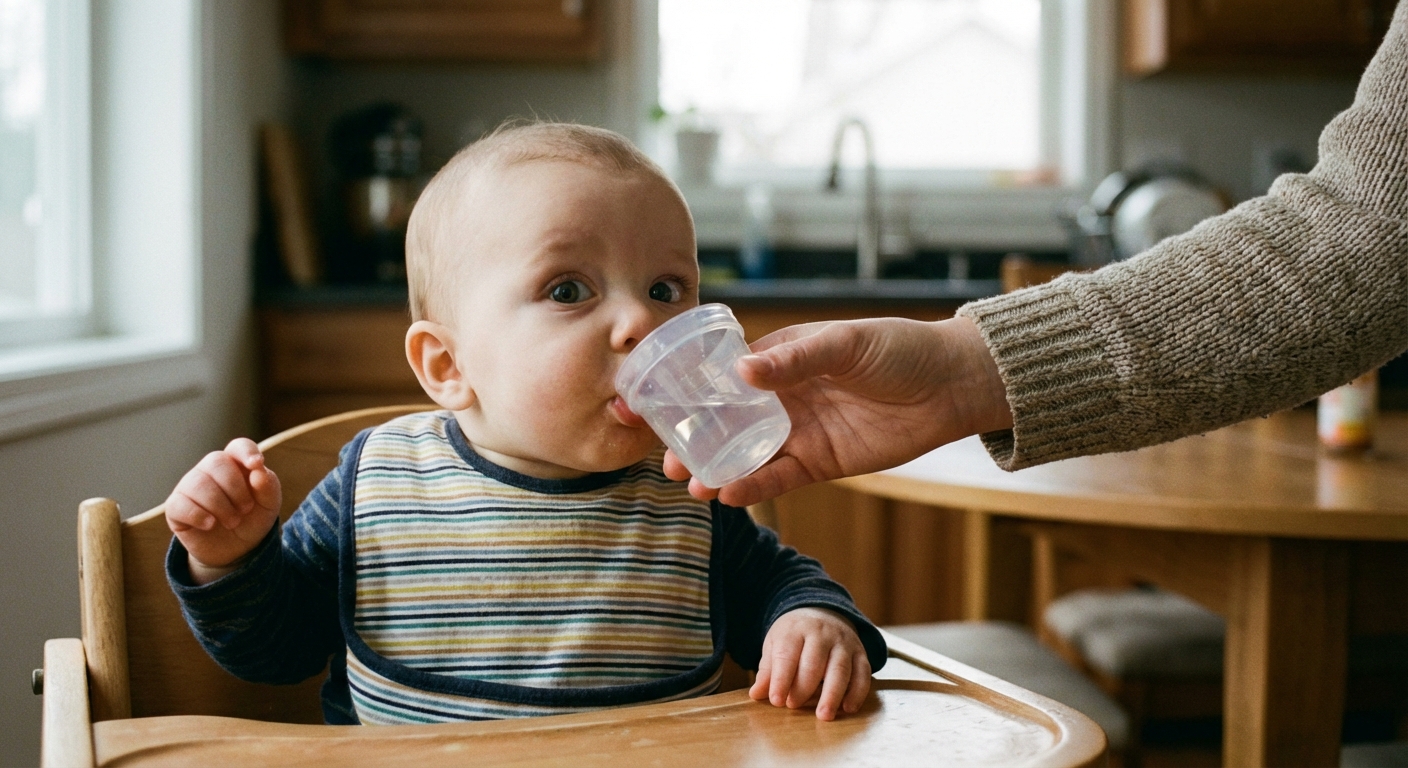
The American Academy of Pediatrics (AAP) recommends no juice under 12 months. Not because one sip is toxic, but because juice adds sugar without the fiber and fullness of whole fruit. It can also increase the risk of diarrhea, tooth decay, and a preference for sweeter drinks.
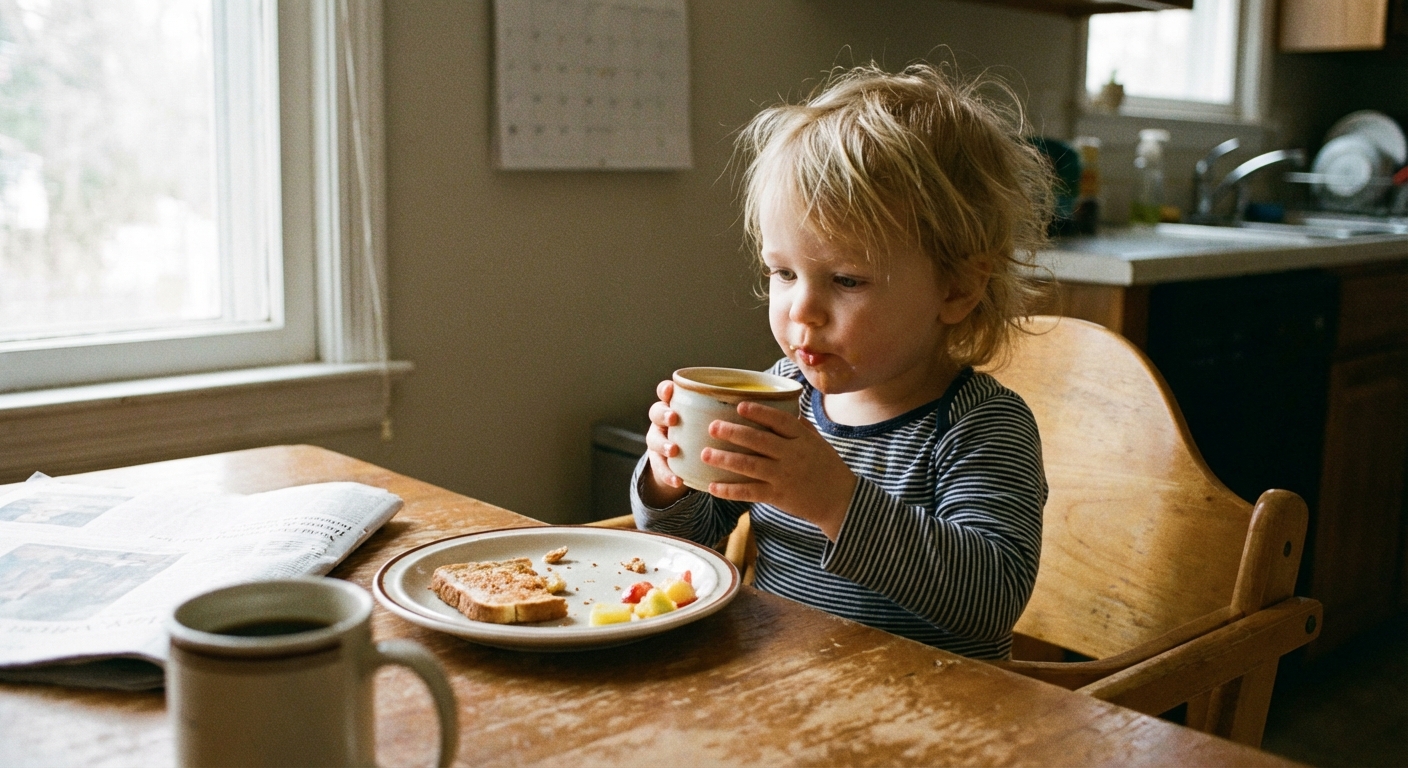
After 12 months, juice is still optional. Many toddlers do best with water and milk as their main beverages and fruit offered in its whole form.
How much juice is okay (AAP guidance)
If you choose to offer juice after age 1, keep it small and structured:
- Age 1 to 3 years: Up to 4 ounces per day of 100% fruit juice.
- Age 4 to 6 years: Up to 4 to 6 ounces per day.
- Age 7 years and up: Up to 8 ounces per day.
Offer juice in a cup with meals, not in a bottle or sippy cup carried around all day. Constant sipping bathes teeth in sugar and is a common path to early cavities.
When doctors sometimes suggest juice (constipation)
In real life, some pediatricians recommend a small amount of certain juices to help constipation in older babies who are already on solids. Pear, prune, and sometimes apple juice contain natural sugars that can pull water into the intestines.
If your clinician advises juice for constipation, a common approach for a baby over 6 months is 1 to 2 ounces once a day, then reassess. If you are needing juice regularly to get stools moving, it is worth a check-in about routine constipation strategies (fiber, fluids, meal timing, and sometimes medication).
Juice safety checklist
- Choose 100% juice, not “juice drinks,” “cocktails,” or sweetened beverages.
- Do not give juice in a bottle, especially at bedtime.
- Diluting juice: Diluting does not make juice necessary or “healthy.” If you serve it, keep portions small (diluted or not) and avoid making it an all-day sipping drink. Water is usually the better default.
- Skip unpasteurized juice due to infection risk.
When can babies have honey?
Start: after 12 months
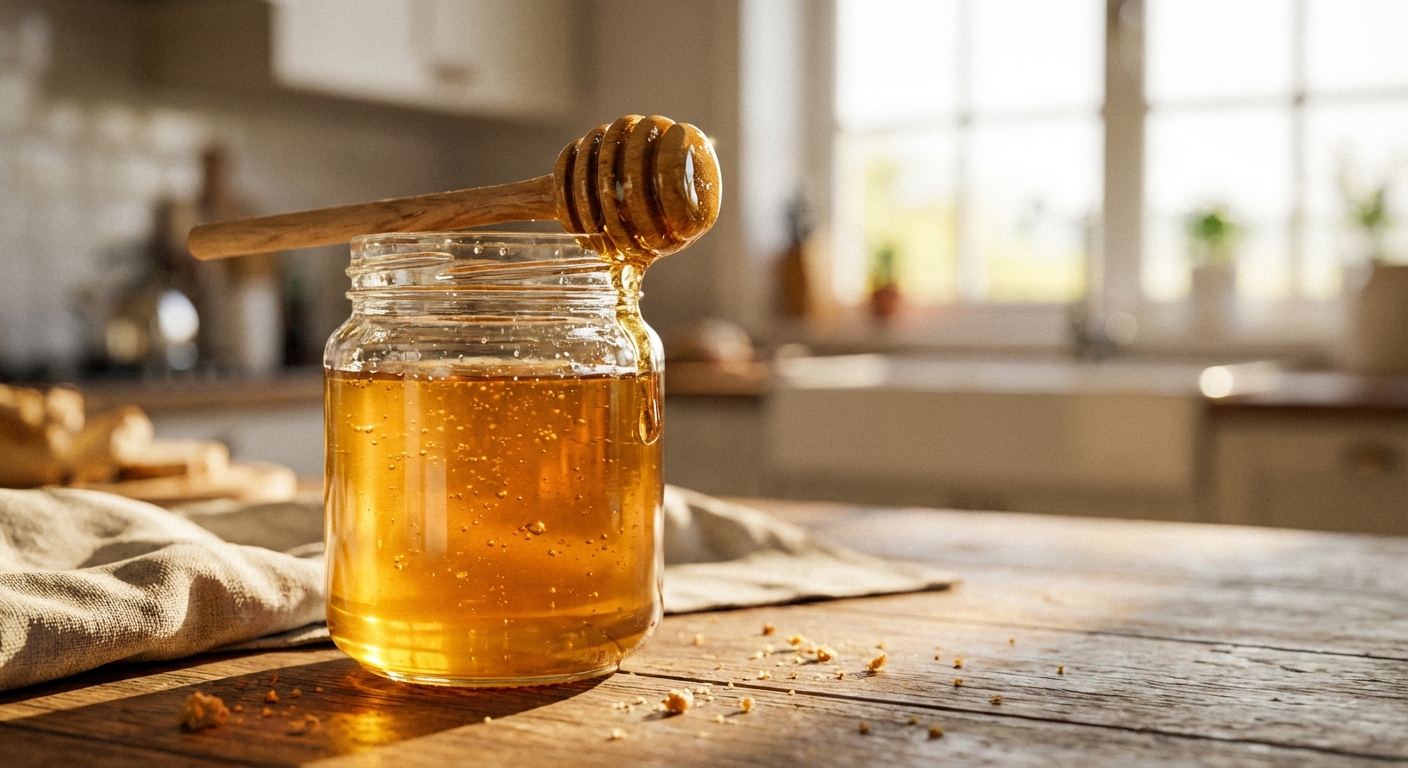
Honey is the clearest rule on this page: no honey before 12 months. That includes baked goods sweetened with honey, honey stirred into oatmeal, and that tiny dab someone suggests for a cough. (CDC guidance on infant botulism is the reason for this firm cutoff.)
Why honey is unsafe before 1 year
Honey can contain spores of Clostridium botulinum. Older children and adults can usually handle these spores without issue. Babies under 12 months have immature gut defenses, so the spores can grow and produce a toxin that causes infant botulism.
Infant botulism is rare, but it is serious and can require hospitalization. This is why pediatric nurses get very firm about the honey rule.
Does cooking honey make it safe?
No. Cooking does not reliably eliminate botulism spores. Guidance is to avoid honey in any form until after 12 months.
Signs of infant botulism
If your baby under 12 months has had honey and develops any of the symptoms below, call your pediatrician right away. If symptoms seem severe, seek urgent or emergency care.
- Constipation that is unusual for your baby
- Weak cry
- Poor feeding or trouble sucking
- Low energy, “floppy” body, or decreased movement
- Droopy eyelids or facial weakness
- Breathing difficulty
3 AM questions
Water in a sippy cup for sleep?
If your baby is under 6 months, skip water. If your baby is older, a few sips of water are fine, but it usually does not improve sleep and can sometimes backfire with more wakeups for wet diapers. For sleep, focus on a solid feeding plan and a consistent bedtime routine instead.
A few sips of water before 6 months
No panic. A couple of accidental sips are unlikely to cause harm in an otherwise healthy baby. The risk is with larger volumes or repeated water feeds. If your baby seems very sleepy, unusually fussy, is vomiting repeatedly, or you are worried, call your pediatrician for guidance.
Coconut water or herbal tea?
For babies under 12 months, it is safest to stick with breast milk or formula as the primary drink. Coconut water and teas can add unnecessary sugars or compounds, and they do not offer benefits that outweigh the downsides. If you are considering them for a specific reason, check with your child’s clinician first.
Honey-based cough syrups?
Honey-based remedies are for children over 12 months. For babies under 1 year, talk to your pediatrician about safer options for cough and congestion.
Special situations
Water and fluid guidance can differ if your baby:
- Was born premature
- Has kidney, heart, or endocrine conditions
- Has growth or feeding concerns (including failure to thrive)
- Uses thickened feeds or has swallowing issues
In these cases, follow your clinician’s plan even if it differs from general age-based advice.
Takeaway
- Water: Start around 6 months in small sips with meals. Under 6 months, generally avoid water unless your clinician specifically directs it.
- Juice: The AAP recommends no juice under 12 months. After 1 year, keep it limited and serve in a cup with meals.
- Honey: No honey before 12 months, including foods made with honey. After 1 year, it is fine.
If you are ever unsure, remember this simple rule: in the first year, breast milk or formula does the heavy lifting. Everything else is tiny tastes, skill-building, and safety-first choices.