When Do Babies Sit Up Without Support?

Sarah Mitchell
Sarah Mitchell is a Registered Pediatric Nurse and a mother of three who has spent over a decade helping families navigate the beautiful, chaotic early years of childhood. She combines evidence-based medical knowledge with real-world parenting experience to offer practical, compassionate advice. At Awesome Parent, Sarah's mission is to help exhausted parents find solutions, trust their instincts, and finally get some sleep.
Watching your baby learn to sit is one of those milestones that feels small until it suddenly changes everything. One day they are a wiggly little potato on a play mat, and the next day they are upright, grinning, and reaching for absolutely everything.
Most babies sit up without support somewhere around 6 to 8 months, but there is a wide range of normal. (If your baby was born early, it also helps to think in terms of adjusted age, meaning milestones may land a bit later.) As a pediatric nurse and a mom of three, I can tell you: sitting is not a single moment. It is a progression of skills, built on head control, core strength, and balance. If you are ever unsure what “counts,” your pediatrician can help you interpret your baby’s specific pattern.
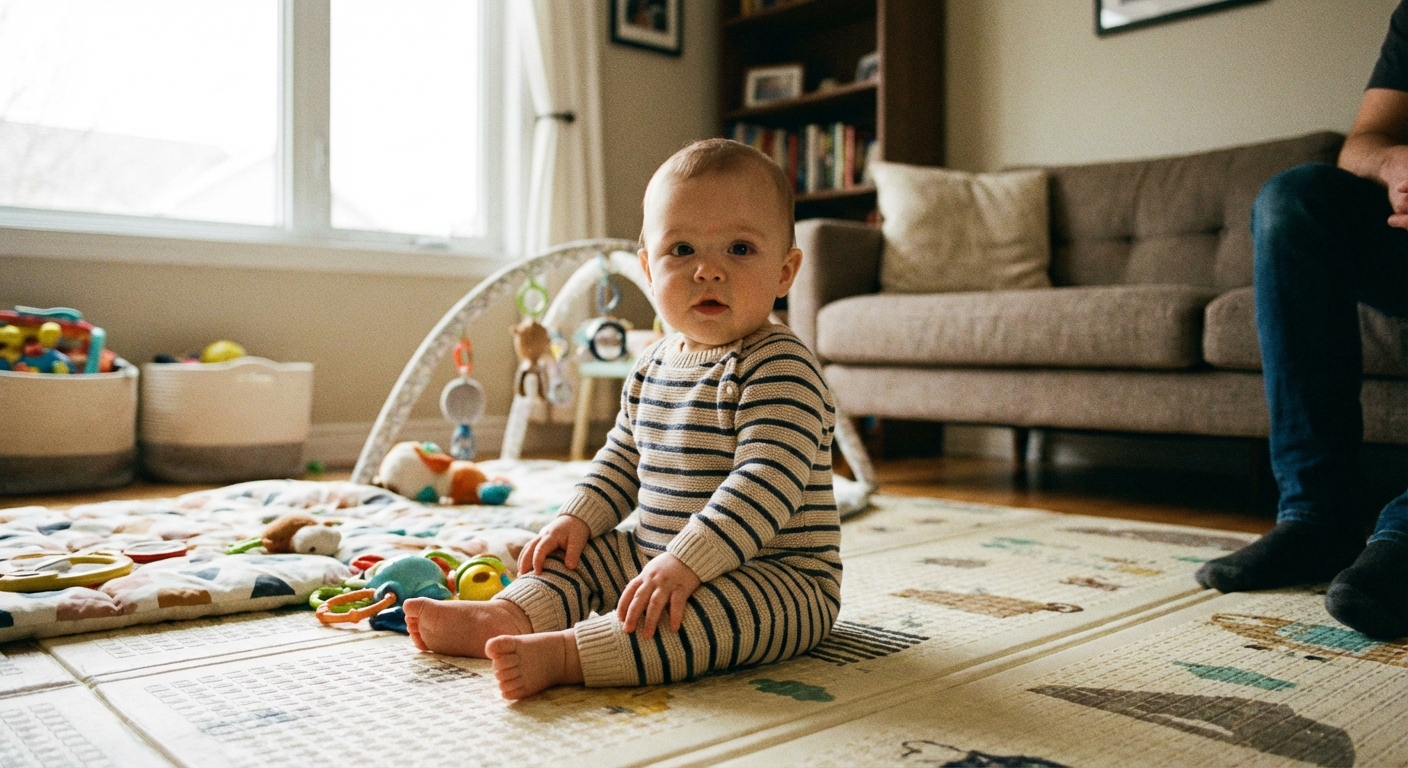
When do babies sit without support?
Most babies can sit independently (without you holding them up) between 6 to 8 months. Some do it a little earlier, and plenty do it closer to 9 months, especially if they are focusing their energy on other skills like rolling, scooting, or early crawling. Milestone ranges vary a bit by source and by how “independent” is defined, so use timelines as a guide, not a grade. (The CDC milestones and pediatric well visits are helpful anchors.)
A typical timeline (with wiggle room)
- 2 to 4 months: Improved head control. Baby can briefly hold their head steady when upright with support.
- 4 to 5 months: May tolerate brief, supported sitting (your hands, between your legs) and may lean forward on their hands. This is optional practice, not a requirement. If your baby is not ready, stick with floor time.
- 5 to 6 months: “Tripod sitting” becomes more common, meaning baby sits leaning forward with both hands on the floor for balance.
- 6 to 8 months: Sits upright for longer stretches without using hands for support and can reach for toys with fewer topple moments.
- 8 to 9 months: Gets into a sitting position independently (often by pushing up from hands and knees or rolling into it).
If your baby sits well when placed in sitting but cannot get into sitting on their own yet, that is still very normal at 6 to 8 months. Getting into sitting is a separate skill that often shows up later.
Stages of learning to sit
Independent sitting is really a mix of three things: core strength, balance reactions (catching themselves), and coordination (using arms and trunk together).
Stage 1: Supported sitting
Your baby can sit when you hold their torso or when they are propped. You will see lots of wobbling, and they may fold forward at the waist.
What helps most: short practice sessions and lots of floor time on their tummy and back.
Stage 2: Tripod sitting
This is the classic “hands on the floor” pose. It is not a sign your baby is behind. It is a smart, normal strategy to stabilize the body while the core muscles catch up.
Stage 3: Independent sitting
Baby can sit upright with hands free to play, turn their head, and reach for toys. Falls still happen, but they recover faster.
Stage 4: Getting into sitting
This is the “wait, when did you learn that?” moment. Many babies learn to move into sitting by rolling to the side and pushing up, or by transitioning from hands and knees.
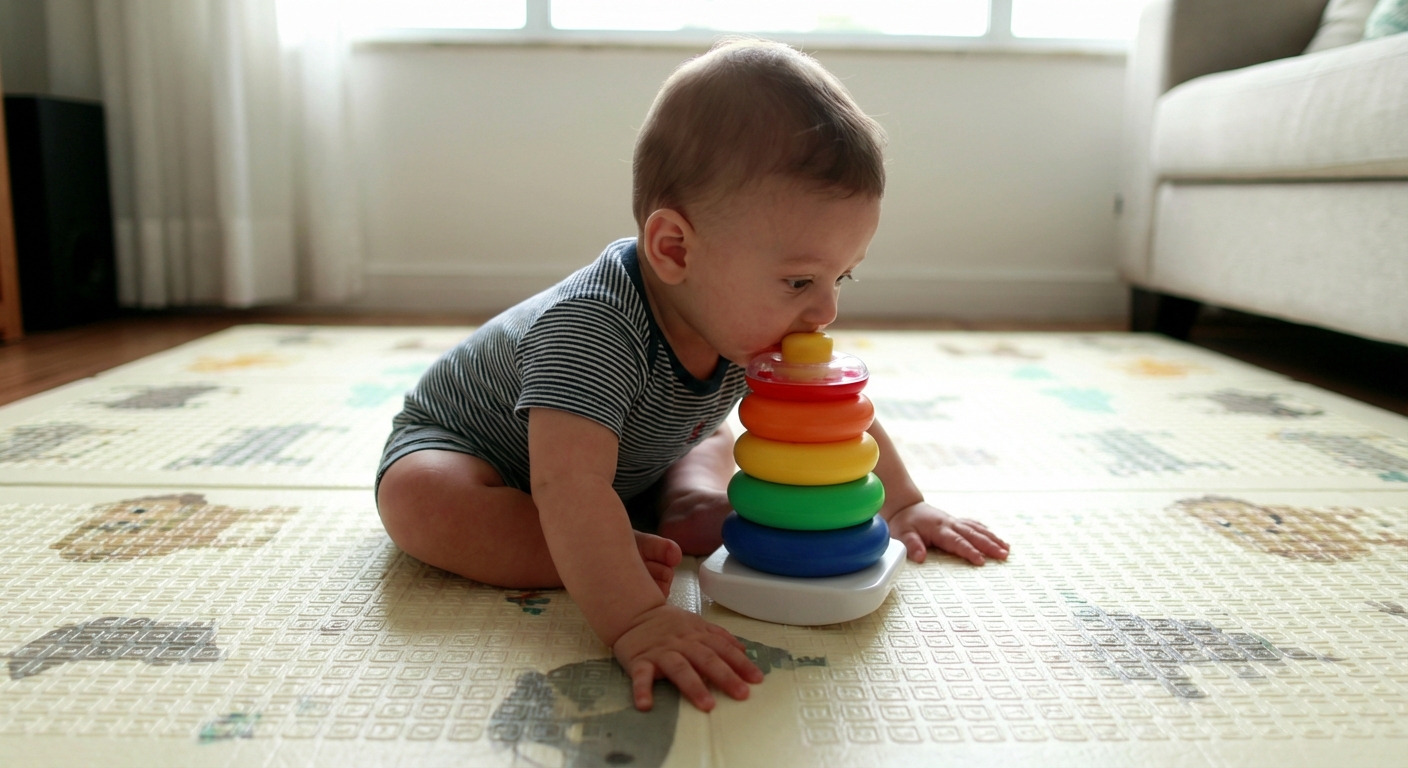
How to help your baby sit (safely)
You do not need fancy gear. In fact, too much time in containers (things like swings, bouncers, loungers, and “sit me up” seats) can limit opportunities to build core strength and balance on the floor. The best “exercise program” for most babies is still: safe floor time, frequent opportunities to move, and a little practice that fits into real life.
Quick safety checklist
- Practice on a firm floor surface (play mat or carpet is fine).
- Stay within arm’s reach.
- Skip elevated spots like beds, couches, and countertops.
- Use a few pillows around your baby on the floor if you want a softer landing.
- Stop when your baby is tired or frustrated. Wobbly practice is fine, exhausted practice is not helpful.
1) Lots of tummy time (even if your baby complains)
Tummy time strengthens the neck, shoulders, back, and core. Those muscles are the foundation for sitting, crawling, and eventually pulling to stand.
- Start with short bursts and build up.
- Try tummy time on your chest, across your lap, or on a firm mat.
- Use a toy or mirror at eye level to encourage lifting the head and shifting weight.
2) Practice sitting with minimal support
Sit your baby on the floor between your legs so you can catch them, and place a toy slightly in front of them to encourage reaching and balance.
Tip: If your baby is constantly tipping backward, offer support at the hips (not the ribs or armpits). Hip support helps them learn true balance instead of “hanging” on you.
3) Side-lean reaching games
In supported sitting, place a toy slightly to one side so your baby has to lean and rotate a bit to get it, then switch sides. (Think: a gentle side reach, not forcing a position.) This builds the muscles that keep them upright when they twist and reach.
4) Encourage rolling and pivoting
Rolling builds the trunk strength babies need to control their bodies in space. If your baby is rolling a lot but not sitting yet, that is not a problem. It is training.
5) Limit time in supportive sitting devices
Seats that hold babies in a sitting position (like some floor seats and loungers) can be fine for short periods, but they do not teach balance. Think of them like a stroller: useful, but not a “workout.”
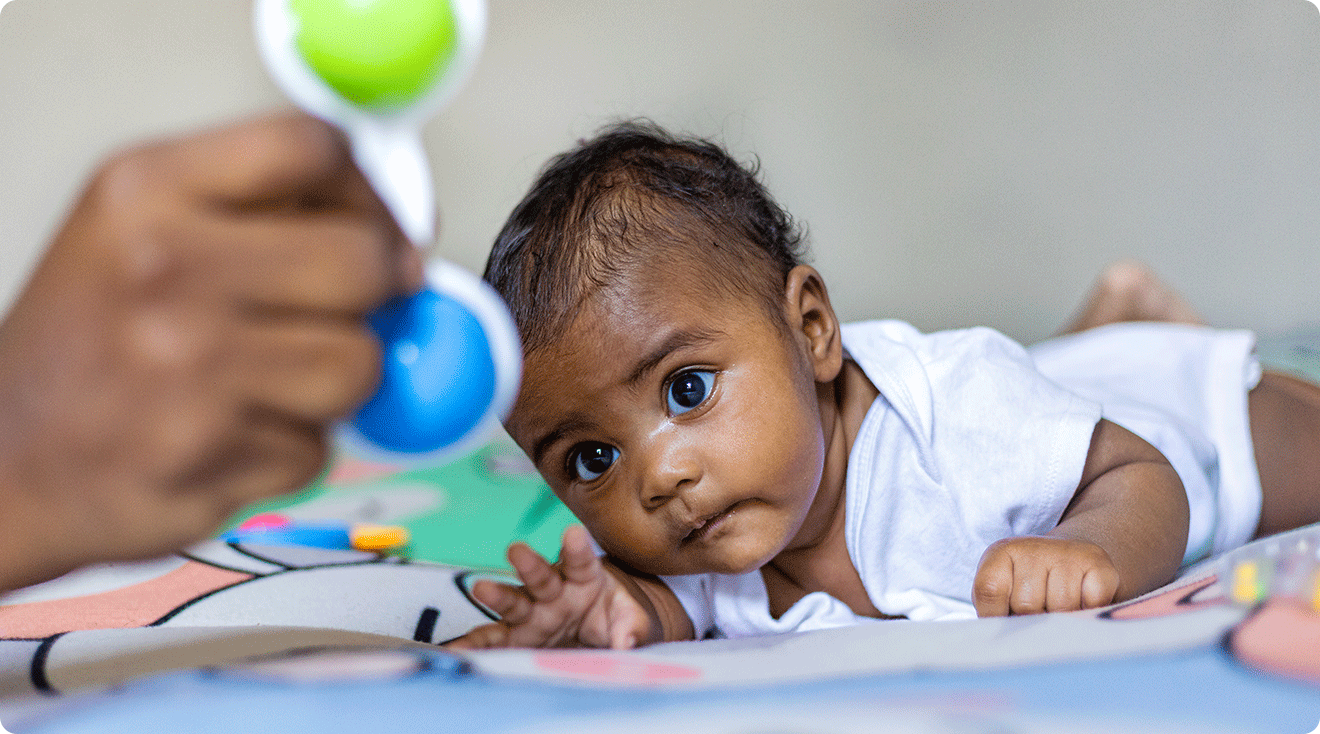
Common questions
Is it bad to prop my baby with pillows?
Occasional, closely supervised propping is fine, but it should not replace floor practice. If you do use pillows, keep your baby on the floor (not on a bed or couch), and stay within arm’s reach. Babies can topple fast.
My baby can sit for a second, then collapses. Normal?
Yes. Early sitting looks like: sit, wobble, face-plant, laugh, repeat. End practice sessions before your baby is exhausted. A few minutes several times a day is usually better than one long session.
Does size change the timeline?
Sometimes body proportions and temperament can affect what looks easier at first. Some babies with rounder bellies may need a little more time to find their balance, and some very petite babies may look wobblier early on. But size is rarely the main factor. Opportunities to move and practice usually matter more.
When to be concerned
I never want parents to panic over a milestone chart. Development is not a straight line, and pediatricians look at the whole picture. That said, there are times when it is worth checking in with your pediatrician or asking about an early intervention evaluation, especially if you are seeing multiple delays, big asymmetry, or loss of skills. (These prompts align with common pediatric and CDC-style milestone guidance, but your child’s history matters.)
Check in with your pediatrician if:
- Your baby has poor head control by about 4 months.
- By 6 months, your baby seems very stiff (arching, rigid legs) or very floppy (feels like they “melt” in your arms) most of the time.
- By 7 to 8 months, your baby cannot sit even briefly with hands propped (tripod) and shows little progress week to week.
- By 9 months, your baby cannot sit independently at all.
- Your baby strongly favors one side, uses one hand much more than the other, or you notice persistent asymmetry.
- Your baby loses previously gained skills.
If your gut says something feels off, trust that. You are not “overreacting” by asking. In clinic, I saw many kids who simply needed a bit of physical therapy coaching and took off after a few sessions.
Quick reassurance: Lots of babies are later sitters and still go on to hit other milestones on schedule. We worry less about one milestone and more about the overall pattern.
Sitting and starting solids
This is where sitting becomes more than a cute photo op. Sitting relates directly to safe feeding.
Does my baby need to sit to start solids?
Most babies are ready to start solid foods around 6 months (AAP-style guidance), when they can:
- Sit with minimal support and keep their head steady.
- Bring objects to their mouth.
- Show interest in food.
- Have a fading tongue-thrust reflex (they do not automatically push everything out with their tongue).
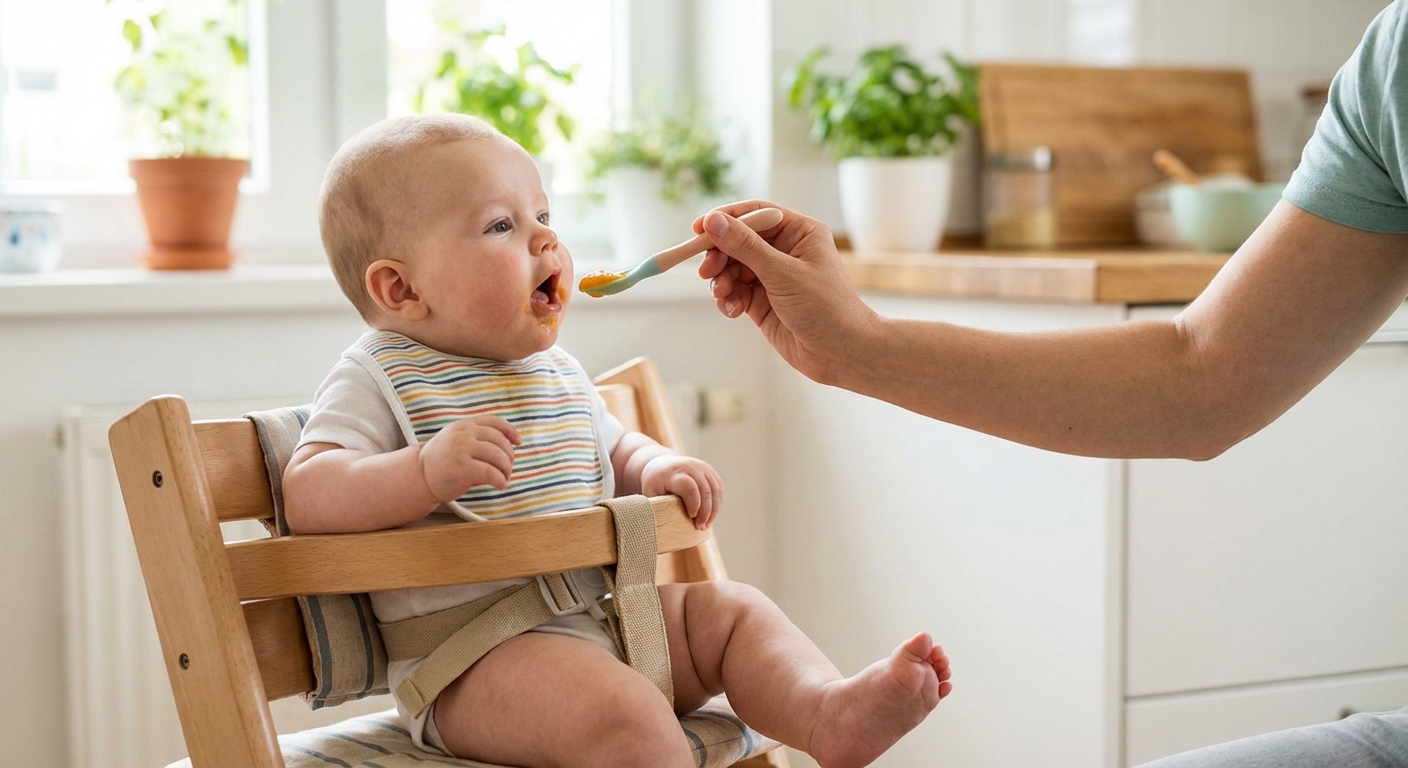
Your baby does not need perfect, hands-free floor sitting to begin solids. But they do need to sit upright and stable in a high chair with good support.
High chair readiness checklist
- Use a high chair with a firm back, footrest if possible, and a secure harness.
- Baby’s hips should be back in the seat so they are not slouching.
- Head and neck stay steady during the meal.
- If baby is collapsing sideways or forward, they are not ready for that setup yet, or the chair needs better support.
Safety note from the triage nurse side of me: For solids, avoid routine feeding in reclined seats, car seats, or loungers. Reclined positioning can increase choking risk because baby is not upright and stable. (Car seats are for travel, not mealtime.)
Simple core and balance activities
Here are a few parent-friendly activities that build the skills needed for sitting without turning your living room into a physical therapy gym. Aim for about 5 minutes a day total, broken up however it works.
Seated bounce and pause
Sit your baby on your lap facing outward, hands at their hips. Gently bounce and then pause. That little pause encourages your baby to engage their core to stay upright.
Supported sitting on the floor
Sit on the floor with your legs in a V, baby in the middle. Offer a toy at midline, then slightly to each side.
“Airplane” carry
Carry your baby tummy-down along your forearm (supporting chest and belly). This strengthens back muscles and helps with head control. Keep it brief if your baby hates it at first.
Reach across the body
In supported sitting, hold a toy so your baby has to reach across their body to grab it. That cross-body movement builds trunk rotation control.
Always keep practice supervised and on the floor. Wobbling is normal. A fall from a couch is not a milestone.
Take a breath
If your baby is around 6 to 8 months and working toward sitting, you are right in the thick of normal. Give them plenty of safe floor time, practice in small doses, and try not to compare your baby’s timeline to the internet’s loudest baby.
And if you are worried, bring it up at your next well visit. Pediatricians and early intervention teams would always rather reassure you early than have you sit at home anxious at 3 AM (speaking from both professional and personal experience).