When Do Babies Start Laughing?

Sarah Mitchell
Sarah Mitchell is a Registered Pediatric Nurse and a mother of three who has spent over a decade helping families navigate the beautiful, chaotic early years of childhood. She combines evidence-based medical knowledge with real-world parenting experience to offer practical, compassionate advice. At Awesome Parent, Sarah's mission is to help exhausted parents find solutions, trust their instincts, and finally get some sleep.
If you’re waiting for that first real belly laugh, you’re not alone. In my years as a pediatric nurse, I saw parents light up the moment their baby finally went from tiny smiles to true giggles. And as a mom of three, I can confirm: it feels like your baby just handed you a tiny “you’re doing great” note.
Here’s the typical timeline for baby laughter, what skills usually show up first, how to encourage it without turning your living room into a full-time comedy club, and when it’s worth checking in with your pediatrician.
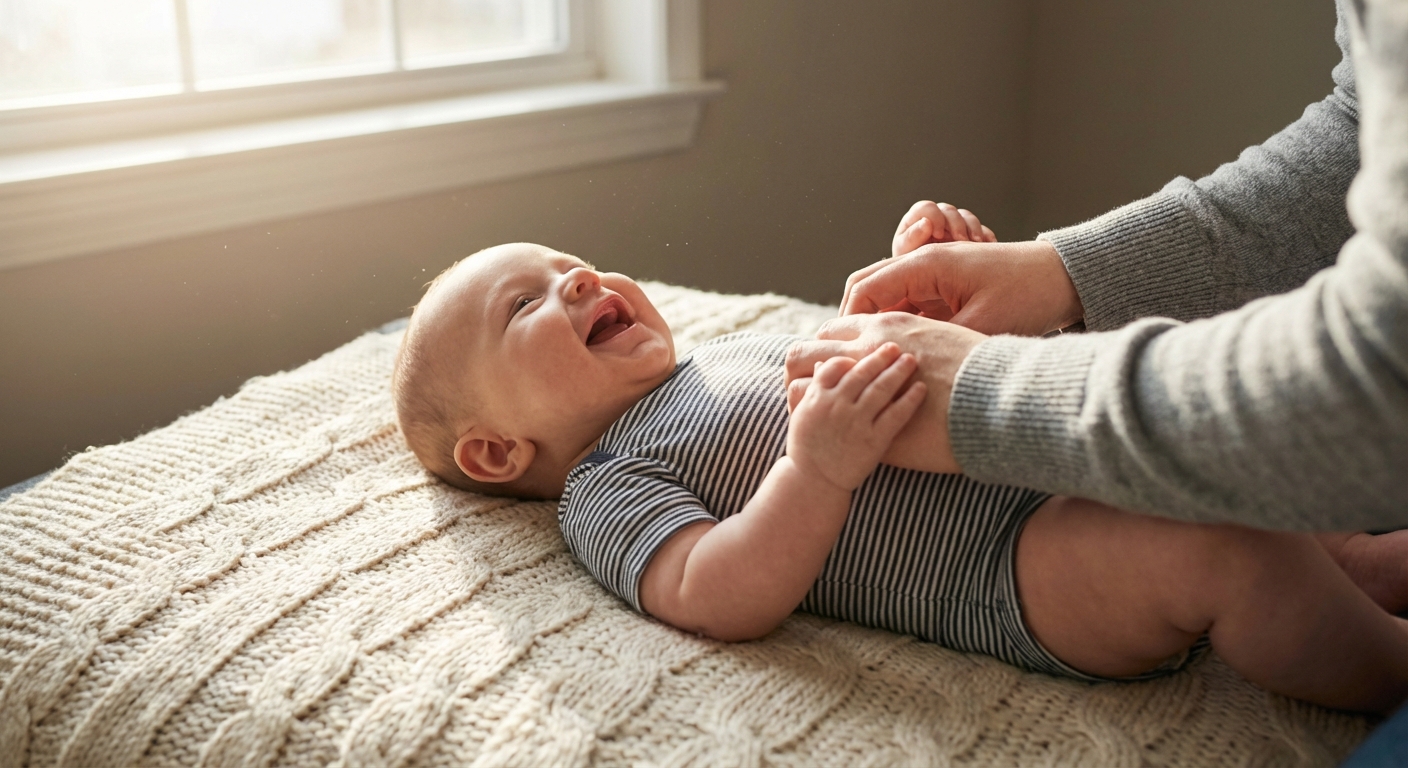
When do babies start laughing?
Many babies laugh for the first time around 3 to 4 months, often by about 4 months. (Milestone guidance varies a bit by source, and babies have their own timelines.) Some start earlier, and plenty start later. A common range is:
- 2 to 3 months: you might hear excited squeals, little grunts, or breathy bursts that are often more like “practice” sounds than a clear, social laugh
- 3 to 4 months: many babies have a clear first laugh
- 5 to 6 months: laughter often becomes more frequent and easier to get during play
It also helps to know that newborns can make adorable sounds in their sleep that sound like laughs, but they are often reflexive. The social “I’m laughing because you’re funny and I like you” laugh typically comes later as your baby’s brain and social skills mature.
What comes first?
Laughter is a social and developmental skill, not just a cute noise. Babies usually need a few building blocks first.
1) Social smiling (often around 6 to 10 weeks)
Before a baby laughs, they usually start offering real social smiles. These are the smiles that happen because they see you, hear your voice, or enjoy a moment, not the random newborn sleep-smiles.
2) Stronger head and body control (around 2 to 4 months)
Laughing takes coordination: breathing, vocalizing, and social engagement all working together. As babies get stronger and more stable, they can pull off those little “ha ha” bursts more easily.
3) More alertness and attention (around 2 to 4 months)
To laugh, your baby has to notice something, process it, and then react. Longer awake periods and better focus help.
4) Early communication (around 2 to 5 months)
Coos, squeals, and babbles are like your baby’s practice runs. Many babies squeal with excitement before they ever laugh.
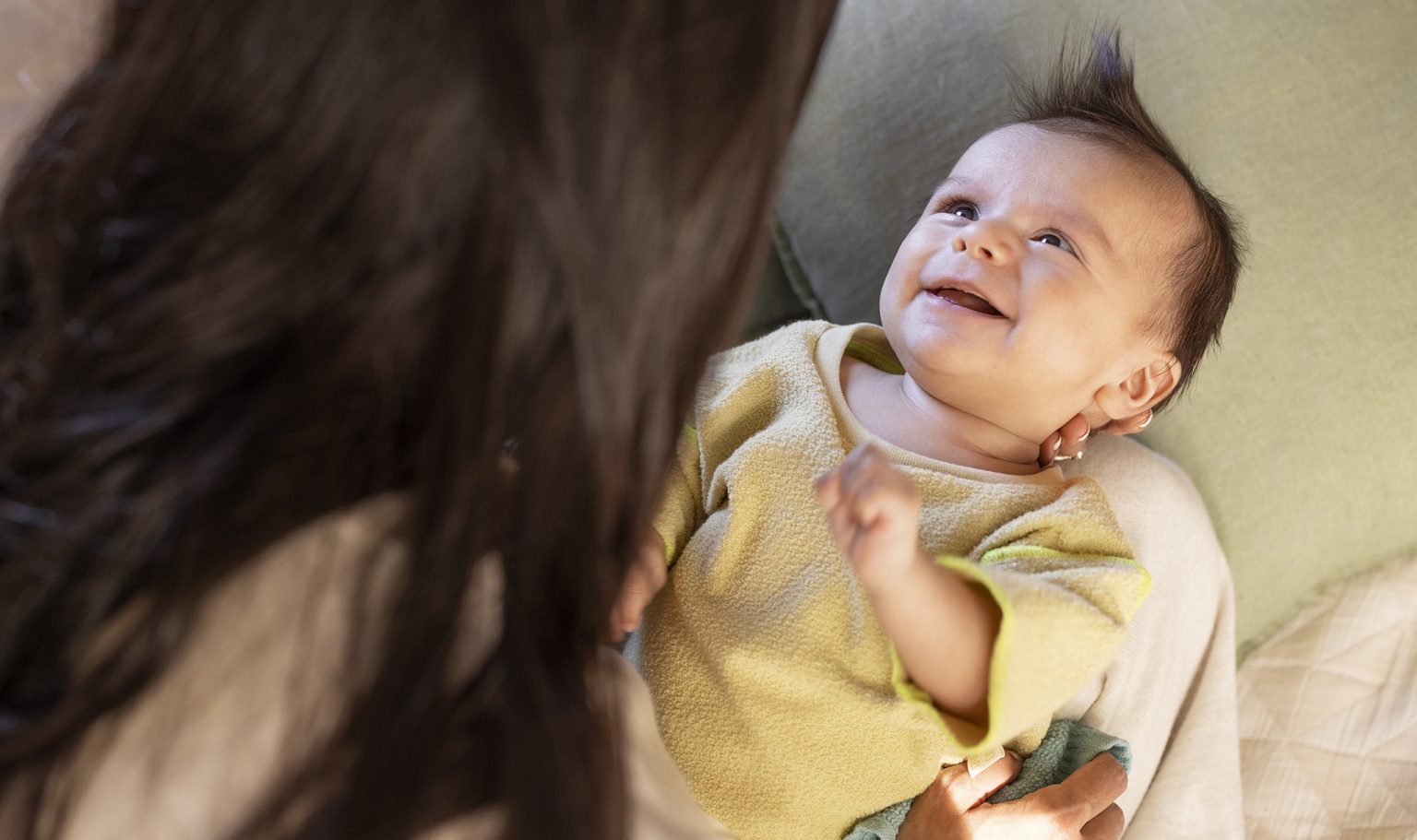
What makes babies laugh
Babies tend to laugh at things that are:
- Predictable: repeating the same silly sound or movement helps them learn what’s coming
- Slightly surprising: a playful pause, a gentle “boo,” or a funny voice can be just enough
- Social: your face, your voice, and your attention are the main event
Adults expect jokes, but babies usually laugh at connection, patterns, and playful surprise.
How to encourage laughter
You don’t need special toys or a perfect routine. A few minutes of face-to-face play is often plenty.
Try these
- Peekaboo, early version: cover your face with your hands for a second, then pop back in. Keep it gentle.
- Silly sounds: clicking noises, raspberries (on your own arm, not on your baby’s belly), animal sounds, or exaggerated “ooo!”
- Copycat game: imitate your baby’s coos and squeals. Babies love being “answered.”
- Gentle bouncing: small knee bounces while holding your baby securely can spark giggles.
- Playful pauses: do something funny, pause, then repeat. The anticipation is half the magic.
- Songs with motions: simple clapping games or gentle hand movements while you sing.
Keep play safe
Keep movements gentle, support your baby’s head and neck as needed, and avoid any rough play or vigorous bouncing. If your baby seems overstimulated, turns away, stiffens, or starts to fuss, take a break.
A quick word on tickling
Some babies love a little tickle, some hate it, and some get overstimulated fast. Use a light touch, stop if your baby turns away or stiffens, and remember: if it isn’t clearly enjoyable, it’s not worth pushing for a laugh.
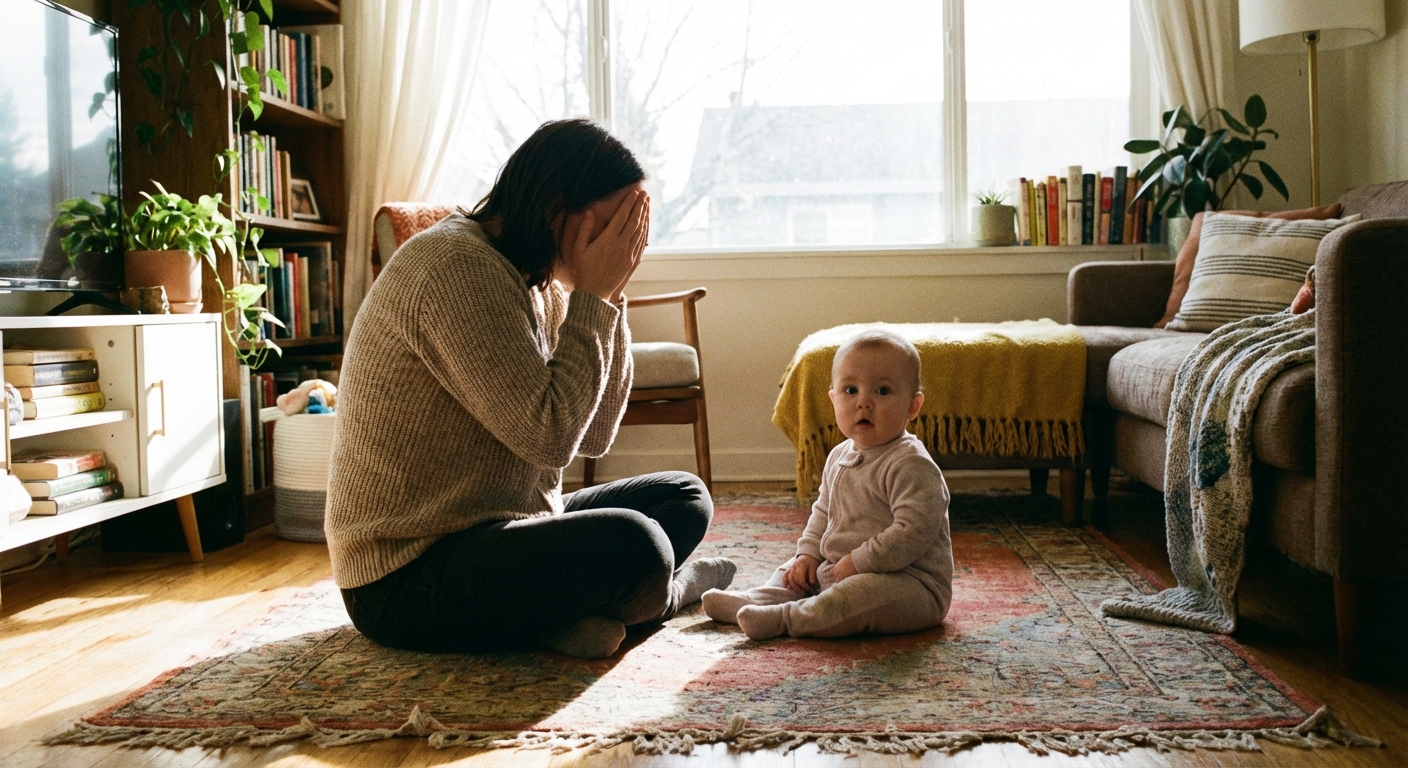
Why your baby isn’t laughing yet
There are many completely normal reasons a baby isn’t laughing “on schedule.”
- Temperament: some babies are observers. They may smile a lot before they giggle.
- Timing: your baby may be close, but only laughs when they’re well-rested and fed.
- Less opportunity for play: if life’s been hectic, your baby may simply need more calm face-to-face time.
- Different triggers: one baby laughs at peekaboo, another laughs at the dog drinking water, and another laughs only when big brother trips over his own feet.
- Quiet joy: some babies laugh softly or rarely at first. Look for the bigger picture: social smiles, eye contact in calm moments, vocalizing, and shared back-and-forth.
Also, if your baby was born early, it’s often more helpful to think in terms of adjusted age when looking at milestones. Many clinicians use adjusted age for development until about 2 years, though practice can vary based on how early a baby was born and your child’s overall health. Your pediatrician can tell you what makes the most sense for your child.
When to check in
I’m firmly in the “trust your gut” camp. If something feels off, you’re allowed to ask. In general, consider bringing it up with your pediatrician (or discussing at the next well visit) if:
- Your baby isn’t smiling socially by about 2 to 3 months
- Your baby isn’t laughing yet by around 6 months, especially if they also aren’t doing joyful squeals, engaged back-and-forth play, or consistently responding to familiar voices
- Your baby doesn’t make much eye contact during calm, face-to-face moments or doesn’t seem to respond to familiar voices
- You notice a loss of skills they previously had (smiling less, less vocal, less engaged)
- You have concerns about hearing, like not reacting to loud sounds or not responding to voices and sounds consistently over time
Not laughing by a certain age doesn’t automatically mean something’s wrong. Providers usually look at the whole picture, including social smiles, interest in people, back-and-forth interaction, and response to sound.
After the first laugh
Once laughter arrives, it usually becomes more frequent over the next couple of months. Many babies start to:
- laugh during play routines they recognize
- laugh more with familiar people
- experiment with sounds that get a reaction
- show clear preferences for certain games (yes, you’ll do the same silly thing 47 times)
And then, one day, they’ll laugh at something you didn’t even know was funny, like sneezing. Parenting is humbling that way.
Quick FAQ
Can a baby laugh at 2 months?
Yes, some babies do. More commonly at this age, you’ll hear “pre-laugh” sounds like squeals, little grunts, and breathy excited bursts, with clearer laughs emerging closer to 3 to 4 months.
Is it normal for my baby to smile but not laugh yet?
Very normal. Smiling usually comes first. Laughing often follows weeks later as your baby’s social engagement and coordination mature.
Do babies laugh more with certain people?
Often, yes. Babies tend to laugh more with caregivers and siblings because they feel safe and have lots of repeated play routines with them.
The bottom line
Many babies laugh for the first time around 3 to 4 months, often by about 4 months, with plenty of normal variation. Focus on connection, simple play, and following your baby’s cues. Try to zoom out, too: overall social engagement (smiles, vocalizing, turn-taking, and response to sound) matters more than one isolated milestone.
And if your baby isn’t laughing by around 6 months, or you’re noticing other social or communication concerns, bring it up at your next well visit or send your pediatrician a message for reassurance and a plan.
You’re not behind. You’re learning your baby. And that first laugh is coming.