When Do Babies Start Smiling?

Sarah Mitchell
Sarah Mitchell is a Registered Pediatric Nurse and a mother of three who has spent over a decade helping families navigate the beautiful, chaotic early years of childhood. She combines evidence-based medical knowledge with real-world parenting experience to offer practical, compassionate advice. At Awesome Parent, Sarah's mission is to help exhausted parents find solutions, trust their instincts, and finally get some sleep.
If you have ever stared at your newborn’s tiny face at 2 AM whispering, “Was that a smile?” you are in very good company. Smiling is one of the earliest milestones parents search for because it feels like the first real “hello.” The tricky part is that babies do smile before they can smile at you.
Let’s break down what those early grins mean, when most babies start social smiling (the heart-melting kind), and what you can do to invite more of them.
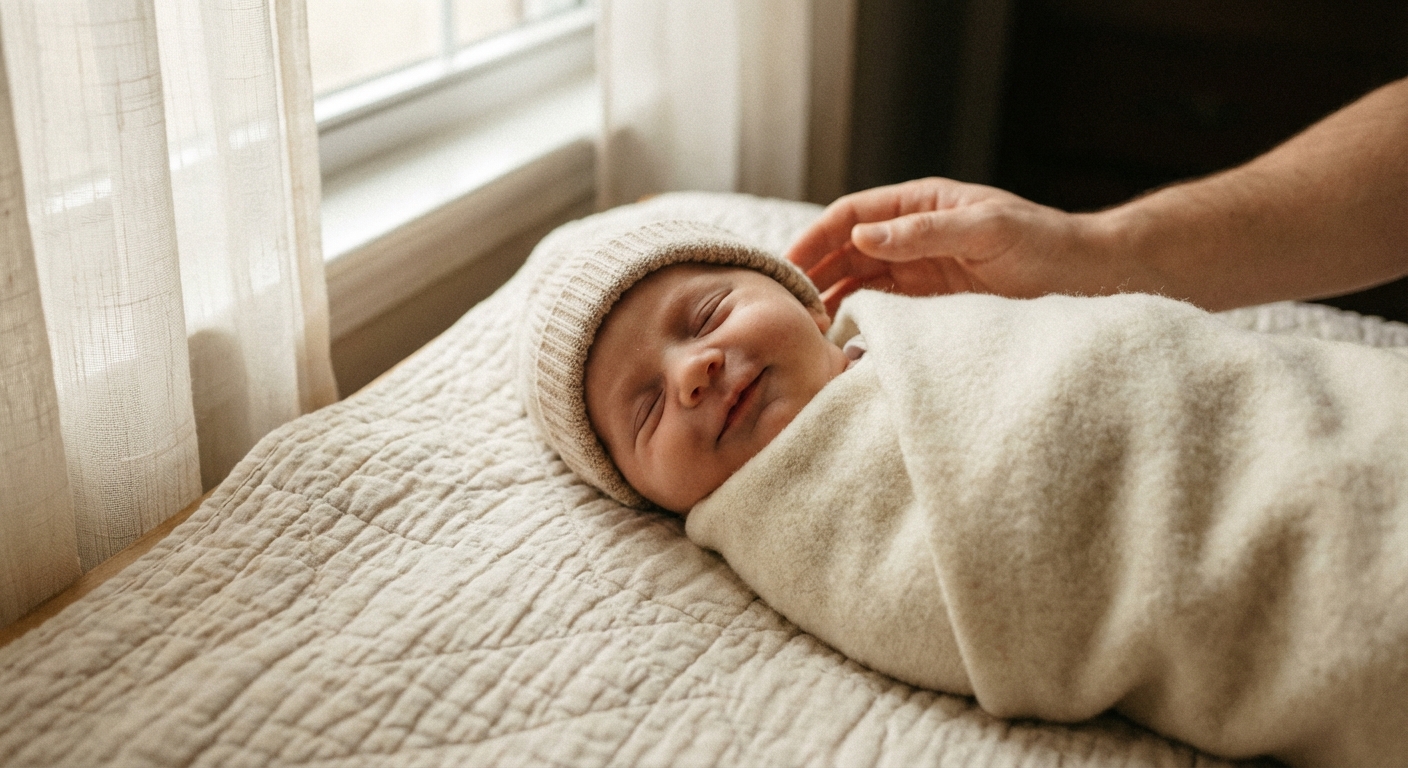
Reflex smile vs. social smile
Reflexive newborn smiles
In the first days and weeks, many babies flash quick little smiles that seem to come out of nowhere. These are reflex smiles. Parents often notice them when their baby is:
- Asleep or drifting off
- In a calm, drowsy state
- Settling during digestion (for example, around passing gas or a bowel movement)
- Responding to internal sensations as their nervous system matures
Reflex smiles are real facial movements, but they are not yet a response to a person, voice, or interaction. They are more like a rehearsal.
True social smiles
A social smile is when your baby smiles because of you. This is the moment you have been waiting for. Social smiles usually show up when your baby is awake and engaged, and they often come with:
- Eye contact
- A brighter, more alert face
- Body wiggles or relaxed arms and legs
- Little coos or happy sounds as they get closer to 2 to 3 months
A social smile feels interactive. It looks like your baby recognizes you as a comforting, interesting part of their world.
When babies smile on purpose
Many babies begin to social-smile around 6 to 8 weeks. Some start earlier, closer to 4 to 6 weeks. For others, it clicks a bit later. Consistent social smiling often emerges by about 2 to 3 months.
Here is a realistic timeline you might see:
- 0 to 4 weeks: Reflex smiles, usually during sleep or drowsiness
- 4 to 6 weeks: More alert time, brief moments of engagement, occasional early social smiles in some babies
- 6 to 12 weeks: Social smiles become more consistent, especially with familiar faces and voices
- 3 to 4 months: Smiles become frequent and expressive, often paired with cooing or laughter starting for some babies
If your baby was born early, it helps to think in terms of adjusted age (also called corrected age). For example, a baby born 4 weeks early may hit the social smiling window about a month later than their calendar age.
One more thing that matters: temperament. Some babies are naturally more serious observers, even when everything is developing right on track.
What triggers early smiles
Social smiling is part brain development and part relationship building. Babies are learning to process faces, tune into voices, and connect pleasant feelings with people.
Common early smile triggers include:
- Your face, close up: Babies typically see best at about 8 to 12 inches (20 to 30 cm) away early on
- High-contrast features: Eyes, eyebrows, and big expressions are easier to “read”
- A warm, sing-song voice: That natural parent “baby voice” can help babies pay attention and engage
- Gentle touch: A soft stroke on the cheek or belly during calm awake time
- Familiar routines: Diaper changes, bath time, or after feeding when they are comfortable
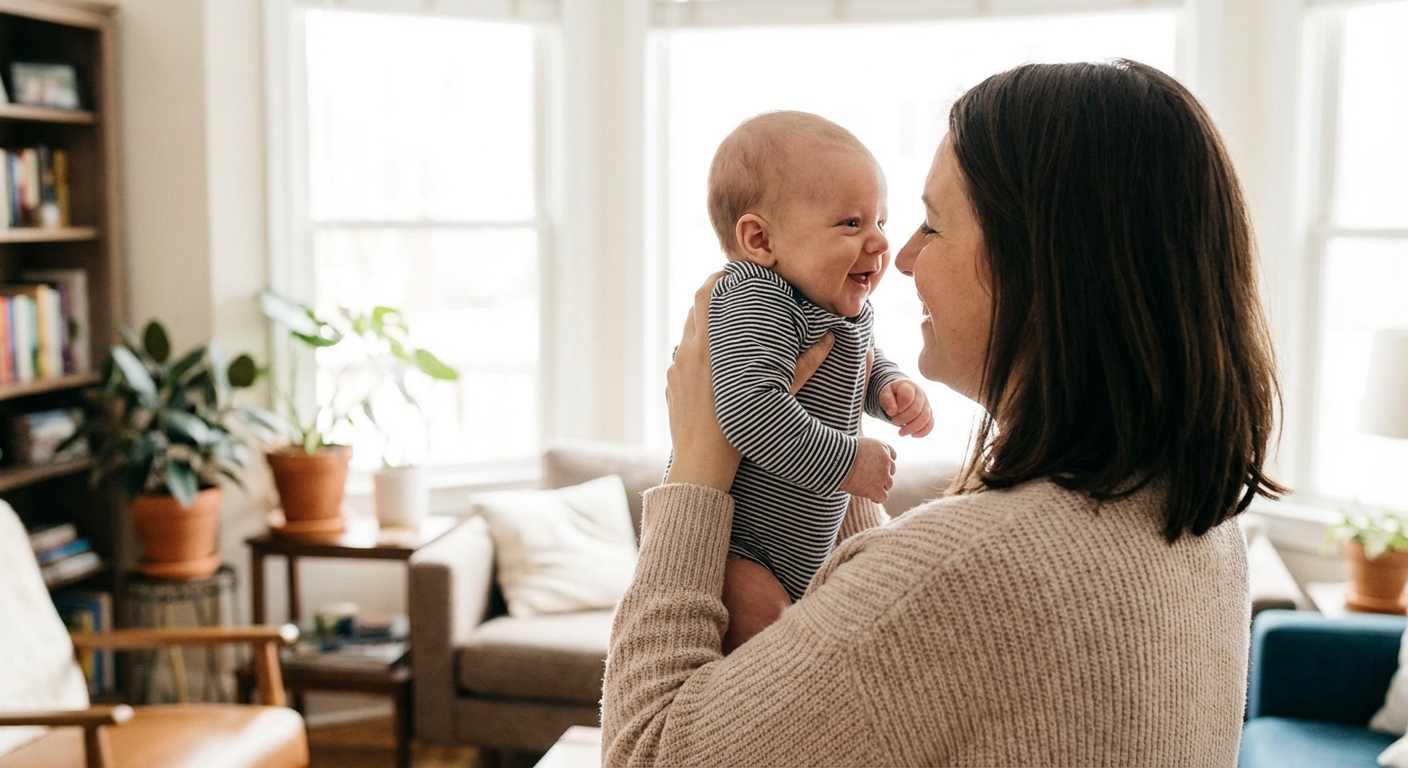
How to encourage social smiling
You cannot force a milestone, but you can set the stage. Think of it as giving your baby lots of low-pressure chances to practice.
1) Aim for “happy awake” time
Try interaction after a feed and a diaper change, when your baby is calm and not overly tired. An overtired baby rarely smiles, even if they are the sweetest baby on earth.
2) Get close and make eye contact
Bring your face into their best focus range, about 8 to 12 inches away. Slow down and wait. Babies often need an extra few seconds to process what they are seeing.
3) Use simple, repeatable games
- Smile and pause: Give a big smile, then pause quietly to see if they respond
- Talk, then wait: Say a short phrase like “Hi, sweetheart,” then pause
- Copy their face: If they raise eyebrows or open their mouth, mimic it gently
- Peekaboo, the newborn version: Briefly move your face out of view and back, very slowly
4) Narrate your day in a warm voice
You do not need to perform. Simple, soothing narration helps: “I’m wiping your hands. All clean. There you go.” Babies love predictable rhythms.
5) Keep it short
A couple of minutes is plenty. If your baby looks away, fusses, stiffens, or starts to yawn, they are telling you they are done.
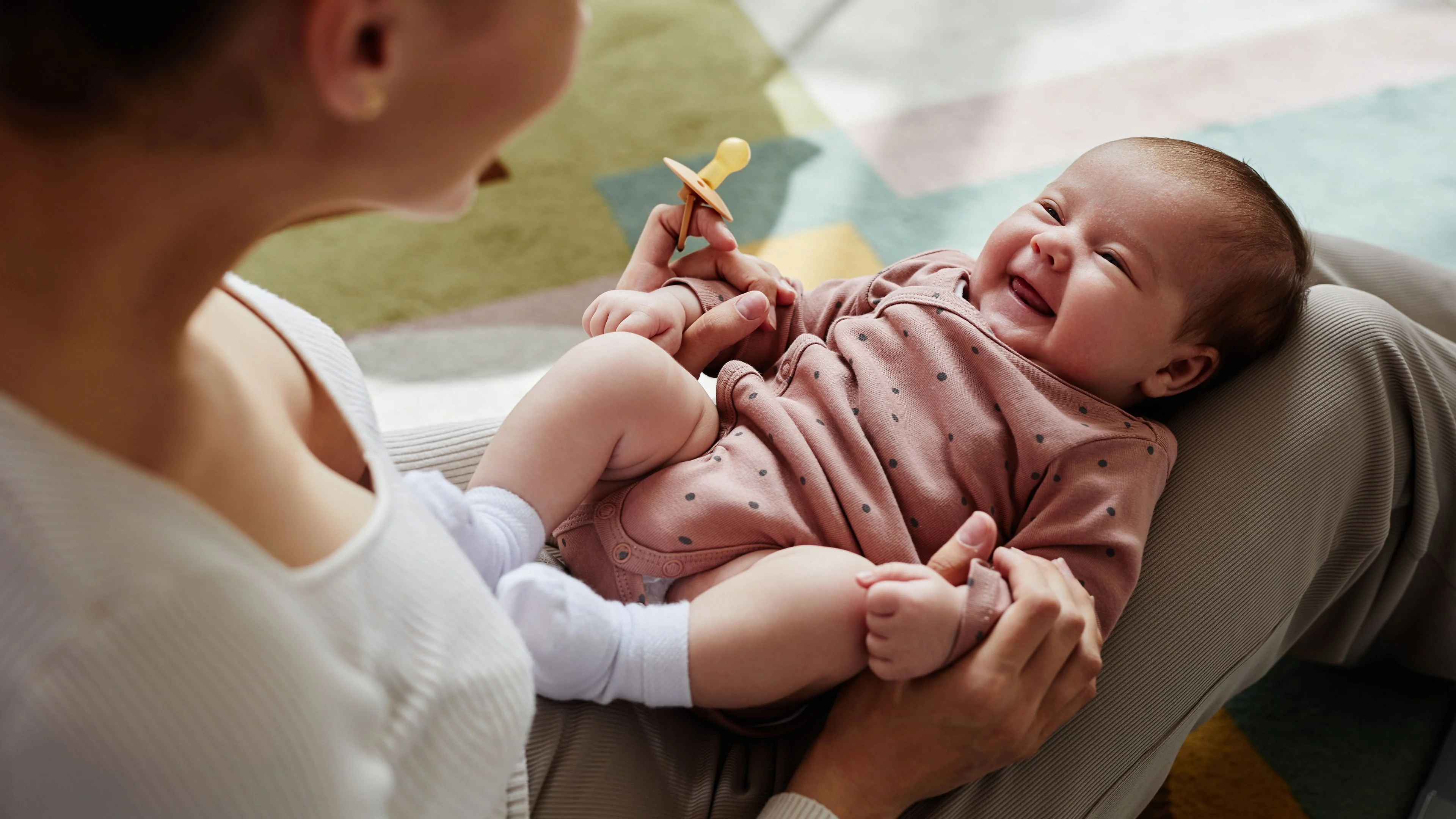
If baby is not smiling yet
First, take a breath. Social smiling can show up suddenly, and some babies are more serious observers at first. Also, babies who have had a rough start, like reflux discomfort, jaundice with lots of sleepiness, or feeding struggles, may spend more early weeks focused on basic comfort rather than social interaction.
That said, you deserve clear guidance on when to check in.
When to talk to your pediatrician
Bring it up at your baby’s next well visit, and consider calling sooner if you notice any of the following:
- No consistent social smiles by 3 months (or by 3 months adjusted age for premature babies)
- Limited eye contact or your baby rarely seems to look at faces
- No response to familiar voices or loud sounds, which can raise hearing concerns
- Not tracking faces or objects by around 3 months, or you suspect a vision problem
- Your baby seems unusually floppy, stiff, or hard to engage
- Loss of skills, like they used to smile or engage and then stopped
If you are seeing more than one concern (for example, not smiling plus limited eye contact or poor response to sound), do not wait. It is reasonable to reach out sooner for guidance.
Often, the solution is simple. Sometimes a clinician identifies something that is making engagement harder, like vision or hearing issues, significant reflux pain, or motor tone concerns. Either way, getting a professional set of eyes on your baby is always a good use of your energy.
When to seek urgent care
Smiling itself is not an emergency milestone, but seek prompt medical advice if your baby has signs of illness like poor feeding, dehydration, breathing trouble, persistent lethargy, or you feel something is seriously off.
For babies under 3 months, a rectal temperature of 100.4°F (38°C) or higher needs prompt medical guidance.
Quick FAQ
Do babies smile in the womb?
Some prenatal ultrasounds capture facial movements that look like smiles, but after birth, those early “smiles” are usually reflexive until social smiling develops.
Why does my newborn smile in their sleep but not at me?
Totally normal. Sleep smiles are common early on. Smiling at you takes more brain organization, stronger vision skills, and more awake time.
My baby smiles at the ceiling fan. Is that normal?
Yes. High-contrast objects, movement, and familiar sights can be fascinating. You are not losing a popularity contest to the fan. Not permanently, anyway.
Can I teach my baby to smile?
You cannot teach it like a trick, but you can encourage it by offering calm, face-to-face interaction during alert times.
The bottom line
Reflex smiles often show up in the first few weeks, but true social smiles usually start around 6 to 8 weeks and become more consistent by 2 to 3 months. If your baby is not smiling yet, it does not automatically mean something is wrong, but it is worth discussing with your pediatrician if you are past 3 months (adjusted for prematurity) or you are noticing other concerns like limited eye contact, not tracking, or poor response to sound.
In the meantime, keep doing the basics: hold them close, talk gently, smile often, and give them a second to respond. That first real smile is coming, and it tends to show up right when you are convinced it never will.