When Do Babies Start Standing Up?

Sarah Mitchell
Sarah Mitchell is a Registered Pediatric Nurse and a mother of three who has spent over a decade helping families navigate the beautiful, chaotic early years of childhood. She combines evidence-based medical knowledge with real-world parenting experience to offer practical, compassionate advice. At Awesome Parent, Sarah's mission is to help exhausted parents find solutions, trust their instincts, and finally get some sleep.
Standing is one of those milestones that feels like it happens overnight. One day your baby is happily parked on the floor, and the next day they're hauling themselves up on the couch like they pay rent. If you're wondering when babies start standing up, what “counts,” and how to help without turning your living room into a baby stunt show, you're in the right place.
Quick safety note: When your baby is newly standing, stay close enough to spot them. Also do a quick scan for small objects, cords, hot drinks, and anything they can now grab from higher surfaces.
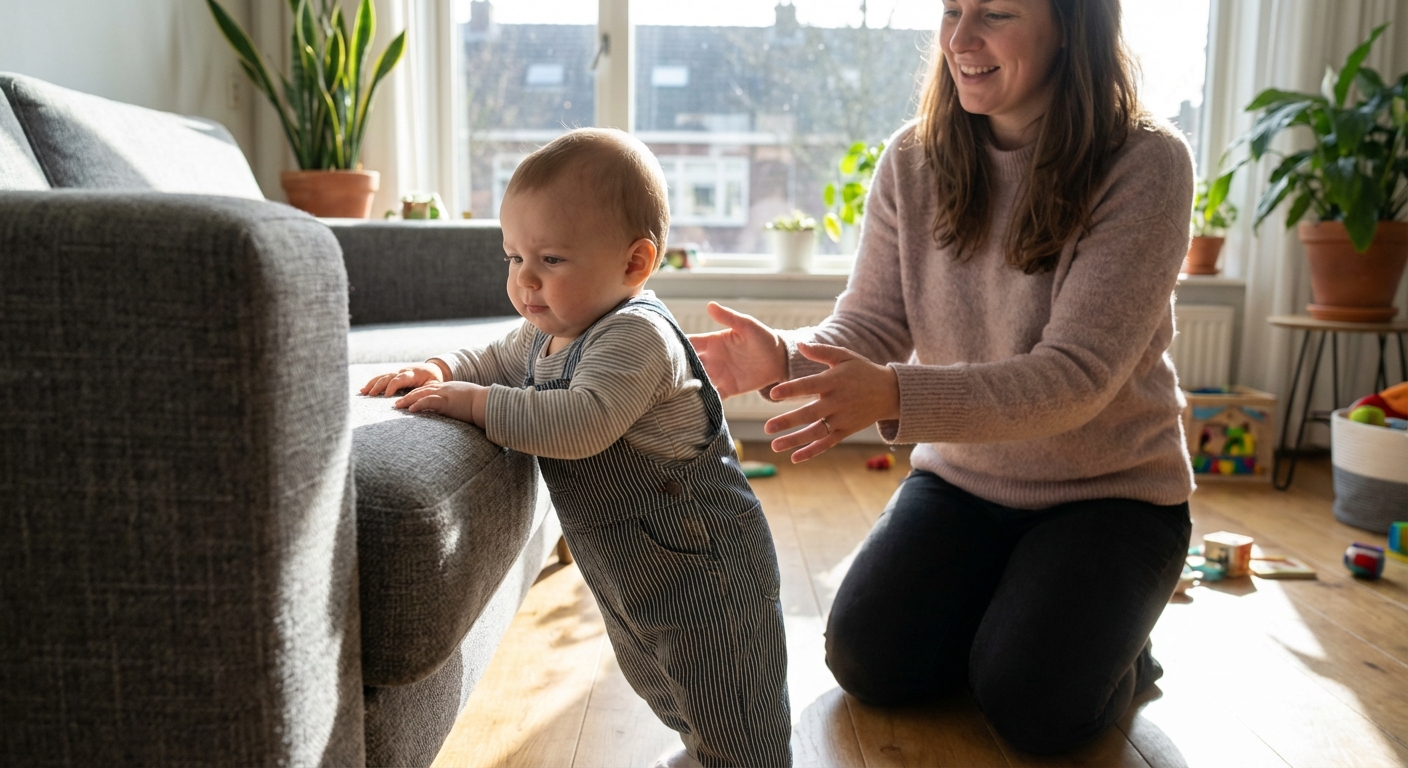
When do babies start standing?
Many babies follow a pretty predictable sequence: they pull to stand, then cruise (walk sideways while holding on), then stand independently for a few seconds, and then start taking steps. There’s a wide range of normal, and babies often bounce back and forth between stages.
Typical timeline
- Pulling to stand: often 8 to 12 months
- Cruising along furniture: often 9 to 13 months
- Standing independently: often 11 to 14 months (sometimes earlier, sometimes later)
- First steps: commonly 12 to 15 months, with a wide normal range
Some babies stand early and walk later. Others skip cruising and go straight to standing and stepping. And plenty of perfectly healthy babies take their sweet time. Development isn't a race, even when Grandma is keeping score.
What standing looks like
Pulling to stand
Your baby grabs a stable surface (coffee table, couch, your legs), gets their knees under them, and uses arms and legs together to rise into a stand. At first they might pop up and immediately plop down. Totally normal.
Cruising
Once standing feels more comfortable, many babies start shuffling sideways while holding on with one or both hands. Cruising helps them practice balance and weight shifting, which matters for walking.
Standing independently
This is when your baby can let go and balance on their own, even if it’s only for a second or two at first. Expect proud faces and gentle tumbles onto their diaper padding.
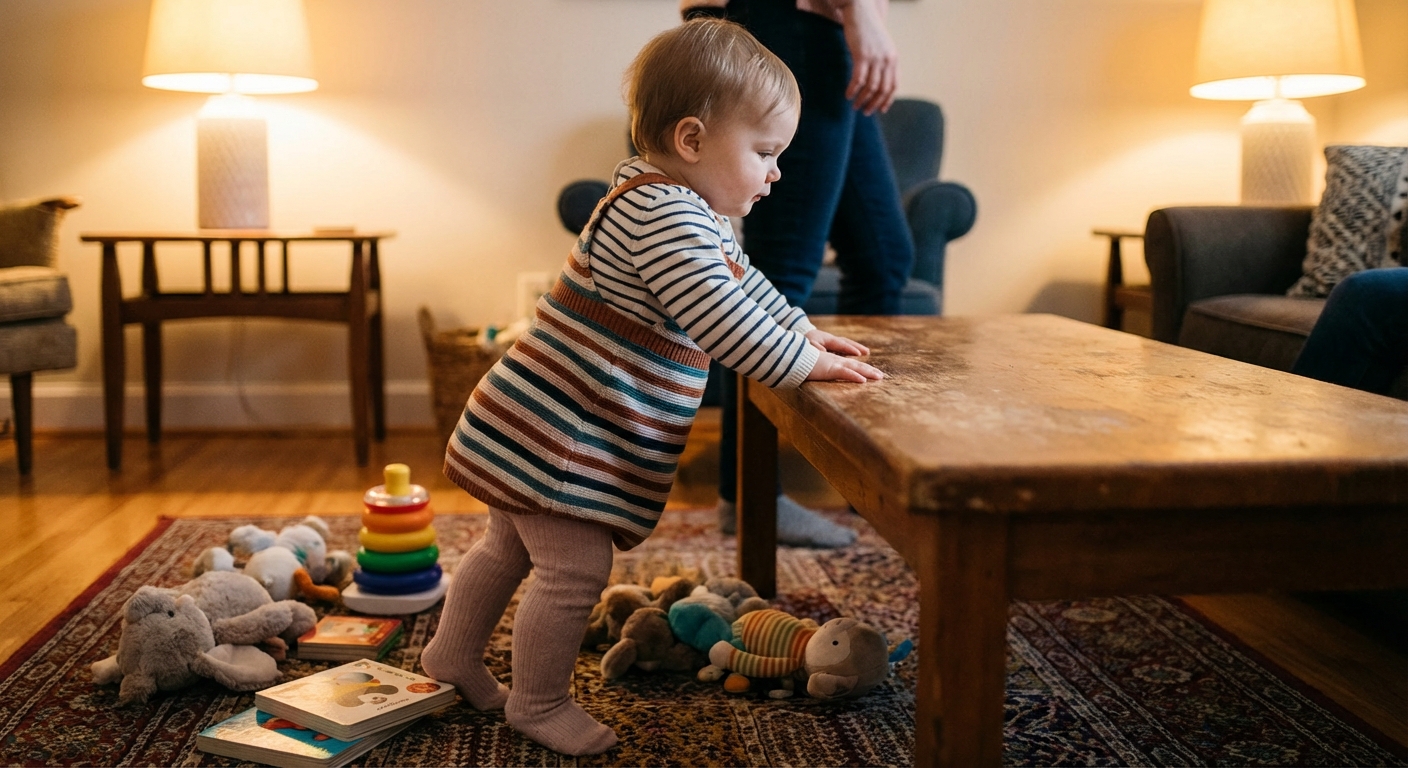
Signs they're getting ready
If you’re looking for clues at home, focus on the “foundation” skills first. Standing is built on strength, coordination, and confidence. Common signs of readiness include:
- Sitting well without support and recovering balance when they wobble
- Good tummy time strength and pushing up on hands
- Moving around the room in some way (rolling, scooting, crawling, army crawling)
- Getting into hands-and-knees or a bear-crawl position
- Kneeling at furniture and trying to rise
- Pulling up on your hands or your pant legs
- “Bouncing” while supported (more excitement than readiness, but it often shows up in the mix)
If your baby is doing several of these, standing is usually around the corner.
How to encourage standing safely
You don't need special gear to “teach” standing. The best approach is simple: give your baby safe opportunities to practice, and keep it supervised while they’re new at it.
1) Set up stable pull-up spots
- Use a sturdy couch, an anchored activity table, or a heavy coffee table that won’t tip.
- Avoid anything light, wobbly, or wheeled that slides away when they grab it.
2) Start from kneeling
If your baby can kneel at the couch, place a favorite toy just a little higher so they reach up and try to rise. Think “invite,” not “force.”
3) Let legs do the work
It's tempting to pull your baby up by their hands. Instead, offer your hands for balance while they do the pushing. You want them driving through their legs and engaging their core.
4) Go barefoot when possible
On safe indoor surfaces, bare feet help babies grip and feel the floor. If you need socks, choose ones with non-slip grips. Save stiff shoes for when your child is walking well outdoors.
5) Teach the “get down” early
This is the part that makes a lot of babies upset. When they’re standing at the couch or coffee table, gently help them bend their knees into a little squat, then lower to sitting. Practice a few times a day so standing doesn’t feel like a one-way trip.
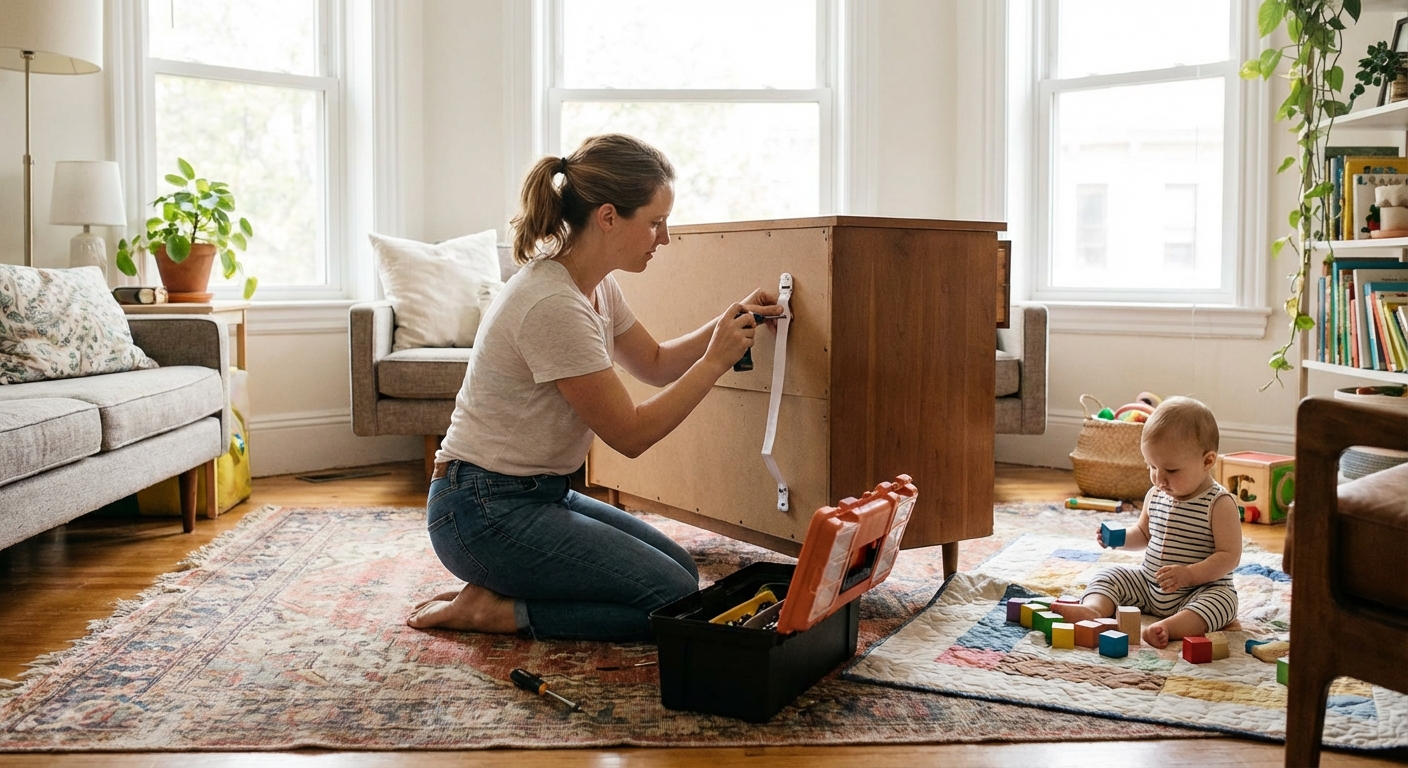
6) Babyproof like standing is already happening
Because it will. And it will surprise you.
- Anchor dressers and bookshelves to the wall.
- Move cords, lamps, and unstable décor out of reach.
- Use gates near stairs.
- Pad sharp corners if your setup makes bumps likely.
- Watch for new reach: cups of coffee, pet bowls, plants, and small objects on low tables.
What to skip
- Baby walkers with wheels: The American Academy of Pediatrics discourages their use due to injury risk from falls and access to hazards. Guidance can vary by country, so check local recommendations too.
- Overusing jumpers or exersaucers: Short, supervised use is fine for many families, but long sessions may reduce floor time where babies build real movement skills. If you use one, keep it brief and balance it with plenty of floor play.
- Standing practice on beds or couches: Soft surfaces make balancing harder and increase fall risk.
Tiptoes: is that normal?
Many babies go through a tiptoe phase while pulling up and cruising. Often it’s just experimentation or excitement. Intermittent toe-walking can also show up in toddlers.
That said, if your baby always stands on tiptoes, seems unable to put heels down, you notice stiffness, or toe-walking persists consistently over time, talk with your pediatrician. It can sometimes need a closer look.
How standing connects to walking
Standing is basically walking practice without the steps, and it’s also its own important balance milestone. When babies stand and cruise, they're learning how to:
- Shift weight from one leg to the other
- Balance while reaching for toys
- Strengthen hips, thighs, and core
- Coordinate hands and feet (letting go is a big deal)
A common pattern is: pull to stand, cruise for weeks or months, stand alone for a few seconds, then take 1 to 3 steps, then back to cruising. That back-and-forth is normal. Skills layer on top of each other.
When to check in
Milestones come with a wide range of normal. Still, trust your gut. If something feels off, you're not “being dramatic.” You're being a good parent.
Bring it up with your pediatrician if you're not seeing things like:
- Comfortably bearing weight on their legs when supported by around 9 to 10 months.
- Attempts to pull to stand by around 12 to 13 months.
- Standing with support or moving along furniture by around 13 to 15 months.
- Using one side much more than the other (always pulling up with the same leg, dragging one side, or obvious asymmetry).
- Loss of skills they previously had (always worth a call).
- Very stiff or very floppy muscle tone, or movement that looks unusually strained.
If needed, the next step is often a developmental screening and possibly a referral to early intervention or pediatric physical therapy. Early support can be incredibly helpful and isn't a sign you did anything wrong.
Quick FAQ
Can babies stand before they crawl?
Yes. Some babies skip crawling or do a different version like scooting. As long as they’re moving, exploring, and building strength, there’s usually no problem.
Should I teach my baby to stand?
You don't need to teach it in a formal way. Offer safe opportunities and let your baby lead. Think of yourself as the stage crew, not the director.
My baby pulls to stand and then cries. Why?
This is incredibly common. They got up, they're proud, and then they realize they don't know how to get down. Practice safe “down” skills from standing at furniture by guiding them to bend knees into a squat, then lower to sitting.
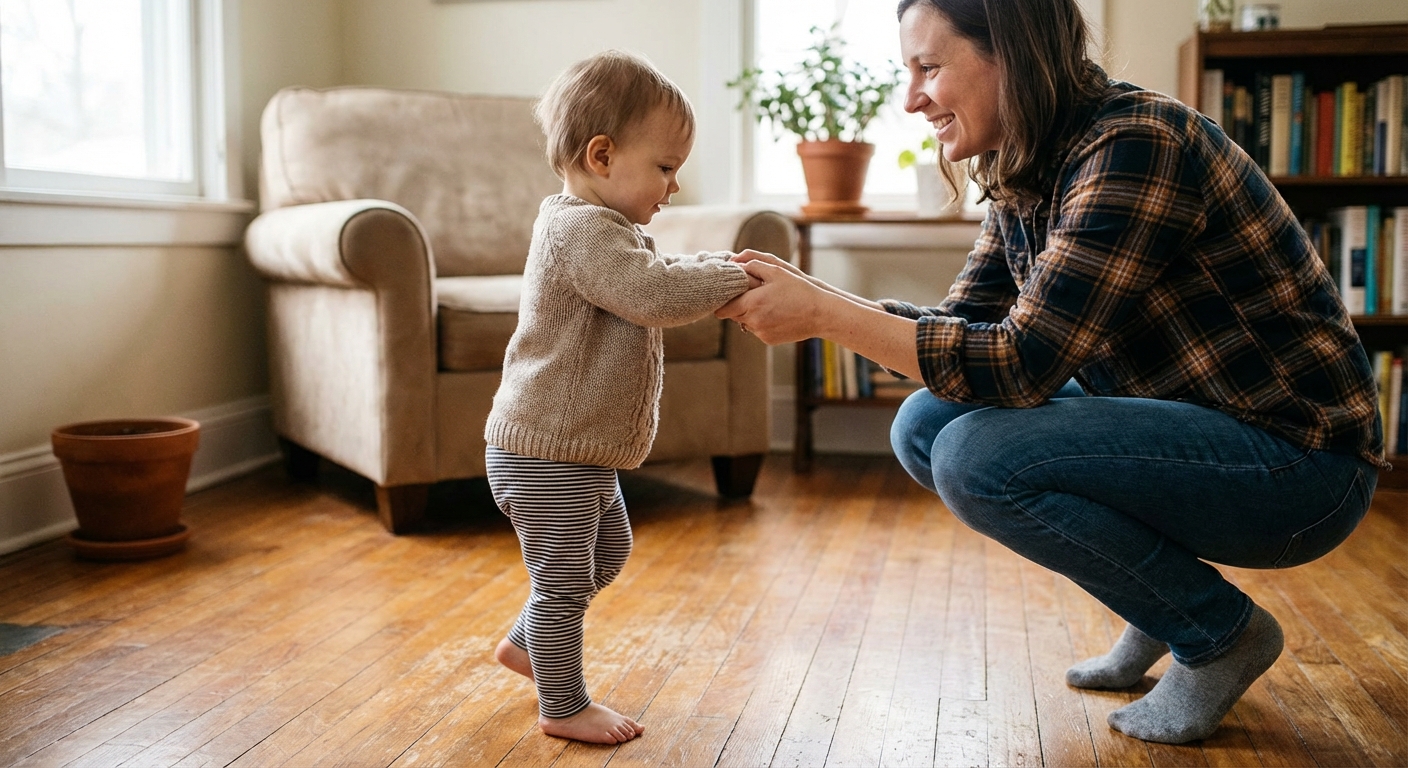
The bottom line
Many babies start pulling to stand between 8 and 12 months, then move into cruising, brief independent standing, and eventually steps. Give your baby lots of floor time, a few sturdy surfaces to practice on, and a safely babyproofed space. And if your baby is on the later end of the range or something feels unusual, check in with your pediatrician. You're not behind, you're gathering information, which is exactly what a calm, wise parent does.