When Do Babies Start Teething?

Sarah Mitchell
Sarah Mitchell is a Registered Pediatric Nurse and a mother of three who has spent over a decade helping families navigate the beautiful, chaotic early years of childhood. She combines evidence-based medical knowledge with real-world parenting experience to offer practical, compassionate advice. At Awesome Parent, Sarah's mission is to help exhausted parents find solutions, trust their instincts, and finally get some sleep.
If you have a drooly baby who suddenly wants to chew on everything you own, welcome. You might be in the teething phase. Or you might just have a baby doing normal baby things. (Both can be true.)
As a pediatric nurse and a mom of three, I can tell you this with confidence: teething is real, but it is also wildly over-credited for every rough day, bad nap, and cranky evening. Let’s sort out what teething usually looks like, when it typically starts, and what actually helps while you wait for that first tiny tooth to make its grand entrance.
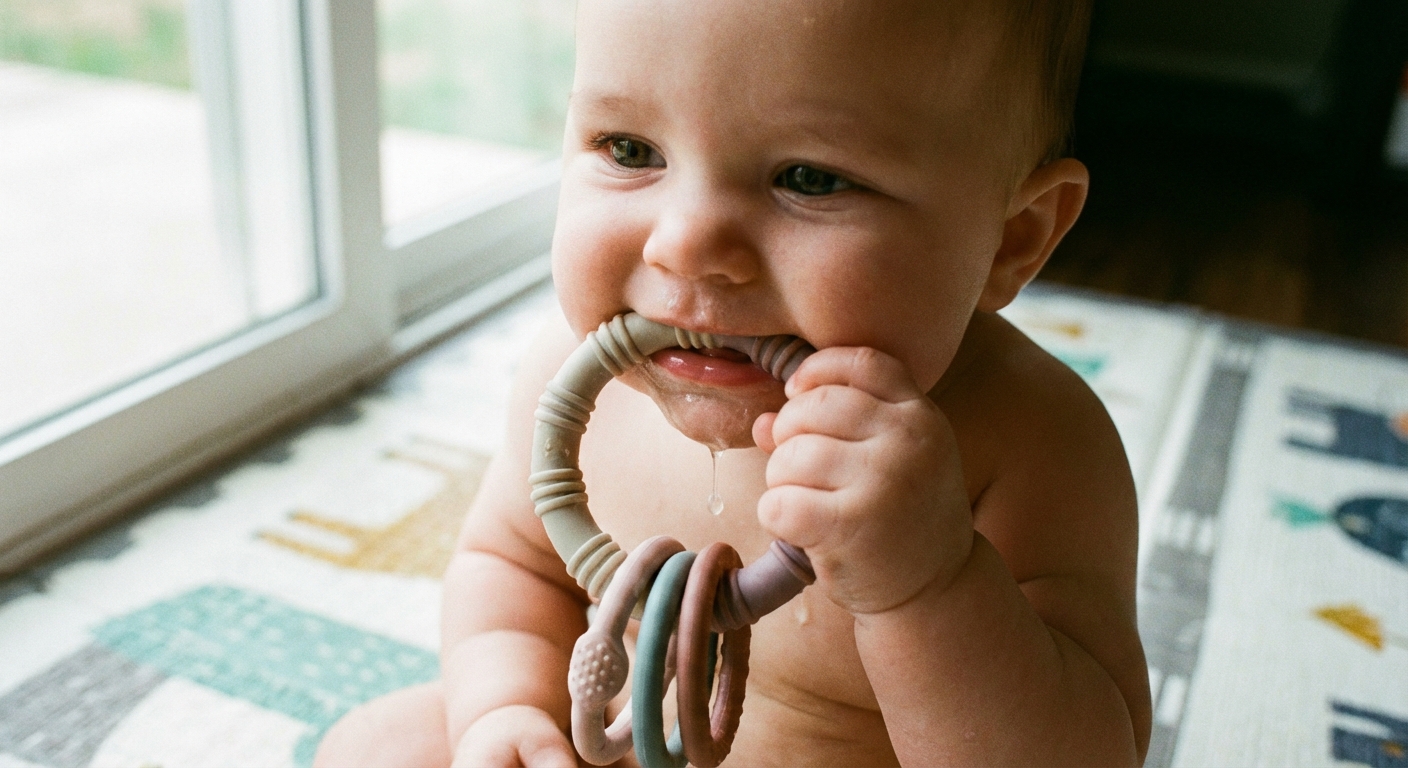
When do babies start teething?
Many babies start teething somewhere around 4 to 7 months. That is a very common window when gums get tender and teeth start moving closer to the surface.
But it helps to think of this as a wider typical range, too. For a lot of babies, first teeth show up anywhere from about 4 to 10 months, with 6 months being a classic average.
And yes, a totally normal range can be wider than that:
- Early teething: Some babies show signs as early as 3 months, and a small number cut a tooth around 2 to 3 months.
- Average timing: Many babies pop their first tooth around 6 months.
- Late teething: Some babies do not cut their first tooth until 10 to 12 months (and occasionally a bit later).
Bottom line: the “right” time is the time your baby does it. Teething timing has a lot to do with genetics. If you or your partner were late toothers, your baby may be too.
Early teething signs
Teething symptoms can start days to a week or two before a tooth is visible. Often, the first tooth seems to appear overnight after a stretch of “Is this teething?” guessing.
Common signs
- Drooling (sometimes a lot). Extra saliva is a classic early clue.
- Chewing and gum rubbing. Hands, toys, your knuckles, the crib rail. All fair game.
- Fussiness, especially in the late afternoon and evening.
- Swollen or tender gums. You may see a slightly puffy ridge or feel a firmer area with a clean finger.
- Wanting to nurse or bottle-feed more often for comfort, or sometimes pulling off because sucking makes sore gums feel worse.
- Interrupted sleep. Not always, but very common when a tooth is close to cutting through.
- Ear pulling or cheek rubbing. Nerves in the jaw can refer discomfort to the cheeks and ears.
- A mild, temporary appetite dip for solids.
What you might see in the gums
Sometimes you will spot a small white line under the gum, or a slightly bluish bubble (called an eruption cyst or hematoma). Those can look dramatic but are usually harmless and resolve on their own as the tooth comes in.
Call your pediatrician or dentist if the bubble looks very large, seems painful, bleeds, shows signs of infection, or does not improve over time.
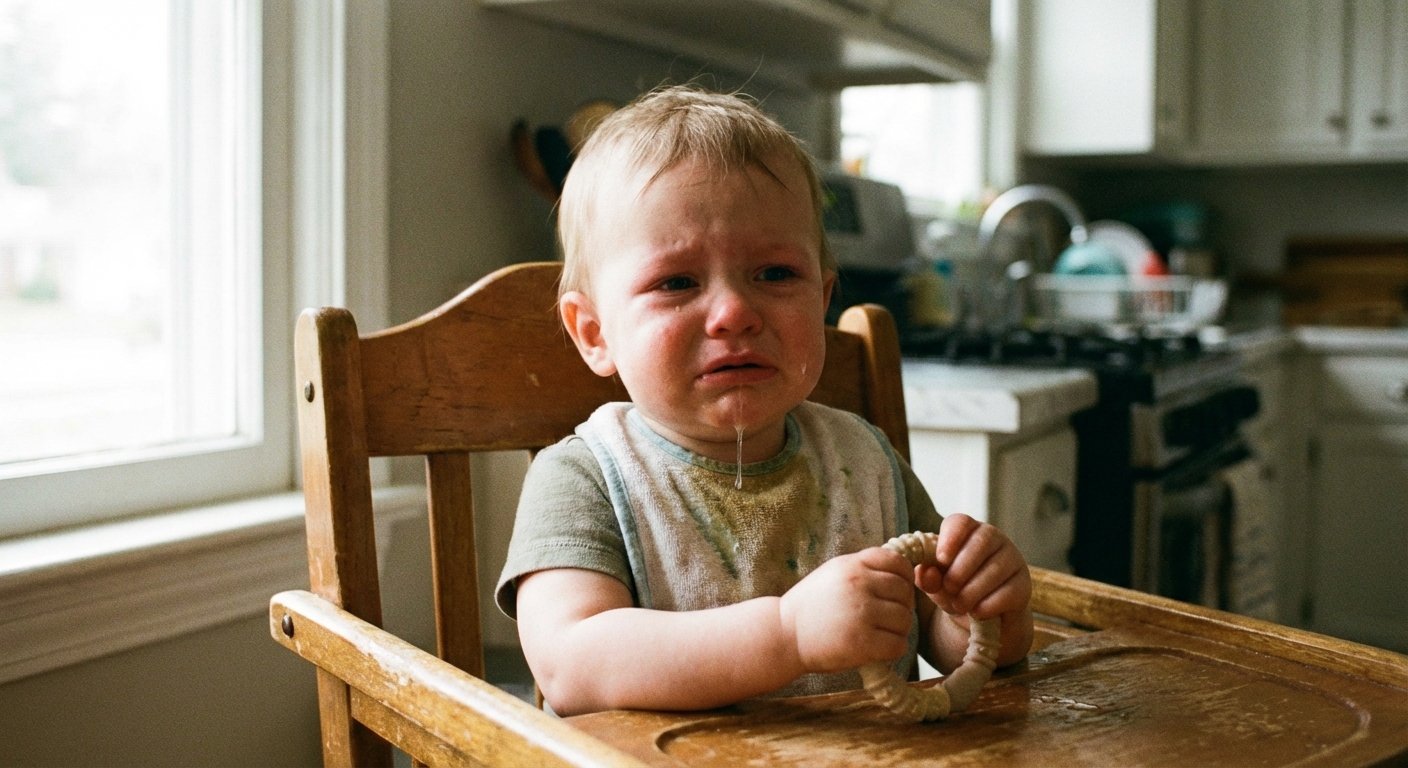
Teething or sick?
This part matters because it helps you know when to pivot from “comfort measures” to “let’s check for illness.”
Teething can cause
- Mild gum discomfort
- Drooling and a drool rash
- Chewing and irritability
- Slight changes in feeding or sleep
Teething is unlikely to cause
- A fever of 100.4°F (38°C) or higher
- Vomiting
- Watery diarrhea (looser stools can happen with extra saliva, but watery diarrhea is not a teething “thing”)
- A significant cough, wheezing, or trouble breathing
- A widespread rash (a drool rash around the mouth and neck is common, though)
If your baby has a true fever or seems genuinely sick, assume it is an illness first, not teething. Babies often teethe and catch colds at the same time, which is incredibly unfair, but very common.
How long does teething last?
Teething is more like a series of waves than one long event. Each tooth can cause a few rough days (sometimes a bit longer), then things calm down until the next tooth starts moving.
Many parents notice the crankiest period is the 1 to 3 days before the tooth breaks through, plus maybe a day or two after.
What helps
You do not need fancy gadgets. You need safe comfort, a little patience, and a plan for the cranky hours.
Simple comfort
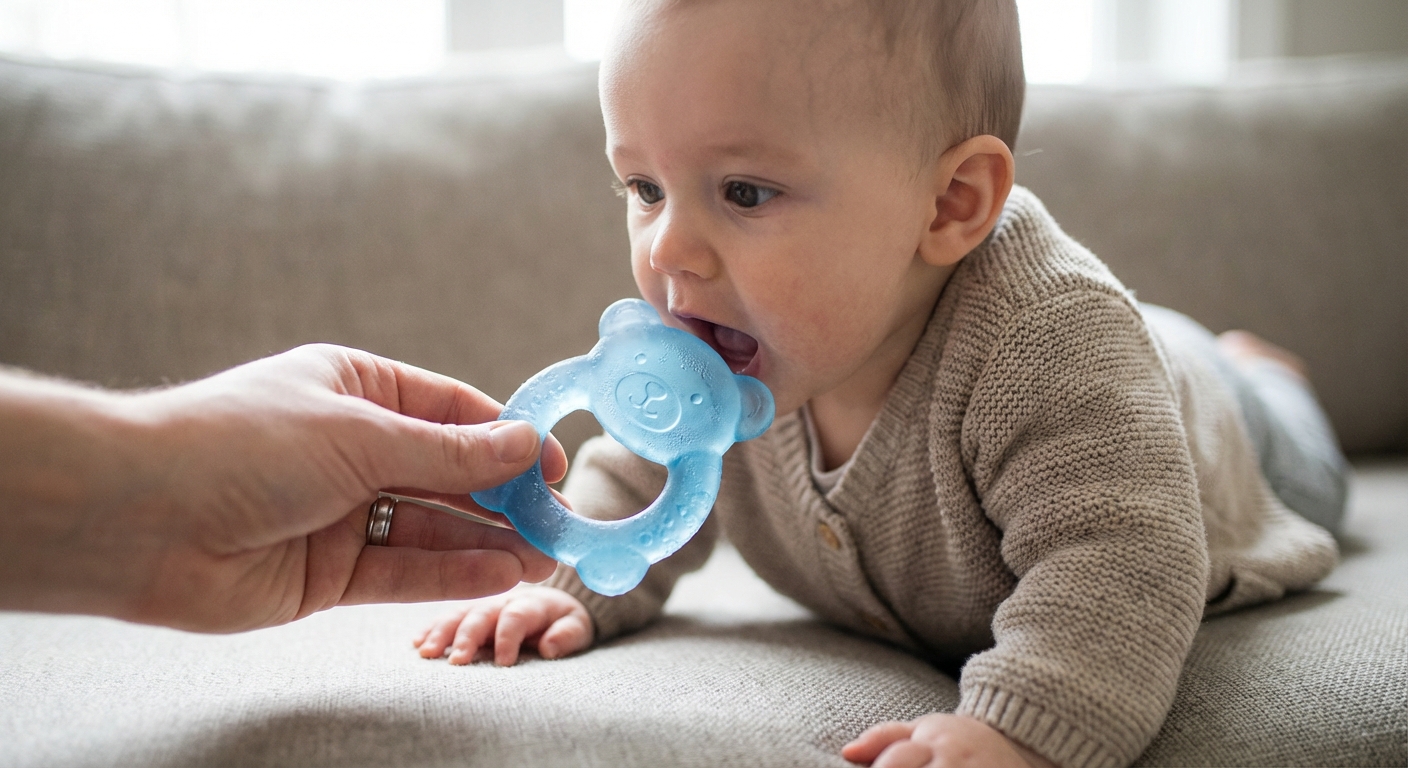
- Cold pressure: Offer a chilled (not frozen solid) teether. Cold can numb sore gums.
- Massage the gums: Wash your hands and gently rub your baby’s gums with a clean finger for 1 to 2 minutes.
- Chilled washcloth: Wet a clean washcloth, twist it, chill it, and let baby chew under supervision.
- Extra cuddles and distraction: A change of scenery, a walk, a bath, or a calm activity can take the edge off.
- Drool rash prevention: Pat drool (do not rub), change bibs often, and gently cleanse the chin and neck folds with water. Use a barrier like petroleum jelly or a zinc oxide cream on irritated skin.
If your baby needs medicine
For some babies, comfort measures are not enough, especially at night. It is reasonable to use pain medicine occasionally if your baby is uncomfortable.
- Acetaminophen (Tylenol): Can be used at the appropriate dose for age and weight.
- Ibuprofen (Motrin/Advil): An option for babies 6 months and older, using the correct dose for weight.
Always follow your pediatrician’s guidance and the dosing instructions for your baby’s current weight. If you are not sure about dosing, call your pediatrician. In triage, we answer that question all day long, and we would rather you ask than guess.
Avoid aspirin in children unless your clinician specifically instructs you to use it. Also avoid combination cold medicines for infants and young children unless your pediatrician tells you otherwise.
What to avoid
Some popular teething remedies are either ineffective or risky. Here is the no-judgment safety list I wish every tired parent had at 2 AM.
- Teething necklaces or bracelets (amber, wooden, silicone): Choking and strangulation hazards, even if “supervised.”
- Benzocaine teething gels and liquids: Not recommended for infants due to the risk of a rare but serious condition called methemoglobinemia.
- Homeopathic teething tablets or gels: Safety and dosing can be unreliable.
- Freezing teethers rock-hard: Can bruise delicate gum tissue. Chilled is better than frozen solid.
- Rubbing alcohol on gums: Unsafe, even in small amounts.
- Choking hazards for “soothing”: Hard foods like raw carrots can be dangerous. If you use food for soothing, stick with safe, age-appropriate options and close supervision.
Late teething
Late teething is usually just a normal variation. Many healthy babies do not get their first tooth until close to their first birthday.
When to check in
Consider a quick call if:
- Your baby has no teeth by around 12 to 15 months.
- You notice poor growth, significant feeding difficulty, or other developmental concerns alongside delayed teeth.
- Your baby was born premature and you want help understanding expectations using adjusted age.
- There is gum swelling, bleeding, or discoloration that looks infected or is getting worse.
Sometimes the reassurance is the whole point. And sometimes your pediatrician will recommend a pediatric dentist visit if teeth are very delayed. Most of the time, though, the teeth are simply taking the scenic route.
When to get help fast
Teething can make babies cranky, but it should not make them dangerously ill. Seek urgent care or medical advice right away if you notice:
- Fever in a baby under 3 months (always call)
- Signs of dehydration (far fewer wet diapers, very dry mouth, no tears, sunken soft spot, unusually sleepy)
- Trouble breathing, wheezing, or persistent pulling in at the ribs
- Lethargy or a baby who is hard to wake
- Persistent vomiting
- Watery diarrhea, especially if there are signs of dehydration
- Inconsolable crying that feels different than usual or lasts for hours
Quick FAQ
Can babies teethe at 3 months?
Yes, they can show early signs around 3 months, and a small number will cut a tooth early. But 3 to 4 months is also peak “everything goes in my mouth” developmental time, so chewing alone is not proof.
How do I know a tooth is about to come through?
Often you will see a swollen gum ridge, increased drooling, and a few cranky days. Then you may spot a tiny white edge on the gum line, usually on the bottom front.
Is teething supposed to hurt?
It can be uncomfortable. Some babies breeze through it, others feel it more. If your baby is inconsolable or symptoms are severe, look for other causes like illness, an ear infection, constipation, or reflux.
When should my baby first see a dentist?
A common recommendation is within 6 months of the first tooth or by age 1, whichever comes first. Your pediatrician or a pediatric dentist can guide you based on your child’s risk factors.
When do I start brushing?
As soon as the first tooth shows up, start brushing gently with a soft, baby-sized toothbrush. Ask your pediatrician or dentist about fluoride toothpaste amounts for your baby’s age and cavity risk.
The calm takeaway
Many babies start teething around 4 to 7 months, but a common range is closer to 4 to 10 months, and earlier or later can still be normal. Look for drooling, chewing, gum rubbing, and fussiness as early signs, and treat big symptoms like a true fever, vomiting, or watery diarrhea as “not teething” until proven otherwise.
While you wait for that first tooth, lean on safe comfort: chilled teethers, gum massage, drool rash prevention, and medication when truly needed and dosed correctly. You are not overreacting. You are reading your baby, and that is the whole job.