When Do Babies Start Walking?

Sarah Mitchell
Sarah Mitchell is a Registered Pediatric Nurse and a mother of three who has spent over a decade helping families navigate the beautiful, chaotic early years of childhood. She combines evidence-based medical knowledge with real-world parenting experience to offer practical, compassionate advice. At Awesome Parent, Sarah's mission is to help exhausted parents find solutions, trust their instincts, and finally get some sleep.
If you are staring at your baby and thinking, “Any day now… right?” you are in very good company. Walking is one of those milestones that can feel like it is taking forever, and then suddenly your little one is toddling straight toward the dog’s water bowl like they have a mission.
As a pediatric nurse and a mom of three, I will tell you the same thing I told families in clinic: there is a wide range of normal. Your baby is not “behind” just because your friend’s cousin’s baby walked at 10 months. Let’s talk about what’s typical, the building blocks that usually come first, and how to safely cheer them on without turning your living room into a baby boot camp.
Quick note: This is general information, not individual medical advice. If your child was born early, ask your pediatrician about using adjusted age when thinking about milestones.
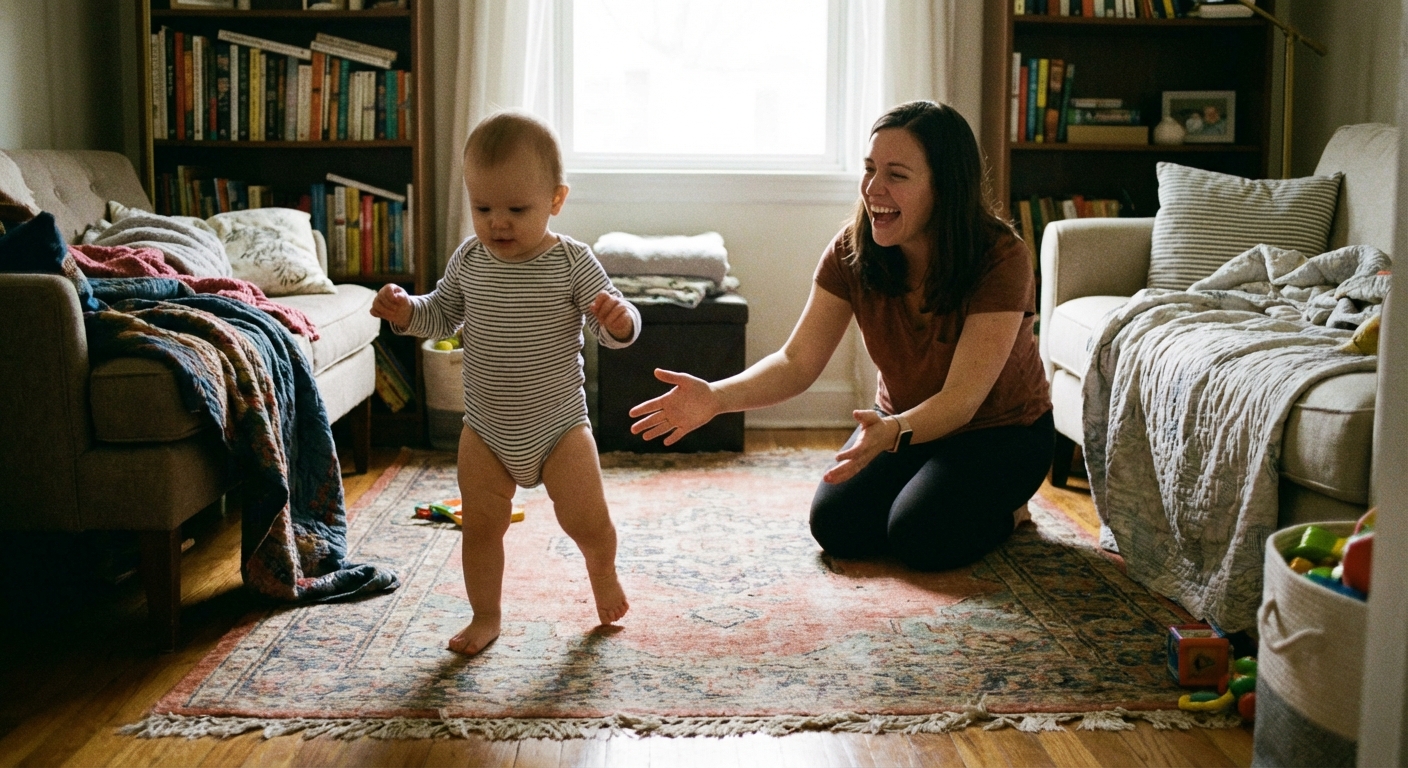
When do babies start walking?
Many babies take their first independent steps sometime between 9 and 18 months. A lot land in the 12 to 15 month range, but earlier and later can still be completely typical. (If you like official references, the AAP and CDC milestone resources reflect a broad range of normal development.)
Walking is not only a “leg strength” milestone. It is a whole-body skill that depends on:
- Core strength (hello, tiny ab muscles doing big work)
- Balance and coordination
- Foot and ankle stability
- Confidence and willingness to try, fall, and try again
- Opportunities to practice (safely, on the floor)
Some babies are cautious perfectionists who cruise forever before letting go. Others are little daredevils who take steps the second they can stand. Both can be normal.
Pre-walking milestones
Independent walking usually shows up after a series of smaller skills. Here are the “stepping stones” I look for.
1) Strong floor skills
Before walking, babies need lots of time moving on the ground, shifting weight, reaching, pivoting, and learning where their body is in space.
- Rolling both ways
- Sitting independently
- Getting in and out of sitting
- Crawling or another consistent way of moving (scooting, army crawling, rolling)
Quick reassurance: Not every baby crawls in the classic hands-and-knees style. Some skip it. What matters most is that they are finding ways to move, explore, and build strength.
2) Pulling to stand
This is when your baby grabs the couch, coffee table, or your pant leg and hoists themselves up. It often shows up in the later part of the first year, but timing varies.
Signs this skill is getting solid:
- They pull up without you helping
- They can stand holding on with one hand for a few seconds
- They start “bouncing” and testing their legs
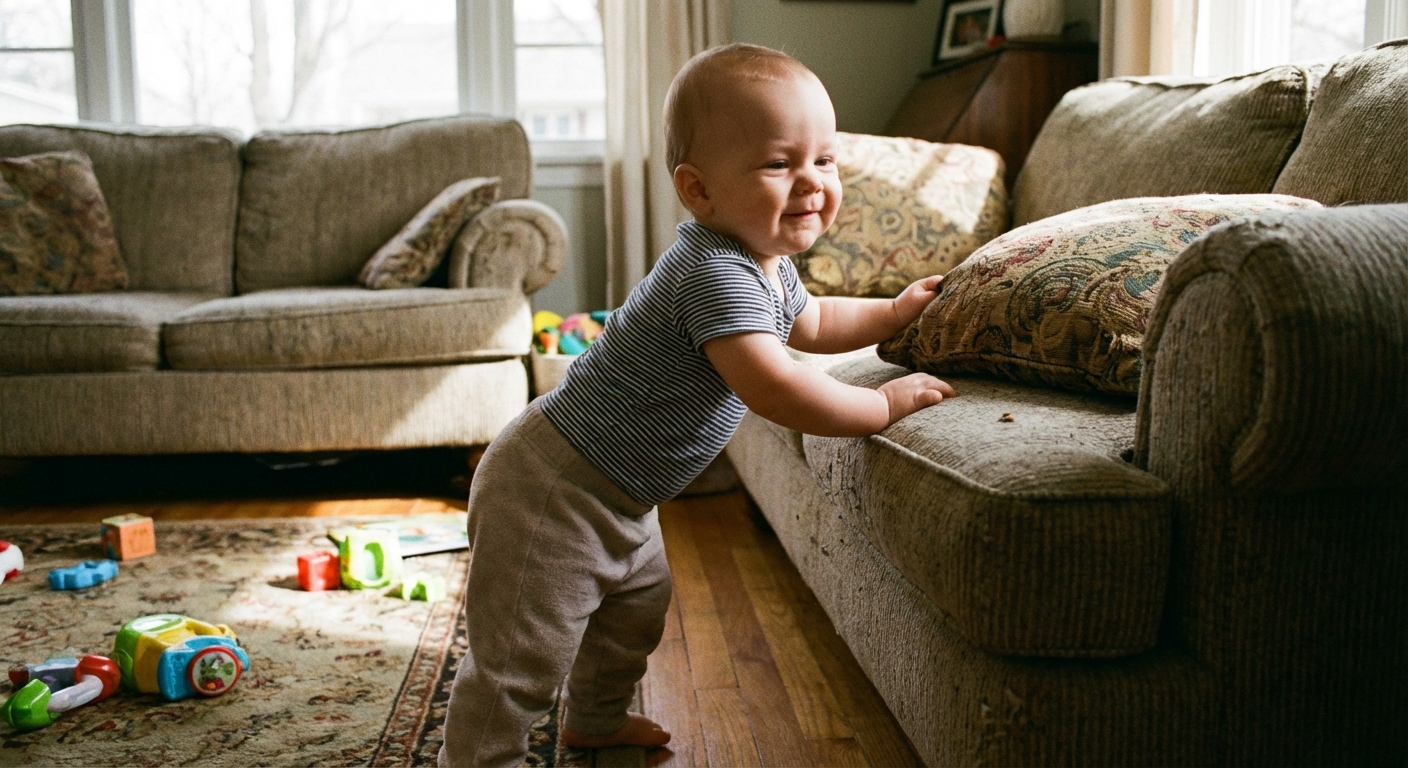
3) Cruising
Cruising is sideways walking while holding onto furniture. It is a very common sign that independent steps may be getting closer.
What cruising practice does for your baby:
- Builds hip and trunk stability
- Teaches weight shifting from one leg to the other
- Improves balance while the hands are still “on standby” for safety
4) Standing briefly without support
At first it may be a split second. Then two seconds. Then they realize they are standing and panic-squat like they just remembered gravity exists.
That momentary independent stand is a big readiness clue because walking is basically “controlled falling” from one foot to the other.
5) Controlled lowering and safe falling
One underappreciated milestone: being able to bend knees and sit down without toppling like a tiny tree. Being able to lower with some control can make it easier for some babies to feel confident practicing standing and stepping.
Ready for first steps?
If your baby is doing several of these, first steps may be close:
- Cruising confidently along furniture
- Pushing up to stand and staying there
- Letting go briefly and balancing
- Taking steps while holding one hand (not hanging off you like a gymnast)
- Walking behind a push toy with good control (not rushing forward and tumbling)
- Squatting to pick up a toy and standing back up while holding on
Temperament matters too. Some babies have all the physical skills but are simply more cautious. If your baby is a “watch first, do later” kid, that is not a problem. It is a personality.
What early walking looks like: New walkers often have a wide stance, arms up for balance, and wobbly turns. That is normal and usually improves with practice.
Encourage walking safely
You do not need fancy gear. The best “walking program” is usually: safe space, bare feet, and lots of chances to practice.
More floor time
More time on the floor means more chances to pull up, cruise, squat, and experiment. If your baby spends long stretches in containers (swings, bouncers, jumpers, seats), they get fewer reps.
A realistic goal for many families is: use containers when you need them, but keep them short and purposeful.
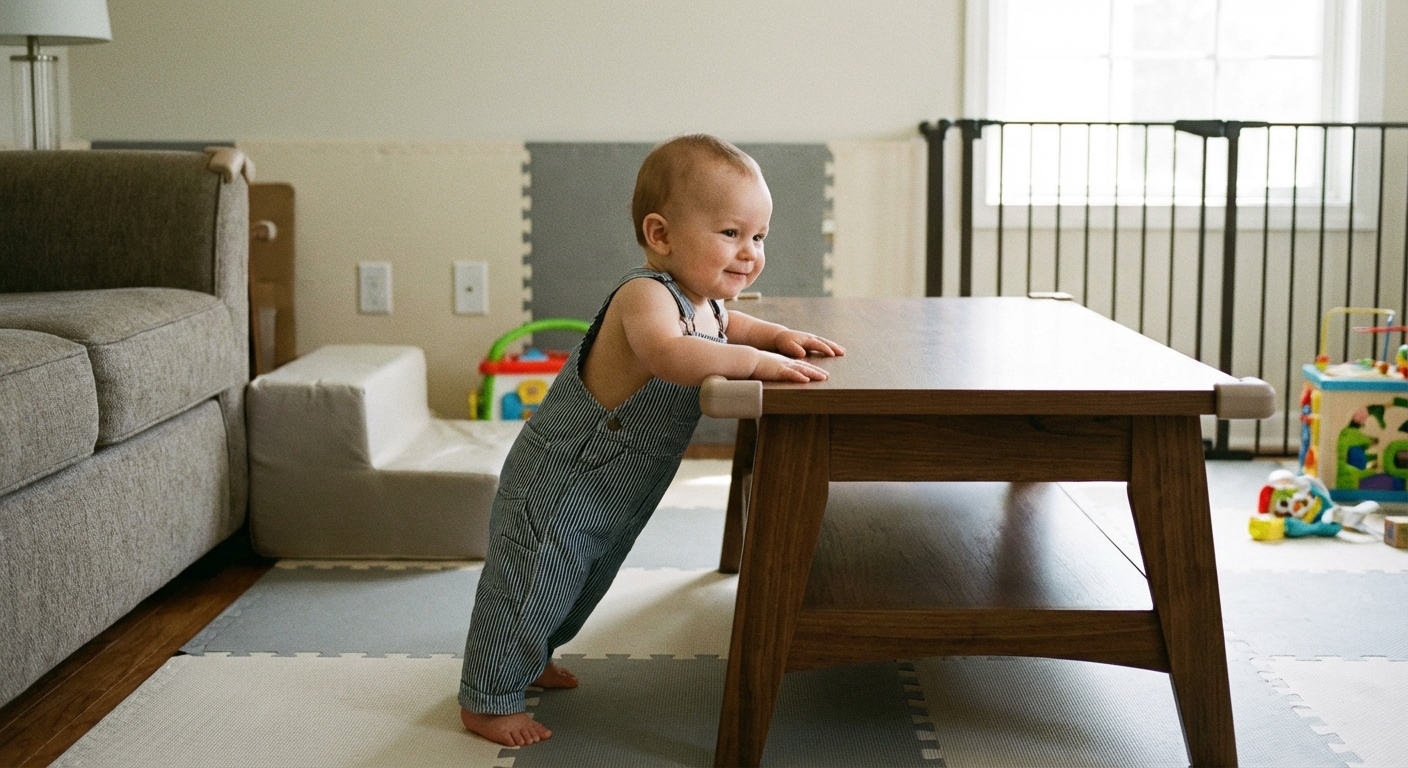
A simple cruising path
Try arranging sturdy furniture so your baby can move from one support to the next:
- Couch to ottoman to sturdy chair
- Coffee table to couch corner
- Low, stable furniture spaced a baby-arm’s length apart
Safety tip: Make sure anything your baby uses to pull up is heavy and stable. Coffee tables that slide easily are notorious for surprise wipeouts.
Toys that encourage standing
A few favorites:
- A sturdy activity table they can stand at
- Blocks or toys placed on the couch to encourage reaching while standing
- A ball rolled a short distance to encourage a step or two while holding on
Push toys, used well
A weighted push walker can be helpful if your baby can already stand holding on and cruise. Look for one that is stable and does not roll too fast.
- Start on carpet or a rug for traction
- Stay close and keep it slow
- Stop if your baby is leaning far forward or the toy is getting away from them
- Always supervise and keep push toys away from stairs
Skip: sit-in baby walkers that let your child zoom around. Many pediatric groups discourage them because they are linked with injuries and they do not teach the same balance skills as standing and cruising.
Barefoot is best (usually)
Bare feet help babies feel the floor and use their toes for balance. If you need something on their feet, choose soft-soled, flexible shoes that bend easily.
About grippy socks: They can be fine, but they can still slip on some floors. If your baby is sliding, barefoot is often the safest indoor option.
Offer a finger, not a lift
If you are helping your baby walk, try offering one or two fingers instead of holding both hands up high. When we hold babies by both hands, we often pull them into an unnatural posture and do more of the balancing for them.
Think: steadying, not suspending.
Common worries
“My baby is not crawling. Will they walk?”
Many babies do crawl, and it can be a great strength-builder. But some skip traditional crawling and still walk normally. What matters is that your baby is progressing in movement skills and using both sides of the body.
“My baby stands on tiptoes. Is that bad?”
Occasional toe standing is common while babies experiment with balance. If your baby is always on tiptoes, seems stiff, or cannot get heels down, bring it up with your pediatrician for a closer look.
“Should I buy special walking shoes?”
In most cases, no. Indoors, bare feet are great. Outdoors, use flexible shoes that protect the feet without acting like tiny ski boots.
“My baby keeps falling. Am I supposed to stop them?”
Falling is part of learning. Your job is to make the environment safer, not to prevent every tumble. Think padded corners, clear pathways, and close supervision. If your baby is falling from standing height onto a safe surface, that is typically expected practice.
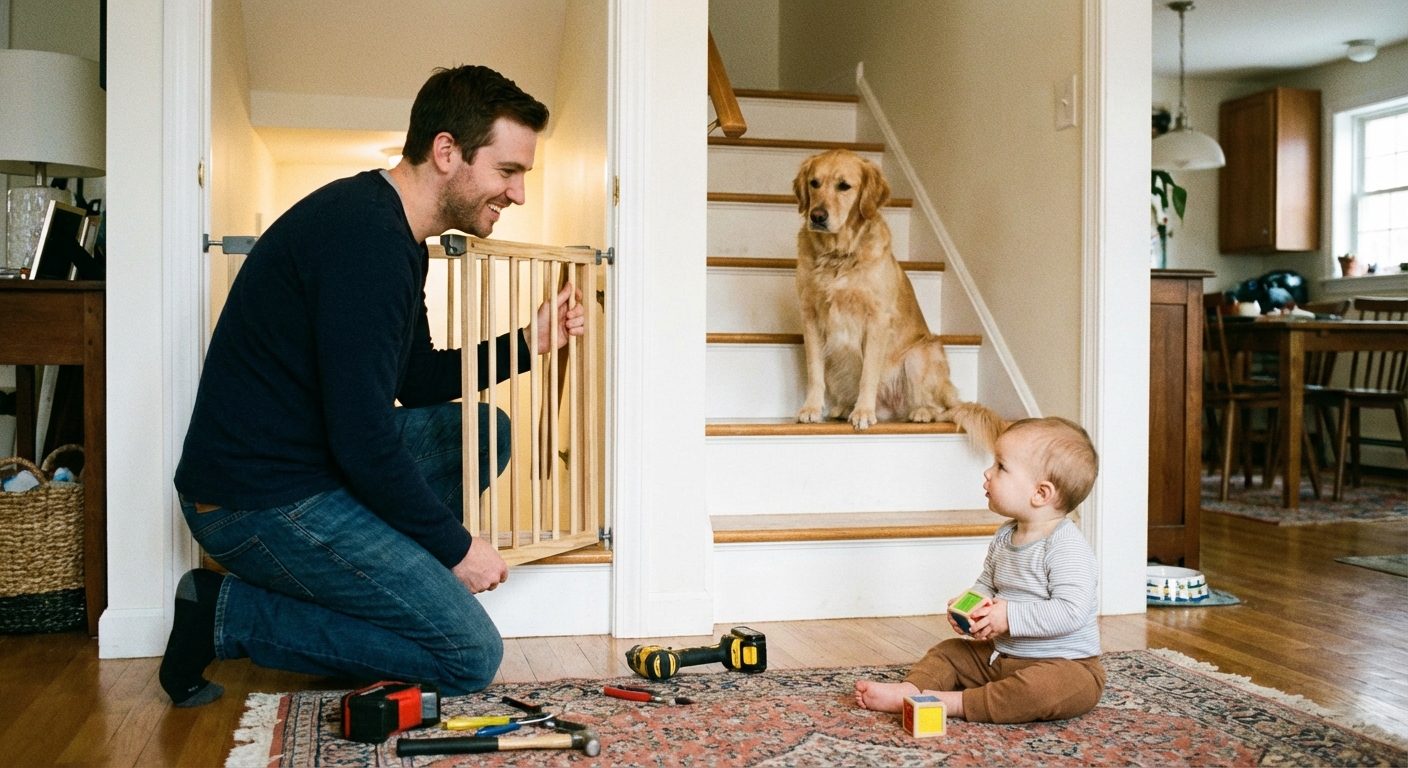
Babyproofing for walkers
The moment your baby takes steps, their world expands dramatically. A quick walking-ready checklist:
- Anchor dressers, bookshelves, and TVs
- Move cords, unstable lamps, and tablecloths they can yank
- Use gates near stairs
- Lock up medications, cleaning products, and small choking hazards
- Check plants for toxicity
- Cover sharp corners if your space has a lot of hard edges
When to call the pediatrician
Development is a spectrum, but there are times when I recommend checking in sooner rather than later. Contact your pediatrician if:
- Your baby is not pulling to stand by around 12 months (or later if your child was born early and you are using adjusted age)
- Your child is not walking independently by around 18 months (again, consider adjusted age for preterm infants)
- You notice loss of skills they previously had
- Your baby seems to use one side much more than the other (for example, dragging one leg consistently)
- Your baby seems very stiff, very floppy, or you are worried about muscle tone
- Toe walking is constant or your child cannot get heels down
Red flags at any age:
- Your baby refuses to bear weight through the legs at all
- Persistent, significant asymmetry in how they move
- Crying or seeming in pain with standing or stepping
If you are unsure, it is always okay to ask. In clinic, I would much rather reassure you early than have you worry alone at 2 AM.
A quick reality check
Walking is not a race, and it is not a reflection of your parenting. It is a skill your baby builds step by step, wobble by wobble.
If you want a simple, low-stress plan, here it is:
- Prioritize floor time daily
- Encourage cruising with safe furniture setups
- Go barefoot indoors when you can
- Skip fast-moving gear that does the work for them
- Celebrate effort, not speed
And when those first real steps happen, you are allowed to cry, cheer, and immediately realize you now live with a tiny, determined escape artist. Welcome to the next stage.
FAQ
Can babies walk at 9 months?
Yes, some do. It is less common, but still within a normal range if other development looks typical and your pediatrician has no concerns.
Is it normal to walk at 18 months?
It can be. Many pediatricians consider independent walking up to about 18 months within the range of typical development, but it is a good time to check in if walking has not started (and to consider adjusted age if your child was born early).
Does a jumper help babies walk sooner?
It can strengthen legs, but it does not teach the balance and coordination needed for walking. Too much time in jumpers can also reduce floor practice time. If you use one, keep it brief and balanced with lots of floor play.
What is cruising?
Cruising is when a baby walks sideways while holding onto furniture for support. It is a common step between pulling to stand and walking independently.