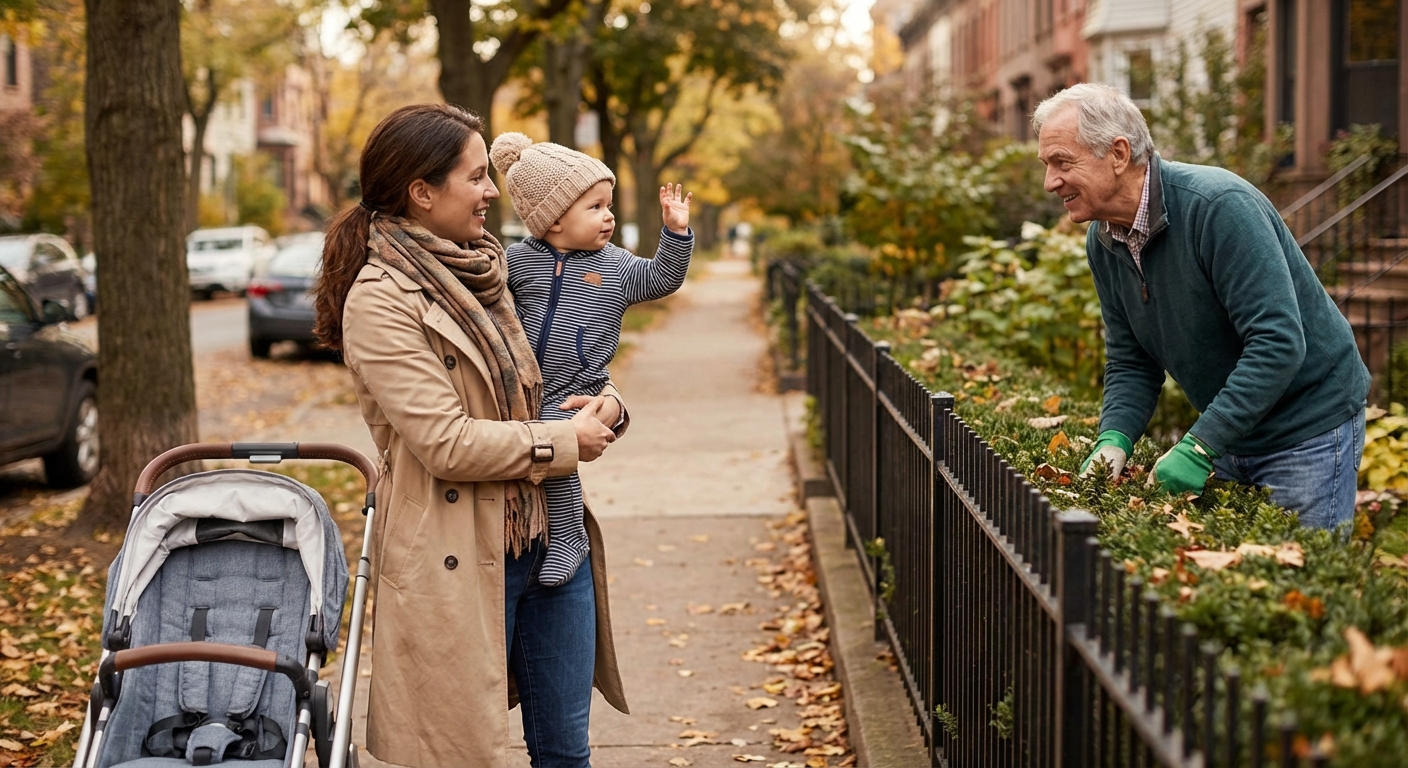
When Do Babies Start Waving Bye-Bye?

Sarah Mitchell
Sarah Mitchell is a Registered Pediatric Nurse and a mother of three who has spent over a decade helping families navigate the beautiful, chaotic early years of childhood. She combines evidence-based medical knowledge with real-world parenting experience to offer practical, compassionate advice. At Awesome Parent, Sarah's mission is to help exhausted parents find solutions, trust their instincts, and finally get some sleep.
Waving bye-bye is one of those tiny milestones that can make you feel like you just witnessed a magic trick. One minute your baby is staring at your hand like it’s a strange sea creature, and the next they’re flapping their little fingers at Grandma on FaceTime.
Many babies start waving sometime between 9 and 12 months, though it can show up a little earlier or later. To be crystal clear, a later wave doesn’t automatically mean something’s wrong. Babies are famously inconsistent. They’ll learn a new skill, perform it once for an audience of exactly zero people, then refuse to do it again for two weeks.
One quick note: If your baby was born premature, timing is often better judged by corrected age (your pediatrician can help you calculate it). That can shift when milestones show up, and that’s completely expected.
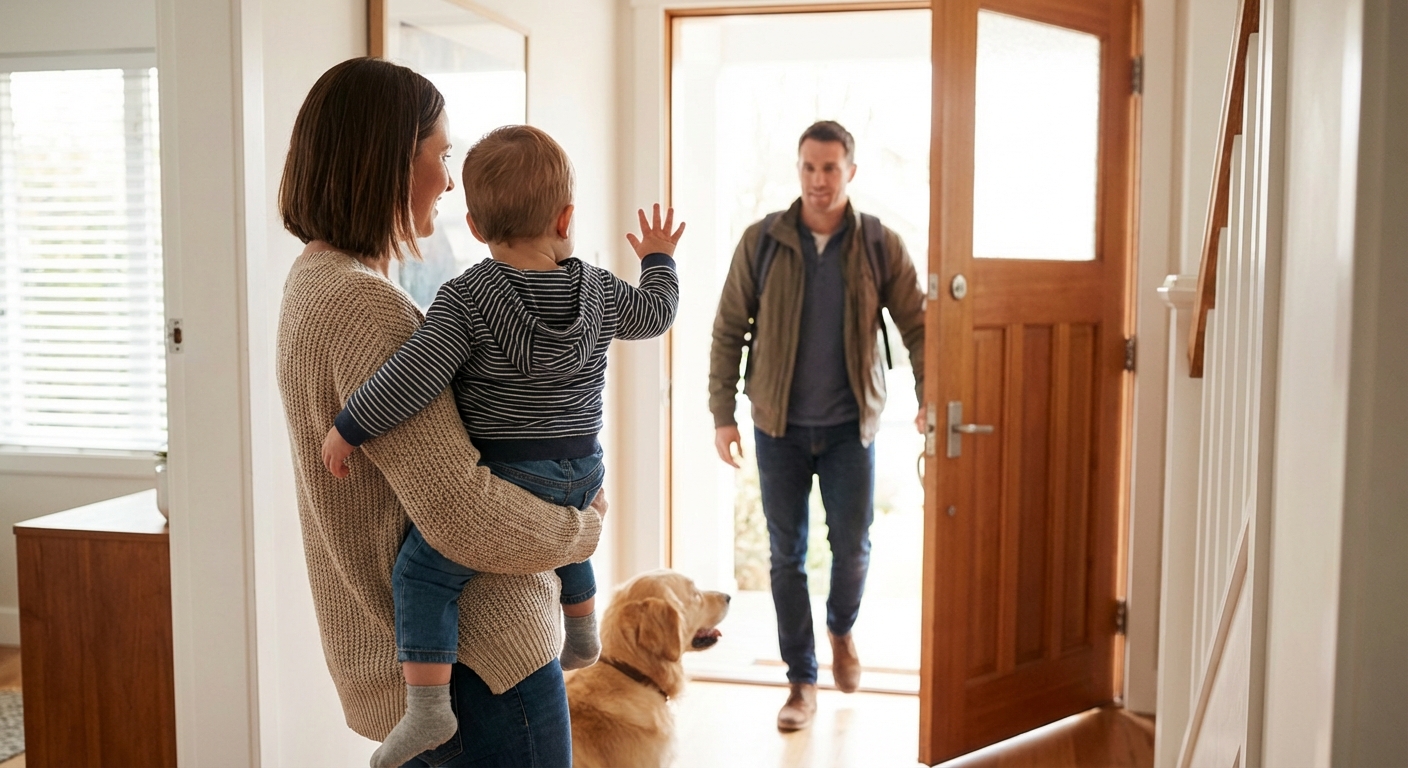
When do babies start waving?
Waving is a social communication skill that also requires some fine motor control and coordination. Because it sits right at the intersection of “I can move my hand like that” and “I understand what this gesture means,” it often appears toward the end of the first year.
Typical age range
- 7 to 9 months: Some babies may begin to imitate big gestures (including an early wave), especially if they see it multiple times a day.
- 9 to 12 months: A very common window for waving bye-bye with at least some consistency.
- 12 to 15 months: Some toddlers start waving later, especially as their social interest, mobility, and imitation skills ramp up.
You might see a “wave” that looks more like a full-arm flap at first. That counts. The more refined wrist and finger wave often shows up over the next few months.
Sources: CDC Milestone Checklists (12 months includes waving); HealthyChildren.org (American Academy of Pediatrics) guidance on developmental milestones and communication gestures.
Why waving matters
As a pediatric nurse, I like waving not because it’s cute (it is), but because it shows multiple developmental skills clicking together.
What it can tell us
- Social engagement: Your baby notices people coming and going and cares enough to respond.
- Imitation: Babies learn a ton by copying. Waving is often one of the first clear “I can imitate you” moments.
- Early communication: Gestures are a big deal in language development. Long before many babies can say “bye,” they can communicate it.
- Understanding routines: Waving often appears when babies start understanding predictable events like greetings and goodbyes.
In other words, waving isn’t just a hand movement. It’s communication with a purpose.
Signs they’re getting close
If your baby isn’t waving yet, look for these warm-up skills. They often show up first:
- Watching your face closely when you talk
- Smiling or vocalizing when someone leaves or arrives
- Reaching toward people (especially caregivers)
- Imitating other actions like clapping, banging toys, or blowing raspberries
- Using other gestures, like raising arms to be picked up
Babies don’t all learn gestures in the same order. Some clap first, some wave first, some point first.
A quick word about pointing: Pointing (usually closer to 12 to 18 months) is a powerful communication skill because it shows your baby can direct your attention. If your baby isn’t waving but is pointing, showing you toys, or bringing you things to share, that’s meaningful communication too.
How to encourage waving
You don’t need flashcards. You need repetition, routines, and a little playful patience.
1) Make it part of daily life
Pick a few moments each day where waving naturally fits:
- When a parent leaves for work
- At daycare drop-off or pick-up
- When you leave a room (yes, even for a quick bathroom trip)
- At the end of a video call
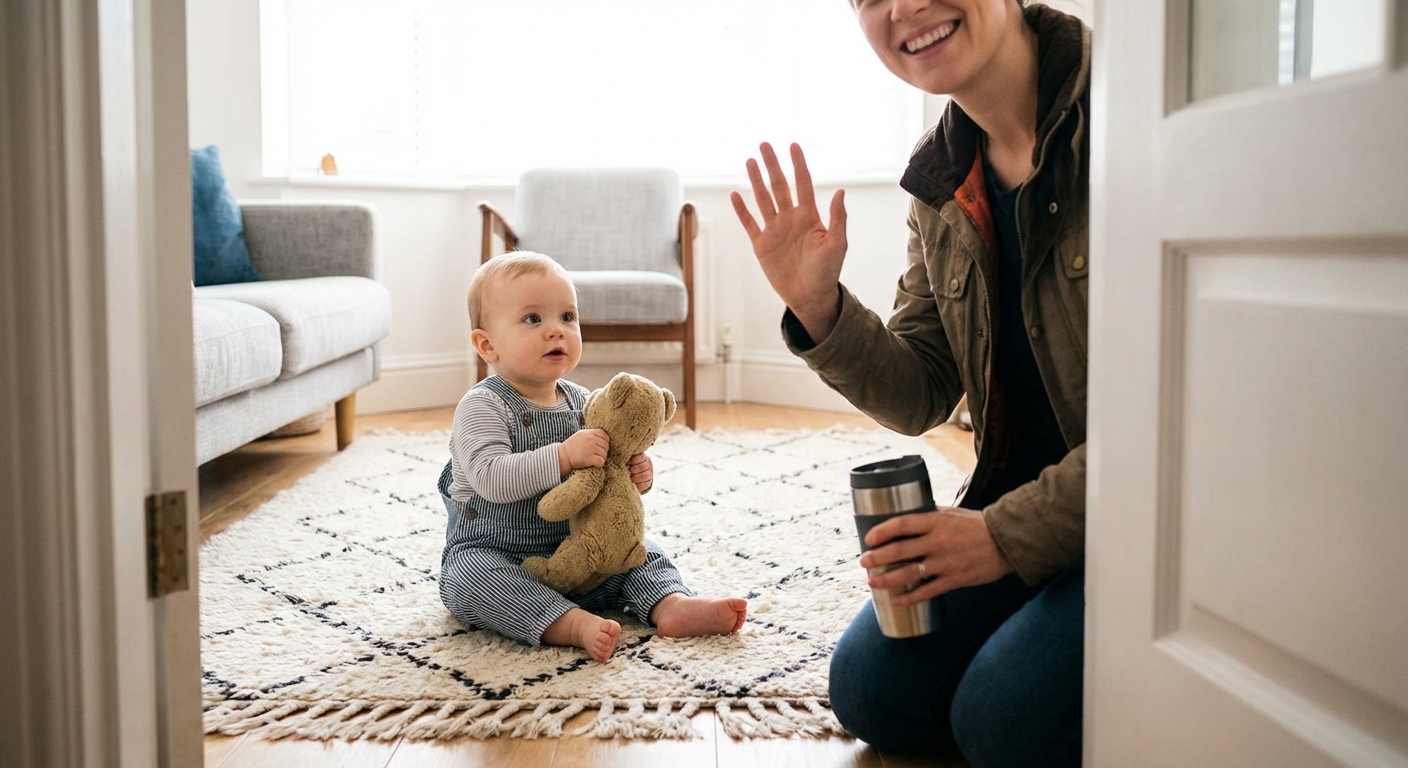
Keep it simple: smile, say “Bye-bye!”, and wave slowly.
2) Go slow and make it obvious
Babies learn best when they can clearly see what you’re doing. Hold your hand up near your face and do a gentle, slow wave.
3) Help their hand, then let them try
If your baby’s okay with it, you can lightly guide their hand in a wave while saying “bye-bye.” Do it for one or two seconds, then stop and see if they try independently. If they pull away or get annoyed, skip this step. There’s no prize for forced waving.
4) Celebrate, don’t pressure
A calm “You waved! Bye-bye!” and a smile is perfect. Too much excitement can sometimes make babies freeze up.
5) Use play to practice
- Stuffed animal goodbyes: Have a teddy bear “leave” and wave.
- Mirror waving: Stand together in front of a mirror and wave to yourselves.
- Peekaboo plus bye-bye: Add “bye-bye!” when you finish the game.
What not to do
- Don’t force it: If your baby resists hand-over-hand help, let it go and keep modeling.
- Don’t compare: Another baby waving at 8 months doesn’t mean yours is behind.
- Don’t rely on screens: Video calls can be great for practicing, but babies learn gestures best from real, face-to-face interaction.
Common questions
Do they need to understand “bye-bye” to wave?
Not at first. Early waving is often imitation. Understanding grows with repetition and routine. Over time, many babies start to wave at the right moments, like when someone reaches for their keys or steps toward the door.
What if they wave at random times?
Normal. They’re practicing. Babies often try a new gesture like they try a new sound, on loop, everywhere, with zero context.
They only wave when they feel like it. Is that okay?
Also normal. A skill can be there and still not show up on demand, especially when your baby is tired, hungry, overstimulated, or deeply focused on trying to eat a shoe.
If they aren’t waving yet
First, take a breath. Waving is one data point, and babies don’t all hit milestones on the same day. That said, it’s always worth looking at the bigger communication picture.
Consider a pediatric check-in if:
- Your baby is not waving and not using other gestures (like pointing, showing, reaching up) by around 12 months
- Your baby seems to have limited eye contact or rarely responds to smiles and social interaction
- Your baby doesn’t respond to their name most of the time by around 12 months (keeping in mind hearing, attention, and the environment matter)
- You notice a loss of skills they previously had (for example, they used to babble or gesture and then stopped)
- You have concerns about hearing, such as not reacting to loud sounds or not turning toward voices
Often, the next step is a simple conversation, plus a hearing screen if there are any concerns. If needed, your pediatrician may suggest an evaluation through Early Intervention (in the US). Early support is meant to give you answers and tools. It doesn’t have to label your child.
If you’re worried, trust that instinct. You don’t need to “wait and see” alone at 2 AM with a search engine.
Quick snapshot
- Many babies wave bye-bye: 9 to 12 months
- Some wave earlier: 7 to 9 months
- Still common: up to about 15 months, especially if other social and gesture skills are developing
- Worth a check-in: few or no gestures (including waving) by about 12 months, or any loss of skills
Bottom line
Waving bye-bye often shows up around 9 to 12 months because it requires both coordination and social understanding. The best way to encourage it is simple: model it often, keep it playful, and weave it into everyday routines.
And if your baby isn’t waving yet, try not to spiral. Look at the whole communication picture and bring your questions to your pediatrician. You deserve clear, calm guidance, and your baby deserves support that meets them exactly where they are.