When Do Kids Start Losing Baby Teeth?

Sarah Mitchell
Sarah Mitchell is a Registered Pediatric Nurse and a mother of three who has spent over a decade helping families navigate the beautiful, chaotic early years of childhood. She combines evidence-based medical knowledge with real-world parenting experience to offer practical, compassionate advice. At Awesome Parent, Sarah's mission is to help exhausted parents find solutions, trust their instincts, and finally get some sleep.
If your child just discovered a wiggly tooth and is now testing it with their tongue every 4 seconds, welcome. Losing baby teeth is one of those big-kid milestones that feels exciting and slightly alarming, especially the first time you see a tiny gap and think, Is that supposed to look like that?
Most kids start losing baby teeth around age 6 and finish around ages 11 to 13. There is a wide range of normal, and the “right” timeline depends on genetics, how early their teeth came in, and sometimes simple luck.
Quick note: This article is general education and not medical advice. If something seems off, your dentist or pediatrician can help you sort it out quickly.

Quick answer: what age do kids lose baby teeth?
- Most common start: 6 to 7 years old
- Most common finish: 11 to 13 years old
- Possible early start: 4 to 5 years old (uncommon; if there was no obvious reason like a bump or a cavity, check in with a dentist)
- Possible late start: 7 to 8 years old, especially if they teethed later as a baby
A useful rule of thumb: baby teeth often fall out in roughly the same order they came in. Not perfectly. The canine and baby molar phase can switch around depending on upper vs. lower jaw, and that is still well within normal.
Baby teeth loss timeline (ages 6–12)
The chart below shows the typical age range when each group of baby teeth loosens and falls out, plus when the permanent tooth usually shows up.
Some kids lose a tooth and the adult one pops through within weeks. Others take months. Both can be normal.
Age chart: which baby teeth fall out when
| Baby tooth (primary tooth) | Where it is | Typical age it falls out | Permanent tooth usually appears |
|---|---|---|---|
| Central incisors | Front top and bottom | 6–7 years | 6–8 years |
| Lateral incisors | Next to front teeth | 7–8 years | 7–9 years |
| First molars | Back chewing teeth (not the very back) | 9–11 years | 9–12 years |
| Canines (cuspids) | Pointy teeth near the corners | 9–12 years | 9–12 years |
| Second molars | Very back baby molars | 10–12 years | 10–13 years |
Important note: The “6-year molars” (first permanent molars) are a special case. They usually come in around age 6 behind the last baby molar, so they do not replace a baby tooth. Parents often miss them because no tooth falls out first.
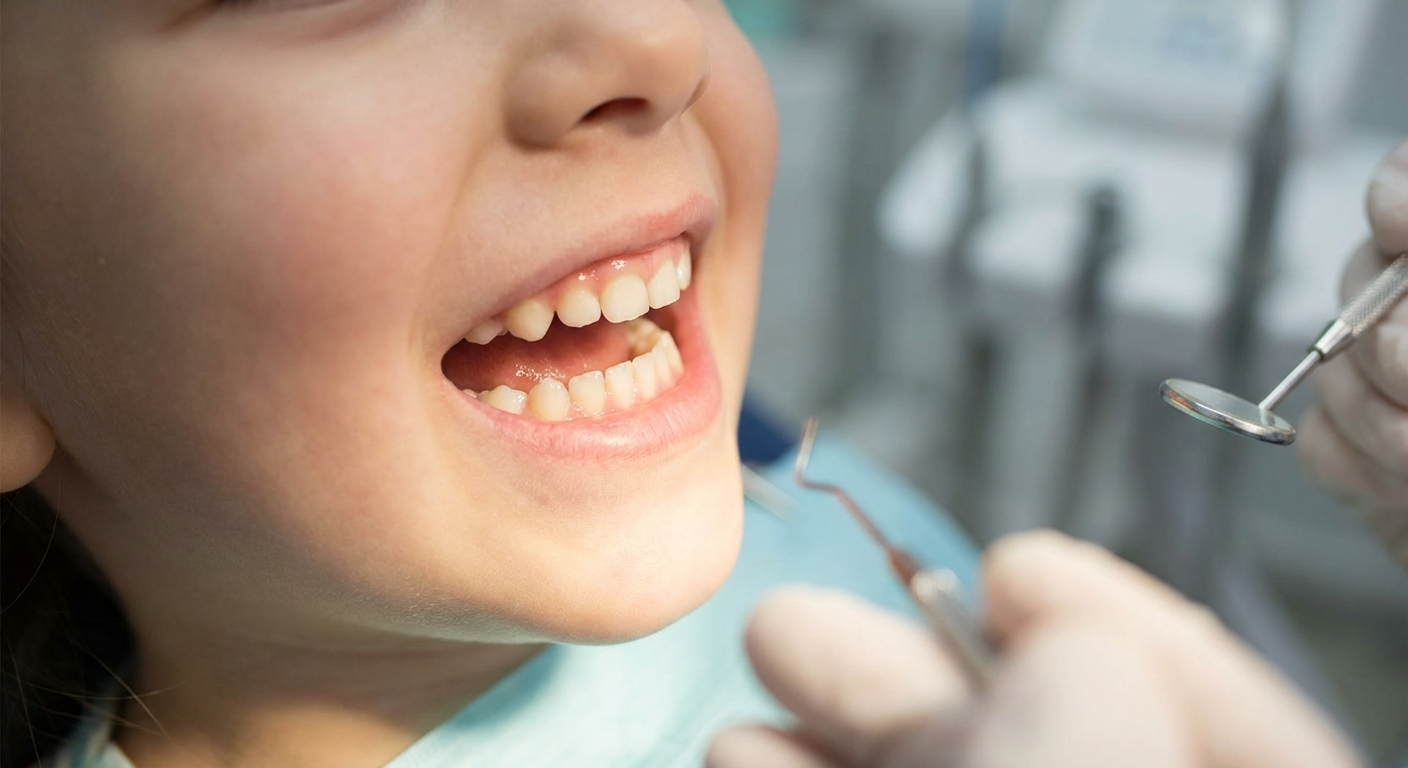
Usual order baby teeth fall out
While kids love to surprise us, the classic order looks like this:
- Bottom front teeth (lower central incisors)
- Top front teeth (upper central incisors)
- Teeth next to the front teeth (lateral incisors)
- First molars and canines (often overlaps; can vary by upper vs. lower jaw)
- Second molars (the last baby teeth to go for many kids)
It is also common for kids to lose teeth in pairs, especially the matching tooth on the other side within a few weeks or months.
What’s normal vs. concerning
Normal (even if it looks dramatic)
- Loose tooth for weeks to months before it falls out
- Bleeding when it finally comes out (usually mild and stops quickly). A little blood mixed with saliva can look like a lot.
- Metallic taste or slightly “blood-y” breath right after it comes out
- A “shark teeth” situation where the permanent tooth erupts behind a baby tooth, most often on the bottom front
- Adult tooth shows up in weeks to several months after the baby tooth falls out (sometimes longer, depending on the tooth and your child’s age)
- One tooth falls out earlier than its neighbor
Call your dentist (or pediatrician) if you notice
- A baby tooth falls out before age 5 without an obvious reason (like a bonk to the mouth). Early loss is often from trauma or cavities, and it is worth getting assessed if it is unexplained.
- Significant injury to the tooth or jaw (tooth pushed in, displaced, or very loose after a fall)
- Swelling, pus, fever, or worsening pain around a loose tooth
- Bad breath that keeps getting worse or a foul taste along with swelling or pain (more concerning for infection than the brief “blood taste” after a tooth comes out)
- Bleeding that does not stop after 10–15 minutes of firm pressure with gauze
- A permanent tooth has been visible for months but the baby tooth is not loosening at all
- The gap stays empty for 6+ months (especially if your child is older and the matching tooth already came in on the other side). Sometimes it is fine, sometimes it is worth an X-ray check.
- Adult teeth coming in very crowded or your child cannot bite comfortably
- Concerns about missing teeth (a dentist can use an X-ray to confirm whether a permanent tooth is developing)
If you are unsure, a quick dental check is usually simple and reassuring. And yes, bringing the tooth in a tissue like a tiny trophy is completely normal.
What to do when a tooth is loose
Loose teeth are a “do less” parenting moment. Your goal is to keep it clean, keep your child comfortable, and let nature do most of the work.
Do
- Keep brushing twice a day. Use a soft toothbrush and be gentle around the wiggly tooth.
- Floss if you can, especially where food gets trapped near a loose molar.
- Offer simple comfort for tenderness: cold water, a chilled washcloth to chew, or soft foods for a day.
- Let your child wiggle it with clean hands or their tongue. That is usually enough.
- Crunchy help (if it is very loose): biting into an apple or crunching toast can sometimes help a ready-to-go tooth come out naturally.
Don’t
- Do not yank a tooth that is only slightly loose. That can cause unnecessary pain and bleeding.
- Do not twist and tug just because it moves. Gentle wiggling is fine. Forcing it is not.
- Do not tie it to a door. I know, I know. It is a classic. It is also a good way to create fear and gum trauma.
- Avoid very sticky foods (caramels, taffy) if the tooth is hanging on by a thread. That is how you end up with a surprise tooth in a snack.
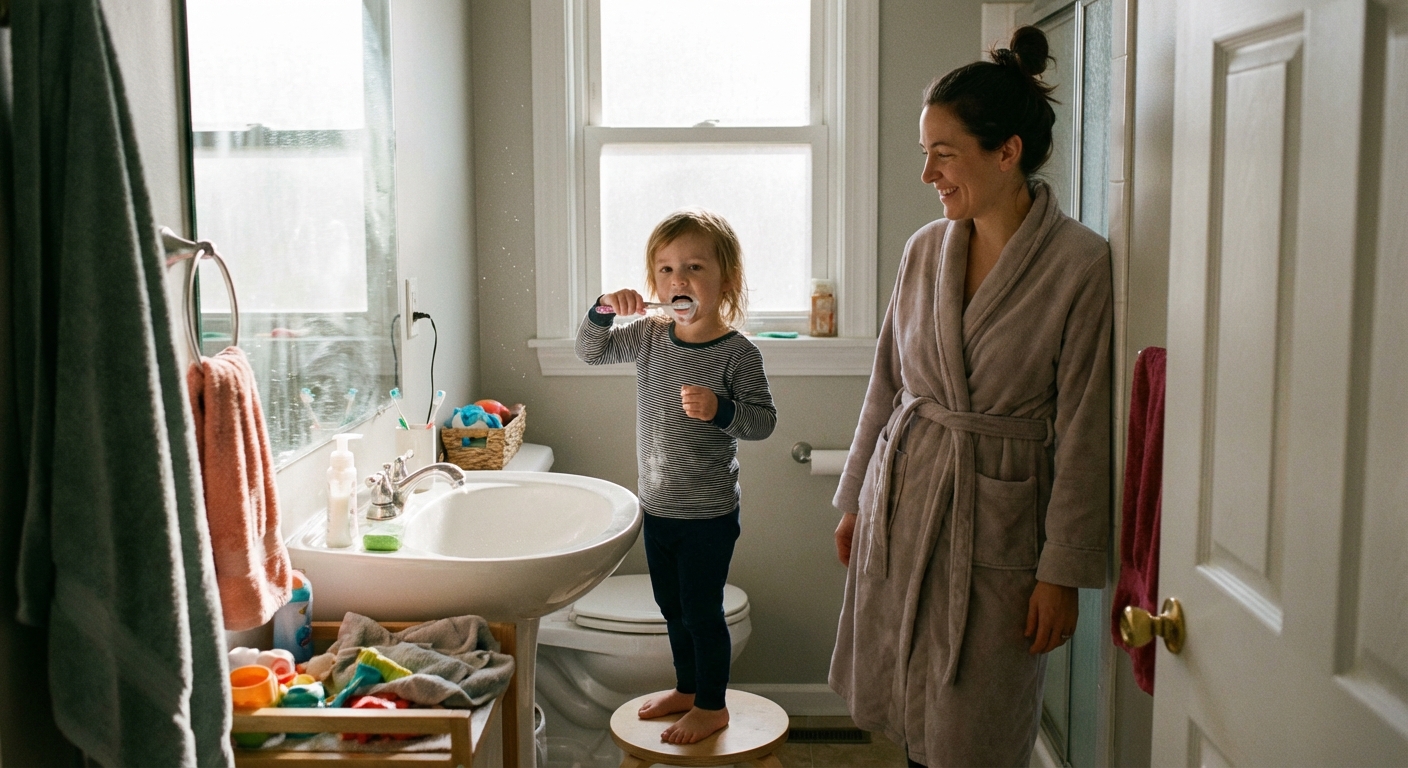
Pull it or let it fall out?
Most of the time, let it fall out naturally. It is okay to help only when it is clearly ready.
It might be okay to gently help if
- The tooth is very loose and basically dangling
- Your child is comfortable and asking for help
- It is interfering with eating or brushing
See a dentist instead of pulling at home if
- The tooth is loose because of trauma (fall, sports injury)
- Your child has significant pain or gum swelling
- The tooth looks cracked, pushed in, or displaced
- Your child has a bleeding disorder or takes medications that affect bleeding (ask your clinician first)
If you do help at home: wash hands, use clean gauze for grip, and apply gentle pressure. If it does not come out easily, stop. “Not ready” is the tooth’s love language.
Care for the gap
The empty space can look surprisingly big. That is normal because adult teeth are larger and the jaw is growing.
- Stop bleeding: Have your child bite on clean gauze or a folded tissue for 10 minutes.
- Keep it clean: Brush gently that night. Rinsing with plain water after meals helps if food collects there.
- Skip poking it: Curious tongues happen, but try to discourage constant touching the first day.
- Comfort: If sore, cold foods (yogurt, smoothies) help. For pain medicine, follow your pediatrician’s guidance.
Call the dentist if the gum looks increasingly swollen after 24 to 48 hours, there is foul odor, or your child cannot eat or sleep due to pain.
When the adult tooth comes in
Typically, the adult tooth appears within a few weeks to several months after the baby tooth falls out.
Sometimes it can take longer, especially for certain teeth or if the tooth has to travel a bit farther. If the gap is still empty around 6 months (or you are seeing asymmetry compared with the other side), ask your dentist whether an exam or X-ray makes sense.
Two common patterns:
- Falls out, then grows in: A gap for a little while, then the adult tooth erupts.
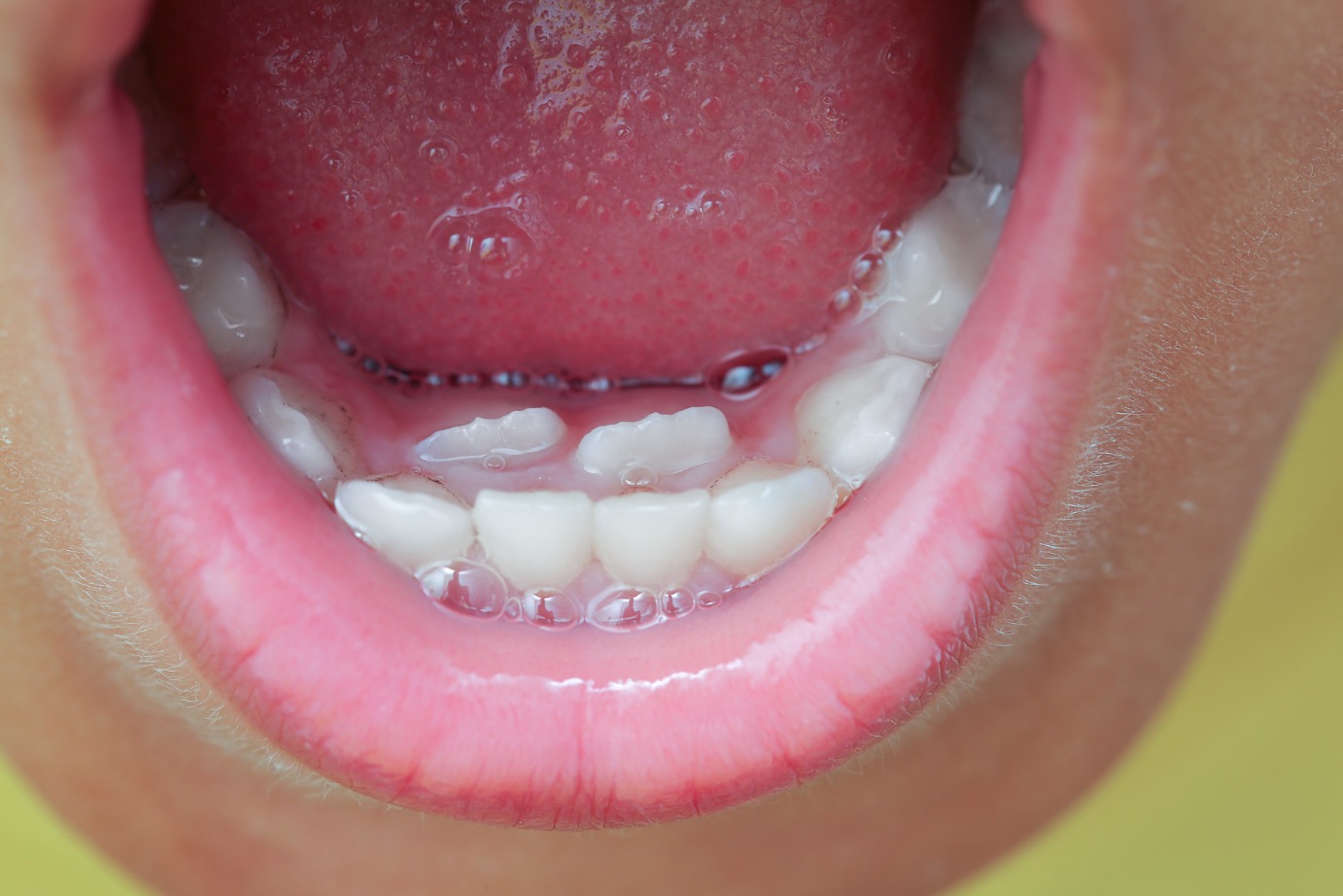
- Shark teeth: The adult tooth erupts behind the baby tooth before the baby tooth falls out, most commonly the lower front teeth.
What to do about shark teeth
In many cases, the baby tooth loosens and falls out on its own as the adult tooth keeps moving forward with normal chewing.
Check with a dentist if the baby tooth is still firmly in place after several weeks, if the adult tooth is coming in very far behind, or if crowding is severe. Sometimes the dentist recommends removing the baby tooth to make space.
Early or late tooth loss
There are plenty of normal reasons for variation:
- Genetics: If you or your partner were early or late tooth-losers, your child may follow that pattern.
- Early teething as a baby: Often (not always) correlates with earlier tooth loss.
- Spacing and jaw growth: Kids with more space sometimes have smoother transitions.
- Dental health history: Cavities, dental work, or early loss of a tooth can change the timing and spacing.
If a child loses multiple teeth very early without injury or decay, it is worth checking in with the dentist and pediatrician just to be safe.
Premature tooth loss and spacing
If a baby tooth is lost early due to a cavity or injury, the neighboring teeth can drift into that space while you are waiting for the adult tooth. This matters most with baby molars.
Ask your dentist if a space maintainer is needed. It is not always necessary, but when it is, it can prevent bigger crowding issues later.
Common parent questions
How many baby teeth do kids lose?
Kids lose 20 baby teeth. These are replaced by permanent incisors, canines, and premolars. Permanent molars come in behind and do not replace baby teeth.
Is it normal for loose teeth to hurt?
Mild soreness is normal, especially with chewing. Sharp pain, swelling, or fever is not typical and should be checked.
Can my child go to school with a very loose tooth?
Yes. Send a small container if the tooth is hanging on by a thread and your child wants to save it. Expect a “Look what happened at lunch!” surprise.
What if my child swallowed the tooth?
It happens all the time, especially at dinner. It is not dangerous in almost all cases. If your child choked, has ongoing coughing, trouble breathing, or you suspect it went into the airway, seek urgent care immediately.
When to see the dentist
- Regular checkups: Keep the usual schedule your dentist recommends, often every 6 months.
- Go sooner if: you see prolonged pain, swelling, injury, teeth erupting in an unusual place, or concerns about crowding and bite.
- Orthodontic check: Many dentists suggest an orthodontic evaluation around age 7, especially if crowding or bite issues are noticeable.
Calm takeaway
For most kids, tooth loss starts around 6, and the front teeth usually lead the way. The process is messy, exciting, and occasionally involves a tooth wrapped in a napkin that you do not find until laundry day.
If you remember just two things, make them these: do not force a tooth that is not ready, and call the dentist if there is trauma, swelling, fever, or persistent bleeding. Otherwise, you are watching a normal, healthy step toward that big-kid smile.