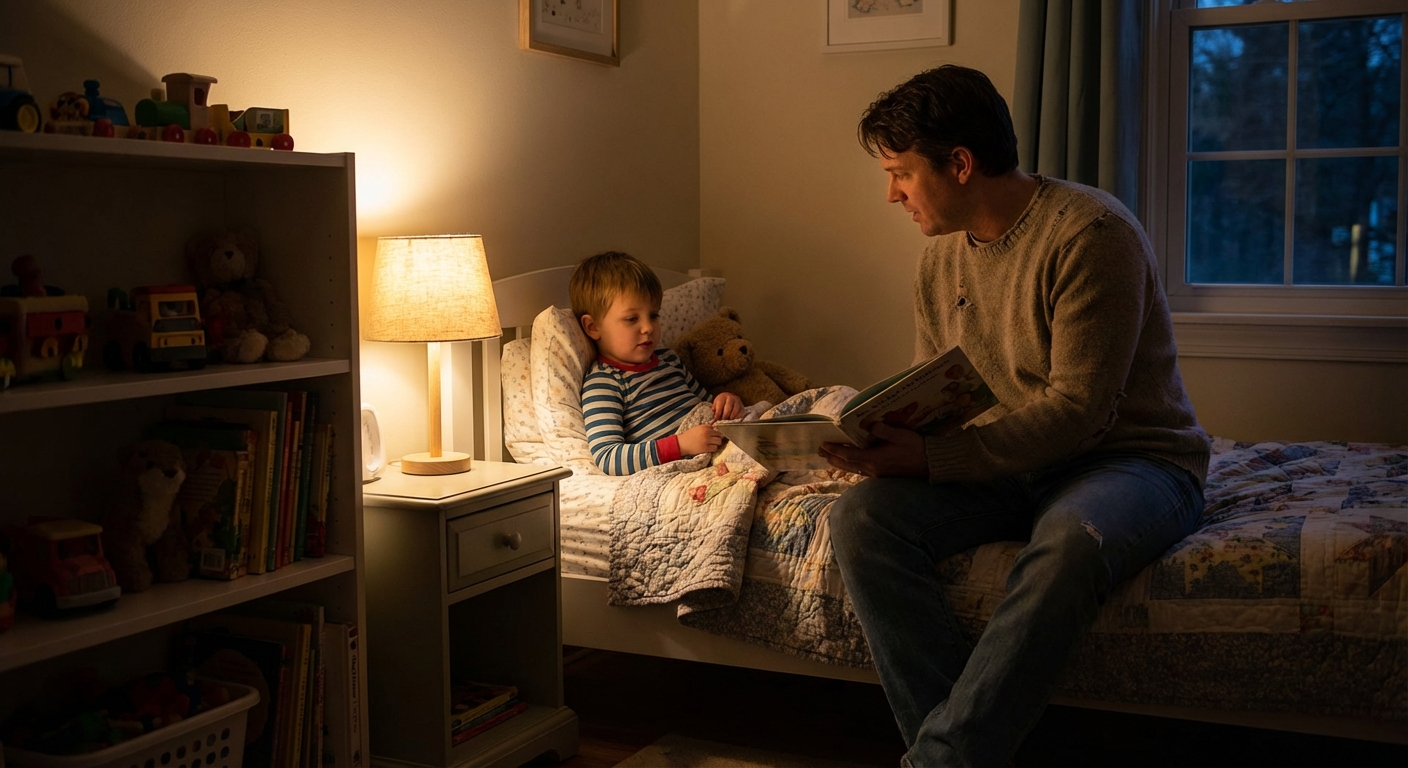
When Do Toddlers Stop Napping? Signs the Afternoon Nap Is Over

Sarah Mitchell
Sarah Mitchell is a Registered Pediatric Nurse and a mother of three who has spent over a decade helping families navigate the beautiful, chaotic early years of childhood. She combines evidence-based medical knowledge with real-world parenting experience to offer practical, compassionate advice. At Awesome Parent, Sarah's mission is to help exhausted parents find solutions, trust their instincts, and finally get some sleep.
If your toddler is suddenly treating the afternoon nap like a personal insult, you're not alone. In the clinic and in my own house, I've seen this exact phase play out: they stop napping, everyone gets a little cranky, and bedtime turns into a late-night negotiation summit.
The good news: dropping the last nap is a normal developmental step, and with a few adjustments you can protect nighttime sleep and keep afternoons from turning into a meltdown marathon.

When do toddlers stop napping?
Many children drop their last regular daytime nap between 3 and 4 years old, though some are done shortly after turning 3 and others keep a solid nap until closer to kindergarten. By age 5, most kids have stopped napping regularly. All of that can be completely normal.
What matters most isn't the birthday on the calendar. It's whether your child is getting enough total sleep in a 24-hour period and whether the nap is helping or hurting nighttime sleep.
A quick reality check on sleep needs
For preschoolers (roughly ages 3 to 5), many do best with about 10 to 13 hours of total sleep per day (including naps). Younger toddlers often need more, but the nap-dropping transition typically happens in the preschool range. If the nap is fading, that sleep usually needs to shift to nighttime.
Signs your toddler is ready
One off day doesn't mean the nap is over. Look for a pattern that lasts at least 1 to 2 weeks.
- They consistently fight the nap: not just wiggling, but taking 45 to 60+ minutes to fall asleep, leaving too little time to actually rest.
- Nap pushes bedtime too late: they nap, then suddenly they're wide awake at 9 or 10 PM and bedtime becomes a battle.
- They aren't tired at nap time: they happily chat, sing, or play in bed and don't seem sleepy.
- Short or late naps wreck the afternoon: a 20-minute nap at 4 PM can create a tiny ball of energy at bedtime.
- They fall asleep quickly at bedtime on no-nap days: when the nap is skipped, bedtime is smoother and night sleep improves.
- They can handle a full day without falling apart: you might still see some late-afternoon grumpiness, but it's manageable.
How to test “no nap” without going off a cliff: Pick a low-demand day and still offer the nap or rest time as usual. If they clearly aren't sleeping after about 45 to 60 minutes, end it and move bedtime earlier that night. Try this a couple times over 1 to 2 weeks rather than pushing through multiple super-overtired days in a row.
Common exception: Some preschoolers “drop” naps at home but still nap at daycare or preschool because the routine is consistent and the room is quiet. That's normal too. You may just need a later bedtime on school days and an earlier one on non-nap days.
Signs the nap isn't over
Sometimes a toddler fights the nap because they're overtired, out of routine, or going through a phase. Consider holding onto the nap (or offering an earlier one) if you're seeing:
- Frequent late-afternoon meltdowns that improve on nap days
- They fall asleep fast when you offer the nap earlier (meaning they were actually tired)
- Night wakings increase when the nap disappears (overtired kids often sleep worse, not better)
- They fall asleep in the car anytime after 2 PM (that's a sneaky nap request)
If this is your situation, you might not need to drop the nap. You may need to tweak timing, shorten the nap, or build a calmer wind-down routine.
Transition to quiet time
Quiet time is the bridge between “my toddler needs a nap” and “my preschooler doesn't nap but I still need 30 minutes to be a person.” It also supports regulation. Even when they don't sleep, they still benefit from rest and downtime.
Step 1: Keep the time slot
Choose a consistent window, usually early afternoon, and protect it like you would a nap. Aim for 30 to 60 minutes to start.
Step 2: Keep rules simple
- Stay in your room (or a designated safe space)
- Use a quiet voice
- Choose from quiet activities only
Step 3: Set up the space safely
Before you expect them to stay in their room, do a quick safety sweep: anchor furniture, cover outlets, keep cords out of reach, and remove anything you wouldn't want them exploring solo. If you use a monitor, this is a great time for it.
Step 4: Offer boring (in a good way) options
- Picture books
- A small basket of puzzles
- Stuffed animals for pretend play
- Simple audio stories or calm music (low volume)
Skip anything that winds them up, like loud toys, screens, or brand-new exciting activities. The goal is rest, not entertainment.
Step 5: Try a visual timer
A simple timer can prevent the repeated question loop: “Is quiet time done yet?” If you use one, practice when they're calm, not mid-standoff.

Bedtime tweaks after naps
This is what saves bedtime. When kids drop the nap, they usually need an earlier bedtime to avoid becoming overtired.
A helpful starting point
- If your child used to nap 1 to 2 hours, bedtime often needs to move earlier by 30 to 90 minutes.
- If naps are inconsistent, consider a two-bedtime approach: earlier bedtime on no-nap days, later bedtime on nap days.
Watch the wake window
Many preschoolers can handle roughly 10.5 to 12.5 hours awake between morning wake-up and bedtime when they're no longer napping, and some can stretch closer to 13. If your child is melting down by 5 PM, that wake window may be too long for them and bedtime should move earlier.
Early bedtime can be a reset
Parents often worry an early bedtime means an early wake-up. Sometimes it does for a few days, but overtired kids are more likely to wake early. A well-timed bedtime often improves mornings once the body catches up.
Sample schedule (no nap)
If you want a concrete starting point for a newly non-napping 3 to 4 year old, here's a simple template you can adjust:
- 6:30 to 7:30 AM: wake
- 12:30 to 1:30 PM: quiet time (30 to 60 minutes)
- 6:30 to 7:30 PM: bedtime (earlier if your child falls apart in the late afternoon)
If naps still happen some days, keep quiet time in the same window and slide bedtime later on those nap days.
If they nap sometimes
The last nap often fades slowly. It's common to see a child nap a few days a week for months.
- Cap the nap to protect bedtime, often to 30 to 60 minutes (especially if naps start late).
- Set a latest nap end time. Many families choose something like 3:00 PM or 3:30 PM, depending on bedtime.
- Keep bedtime flexible based on whether they slept.
How to cap a nap in real life: open curtains, turn on a light, use a calm voice, and go straight into a snack and a little movement. Some kids are tough to wake. If capping causes big tears every time, it can be a sign the nap is still doing important work and bedtime needs to move earlier on no-cap days.
If your child naps at daycare and bedtime becomes a nightly battle, ask if they can offer a shorter rest, earlier wake-up, or a quiet activity option. Some programs can, some can't. If they require lying on a mat, ask what's allowed (books, a stuffed animal, or a simple “quiet basket”). If they can't change the routine, you can still protect night sleep with a later bedtime on school days and an earlier one on weekends.
Is it ever too early?
Some children stop napping regularly shortly after 3, and that can be normal. But if a younger toddler stops napping before age 3, it's worth checking whether something else is getting in the way, like:
- A too-late nap time
- Too much stimulation before nap
- Not enough total nighttime sleep
- Sleep association changes (for example, you used to rock them to sleep and now you're trying to stop)
If you're unsure, try adjusting the schedule for 1 to 2 weeks before declaring naps officially “done.”
Common problems
“My child falls apart at 5 PM.”
That's often overtiredness. Try an earlier bedtime, and consider adding a short quiet time plus a calm snack and low-key play in the late afternoon. Outdoor time can help too, as long as it's not too stimulating right before bedtime.
“They fell asleep at 6 PM. Now what?”
If they conk out very early, treat it like bedtime and keep the evening calm. Waking them up can backfire. Over the next few days, aim for a more realistic earlier bedtime so they don't crash unintentionally.
“They skip the nap, then wake up all night.”
Overtiredness can increase night wakings for some kids. Move bedtime earlier, keep the bedtime routine predictable, and make sure they're getting enough daytime calories and fluids (without loading up right before bed).
When to talk to your pediatrician
Most nap transitions are normal, even when they're messy. Check in with your child's clinician if you notice:
- Persistent snoring, gasping, or pauses in breathing during sleep
- Extreme daytime sleepiness (falling asleep during play most days)
- Behavior changes that feel out of proportion or sudden
- Sleep struggles that are severely impacting your family's functioning for weeks
Sometimes there's an underlying issue like sleep-disordered breathing, low iron (especially if you see restless sleep or leg discomfort), anxiety, or a schedule mismatch that can be addressed.
The bottom line
Most kids stop napping sometime between 3 and 5 years, with many transitioning closer to 3 to 4 and most done by 5. If your child is consistently fighting the nap and bedtime improves when the nap is skipped, the last nap may be on its way out. Replace it with quiet time, protect an earlier bedtime, and give the transition a few weeks to settle.
And if you're reading this while hiding in the hallway during “quiet time,” just know I see you. This phase can be exhausting, but it's also a sign your little one is growing up, one stubborn non-nap at a time.