Whooping Cough in Babies: Symptoms, Vaccine, and When to Get Emergency Care

Sarah Mitchell
Sarah Mitchell is a Registered Pediatric Nurse and a mother of three who has spent over a decade helping families navigate the beautiful, chaotic early years of childhood. She combines evidence-based medical knowledge with real-world parenting experience to offer practical, compassionate advice. At Awesome Parent, Sarah's mission is to help exhausted parents find solutions, trust their instincts, and finally get some sleep.
If you are reading this at 2 or 3 AM with a baby who cannot stop coughing, I want you to hear this first: you are not overreacting. Whooping cough (also called pertussis) is one of those illnesses that can start off looking like a plain little cold, then turn scary fast, especially in babies under 12 months.
Quick note before we start: this is general information, not a diagnosis. If you are worried about your baby’s breathing, trust that instinct and get help.
This article will walk you through what pertussis can look like in infants, the classic stages (and why the “whoop” is not always there), how the DTaP vaccine schedule helps protect your baby, and the specific breathing signs that mean it is time to go to the ER.

What is whooping cough?
Whooping cough is a highly contagious respiratory infection caused by the bacteria Bordetella pertussis. It spreads through droplets in the air when someone coughs or sneezes, and it can move quickly through households, daycares, and schools.
In older kids and adults, it can be miserable but often manageable at home. In babies, it is different. Infants have smaller airways, less breathing reserve, and they are more likely to have dangerous pauses in breathing.
Why it is dangerous for babies
Pertussis is most dangerous for young infants, especially those who are under 6 months and not fully vaccinated yet. The biggest risks are not just the coughing itself, but what the coughing does to a baby’s breathing and feeding. Some infants can even present with apnea (pauses in breathing) and very little cough at first.
What makes infants higher risk
- Apnea (pauses in breathing) can happen, sometimes with very little warning.
- Low oxygen during coughing fits can cause blue or gray color around the lips or face.
- Dehydration can happen quickly when a baby cannot keep feeds down.
- Pneumonia is a common complication.
- Exhaustion from repeated coughing spells can make babies too tired to eat well.
If you have a young infant and anything about their breathing looks off, do not “wait it out.” Call your pediatrician’s office (including the after-hours line) or seek urgent evaluation.
The stages of pertussis
Pertussis often follows a pattern in three stages. The tricky part is that the early stage can look mild, which is why people sometimes spread it before anyone realizes what it is.
Stage 1: Catarrhal
This is the first 1 to 2 weeks for many children, sometimes longer. Symptoms can include:
- Runny nose
- Sneezing
- Mild cough that gradually worsens
- Low-grade fever or no fever
- Watery eyes
In babies, this stage can still be subtle, but you might notice a worsening cough, feeding changes, or an “off” breathing pattern.
Stage 2: Paroxysmal
This is the stage most people think of. It often lasts 1 to 6 weeks, and sometimes longer. The cough comes in intense bursts called paroxysms.
During a coughing fit, you might see:
- Rapid coughs in a row, like baby cannot catch a breath
- Red or watery eyes from pressure
- Gagging, choking, or vomiting after coughing
- Thick mucus
- Exhaustion afterward
About the “whoop” sound: the classic “whoop” is a noisy inhale after a coughing burst. Older children may clearly whoop. Many infants do not whoop. Instead, they may have:
- Silent struggling to breathe
- A high-pitched squeak
- Gasping
- Apnea (a pause) rather than a whoop

Stage 3: Convalescent
Symptoms gradually improve over weeks. The cough can linger for weeks to months, and it is common for coughing fits to flare up again with the next cold. This is part of why pertussis is sometimes called the “100-day cough.”
Parents often tell me, “They seem better, then they catch a tiny sniffle and the cough comes roaring back.” That is a real pattern with pertussis recovery.
Symptoms in babies
If your baby has a cough and you are wondering if it could be whooping cough, these are the clues that raise concern:
- Coughing fits that come in bursts and are hard to stop
- Gagging or choking during coughing
- Vomiting after coughing
- Often little or no fever
- Struggling to catch a breath after a coughing spell
- Turning red, purple, or blue or gray during coughing
- Pauses in breathing
- Baby is too tired to feed well
Also: if there has been a pertussis case at daycare, school, or in your household, take even a mild cough seriously and call your pediatrician.
When to go to the ER
I am going to be very clear here, because this is the part that matters most when you are scared and sleep-deprived.
Call 911 or go now if your baby has
- Blue or gray color around the lips, face, or gums
- Pauses in breathing (apnea), even if baby “starts again”
- Struggling to breathe: ribs pulling in, nostrils flaring, grunting, or head bobbing
- Baby is limp, unusually hard to wake, or not acting like themselves
- Persistent vomiting with coughing or signs of dehydration (very dry mouth, no tears, fewer wet diapers)
- Baby is under 3 months with a significant cough or any breathing concern
- Pale plus concerning symptoms like unusual sleepiness, weak cry, or poor feeding
If you are debating whether it is “bad enough,” treat that as your answer. You are allowed to get help.
Call your pediatrician today if
- Coughing fits are increasing in frequency or intensity
- Known exposure to pertussis
- Post-cough vomiting more than once
- Feeding is clearly worse because of coughing
- Any infant cough that sounds unusual to you, especially if there is no clear cold explanation
How pertussis is diagnosed
Clinicians diagnose pertussis based on symptoms plus testing. Testing may include:
- Nasal swab PCR for pertussis
- Sometimes culture or additional respiratory panels
Because pertussis can be dangerous in infants and spreads easily, your child’s clinician may start treatment based on symptoms and exposure risk while waiting for results.
Treatment
Pertussis is treated with antibiotics, most commonly a macrolide antibiotic (for example, azithromycin), depending on age and medical situation. Antibiotics can:
- Help reduce spread to others
- Help most when started early
Important: antibiotics do not always make the cough stop quickly once your child is deep into the coughing-fit stage. Pertussis cough often lingers because the airways stay irritated.
Hospital care
Babies may need hospital monitoring if they have apnea, low oxygen, dehydration, pneumonia, or frequent severe coughing fits. In the hospital, care might include oxygen, suctioning, IV fluids, and close observation.
Home care (only when your pediatrician says it is safe)
- Keep baby upright during and after feeds
- Offer smaller, more frequent feeds to reduce vomiting and fatigue
- Use a cool-mist humidifier if it seems soothing
- Keep the air smoke-free and fragrance-free
- Follow your clinician’s advice about isolating and when your child can return to daycare
Do not use over-the-counter cough medicines in babies unless your pediatrician specifically instructs you to. They are not recommended for infants and can be harmful.
DTaP schedule
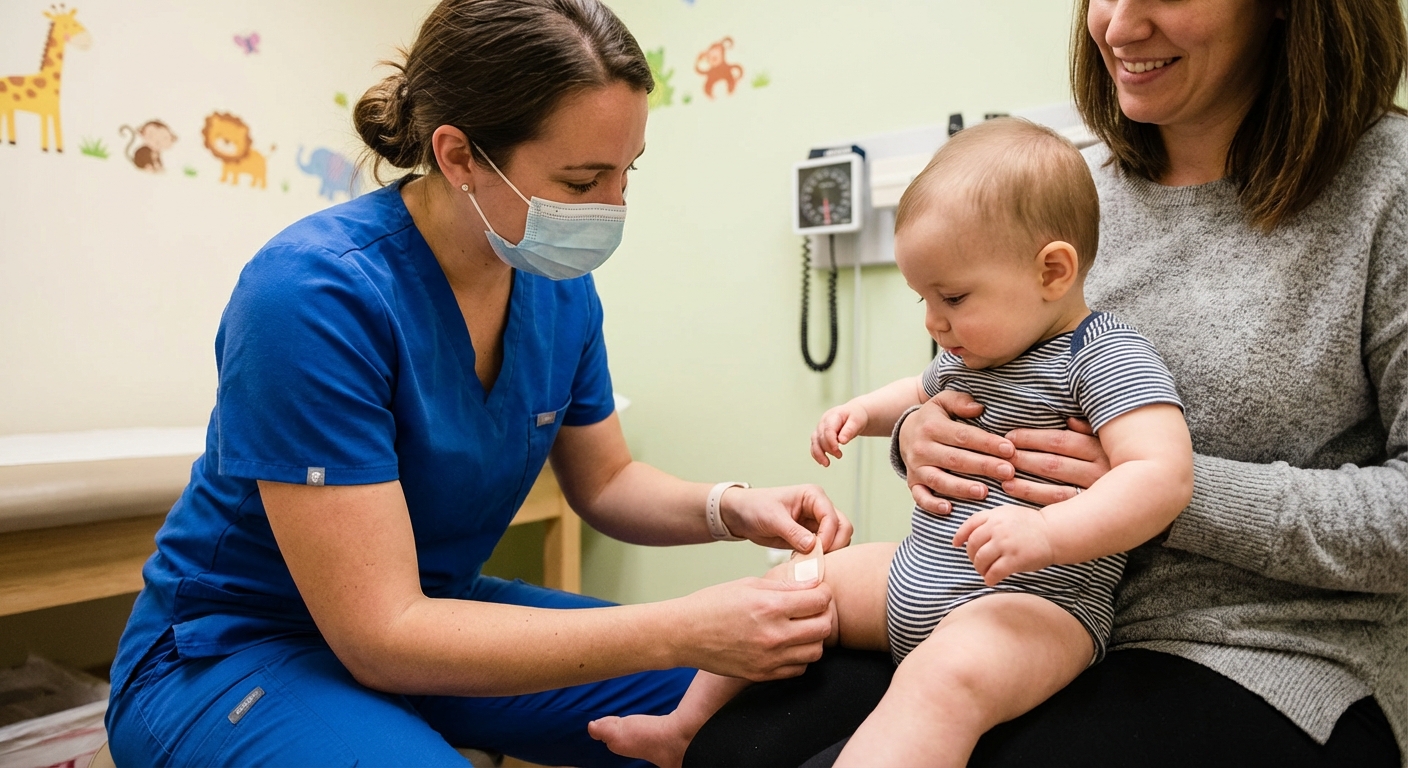
The best protection against severe pertussis in babies includes on-time infant vaccination, the strongest early protection for newborns through Tdap in pregnancy, and making sure close caregivers are up to date.
DTaP schedule for children
In the United States, the routine DTaP series is typically given at:
- 2 months
- 4 months
- 6 months
- 15 to 18 months
- 4 to 6 years
Babies start building protection after the early doses, but they are still vulnerable in the first months of life, which is why prevention around the baby matters so much.
Pregnancy and Tdap
Many newborns who get pertussis catch it from an adult or older child with a lingering cough. The Tdap vaccine during pregnancy (timed per OB guidance) helps pass protective antibodies to the baby before birth, offering important early coverage. For a newborn, this is one of the most impactful prevention steps we have.
Parents and caregivers
Adults and teens should be up to date on Tdap boosters per clinician guidance, especially anyone who will be close to a newborn. If you are not sure, your primary care provider or pharmacy can help you check.
How long is it contagious?
People with pertussis are usually most contagious early on. In general, a person can spread pertussis from the start of symptoms through:
- 21 days after coughing begins, if not treated
- Or until they have completed 5 full days of effective antibiotics (such as azithromycin), per clinician guidance
Your pediatrician can tell you when it is safe to be around others and when childcare can resume. Until you have clear guidance, be cautious around infants and pregnant people, and stick with basics like hand hygiene and masking if you need to be close.
If your baby was exposed
If your baby was around someone diagnosed with pertussis, call your pediatrician right away, even if symptoms are mild or not present yet.
In many cases, clinicians recommend post-exposure prophylaxis (preventive antibiotics) for:
- Household contacts of someone with pertussis
- Anyone who will be around a high-risk person (like an infant)
- High-risk people themselves, including young infants and pregnant people, based on clinician guidance
Timing matters, so do not wait to see if symptoms show up.
Quick summary
- Think pertussis when a cough comes in intense fits, causes vomiting, or follows an exposure.
- Do not wait for the whoop. Many babies never make that sound.
- Babies under 12 months are at higher risk for apnea and serious complications, and some may have apnea with minimal cough at first.
- Go to the ER for blue or gray color, pauses in breathing, significant breathing effort, unusual sleepiness, or dehydration concerns.
- Vaccines matter: on-time infant DTaP and Tdap in pregnancy help protect the most vulnerable months, and up-to-date caregivers help reduce risk too.
One last nurse-mom note
If your gut is telling you something is off, trust it. I have never met a parent who regretted getting their baby checked when breathing was the concern. The goal is not to be brave at home. The goal is to keep your baby safe and get you both through the night.