A clear guide to every car seat stage with AAP recommendations, fit checks, installation tips, recall registration, and the most common mistakes parents make.
Winter Coats and Car Seat Safety

Sarah Mitchell
Sarah Mitchell is a Registered Pediatric Nurse and a mother of three who has spent over a decade helping families navigate the beautiful, chaotic early years of childhood. She combines evidence-based medical knowledge with real-world parenting experience to offer practical, compassionate advice. At Awesome Parent, Sarah's mission is to help exhausted parents find solutions, trust their instincts, and finally get some sleep.
If you’ve ever buckled your child into their car seat in a big winter coat and thought, This feels fine, you’re in very good company. I’ve had this exact conversation with parents in triage more times than I can count, and I’ve also done the awkward parking lot coat-wrestle with my own kids.
The tricky part is that a harness can feel snug over a puffy jacket and still be too loose where it matters. In a crash, that extra space can let your child move too far forward or even slip partially out of the straps.
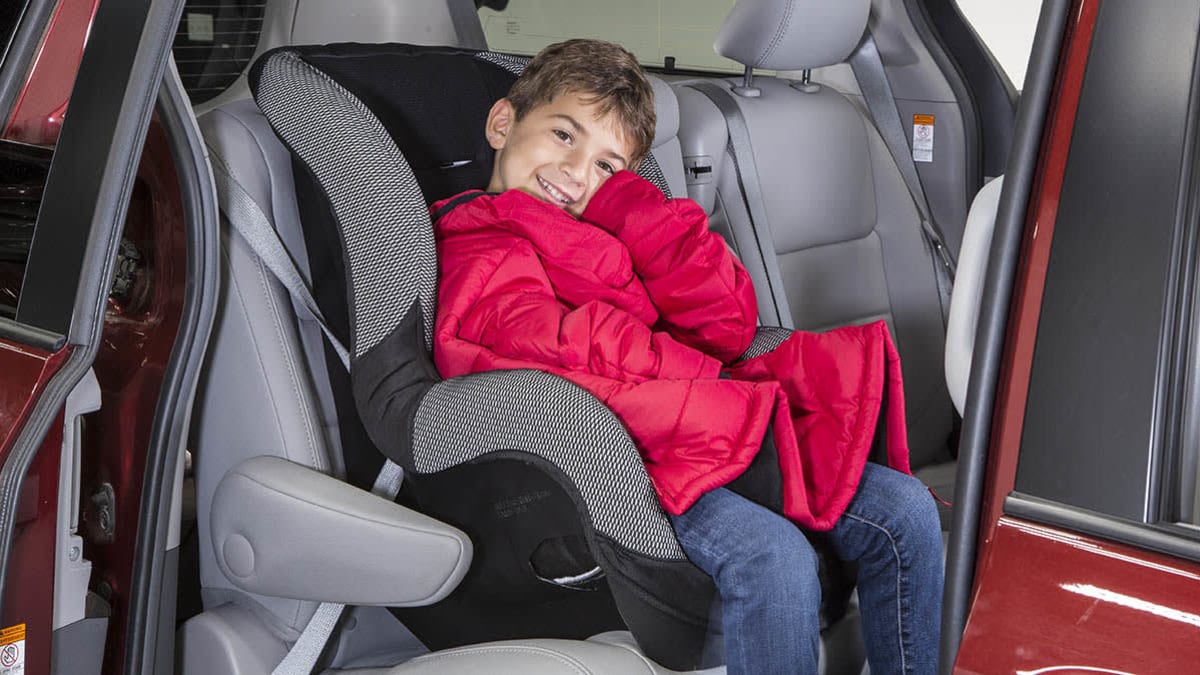
Let’s walk through the mechanics, a quick tightness test, and what to use instead so your child stays both warm and properly restrained.
Why puffy coats and harnesses don’t mix
Car seat harnesses are designed to fit close to the body. Puffy jackets, snowsuits, and plush, high-loft fleece create a layer of compressible air and padding between your child and the straps.
What happens in a crash
In a crash, your child’s body keeps moving forward, and the harness has to hold them back. Bulky coat material can compress almost instantly, which means the harness that seemed tight a second ago can suddenly have slack.
- Slack increases forward movement. More head and chest movement can raise injury risk.
- Slack can change strap position. Straps can slide off shoulders more easily if the coat is slick or bulky.
- Slack can allow partial ejection. Especially with very puffy coats or loose buckling habits.
Even short drives count. Many crashes happen on local roads and during everyday errands, which is exactly what winter life is made of.
The harness tightness test (about 10 seconds)
If you take nothing else from this article, take this: use the pinch test. It’s simple, quick, and it works in any season.
Step-by-step: the pinch test
- Buckle the harness and tighten it as usual.
- At your child’s collarbone area, try to pinch the harness strap between your thumb and forefinger.
- If you can pinch and grab webbing (not just fabric rubbing between your fingers), the harness is too loose.
- If your fingers slide off and you can’t pinch any extra strap, it’s snug enough.
Quick nurse tip: A lot of parents stop tightening when the child protests. I get it. But “snug” is the goal, and snug is not the same as “too tight.” Use the pinch test to take the guesswork out of it.
Chest clip placement
Don’t forget the chest clip. Position it at armpit level. Too low and the straps can spread apart. Too high and it can press into the neck.
The coat test that convinces most skeptics
If you want to see the problem for yourself (and many of us need to see it), do this at home when you’re not rushed.
- Buckle your child in with the puffy coat on. Tighten until it feels snug. Remember that feeling.
- Unbuckle without loosening the straps.
- Take the coat off.
- Buckle again with the same harness setting.
Most parents are shocked by how loose the harness suddenly is. That extra space is what can show up during a crash when the coat compresses.
What kids should wear in winter
The goal is simple: thin layers under the harness, then add warmth over the buckled harness.
Harness-safe base layers
- Long-sleeve shirt plus leggings or pants
- Thin, low-loft fleece or a sweatshirt that doesn’t puff up (skip sherpa and super plush fleece)
- Thermal base layer (great for truly cold climates)
- Warm socks and closed-toe shoes
If you’re not sure whether something is too bulky, do the pinch test. Your hands will tell you faster than the tag on the coat.
What to avoid under the harness
- Heavy puffer coats
- Snowsuits
- Thick layered hoodies stacked under a coat
- Anything that makes the harness sit “up” off the body
Also skip bulky scarves inside the harness area. They can push the straps out of position. Hats are fine, but if a hat forces the head forward in a rear-facing seat, take it off once buckled.
Warm alternatives that work
Here are winter solutions I recommend to families because they’re realistic, safe, and don’t require superhero patience in a windy parking lot.
1) Car seat poncho
A car seat poncho is worn like a cape. The harness goes under the poncho, directly against the child’s clothing. The poncho then covers the harness and holds warmth in.
- Look for a design with a neck opening and enough drape to cover the torso and legs.
- Avoid anything that adds bulk behind the child’s back. In general, nothing thick should go between your child and the car seat unless it came with the seat or the manufacturer explicitly allows it.
2) Blanket over the buckled harness
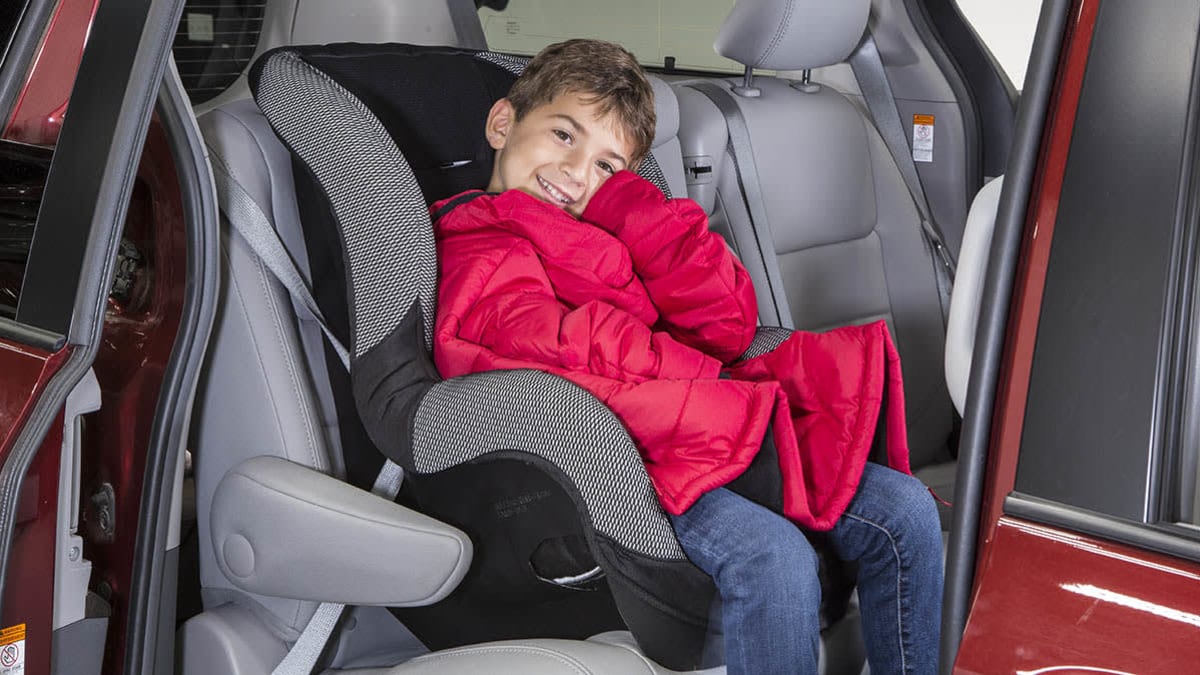
This is the simplest option and still one of the best. Buckle your child in snugly, then place a blanket over their legs and torso.
- For babies and toddlers, you can tuck the blanket around the sides after buckling.
- For older kids, give them a blanket they can manage themselves.
Safety note: A blanket goes over the straps, not between the child and the harness.
3) “Warm the car first” routine
Not always possible, but if you can safely remote start or warm the car while you’re nearby, it reduces the urge to keep the puffy coat on in the seat.
- Never warm a car in an enclosed space like a garage.
- Make sure the vehicle is secured, and follow your local guidance and manufacturer instructions for remote start.
- Keep a “car blanket” in the vehicle so it’s always there.
- Store a spare thin fleece in the car for surprise cold snaps.
4) Thin jacket trick: coat on backward after buckling
For kids who refuse to be cold for even 30 seconds, a thin coat can be put on backwards after they’re buckled. Think of it like a little car seat robe.
This works best with lightweight fleece or a thin jacket. It’s not a fix for a bulky puffer.
Cold-weather tips by age
Babies (rear-facing)
- Dress in thin layers.
- Buckle snugly.
- Use a blanket over the harness.
- If you use a car seat cover, make sure it goes over the seat and doesn’t add anything behind the baby.
Avoid thick inserts or buntings that didn’t come with the seat. Aftermarket products can interfere with fit unless specifically approved by your car seat manufacturer.
Toddlers and preschoolers
- Car seat ponchos are a lifesaver for this age.
- Keep mittens on a clip so you’re not hunting for them in the seat crack.
- Do a quick pinch test whenever clothing changes.
Big kids in boosters
Boosters rely on the vehicle seat belt fitting correctly. Puffy coats can also create slack with seat belts.
- Keep the coat open or take it off.
- Make sure the lap belt sits low on the hips, not up on the belly.
- Make sure the shoulder belt lays across the chest and shoulder, not the neck or arm.
Quick fit reminders
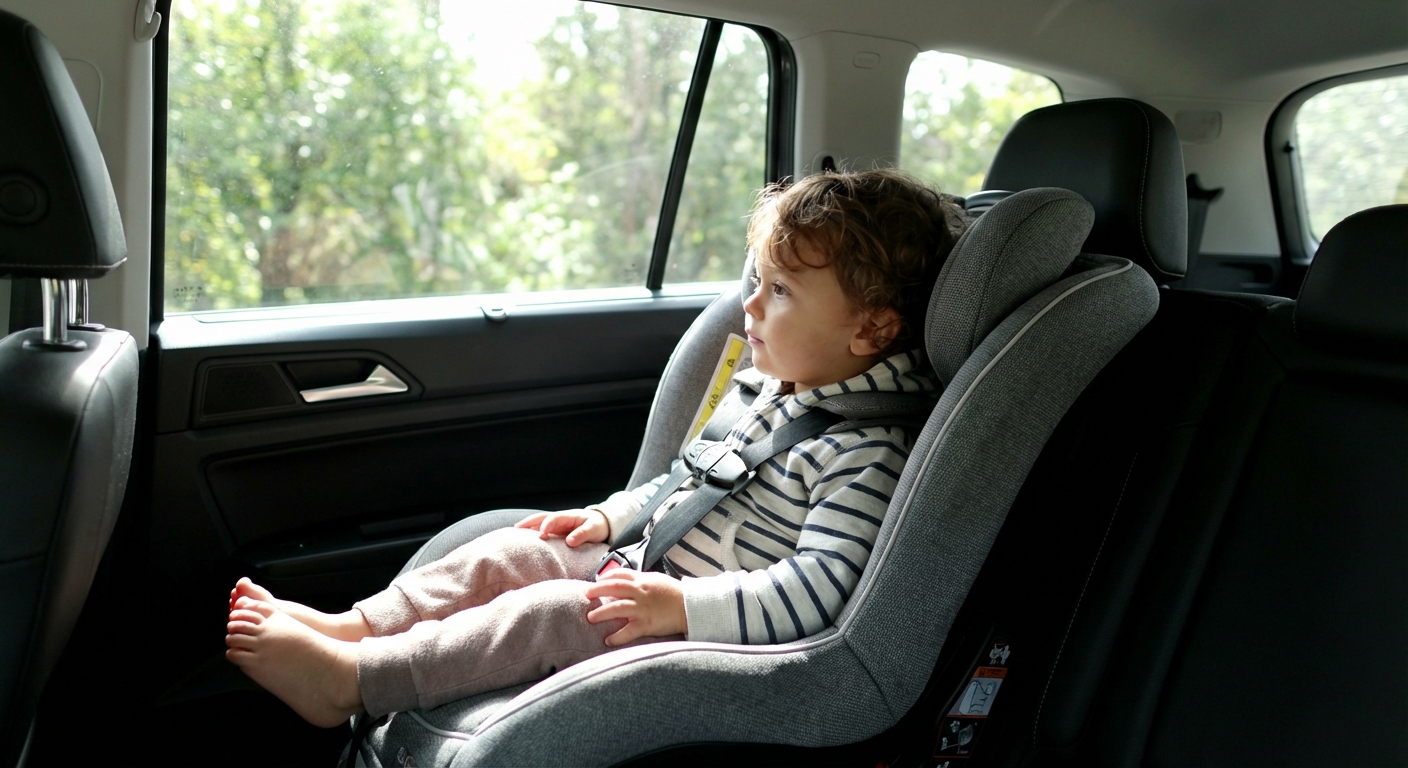
- Rear-facing: harness straps should come from at or below the shoulders.
- Forward-facing: harness straps should come from at or above the shoulders.
If you’re not sure which slot to use or you’ve recently adjusted the seat, a CPST check can be incredibly reassuring.
Common questions
“My child is freezing. Is this really necessary?”
Yes, but we can make it manageable. The safest setup is thin layers under the harness plus warmth on top. In a properly warmed car, kids usually settle quickly with a blanket or poncho.
“What about those thick car seat strap covers?”
Only use strap covers that came with your seat or are specifically allowed by your manufacturer. Extra padding can change harness positioning and tightness.
“Can I just loosen the harness to fit the coat, then tighten it a little?”
That’s exactly the problem. The harness needs to be snug against the body. If the coat is thick enough that you need to loosen the straps to buckle, it’s too bulky for the seat.
“Is a thin puffer okay?”
Sometimes, but “thin” is subjective. Trust the pinch test. If you can’t pass the pinch test, the coat isn’t harness-safe.
Quick winter car seat checklist
- Dress child in thin layers for the car seat.
- No puffy coats or snowsuits under the harness.
- Tighten harness, then do the pinch test.
- Chest clip at armpit level.
- Add warmth over the buckled harness with a blanket or poncho.
- Use only car seat accessories that came with the seat or are approved by the manufacturer.
If you’d like extra reassurance, many communities have certified Child Passenger Safety Technicians (CPSTs) who can check fit and answer questions. In my experience, a 10-minute check can save months of worry.
And if you’re reading this at 3 AM while mentally planning tomorrow’s freezing school drop-off, I see you. You don’t have to choose between warm and safe. With a few tweaks, you get both.
Sarah Mitchell
Sarah Mitchell is a Registered Pediatric Nurse and a mother of three who has spent over a decade helping families navigate the beautiful, chaotic early years of childhood. She combines evidence-based medical knowledge with real-world parenting experience to offer practical, compassionate advice. At Awesome Parent, Sarah's mission is to help exhausted parents find solutions, trust their instincts, and finally get some sleep.