Yeast Diaper Rash: How to Spot It and Treat It Fast

Sarah Mitchell
Sarah Mitchell is a Registered Pediatric Nurse and a mother of three who has spent over a decade helping families navigate the beautiful, chaotic early years of childhood. She combines evidence-based medical knowledge with real-world parenting experience to offer practical, compassionate advice. At Awesome Parent, Sarah's mission is to help exhausted parents find solutions, trust their instincts, and finally get some sleep.
If you have been faithfully applying diaper cream and your baby’s rash is still bright red, angry, and spreading, you are not failing. You might just be dealing with a yeast diaper rash, which is a totally different beast than a simple irritation rash.
As a pediatric nurse and a mom who has personally stared at more tiny baby butts at 3 AM than I ever imagined, here is the calm, no-drama guide to spotting yeast (Candida) diaper rash and treating it fast.
Quick note: This is general education, not individualized medical advice. When in doubt, your pediatrician is your best shortcut.
What is a yeast diaper rash?
A yeast diaper rash is usually caused by Candida, a common fungus that naturally lives on the skin and in the gut. It becomes a problem when it overgrows, especially in warm, damp places like the diaper area.
Yeast rashes are common, treatable, and not a sign that you did anything wrong. Think of it like this: yeast is opportunistic. Give it moisture, warmth, and a little skin irritation to sneak in, and it moves right in.
Yeast vs regular diaper rash
Most “regular” diaper rash is irritation from moisture, friction, stool, or new foods. Yeast looks and behaves differently.
Signs it is likely yeast
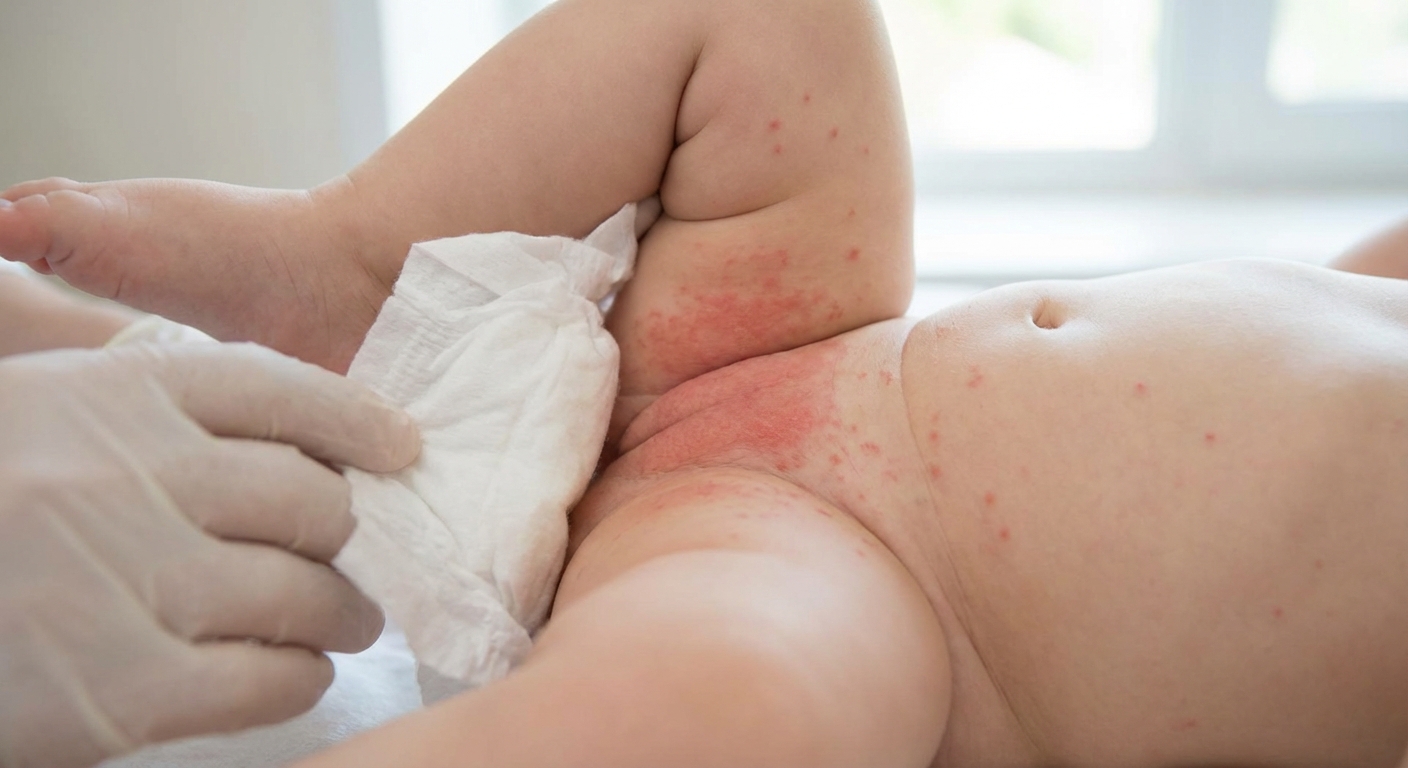
- Bright red rash that can look raw or shiny
- Satellite spots, meaning small red dots or bumps a little outside the main rash area
- In the skin folds (groin creases, between the thighs). Irritant rashes often spare the folds
- Well-defined edges, where you can almost “trace” the border of the rash
- Often does not improve with barrier cream alone (especially when you also see folds plus satellite spots). Many irritant rashes can take a few days to fully calm down, so look at the whole pattern, not just the clock
Signs it is more likely irritation
- Pink to red skin on the areas that touch the diaper most (butt cheeks, around the anus)
- Improves with frequent diaper changes and a thick barrier ointment
- Usually less involvement in the creases
If you are thinking, “This rash has little red dots and it is in the folds,” you are very likely on the yeast track.

Why yeast diaper rash happens
Yeast loves a moist environment, and diapers can create the perfect warm, damp microclimate. A few common triggers can tip things into overgrowth:
- Antibiotics (for baby or nursing parent), which can disrupt normal bacteria that keep yeast in check
- Diarrhea or frequent stools, which irritate skin and increase moisture
- Prolonged wetness, such as overnight diapers, infrequent changes, or heavy wetters
- A recent “regular” diaper rash that damaged the skin barrier first
- Thrush: Candida can show up in more than one place. Thrush (white patches in the mouth) and yeast diaper rash often occur together, especially after antibiotics. If you are seeing both, loop in your clinician so everything gets treated appropriately
Treat it fast
Yeast usually needs an antifungal. Barrier creams help protect skin, but they do not reliably clear an active yeast overgrowth on their own.
Step 1: Dry it out
- Change diapers often, including right after poops.
- Pat dry, do not rub.
- Give diaper-free time if you can. Even 10 minutes a few times a day helps.
Step 2: Use an OTC antifungal
Common over-the-counter options include:
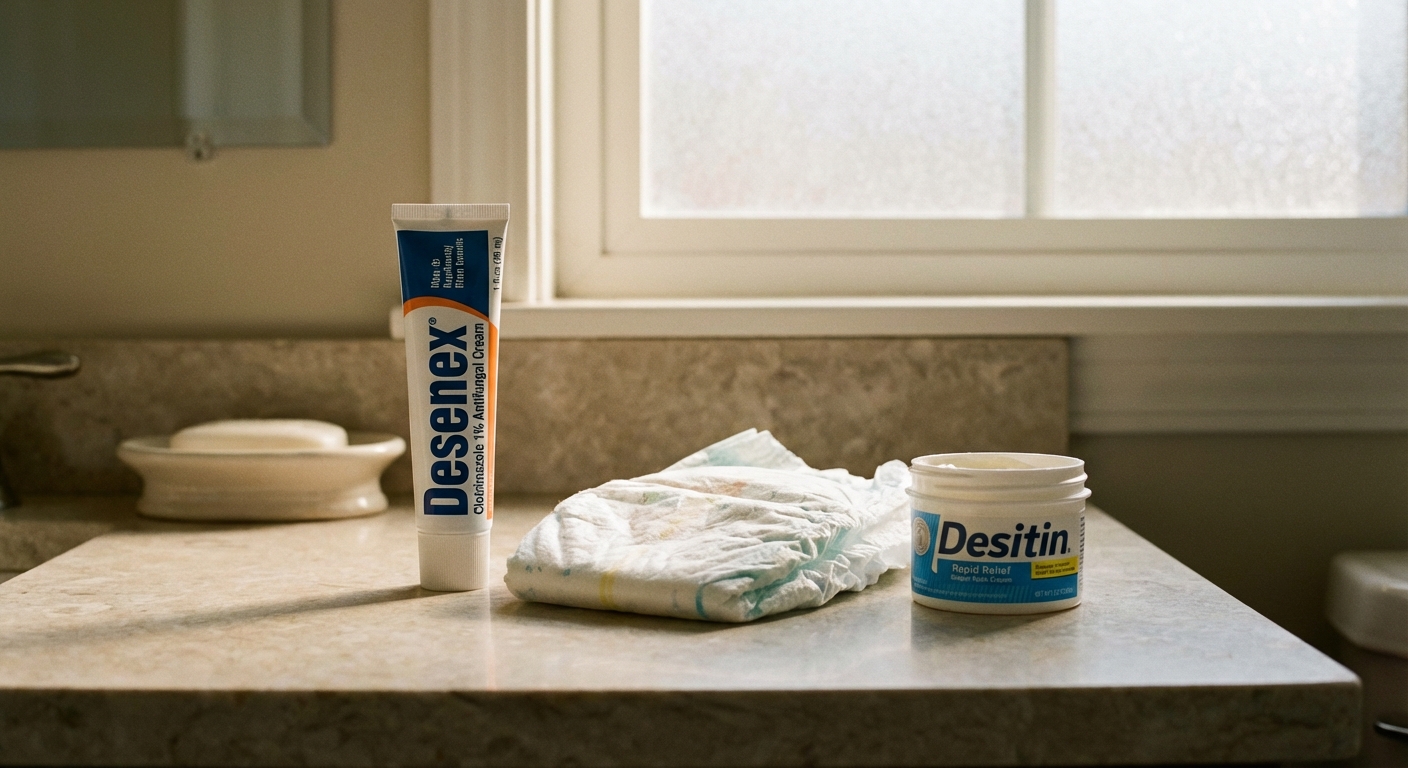
- Clotrimazole 1% (an antifungal cream often marketed for athlete’s foot)
- Miconazole 2% (another common antifungal)
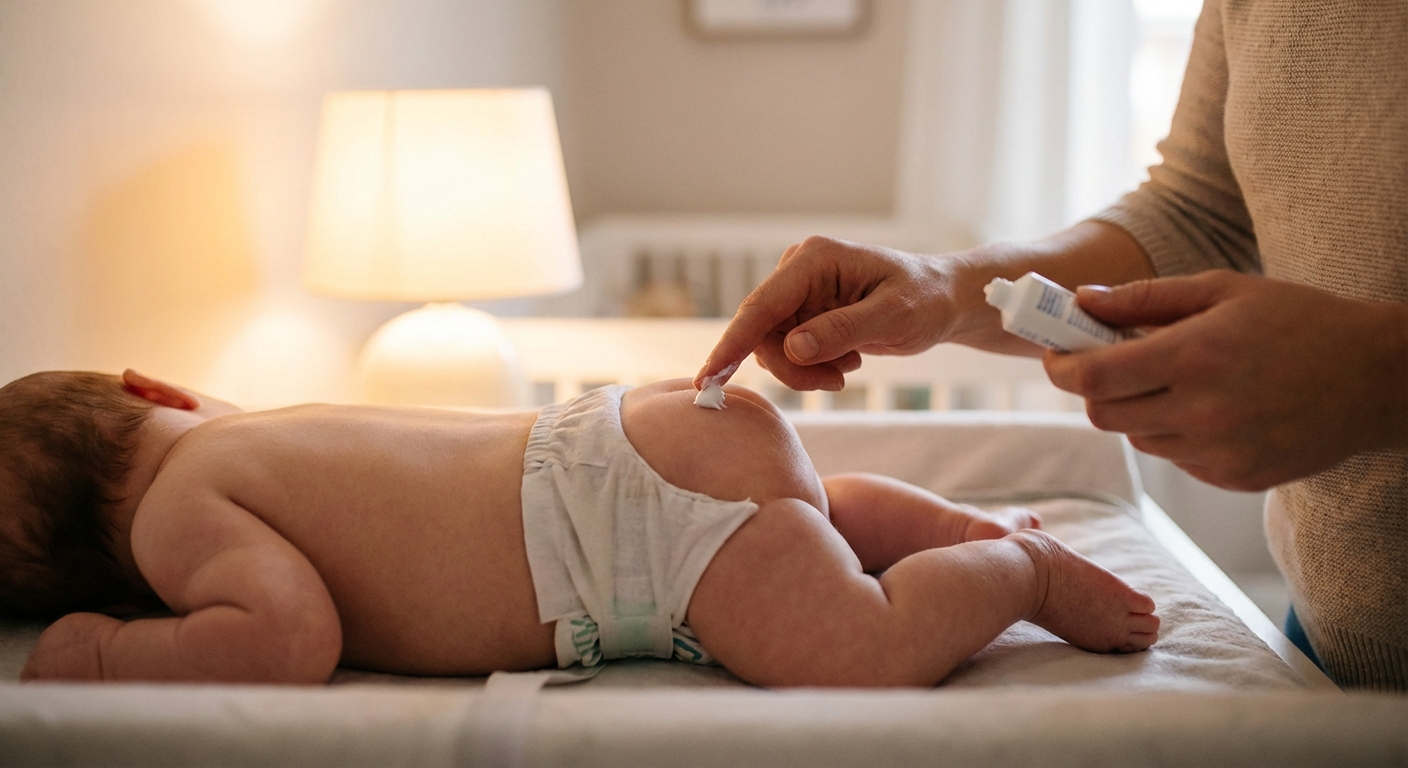
How to apply: Put a thin layer on the rash on clean, dry skin and follow the package directions (often 2 times a day, sometimes 2 to 3).
Real-life tip: Some pediatricians recommend using the antifungal more often (for example, with each diaper change) in stubborn cases. Do not guess. If your baby’s rash is intense or not improving, call and ask what schedule they want you to use.
How fast should it work? You often see improvement within 24 to 48 hours. Keep treating for the full recommended duration on the package or from your clinician, and many clinicians advise continuing for a few days after it looks better to prevent a rebound.
Safety note: These are commonly used for yeast diaper rash, but if your baby is under 2 months, has broken/bleeding skin, or you are unsure, it is smart to call your pediatrician first.
Avoid: Combination antifungal-steroid products or routine steroid creams in the diaper area unless your clinician tells you to. Steroids can make some infections worse and diaper skin absorbs medication easily.
Step 3: Add a barrier on top
After the antifungal absorbs for a minute or two, apply a thick layer of barrier ointment (like zinc oxide paste or petroleum jelly) to protect the skin from moisture and stool.
Step 4: Clean gently
- Use warm water and a soft cloth when possible.
- If wipes sting, switch to fragrance-free wipes or water wipes temporarily. Avoid alcohol and fragrance during flares.
- Avoid harsh soaps and bubble bath during flare-ups. If you use cleanser, rinse well so residue does not sit on the skin.
What to avoid
- Only using barrier cream when it is yeast. It may soothe, but it often will not fix the underlying problem.
- Powders (talc or cornstarch). Powders can irritate lungs if inhaled, and cornstarch may worsen yeast in some cases.
- Fragranced products in the diaper area during a flare.
- Scrubbing. If it looks tender, treat it like tender skin.
Cloth diaper note
If you use cloth diapers, this is the part many parents do not hear until they are stuck in a miserable reinfection loop: standard washing does not always fully kill yeast.
- Consider a proper sanitation routine (often a diluted bleach soak or bleach in the wash, per your diaper manufacturer’s instructions).
- Wash hot if your diapers allow it, and make sure they rinse clean (detergent buildup can irritate skin).
- Some families temporarily switch to disposables during treatment to help the skin heal and reduce reinfection risk.
If you are not sure what your cloth system needs, your pediatrician or a reputable cloth diaper care guide can help you choose a safe approach.
Look-alikes to know
Most diaper rashes are straightforward, but a few common look-alikes can change what helps:
- Bacterial infection (impetigo): oozing, honey-colored crusts, spreading redness
- Perianal strep: very bright red, sharply outlined rash around the anus, often painful, sometimes with blood-streaked stools
- Contact dermatitis: reaction to wipes, diapers, detergents, or new products
- HSV: clustered blisters or sores, baby may seem unwell
- Psoriasis or eczema: persistent, well-demarcated plaques or recurrent rashes that do not fit the usual pattern
You do not need to self-diagnose these at home. This list is here so you know when it is worth getting eyes on it sooner.
When to call the pediatrician
Most yeast diaper rashes can be managed at home, but you should call your child’s clinician if:
- The rash is not improving after 2 to 3 days of antifungal treatment
- Your baby has a fever, is unusually fussy, or seems ill
- You see blisters, open sores, oozing, honey-colored crusting, or rapidly spreading redness (could suggest bacterial infection)
- The rash is severe, bleeding, or extremely painful
- Your baby is very young (especially under 8 weeks) and the rash looks intense
- Yeast rashes are happening repeatedly. It is usually about moisture, irritation, or antibiotic exposure, but your clinician can help make sure nothing else is contributing
Sometimes a prescription antifungal, a different diagnosis, or treatment for a bacterial infection is needed. Getting eyes on it is the right move.
Prevention tips
Once you have dealt with yeast once, it is natural to want to prevent a repeat. These habits make a real difference:
- Change frequently, especially after poops and during or after diarrhea.
- Dry the skin before putting on a new diaper. A quick pat with a soft cloth goes a long way.
- Use a barrier ointment overnight or during high-risk times (teething poop, new foods, antibiotics).
- Choose breathable diapers and avoid overly tight fits that trap moisture in the creases.
- Wash cloth diapers thoroughly if you use them, and ensure they fully rinse clean. Residue can irritate skin.
- Address thrush if present. If baby has white patches in the mouth or you have nipple pain while nursing, ask your clinician. Treating only one can lead to a frustrating back-and-forth cycle.
Quick checklist
- Looks like yeast? Bright red, in folds, satellite dots, well-defined edges, and not behaving like a typical irritant rash.
- First-line treatment: OTC antifungal (clotrimazole or miconazole) used as directed, plus frequent changes and drying.
- Protect: Barrier ointment on top after antifungal.
- Cloth diapers: Consider sanitizing routine or temporary disposables to prevent reinfection.
- Call the doctor: No improvement in 2 to 3 days, fever, oozing or crusting, blisters, or severe pain.
If you are reading this during a middle-of-the-night diaper change, I see you. Yeast rashes can look dramatic, but with the right treatment, they usually turn the corner quickly.