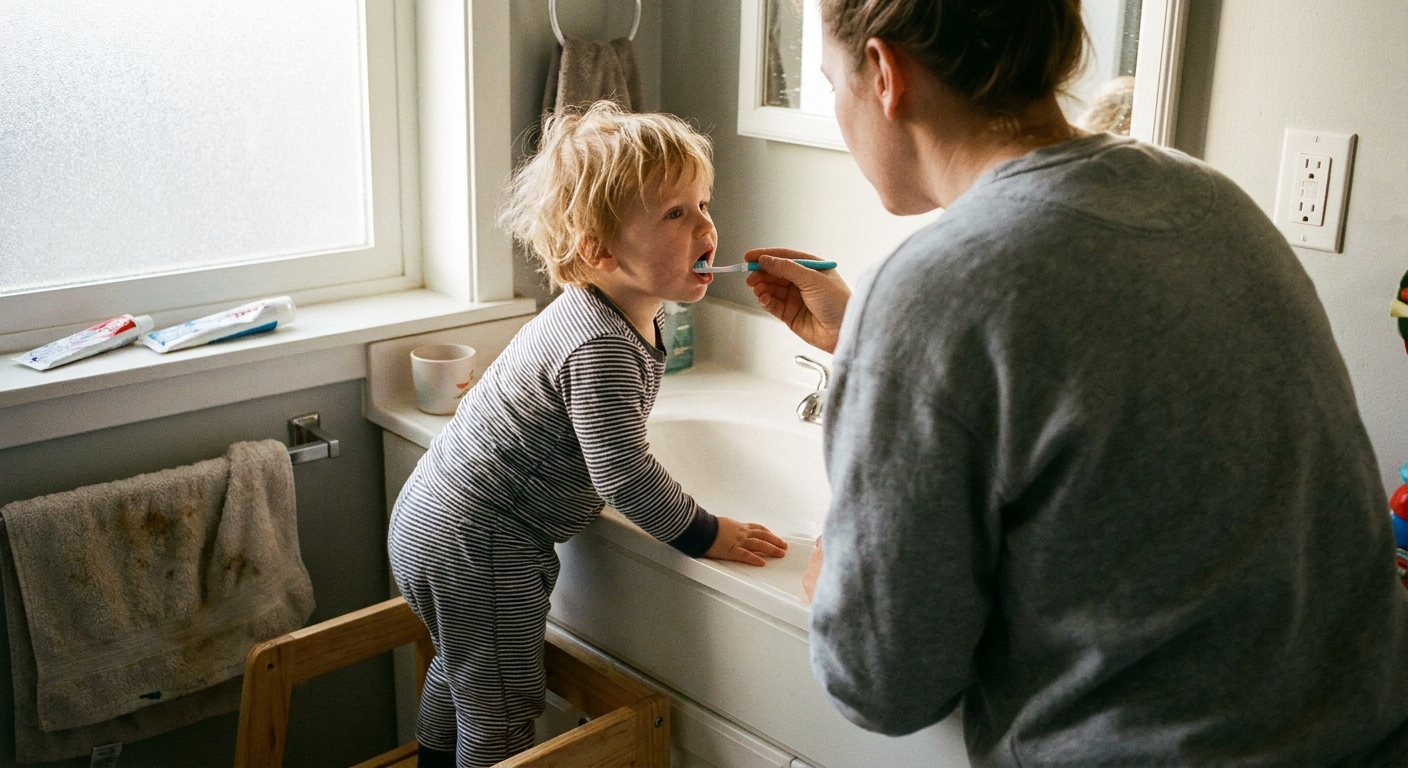
Spot early childhood caries early. See the signs on front teeth, prevent damage from night bottles and sugary drinks, and know exactly when to book a pediatr...
Your Baby’s First Dental Visit

Sarah Mitchell
Sarah Mitchell is a Registered Pediatric Nurse and a mother of three who has spent over a decade helping families navigate the beautiful, chaotic early years of childhood. She combines evidence-based medical knowledge with real-world parenting experience to offer practical, compassionate advice. At Awesome Parent, Sarah's mission is to help exhausted parents find solutions, trust their instincts, and finally get some sleep.
That first tiny tooth is equal parts adorable and slightly alarming. Suddenly you are responsible for dental hygiene on someone who thinks toothpaste is a food group and the exam chair is a jungle gym. The good news is that a baby’s first dental visit is usually quick, gentle, and more about prevention than poking around.
Let’s walk through when to go, what actually happens, and how to make it easy, even if your baby is currently not a fan of new places.
When should a baby go?
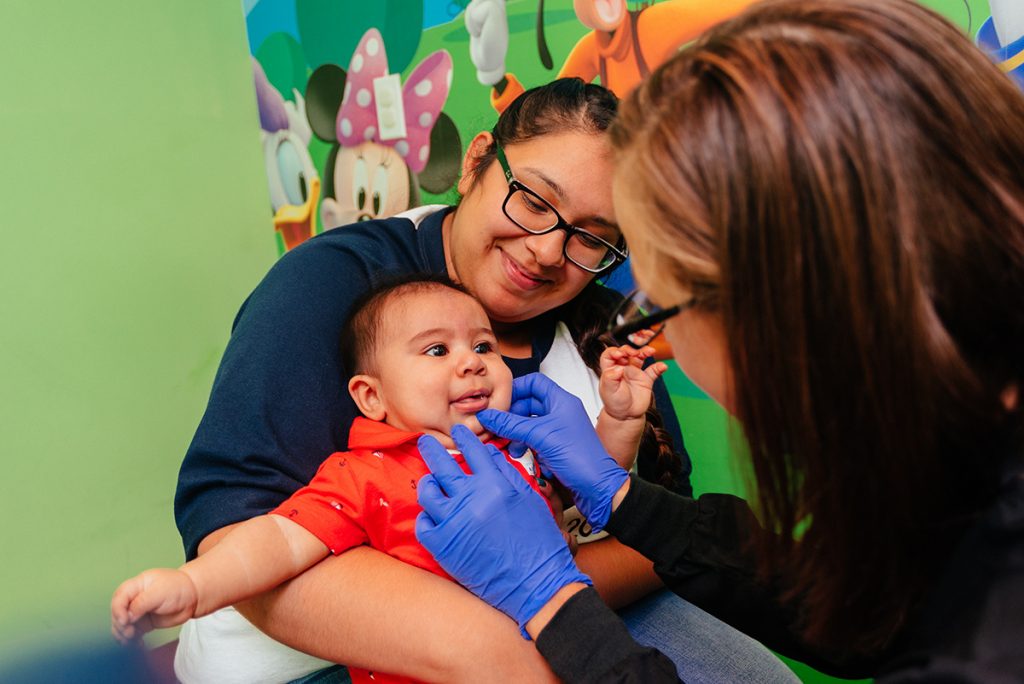
The most common guideline you will hear (including from the American Academy of Pediatric Dentistry) is:
- By the first birthday, or
- Within 6 months of the first tooth coming in, whichever happens first.
Many babies get their first tooth around 6 months, so that often lands the first dental visit somewhere between 6 and 12 months. Some kids pop teeth earlier or later, and that is normal too.
Why go so early?
In triage nursing terms, this is a “prevention appointment,” not a “something is wrong” appointment. Early visits help you:
- Catch early signs of tooth decay before it becomes painful.
- Get personalized brushing and fluoride guidance based on your child’s risk factors.
- Talk about feeding habits that affect teeth, including bottles and bedtime milk.
- Help your baby get used to the dental office before a bigger issue ever shows up.
Go sooner if you notice
If any of the following show up, do not wait for the “first birthday” mark:
- White or brown spots on the teeth, especially near the gumline.
- Chips, cracks, or tooth injuries from a fall.
- Swollen gums, mouth sores that are not healing, or persistent bad breath not explained by diet or a recent illness.
- Teeth that seem to be coming in unusually late or in a pattern that worries you.
What happens at the first visit?
Most first visits are short and sweet. Think: meet-and-greet plus a quick check. The goal is to build trust, assess risk, and coach you through daily habits.
The knee-to-knee exam
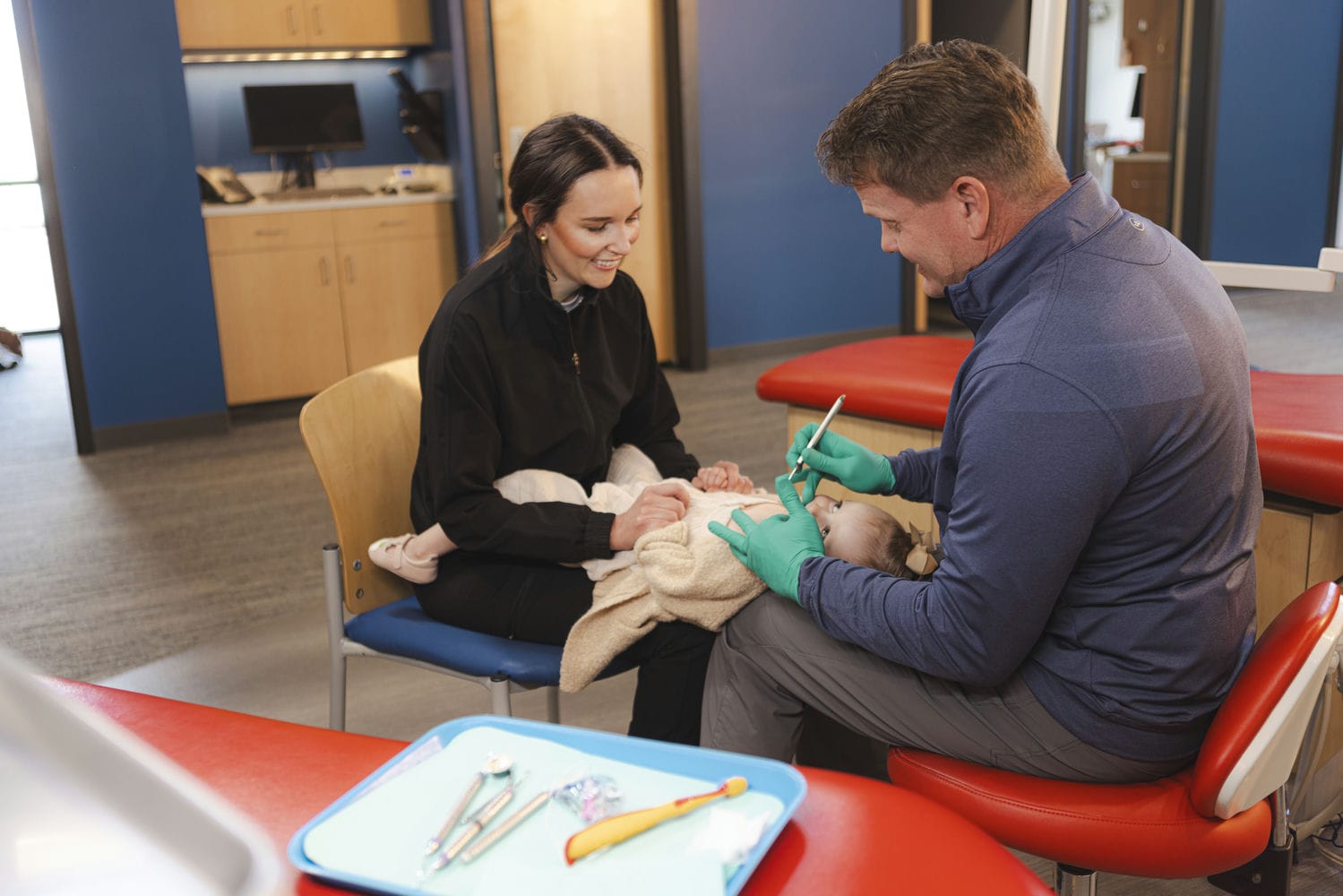
Many pediatric dental offices do a knee-to-knee exam for infants and young toddlers. You sit facing the dentist, knees touching. Your baby sits on your lap, then gently reclines so their head rests in the dentist’s lap. This position helps your baby feel secure while the dentist gets a clear view.
Typical parts of the appointment
- Health history and habits chat: feeding schedule, bottles or cups, pacifiers, thumb sucking, medications, and family dental history.
- Quick oral exam: teeth, gums, tongue, bite, and how the teeth are coming in.
- Cavity risk assessment: not a judgment, just a “what should we watch for” plan.
- Cleaning: sometimes a gentle polish, sometimes not, depending on age and cooperation.
- Fluoride plan: whether your baby might benefit from fluoride varnish and what to use at home.
- Parent coaching: brushing technique, teething comfort tips, and a realistic plan for bottles and night feeds if those are still happening.
Will they take X-rays?
X-rays are not routine for many babies at the first visit, but they are not “never.” Radiographs are individualized based on cavity risk, clinical findings, trauma concerns, and how teeth are erupting. If X-rays are recommended, your dentist should explain why and what safety measures are used.
How to make it easier
Babies do not need to be “brave.” They need to feel safe, and they need you to be calm. Here are realistic ways to set everyone up for success.
1) Pick your child’s best time
For most little ones, that means morning, after a snack, and not too close to nap time. A hungry, overtired baby is basically a tiny protest march.
2) Practice at home
- Play “open your mouth” for 2 seconds at a time.
- Let your child hold a toothbrush while you do a quick brush.
- Gently lift the lip to peek at teeth now and then, so the dental exam is not the first time it happens.
3) Keep your words neutral
It is tempting to say, “It won’t hurt,” but that can accidentally plant the idea that it might. Try:
- “The dentist is going to count your teeth.”
- “We are going to take care of your smile.”
- “You can sit with me the whole time.”
4) Bring comfort items
- A favorite small toy or lovey.
- A pacifier if your child uses one.
- A snack for after, not during, unless the office suggests otherwise.
5) Expect some tears and still call it a win
Some kids cry because the room is new or they do not love strangers peeking in their mouth. That does not mean the visit “failed.” If the dentist got even a quick look and you got guidance, you accomplished the goal.
6) The boring admin stuff
You may be asked to arrive a little early for new patient forms. Some offices do the visit in a private room, others in an open bay. Either way, most first visits move fast once you are back there.
Brushing and fluoride basics
This is the part parents always want in plain language, so here it is:
- Start brushing as soon as the first tooth erupts.
- Brush twice a day (especially before bed).
- Use a smear of fluoride toothpaste, about the size of a grain of rice, until age 3.
- At this stage, you do the brushing. Let your baby “help” first if you want, then you take the final turn.
Your dentist can adjust this based on your child’s cavity risk and your local water fluoride level.
How this connects to cavities
This first dental visit is where many families first hear about early childhood caries (ECC), sometimes called “baby bottle tooth decay.” You will still hear that older term, but ECC is the one you will see in more up-to-date dental guidance.
What your dentist is watching for
- Chalky white lines or spots near the gums, especially on the upper front teeth.
- Habits that keep sugar on teeth for long stretches, like frequent or prolonged bottles of milk, formula, juice, or sweet drinks.
- All-day sipping from a bottle or sippy cup instead of having drinks with meals.
The quick, helpful takeaway
You do not need to overhaul your whole life overnight. Many families just need a small plan like:
- Brush twice a day with a smear (rice-sized) amount of fluoride toothpaste.
- Avoid letting your child fall asleep with milk or juice in the mouth as a regular habit. Occasional realities happen, but the goal is to reduce frequent, prolonged exposure. If night feeds are still happening, ask your dentist for a practical step-down approach.
- Stick with water between meals if your child likes to sip.
A quick note on sharing germs
This is not meant to make you paranoid, just informed: cavity-causing bacteria can be shared. If possible, avoid sharing utensils or cleaning a pacifier with your mouth. If you are a caregiver with untreated cavities, getting your own dental care is also a sneaky way to protect your child’s teeth.
Teething or tooth trouble?
Teething can cause fussiness and drool. It should not cause high fever, facial swelling, or a mouth that looks infected. If something feels “off” beyond normal teething, it is worth calling.
Call urgently if you see
- Facial swelling or swelling of the gums with fever.
- Uncontrolled bleeding after an injury.
- A tooth injury where a tooth is pushed in, knocked loose, or your child cannot bite normally afterward.
- Severe pain that is not improving with typical comfort measures.
FAQ
What if my baby has no teeth at 12 months?
Many dentists still like to see your child around age 1 to discuss habits and check oral development, even if teeth are late bloomers. If your pediatrician is also monitoring tooth eruption and growth, that is a good sign you are covered from both sides.
How often will we need to go after the first visit?
Typically every 6 months, but some children may need more frequent visits based on cavity risk.
Do I need a pediatric dentist?
A pediatric dentist has extra training in child development and behavior, plus kid-friendly equipment and routines. Many general dentists also see infants and toddlers comfortably. The best choice is the office that is experienced with little ones and makes you feel supported.
What if my child bites or refuses to open?
That is common. Pediatric dental teams are used to it, and the first visit is intentionally low-pressure. Your job is to stay calm, help with positioning, and let the team lead.
Before-you-go checklist
- Schedule: first tooth or first birthday, whichever comes first (AAPD guidance).
- Bring insurance card and any medical history info.
- Plan for a well-rested window if possible.
- Practice a quick “open mouth” game for a few days.
- Write down your top three questions (night feeds, pacifiers, fluoride, brushing battles).
- Toothpaste reminder: smear (rice-sized) fluoride toothpaste, twice daily.
If you are reading this at 3 AM with a teething baby gnawing on your shoulder, here is my nurse-mom reassurance: the first visit is more like coaching than a procedure. You are not behind. You are getting ahead.
Sarah Mitchell
Sarah Mitchell is a Registered Pediatric Nurse and a mother of three who has spent over a decade helping families navigate the beautiful, chaotic early years of childhood. She combines evidence-based medical knowledge with real-world parenting experience to offer practical, compassionate advice. At Awesome Parent, Sarah's mission is to help exhausted parents find solutions, trust their instincts, and finally get some sleep.