A calm, realistic plan for the 8 to 10 month sleep rough patch: what is happening developmentally, how to handle separation anxiety, schedule tweaks, and saf...
7-Month Sleep Regression

Sarah Mitchell
Sarah Mitchell is a Registered Pediatric Nurse and a mother of three who has spent over a decade helping families navigate the beautiful, chaotic early years of childhood. She combines evidence-based medical knowledge with real-world parenting experience to offer practical, compassionate advice. At Awesome Parent, Sarah's mission is to help exhausted parents find solutions, trust their instincts, and finally get some sleep.
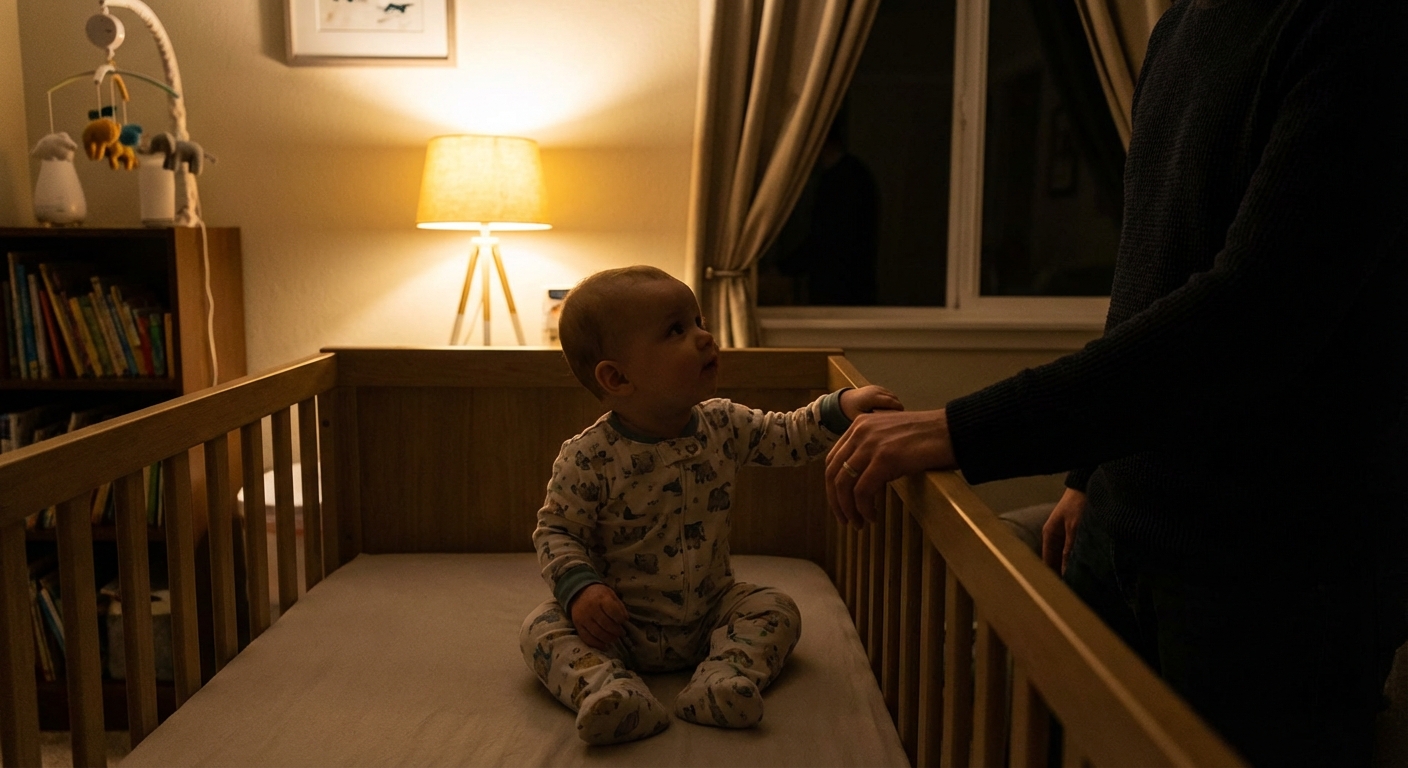
If your baby hit 7 months and suddenly sleeps like they have a side hustle, you are not imagining it. Around this age, brand-new motor skills, separation awareness (often tied to object permanence), and sometimes teething can turn a previously decent sleeper into a frequent night waker.
As a pediatric nurse and a mom of three, I want to reassure you: most 7-month sleep disruptions are temporary and very fixable. The goal is not perfect sleep. It is getting everyone back to the kind of sleep that feels human again.
Quick note: This article offers general education, not personal medical advice. If something feels off, trust your gut and call your child’s clinician.

What it looks like
Not every baby goes through a clear regression, but the most common patterns I see in clinic and at home include:
- More frequent night waking, often every 1 to 3 hours
- Short naps or naps that fall apart after 30 to 45 minutes
- Bedtime battles, including suddenly needing more help to fall asleep
- Early morning wakes (the dreaded 4:30 to 5:30 AM start)
- New “skills practice” in the crib: rolling, getting on hands and knees, sitting up, pulling to stand
For many babies, this phase improves within a couple of weeks, but it can be shorter or longer. If it drags on, it is often because a new habit got built during the disruption, or there is an underlying schedule issue like too much daytime sleep or wake windows that are not quite right.
Why sleep falls apart
1) Motor milestones
At 7 months, your baby’s body is busy learning to do big things. The problem is that they often want to practice those big things at 2 AM.
Common scenarios:
- Baby wakes up, rolls over, gets stuck, and yells for help.
- Baby sits up in the crib and cannot figure out how to lie back down.
- Baby rocks on hands and knees and gets so amped up they cannot resettle.
What helps: Give plenty of daytime practice so the crib is not the training gym. Add 10 to 15 minutes of floor time focused on the newest skill in the morning and late afternoon.

2) Separation awareness and object permanence
Around 6 to 9 months, many babies start to understand, more and more, that you exist even when you are out of sight. This is not a single, perfectly timed “leap” for every baby, but it can show up as more checking-in at bedtime and overnight.
You may notice:
- More crying at bedtime even with the same routine
- Waking and immediately calling for you
- Struggling to fall asleep unless you are right there
What helps: Add small daytime reps of predictable separations. A little peekaboo, short “I’ll be right back” moments (then you actually come right back), and lots of warm goodbyes can make bedtime feel less like a surprise disappearance.
If this sounds familiar, you will also want to read our deeper dive on separation-related sleep challenges at 8 months: 8-month sleep regression and separation anxiety. Seven months can be the warm-up act, and it helps to know what is coming.
3) Teething (sometimes)
Teething gets blamed for everything, but it can contribute to night waking if your baby is uncomfortable, drooly, or suddenly chewing like it is their job.
Teething tends to cause:
- Fussiness that is worse in the evening
- More drool and hand chewing
- Slight changes in appetite
- Trouble settling, especially for naps
Teething does not usually cause high fever, significant diarrhea, or persistent, inconsolable crying. If you are seeing those, think illness, not teeth.
4) Schedule shifts
Seven months is often the messy middle between the 3-nap life and moving toward 2 naps for some babies. If your baby is undertired, overtired, or bouncing between schedules, you can see more night waking.
Typical patterns (not rules):
- Many 7-month-olds still take 3 naps, with a short third catnap.
- Some are ready for 2 naps, especially if the third nap is consistently a battle.
One simple decision rule: if nap 3 regularly pushes bedtime late (or turns bedtime into a meltdown), cap that catnap to about 20 to 30 minutes or start nudging toward two naps.
If you are still figuring out the earlier milestone changes, our overview of the prior month can help without rehashing everything here: 6-month sleep regression.
Regression or illness?
When sleep suddenly gets worse, parents often ask me the same question: “Is this a regression or is something wrong?” Here are practical signs that suggest each.
More likely a typical disruption
- Baby is happy and playful during the day
- Wakes are frequent but baby can be comforted
- No fever, normal breathing
- Eating and wet diapers are fairly normal
- New skills are clearly emerging (rolling, sitting, crawling)
Get same-day medical advice if
- Fever (follow your clinician’s guidance for your baby’s age and medical history)
- Breathing trouble: fast breathing, pulling in at the ribs, grunting, bluish lips
- Ear pain signs: new intense night crying plus ear tugging, worse when lying down, recent cold
- Dehydration: noticeably fewer wet diapers, very dry mouth, no tears when crying
- Vomiting that is persistent, green, or forceful, or baby seems unusually sleepy and hard to wake
If your gut says, “This is not my baby,” listen to that. You do not need to prove it is serious before you ask for help.
Safe sleep quick reminders
- Back to sleep: place your baby on their back to start sleep. If they can roll both ways on their own, it is generally okay to let them find their position. Keep placing them on their back at the start.
- Crib stays empty: use a firm, flat mattress with a fitted sheet only. No pillows, blankets, bumpers, or stuffed toys.
- Pacifiers are fine, accessories are not: if you use a pacifier, use plain pacifiers only. No cords, clips, straps, or attachments in the crib.
- If baby pulls to stand: lower the mattress to the appropriate height for your crib model, and remove anything they could use as a step.
What to do at night
The best response is calm, consistent, and boring. Your baby is learning, testing, and sometimes just confused. You are the steady anchor.
Step 1: Pause briefly
If your baby is fussing, pause for 60 to 90 seconds before you go in. Many babies will resettle if they are not fully awake.
Exception: if crying is intense right away, you suspect illness, or something seems unsafe, respond immediately.
Step 2: Start with the least hands-on help
Work from the lightest touch up to more support:
- Shush, pat, hand on chest
- Replace pacifier if you use one
- Brief pick-up to calm, then back down
- Feed if it has been long enough and hunger is likely
The goal is to help them settle, not to fully wake them with bright lights, chatter, or a full play session.
Step 3: Stuck on a skill? Teach the reset
If your baby is sitting or standing and panicking, help them lie down. Keep it simple and repetitive.
- Gently guide them back to their side or back
- Place your hand on their belly for a few breaths
- Then step back
During the day, practice the same downshift: from sitting to hands-and-knees to lying down. Babies who can get themselves out of a position often resettle more easily.
Step 4: If you suspect teething pain
Try comfort measures first: a cool (not frozen) teether before bed, extra cuddles, and keeping the bedtime routine soothing. If your pediatrician has already okayed pain medication for your baby’s age and weight, use it as directed for nights that are clearly painful. If you are unsure, call and ask. That is what we are there for.
Step 5: Keep nights night
- Dim lights only
- Minimal talking
- No screens
- Diaper change only if needed (poop or very full)
It is not about being strict. It is about making it easier for your baby’s brain to stay in sleep mode.
Naps at 7 months
When naps fall apart, bedtime often gets harder, and then night sleep gets worse. So yes, naps matter.
Aim for a steady rhythm
Many 7-month-olds do well with wake windows around 2.5 to 3.5 hours, often shorter earlier in the day and longer before bed. This is an approximate range, and your baby might need more or less.
Circadian anchors help: try a consistent morning wake time, get outdoor light in the first hour after waking when you can, and keep bedtime in a predictable window most nights.
Signs wake windows are off:
- Undertired: playing in the crib at nap time, taking forever to fall asleep, naps are short but baby seems cheerful
- Overtired: meltdowns before sleep, fighting being put down, wakes after 20 to 30 minutes upset
Sample schedules (flexible)
These are not prescriptions, just examples to make the day easier to picture.
3-nap day (with a catnap):
- Wake: 6:30 to 7:00
- Nap 1: mid-morning
- Nap 2: early afternoon
- Nap 3: late afternoon, cap to 20 to 30 minutes
- Bedtime: 7:00 to 8:00
2-nap day:
- Wake: 6:30 to 7:00
- Nap 1: late morning
- Nap 2: mid-afternoon
- Bedtime: 6:45 to 7:45 (often earlier at first during the transition)
Protect the first two naps
If you are on 3 naps, treat nap 1 and nap 2 as the real naps and let nap 3 be a short bridge to bedtime. If nap 3 is ruining bedtime, it may be time to shorten it or start moving toward two naps.
If naps are short, try one rescue
Pick one nap (usually nap 1 or 2) and try to extend it with contact napping, stroller, or carrier. This is not creating a bad habit if you use it as a temporary tool to prevent overtiredness while skills settle down.

Common questions
Do I need to sleep train again?
Not necessarily. Many families just need to tighten up the schedule, do extra daytime skill practice, and respond consistently at night. If you previously used a method that worked for your family, you can return to those basics once you have ruled out illness and addressed comfort needs.
My baby sits up all night. What do I do?
Daytime practice is your best friend. At night, calmly lay them back down as many times as needed with minimal interaction. It is repetitive, yes. It usually improves once the novelty wears off and they master getting down.
Is it hunger or habit?
At 7 months, some babies still need night calories, while others are waking out of habit or for comfort. Look at the pattern: if they take a full feed and go right back to sleep, hunger is more likely. If they snack for a minute and pop off wide awake, it may be a comfort wake.
If you are unsure what is appropriate for your baby’s growth and feeding plan, ask your pediatrician. It is completely reasonable to get guidance that fits your baby, not someone else’s internet baby.
A simple 7-night reset
If you want something concrete to follow, try this for one week:
- Day 1 to 2: Add two short skill-practice sessions daily. Keep bedtime routine consistent and calm.
- Day 3: Review naps. Protect the first two naps and cap the last nap if bedtime is getting pushed late.
- Day 4: Pick your response plan for night wakes (pause, then least hands-on help first) and do it the same way each time.
- Day 5: Make sure the sleep environment supports sleep: dark room, white noise if you use it, comfortable temperature, safe sleep space.
- Day 6: If you are replacing a pacifier 12 times a night, consider teaching your baby to find it by placing several plain pacifiers in the crib (no clips, cords, or straps). If you are unsure what is safe for your baby, ask your pediatrician.
- Day 7: Reassess. If wakes are decreasing, stay the course. If things are worsening or you see signs of illness, call your child’s clinician.
Parenting pro tip from the 3 AM club: if you are doing everything “right” and your baby is still waking a lot, that does not mean you failed. It often means your baby is learning something big. And unfortunately, they insist on learning it at night.
When to get extra help
Reach out to your pediatrician if sleep is falling apart alongside feeding issues, poor weight gain, reflux symptoms that seem painful, persistent congestion, or if you suspect ear infection. If you are feeling anxious, shaky, or depressed from sleep deprivation, that matters too. You deserve support.
If you want to read ahead to the next common bump, head here: 8-month sleep regression and separation anxiety. And if you are comparing what happened last month to what is happening now, this page can help you connect the dots: 6-month sleep regression.