Viral vs bacterial vs allergic vs irritant pink eye: contagious windows, when antibiotic drops may reduce spread, daycare return guidance, sibling-proof hygi...
Adenovirus in Kids: Pink Eye, Fever, and When It’s More Than a Cold

Sarah Mitchell
Sarah Mitchell is a Registered Pediatric Nurse and a mother of three who has spent over a decade helping families navigate the beautiful, chaotic early years of childhood. She combines evidence-based medical knowledge with real-world parenting experience to offer practical, compassionate advice. At Awesome Parent, Sarah's mission is to help exhausted parents find solutions, trust their instincts, and finally get some sleep.
Adenovirus is one of those names parents often hear at urgent care and then promptly forget until the next 2 AM fever spike. It is a very common virus that can cause classic cold symptoms, but it also tends to show up as pink eye, sore throats, and sometimes even vomiting or diarrhea. In other words, it can look like a lot of different illnesses, and that is exactly why it stresses parents out.
Let’s walk through what adenovirus typically looks like in kids, when symptoms usually start, how long it tends to hang around, what you can do at home, and the specific signs that mean it is time to get medical help.

What is adenovirus?
Adenoviruses are a group of viruses that spread easily, especially in places where kids share close contact, toys, and sticky hands. Most children will get at least one adenovirus infection in childhood, and some will get several.
The tricky part is that adenovirus symptoms overlap with many other common infections. There is no single look that always gives it away. Clinicians sometimes test for it, but often the diagnosis is made based on symptoms and the fact that it is going around.
When symptoms start
After an exposure, adenovirus symptoms usually start within about 2 to 14 days, often around 5 to 7 days. That can make it hard to pinpoint exactly where it came from, especially in daycare or school.
How kids catch it
Adenovirus spreads through:
- Respiratory droplets from coughing and sneezing
- Direct contact like touching mucus, then touching eyes, nose, or mouth
- Shared objects like toys, remotes, doorknobs, and tablets
- Stool in some cases, especially when it causes stomach symptoms
It can also survive on surfaces longer than many parents expect, which is why outbreaks can roll through daycares and classrooms with impressive efficiency.
One more common question: adenovirus can spread in poorly chlorinated pools, but properly maintained pools are much less of a risk. The bigger issue is usually shared towels, goggles, and close contact in locker rooms.
Common symptoms in kids
Adenovirus can cause symptoms in different body systems. Your child might have a few of these, or a whole sampler platter.
Cold symptoms
- Runny or stuffy nose
- Cough
- Sneezing
- Hoarse voice
Fever
Fever is very common with adenovirus and can be higher than with many common colds. It can also last longer than parents expect, sometimes several days.
Sore throat and swollen glands
Many kids get a very sore throat with adenovirus. You may also notice swollen glands in the neck. Some children develop tonsil swelling and a “looks like strep” throat, but it is viral.
Pink eye (conjunctivitis)
Adenovirus is a frequent cause of viral pink eye. It often comes with:
- Redness in one or both eyes
- Watery tearing
- Gritty or burning sensation
- Light sensitivity
- Crustiness in the morning
Adenovirus-related eye discharge is often more watery than thick and pus-like, but this is not a perfect rule. Some bacterial infections can look watery early on, and viral eyes can still look pretty gross after sleep.
Occasional stomach symptoms
Some strains can cause:
- Vomiting
- Diarrhea
- Belly pain
- Low appetite
When adenovirus affects the gut, hydration becomes the main priority.

How long it lasts
Adenovirus can feel slow compared with a simple cold. Many children start turning a corner within 7 to 10 days, but it is also very common for symptoms to last 1 to 2 weeks, with a cough lingering even longer.
- Fever often lasts 3 to 5 days, sometimes longer.
- Cold symptoms like congestion and cough often last 1 to 2 weeks, and cough can occasionally persist beyond that.
- Pink eye can last 1 to 2 weeks, with redness sometimes lingering even after your child feels fine.
A very important note: children can sometimes continue shedding the virus after symptoms improve. This can last weeks, especially in young children and especially in stool. This is one reason it spreads so easily in group settings.
Home care that helps
There is no specific cure for adenovirus in most healthy kids, so treatment is supportive. Your goal is to keep your child comfortable and hydrated while their immune system does the heavy lifting.
Hydration: the non-negotiable
If I could send one message to every sick-kid household, it would be this: fluids are medicine.
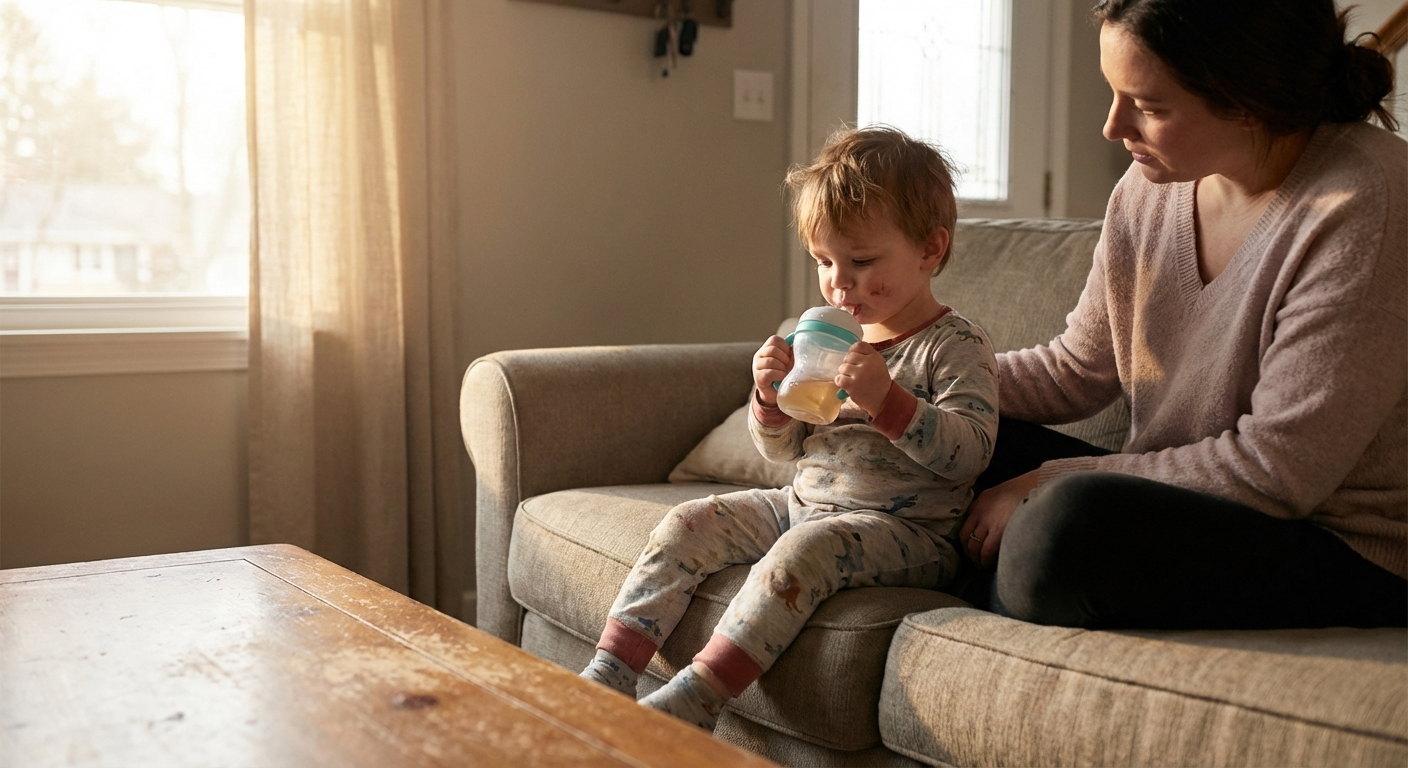
- Offer small, frequent sips. Think “a little often” instead of “a lot once.”
- Use oral rehydration solutions if vomiting or diarrhea is involved.
- Popsicles, ice chips, and soups count.
- For babies, keep breastfeeding or formula feeding as usual, with extra feeds if tolerated.
If your child has a sore throat, cold liquids or frozen treats can be soothing.
Fever and discomfort
- Use fever reducers only if your child is uncomfortable, not just to “make the number normal.”
- Follow your clinician’s dosing guidance for acetaminophen or ibuprofen based on your child’s weight and age.
- Do not use ibuprofen under 6 months unless your clinician specifically tells you to.
- Skip aspirin in children.
Nose and cough support
- Saline spray or drops plus gentle suction for babies
- A cool-mist humidifier in the bedroom
- Honey for cough in children over 1 year old
Over-the-counter cough and cold medications are generally not recommended for young children. If your child is older and you are considering them, check with your pediatrician first.
For adenovirus pink eye
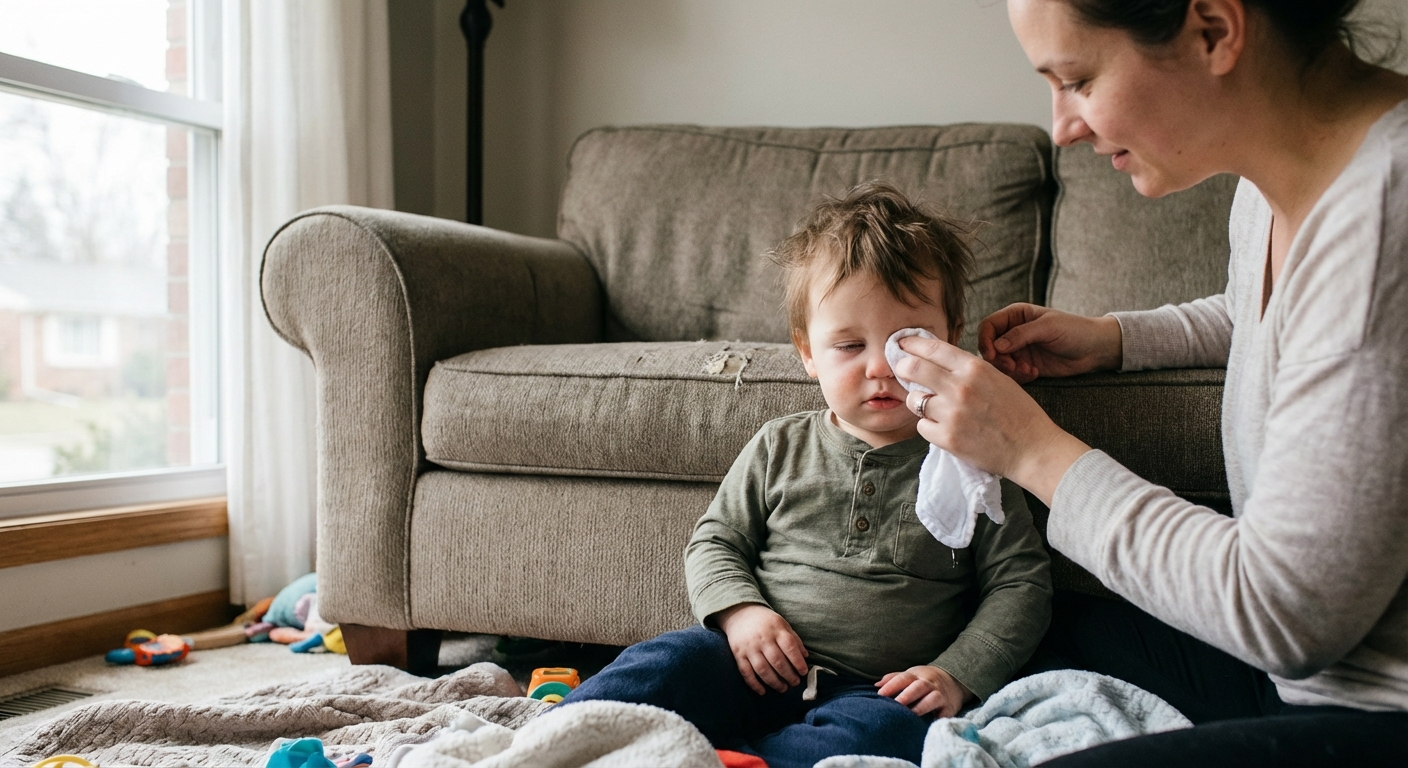
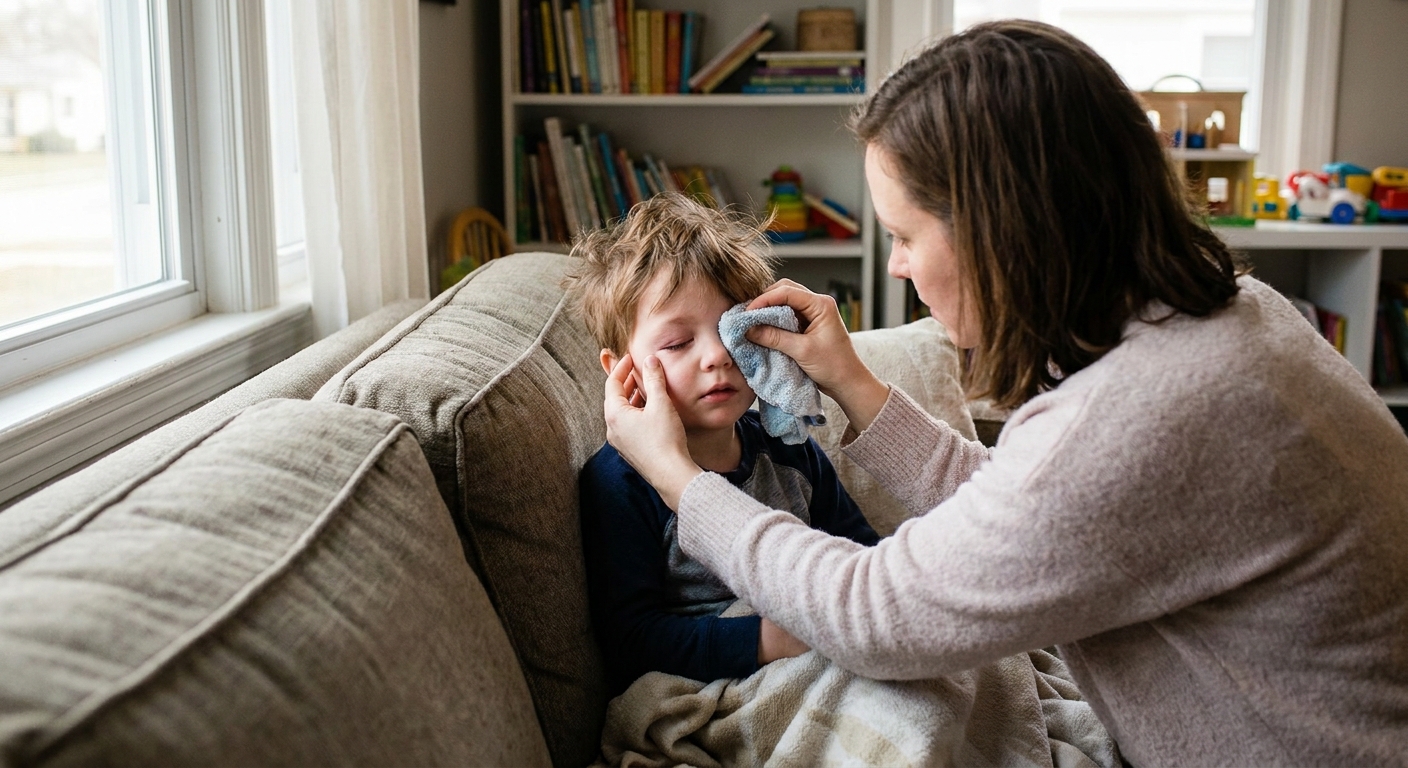
- Use a clean, warm compress for crusting.
- Teach “wipe away from the eye” and use a clean cloth each time.
- Avoid sharing towels, pillows, eye makeup, or washcloths.
- Remind kids not to rub their eyes, which is like giving the virus a free ride to the other eye.
Antibiotic eye drops usually do not help viral pink eye. They are sometimes prescribed if bacterial infection is suspected, but adenovirus itself does not respond to antibiotics.

Preventing spread
Adenovirus is contagious, and pink eye can be especially efficient at spreading through households and classrooms.
Practical steps
- Handwashing with soap and water, especially after wiping noses, using the bathroom, and before meals.
- Separate towels and washcloths for the sick child.
- Clean high-touch surfaces like light switches, doorknobs, tablet screens, and faucets.
- Do not share cups, utensils, or pillows.
School and daycare return
This depends on your local policy, but in general, kids should stay home if they have:
- Fever (typically until fever-free for 24 hours without fever reducers)
- Significant fatigue or symptoms that prevent participation
- Uncontrolled coughing or trouble breathing
- Vomiting or frequent diarrhea
With pink eye, many schools no longer require antibiotic drops to return because viral pink eye is common and antibiotics do not fix it. That said, some centers still have strict rules, so it is worth checking your specific policy.
Diagnosis and testing
Most of the time, adenovirus is diagnosed clinically based on the symptom pattern and what is circulating locally. Testing may be done when results would change what your clinician does next, such as clarifying isolation decisions during an outbreak, evaluating a very sick child, or assessing a child with a weakened immune system.
When it is more than a cold
Most children recover without complications, but adenovirus can occasionally cause more serious illness, particularly in infants and children with weakened immune systems. Kids with underlying lung disease or who tend to wheeze (including asthma) may have more breathing symptoms during respiratory viruses.
Breathing red flags
Seek urgent care or emergency evaluation if your child has:
- Fast breathing, struggling to breathe, or retractions (skin pulling in between or under the ribs)
- Wheezing that is new or worsening
- Grunting, flaring nostrils, or trouble speaking in full sentences (in older kids)
- Lips or face that look bluish or gray
- A cough that is severe, painful, or accompanied by chest retractions
Dehydration red flags
Call your pediatrician promptly or seek care if you notice:
- Very little urine: fewer wet diapers than usual or no urination for 8 to 12 hours
- Dry mouth or no tears when crying
- Sunken eyes or sunken soft spot in babies
- Child is too sleepy, hard to wake, or unusually irritable
- Persistent vomiting or inability to keep down fluids
Fever and “not acting right” red flags
- Fever in a baby under 3 months
- Fever lasting more than 5 days, or fever that returns after improving
- Stiff neck, severe headache, or sensitivity to light
- Rash with fever that spreads quickly, bruises, or does not blanch when pressed
- Your gut feeling that something is off, especially if your child looks very ill
Eye-specific red flags
Contact your clinician urgently (or seek emergency care if severe) if your child has pink eye plus:
- Moderate to severe eye pain
- Trouble opening the eye
- Significant eyelid swelling or swelling around the eye
- Blurry vision, vision changes, or a new inability to track or focus
- Severe light sensitivity, especially with headache
- Contact lens use
- Symptoms that are not improving after 7 to 10 days
If you are staring at your child thinking, “This is not my kid,” trust that instinct. You do not need to win an argument with Google before you call.
Antibiotics and antivirals
Antibiotics do not treat adenovirus because antibiotics only work on bacteria. Sometimes a child can develop a secondary bacterial infection like an ear infection or pneumonia after a viral illness, and that is when antibiotics might come into the picture.
For most healthy children, there is no antiviral medication used routinely for adenovirus. In rare, severe infections, antivirals may be considered for immunocompromised patients under specialist care.
3 AM parent questions
Why pink eye and a sore throat at the same time?
Adenovirus can cause both respiratory symptoms and conjunctivitis in the same infection. It is a classic combo, and it is also why outbreaks move fast through groups of kids.
Is it normal for fever to last several days?
Yes, adenovirus fevers can be stubborn. If the fever lasts more than 5 days, your child is worsening, or you are concerned, check in with your pediatrician.
Can adults catch it too?
Yes. Parents often get a milder version, but not always. Handwashing and not sharing towels or pillows really helps.
The bottom line
Adenovirus is a common childhood virus that can look like a cold, come with high fevers, and frequently causes viral pink eye. Most kids improve over 1 to 2 weeks with supportive care, with hydration and comfort measures making the biggest difference. A cough can linger longer.
Keep your child home when they have fever or cannot participate normally, focus on fluids, and watch closely for breathing trouble or dehydration. And if you are on the fence about whether it is time to call, you are allowed to call. That is what we are here for.
Sarah Mitchell
Sarah Mitchell is a Registered Pediatric Nurse and a mother of three who has spent over a decade helping families navigate the beautiful, chaotic early years of childhood. She combines evidence-based medical knowledge with real-world parenting experience to offer practical, compassionate advice. At Awesome Parent, Sarah's mission is to help exhausted parents find solutions, trust their instincts, and finally get some sleep.