A calm, practical guide to toddler pink eye: discharge color clues, home care that actually helps, contagious timelines, when antibiotics are needed, and red...
How Long Is Pink Eye Contagious in Kids?

Sarah Mitchell
Sarah Mitchell is a Registered Pediatric Nurse and a mother of three who has spent over a decade helping families navigate the beautiful, chaotic early years of childhood. She combines evidence-based medical knowledge with real-world parenting experience to offer practical, compassionate advice. At Awesome Parent, Sarah's mission is to help exhausted parents find solutions, trust their instincts, and finally get some sleep.
If your child wakes up with a sticky, pink, goopy eye, your brain immediately does the math: How long are they contagious for, what about siblings, and can we go back to daycare without being “that family”?
I’ve answered this question as a pediatric triage nurse and as a mom who has cleaned crusty eyelashes at 3 AM. The good news is that most cases are manageable at home with smart hygiene and a little patience. The tricky part is that “pink eye” is actually a few different conditions that behave differently.
Quick answer: contagious timelines
Here’s the simplest way to think about it:
- Viral conjunctivitis: contagious for several days and can last longer, sometimes up to 1 to 2 weeks (adenovirus is the classic culprit), especially with ongoing tearing/discharge and cold symptoms.
- Bacterial conjunctivitis: spread risk is highest while there is active discharge. Many kids are often considered much less contagious after about 24 hours of appropriate antibiotic drops or ointment, but it is not a perfect on/off switch.
- Allergic conjunctivitis: not contagious.
- Irritant/chemical conjunctivitis: not contagious (think chlorine, smoke, strong fragrances, dust, or getting soap in the eye).
Because kids do a lot of eye rubbing and a lot of face touching, even mild cases can spread through a household quickly unless you get ahead of the hygiene piece.
What is pink eye?
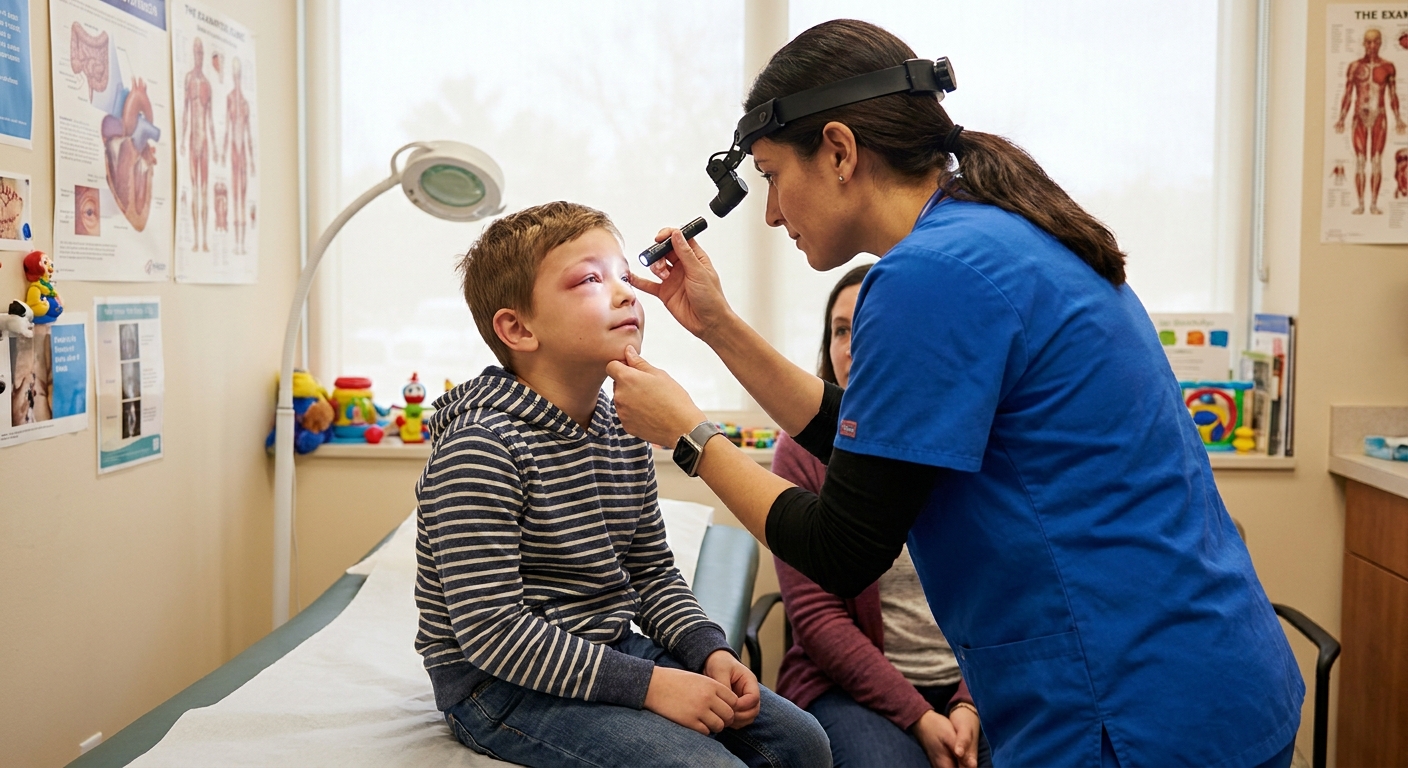
Conjunctivitis is irritation and inflammation of the thin membrane covering the white part of the eye and the inside of the eyelids. It can look dramatic, but it’s often mild.
The cause matters because it determines how long your child is contagious and whether drops will help.
Viral pink eye
How it spreads
Viral conjunctivitis is often part of a common cold. It spreads mainly through direct contact and contaminated surfaces, like:
- Hands after touching eye discharge or tears
- Shared towels, pillows, washcloths
- High-touch items like tablets, toys, doorknobs
It can also spread through coughing and sneezing when the same virus is causing upper respiratory symptoms.
How long it’s contagious
In general, kids are most contagious while symptoms are active, especially in the first 3 to 5 days. But some viruses (especially adenovirus) can keep spreading for longer, even as things slowly improve.
A practical rule in real life: assume the spread risk is higher while there is active tearing or discharge and your child is rubbing their eyes. Viral pink eye can stay contagious for 7 to 14 days, particularly if they also have a lingering cold.
Do antibiotic drops help viral pink eye?
No. Antibiotics do not treat viruses and do not shorten the contagious period for viral conjunctivitis. Supportive care does help your child feel better:
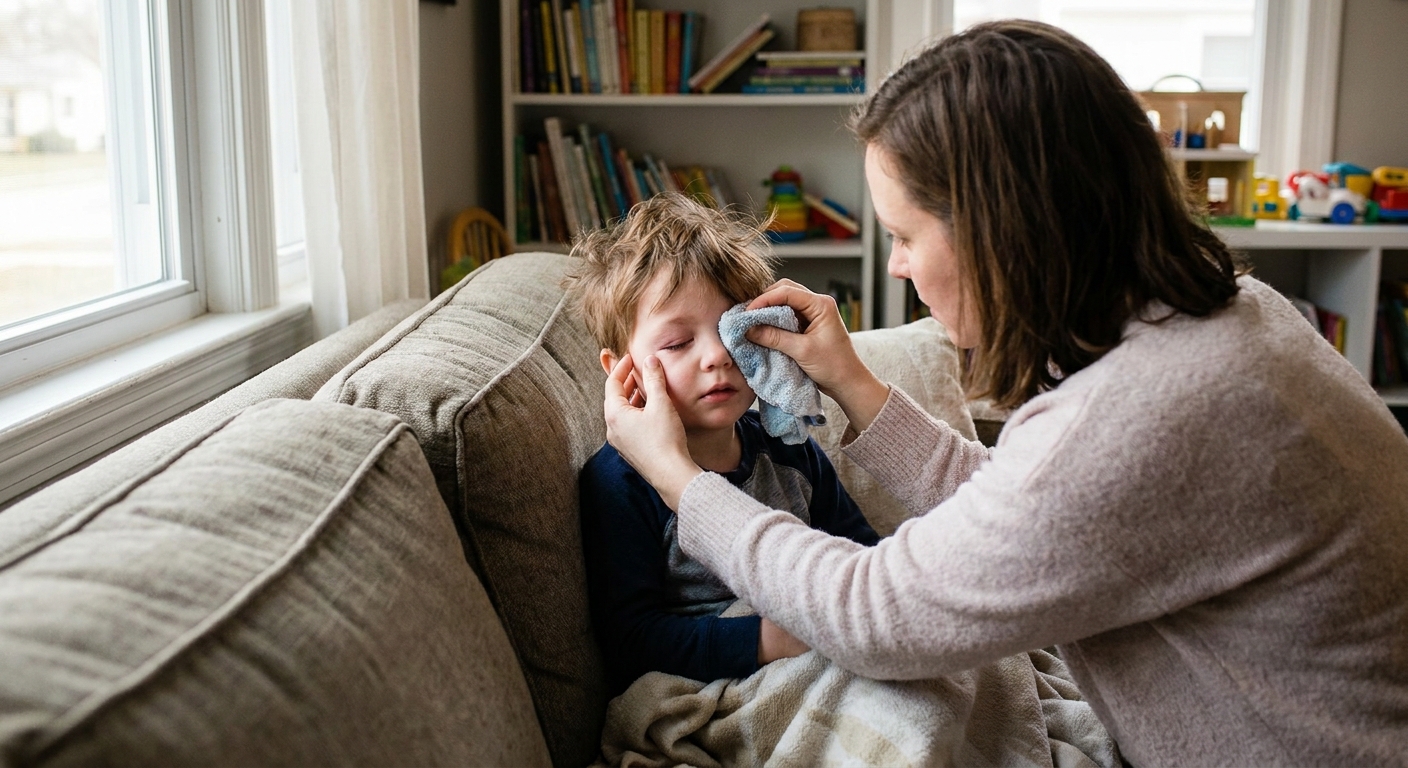
- Cool compresses for irritation
- Artificial tears (check age guidance on the label)
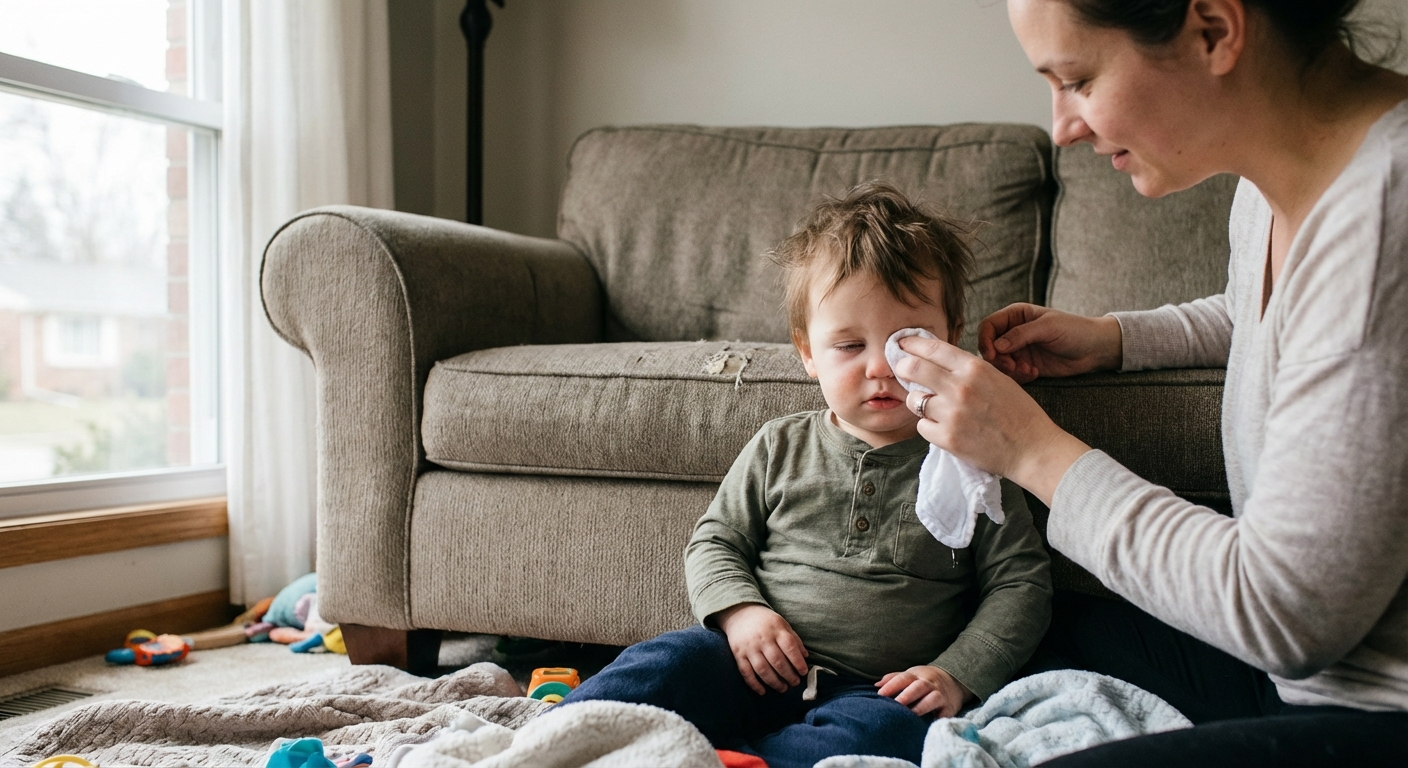
- Gentle cleaning of discharge with warm water and a clean cloth

Bacterial pink eye
Clues it may be bacterial
No home test is perfect, but bacterial conjunctivitis often includes:
- Thick yellow or green discharge
- Eyelids stuck shut after sleep
- One eye may start first, the other may follow
Viral infections can still cause discharge, especially in the morning, so use these as hints, not guarantees.
How long it’s contagious
Bacterial pink eye spreads most when there is fresh discharge on hands, faces, and shared surfaces. With treatment, many children are often considered less contagious after about 24 hours of antibiotic drops or ointment, and you will usually see less goop and less eye rubbing within a day or two.
Without antibiotics, many cases still improve on their own, but the “goopy” phase can last several days and can spread easily in that window.
When do drops start working?
Many children look noticeably better in 1 to 2 days after starting antibiotics. The goal is comfort and reducing spread. Make sure you:
- Use the medication exactly as prescribed
- Finish the full course if instructed, even if it clears quickly
- Do not share eye drops between siblings
Allergic pink eye
Allergic conjunctivitis is caused by pollen, pet dander, dust, or other allergens. It often comes with:
- Itching (classic allergy clue)
- Watery eyes (more than thick, goopy discharge)
- Sneezing or a clear runny nose
- Both eyes affected at the same time
This type is not contagious. Your child can usually attend school or daycare if they feel well enough and can avoid constant eye rubbing.
Helpful options include cool compresses, allergy meds recommended by your pediatrician, and allergy eye drops when age appropriate.
Daycare and school return
Policies vary. Some childcare centers still follow a familiar rule: kids with suspected bacterial pink eye can return after 24 hours of antibiotic treatment. Many medical guidelines are more flexible, because a lot of conjunctivitis is viral, and even bacterial cases often improve without antibiotics.
Return-to-daycare checklist
- If bacterial and on antibiotics: often OK to return after about 24 hours, especially if discharge is improving and your child can keep hands away from eyes.
- If viral: there is no “24-hour drop rule.” Return is usually based on whether your child is well enough to participate and can manage hygiene, meaning discharge is manageable and they are not constantly rubbing the eye.
- If allergic or irritant: not contagious, return when comfortable.
When should your child stay home?
Consider staying home if your child has:
- Fever or significant cold symptoms that would keep them home anyway
- So much discharge that it is constantly running down the face
- Inability to stop rubbing their eyes despite reminders
- New eye pain, light sensitivity, or vision complaints (needs medical assessment)
If your daycare requires a note, your pediatrician can help, but most offices also appreciate when families call first rather than showing up in the waiting room with a highly contagious eye infection.
Stop it from spreading
In my house, the “don’t touch your eye” speech lasts about seven seconds. So we focus on what actually works: reducing germs on hands and shared surfaces.
Hygiene steps that help
- Handwashing: soap and water for 20 seconds, especially after wiping the eye, before meals, and after using the bathroom.
- Separate linens: give your child their own towel and washcloth, and swap pillowcases daily during the goopy phase.
- Clean discharge safely: wipe from inner corner outward using a clean, damp cloth or cotton pad. Use a new one for each wipe if you can.
- Do not share: eye drops, tissues, cosmetics, face paint, swim goggles.
- Wipe high-touch surfaces: doorknobs, tablet screens, faucet handles, remote controls.
- Contact lenses: older kids should stop wearing them until cleared. If your child wears contacts and has red eye plus pain, light sensitivity, or blurry vision, get same-day medical advice because corneal infections (keratitis) can be serious.

Swollen eyelid or cellulitis?
A mildly puffy eyelid can happen with pink eye. But there’s an important line between “irritated and swollen” and a more serious skin infection around the eye called cellulitis.
Doctors may describe this as preseptal (periorbital) cellulitis or the more dangerous orbital cellulitis. Orbital cellulitis is the one we worry about when eye movement, vision, or the position of the eye itself is affected.
Get urgent, same-day care if you notice
- Significant eyelid swelling, especially if it is getting worse quickly
- Redness and warmth of the eyelid or skin around the eye (not just the white of the eye)
- Eye pain, especially with movement
- Fever
- Bulging eye (proptosis), droopy eyelid, or trouble opening the eye
- Vision changes or double vision
Cellulitis needs prompt medical evaluation and sometimes antibiotics by mouth or even in the hospital. Trust your gut here. If the eyelid looks markedly swollen, tender, and hot, do not wait it out.
Other reasons to call
- Newborns (especially under 28 days) with any eye redness or discharge
- Baby under 3 months with eye redness or discharge
- Moderate to severe eye pain, or your child is keeping the eye closed
- Light sensitivity or headache with eye symptoms
- Symptoms after an eye injury or chemical exposure
- Suspected foreign body in the eye
- Symptoms lasting more than 7 to 10 days without improvement
- Recurrent pink eye over and over (may be allergies, blocked tear duct, or another issue)
- Blisters on the eyelid or skin near the eye (needs prompt evaluation)
FAQ
Is pink eye contagious before symptoms show?
Viral pink eye: yes, kids can spread viruses before obvious eye redness, especially if they also have cold symptoms starting. Bacterial: typically spreads most when discharge is present.
Can my child go swimming with pink eye?
It’s best to skip swimming until symptoms have improved. Pools can irritate already inflamed eyes, and while chlorine kills many germs, it does not make shared water and wet surfaces a great idea during an active infection.
If your child wears contact lenses, be extra cautious. Any red eye with pain, light sensitivity, or blurry vision should be assessed promptly.
What if daycare says my child needs drops to return?
This is a common policy, even though not all pink eye needs antibiotics. If your child’s symptoms look viral, allergic, or irritant, ask your pediatrician if a note is appropriate. If bacterial is likely, drops can help your child feel better and may reduce spread faster.
The bottom line
Viral pink eye tends to be contagious the longest. It’s usually several days, and it can be up to 2 weeks in some cases (adenovirus is a common reason). Bacterial pink eye often becomes less contagious after about 24 hours on appropriate antibiotic drops, but spread risk still depends on how much discharge and eye rubbing is happening. Allergic and irritant pink eye are not contagious.
If you take nothing else from this, take this: focus on hands, linens, and surfaces, and watch the eyelid closely. A little puffiness is common. A hot, red, rapidly swelling eyelid with fever or pain is a different situation and needs medical care.
You are not failing if pink eye sweeps through your house anyway. It is basically a toddler superpower. Do what you can, get everyone washed up, and give yourself the same compassion you would give a friend texting you about crusty eyelashes at dawn.
Sarah Mitchell
Sarah Mitchell is a Registered Pediatric Nurse and a mother of three who has spent over a decade helping families navigate the beautiful, chaotic early years of childhood. She combines evidence-based medical knowledge with real-world parenting experience to offer practical, compassionate advice. At Awesome Parent, Sarah's mission is to help exhausted parents find solutions, trust their instincts, and finally get some sleep.