Classic vs atypical symptoms by age, rebound tenderness in plain language, common lookalikes, at-home pain medicine guidance, and a simple ER decision framew...
Appendicitis vs Stomach Bug in Kids: How to Tell the Difference

Sarah Mitchell
Sarah Mitchell is a Registered Pediatric Nurse and a mother of three who has spent over a decade helping families navigate the beautiful, chaotic early years of childhood. She combines evidence-based medical knowledge with real-world parenting experience to offer practical, compassionate advice. At Awesome Parent, Sarah's mission is to help exhausted parents find solutions, trust their instincts, and finally get some sleep.
If your kid is curled up on the couch saying their belly hurts, your brain does what every loving parent brain does: it jumps straight to appendicitis. And to be fair, appendicitis is one of the diagnoses we never want to miss.
The tricky part is that a common stomach virus can look dramatic at 2 AM, and appendicitis can start off annoyingly vague. Below are practical clues you can watch for at home, plus the exact moments you should stop googling and call for medical advice.

The big picture
Stomach bug (viral gastroenteritis)
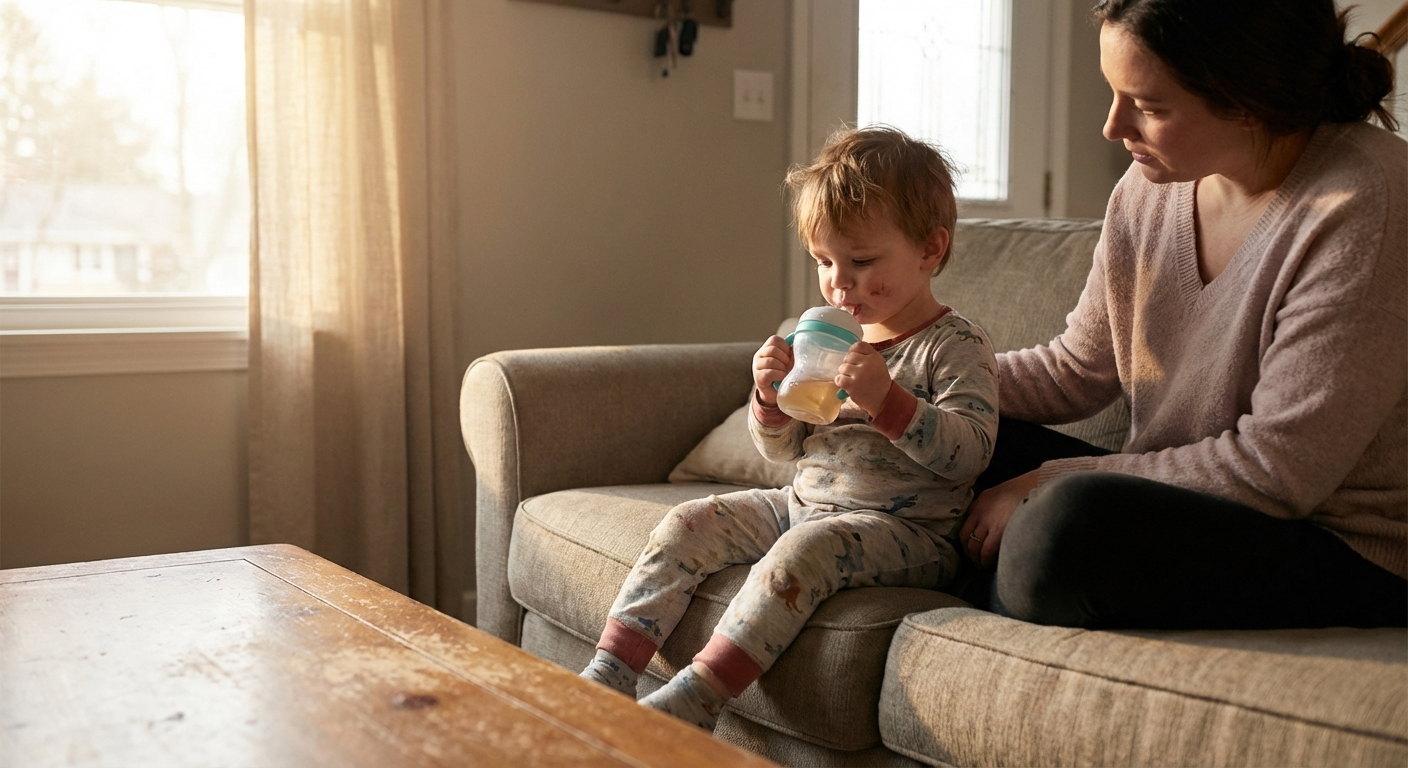
Many stomach bugs start fast and messy. Kids may go from fine to vomiting within hours, and diarrhea often follows, but the order can vary. Some kids have more diarrhea than vomiting, and some barely vomit at all.
They usually feel crummy, but between episodes many kids can still be distracted, sip fluids, and sometimes even ask for a snack once the worst wave passes.
Appendicitis
Appendicitis usually gets worse over time, not better. Early on it can look like “just” belly pain, mild nausea, or low appetite. Then the pain tends to become more constant and more specific.
Parent gut-check: With appendicitis, the story is often a steady downhill slide. With a stomach bug, symptoms can be intense but come in waves.
Pain pattern
Where the pain is
- Appendicitis: classically starts near the belly button or upper belly, then moves to the lower right side (right lower quadrant). Not every child reads the textbook. If the appendix sits in a different position, pain can show up in the back, flank, or low pelvis, and some kids have urinary symptoms. Left-sided pain is less typical, but anatomy can vary.
- Stomach bug: pain is often diffuse (all over), crampy, and may come right before vomiting or diarrhea.
How the pain behaves
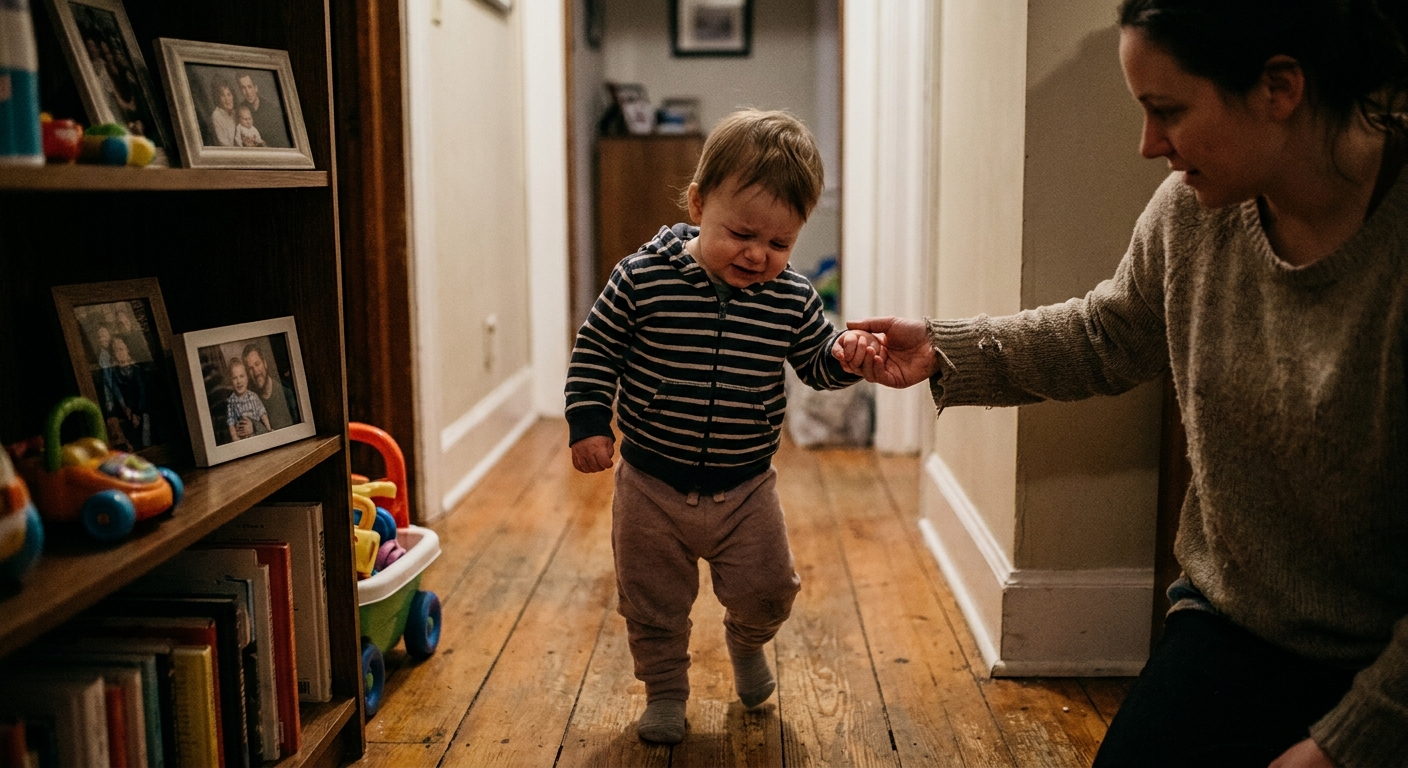
- Appendicitis: pain is more likely to be constant and worsen with movement, walking, coughing, laughing, or riding in the car over bumps.
- Stomach bug: pain is more likely to be crampy and ease temporarily after vomiting or a bowel movement.
Vomiting and diarrhea timing
The timeline matters more than the number of episodes.
More typical for a stomach bug
- Vomiting and diarrhea often happen close together. In many cases vomiting comes first and diarrhea follows, but either can lead.
- Multiple family members get sick close together.
- Symptoms come in waves, with short breaks where your child can rest and sip fluids.
More concerning for appendicitis
- Pain comes first, then nausea and vomiting after the pain has been building.
- Little to no diarrhea. Some kids have loose stools, but frequent watery diarrhea is more typical of a virus.
- Vomiting that persists or escalates despite basic supportive care (rest and small, frequent sips of oral rehydration solution or clear fluids) needs evaluation, no matter the cause.
One important exception: Appendicitis can sometimes irritate the bowel and cause some diarrhea, especially if the appendix sits close to the colon. So diarrhea does not rule it out. It just lowers the odds a bit when the rest of the pattern screams “stomach bug.”
Fever
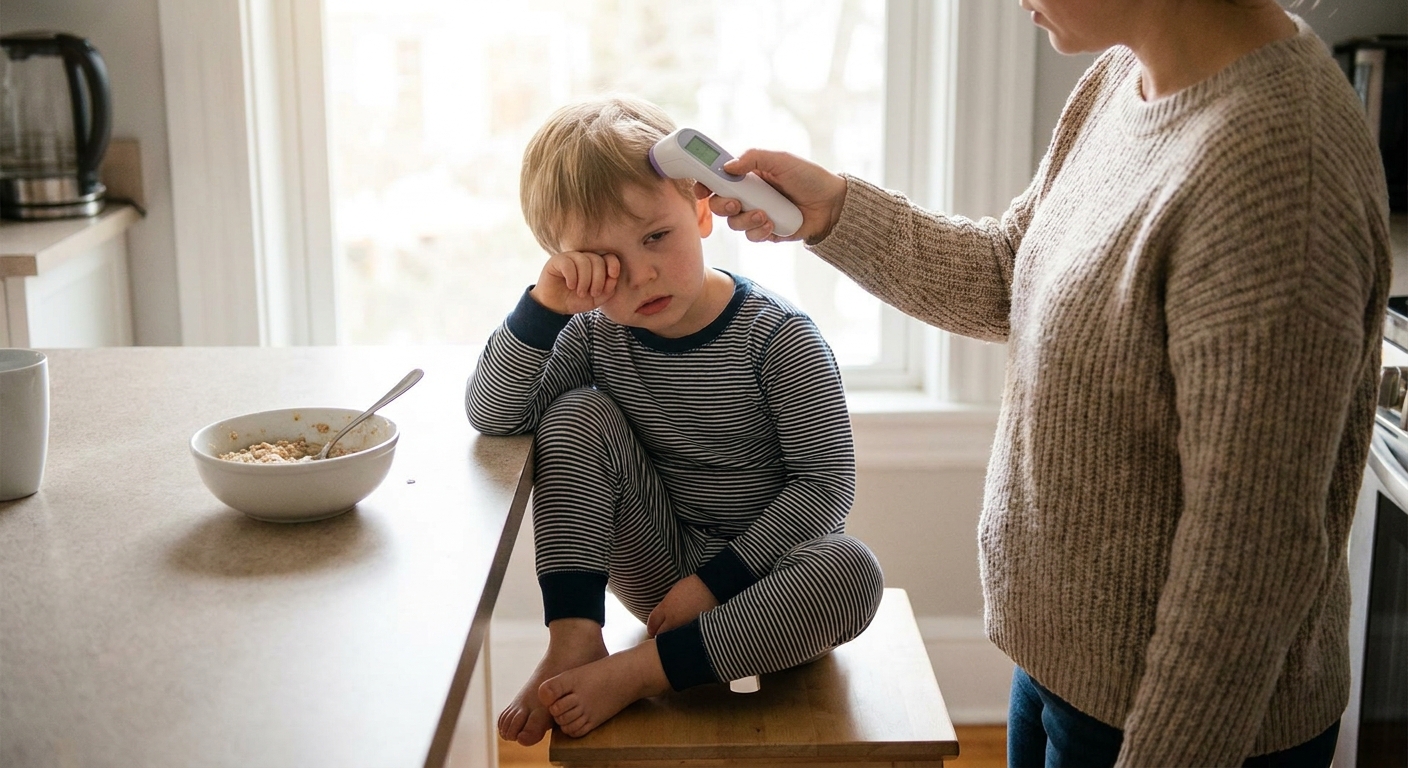
- Stomach bug: fever can show up early and may fluctuate. Hydration does not treat the fever itself, but it helps your child feel better overall and reduces dehydration risk.
- Appendicitis: fever may be absent early. A fever that appears later, especially with worsening pain and a child who looks increasingly unwell, is concerning. Higher fevers can happen with perforation or spreading infection, but you do not wait for that.
Bottom line: fever is a supporting clue, not the deciding factor. A child can have appendicitis with no fever. A child can have a stomach bug with a pretty impressive fever.
What you can safely notice
You do not need to poke and prod your child’s belly aggressively. But you can observe a few things that often separate “crampy sick” from “I need to be seen.”
- Walking test: Kids with appendicitis often avoid walking upright and may guard their right side. They may refuse to jump, climb stairs, or move around.
- Car ride bumps: Pain that flares significantly with bumps or turning can be a clue of irritation inside the abdomen.
- Guarding: If your child tenses their belly or pushes your hand away when you gently rest it on the lower belly (especially the lower right), note that. Also, the absence of guarding does not rule out appendicitis.
- One spot pain: “It hurts right here” with a fingertip point, especially lower right, matters more than vague “my tummy.”
- Overall look: A child who looks pale, sweaty, very still, or unusually irritable or sleepy deserves a closer look.
Important: If your child has severe pain, do not repeatedly press on the abdomen trying to “check.” Your best move is to get medical help.
ER now: do not wait
Seek emergency care now (or call your local emergency number) if your child has any of these:
- Severe belly pain, a hard or very swollen belly, or pain that is rapidly worsening
- Green (bilious) vomit, blood in vomit, or bloody stools
- Very sleepy, hard to wake, floppy, confused, or inconsolable
- Signs of significant dehydration (no urine for 8 to 12 hours, very dry mouth, no tears, dizziness, or your child is too weak to drink)
- Trouble breathing, blue lips, or a new rash with fever and a very ill appearance
- Sudden, intense lower belly pain with testicle pain or swelling (possible testicular torsion)
- Sudden, intense one-sided lower belly pain in a teen girl with nausea or fainting (possible ovarian torsion)
Call now vs watch at home
Use this table as a decision helper. When in doubt, call your pediatrician’s nurse line, urgent care, or your child’s clinician. That is exactly what we are there for.
| Call now or go in today | Watch at home (with a plan) |
|---|---|
| Abdominal pain that is getting steadily worse over 6 to 24 hours | Mild crampy belly pain that comes and goes and improves after vomiting or stool |
| Pain that localizes to the lower right belly, or your child points to one spot | Diffuse “all over” belly discomfort with typical viral symptoms |
| Pain with walking, jumping, coughing, or riding over bumps | Your child can move around, change positions, and is intermittently playful |
| Vomiting that starts after the belly pain and does not let up | Vomiting that starts early and gradually spaces out over time |
| Little appetite plus worsening tenderness, especially with fever that appears later | Normal or low-grade fever early in illness, improving as the virus runs its course |
| Bloody stool or vomit, green vomit, or a very swollen, hard belly | No blood, belly soft between cramps, able to sip fluids |
| Signs of dehydration: very dry mouth, no tears, very sleepy, peeing much less | Trending back toward normal hydration: peeing at least a few times a day, moist mouth |
If you are seeing appendicitis-type signs, do not give laxatives or enemas “just in case” unless a clinician specifically tells you to. Call your child’s clinician or head in for an exam.
For a deeper dive on urgent warning signs, read our red-flag guide: Appendicitis in Kids: Red Flags Parents Should Never Ignore.
Other serious look-alikes
In clinic, a big chunk of “possible appendicitis” visits turn out to be something else. Sometimes it is harmless. Sometimes it is a different “do not miss” problem. If your child’s symptoms do not fit a typical stomach bug pattern, or they are not improving on a reasonable timeline, get them checked.
- UTI: belly pain with urinary frequency, burning, accidents, or new bedwetting
- Pneumonia: belly pain plus cough, fast breathing, or chest pain (especially in younger kids)
- Strep throat: belly pain with sore throat, fever, headache, or a sandpapery rash
- Intussusception: episodes of intense crampy pain with periods of calm, sometimes with vomiting or bloody “currant jelly” stool
- Diabetic ketoacidosis (DKA): belly pain and vomiting with deep fast breathing, fruity breath, extreme thirst, and peeing a lot
Common mimics
Two common look-alikes are mesenteric adenitis and constipation.
Mesenteric adenitis
This often happens after a viral illness, and it can cause right-sided belly pain that looks a lot like appendicitis. Kids may also have sore throat, runny nose, or recent cold symptoms.
- Pain can be significant and may be right-sided.
- Fever can occur.
- It is usually diagnosed after a clinician exam and sometimes imaging, because it can be hard to tell apart from appendicitis at home.
Constipation
Constipation is a sneakier troublemaker than it gets credit for. Hard stool can cause lower belly pain, poor appetite, nausea, and even vomiting.
- Pain may be intermittent and crampy.
- Your child may have fewer stools, painful stools, or small pellet-like stools.
- Belly can feel bloated and uncomfortable, and symptoms may improve after a large poop.
But here is the catch: constipation can exist at the same time as appendicitis. So if the pain is worsening, localized, or movement-sensitive, do not assume it is “just constipation” without a medical exam.

What to do while you decide
If this looks like a stomach bug
- Hydrate smart: small sips frequently. Oral rehydration solution is ideal, especially for toddlers.
- Food: once vomiting slows, offer gentle foods your child tolerates. No need to force eating.
- Track urine: fewer wet diapers, no urine for many hours, or very dark urine means you need help.
- Comfort meds: if your child can keep liquids down, you can usually use acetaminophen or ibuprofen for fever or discomfort (follow label dosing and your clinician’s guidance). If you are heading in for possible appendicitis, ask before giving anything stronger.
If appendicitis is on your radar
- Call your pediatrician or go to urgent care or the ER, depending on severity and access.
- Avoid laxatives, enemas, or heavy meals unless instructed by a clinician.
- Do not ignore pain that is getting worse or localizing, even if vomiting is not constant.
- About pain medicine: many parents worry it will “mask” appendicitis. In general, appropriate pain control does not prevent clinicians from diagnosing appendicitis, but if you are unsure where to go next, calling before dosing can help you make a clean plan.
And yes, you are allowed to be wrong. Parents often worry they will “waste a visit.” In triage, we would rather see ten stomach bugs than miss one appendicitis.
Quick FAQ
Can a kid have appendicitis with diarrhea?
Yes, occasionally. It is less typical, but it happens. Pay attention to the pain pattern and whether your child is getting worse.
What ages get appendicitis?
It can happen at any age, but it becomes more common in school-age kids and teens. In very young children, symptoms can be less classic, which is why persistent or worsening belly pain always deserves a call.
If the pain goes away, can it still be appendicitis?
Pain that truly resolves and your child returns to normal is less consistent with appendicitis. But pain that “lets up” because your child is exhausted, medicated, or temporarily very still can be misleading. If the overall trend is worsening or localizing, get them checked.
How long is too long to wait?
If belly pain is steadily worsening over 6 to 24 hours, localizing (especially to the lower right), or your child cannot walk comfortably, call or go in. If you are treating this like a stomach bug but your child is not improving as the hours pass, trust that trend and check in.
Trust the trend
Here is the calm, nurse-mom takeaway: a stomach bug is usually loud at first and then gradually improves. Appendicitis often starts quieter and gets steadily worse, especially with movement and with pain settling into the lower right belly.
If your child’s symptoms fit the appendicitis pattern or your parent instincts are yelling that something is off, call now and get an exam. You are not overreacting. You are paying attention.
Sarah Mitchell
Sarah Mitchell is a Registered Pediatric Nurse and a mother of three who has spent over a decade helping families navigate the beautiful, chaotic early years of childhood. She combines evidence-based medical knowledge with real-world parenting experience to offer practical, compassionate advice. At Awesome Parent, Sarah's mission is to help exhausted parents find solutions, trust their instincts, and finally get some sleep.