A clear, month-by-month guide to baby speech milestones from cooing to first words and two-word phrases, plus simple ways to support language and signs of de...
Baby Sign Language: Does It Delay Talking?

Sarah Mitchell
Sarah Mitchell is a Registered Pediatric Nurse and a mother of three who has spent over a decade helping families navigate the beautiful, chaotic early years of childhood. She combines evidence-based medical knowledge with real-world parenting experience to offer practical, compassionate advice. At Awesome Parent, Sarah's mission is to help exhausted parents find solutions, trust their instincts, and finally get some sleep.
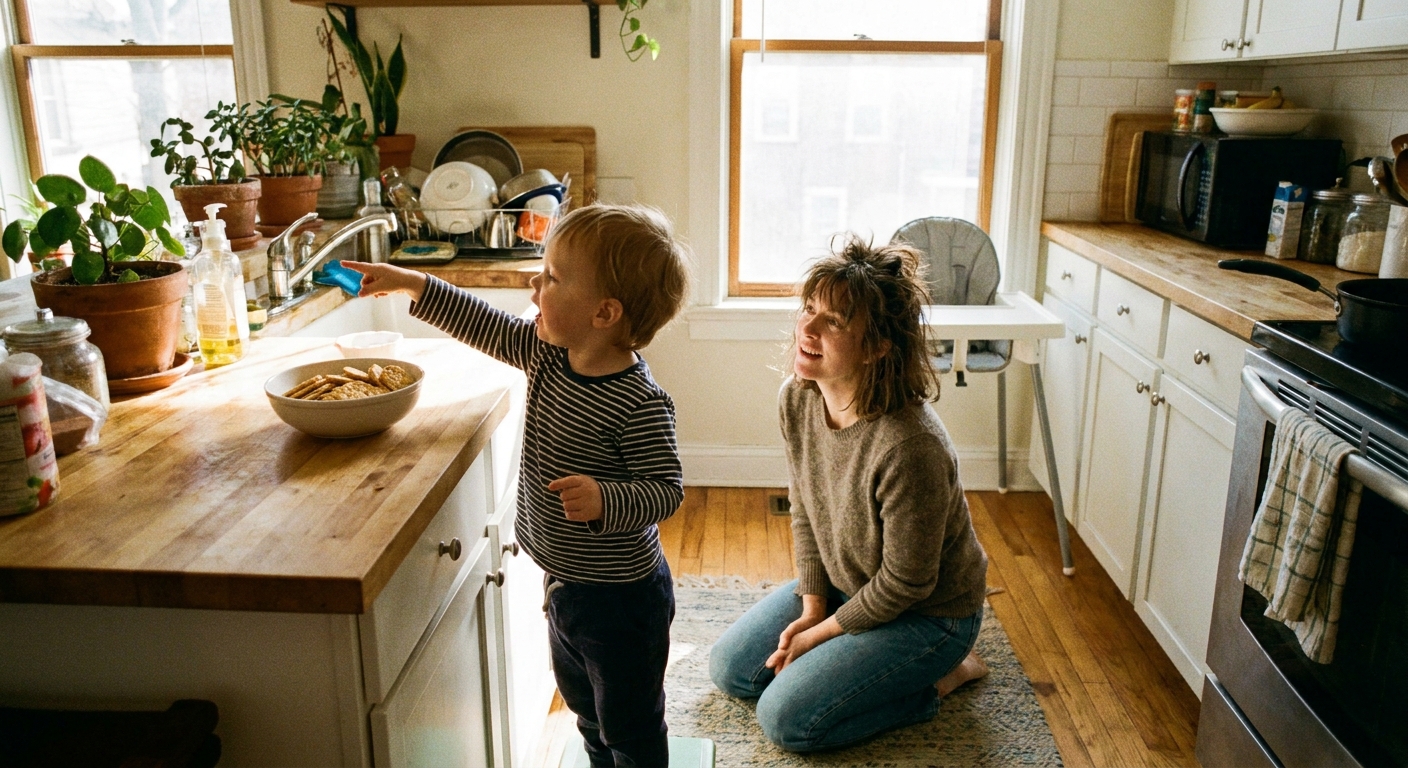
I still remember the first time one of my babies signed more. He was sitting in his high chair, covered in oatmeal, and he looked at me like, “Listen, lady, I have very clear opinions about second breakfast.” He wasn’t talking yet, but he was communicating, and that took a lot of pressure out of our day.
If you are wondering whether baby sign language can delay talking, here is the calm, evidence-based answer I gave families for years as a pediatric triage nurse.
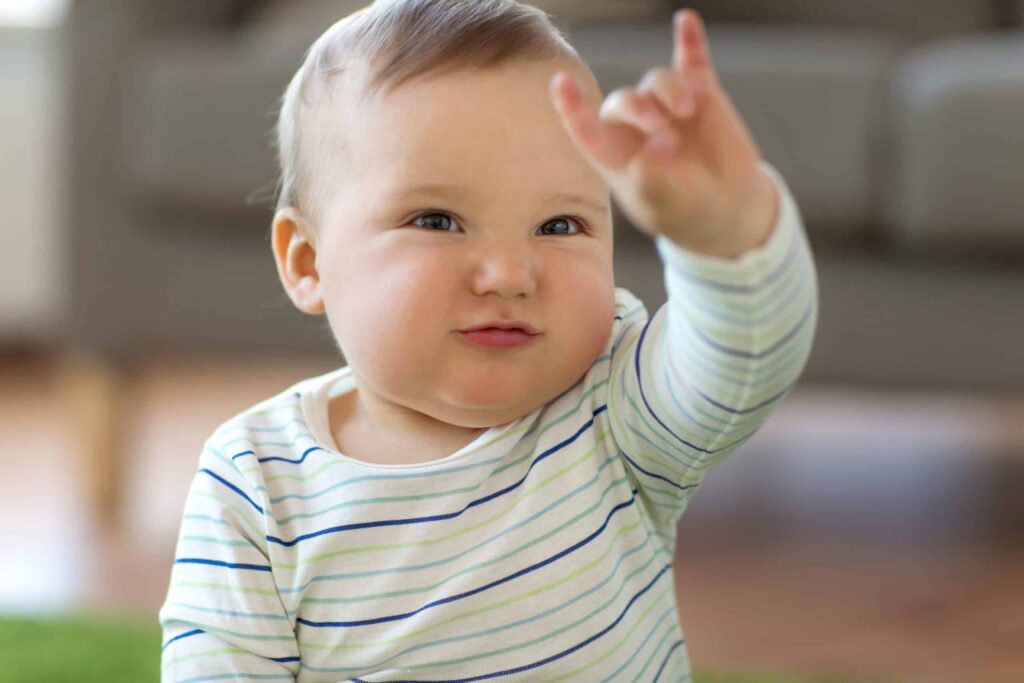
Does baby sign language delay talking?
For most children, no. Using a few simple signs along with spoken words has not been shown to delay speech, and it may support communication by reducing frustration.
Here is the key: signs should be paired with speech. Baby sign is not meant to replace talking. It is more like giving your child a temporary “bridge” so they can express basic needs while their speech skills are still under construction.
What I saw in clinic was this: kids who sign often still babble, still experiment with sounds, and still move into words on their own timeline. When a child does have a delay, it is usually due to underlying factors like hearing differences, speech or language differences, or broader neurodevelopmental factors, not because a family used signs.
What baby sign looks like
Online, it can look like you need 50 signs, flashcards, and a whole production. In actual family life, it is usually much simpler.
Many families find 3 to 10 signs manageable and useful, especially when they match everyday routines. You say the word, make the sign, then wait. If your baby does not copy you at first, that is normal. They often understand long before they sign back.
One expectation-setter that saves a lot of stress: it can take weeks of repetition before a baby signs back consistently. You are not failing. Their brain is just collecting data.
A typical day with signs
- Morning: You say and sign “milk” before a bottle or nursing.
- Meals: You say and sign “more” and “all done.”
- Play: You say and sign “ball,” “book,” or “help.”
- Diapers: You can say and sign “change” (optional, but some babies love being in on the plan).
- Bedtime: You say and sign “bath” and “sleep.”
The magic is not the perfection of the sign. The magic is the consistent pairing of the sign with the spoken word in a predictable moment.
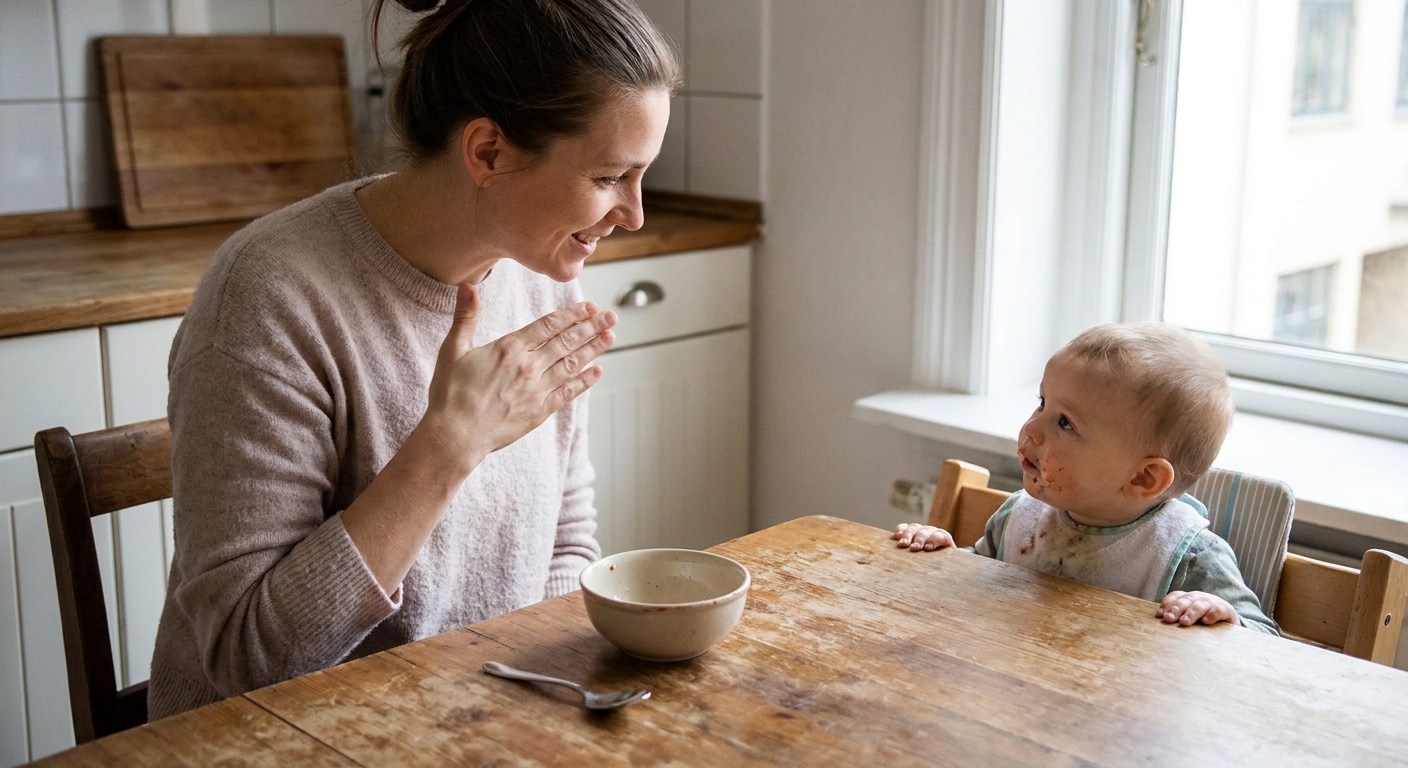
How to teach signs and keep speech
If you take nothing else from this article, take this: always talk while you sign. Your voice is still the main event.
Keep it simple
- Choose functional signs first: more, milk, eat, all done, help, open.
- Use them during the real moment: sign “more” only when there is actually more.
- One sign at a time: add a new sign after your baby starts using one consistently.
Grow the language
As your baby grows, you can “level up” your language while still using the same sign:
- Start: “Milk” (sign milk)
- Next: “Want milk?” (sign milk)
- Then: “More milk, please.” (sign more and milk)
No pressure
Some babies sign early, some later, and some never really take to it. That is fine. Your goal is communication, not a party trick.
Will signing make my baby stop talking?
This is a very common worry, and I get it. When something works, babies use it. If signing gets them crackers faster, they will absolutely sign for crackers.
For many kids, speech becomes faster and more efficient than signing once words and short phrases take off, so signs often fade naturally. But there are exceptions. Some children with hearing loss, autism, speech motor challenges (like childhood apraxia of speech), or other communication differences may use sign or other supports (like AAC) longer, and that is not “giving up” on speech. It is meeting a child where they are so they can be understood.
Green flags for language growth
Baby sign is a communication tool. It does not replace the underlying building blocks of speech and language. Whether or not you use signs, these are good green flags that your child is learning language:
- They respond to sounds and notice voices and music.
- They take turns with you in coos or babbles.
- They use gestures like reaching, showing, waving, or pointing as they get older.
- They understand routines like “bath time” or “bye-bye.”
- They try to communicate in any way: sounds, facial expressions, signs, or pulling you toward what they want.
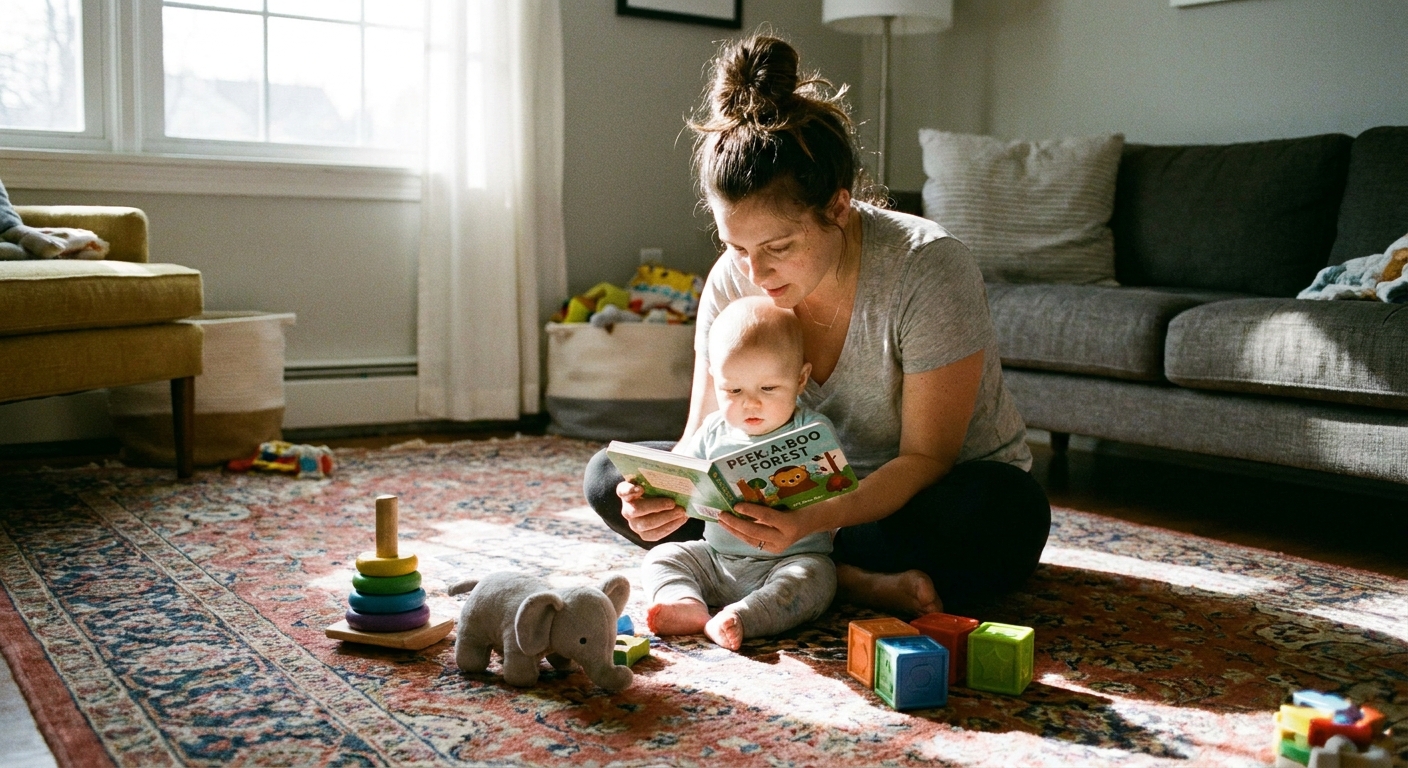
When to get a speech check
Sometimes parents tell me, “We started signs, and now I am worried he is not talking.” Most of the time, the signing is not causing the problem. It is just shining a light on the fact that your child is still having trouble producing sounds or words.
Bring it up if you notice
- Loss of words or loss of skills at any age (for example, they used to say “mama” and stopped).
- Not responding to sound, not turning to voices, or you suspect hearing issues.
- Very limited babbling after the middle of the first year, or a baby who is unusually quiet most of the time.
- Mostly vowel sounds with very few consonants as months go by (especially later in the first year).
- Spoken words are not emerging and you feel like things are not moving forward.
- Speech is hard to understand compared with peers and it is not improving over time (more relevant in the toddler and preschool years).
- They seem to understand very little language (not just “not following directions,” but not seeming to grasp familiar words or routines).
- Frustration is high because communication is consistently breaking down, even with signs.
A quick, non-alarmist milestone anchor: many kids say their first real words around 12 months, with a wide range of normal. If you are looking at no words by around 15 to 18 months, or no two-word combinations by around 24 months, it is worth checking in. And if you are ever told to “wait and see” but your gut is still uneasy, you can ask for a referral anyway.
Do not skip hearing
Hearing issues can be subtle, even in kids who passed a newborn hearing screen. Frequent ear infections, inconsistent responses to their name, or a child who seems to hear some sounds but not others are all reasons to ask about a hearing screen.
About “missing sounds”
Kids develop speech sounds gradually. It is normal for toddlers to have unclear speech and to simplify words. What I listen for clinically is a pattern that feels stuck, like a child who uses only a couple consonant sounds for months, or who cannot seem to coordinate sounds into words.
If you are noticing a big gap between what your child seems to want to say and what they can physically get out, ask about a speech evaluation and a hearing screen.
Common signing mistakes
- Signing without speaking. Always pair the sign with the word.
- Teaching too many signs at once. A few high-use signs work best.
- Only using signs when your baby is upset. Practice when everyone is calm and fed.
- Expecting perfect hand shapes. Approximate signs count. Communication is the goal.
- Using signs to quiz. Instead of “Show me milk,” try “Milk! Here you go” while you sign.
6 useful first signs
If you want a simple starting point, these tend to give the biggest payoff in daily life:
- More
- All done
- Milk (or “drink” depending on your preference)
- Eat
- Help
- Open
Pick two to start. Use them for a week or two. Add more only if it feels helpful, not stressful.
FAQ
What age can babies learn sign language?
Many babies start understanding signs before they can produce them. Some begin signing back in the latter half of the first year, while others start later. Earlier exposure is fine as long as it stays playful and paired with spoken words.
If my child only signs and does not talk, is that a problem?
It depends on age and the whole picture. Signing alone does not explain a true speech delay. If spoken words are not emerging as expected, or if you have concerns about hearing, understanding, or skill loss, it is worth discussing with your pediatrician and considering a speech-language evaluation.
Should we stop signing once words start?
You do not have to. Many families naturally sign less as talking increases. If your toddler enjoys it, you can keep using signs as a support, especially during big-feelings moments when speech gets harder.
Is baby sign language the same as ASL?
Many “baby signs” are borrowed from ASL, but baby sign programs often simplify or adapt signs. If learning authentic ASL matters to your family, consider resources created by Deaf educators and ASL professionals. One practical tip: choose one approach your household will use and be consistent, so your baby is not trying to learn two different signs for the same word.
The bottom line
Using baby sign language alongside speech does not typically delay talking. For many families, it makes daily life smoother by giving babies a way to communicate before words are ready.
If your child is losing skills, not responding to sound, not progressing with babbling or words over time, or you are simply feeling that something is off, signing is not the cause. It is a good reason to ask for a speech and hearing check. You do not have to wait and worry alone.
Sarah Mitchell
Sarah Mitchell is a Registered Pediatric Nurse and a mother of three who has spent over a decade helping families navigate the beautiful, chaotic early years of childhood. She combines evidence-based medical knowledge with real-world parenting experience to offer practical, compassionate advice. At Awesome Parent, Sarah's mission is to help exhausted parents find solutions, trust their instincts, and finally get some sleep.