A calm, practical guide to school-age bedwetting: primary vs secondary enuresis, constipation as a hidden cause, routines and fluids, bedwetting alarms, medi...
Bedwetting and Sleepovers: How to Prepare Your Child

Sarah Mitchell
Sarah Mitchell is a Registered Pediatric Nurse and a mother of three who has spent over a decade helping families navigate the beautiful, chaotic early years of childhood. She combines evidence-based medical knowledge with real-world parenting experience to offer practical, compassionate advice. At Awesome Parent, Sarah's mission is to help exhausted parents find solutions, trust their instincts, and finally get some sleep.
The first time one of my kids got invited to a sleepover, I did the normal mom thing and celebrated for about twelve seconds, then immediately thought: Wait. What about bedtime accidents? If your child still wets the bed, sleepovers, camp, and overnights can feel like a big, scary milestone for both of you.
Here is the good news, as a pediatric nurse and a mom of three: bedwetting is common in school-age kids (for example, around 1 in 10 7-year-olds still wet the bed), it is not your child being lazy, and you can absolutely make away-from-home nights doable without shame. The goal is not perfection. The goal is a plan that protects your child’s privacy and confidence.
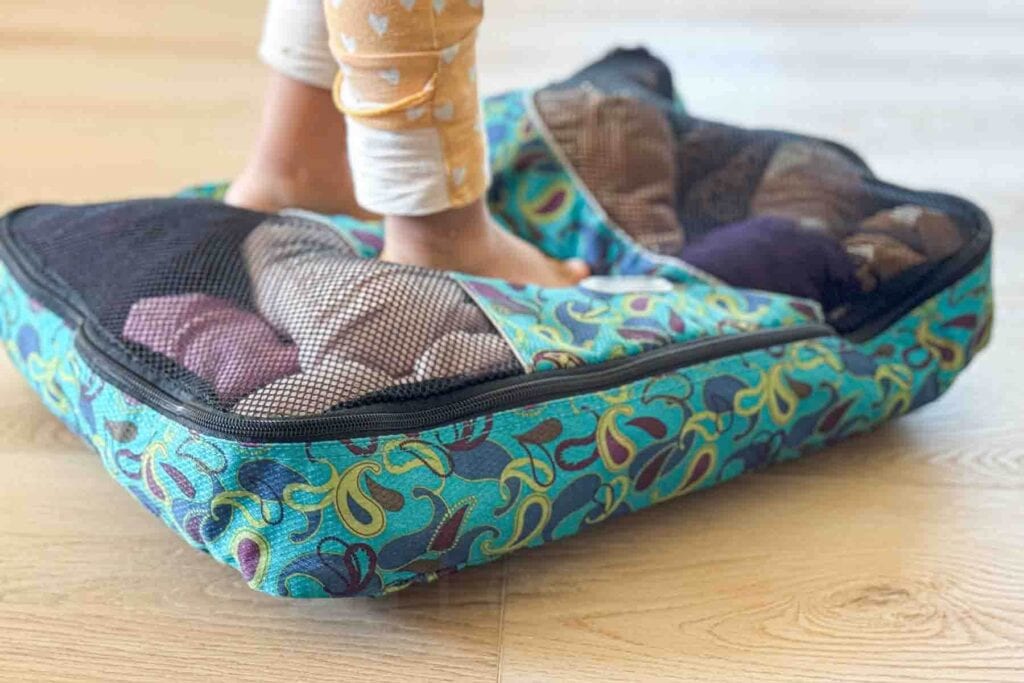
Start with a simple readiness check
Before you say yes, take a quick look at the basics. Plenty of kids with bedwetting can still go, but these questions help you choose the right first sleepover.
- Does your child want to go? If the invitation is exciting but your child seems tense or avoidant, ask what they are worried about. Sometimes they want a shorter practice run first.
- How often are wet nights happening right now? If it is rare, you may just need a backup plan. If it is frequent, a more structured plan (and a conversation with the host) helps.
- Can your child change clothes and manage a wet bag discreetly? If not yet, that is a skill you can practice at home in a totally matter-of-fact way.
- Is constipation an issue? Constipation is a common contributor to bedwetting. If your child strains, has painful stools, or goes infrequently, talk with your pediatrician. Addressing it can help nights go better.
Choose the right protection
For sleepovers, you want something reliable, comfortable, and quiet to put on and change out of. What you choose depends on your child’s age, body size, and how heavy the wetting tends to be.
Disposable nighttime underwear
These are the easiest for most families: they look like underwear, absorb well, and can be rolled up and tossed in a bag. Tips:
- Practice at home first. Make sure it fits and does not leak at the legs.
- Size matters more than brand. A too-small waist or loose leg holes can cause leaks.
- Pack more than you think you need. For one night, send two. For two nights, send three to four.
Reusable training pants or absorbent underwear
These can work well if your child typically has small leaks and you are trying to avoid disposables. For sleepovers and camp, though, they can be tricky because they require rinsing or storing a wet item until morning.
- If you use them, pack a sealable wet bag.
- Consider adding a waterproof bed pad. It protects the mattress if absorption is limited.
Waterproof bed pads
A thin, washable or disposable waterproof pad can go under your child’s bottom area and protects sheets. Some kids prefer this plus nighttime underwear for extra confidence.
A quick etiquette note: If your child is staying at someone else’s home, your goal is to protect the host’s mattress without making it a big production. Nighttime underwear plus a discreet pad is usually enough. In the morning, your child can tie the bag closed and pack it out. No announcing, no explanations.
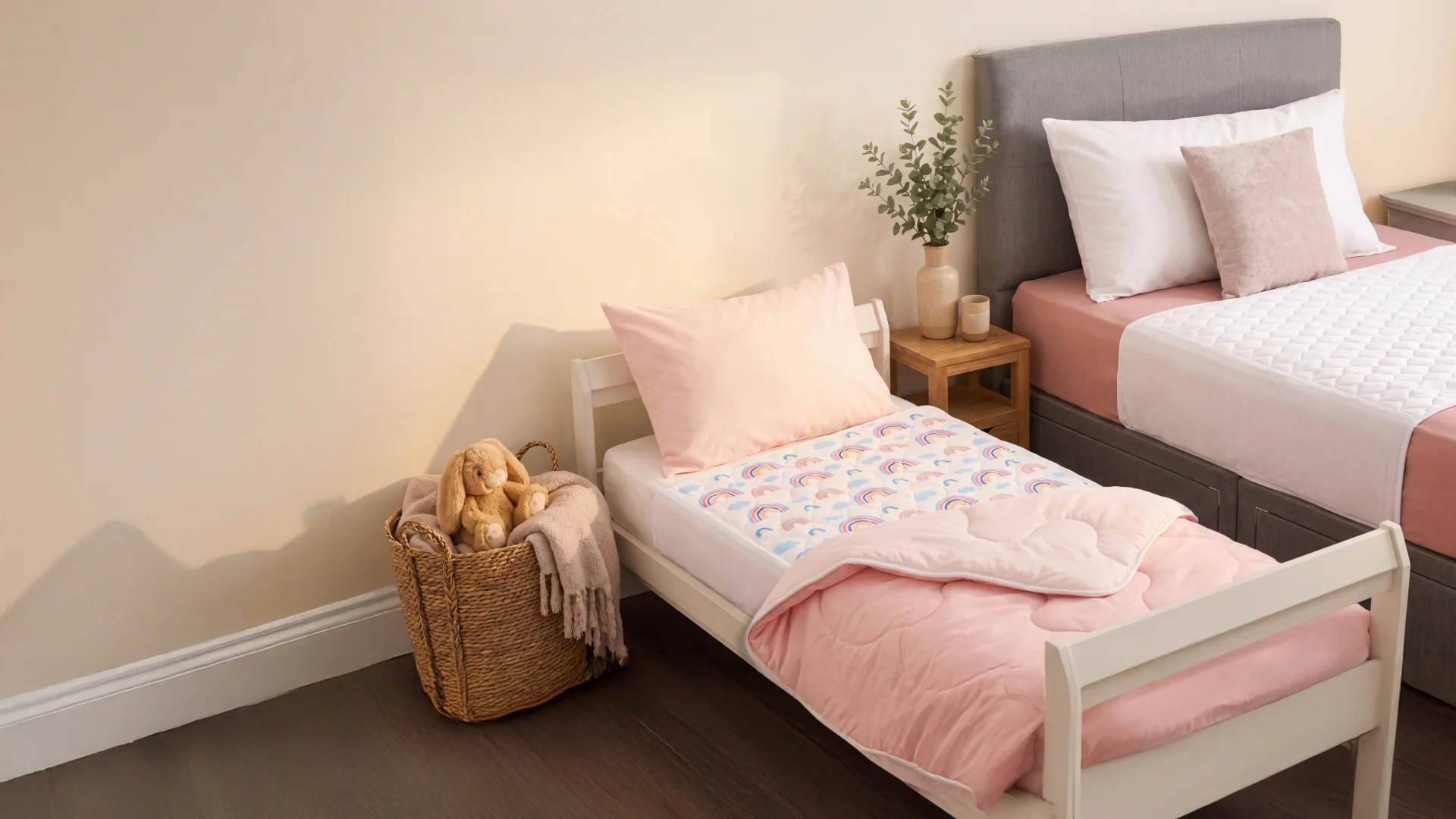
A low-drama bedtime plan
Once you have the gear handled, a simple routine can reduce stress for everyone. Let’s keep this realistic. You do not need to restrict your child like a camel in the desert all afternoon. You just want smart timing.
Fluid timing that helps
- Hydrate earlier in the day. Encourage normal water intake after school and at dinner.
- Ease up on big drinks 1 to 2 hours before bed. Offer small sips if they are thirsty. Avoid big cups of water right before lights out.
- Skip bladder irritants in the evening. Soda, caffeinated drinks (like cola or energy drinks), and some acidic drinks (like citrus juice) can make some kids need to pee more urgently.
The double-pee routine
This is simple and can help some kids:
- Have your child use the bathroom about 20 to 30 minutes before bed.
- Then again right before they get into bed.
Do not rely on waking them to pee
Some parents try to do a late-night “dream pee” at sleepovers. In real life, it is hard to do discreetly, and it can be confusing for kids who are in deep sleep. If it has worked for your child at home and your child is comfortable doing it, you can consider it. But you do not need this to make a sleepover possible.
How to pack discreetly
Privacy is the biggest stressor I hear about from school-age kids. Here is the packing system I recommend because it is simple and your child can manage it.
Use two bags inside the overnight bag
- Bag 1: “Bedtime.” Pajamas, toothbrush, and nighttime underwear in a small pouch.
- Bag 2: “Just in case.” Extra pajamas, extra underwear, a pair of shorts or leggings, and a gallon-size sealable bag (or wet bag) for anything damp.
Add one dark plastic bag
A plain dark bag makes it easy to discreetly store used nighttime underwear or wet clothes until morning. If your child is worried about disposal, remind them they can tie it shut and put it back into their backpack to take home.
Send bedding only if you know it will be needed
If your child has frequent heavy wetting, you can pack a spare pair of pajamas and underwear and rely on the nighttime underwear plus a pad. Packing sheets can feel more obvious to kids. If you do want to send bedding, a compact waterproof pad is usually less noticeable.
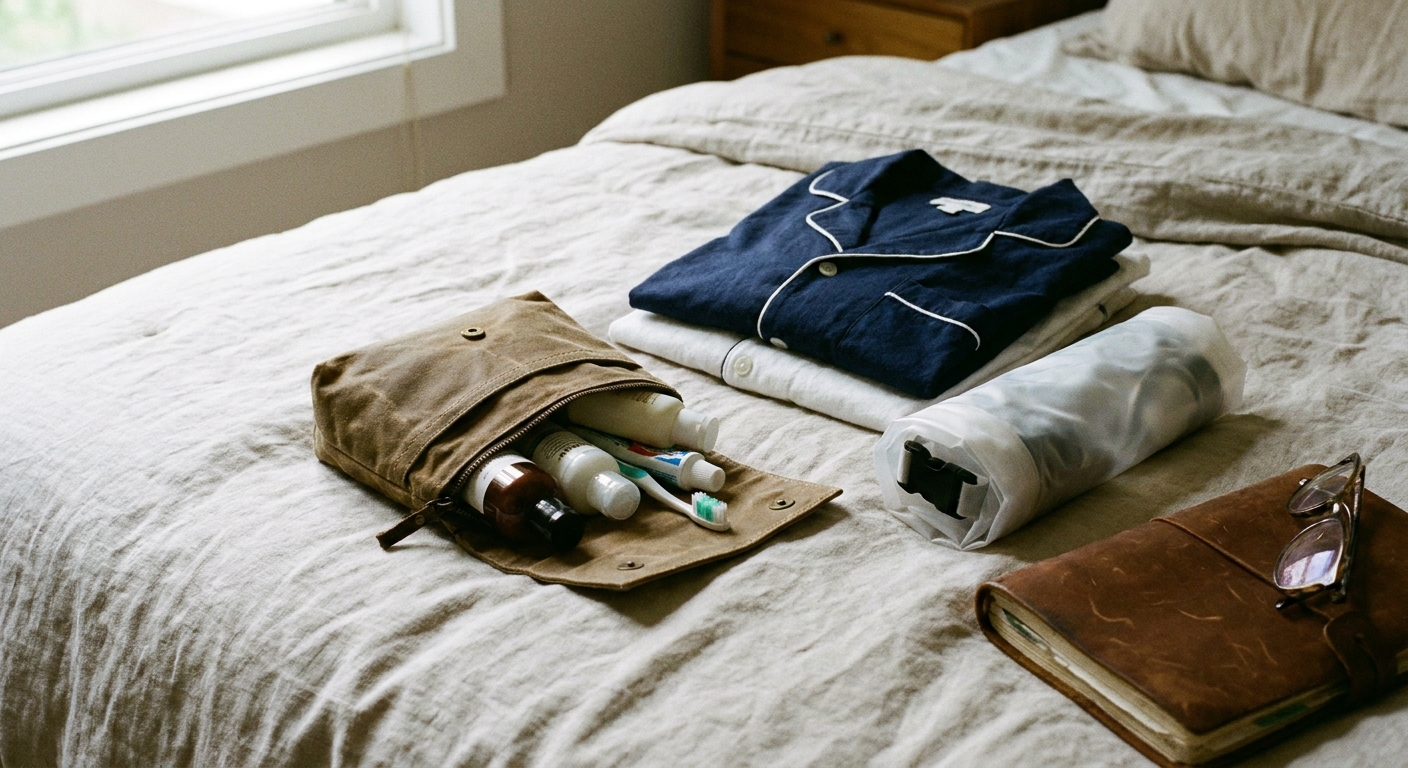
Talk to your child with confidence
The tone you set matters. If you act like bedwetting is a disaster, your child will feel like a disaster. If you treat it like a normal body thing you manage, they will too.
What to say
- Keep it simple: “Your body is still learning nighttime bladder control. Lots of kids go through this.”
- Focus on the plan: “We have a private routine so you can just enjoy your sleepover.”
- Give them control: “Do you want to keep the backup pouch in your bag or in the bathroom?”
What to avoid
- “You’re too old for this.”
- “Do not drink anything or you’ll wet.”
- Joking about it in front of siblings or friends, even if you think it is lighthearted.
A practice run that helps
Do a “sleepover rehearsal” at home on a weekend. Let your child pack their own bag, put on nighttime underwear, and practice what they would do if they woke up wet. When kids have rehearsed, they worry less.
Do you tell the host parent?
For many school-age kids, the best plan includes telling the host parent privately. Not the other kids. Not the other parents in the group chat. Just the adult who can help if something goes sideways.
When I recommend telling
- Your child wets the bed more than rarely.
- Your child is a deep sleeper and might not notice a wet night.
- The sleepover is at a home you do not know well.
- It is camp, a team trip, or any situation where bedding is shared property and needs protection.
How to tell
Text or call the host parent and keep it brief:
“Quick heads-up for tonight: my kid sometimes has a nighttime accident. We’re sending nighttime underwear and a change of clothes in a small pouch. If there’s any issue, could you please just point them to the bathroom and I can also come grab them if needed. Thank you for keeping it private.”
If your child begs you not to tell
I get it. Privacy is huge at this age. You can negotiate:
- Ask if you can tell the host parent without using the word bedwetting, like “nighttime accidents.”
- Offer an option where your child handles everything unless they ask the adult for help.
- Consider a shorter event first, like a movie night pick-up at 10 or 11 pm.
Sleepovers, camp, and trips
Sleepovers
- Choose a trusted family if possible.
- Send the bedtime pouch and just-in-case pouch.
- Have an easy exit plan like: you can pick them up, no questions asked, if they want to come home.
Overnight camp
- Contact the camp nurse or director before camp. Ask about discreet laundry, private trash disposal, and bathroom access.
- Pack extra supplies. Assume a few more changes than at home due to excitement, different schedule, and deeper sleep.
- Consider a waterproof sleeping bag liner or pad. This helps protect camp mattresses and reduces anxiety.
School trips or team travel
- Ask about rooming arrangements. Some kids do better with a close friend who is kind and low-drama.
- Let a supervising adult know. A school nurse, teacher, or coach can quietly support bathroom breaks and bedding issues.
- Pack for speed. Dark shorts or leggings and wipes help your child do a quick change if needed.
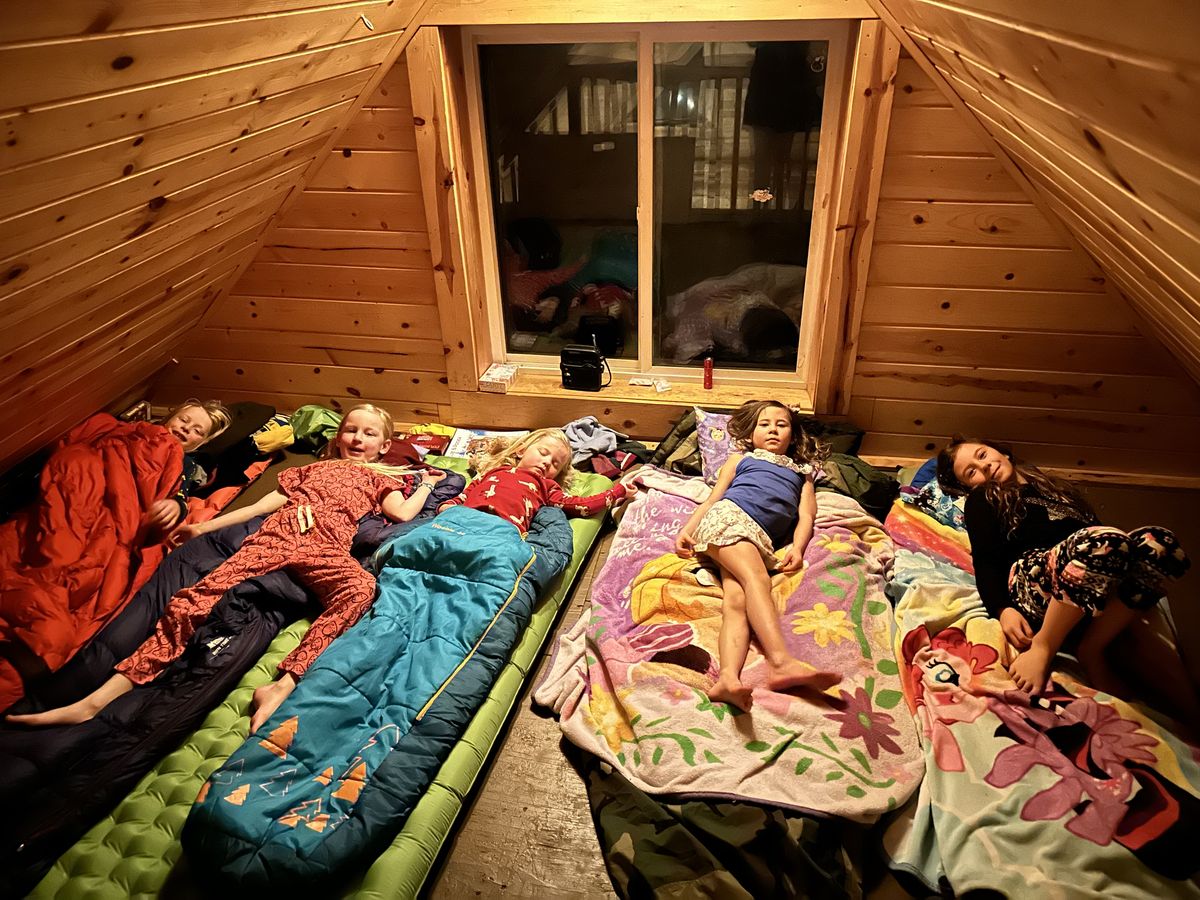
If an accident happens
This is the part kids fear most, so it helps to rehearse a simple plan.
Teach a 4-step quiet cleanup
- Go to the bathroom.
- Change into dry clothes.
- Put wet items in the dark bag or wet bag.
- Tell the host parent only if help is needed with bedding.
What you say the next morning matters
Try something like: “Thanks for handling it. I’m proud of you for following the plan.” Then move on. No post-mortem. No disappointed face. Kids read us like a billboard.
When to talk with the pediatrician
Most bedwetting is developmental and improves with time, but I do want you to get support if something feels off.
Many kids have primary enuresis, meaning they have always had wet nights. It is frustrating, but it is usually not a sign something is wrong. Secondary enuresis is when bedwetting starts again after your child has been dry for months, and that deserves a check-in.
Talk to your child’s pediatrician if:
- Bedwetting starts suddenly after a long dry stretch.
- Your child has daytime accidents, pain with urination, or strong urgency.
- There is loud snoring, gasping, or very restless sleep (sleep issues can worsen bedwetting).
- Your child has significant constipation.
- Bedwetting is causing anxiety, avoidance of activities, or low self-esteem.
There are evidence-based options that can help, including behavioral strategies and, for some families, bedwetting alarms or medication for specific situations under medical guidance. You do not have to DIY this forever.
Quick overnight checklist
- Nighttime underwear (2 for one night)
- Backup pajamas and underwear
- Dark plastic bag or wet bag
- Small pack of wipes (optional but helpful)
- Waterproof bed pad (optional extra confidence)
- Brief message to host parent if appropriate
- A no-questions-asked pick-up plan
FAQ
Should I limit my child’s water at a sleepover?
Limit big drinks right before bed, yes. But do not over-restrict all evening. Encourage hydration earlier in the day and keep evening fluids reasonable.
What if another child sees the nighttime underwear?
This happens. Help your child prepare one calm line: “It helps me sleep.” Then practice changing in the bathroom and keeping supplies in a pouch so it is less likely to come up at all.
Is it okay to do a late-night bathroom trip at a sleepover?
If your child naturally wakes to pee sometimes, great. If you are thinking of waking them to pee, it is optional and often not necessary. Many kids sleep right through and stay dry with nighttime underwear and a good bedtime routine.
My child is embarrassed and refuses to go to sleepovers. What now?
Start smaller: a late pick-up, a sleepover at grandparents, or having a friend sleep at your house first. Confidence builds in steps, not leaps.
Sarah Mitchell
Sarah Mitchell is a Registered Pediatric Nurse and a mother of three who has spent over a decade helping families navigate the beautiful, chaotic early years of childhood. She combines evidence-based medical knowledge with real-world parenting experience to offer practical, compassionate advice. At Awesome Parent, Sarah's mission is to help exhausted parents find solutions, trust their instincts, and finally get some sleep.