If your child’s ear starts draining, the eardrum may have ruptured. Here’s what to do next, how long healing can take, water precautions, and which symptoms ...
Cholesteatoma in Kids: Smelly Ear Drainage That Keeps Coming Back

Sarah Mitchell
Sarah Mitchell is a Registered Pediatric Nurse and a mother of three who has spent over a decade helping families navigate the beautiful, chaotic early years of childhood. She combines evidence-based medical knowledge with real-world parenting experience to offer practical, compassionate advice. At Awesome Parent, Sarah's mission is to help exhausted parents find solutions, trust their instincts, and finally get some sleep.
There are a few phrases parents use in triage that make my ears perk up immediately, and “it smells really bad and it keeps coming back” is one of them. Most ear drainage is from something common and very treatable, like a routine middle-ear infection that ruptured and started draining, swimmer’s ear (an outer ear canal infection), or drainage related to ear tubes. But when the drainage is foul-smelling, persistent, or keeps recurring, especially with hearing changes, we start thinking about a less common culprit called cholesteatoma.
This article will walk you through what cholesteatoma is, what it can look like at home, how it’s different from other ear problems, and what the ENT appointment is actually for. Take a breath. You are not overreacting by getting this checked.

What is a cholesteatoma?
A cholesteatoma is an abnormal growth of skin cells in the middle ear area (behind the eardrum). Even though the name sounds like a tumor, it is not cancer. Think of it more like a pocket or cyst-like growth that can slowly enlarge over time.
Here’s why clinicians take it seriously: that growth can trap debris and bacteria, leading to repeated smelly drainage and chronic infection. Over time, it can damage delicate structures involved in hearing. In more advanced cases it can erode nearby bone, involve the mastoid (the bone behind the ear), and rarely lead to more serious complications. That is exactly why ENT evaluation matters.
How does it happen?
In kids, cholesteatoma most often develops when the eustachian tube (the tube that helps equalize pressure between the middle ear and the back of the nose) does not ventilate the middle ear well. Over time, poor ventilation can create a retraction pocket in the eardrum that collects skin cells. Less commonly, a child is born with a cholesteatoma (congenital cholesteatoma), which can be found when there is hearing loss or an abnormal ear exam even without classic infections.
Signs parents notice at home
Cholesteatoma can be sneaky. Some kids do not act very sick, which is part of what makes parents feel unsettled. Common clues include:
- Foul-smelling ear drainage that returns again and again, even after drops or antibiotics
- Drainage that does not taper off over several days (or lasts beyond about 3 to 5 days), especially if it persists despite treatment
- Hearing trouble in one ear (turning up the tablet volume, asking “what?” more often, not responding when called from the other room)
- Fullness or pressure in the ear
- Ear discomfort that is mild or comes and goes
- Balance issues or dizziness (less common, but important)
If you are thinking, “But my child has had ear infections before and it never smelled like this,” that’s a very reasonable observation. Also, smell alone is not a diagnosis. It is the pattern over time plus the exam that tells the story.
Cholesteatoma vs other causes of drainage
Ear drainage is not one-size-fits-all. Where the infection or irritation is located matters, and so does the pattern over time.
Middle-ear infection that drains
With a typical ear infection, kids often have cold symptoms, ear pain, fussiness, and sometimes fever. If the eardrum ruptures, you might suddenly see fluid drain and your child may actually seem less uncomfortable because pressure is released.
- Pattern: A single episode that improves with time and treatment
- Drainage: Can happen, usually short-lived and tapers as the infection resolves
- Smell: Not typically extremely foul
- Hearing: May be muffled temporarily, then returns
Ear tubes with drainage
If your child has tympanostomy tubes, drainage is a common way the ear “vents” fluid during a cold or ear infection. It can look dramatic, but in many cases it responds well to the right drops and keeping the ear as dry as your clinician recommends.
- Pattern: Often tied to a viral illness or water exposure, may recur
- Drainage: Can be frequent in some kids with tubes
- Smell: Can smell unpleasant, but the key issue is whether it keeps returning despite appropriate treatment
- Hearing: Can fluctuate depending on fluid and inflammation
Eardrum perforation
A ruptured eardrum is a hole or tear in the eardrum. It can happen during an infection, from significant pressure changes, or from trauma (like inserting something into the ear canal). Many perforations heal, but a perforation can also persist and become a pathway for repeated drainage if infections keep occurring.
- Pattern: Often sudden pain followed by drainage, then healing
- Drainage: Often decreases as the infection resolves
- Smell: Variable, usually not the standout feature
- Hearing: Can be muffled while fluid and inflammation are present
Swimmer’s ear
Swimmer’s ear is an infection of the ear canal, not behind the eardrum. It often happens after water exposure or irritation from scratching or cotton swabs. The ear can be very tender, especially when you touch or move the outer ear.
- Pattern: Often after swimming, baths, or lots of humidity
- Drainage: Can be present
- Key clue: Pain when the outer ear is moved or when pressing the tragus (the little nub in front of the ear opening)
- Hearing: Can sound “blocked” if the canal swells shut
Why cholesteatoma stands out
Cholesteatoma tends to cause a repeating cycle of drainage that does not truly clear, and the drainage is often described as strongly foul-smelling. Hearing changes are also common, especially if this has been going on for a while.
When to call urgently
Most kids with ear drainage can be evaluated in a regular clinic visit, but some symptoms should move you into urgent or emergency care.
Seek urgent care today if:
- Your child has severe ear pain that is worsening or not improving
- There is swelling, redness, or tenderness behind the ear, or the ear looks pushed forward
- Your child has fever with worsening pain or looks very ill
- Your child has new dizziness, trouble walking, or repeated vomiting
- You notice weakness or drooping on one side of the face
- Your child is a young infant with drainage or fever
Those symptoms can point to complications that need immediate assessment.
What to do at home
Waiting for an appointment while your kid’s ear is leaking is not anyone’s idea of fun. A few safe steps can help without making things worse:
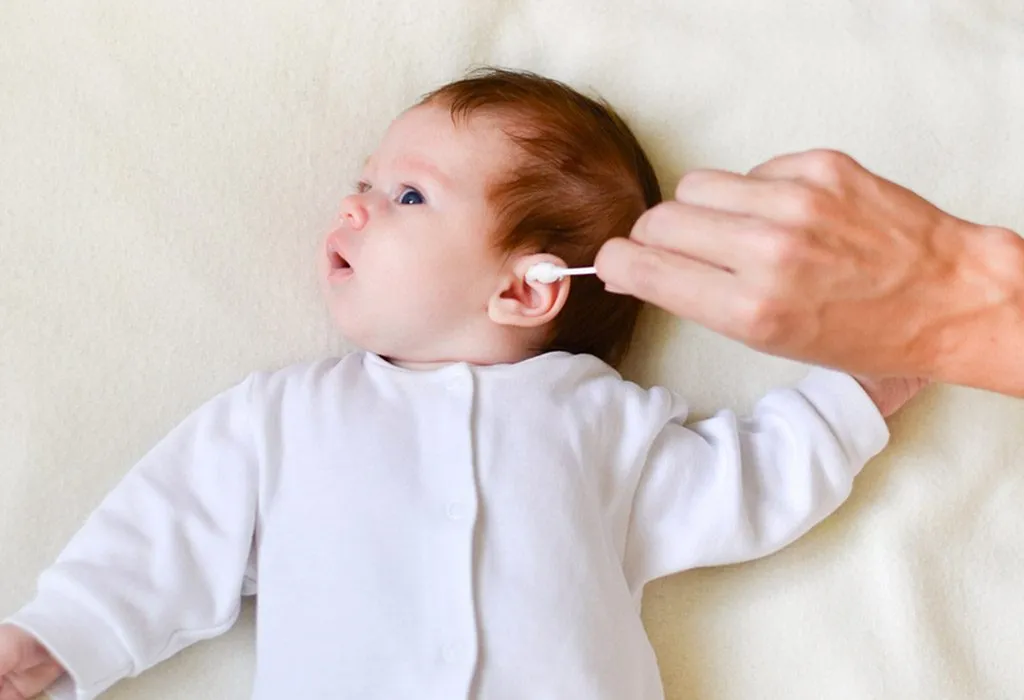
- Wipe drainage from the outside only. Use a soft tissue or clean cloth. Do not put cotton swabs or anything else into the ear canal.
- Keep the ear dry. Skip swimming. For baths, you can loosely place a bit of cotton with petroleum jelly at the outer opening to reduce water entry, but do not push it into the canal.
- Pain control if needed. Use the fever and pain medicine your child’s clinician has previously recommended for age and weight.
- Track the pattern. Jot down when the drainage started, whether it smells, what color it is, and whether hearing seems worse. This is surprisingly helpful at the visit.
Avoid using leftover or non-prescribed ear drops unless a clinician tells you to. Some drops, especially those with aminoglycoside antibiotics, can be harmful to the inner ear if there is a perforation or ear tube. When a perforation or tubes are possible, clinicians often choose safer options, such as fluoroquinolone drops, when drops are needed.
What the ENT visit is for
ENT stands for ear, nose, and throat. When a pediatrician refers a child to ENT for recurrent smelly drainage or chronic ear problems, it is not to scare you. It is to get a better look and to protect hearing long-term.
1) A detailed ear exam
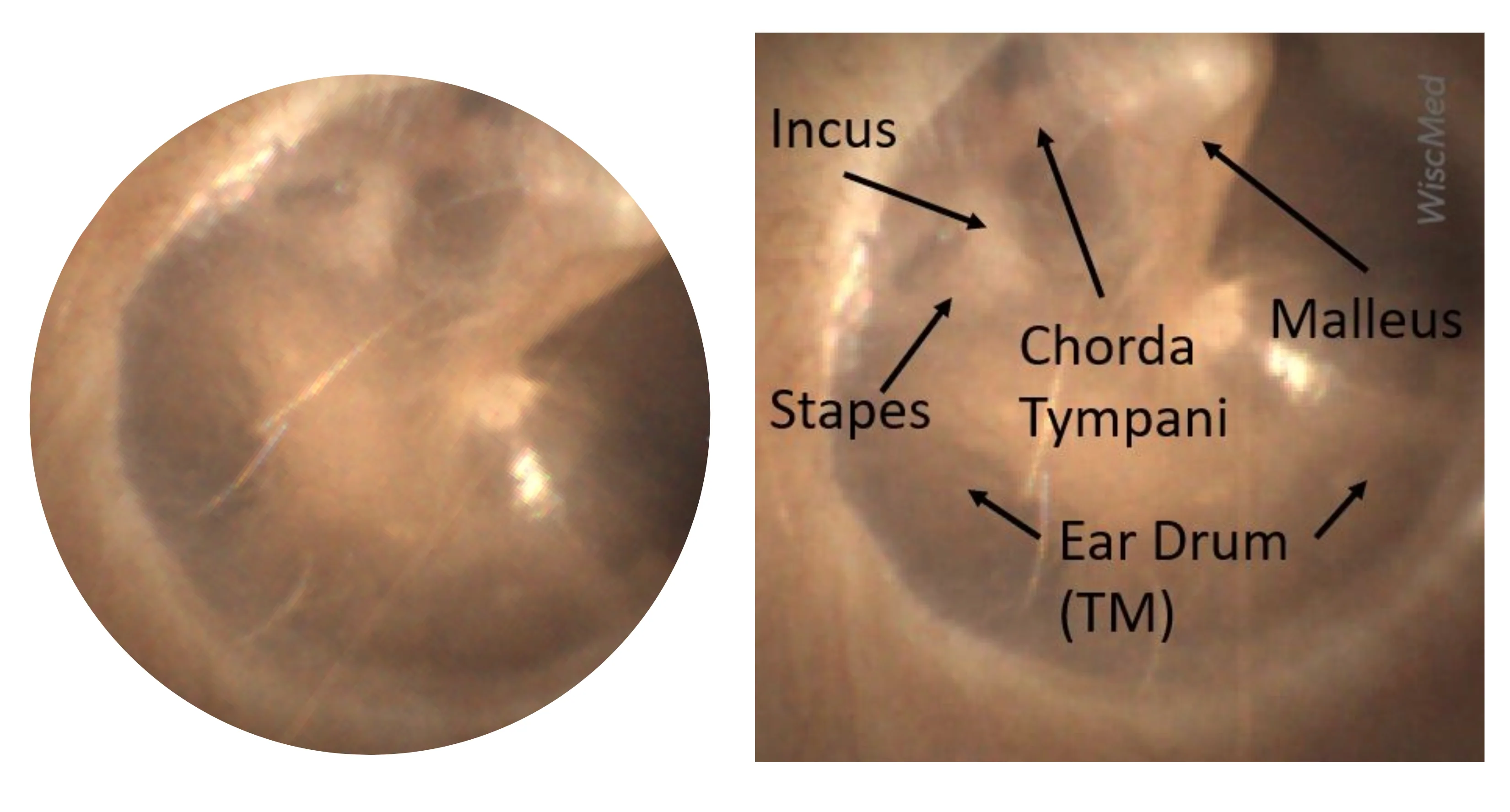
ENT clinicians use specialized tools, often a microscope or a small camera scope, to get a much clearer view of the ear canal and eardrum than is possible in a quick office peek, especially if there is drainage or wax blocking the view.
2) Cleaning that helps diagnosis and comfort
One of the most useful things ENT can do is carefully suction and clean the ear canal so the eardrum can be examined properly. This also helps because medication works better when it can actually reach the irritated area.
3) Hearing testing
Because cholesteatoma can affect hearing, your child may be scheduled for an age-appropriate hearing test (audiology). This might include listening games with headphones, or tests that measure how the eardrum moves.
4) Imaging, if needed
In some situations, ENT may order imaging to understand the anatomy and extent of the problem. This is commonly a CT scan of the temporal bone, and in some cases an MRI (including diffusion-weighted MRI) is used depending on the clinical question. Not every child needs imaging right away. It depends on the exam and the history.
5) A plan to stop the cycle
The goal of the visit is to figure out why the drainage keeps returning and how to prevent ongoing damage. That may involve medication, close monitoring, or discussing procedures that are appropriate for your child’s specific situation. An ENT visit is about making an individualized plan, not making assumptions.

If cholesteatoma is suspected
Because cholesteatoma is a growth of trapped skin cells, it typically does not permanently go away with antibiotics alone. Antibiotics can treat an active infection and calm down drainage, but they do not remove the underlying pocket of tissue.
When cholesteatoma is confirmed, treatment is commonly led by ENT and often includes surgery to remove the cholesteatoma (frequently a tympanomastoid-type surgery). The exact approach depends on where it is, how extensive it is, and how your child’s ear structures look.
I also like to set expectations gently: follow-up matters. Kids can have residual or recurrent cholesteatoma, so ENT may recommend planned rechecks and sometimes additional imaging or a second-look evaluation depending on the situation.
I know the word “surgery” can make your stomach drop. If this is where you are headed, ask every question you have. A good ENT team will expect that and will talk you through it step by step.
Questions to ask
If your brain goes blank the second the clinician walks in, you are in excellent company. Here are a few questions that help parents leave with a clear plan:
- What do you see on the eardrum and in the middle ear area?
- Does this look like swimmer’s ear, tube drainage, a perforation, chronic infection, or cholesteatoma?
- Do we need a hearing test, and when?
- How should we keep the ear dry in the meantime?
- What symptoms would mean we should call you sooner?
- What is the follow-up schedule, and what are you watching for?
FAQ
Is cholesteatoma contagious?
No. It is not something your child can “catch” from another child. It is related to how the ear is ventilating and how the eardrum and middle ear are functioning over time.
Can a kid have cholesteatoma without pain or fever?
Yes. Some kids have very little pain and may not have fever at all, especially if this has been smoldering for a while. Persistent drainage and hearing changes are often the clues.
My child had one bad-smelling draining ear once. Is that cholesteatoma?
Not necessarily. A one-time episode can happen with a ruptured eardrum during a typical ear infection, with ear tubes during an illness, or with swimmer’s ear. What pushes cholesteatoma higher on the list is drainage that keeps returning or does not truly resolve, especially with hearing issues.
Should I clean inside the ear to get the drainage out?
No. Wipe only what you can see on the outside. Putting anything into the ear canal can irritate the skin, worsen infection, or injure the eardrum.
The bottom line
Most ear drainage in kids is caused by common conditions that clear with the right treatment, including swimmer’s ear and ear tube drainage. But recurrent, foul-smelling drainage plus ongoing hearing trouble deserves a closer look, and cholesteatoma is one of the important reasons why.
If you are heading to an ENT visit, you are doing exactly what I would want for my own child: getting the right eyes on the problem, protecting hearing, and ending the exhausting cycle of “it’s back again.”
Sarah Mitchell
Sarah Mitchell is a Registered Pediatric Nurse and a mother of three who has spent over a decade helping families navigate the beautiful, chaotic early years of childhood. She combines evidence-based medical knowledge with real-world parenting experience to offer practical, compassionate advice. At Awesome Parent, Sarah's mission is to help exhausted parents find solutions, trust their instincts, and finally get some sleep.