A calm, cue-based bottle technique that can help reduce gas, spit-up, and overfeeding. Learn positioning, pacing, switching sides, burping rhythm, and nipple...
Combination Feeding: Breastfeeding and Formula in the Same Day

Sarah Mitchell
Sarah Mitchell is a Registered Pediatric Nurse and a mother of three who has spent over a decade helping families navigate the beautiful, chaotic early years of childhood. She combines evidence-based medical knowledge with real-world parenting experience to offer practical, compassionate advice. At Awesome Parent, Sarah's mission is to help exhausted parents find solutions, trust their instincts, and finally get some sleep.
When parents tell me they are “doing some breastfeeding and some formula,” I usually see their shoulders drop for the first time all day. Combination feeding can be a lifesaver. It can also feel weirdly confusing, because so many feeding articles act like you have to choose one lane and stay there.
You do not. You can keep breastfeeding and use formula in the same day, long-term, on purpose. The goal is to keep nursing working for you while also making sure your baby is fed, growing, and your household is functioning.

What combination feeding is and is not
Combination feeding means your baby gets both breast milk and formula over the course of a day or week. That might look like nursing plus one formula bottle at night, or breastfeeding during the day and formula at daycare.
It is not the same as weaning. Weaning is a plan to end breastfeeding. Combination feeding is a plan to keep breastfeeding, just not exclusively.
It is also not the same as a full switch to formula. In combo feeding, you still protect opportunities for milk removal (nursing or pumping) so your body has a reason to keep making milk.
Why families choose combo feeding
In the pediatric clinic, I saw combination feeding work beautifully for lots of situations, including:
- Supply challenges (real or perceived) when baby still wants more after nursing.
- Slow weight gain where your pediatrician recommends extra calories while you keep breastfeeding.
- Returning to work when pumping output does not match what baby takes in bottles.
- Mental health and sleep protection, especially when a parent is running on fumes.
- Multiples or a medical recovery where exclusive breastfeeding is not realistic.
Needing formula is not a failure. It is food. And you can absolutely keep your breastfeeding relationship alongside it.
Two combo feeding setups that work long-term
There is no single “right” schedule, but the plans below are the most sustainable ones I see families stick with.
Option A: Nurse first, then top off if needed
This works well when your main goal is to keep breastfeeding at the center, while making sure baby leaves the feed satisfied.
- Nurse on one or both breasts.
- If baby still shows hunger cues, offer a small bottle of formula.
- Use paced bottle feeding (more on that below) to reduce preference for the bottle’s faster flow.
Tip: “Top off” amounts vary widely. Many babies do well starting with 0.5 to 2 ounces after nursing, then adjusting based on cues and guidance from your pediatrician or lactation consultant.
Option B: Set formula times, keep nursing at other times
This works well for daycare, shared overnight duties, or parents who do best with a predictable plan.
- Pick one to three feeds that will be formula bottles most days (for example, a bedtime bottle and a middle-of-the-night bottle).
- Nurse at the other feeds.
- If you want to protect supply strongly, pump when a bottle replaces a nursing session, especially in the early months.

Paced bottle feeding (the skill that makes combo feeding smoother)
Many babies start to prefer bottles because bottles are easier, not because they dislike breastfeeding. Often it is really a flow preference. Paced bottle feeding slows the bottle down so your baby stays in charge of the pace, more like at the breast.
How to do paced bottle feeding
- Use a slow-flow nipple. Even for older babies, a slower nipple often supports combo feeding better.
- Hold baby upright (not flat on their back).
- Hold the bottle more horizontal so milk does not pour into baby’s mouth.
- Let baby latch onto the bottle nipple instead of pushing it in quickly.
- Take frequent pauses, like every few sucks or about every 20 to 30 seconds, by tipping the bottle down slightly or removing it briefly, then offer again.
- Watch for “I’m full” cues like relaxed hands, turning away, slowing sucking, or drifting off with a relaxed, milk-satisfied look.
If your baby drains bottles in a few minutes and then refuses the breast, paced feeding is often the first change I would try.
How to protect your milk supply while combo feeding
Milk production is mostly supply and demand. If milk is removed frequently, your body gets the message to keep making it. If milk is removed less often, supply typically drops over time. That drop might be exactly what you want. Or it might surprise you.
Start with your goal
- If you want to maintain or increase supply: aim to remove milk about as often as your baby eats, especially in the first 8 to 12 weeks.
- If you are okay with a gradual decrease: you can replace some nursing sessions with formula without pumping every single time.
Practical ways families keep supply steady
- Nurse first when you are together, then use formula after if needed.
- Protect the morning feed. Many parents are often at their fullest earlier in the day.
- Pump when a bottle replaces a feed, especially for regularly skipped daytime feeds (like daycare).
- Add one “maintenance pump” at a consistent time if supply is dipping. A short pump session after the first morning feed is a common, realistic option.
- Use the lowest bottle nipple flow baby will tolerate to reduce bottle flow preference.
- Make sure baby is transferring milk well at the breast. A shallow latch, tongue-tie concerns, pain, or frequent clicking can all reduce transfer and supply over time.
One note from the mom side of my brain: the “pump every time the baby gets a bottle” advice is ideal for supply, but not always ideal for sanity. If you can pump sometimes, consistently, that is often enough for many families to keep breastfeeding long-term.
Also worth knowing: supply is typically more sensitive in the first weeks. Once supply is established (often after the early newborn period), many parents can be a bit more flexible with which feeds are nursing vs bottles without seeing a big impact.
How to decide which feeds should be formula
If you are building a routine, here are the most common decision points:
- Overnight: Some families keep nursing overnight because it maintains supply and is fast. Others choose one formula bottle so a partner can take a shift. Both can work. If you drop a regular night feed in the early months, supply may dip.
- Daycare or work hours: Many parents nurse before and after work and use bottles during the day.
- Evening cluster feeding: Some babies want to nurse nonstop in the evening. A small formula bottle can take the edge off while still breastfeeding for comfort and connection.

Choosing a formula (keep it simple)
Most babies do well on a standard, iron-fortified, cow’s-milk based infant formula, unless your pediatrician recommends something different.
If you are troubleshooting fussiness, spit-up, or possible intolerance, try not to switch types every couple of days. Frequent changes can make it harder to tell what is actually helping. If you think your baby needs a specialty formula (hydrolyzed, amino acid, reflux-thickened), loop in your pediatrician so you have a clear plan.
Mixing breast milk and formula: what is safe?
Parents ask this constantly, and the answer depends on what you mean by “mix.”
Can you give breast milk and formula in the same day?
Yes. Most combo-fed babies do great with breast milk and formula in the same day.
Can you put breast milk and formula in the same bottle?
Sometimes, but with a couple of important safety rules:
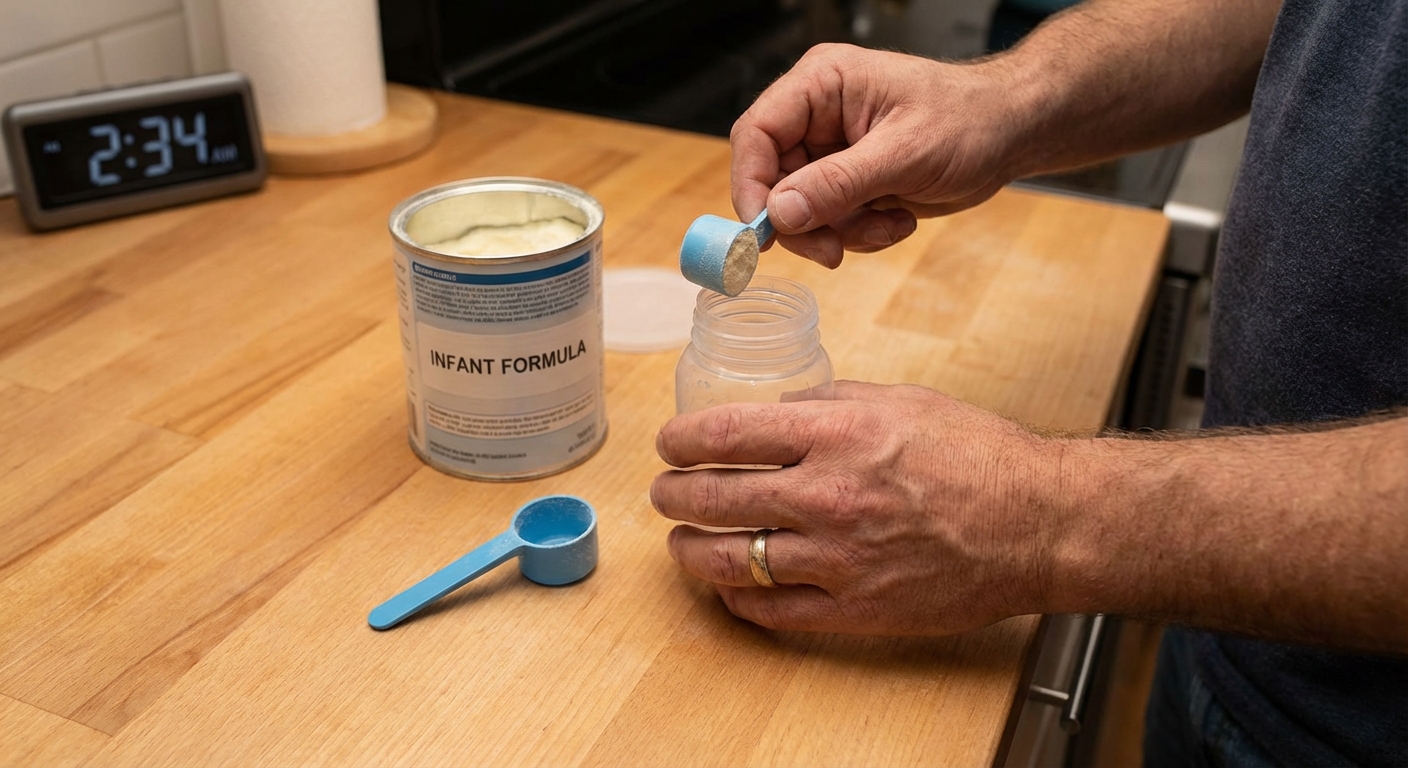
- Follow the formula label for preparation. Powdered formula and liquid concentrate are mixed with water in the amounts the label states. Do not replace the water with breast milk unless your pediatrician gives you specific instructions.
- After formula is prepared, you can combine. It is generally fine to add breast milk to an already-prepared bottle of formula, as long as you follow safe storage rules.
- To avoid wasting breast milk, consider offering breast milk first and then giving formula separately if baby is still hungry.
How long can a bottle sit out?
Time limits vary by country and by which authority you follow (and guidance can be stricter for premature or medically fragile infants). A commonly cited standard, including CDC-style guidance, is:
- Prepared formula: use within 2 hours at room temperature, and within 1 hour once baby has started drinking from it.
- Breast milk: has different storage windows depending on whether it is freshly expressed or previously refrigerated, but once baby has started drinking, many clinicians recommend using it within about 1 to 2 hours.
If your baby is premature, medically fragile, or immunocompromised, ask your pediatrician for more specific instructions. And whenever local public health guidance differs, follow your local guidance.
What changes are normal when you add formula
A few changes can be totally normal in the first days to a week:
- Stool color and texture: often becomes more tan, brown, or green and may look thicker.
- Less frequent poop: some babies poop less often with more formula.
- Gassiness: mild gas as baby adjusts can happen.
If your baby seems comfortable, is peeing well, and is gaining weight appropriately, these changes are usually just “new normal.”
Diaper and weight signs that need a check-in
As a triage nurse, I always come back to two things: hydration and growth. Combination feeding is supposed to support both, not create new worries.
Call your pediatrician promptly if you notice
- Fewer wet diapers than usual, very dark urine, or consistently dry diapers.
- Signs of dehydration like a very dry mouth, no tears when crying, unusual sleepiness, or a sunken soft spot.
- Repeated vomiting (not just spit-up), especially if baby cannot keep feeds down.
- Blood in stool or persistent mucus with fussiness, which can sometimes point to a milk protein intolerance or other issue.
- Persistent diarrhea or very watery stools multiple times a day along with poor intake.
- Worsening eczema plus GI symptoms after introducing formula, worth discussing.
Ask for lactation support if you notice
- Painful nursing, damaged nipples, or baby clicking and slipping off often.
- Baby seems frustrated at the breast but drinks bottles quickly and easily.
- Supply dipping faster than you wanted after adding formula.
- Very long feeds with baby still seeming hungry, which can be a milk transfer issue rather than “not enough milk.”
Weight checks that matter
If your baby is under 2 months, was early, had a low birth weight, or has had slow gain, do not guess. A weighted feed with a lactation consultant and scheduled weight checks with your pediatrician can take the anxiety way down and help you tailor the combo plan.
A simple combo-feeding starter plan
If you are standing in your kitchen right now wondering what to do next, here is a common, gentle starting point:
- Keep nursing at your easiest times (often morning, naps, bedtime).
- Add one formula bottle at the hardest time of day (often late evening or overnight).
- Pace the bottle and use a slow-flow nipple.
- For the first week, consider pumping once daily at a time you can actually maintain (10 to 15 minutes is fine) to signal your body to hold steady.
- Reassess after 7 to 10 days based on baby’s diapers, overall mood, and weight trajectory.
This is not the only way. It is just a steady on-ramp that helps you avoid the two common pitfalls: baby developing a bottle flow preference, and supply dropping faster than you intended.
FAQ
Will combination feeding ruin breastfeeding?
Not automatically. Many parents breastfeed for months or years while using some formula. The biggest factors are milk removal (nursing and/or pumping) and keeping bottles slow and baby-led.
Will my supply drop if I do one formula bottle a day?
Some parents see no noticeable change. Others see a small dip, especially if that bottle replaces a feed your body relied on (often overnight or early morning). If you want to maintain supply, pumping around the time of that bottle can help, particularly in the early months.
My baby prefers the bottle. What can I do?
Use paced feeding, confirm you have a slow-flow nipple, and try offering the breast when baby is calm or just waking up. Skin-to-skin time can help too. If it persists, a lactation consultant can check latch and milk transfer and help you tweak the plan without pressure or guilt.
Is it okay to combo feed permanently?
Absolutely. Combination feeding can be a long-term, stable feeding plan, not just a temporary bridge.
Do we need vitamin D if we combo feed?
Maybe. Many breastfed babies are recommended to get 400 IU of vitamin D daily, while some babies who drink enough formula may get sufficient vitamin D from formula. Because combo feeding amounts vary so much, ask your pediatrician what makes sense for your baby.
The bottom line
Combination feeding is not “giving up.” It is a strategy. With paced bottle feeding and a plan to protect the nursing sessions that matter most to you, many babies move between breast and bottle smoothly.
If something feels off, like diapers drop, weight gain slows, or breastfeeding becomes painful or stressful, that is not a personal failure. It is a sign you deserve more support. A quick check-in with your pediatrician or a lactation consultant can make the whole plan easier.
Sarah Mitchell
Sarah Mitchell is a Registered Pediatric Nurse and a mother of three who has spent over a decade helping families navigate the beautiful, chaotic early years of childhood. She combines evidence-based medical knowledge with real-world parenting experience to offer practical, compassionate advice. At Awesome Parent, Sarah's mission is to help exhausted parents find solutions, trust their instincts, and finally get some sleep.