Punched-out blisters on eczema plus fever can be eczema herpeticum, a herpes infection that needs same-day medical evaluation. Here’s how to spot it and what...
Eczema Coxsackium in Children

Sarah Mitchell
Sarah Mitchell is a Registered Pediatric Nurse and a mother of three who has spent over a decade helping families navigate the beautiful, chaotic early years of childhood. She combines evidence-based medical knowledge with real-world parenting experience to offer practical, compassionate advice. At Awesome Parent, Sarah's mission is to help exhausted parents find solutions, trust their instincts, and finally get some sleep.
I’ll never forget the first time a parent held up their toddler’s sleeve in triage and said, “This can’t be hand, foot, and mouth. It’s everywhere.” Their child had eczema already, and now every familiar patch looked like it had been sprinkled with blisters. It’s a scary sight, especially at 2 a.m. when your brain is running on fumes.
What you’re likely seeing is eczema coxsackium, which is basically hand, foot, and mouth disease (HFMD) taking advantage of irritated, eczema-prone skin. The good news is that it’s usually self-limited and treated with supportive care. The important news is that a few look-alikes need faster evaluation.
What is eczema coxsackium?
Eczema coxsackium is an atypical form of HFMD where the virus causes a more widespread rash, especially in areas where the skin barrier is already damaged. It is often linked to enteroviruses such as Coxsackie A6 (and sometimes other enteroviruses).
It tends to show up more dramatically in:
- Kids with eczema (atopic dermatitis)
- Areas of diaper rash or irritation
- Scratches, bug bites, healing scrapes
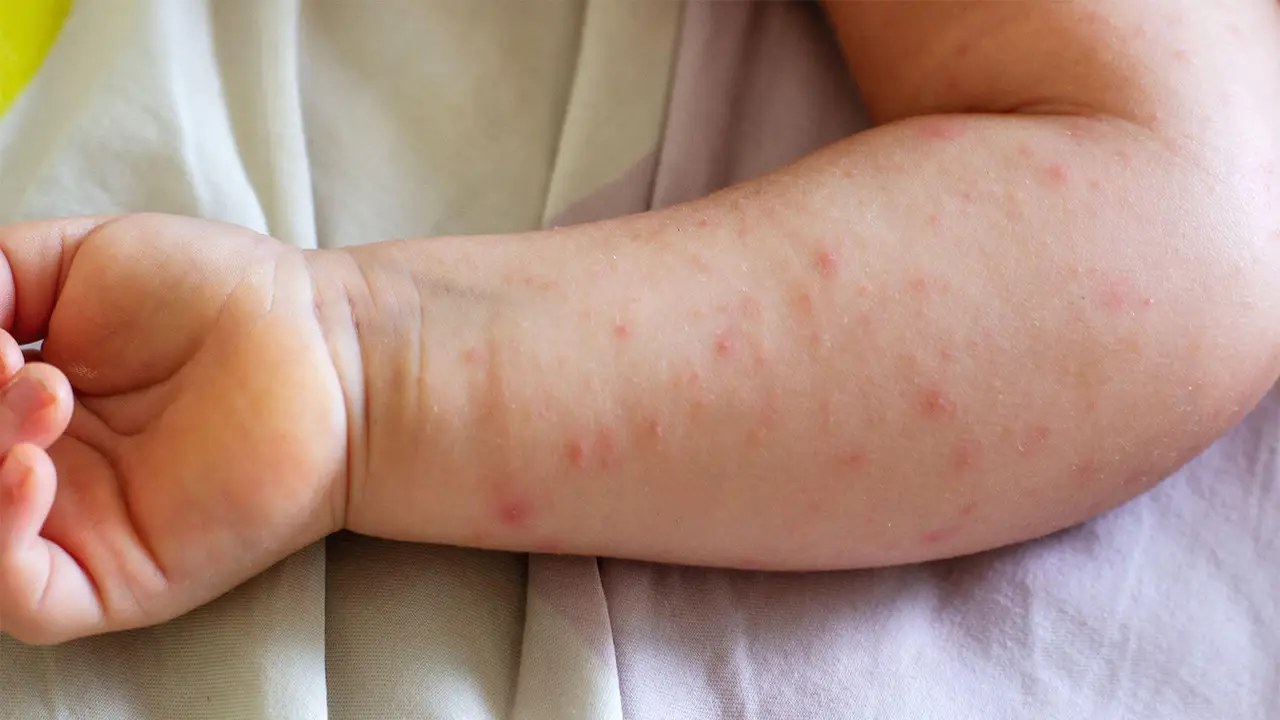
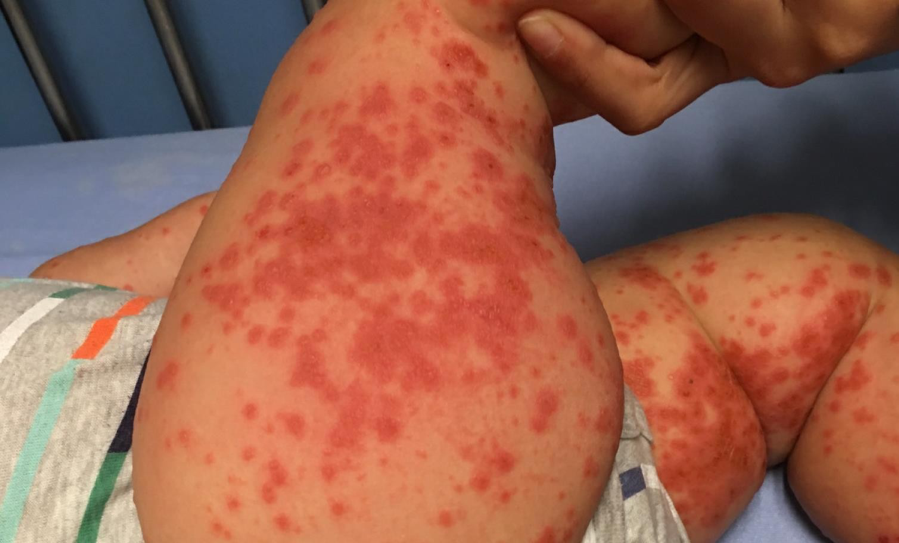
Instead of the classic “a few spots on hands and feet,” eczema coxsackium can create clusters of small blisters that quickly become raw erosions or crusted spots on top of existing eczema patches.
What it looks like on eczema skin
Parents often describe it as: “Their eczema looks angry and blistered.” That is a pretty accurate summary.
Common signs
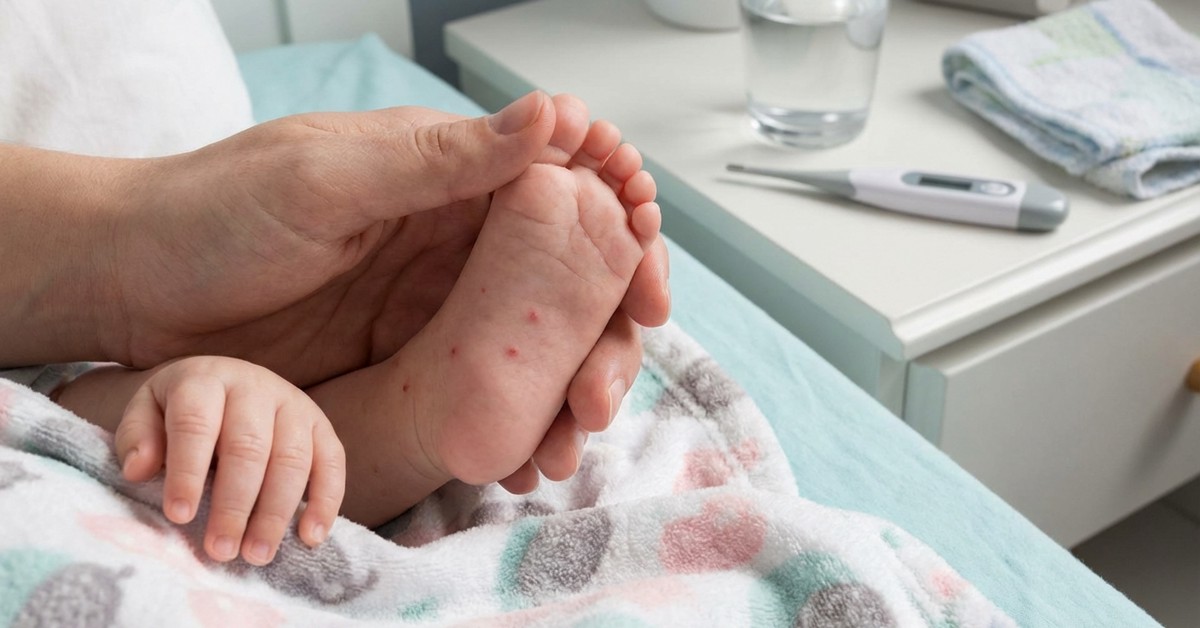
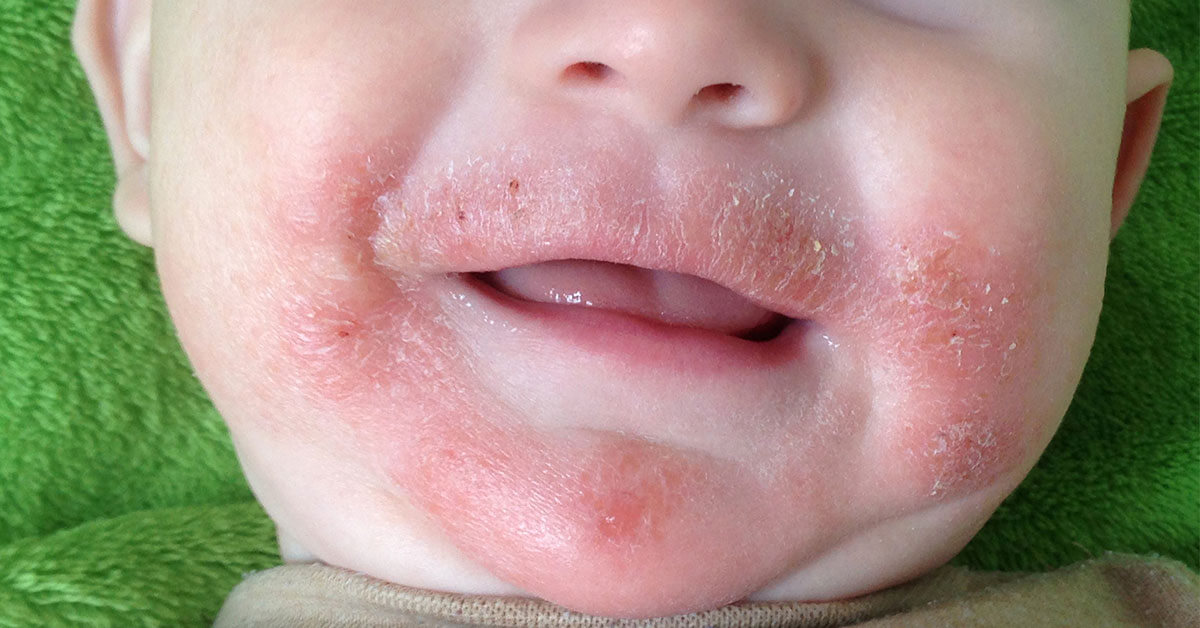
- Blisters or fluid-filled bumps (vesicles) appearing in eczema areas
- Open sores (erosions) where blisters have broken
- Crusting as spots dry out
- Rash that seems widespread, including arms, legs, trunk, and diaper area
- Fever and general “sick” behavior, especially in the first couple of days
- Mouth pain, drooling, or refusal to eat (from mouth sores), although not every child has obvious mouth lesions
Some kids still get the classic HFMD clues like spots on palms and soles and ulcers in the mouth. Others mainly show the dramatic eczema-area rash first, which is why it can be so confusing.
Why it looks different with eczema
Eczema is a skin barrier problem. When that barrier is inflamed and disrupted, the skin is more vulnerable to irritation and secondary infections. With eczema coxsackium, the enterovirus tends to cause lesions right where the skin is already inflamed.
That is why you might see:
- Heavier rash density on elbow creases, behind knees, wrists, ankles, cheeks, and around the diaper line
- New blisters popping up in areas that were “just eczema yesterday”
- A rash that looks more like scattered blisters and raw spots than the textbook HFMD photos
Eczema coxsackium vs other rashes
Clinicians take this comparison seriously because the treatment and urgency can differ. Here’s how we think it through at the bedside.
1) Eczema coxsackium (HFMD on eczema)
- Often starts with fever and a viral-sick feeling
- Blisters that can break down into erosions on eczema patches
- May have mouth sores, hand and foot rash, or known HFMD exposure
- Usually managed with comfort care and close attention to hydration
2) Infected eczema (bacterial infection, often impetigo)
- Can happen with or without fever
- Skin may look oozy with yellow or honey-colored crust
- Often more localized to typical eczema areas, but can spread
- May have increasing tenderness, warmth, swelling
- Treatment may include topical or oral antibiotics, depending on severity and location
3) Eczema herpeticum (HSV infection on eczema skin)
This is the big one we do not want to miss. Eczema herpeticum is a herpes simplex virus infection that can spread quickly on eczema skin and can become serious, especially in young children.
- Often comes with a child who looks more ill than you’d expect
- Painful rash (parents often say it hurts more than it itches)
- Many similar-looking “punched-out” blisters or erosions that can cluster
- May involve face or around the eyes, and eye involvement is urgent
- Usually needs same-day evaluation and often antiviral medication
Bottom line: from home, these can overlap. If your child has eczema and a blistery, rapidly spreading rash with fever, it’s reasonable to call your pediatrician promptly. If there is significant pain, fast spread, or eye-area involvement, that is same-day care.
When to get same-day care
With eczema coxsackium, many kids can be managed at home, but I want you to have clear “do not wait” signs.
Same-day pediatrician or urgent care
- Age under 6 months with suspected HFMD-like illness
- Spreading blisters or erosions over eczema with fever
- Rash that looks painful (not just itchy) or your child is unusually inconsolable
- Concern for bacterial infection: increasing redness, warmth, swelling, pus-like drainage, or rapidly worsening crusting
- Eye area involvement (blisters or sores near the eyelids, eye redness, squinting, light sensitivity)
- History of immune compromise (ask your child’s specialist if you are unsure)
Go now (ER)
- Dehydration signs (see next section)
- Breathing difficulty, severe lethargy, or a child who is hard to wake
- Stiff neck, severe headache in an older child, or any concerning neurologic symptoms
- Worsening rash with severe pain plus fever and a toxic appearance
Hydration red flags
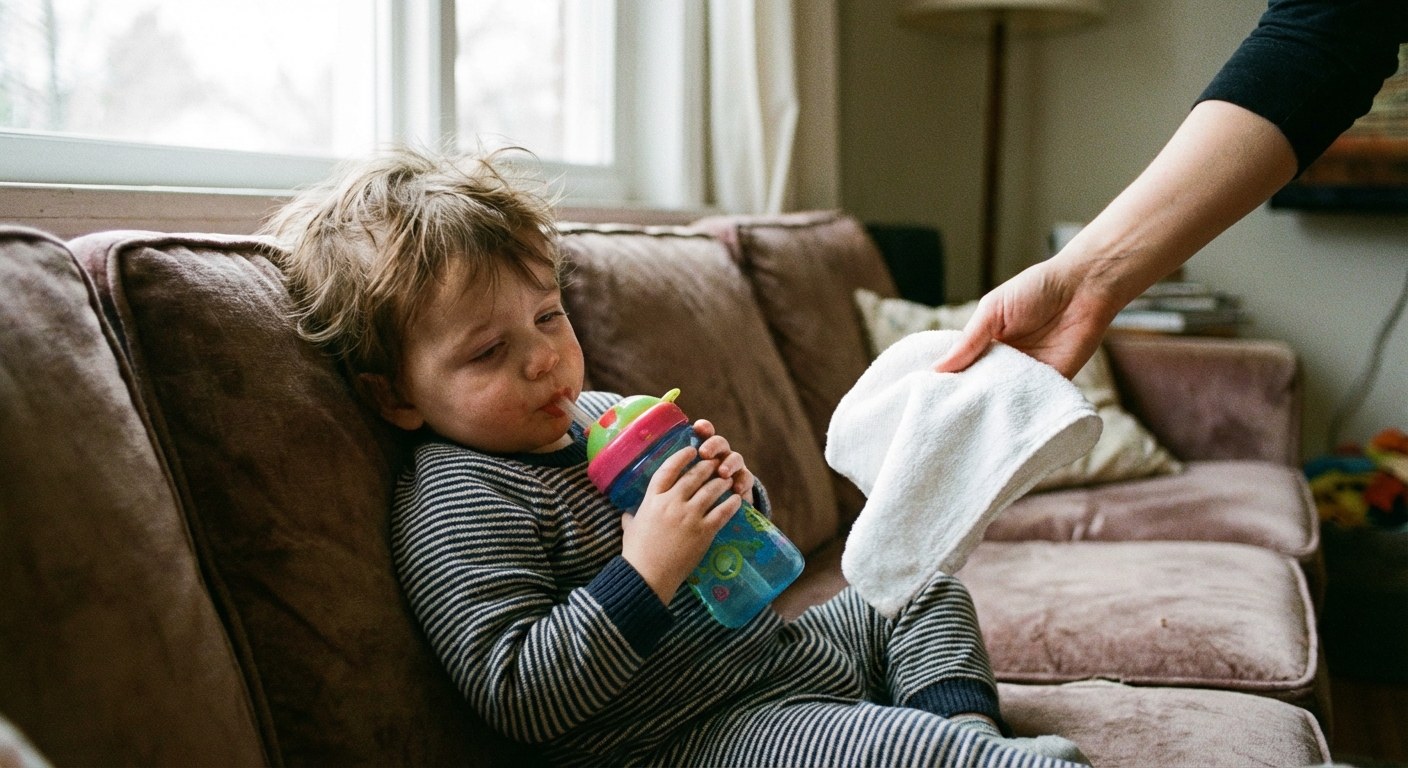
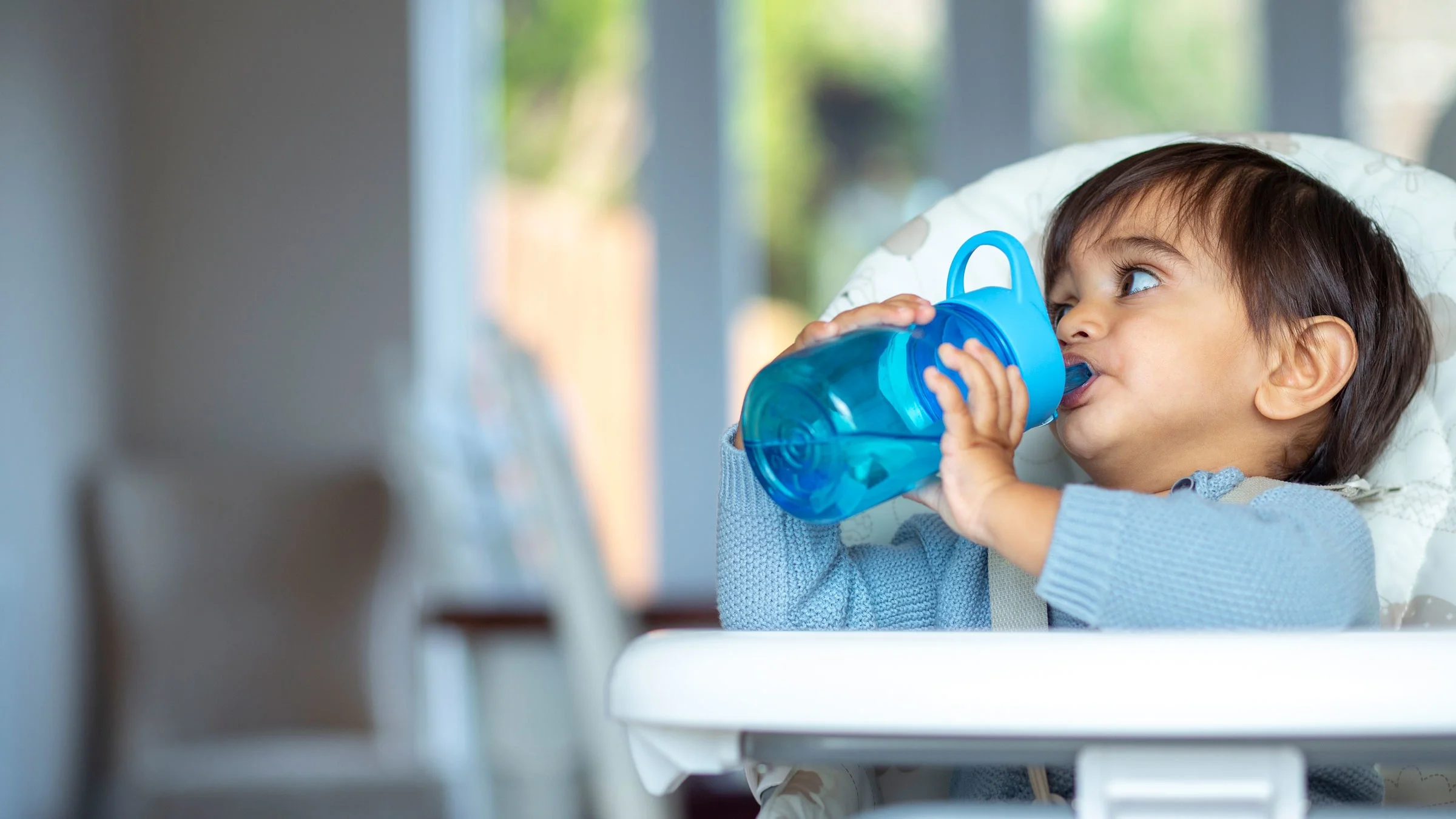
For most kids with HFMD, including eczema coxsackium, the biggest short-term risk is not drinking enough, often because mouth sores make swallowing painful.
Call same day if your child has any of these
- Less urine: fewer wet diapers than usual, very dark urine, or in older kids no pee for about 8 hours
- Very dry mouth (no saliva, cracked lips) or crying with few tears
- Refusing most fluids for more than a few hours, especially with fever
- Dizziness or weakness in an older child
Go to the ER if you see these
- No wet diaper for about 6 to 8 hours in a baby or young toddler, especially if they are not drinking
- Very sleepy or difficult to rouse
- Fast breathing, cool or mottled hands and feet, or signs your child is “shutting down”
If your child is refusing their usual drinks, try cold options and tiny, frequent sips: popsicles, chilled oral rehydration solution, smoothies, or cold milk if they tolerate it. Avoid acidic drinks (like orange juice) if mouth sores are present because they can sting.
What you can do at home
There is no medication that “kills” HFMD viruses in otherwise healthy kids. Treatment is supportive: keep them comfortable, protect the skin, and keep fluids going.
For fever and discomfort
- Use acetaminophen or ibuprofen if your child can take them, and dose based on your pediatrician’s guidance or the label for weight-based dosing.
- Do not give aspirin to children.
- Avoid topical numbing gels unless your pediatrician specifically recommends them. Some are not safe for young children.
For the eczema skin
- Gentle cleansing with lukewarm water and mild, fragrance-free cleanser.
- Moisturize often with a thick, fragrance-free ointment or cream.
- If your child already has an eczema action plan (like prescribed topical steroids for flares), follow it unless your clinician tells you otherwise. Sometimes we adjust plans when there is a lot of open skin, so check in if you are unsure.
- Keep nails short and consider cotton pajamas to reduce scratching during sleep.
- Avoid popping blisters. Let them dry and heal on their own.
Prevent spreading
- Handwashing after diaper changes, toileting, and wiping noses.
- Do not share cups, utensils, towels, or toothbrushes.
- Wipe down high-touch surfaces and toys, especially during the fever and blister phase.
One more reassuring note: eczema coxsackium can look dramatic and still be a routine viral illness. Your job is not to diagnose it perfectly. Your job is to watch your child’s overall behavior, hydration, and comfort, then get eyes on them if anything feels off.
How long it lasts
Most kids start to improve over 7 to 10 days. Fever often settles in a few days, while the rash can linger longer as spots dry and heal. Some children peel on their hands or feet afterward. Occasionally, fingernails or toenails can shed weeks later after HFMD (onychomadesis). It looks alarming, but it usually grows back normally.
FAQ
Is eczema coxsackium contagious?
Yes. It is caused by the same viruses that cause HFMD, which spread through respiratory secretions, saliva, blister fluid, and stool. Kids can spread the virus even before the rash appears, and stool shedding can continue for weeks. In real-life parenting terms: be extra careful with hand hygiene for a while, even after your child looks better, especially after bathroom trips and diaper changes.
Can my child go to daycare or school?
Follow your childcare or school rules, but many policies focus on whether a child has a fever and can participate. If your child is fever-free (without fever reducers), drinking adequately, and feeling well enough for the day, they are often allowed back. Because HFMD can spread before anyone knows a child is sick, exclusion does not fully stop outbreaks. The most practical prevention is strict handwashing, especially after toileting or diapering, for weeks.
Does this mean my child’s eczema is getting worse permanently?
Not usually. Eczema coxsackium is a temporary viral hit to already sensitive skin. Once the illness passes, many kids return to their baseline eczema pattern, especially with consistent moisturizing and flare management.
How is it diagnosed?
Most of the time, clinicians diagnose eczema coxsackium based on the pattern of the rash and the symptoms around it. Swabs are not always needed, because treatment is supportive unless there is concern for bacterial infection or herpes.
When should I worry about eczema herpeticum instead?
If the rash looks rapidly spreading and painful, your child seems very ill, or sores cluster around the eyes or face, get same-day medical care. When in doubt, it is absolutely appropriate to call your pediatrician and say, “My child has eczema and now has widespread blisters with fever. I’m worried about eczema herpeticum.”
A final calming thought
If you’re staring at a rash that does not match the cute little “hand-foot-mouth” pictures online, you are not overreacting. Eczema changes the whole look of the illness. Take a few photos in good light, track wet diapers or bathroom trips, push fluids in small frequent sips, and get same-day guidance if the rash is painful, spreading fast, or hydration is slipping.
And if you’re reading this with a sleeping child on your chest, you’re doing exactly what good parents do: staying close and gathering solid information instead of spiraling.
Sarah Mitchell
Sarah Mitchell is a Registered Pediatric Nurse and a mother of three who has spent over a decade helping families navigate the beautiful, chaotic early years of childhood. She combines evidence-based medical knowledge with real-world parenting experience to offer practical, compassionate advice. At Awesome Parent, Sarah's mission is to help exhausted parents find solutions, trust their instincts, and finally get some sleep.