Worried your child’s cold sore will spread at daycare or school? Here’s the HSV-1 timeline, what’s safe to use at home, when to call the doctor for antiviral...
Eczema Herpeticum in Children

Sarah Mitchell
Sarah Mitchell is a Registered Pediatric Nurse and a mother of three who has spent over a decade helping families navigate the beautiful, chaotic early years of childhood. She combines evidence-based medical knowledge with real-world parenting experience to offer practical, compassionate advice. At Awesome Parent, Sarah's mission is to help exhausted parents find solutions, trust their instincts, and finally get some sleep.
If your child has eczema and suddenly develops a fast-spreading cluster of painful blisters, especially with fever or acting really unwell, I want you to pause the “maybe it’s just a flare” voice in your head. There’s a complication called eczema herpeticum that can start on eczema-prone skin and turn into a same-day concern.
As a pediatric nurse and a mom, I’m not here to scare you. I’m here to help you recognize a pattern that deserves urgent attention, so you can get treatment quickly and avoid bigger problems.
What is eczema herpeticum?
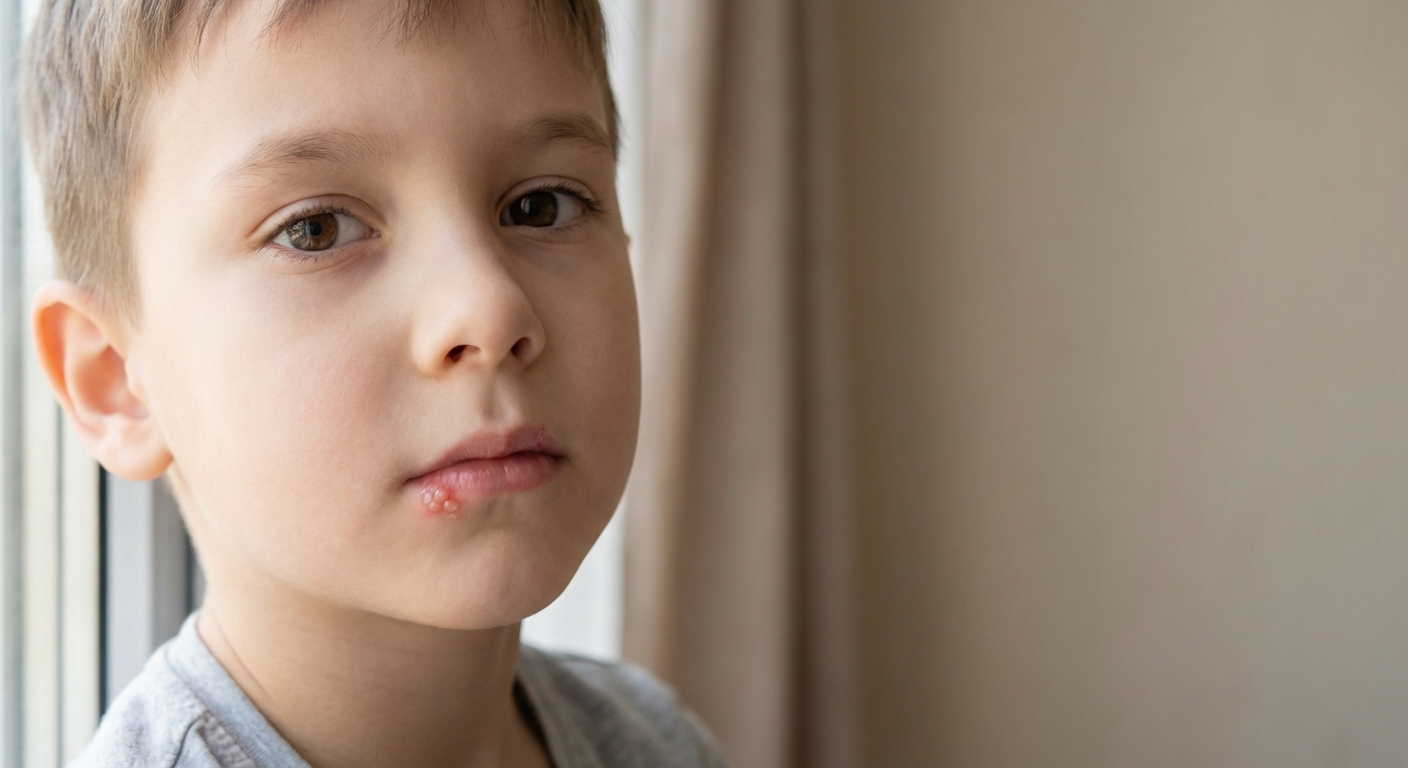
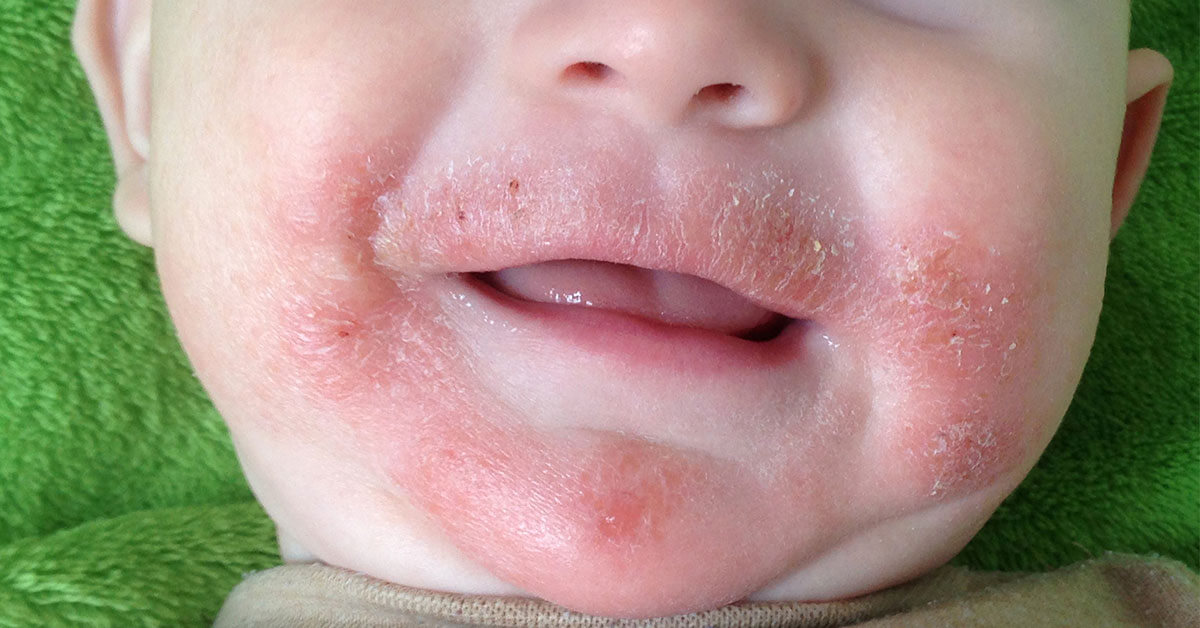
Eczema herpeticum is a widespread skin infection caused by the herpes simplex virus, most often HSV-1 (the same virus that commonly causes cold sores). Less commonly, HSV-2 can cause it too. In kids with eczema, the skin barrier is already leaky and inflamed, which makes it easier for the virus to spread across larger areas of skin.
This is not “just another rash.” It can make children quite sick, and it often needs prescription antiviral medication. The key is urgent, same-day medical evaluation, because a clinician will decide what treatment is needed based on the exam, your child’s age, symptoms, hydration status, and whether the eyes are involved.
What it looks like
Parents often describe it as an eczema flare that suddenly looks different and escalates quickly. A few classic features:
- Clusters of tiny blisters (vesicles) that may fill with cloudy fluid and look pustule-like
- “Punched-out” sores after blisters break, meaning small round erosions that look like little craters
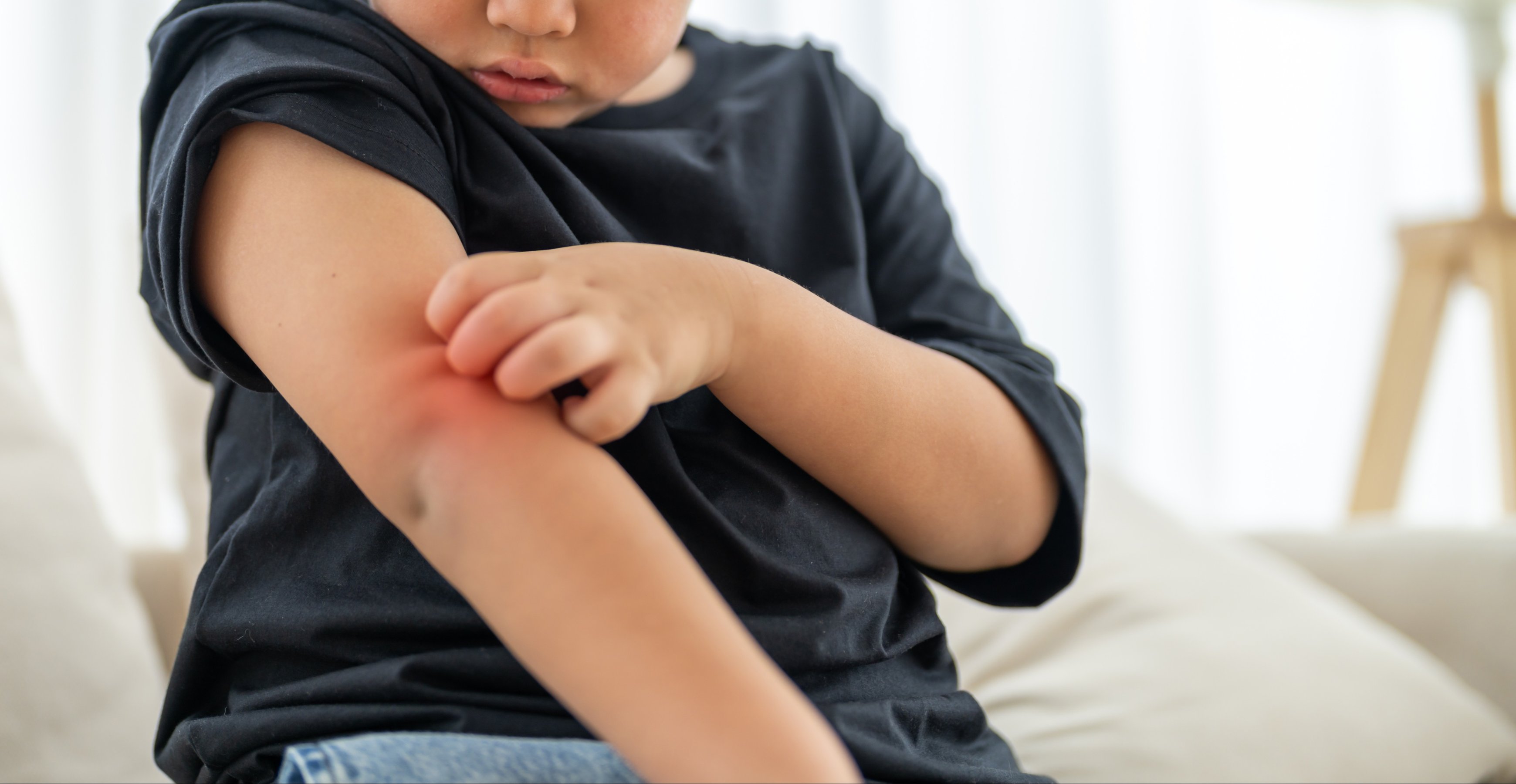
- Skin tenderness or pain (eczema is often itchy, but eczema herpeticum is more likely to be painful)
- Rapid spread over hours to a couple of days
- Weeping or oozing, sometimes with bleeding as the skin erodes
- Fever or chills and a child who seems run-down
- Swollen glands (swollen lymph nodes). You might feel “beans” in the neck
It commonly shows up on the face and neck, but it can spread anywhere eczema tends to flare, including the arms, legs, torso, and diaper area.
Why same-day care matters
Eczema herpeticum is treatable, but time matters. Same-day evaluation is important because:
- Antivirals work best early. Oral acyclovir or a similar antiviral is often used, and more severe cases may need IV medication.
- Dehydration can happen fast. Painful skin, fever, and reduced drinking can add up quickly in infants and toddlers.
- Rashes near the eyes need urgent evaluation. If herpes involves the eyelids or the skin around the eye, clinicians may involve ophthalmology because the cornea and vision can be at risk.
- Secondary bacterial infection can stack on top. Open sores are an easy entry point for staph or strep.
If you suspect eczema herpeticum, this is a “call your pediatrician now” situation. If you cannot be seen promptly, go to urgent care or the ER.
Who is at higher risk?
Eczema herpeticum can happen even in families who do “everything right.” But I see it more often when:
- There is a cold sore in the household or close contact circle, even if it looks small or almost healed
- A child has more severe or poorly controlled eczema, with lots of open or inflamed areas
- The child is an infant or young toddler
- The child is immunocompromised or taking immune-suppressing medication
Eczema herpeticum vs infected eczema vs impetigo
I used to see this mix-up all the time in triage, because all three can involve irritated skin and oozing. Here’s the parent-friendly way I separate them.
Eczema herpeticum (herpes virus)
- Often painful, not just itchy
- Blisters in clusters (vesicles that may become cloudy or pustule-like)
- Punched-out sores after blisters open
- Fever and a sick-looking child are common
- Spreads quickly
Infected eczema (bacterial infection on top of eczema)
- Usually looks like a flare that becomes more red, warm, and oozing
- May have tenderness, sometimes fever, but the hallmark punched-out look is typically absent
- Can develop yellow crusting and worsening inflammation
- Often treated with topical or oral antibiotics, depending on severity
Impetigo (bacterial skin infection)
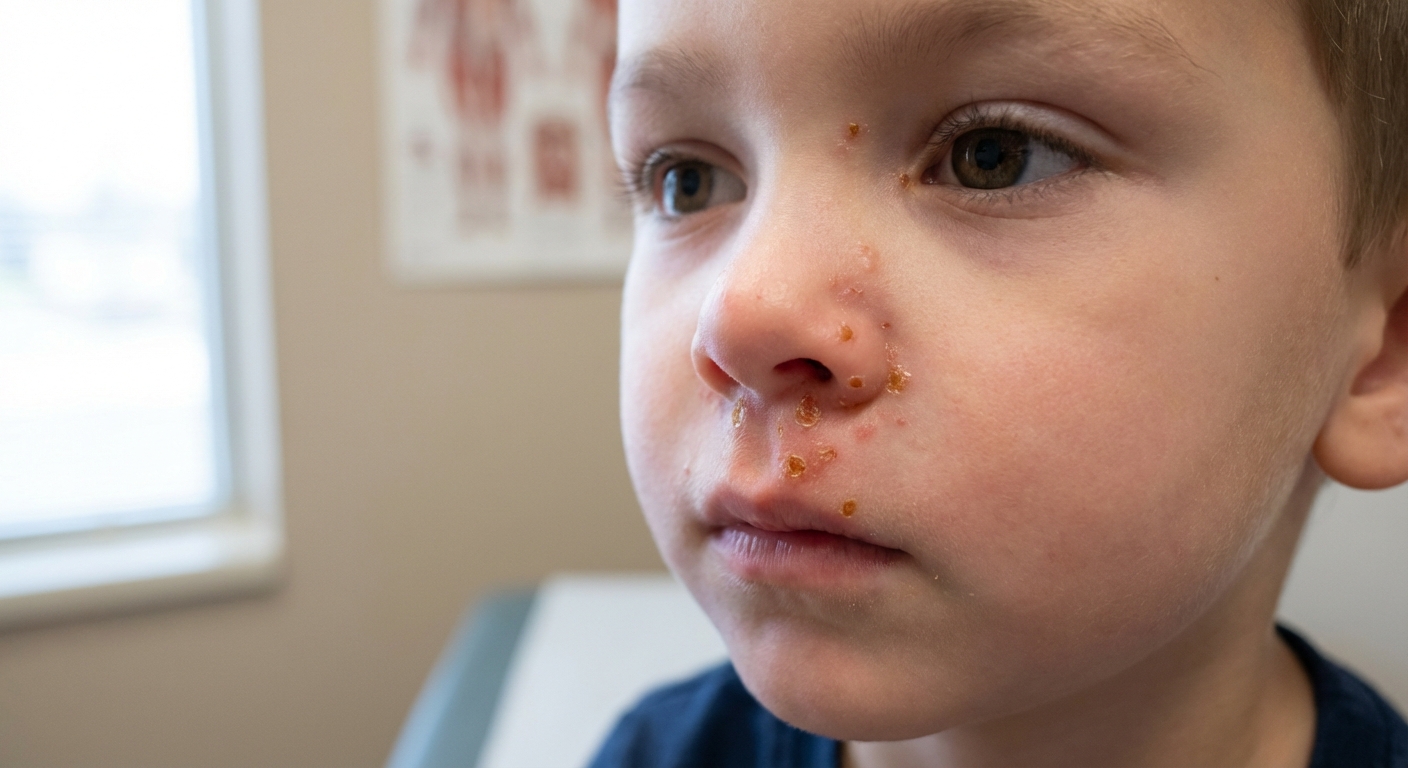
- Classically has honey-colored crusts
- Often starts around the nose and mouth or on areas with small breaks in the skin
- May itch and spread, but fever is not always present
- Treated with topical or oral antibiotics
One important point: eczema herpeticum can sometimes be mistaken for impetigo at first glance. The difference is that eczema herpeticum tends to be more blistery, more uniform in appearance within a cluster, more painful, and more likely to come with a sick-looking child or fever.
Same-day action plan
If your child has eczema and you are seeing blister clusters, punched-out sores, rapid spread, or fever, here’s what I want you to do today.
1) Call your pediatrician and say “eczema herpeticum”
You are not diagnosing. You are flagging a concern. This helps the office triage correctly. Many kids will need an in-person exam the same day.
2) Go to urgent care or the ER for red flags
- Baby under 3 months with fever
- Any signs of dehydration (dry mouth, no tears, very few wet diapers, extreme sleepiness)
- Rash on the eyelids, rash close to the eye, eyelid swelling, eye redness, or your child is rubbing the eye
- Fast spread, significant pain, or your child is very lethargic
- Your child is immunocompromised or on immune-suppressing medicine
3) While you wait, focus on comfort and limiting spread
- Trim nails and consider soft mittens for babies to reduce scratching
- Use gentle cleansing with lukewarm water if needed, then pat dry
- Avoid sharing towels, washcloths, utensils, cups, pacifiers, or lip balm
- Wash hands frequently, especially after touching the rash or applying moisturizer
- Avoid tight or occlusive wraps unless a clinician tells you to use them. Loose cotton clothing is fine. If you need to reduce scratching or protect raw areas, a light, breathable covering can be reasonable.

What to do about usual eczema meds
This is one of the most common questions, and it’s a good one.
- Do not start new medications (especially new topical steroids or new prescription creams) on a rapidly worsening, blistering, painful eruption without checking in with a clinician first.
- If you already use prescribed eczema medicines, ask your pediatrician what to do while you are waiting to be seen. In suspected eczema herpeticum, they may want to examine first.
- Bland moisturizers are usually okay if they do not sting and your child tolerates them, but avoid aggressively rubbing irritated skin.
Do not treat these as ordinary flares
Routine eczema flares are common, and most parents get very good at managing them. Eczema herpeticum is different. Do not brush these off as “just dryness” or “just an eczema flare”:
- New blister clusters on eczema skin
- Punched-out, crater-like sores
- Fever with a worsening rash
- Rapid spread or sudden change in the rash’s appearance
- Significant pain or a child who is unusually fussy or listless
- Rash near the eyes
If you are debating whether it looks “bad enough,” that’s your cue to get a same-day medical opinion. In pediatrics, we would rather evaluate a false alarm than miss a time-sensitive infection.
Triage questions
Can my child get eczema herpeticum without having cold sores?
Yes. Your child may have been exposed to HSV from someone else, even a person with a tiny or “almost healed” cold sore. Some people shed the virus even when sores are not obvious.
Is it contagious?
HSV is contagious through close contact, especially when there are active blisters or open sores. Try to avoid skin-to-skin contact between the affected areas and other children, and do not share towels, bedding, washcloths, cups, utensils, or pacifiers.
Will antibiotics help?
Eczema herpeticum is caused by a virus, so antivirals are the key treatment. Sometimes clinicians also treat for possible bacterial infection if the skin looks secondarily infected, but antibiotics alone will not address HSV.
What will the clinician do at the visit?
They will examine the rash carefully, ask about fever and symptoms, and may swab a lesion to test for HSV. If eczema herpeticum is suspected, they often start antiviral medication right away rather than waiting for results. They will also assess hydration and check for eye involvement if the rash is on the face.
When to call 911
This is rare, but call emergency services if your child has trouble breathing, becomes difficult to wake, has a bluish color to lips or face, or you see signs of a severe allergic reaction (widespread hives plus swelling of lips or tongue). Trust your instincts here.
The bottom line
If your child has eczema and develops punched-out blisters or sores with fever, pain, or a rapidly spreading rash, treat it like the urgent issue it can be. Same-day medical evaluation is the safest move, and early antiviral treatment can make a big difference.
You are not overreacting. You are doing what good parents do: noticing when something looks off and getting the right help.
Sarah Mitchell
Sarah Mitchell is a Registered Pediatric Nurse and a mother of three who has spent over a decade helping families navigate the beautiful, chaotic early years of childhood. She combines evidence-based medical knowledge with real-world parenting experience to offer practical, compassionate advice. At Awesome Parent, Sarah's mission is to help exhausted parents find solutions, trust their instincts, and finally get some sleep.