Norovirus can hit fast with sudden vomiting and diarrhea. Learn how to recognize it, how long kids can spread it, hydration pacing tips, cleaning guidance, m...
How Long Is Norovirus Contagious in Kids?

Sarah Mitchell
Sarah Mitchell is a Registered Pediatric Nurse and a mother of three who has spent over a decade helping families navigate the beautiful, chaotic early years of childhood. She combines evidence-based medical knowledge with real-world parenting experience to offer practical, compassionate advice. At Awesome Parent, Sarah's mission is to help exhausted parents find solutions, trust their instincts, and finally get some sleep.
If your child has norovirus, you are probably not asking for a detailed symptom list. You are asking the real 3 AM question: When does this stop being contagious?
As a pediatric nurse and a mom who has disinfected more doorknobs than I care to admit, here is the honest answer: kids are most contagious during vomiting and diarrhea, but they can continue to shed the virus after they seem better. That is why norovirus loves to make a “farewell tour” through households and classrooms.
Norovirus contagious timeline (day by day)
Norovirus spreads through tiny particles from vomit and stool, and it takes a very small amount to infect someone else.
Two quick notes before the timeline:
- Day 0 means the first day symptoms start (first vomit or first bout of diarrhea).
- This is a practical risk guide, not a stopwatch. Kids vary, and contagiousness does not map perfectly to calendar days.
The timeline below is a helpful way to think about risk after vomiting or diarrhea starts.
Day 0: Symptoms start
- Contagious level: very high.
- Virus is easily spread by shared bathrooms, hands, changing diapers, and any cleanup of vomit.
- Keep your child home. If possible, give them a dedicated bathroom or a dedicated potty chair that you disinfect after each use.
Days 1 to 2: Active stomach bug phase
- Contagious level: very high.
- This is when siblings often catch it because parents are doing close-contact care and lots of laundry.
- Focus on handwashing and disinfection (more on that below). Also, closing the lid before flushing may help reduce spray.
Days 3 to 4: Often improving
- Contagious level: often moderate, still real.
- Many kids stop vomiting first and may still have loose stools. Even if they look like themselves again, they can still spread norovirus.
- Continue “sick-day rules” at home: separate towels, extra handwashing, and disinfecting bathroom touchpoints daily.
Days 5 to 7: Better, still shedding
- Contagious level: often lower, not zero.
- Most kids are back to normal by now, but the virus can still be present in stool.
- This is where outbreaks happen when a child returns and hand hygiene is not great (hello, preschool bathrooms).
Weeks 1 to 2 (sometimes longer): After recovery
- Contagious level: usually low.
- Some children can shed virus in their stool for about 2 weeks, sometimes longer, even though they feel well (especially younger kids, and sometimes people with immune system issues).
- In real life, we do not keep kids isolated for weeks. We do keep up strong hygiene habits, especially after toileting and before eating.
Key takeaway: Your child is most contagious from the start through the first couple of days. The next week is “lower risk but still possible,” which is why good handwashing matters even after they bounce back.
How long are siblings and classmates at risk?
In your home
Household spread is common because norovirus is tough, fast, and not impressed by a quick rinse. Siblings are most at risk during:
- The first 48 hours after symptoms begin
- Any cleanup of vomit or diarrhea
- Shared bathrooms, shared towels, and shared snacks
Once the sick child has been symptom-free for a couple of days, the risk drops, but it does not vanish. The main ongoing risk is stool on hands after toileting or diaper changes.
At daycare and school
Classmates are at highest risk if a child returns while they still have:
- Vomiting
- Diarrhea or frequent urgent stools
- Accidents that require staff cleanup
Even after symptoms stop, norovirus can linger on surfaces and spread through imperfect handwashing. Daycare settings are especially vulnerable because young kids touch everything and then touch their mouths. That is not a moral failure. That is Tuesday.
When can kids go back to school or daycare?
Most schools and childcare centers use the same basic standard for stomach bugs, and it is a good one.
Important: Always follow your school or daycare policy. Many specifically require 48 hours after the last episode.
The practical rule: 24 to 48 hours symptom-free
- Minimum: Keep your child home until they have been vomit-free and diarrhea-free for at least 24 hours.
- Better (especially for daycare): 48 hours after the last vomit or diarrhea.
If your child is in diapers or still learning to wipe, I lean toward 48 hours when possible, because lingering loose stool plus imperfect hygiene is the perfect setup for spreading.
About “normal poop” after norovirus
Stools can stay softer for several days as the gut recovers. If your child has one or two mild, improving loose stools but is otherwise well, eating, and can reliably avoid accidents, some schools may allow return after 24 to 48 hours. But if they are having frequent watery diarrhea, they are not ready, even if they feel fine.
Quick return checklist
- No vomiting for 24 to 48 hours
- No watery diarrhea for 24 to 48 hours
- No stool accidents
- They can keep fluids down and are peeing regularly
- They have the energy to participate, not just sit on a beanbag looking miserable
Cleaning that actually reduces spread
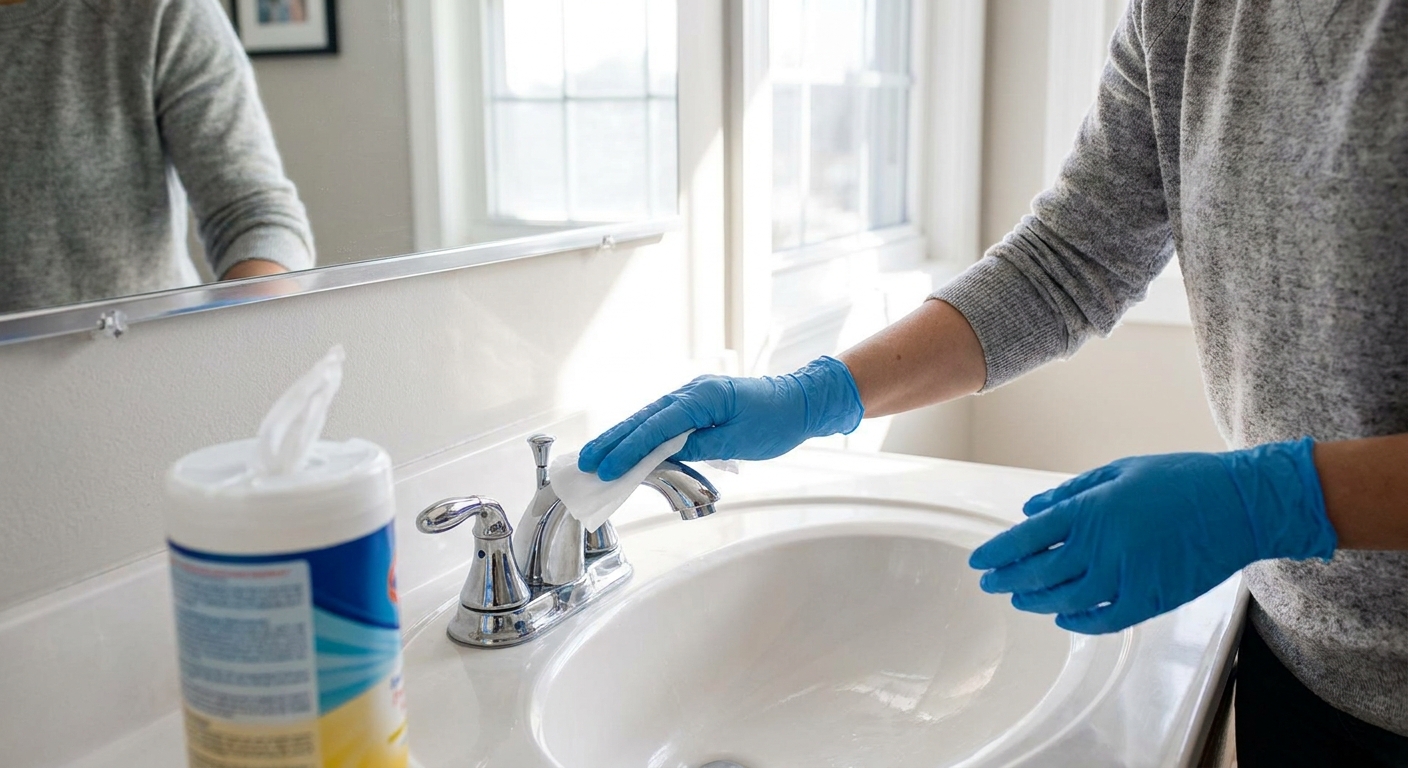
Norovirus is one of those viruses that can hang around on surfaces and spread easily. The goal is not perfection. The goal is to break the chain in the places that matter most.
Handwashing: the #1 tool
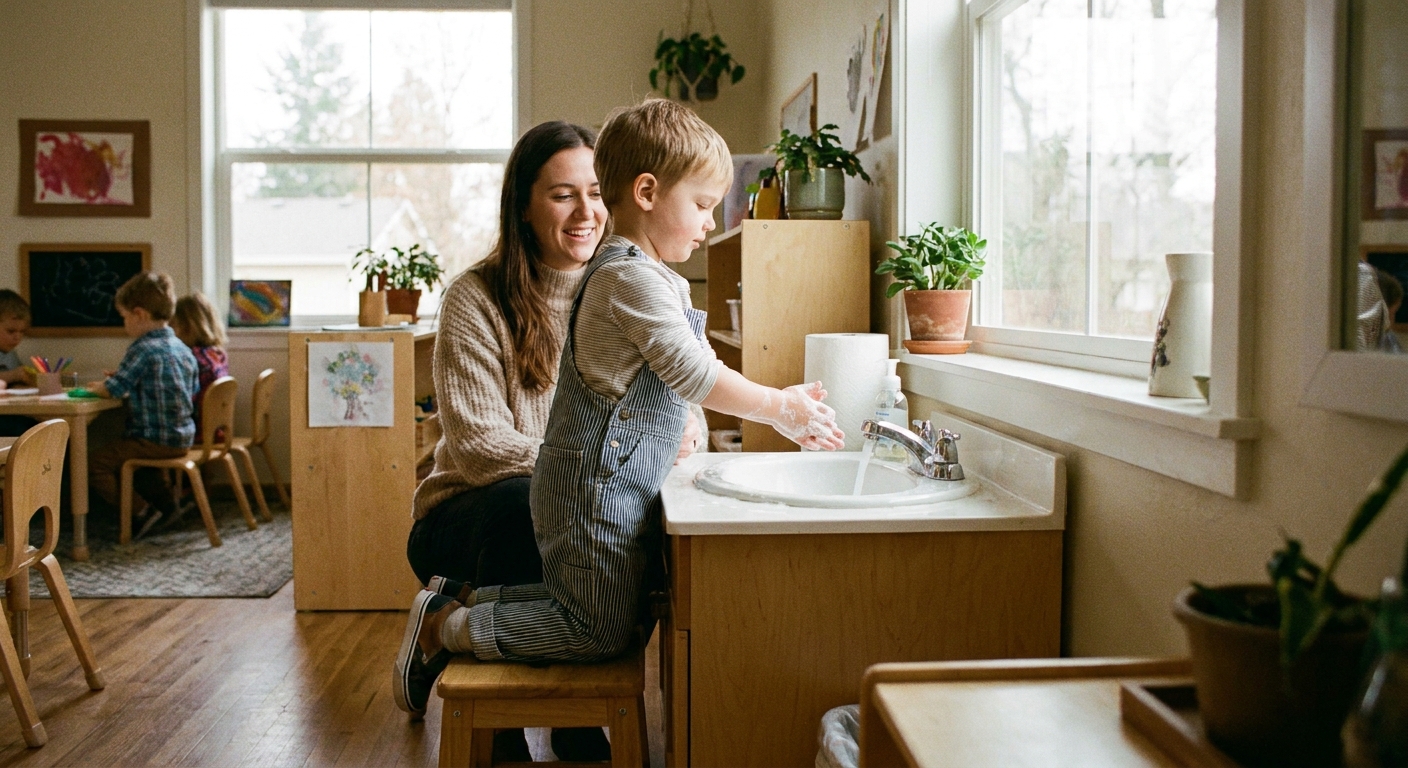
- Use soap and running water for 20 seconds, especially after toileting, diaper changes, and before eating.
- Alcohol-based hand sanitizer is less effective than soap and water against norovirus. It can help in a pinch, but it is not a substitute after toileting or diapering.
Disinfecting surfaces
Focus on high-touch spots for several days after the last symptoms:
- Bathroom: toilet handle, seat, lid, sink handles, light switches, doorknobs
- Kitchen: counters, fridge handle, table, high chair tray
- Electronics and toys that get mouthed
What to use: A bleach-based disinfectant is commonly recommended for norovirus because it is effective when used correctly.
- Store-bought option: Check the label to confirm it is intended for norovirus (or lists effectiveness against norovirus) and follow the stated wet contact time.
- DIY bleach option (CDC guidance): 5 to 25 tablespoons of household bleach per gallon of water. Use the amount that fits the situation and surface, and follow safety steps (ventilation, gloves, never mix with ammonia or other cleaners). Bleach concentrations vary by product, so when in doubt, follow the product label and local public health guidance.
Soft surfaces (carpets and couches)
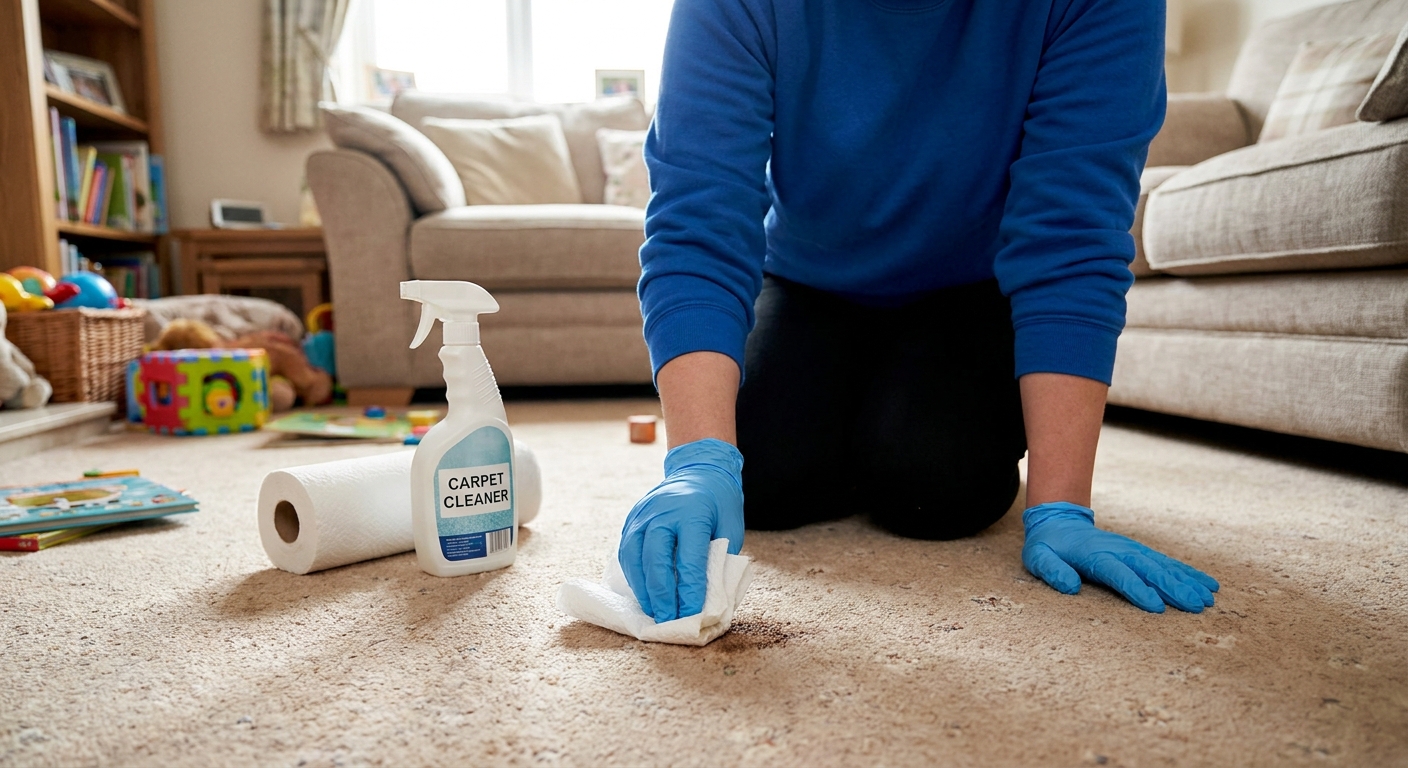
For rugs, upholstered furniture, and other soft surfaces: clean up the bulk first, then wash with cleaner appropriate for the material. If you can, use heat (steam cleaning or hot laundering of removable covers) because heat can help reduce germs when disinfectants are not fabric-safe.
Cleaning up vomit or diarrhea safely
- Wear disposable gloves if you have them.
- Use paper towels to remove the bulk first.
- Then disinfect the area thoroughly (including nearby surfaces). Norovirus particles can spread beyond the obvious spot.
- Wash hands with soap and water after glove removal.
Laundry tips: what matters and what you can skip
If you have ever carried a pile of bedding at arm’s length like it is radioactive, you are my people.
Handle laundry like it is contagious
- Avoid shaking sheets or clothes. That can spread particles into the air.
- Wear gloves if possible, or wash hands immediately after handling.
- Wash contaminated items as soon as you can.
Wash settings
- Use the warmest water safe for the fabric.
- Dry on high heat when possible.
- Bleach helps: Adding bleach to the wash cycle for white items or color-safe fabrics can provide an extra layer of decontamination. Follow the product label and fabric care instructions.
Do not forget these sneaky items
- Throw blankets and couch covers
- Stuffed animals that were slept with during illness (if washable)
- Bathroom hand towels and bath mats
- Reusable changing pad covers
How to protect siblings (without turning your house into a hazmat lab)
In clinic, I used to joke that norovirus spreads via “family love.” At home, these are the biggest wins:
- Assign towels: Everyone gets their own towel, or switch to paper towels for hand drying for a few days.
- Bathroom plan: If you have two bathrooms, designate one for the sick child. If not, disinfect the toilet handle, seat, lid, and sink handles daily and after accidents.
- Food boundaries: No shared cups, no shared utensils, no sharing bites.
- Handwashing routines: Make it automatic: after bathroom, before meals, when coming home.
- Short nails: Viruses love hiding under long nails. Trim kids’ nails if you can.
If siblings have already been exposed, you cannot always prevent illness. But you can often reduce the number of people who get it, or at least keep it from looping through the household twice.
FAQ: quick answers exhausted parents want
Is my child contagious before symptoms start?
Possibly. Norovirus can spread shortly before symptoms appear, which is one reason outbreaks move fast in schools and daycares.
How long after the last vomit is my child contagious?
Vomiting is the highest-risk symptom for spread. After the last vomit, risk usually drops over the next day or two, but stool can still carry virus for days. That is why return-to-school rules include being diarrhea-free too.
Can we visit grandparents after norovirus?
If grandparents are older, immunocompromised, or medically fragile, I would wait until your child is at least 48 hours symptom-free and you have done a solid round of cleaning, especially bathroom and kitchen touchpoints. If there were stool accidents, consider waiting a bit longer.
Can my child go swimming after norovirus?
Keep them out of the pool while they have diarrhea. After symptoms stop, a cautious rule is to wait at least 48 hours after diarrhea ends and follow your pool’s policy. Some facilities are stricter because accidents can contaminate water and spread illness.
What if this is not actually norovirus?
Not every stomach bug is norovirus. Vomiting and diarrhea can also come from other viruses (like rotavirus or adenovirus), food poisoning, or sometimes something else entirely. If symptoms are severe, not improving after a couple of days, or keep coming back, check in with your pediatrician.
When to call the doctor
Most norovirus cases can be managed at home, but reach out to your pediatrician or seek urgent care if your child has:
- Signs of dehydration (very dry mouth, no tears, peeing much less, extreme sleepiness, dizziness)
- Blood in stool or vomit
- Severe belly pain that is worsening or localized
- Vomiting that will not stop and they cannot keep fluids down
- Fever in a young infant, or you have an infant under 3 months with any significant illness concerns
If your gut is telling you something is off, trust it. You do not need to hit a certain panic threshold to call.
Hydration tip that helps: Use an oral rehydration solution if you have it, and offer small frequent sips. Big gulps can boomerang right back up.
The bottom line
Norovirus is most contagious in the first 1 to 2 days when vomiting and diarrhea are active. Kids can still shed virus after they feel better, so keep hygiene tight for at least a week, especially around toileting and food.
For school and daycare, a realistic, widely accepted target is 24 to 48 hours after the last vomit or diarrhea, with 48 hours being the safer choice when you can swing it (and the required choice in many programs). Your future self, your child’s teacher, and the parents in the class group chat will thank you.
Sources to check if you want the official wording: CDC norovirus prevention guidance and EPA disinfectant product lists for norovirus.
Sarah Mitchell
Sarah Mitchell is a Registered Pediatric Nurse and a mother of three who has spent over a decade helping families navigate the beautiful, chaotic early years of childhood. She combines evidence-based medical knowledge with real-world parenting experience to offer practical, compassionate advice. At Awesome Parent, Sarah's mission is to help exhausted parents find solutions, trust their instincts, and finally get some sleep.