A parent-friendly guide to telling a typical cold from RSV in babies, with breathing and hydration red flags, fever guidance, prevention, and clear “call v...
Human Metapneumovirus (HMPV) in Babies: Symptoms and When to Worry

Sarah Mitchell
Sarah Mitchell is a Registered Pediatric Nurse and a mother of three who has spent over a decade helping families navigate the beautiful, chaotic early years of childhood. She combines evidence-based medical knowledge with real-world parenting experience to offer practical, compassionate advice. At Awesome Parent, Sarah's mission is to help exhausted parents find solutions, trust their instincts, and finally get some sleep.
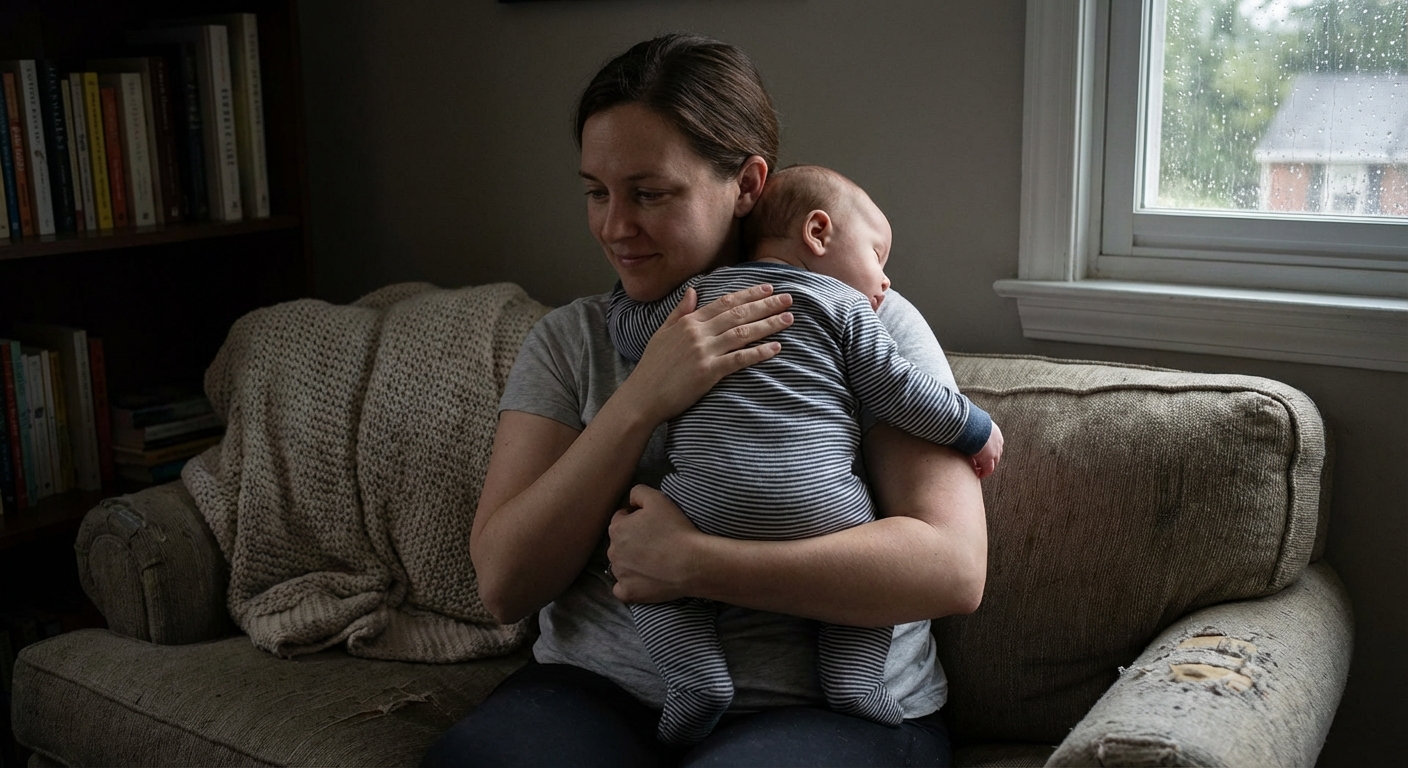
If your baby was just diagnosed with human metapneumovirus (HMPV), take a breath. I know a new virus name can hit like a jump scare at 2 AM, especially when your little one sounds congested and miserable. The reassuring truth is that HMPV is very common, and most babies and toddlers recover with supportive care at home.
That said, HMPV can sometimes act a lot like RSV and trigger wheezing or bronchiolitis in young kids. This article will help you understand what’s normal, what’s not, and when it’s time to call the pediatrician or go in.
What is HMPV?
Human metapneumovirus (HMPV) is a respiratory virus. In many places it often peaks in late winter and spring, but timing can vary by region and year. It spreads the same way other cold viruses do: through respiratory droplets, close contact, and contaminated hands and surfaces.
Most children are exposed to HMPV in early childhood. For many kids, it looks like a typical cold. For some, especially infants and toddlers, it can move into the lower airways and cause more significant symptoms like wheezing or fast breathing.
HMPV vs RSV vs a cold
Parents often ask me, “Is this basically RSV?” The most practical answer is: it can look very similar, and the home care is often similar, too.
- HMPV: Can cause cold symptoms, fever, wet cough, wheeze, and bronchiolitis-like illness. Some children can have croup-like symptoms, too.
- RSV: Famous for bronchiolitis in babies. Also causes congestion, cough, wheeze, and trouble feeding. Peaks in typical respiratory seasons (timing varies).
- Common cold viruses (like rhinovirus): Usually milder, but can still be rough, especially for babies. Wheezing can happen, but persistent or worsening breathing symptoms deserve a call.
Important: The virus name rarely changes what you do at home on day one. What matters most is how your child is breathing, hydrating, and acting.
Common symptoms
HMPV symptoms often start like a cold and can ramp up over a few days.
Upper airway symptoms
- Runny or stuffy nose
- Sneezing
- Sore throat (toddlers may refuse food or complain)
- Cough (often gets worse at night)
- Fever
Chest symptoms
- Wheezing (a whistling sound when breathing out)
- Fast breathing
- Working harder to breathe
- Chesty, wet cough
- Bronchiolitis symptoms similar to RSV
Some kids may also have decreased appetite, vomiting after coughing, or diarrhea. Those can happen with respiratory viruses, but we still keep a close eye on hydration.

How long it lasts
Many kids improve in about 7 to 10 days. A cough can linger longer, sometimes 2 to 3 weeks, especially after a lower airway infection. Think of these as typical ranges, not a promise. Every kid and every season is a little different.
A common pattern is:
- Days 1 to 3: runny nose, mild cough, fever may start
- Days 3 to 5: symptoms often peak, cough ramps up, breathing may get noisier
- Days 5 to 10: gradual improvement, appetite returns
- After day 10: lingering cough or congestion can persist but should slowly trend better
If symptoms are trending worse after the first several days, or your baby is working harder to breathe, that’s a reason to check in.
Home care
There is no routine, specific antiviral treatment for HMPV in general clinical practice. Supportive care is the name of the game, and yes, it can feel like a full-time job.
1) Clear the nose
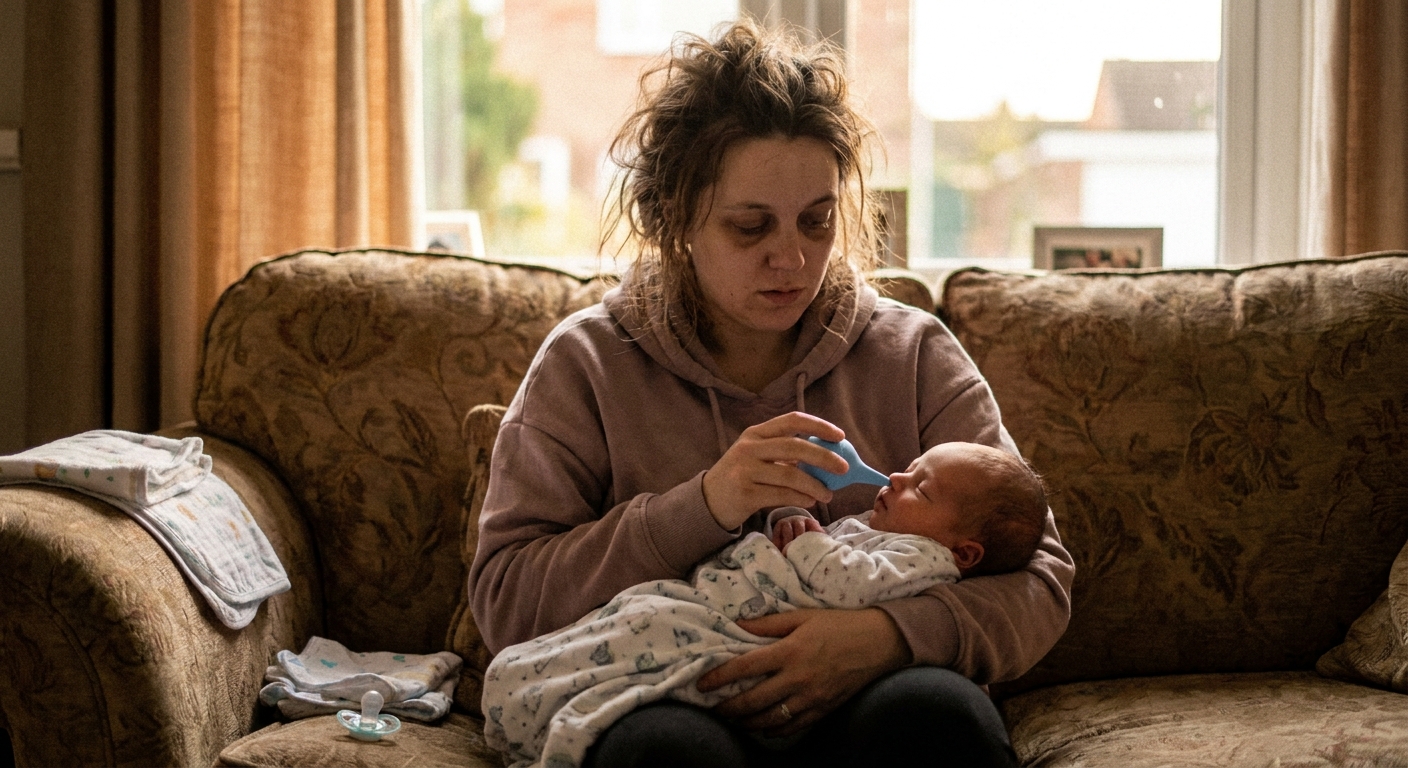
Babies rely heavily on nose breathing. When the nose is clogged, feeding and sleep fall apart.
- Saline drops or spray to loosen mucus
- Gentle suction (especially before feeds and sleep)
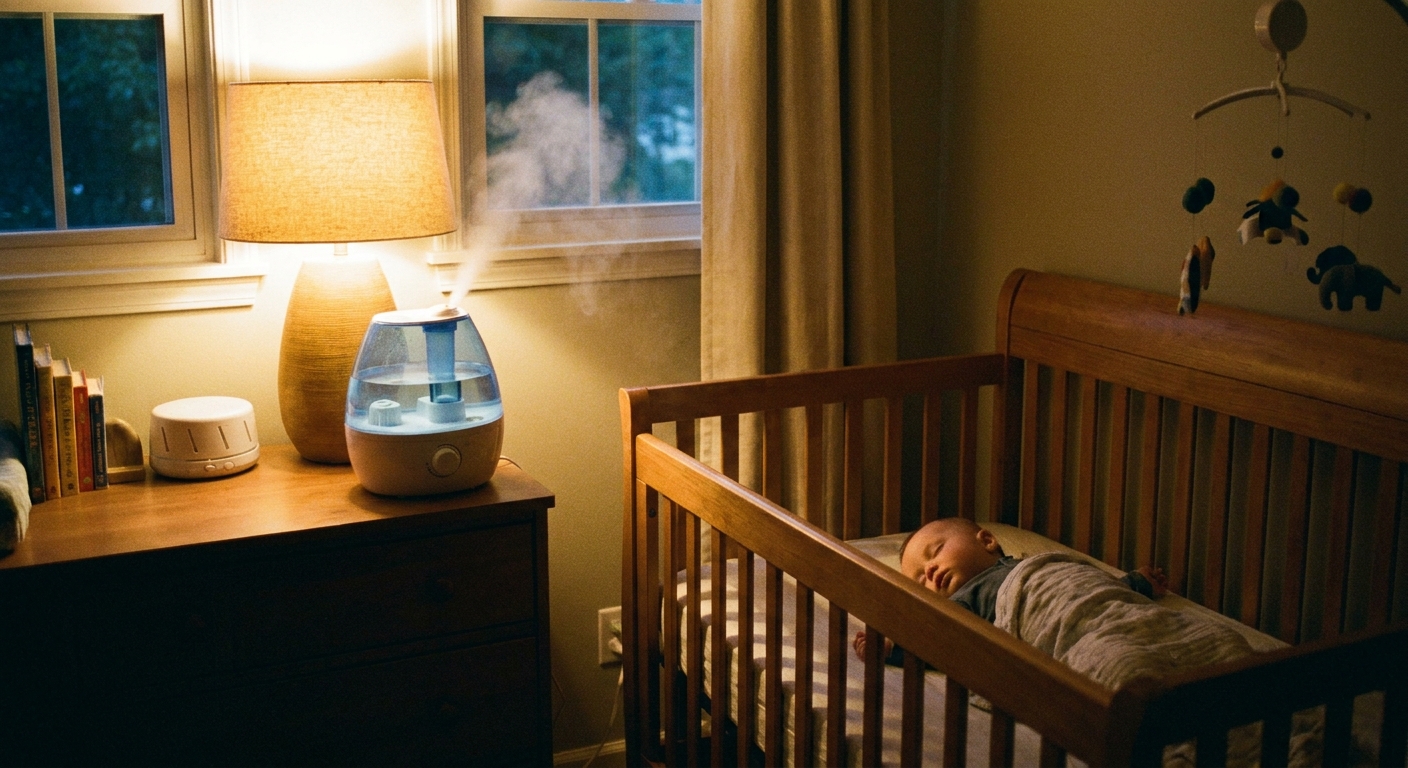
- Cool-mist humidifier in the sleep space
- Steamy bathroom for 10 to 15 minutes for older babies and toddlers (supervised)
Tip from my triage-nurse days: suction is most helpful when you keep it targeted. Before eating, before sleep, and when they’re truly struggling. Constant suction can irritate little noses.
Humidifier and steam safety: Use cool mist (not hot steam) around babies, keep cords and water out of reach, and clean the humidifier regularly to prevent mold or bacteria buildup.
2) Fluids first
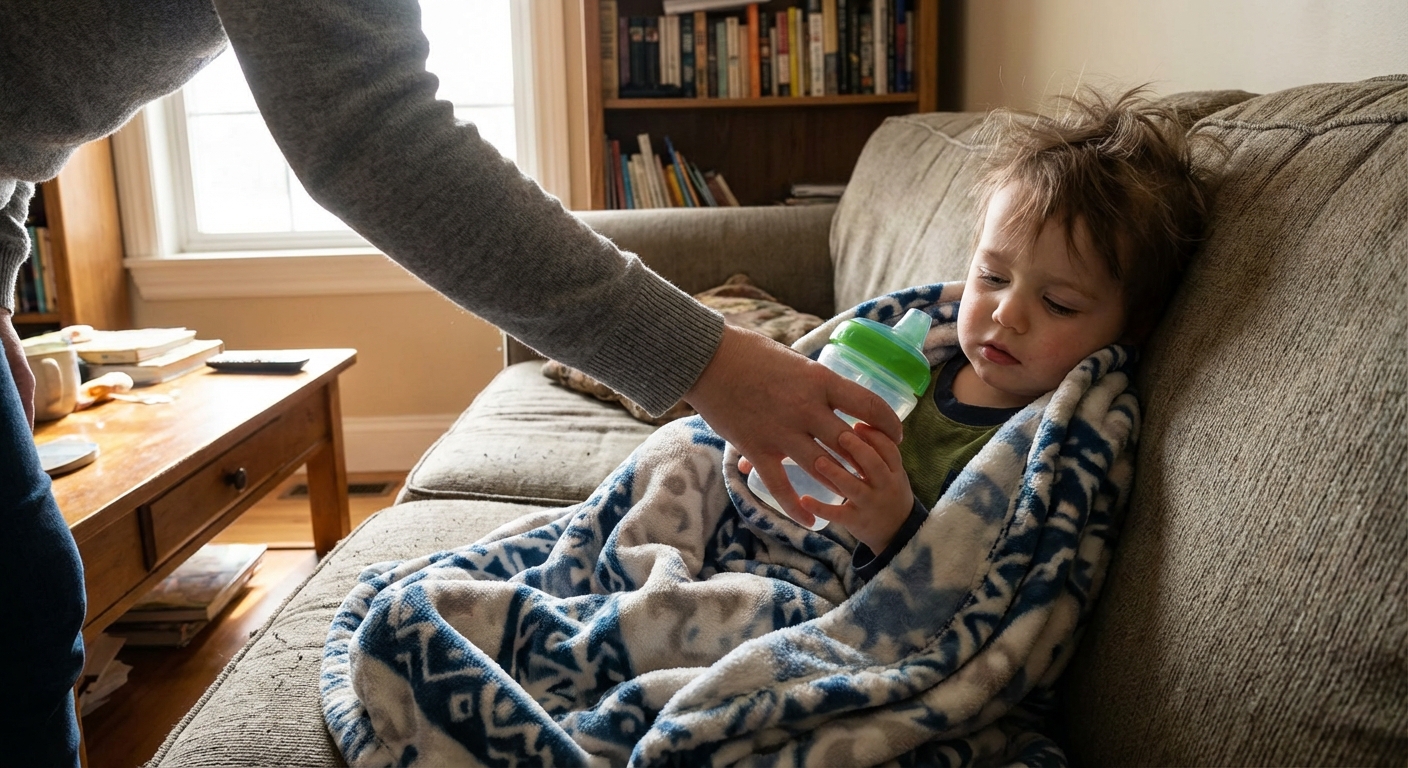
When babies are sick, hydration matters more than finishing a perfect meal.
- Breast milk or formula for infants
- Small, frequent feeds if they won’t take a full bottle
- For older babies and toddlers: water, milk, oral rehydration solution, soups, popsicles
3) Fever comfort
Fever can be part of the body’s immune response. We treat it mainly to help your child feel comfortable and drink.
- Use infant acetaminophen or ibuprofen (only if age-appropriate) according to your pediatrician’s guidance and package dosing
- Dress in light layers
- Avoid alcohol rubs or ice baths
Medication safety notes: avoid ibuprofen under 6 months unless your clinician specifically tells you to use it. Dose fever medicine by weight when possible, and avoid multi-symptom cough and cold products for young kids.
If your baby is under 3 months old with any fever, see the “Special situations” section below.
4) Cough medicine cautions
Over-the-counter cough and cold medicines are generally not recommended for young children. For toddlers over 1 year, a small amount of honey can soothe cough (never honey under 12 months).
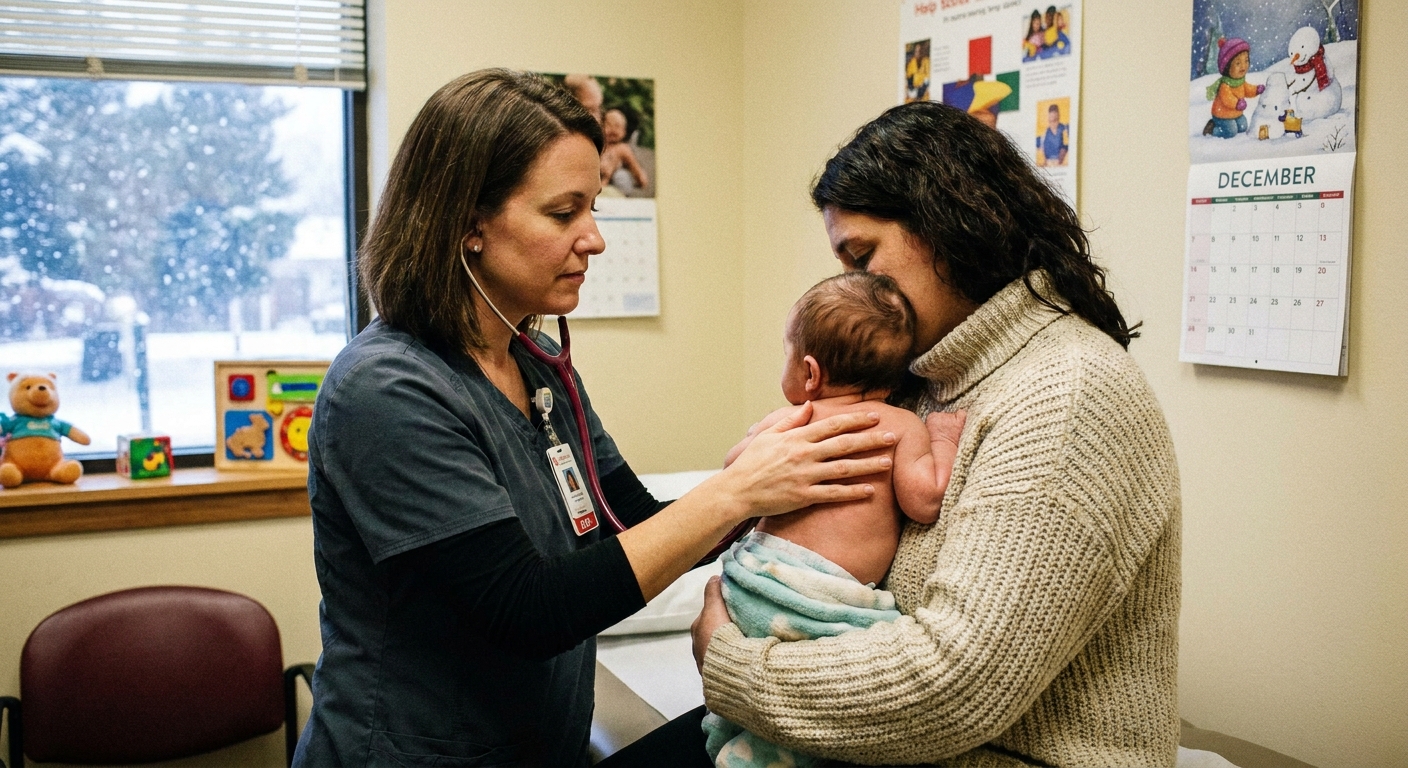
Call the pediatrician
Call your child’s clinician the same day if you notice any of the following:
- Wheezing that is new, persistent, or worsening (especially a first-time wheeze in an infant)
- Fever lasting more than 3 days, especially if it’s high, your child seems worse, or fever goes away and then returns
- Ear pain or new fussiness that suggests an ear infection
- Vomiting that prevents your child from keeping fluids down
- Underlying risk factors like prematurity, chronic lung disease, heart disease, immune compromise, or if your child has needed breathing treatments before
- Symptoms not improving after about a week, or getting noticeably worse after day 3 to 5
If your child has asthma or a history of reactive airway disease, ask your pediatrician whether you should use an inhaler or nebulizer plan at home.
Breathing red flags
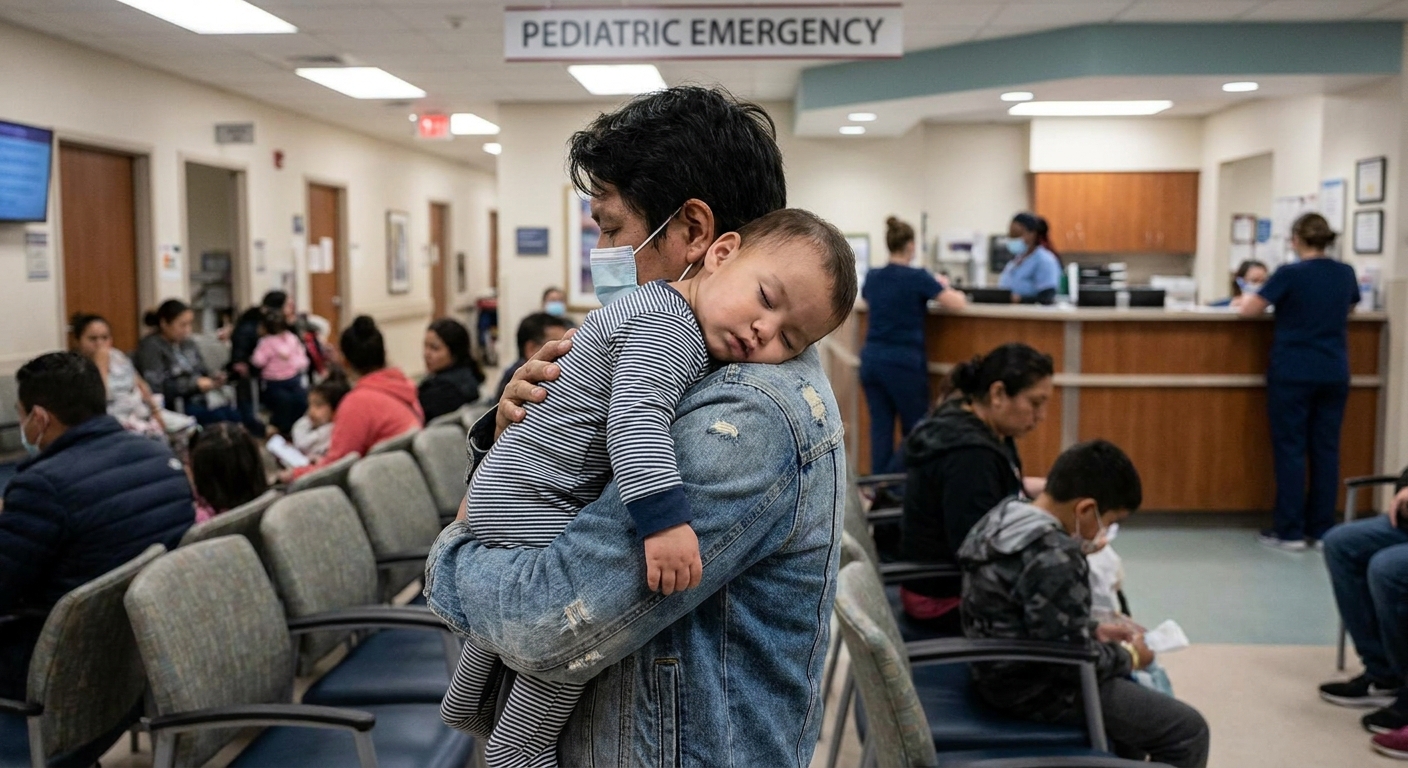
This is the section I wish every parent had taped to the fridge during cold and flu season. Trust your gut. If your baby’s breathing looks wrong, it is worth being seen.
Go now if your baby has:
- Struggling to breathe or you see the skin pulling in between the ribs or under the ribs (retractions)
- Fast breathing that does not settle when calm
- Nostrils flaring with each breath
- Grunting or repeated pauses in breathing
- Blue, gray, or pale color around lips or face
- Head bobbing with breathing (a sign of significant work of breathing in infants)
- Unable to feed because they cannot coordinate breathing and sucking
- Sleepiness that is unusual or hard to wake
If you are on the fence, record a 10-second video of the breathing and call your pediatrician. It can help them triage you appropriately.
Dehydration red flags
Babies can get dehydrated faster than adults, especially if they are breathing fast, running a fever, or taking less milk.
Get urgent help if you notice:
- Significantly fewer wet diapers than usual for your child
- For many older infants, fewer than about 3 to 4 wet diapers in 24 hours can be concerning
- Dry mouth or no tears when crying (in older infants)
- Sunken soft spot (fontanelle) on the head
- Very dark urine
- Refusing most feeds or repeated vomiting
- Lethargy or unusually hard to console
Practical tip: if your baby cannot take a normal feed, try smaller amounts more often. Even a few sips or a short nurse every 10 to 15 minutes can add up.
Special situations
Babies under 3 months
If your baby is under 3 months and has a fever (often defined as 100.4°F or 38°C or higher), call your clinician immediately. Newborns have different rules because they can get sick faster and may need evaluation.
Higher-risk babies
If your child was born premature, has chronic lung or heart conditions, neuromuscular conditions, or is immunocompromised, a “regular” virus can hit harder. Don’t hesitate to call earlier rather than later.
Diagnosis and treatment
HMPV can be diagnosed with a nasal swab test, often as part of a respiratory viral panel. Many clinicians do not test every child because it usually does not change home treatment.
Treatment depends on severity:
- Mild cases: supportive care at home (fluids, nasal suction, fever comfort)
- Moderate cases: may need evaluation for wheezing or oxygen level checks
- Severe cases: some children need hospital care for oxygen, suctioning support, or fluids
Antibiotics do not treat HMPV, but they may be used if a child develops a secondary bacterial infection (like an ear infection or pneumonia) diagnosed by a clinician.
Contagious and daycare
Kids with HMPV are usually most contagious early on, especially while they have lots of runny nose and cough. In real life, it can be hard to pin down an exact day they stop spreading germs.
A practical rule for daycare or school is often:
- Fever-free for 24 hours without fever-reducing medicine
- Breathing is comfortable enough to participate
- Symptoms are improving (even if the cough lingers)
That lingering cough after a viral illness can be normal, but it should slowly trend better.
Prevention
You cannot prevent every seasonal virus, but you can reduce risk:
- Handwashing, especially after wiping noses
- Avoid close contact with sick people when possible
- Clean high-touch surfaces (phones, doorknobs, toys)
- Teach “cough into elbow” for toddlers
- Keep babies away from smoke exposure, which can worsen respiratory symptoms
There is currently no routine HMPV vaccine in standard pediatric schedules.
Bottom line
HMPV is a common respiratory virus that can look like a bad cold or RSV, especially in babies and toddlers. Most kids recover with supportive care, but breathing difficulty and dehydration are the big reasons we worry.
If your child is breathing comfortably, staying hydrated, and gradually trending better, you are very likely on the right track. If something feels off, especially with breathing, you are never “overreacting” by getting them checked.
Sarah Mitchell
Sarah Mitchell is a Registered Pediatric Nurse and a mother of three who has spent over a decade helping families navigate the beautiful, chaotic early years of childhood. She combines evidence-based medical knowledge with real-world parenting experience to offer practical, compassionate advice. At Awesome Parent, Sarah's mission is to help exhausted parents find solutions, trust their instincts, and finally get some sleep.