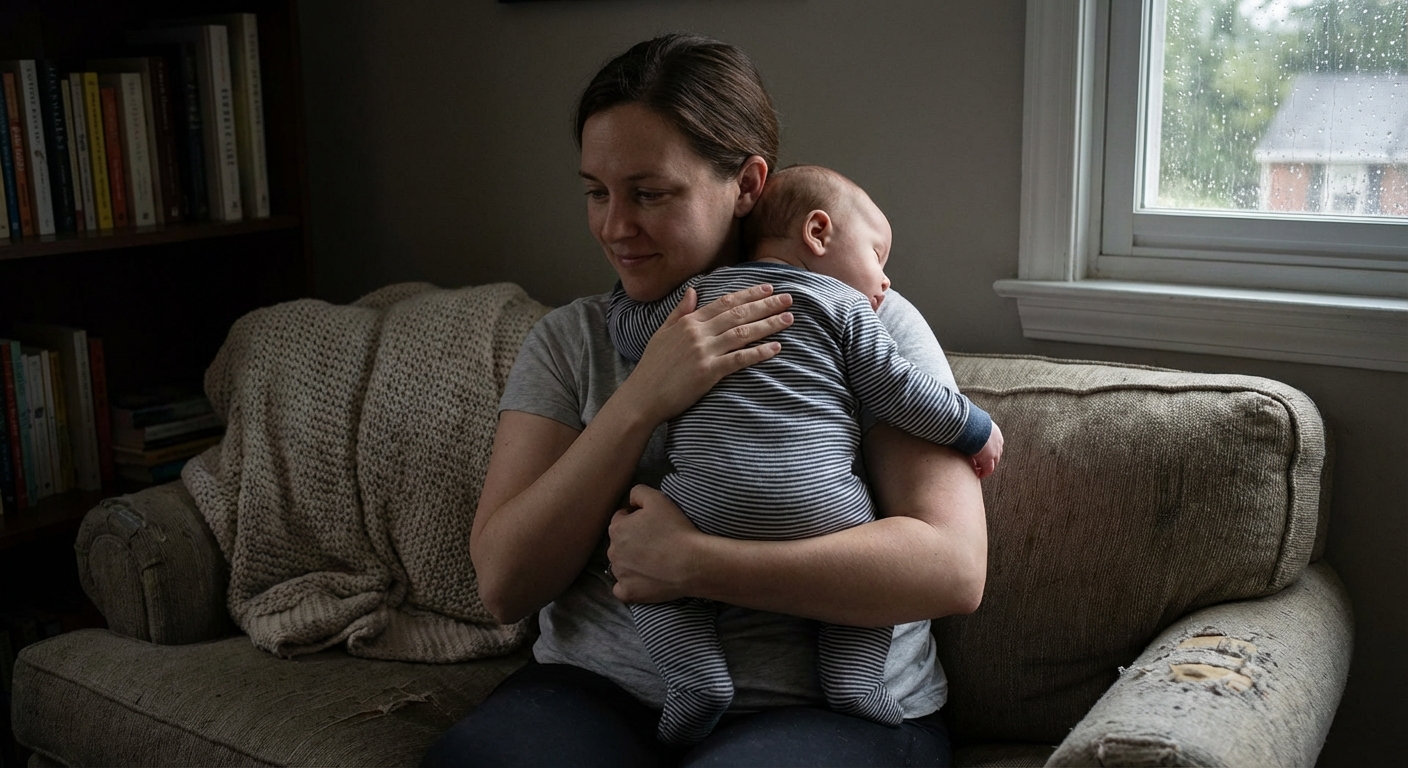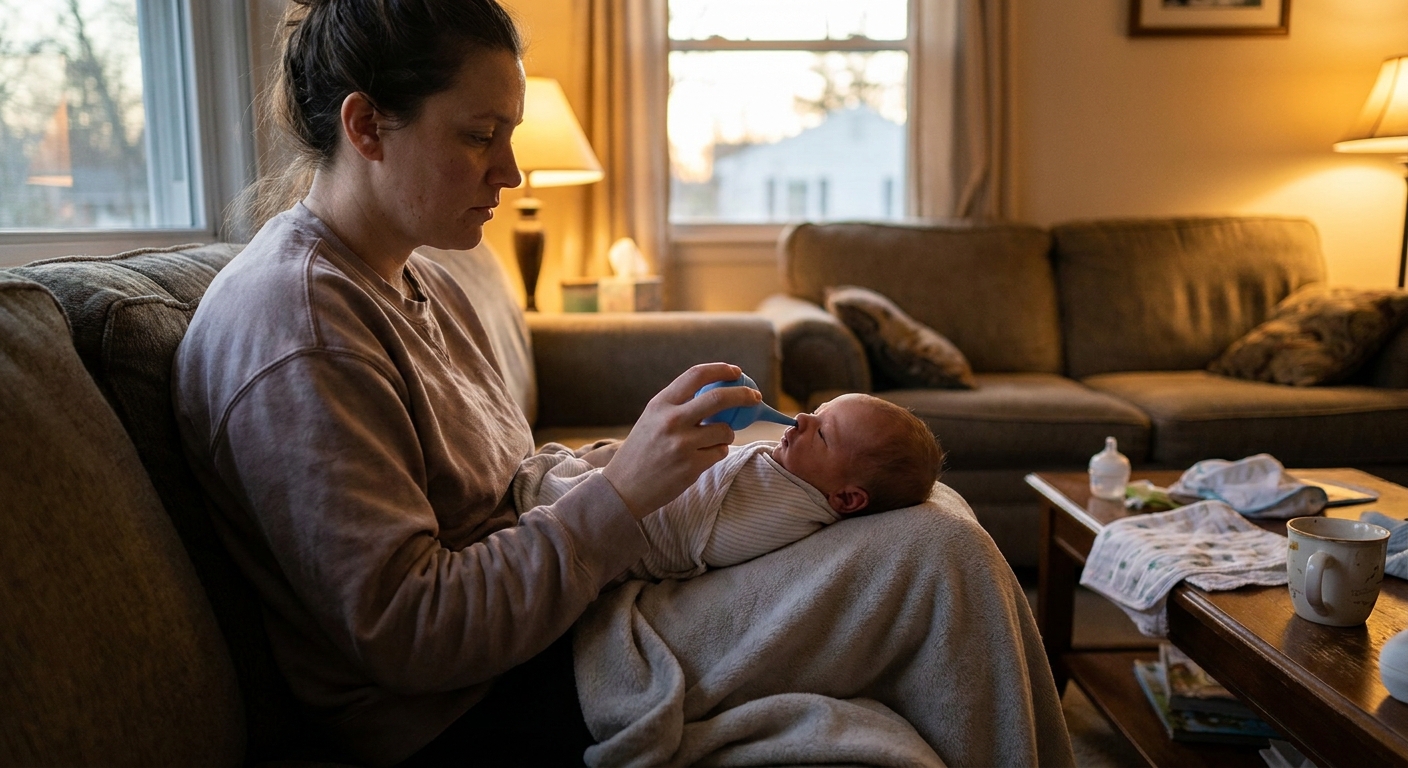
A calm, practical guide to RSV: how it differs from a cold, what symptoms look like by age, what you can do at home, and when it’s time for urgent care.
RSV vs Cold in Babies: How to Tell the Difference

Sarah Mitchell
Sarah Mitchell is a Registered Pediatric Nurse and a mother of three who has spent over a decade helping families navigate the beautiful, chaotic early years of childhood. She combines evidence-based medical knowledge with real-world parenting experience to offer practical, compassionate advice. At Awesome Parent, Sarah's mission is to help exhausted parents find solutions, trust their instincts, and finally get some sleep.
If your baby has a runny nose and a little cough, you are probably asking the same question I heard every winter in triage: “Is this just a cold, or is it RSV?”
Here is the calm, useful truth. Early on, RSV can look exactly like a basic cold. The difference often shows up over the next day or two, when symptoms shift from mostly “nose” to more “chest,” especially in younger babies. But it does not always follow a neat schedule.
This guide will help you decide what to watch closely, what you can treat at home, and when it is time to call your pediatrician or head in.
RSV vs cold: quick difference
A common cold usually stays in the upper airway. Think: sneezing, runny nose, mild cough, maybe a low fever, and your baby still breathes comfortably and feeds reasonably well.
RSV often starts the same, but in many babies it can move into the lower airways and cause bronchiolitis. That is when you may see faster breathing, wheezing, retractions, and feeding that drops off because breathing takes too much effort.
Important nuance: wheezing is not RSV-specific. Other viruses and colds can also cause wheeze in some babies. What matters most is how hard your baby is working to breathe and whether they can stay hydrated.
Not every RSV infection becomes severe. Many babies do fine at home. The key is knowing what “fine” looks like and what signals a turn.
Symptom timeline
Viruses do not read the rulebook, but here is a common pattern parents notice with RSV and bronchiolitis.
Days 1 to 2
- Runny or stuffy nose
- Sneezing
- Mild cough
- Fussiness
- Sometimes fever
At this stage, RSV and a cold are basically twins.
Days 3 to 5 (often a tougher window)
- Cough worsens
- Wheezing or a “tight” sounding chest
- Faster breathing
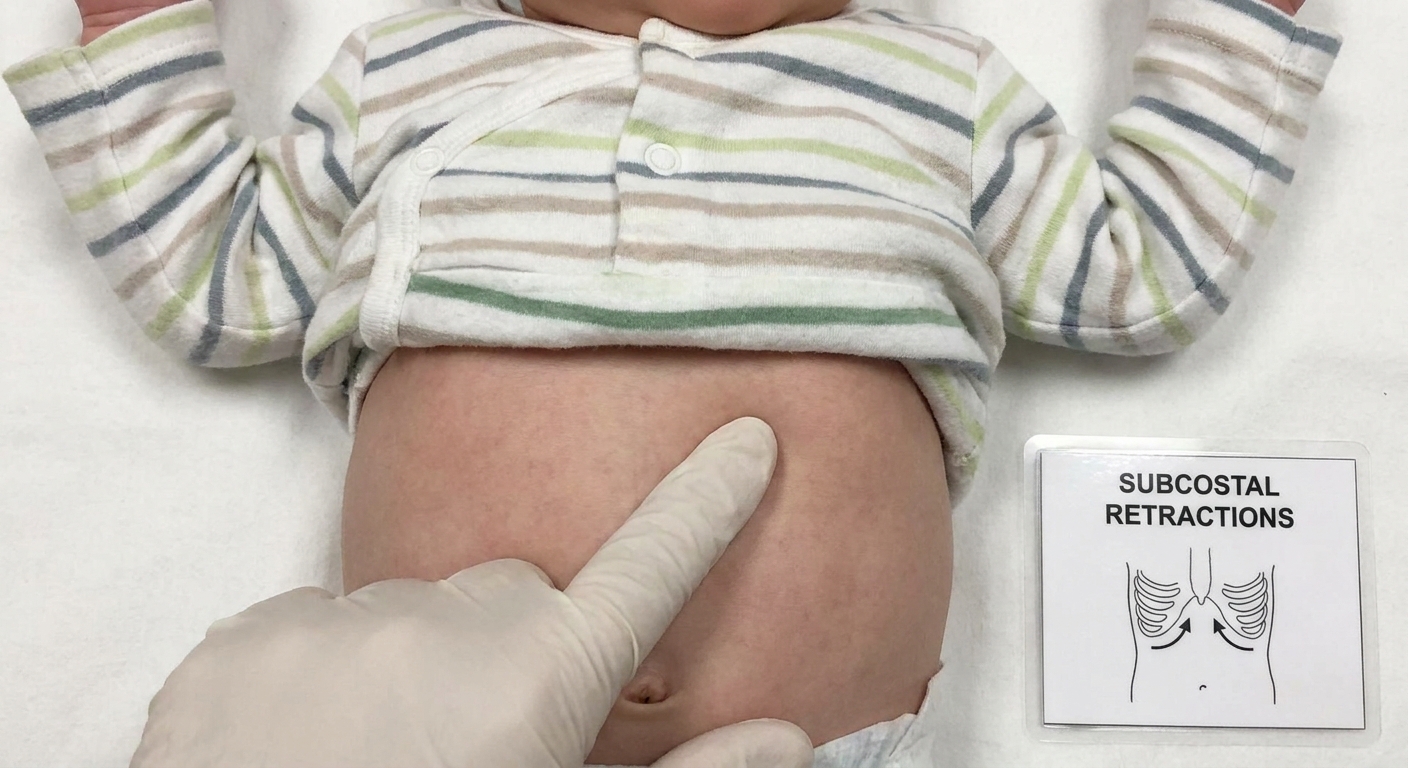
- Retractions (skin pulling in around ribs or neck)
- Baby tires out while feeding
If RSV is going to cause trouble, this is often the window when parents see the shift. Some babies peak earlier or later, and some never develop chest symptoms.
Parent note: Many babies seem “worse at night.” Part of that is normal congestion plus tiredness. What matters most is how your baby is breathing and drinking, not what the clock says.
Breathing: biggest clue
In triage, breathing is the number one thing we focus on. A snotty nose is annoying. Trouble breathing is urgent.
More like a cold
- Breathing is comfortable when your baby is calm
- You may hear congestion in the nose, but the chest does not look like it is working hard
- Your baby can feed without needing frequent breaks
More concerning
- Breathing rate is clearly faster than normal, especially when baby is calm or sleeping
- Retractions: skin pulling in between ribs, under the ribs, or above the collarbones
- Nasal flaring: nostrils widening with breaths
- Head bobbing with breathing in young infants
- Grunting or making a soft “uh” sound on exhale
- New noisy breathing from the chest (wheezing, persistent tight cough, or rattly sounds you did not hear before)
- Pauses in breathing or color change (blue or gray lips/face)
How to check breathing at home
Choose a moment when your baby is calm or sleeping.
- Watch the chest and belly for 30 seconds. Count each rise as one breath. Multiply by 2 for breaths per minute.
- Look for extra work. Retractions and nasal flaring matter more than an exact number.
- If you want numbers, ask for age cutoffs. “Fast” depends on age and your baby’s baseline. Your pediatrician can give you the cutoff that fits your baby.
Helpful reference: If your baby is breathing so fast you cannot count comfortably, or they cannot feed because of breathing, that is a “call now” situation.
Feeding and diapers: the fuel gauge
Babies can handle a lot of mucus. What they cannot handle is dehydration plus working hard to breathe.
More like a cold
- Feeds are a little smaller or slower, but still steady
- Wet diapers are close to normal
- Baby perks up between naps, even if they are cranky
More concerning
- Feeds drop significantly (baby stops early, refuses, or cannot coordinate sucking and breathing)
- Fewer wet diapers (a noticeable decrease from your baby’s normal)
- Signs of dehydration: dry mouth, fewer tears than usual, sunken soft spot, sleepy and hard to wake
- Vomiting with coughing can happen with both, but repeated vomiting plus poor intake is a red flag

If your baby is working hard to breathe, they often cannot drink enough. That is one of the most common reasons we bring babies in for evaluation.
Diaper anchor (general): If wet diapers are clearly dropping off, or you are seeing only a few in a day compared with normal for your baby, call for guidance. Age and feeding method matter, so when in doubt, call.
Fever: helpful, not the decider
Both colds and RSV can cause fever. Some babies with RSV have no fever at all.
- Fever with a happy, comfortably breathing baby is usually something you can monitor with guidance from your pediatrician.
- Fever with fast breathing, retractions, or poor feeding needs closer attention.
Important: In young babies, fever changes the plan.
- Under 3 months: a rectal temperature of 100.4°F (38°C) or higher usually warrants an urgent call and often an in-person evaluation.
- Any age: if your baby seems limp, difficult to wake, or is struggling to breathe, do not wait on a fever number.
Higher risk babies
RSV can be rough for any baby, but some babies have less reserve. Meaning they can go from “fine” to “not fine” faster.
- Babies under 6 months, especially under 3 months
- Premature infants
- Chronic lung disease or significant heart disease
- Weakened immune system
- History of apnea (breathing pauses)
If your baby is in a higher-risk group, call earlier rather than later, even if symptoms look “just like a cold” right now.
At-home care
Whether it is RSV or a standard cold, the home care basics are very similar. Your goal is to keep air moving and fluids going.
Focus on the nose
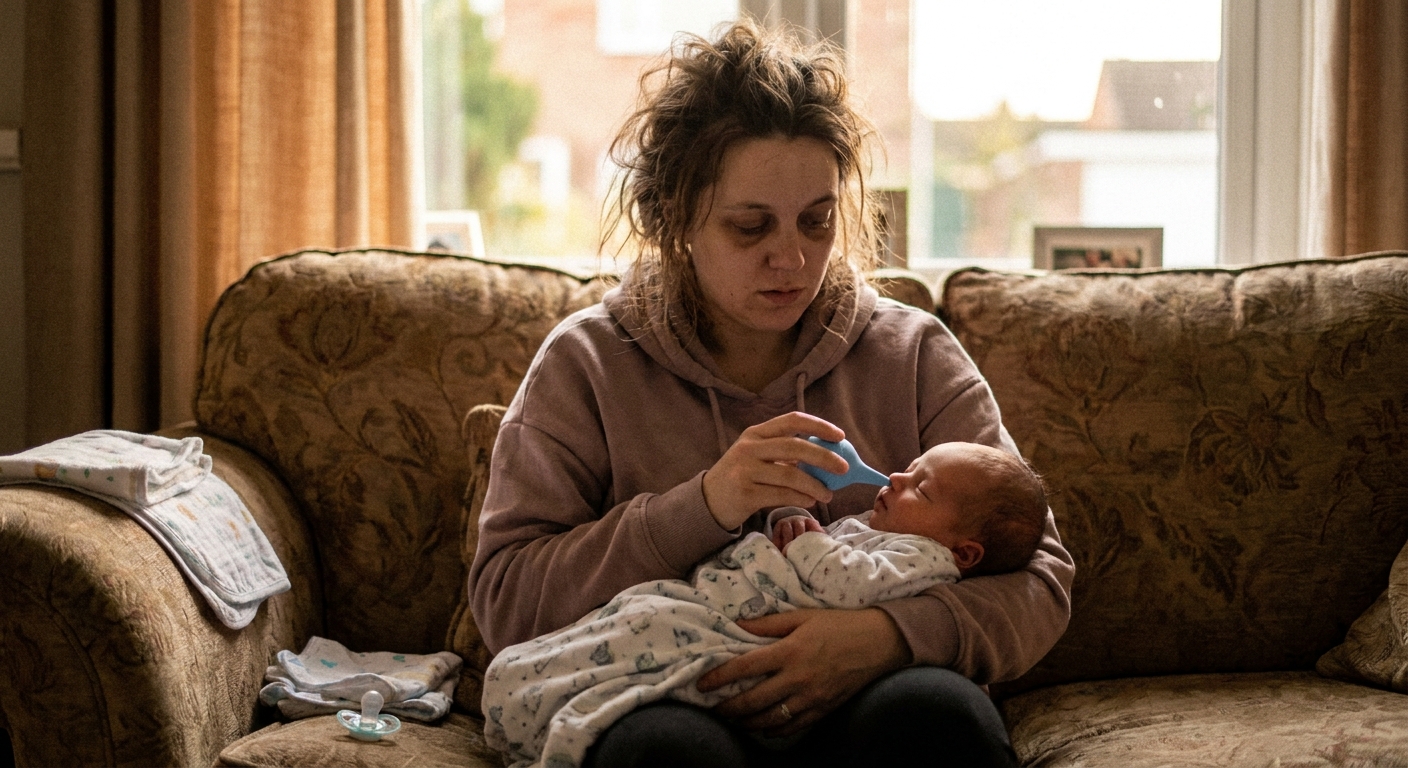
- Saline drops or spray to loosen mucus
- Gentle suction before feeds and sleep
- Smaller, more frequent feeds if congestion is interrupting eating
Support breathing
- Cool-mist humidifier in the room
- Steamy bathroom for a few minutes as a comfort option for congestion (keep baby away from hot water and never use hot steam close to baby)
- Keep baby upright after feeds if coughing triggers spit-up
What to skip
- Over-the-counter cough and cold medicines for babies unless specifically instructed by your clinician
- Honey for babies under 1 year
- Essential oils directly on skin or near the face, which can irritate airways, and some can be toxic if ingested
- Force-feeding when baby is clearly struggling to breathe
If you suspect RSV, think supportive care and close watching. You do not have to treat every cough. You do have to watch breathing and hydration.
Call vs go in
Call your pediatrician today (or urgent line) if:
- Your baby is breathing faster than usual even when calm
- You see mild retractions or persistent wheezing
- Feeds are dropping or baby is taking much longer to eat
- Wet diapers are decreasing
- Your baby is under 6 months and symptoms are worsening
- Fever is present and you need dosing guidance or your baby seems uncomfortable
Go to urgent care or the ER now if you notice:
- Moderate to severe retractions (pulling in around ribs or collarbones)
- Nasal flaring, head bobbing, grunting
- Blue or gray lips, face, or fingernails
- Pauses in breathing, or baby is hard to wake
- Cannot keep fluids down or is too tired to feed
- Very few wet diapers or signs of dehydration
If you are staring at your baby thinking, “This feels different,” you are allowed to trust that instinct. You do not need to win a debate with Google at 2 AM to get help.

Under 3 months
Please treat this age group as special. Call promptly for:
- Fever of 100.4°F (38°C) or higher
- Any breathing changes
- Noticeable decrease in feeding or wet diapers
Quick safety note: This article is general education, not a diagnosis. Any concern about breathing is a reason to seek urgent medical evaluation.
Does testing matter?
Parents often ask, “Should we test for RSV?” Sometimes testing is helpful for childcare guidance or in certain medical settings. But at home, most decisions still come down to the same two questions:
- How is my baby breathing?
- How is my baby drinking and peeing?
A positive RSV test does not automatically mean your baby needs the hospital. A negative test does not mean you ignore breathing trouble. Treat the baby in front of you, not just the name of the virus.
Prevention basics
RSV is contagious, and it spreads easily through hands and shared air in close quarters.
- Handwashing before touching baby, especially after school, daycare, or errands
- Limit close contact with sick people when you can
- Clean high-touch surfaces during illness in the home
- Avoid smoke exposure, which can irritate airways and worsen symptoms
Ask your pediatrician about RSV prevention options that may be available or recommended for your family, such as infant antibody protection (nirsevimab) and vaccination during pregnancy in the appropriate window.
RSV vs cold: checklist
If you want the quickest way to check in with yourself, use this:
- Nose: Can I clear it enough for baby to feed?
- Breathing: Any retractions, flaring, grunting, or fast breathing when calm?
- Drinking: Is baby taking enough to stay hydrated?
- Diapers: Wet diapers close to normal for my baby?
- Energy: Does baby perk up at least a little between sleep?
- Age and risk: Under 6 months, premature, heart or lung issues? Lower threshold to call.
If breathing looks labored or feeding is falling off, get medical guidance.
One last reassurance
You do not need to be a nurse to notice when breathing looks wrong. Parents are incredibly good at spotting “not my baby’s normal.” If your gut is pinging, especially with a young infant, call. That is what the on-call line is there for.
And if it truly is just a cold, you still did the right thing by checking. Anxiety is exhausting, but it is also love with a tiny bit of caffeine.
Sarah Mitchell
Sarah Mitchell is a Registered Pediatric Nurse and a mother of three who has spent over a decade helping families navigate the beautiful, chaotic early years of childhood. She combines evidence-based medical knowledge with real-world parenting experience to offer practical, compassionate advice. At Awesome Parent, Sarah's mission is to help exhausted parents find solutions, trust their instincts, and finally get some sleep.