A calm, parent-friendly guide to newborn jaundice: what causes it, how to check for yellowing, what’s normal vs concerning, and when to seek urgent care.
Pale Stools and Jaundice After 2 Weeks: When to Suspect Biliary Atresia

Sarah Mitchell
Sarah Mitchell is a Registered Pediatric Nurse and a mother of three who has spent over a decade helping families navigate the beautiful, chaotic early years of childhood. She combines evidence-based medical knowledge with real-world parenting experience to offer practical, compassionate advice. At Awesome Parent, Sarah's mission is to help exhausted parents find solutions, trust their instincts, and finally get some sleep.
I’ll never forget the parent who came into our pediatric clinic carrying a diaper in a zip-top bag. They looked apologetic, like they were being “too much.” But as soon as I saw that stool color, my nurse brain went very quiet: this was not a wait-and-see situation.
If your baby’s jaundice (yellow skin or eyes) is sticking around past the first 1 to 2 weeks and you’re seeing pale, clay-colored stools or dark urine, you deserve a clear, calm answer: this pattern needs urgent evaluation today.
(And if your baby was born early, the timing can be a little different. Preterm babies may stay yellow longer for benign reasons. But pale, gray, or white stools are never something to sit on, regardless of gestational age. If you see that, call today.)

Why this pattern matters
In many newborns, jaundice is common in the first week or two because the body is adjusting to life outside the womb. That type often fades on its own.
But when jaundice continues and you also notice very light stools (pale yellow, beige, gray, or clay-colored) and urine that looks unusually dark (tea or cola colored), that combination can signal cholestasis, which means bile is not flowing the way it should.
Bile is what gives poop its normal brownish, mustardy, or green color. If bile cannot reach the intestine, stool can turn very pale. At the same time, a form of bilirubin can build up and spill into urine, making it darker.
One of the most urgent causes of blocked bile flow in young babies is biliary atresia, a condition where the bile ducts are damaged or blocked. It is uncommon, but it is time-sensitive.
One high-yield medical detail that is worth knowing as a parent: the key screening test is a blood test for direct (conjugated) bilirubin. A total bilirubin number by itself can miss cholestasis.
Biliary atresia in parent terms
Biliary atresia is a disease of the bile ducts that prevents bile from draining from the liver into the intestine. Over time, this can injure the liver.
The reason we push for quick evaluation is that treatments are most effective when started early. Waiting weeks to see if it improves can take away valuable time.
This does not mean your baby definitely has biliary atresia. But it does mean your baby needs a clinician to check right away.
Red flags to act on today
If your baby has any of the signs below, call your pediatrician’s office now and tell them you are concerned about pale stools and prolonged jaundice. If you cannot be seen today, call the after-hours line for direction. Many families are best served by a pediatric emergency department or a children’s hospital emergency department, because they can do infant labs and imaging.
Bring photos of diapers if you can. Bringing the actual diaper is optional.
- Jaundice lasting longer than 2 weeks (especially if the whites of the eyes are yellow)
- Pale, gray, beige, or clay-colored stools, even if it is “only sometimes”
- Very dark urine (tea/cola colored) or urine that seems to stain the diaper more than usual
- Poor weight gain or trouble feeding
- Swollen belly or a liver that seems enlarged (often noticed by a clinician)
- Easy bruising or bleeding (less common early on, but urgent)
- Baby seems unusually sleepy, difficult to wake for feeds, or “not themselves”
Trust your eyes here. If the stool looks like putty, wet cement, pale khaki, or chalky, that is worth being seen today.
Also, be cautious about internet stool-color comparisons. Lighting can make normal stool look strange. If you are unsure, call and ask anyway.
Breast milk jaundice vs cholestasis
Breast milk jaundice is a common, usually harmless reason some breastfed babies stay yellow longer. It can linger for several weeks in otherwise healthy babies who are feeding well and gaining weight.
Here is the key difference:
- Breast milk jaundice: baby may look yellow, but stools keep a normal color (yellow, mustard, green, brown) and urine is typically pale and not tea-colored.
- Possible blocked bile flow (cholestasis): jaundice plus pale stools and often dark urine.
So yes, a baby can be “still a little yellow” at 3 to 5 weeks and be totally fine. But pale stools are not part of benign breast milk jaundice.
What to do right now
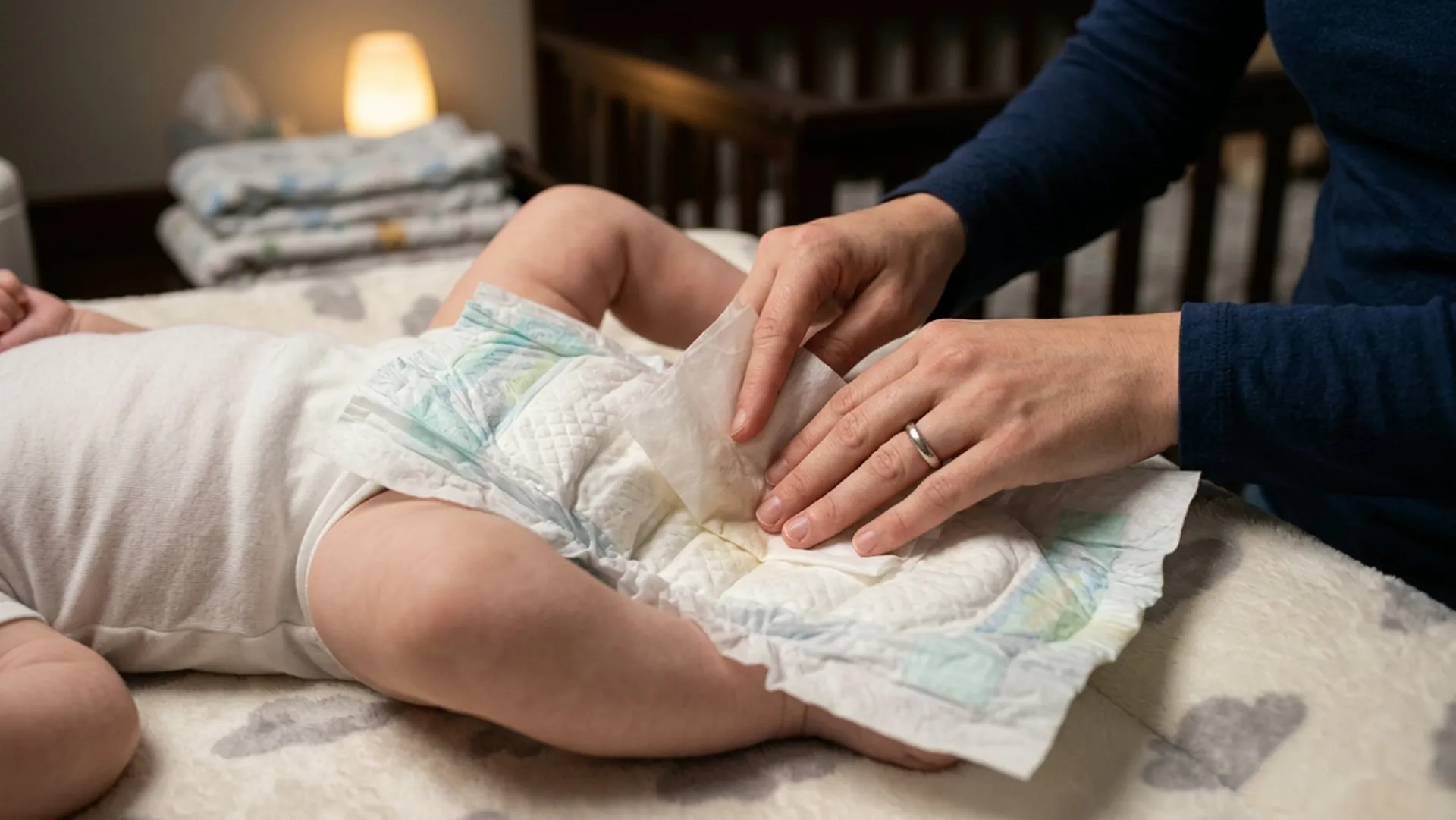
1) Check the stool in good light
Bathroom lighting at 2 a.m. can make everything look weird. If you can, look at the next diaper in natural daylight or under a bright white light.
2) Take clear photos of 2 to 3 diapers
Photo evidence is genuinely helpful. Try to capture the stool color without strong yellow lighting.
3) Call and use specific words
When you call, say: “My baby has jaundice past 2 weeks and pale or clay-colored stools and dark urine. I am worried about cholestasis or biliary atresia, and I think they need a direct (conjugated) bilirubin checked.” This usually speeds up triage appropriately.
4) Do not stop breastfeeding unless your clinician tells you to
Parents sometimes panic and stop breastfeeding, thinking it caused the jaundice. For this situation, we are not trying to “fix” color by changing feeds. We are trying to make sure bile flow and liver function are okay.
5) Bring your notes
If you can, jot down:
- Baby’s age today
- Whether your baby was born full-term or preterm
- When you first noticed yellow skin/eyes
- How long pale stools have been happening
- Any fever, vomiting, or feeding changes
- Number of wet diapers in 24 hours
What the doctor may do
Evaluation today often includes a physical exam and lab work. Your clinician may:
- Order blood tests that include fractionated bilirubin (direct and indirect) and liver enzymes
- Check your baby’s weight and feeding
- Ask to see stool photos
- Order an abdominal ultrasound
- Refer you urgently to a pediatric gastroenterologist or liver specialist if results suggest cholestasis
None of this is meant to scare you. It is meant to move quickly and rule out serious causes, because time matters if there is true blockage.
When to go to the ER now
Go to a pediatric emergency department now (do not wait for a call back) if your baby is under 3 months and has any of the following along with jaundice or pale stools:
- Fever (100.4°F / 38°C or higher) or feels very hot or very cold
- Hard to wake, very floppy, or struggling to feed
- Breathing looks labored or fast
- Repeated vomiting, especially green (bilious) vomit
- Signs of dehydration (very few wet diapers, dry mouth, sunken soft spot)
FAQ
My baby’s poop is lighter than usual. What counts as “pale”?
Normal newborn and infant stool ranges from mustard yellow to green to brown. Some formula-fed babies have tan stools and that can be normal.
“Concerning pale” is more like beige-gray, off-white, chalky, or clay/putty colored, especially if it happens repeatedly.
What if the stool is pale sometimes but not always?
Still worth getting advice today. Intermittent pale stools can happen early in bile flow problems, and patterns can be hard to spot when diapers blur together.
Can formula cause pale stools?
Formula can make stools lighter or more tan. But clay-gray or chalky stools are not explained by formula alone, especially when paired with prolonged jaundice or dark urine.
My baby looks yellow but is otherwise fine. Do I still need to call?
If your baby is older than 2 weeks and looks yellow, it is reasonable to check in with your pediatrician. If you also see pale stools or dark urine, yes, call today.
A quick reality check
Parents miss diaper color changes all the time. You are feeding, burping, rocking, wiping, and trying to remember if you brushed your teeth. It is not a moral failing to notice this late.
If you are reading this because something in your gut feels off, let that instinct help you take the next step: get your baby evaluated today. Best case, you get reassurance. If it is something more, you have protected your baby by acting quickly.
Sarah Mitchell
Sarah Mitchell is a Registered Pediatric Nurse and a mother of three who has spent over a decade helping families navigate the beautiful, chaotic early years of childhood. She combines evidence-based medical knowledge with real-world parenting experience to offer practical, compassionate advice. At Awesome Parent, Sarah's mission is to help exhausted parents find solutions, trust their instincts, and finally get some sleep.