A calm, parent-friendly guide to newborn jaundice: what causes it, how to check for yellowing, what’s normal vs concerning, and when to seek urgent care.
Newborn Phototherapy: What to Expect

Sarah Mitchell
Sarah Mitchell is a Registered Pediatric Nurse and a mother of three who has spent over a decade helping families navigate the beautiful, chaotic early years of childhood. She combines evidence-based medical knowledge with real-world parenting experience to offer practical, compassionate advice. At Awesome Parent, Sarah's mission is to help exhausted parents find solutions, trust their instincts, and finally get some sleep.
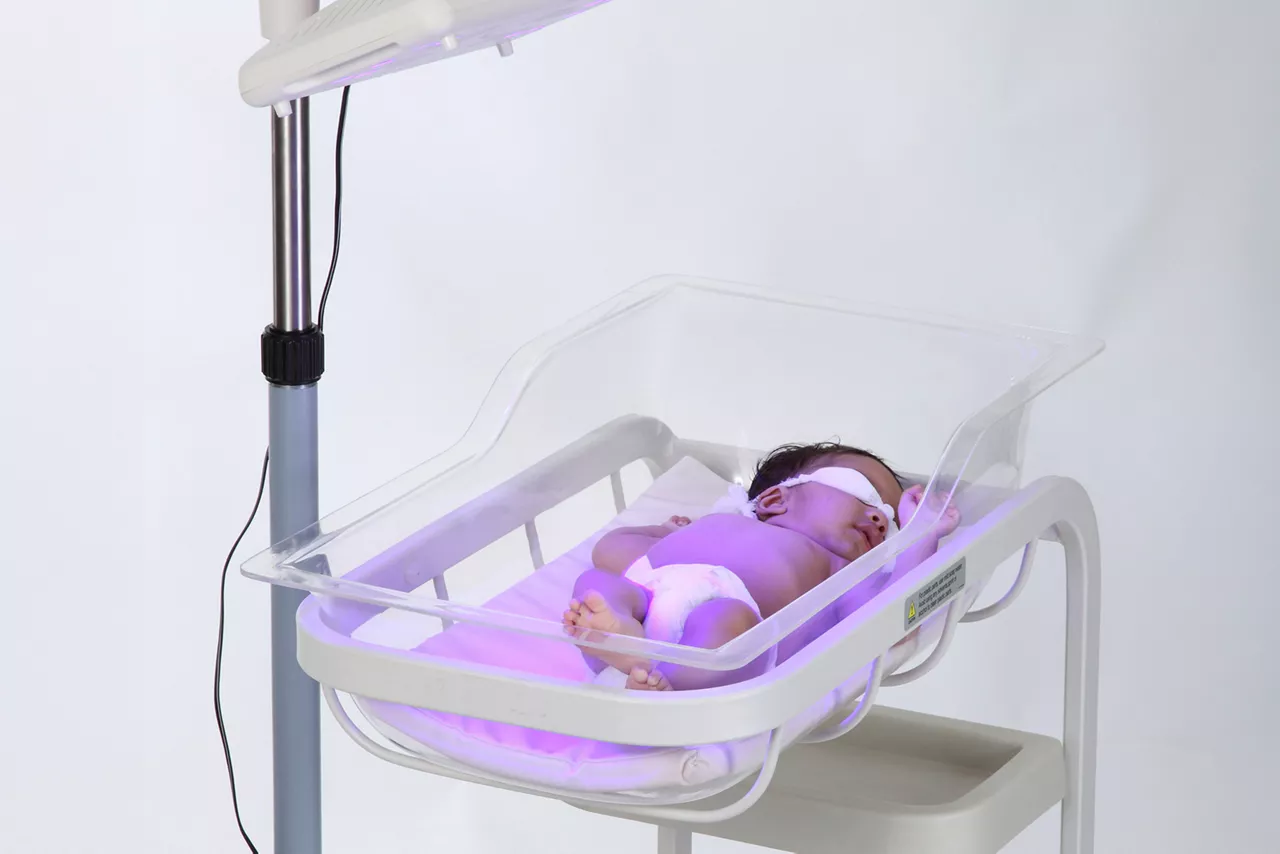
The first time you see your newborn under phototherapy lights, it can feel surreal. Your tiny baby is wearing little eye shields, tucked mostly in a diaper, and glowing under bright blue light like they are at the world’s smallest spa. As a pediatric nurse, I used to explain this all the time. As a mom, I can tell you it still hits differently when it’s your own baby.
If your clinician has already recommended phototherapy, this article is here to walk you through what the experience usually looks like, how feeding continues, what the eye protection is about, and why bilirubin levels are checked again afterward. No scare tactics. No shame. Just the practical stuff you want at 2 a.m.
What phototherapy does
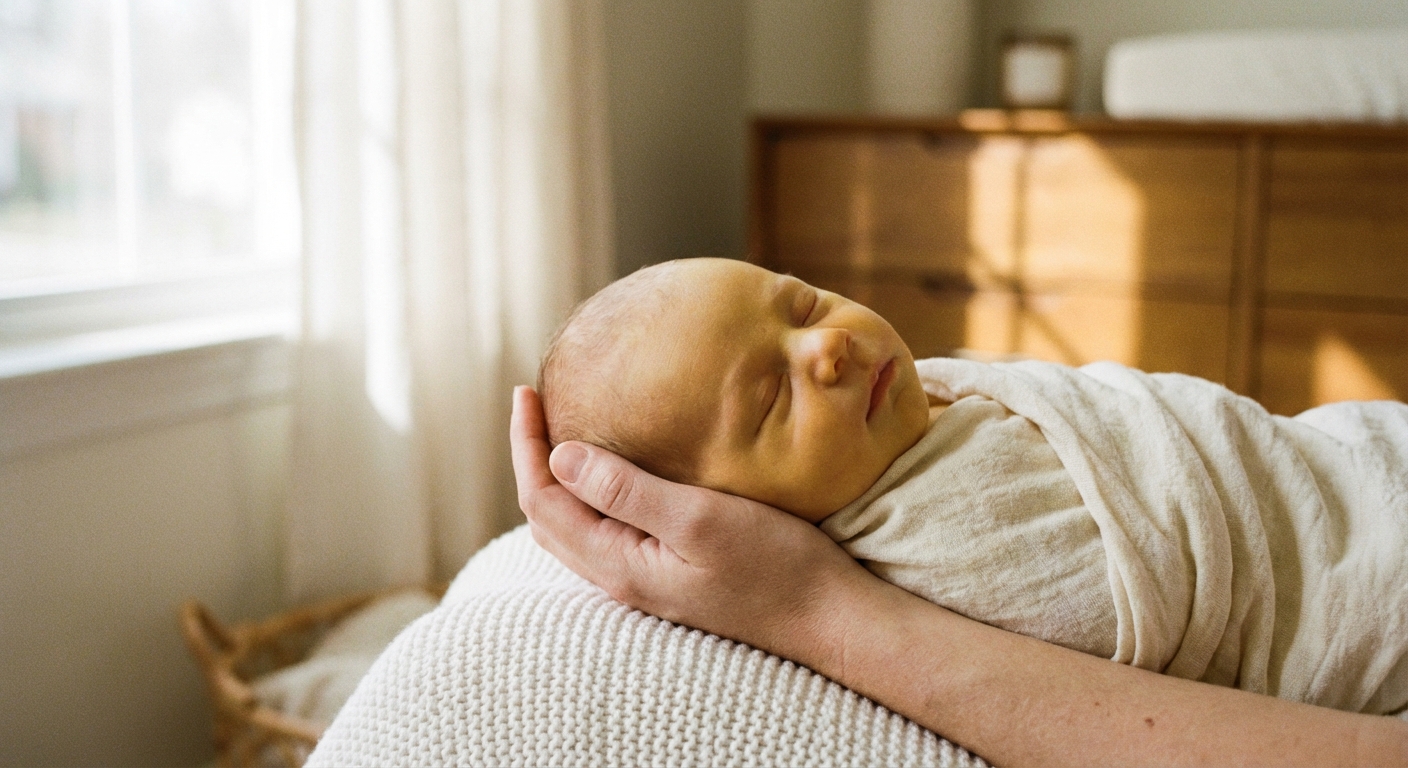
Newborn jaundice happens when bilirubin builds up faster than a baby’s body can clear it. Bilirubin is a yellow pigment produced when the body breaks down old red blood cells. Most babies have some jaundice in the first week of life, and most clear it without any special treatment.
When bilirubin gets higher than your baby’s care team is comfortable with, phototherapy may be recommended. Phototherapy uses a specific wavelength of blue light to change bilirubin in the skin into forms that are easier for your baby to get rid of through pee and poop.
In other words, the light is not “burning off” jaundice. It is helping your baby’s body process bilirubin more efficiently.
What you’ll see
The lights
There are a couple common setups:
- Overhead phototherapy lights: Usually bright blue and positioned above your baby’s bassinet or incubator.
- Fiber-optic pad (often called a bili blanket): A glowing pad or wrap that sits against your baby’s back or torso.
- Combination therapy: Some babies receive overhead lights plus a bili blanket for more skin exposure at once.
Phototherapy works best when as much skin as possible is exposed to the light, which is why babies are typically in just a diaper (and sometimes a little hat). Your care team will keep your baby warm with the room temperature, an incubator, or swaddling in a way that still allows light exposure.
Eye shields
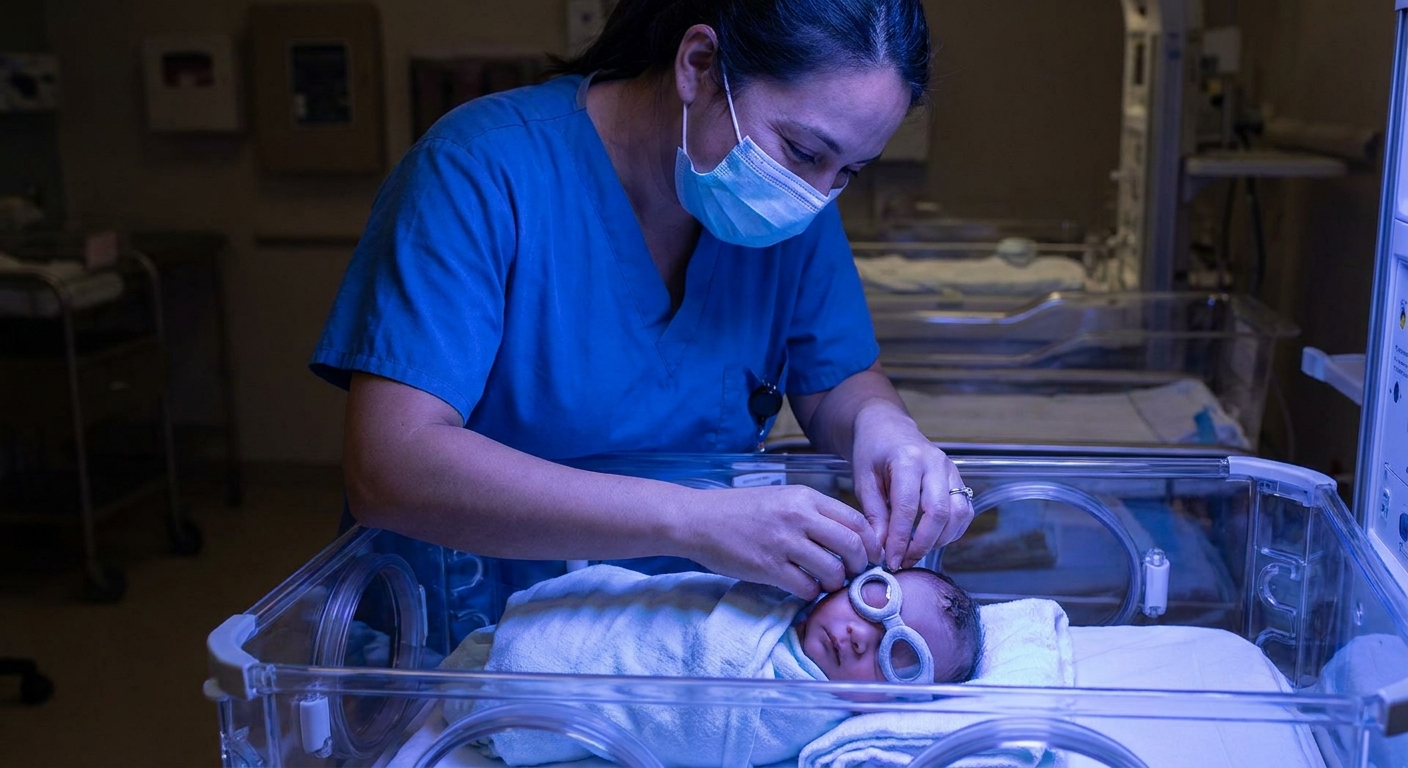
If your baby is under overhead phototherapy lamps, you will almost always see eye protection. Those little “sunglasses” can look dramatic, but they are there for a straightforward reason: the bright light can irritate or potentially harm a newborn’s eyes if the eyes are exposed for long periods.
A few practical things to know:
- Eye shields are placed snugly but gently. Nurses adjust them often to avoid rubbing.
- They usually come off during feeds and cuddles, depending on your unit’s routine.
- If your baby is using only a bili blanket, eye protection may not be needed because the light is directed into the pad and the baby’s body rather than shining into the eyes. Your team will decide what is appropriate for your exact setup.
If the eye mask slips or seems too tight, call your nurse. That is a very normal thing to ask for help with.
More checks
Phototherapy can feel like a lot of in-and-out. You may notice:
- Vital signs checked regularly
- Temperature monitoring to ensure baby is not getting too warm or too cool
- Diaper counts tracked closely (pee and poop matter here)
- Periodic bilirubin testing
This can be exhausting when all you want is to rest. It is also one of the ways clinicians make sure phototherapy is helping and your baby stays stable while it does.
Feeding during phototherapy
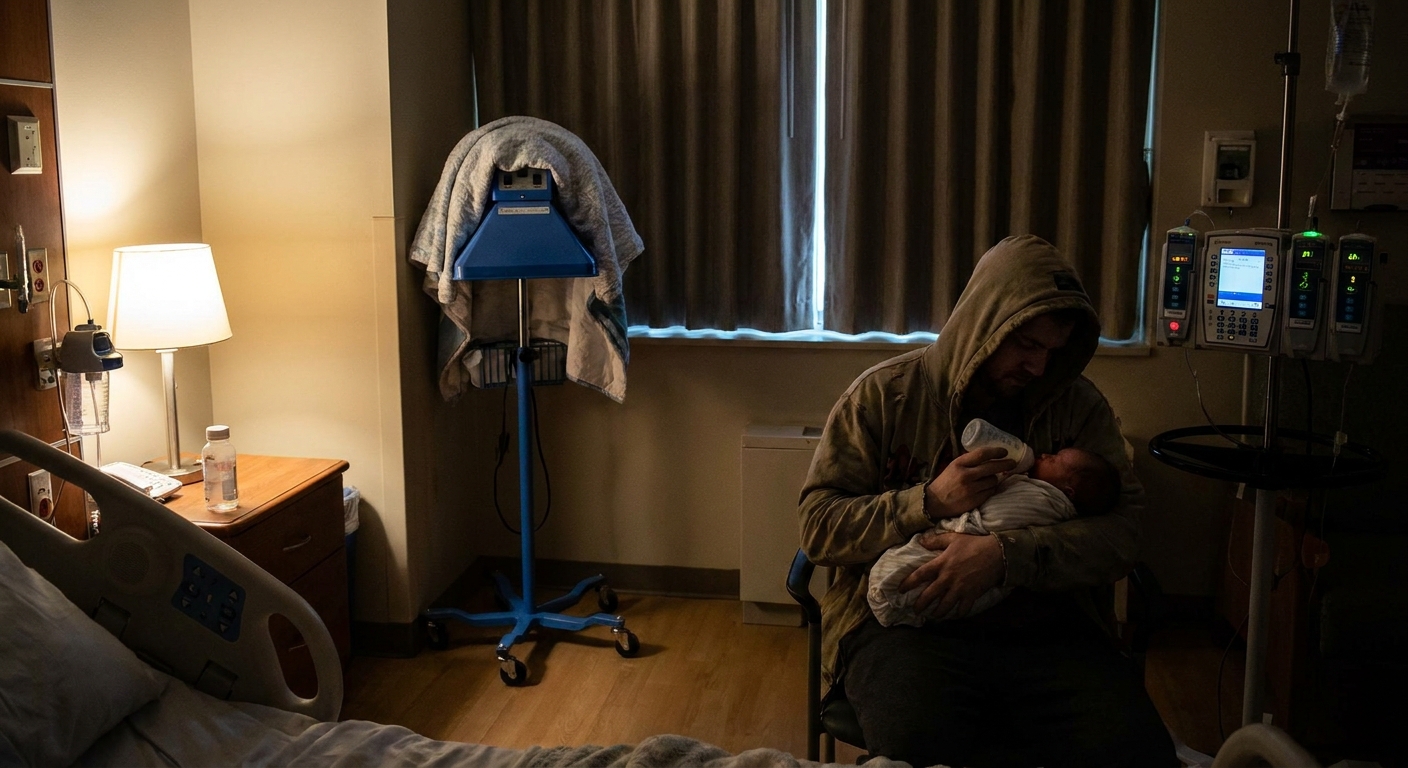
One of the biggest worries I hear is, “But how do we keep feeding if the baby has to stay under the lights?” The reassuring answer is: feeding continues, and it is a key part of treatment support.
Why feeds matter
Hydration and calories help your baby:
- Maintain energy for feeding and staying warm
- Produce enough wet and dirty diapers
- Move bilirubin out of the body through stool
That last point is huge. Bilirubin leaves through poop, so feeding helps in a very direct way.
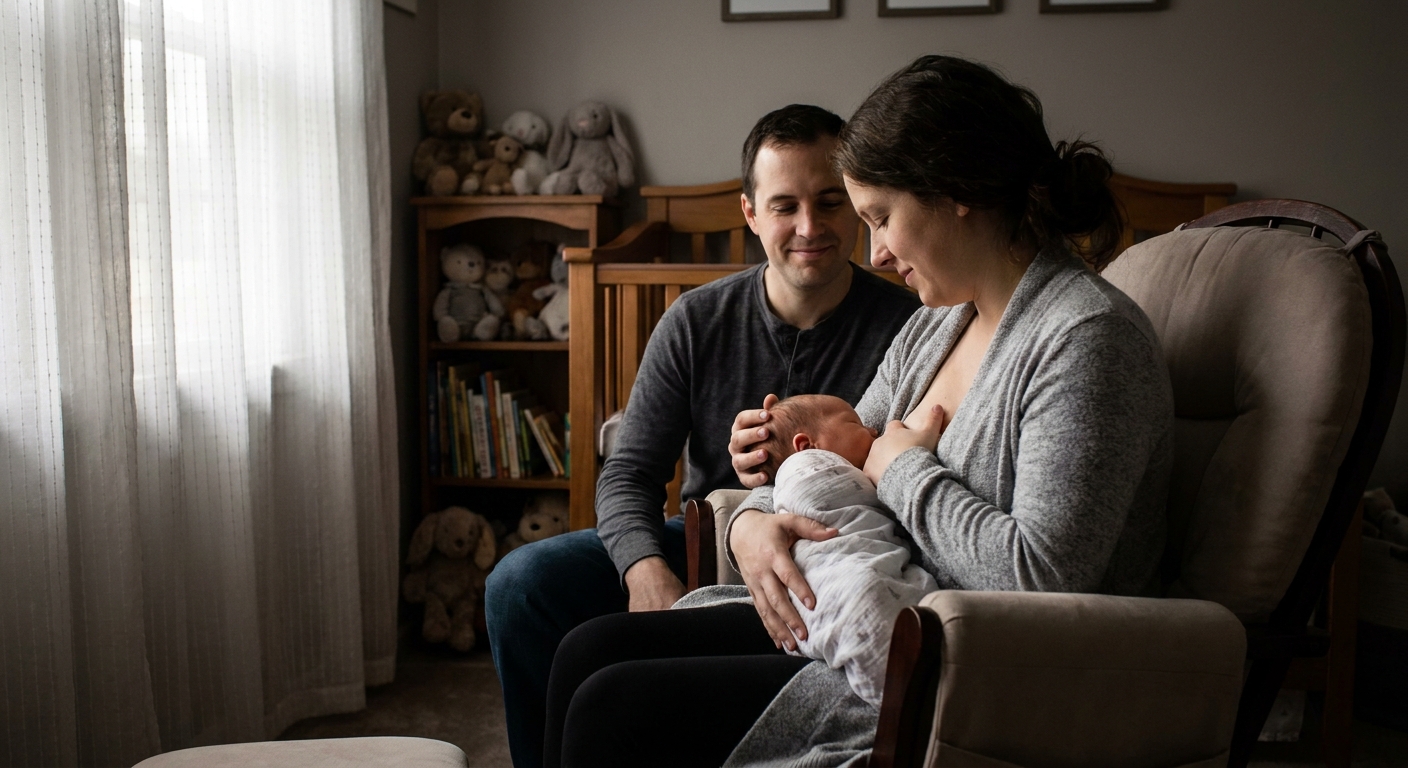
Breastfeeding
In most hospitals, parents are encouraged to breastfeed on a regular schedule. Depending on your baby’s bilirubin level, age, and how sleepy they are, the care team may also:
- Encourage more frequent feeds
- Have you work with lactation to improve latch or milk transfer
- Suggest pumping after feeds if milk supply is still coming in
If your newborn is extra sleepy (very common with jaundice), you might need to do more active feeding support: unwrapping, diaper change before feeding, skin-to-skin, breast compressions, and lots of patience.
Formula or supplementation
Some babies need supplementation for a short time. That decision is individual and should be made with your clinician and, if available, a lactation consultant. When supplementation is recommended, it is typically because your baby needs more volume or is not transferring milk well yet, not because you “did something wrong.”
If you are breastfeeding and supplementation is suggested, you can absolutely ask:
- What is the goal of supplementing right now?
- Is this temporary while my milk comes in or while baby gets stronger?
- Can we use expressed breast milk if I pump?
- What feeding method supports breastfeeding best for our situation?
Good teams welcome these questions.
Do the lights pause for feeds?
Usually, yes, overhead lights are paused so you can pick up your baby and feed. Many units aim to keep breaks short so baby gets the most light exposure possible, but they also prioritize safe feeding and parent bonding.
If your baby is on a bili blanket, you may be able to keep the blanket on during feeds depending on positioning and your baby’s comfort. Your nurse will show you how.
Side effects
Phototherapy is widely used and generally very safe. Still, it can come with a few expected “this is weird but normal” moments.
Common changes
- More frequent loose stools: As bilirubin clears, poop often ramps up and can look greener or looser.
- Mild skin dryness or warmth: Babies can get a bit dry under the lights, and temperature is monitored closely.
- Sleepiness: Jaundice itself can make babies sleepy, and sleepy babies can feed less effectively. This is one reason the team watches feeding closely.
What to mention
- Your baby is too sleepy to wake for feeds or feeds are getting shorter and weaker
- Fewer wet diapers than expected for age
- Repeated vomiting (not just spit-up)
- A fever or low temperature
- Eye shields causing redness, swelling, or slipping into the eyes
If you are in the hospital, you are not overreacting by calling the nurse. That is literally what they are there for.
Why bilirubin is rechecked
This is the part that can surprise parents. Your baby may look less yellow, feeds may be improving, and you might think, “Great, we are done.” Then the team orders another bilirubin check.
There are a few good reasons for this:
To confirm it dropped
Skin color is a helpful clue, but it is not precise. Babies can still have a bilirubin level that needs monitoring even when they look better, especially under hospital lighting.
To watch for rebound
Sometimes bilirubin can rise again after phototherapy is stopped. Not every baby has a significant rebound, but clinicians are looking to make sure the bilirubin stays in a safe range once the lights are off.
Rebound risk depends on the reason your baby’s bilirubin was high and how old they are when treatment happens, among other factors. This is why your baby’s plan is individualized and why your care team may time rechecks the way they do.
To plan follow-up
The post-treatment bilirubin helps decide what happens next, such as whether you can go home, whether your baby needs another check soon, and how close outpatient follow-up should be.
Discharge and follow-up
If your baby is treated in the hospital or goes home after bili blanket treatment supervised by a clinician, you will usually get some combination of:
- A follow-up appointment with your pediatrician or newborn clinic
- Feeding guidance and what diaper counts to aim for
- Instructions on when to get repeat bilirubin testing, if needed
- Clear return precautions, meaning when to call urgently
Two important reminders from my triage-nurse days:
- Bring your questions. If you are unsure whether your baby is feeding well enough, ask before you leave.
- Trust your gut after you get home. If your baby becomes harder to wake, feeds drop off, or the yellow color seems to deepen, call your pediatrician promptly.
Common questions
Can I hold my baby?
Yes. Babies need comforting and bonding. Most units structure phototherapy around feeding and caregiving breaks so you can hold and soothe your baby. If you are using a bili blanket, you may be able to hold your baby with the blanket in place.
Does it hurt?
The light itself does not hurt. The hardest part for many families is the disruption, the eye mask, and how sleepy jaundice can make a newborn. Your baby may fuss when placed back under the lights, which is more about being put down than about pain.
Why only a diaper?
More exposed skin means more effective treatment. Keeping the diaper on protects the diaper area and helps keep bedding clean while still allowing a lot of skin exposure.
Will my baby’s eyes be okay?
That is exactly why eye shields are used under overhead lights and why staff check them frequently. If you ever see the eye protection slipping or leaving marks, ask for it to be repositioned.
Can I use sunlight at home instead?
I know the internet loves this idea, but it is not a safe replacement for medically supervised phototherapy. Sun exposure is hard to control, can lead to overheating or sunburn, and does not provide the same consistent therapeutic light. If your baby is jaundiced enough to need phototherapy, stick with your clinician’s plan.
When to get urgent help
If your baby is currently being treated for jaundice or was just treated, contact your baby’s clinician urgently or seek emergency care if you notice:
- Extreme sleepiness or difficulty waking for feeds
- Poor feeding with fewer wet diapers than expected
- High-pitched crying or unusual irritability that does not settle
- Arching of the back, stiffness, or floppy weakness
- Breathing trouble, blue or gray lips, or a fever
If you are sitting there thinking, “Something is off,” that is enough reason to call. You do not need to be 100 percent sure.
Final reassurance
Phototherapy can feel like a curveball at the exact moment you are already tired, sore, and trying to learn your baby. The good news is that jaundice treatment is common, teams do this every day, and most babies respond well.
Your job is not to memorize lab values or figure out the “perfect” feeding plan overnight. Your job is to love your baby, keep showing up for feeds, and ask for help when you need it. That is already excellent parenting.
Sarah Mitchell
Sarah Mitchell is a Registered Pediatric Nurse and a mother of three who has spent over a decade helping families navigate the beautiful, chaotic early years of childhood. She combines evidence-based medical knowledge with real-world parenting experience to offer practical, compassionate advice. At Awesome Parent, Sarah's mission is to help exhausted parents find solutions, trust their instincts, and finally get some sleep.