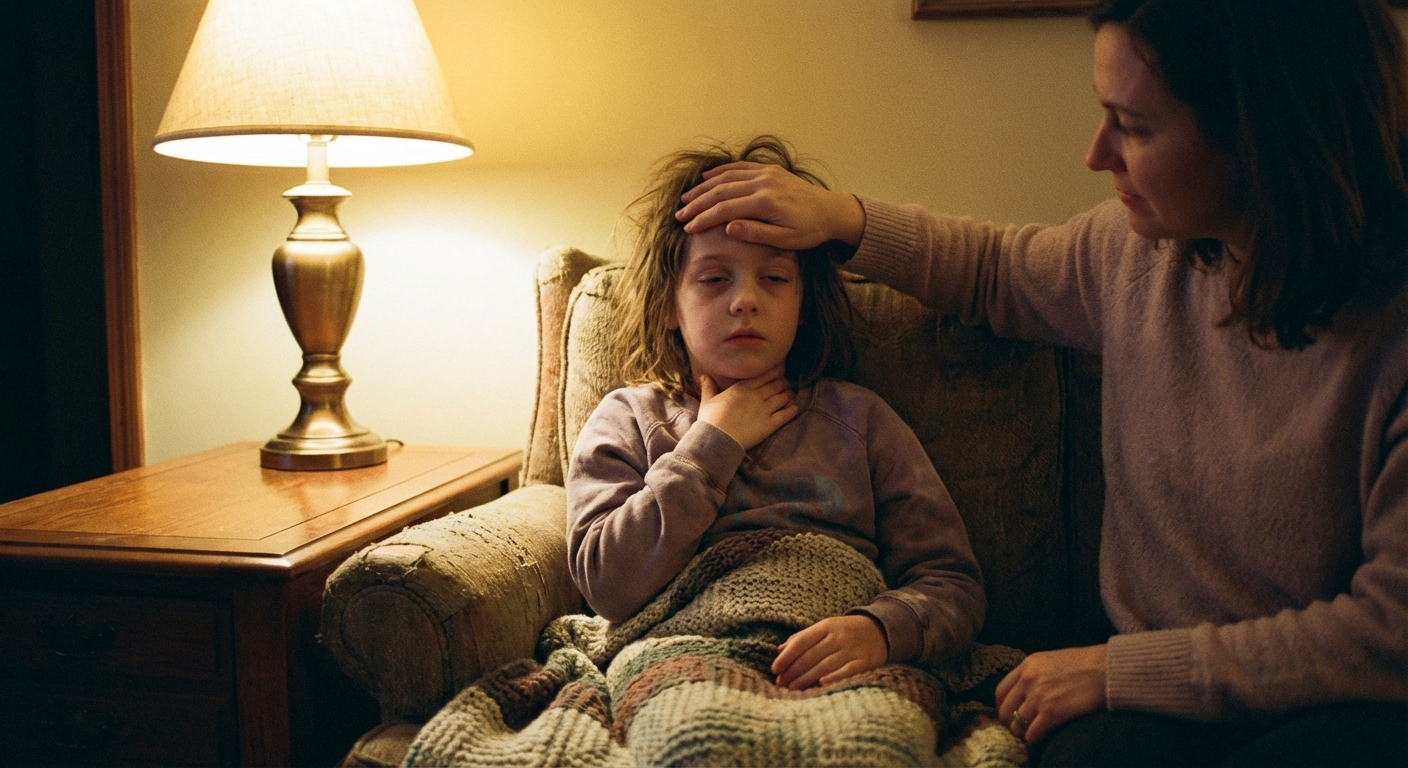
Swollen tonsils, fever, sore throat. Here’s how tonsillitis differs from strep, what you can do at home, when antibiotics are needed, and the criteria doct...
Peritonsillar Abscess in Kids

Sarah Mitchell
Sarah Mitchell is a Registered Pediatric Nurse and a mother of three who has spent over a decade helping families navigate the beautiful, chaotic early years of childhood. She combines evidence-based medical knowledge with real-world parenting experience to offer practical, compassionate advice. At Awesome Parent, Sarah's mission is to help exhausted parents find solutions, trust their instincts, and finally get some sleep.
If your child has a sore throat, you are probably thinking: strep? A virus? Maybe tonsillitis? Most of the time, that is exactly what it is. Peritonsillar abscess is uncommon, but it is one throat problem that deserves a faster, more urgent response because it can make swallowing and breathing harder.
As a pediatric triage nurse, this is one of those “trust your gut and get seen” situations, especially when the pain is strongly one-sided and your child looks truly miserable.
What it is
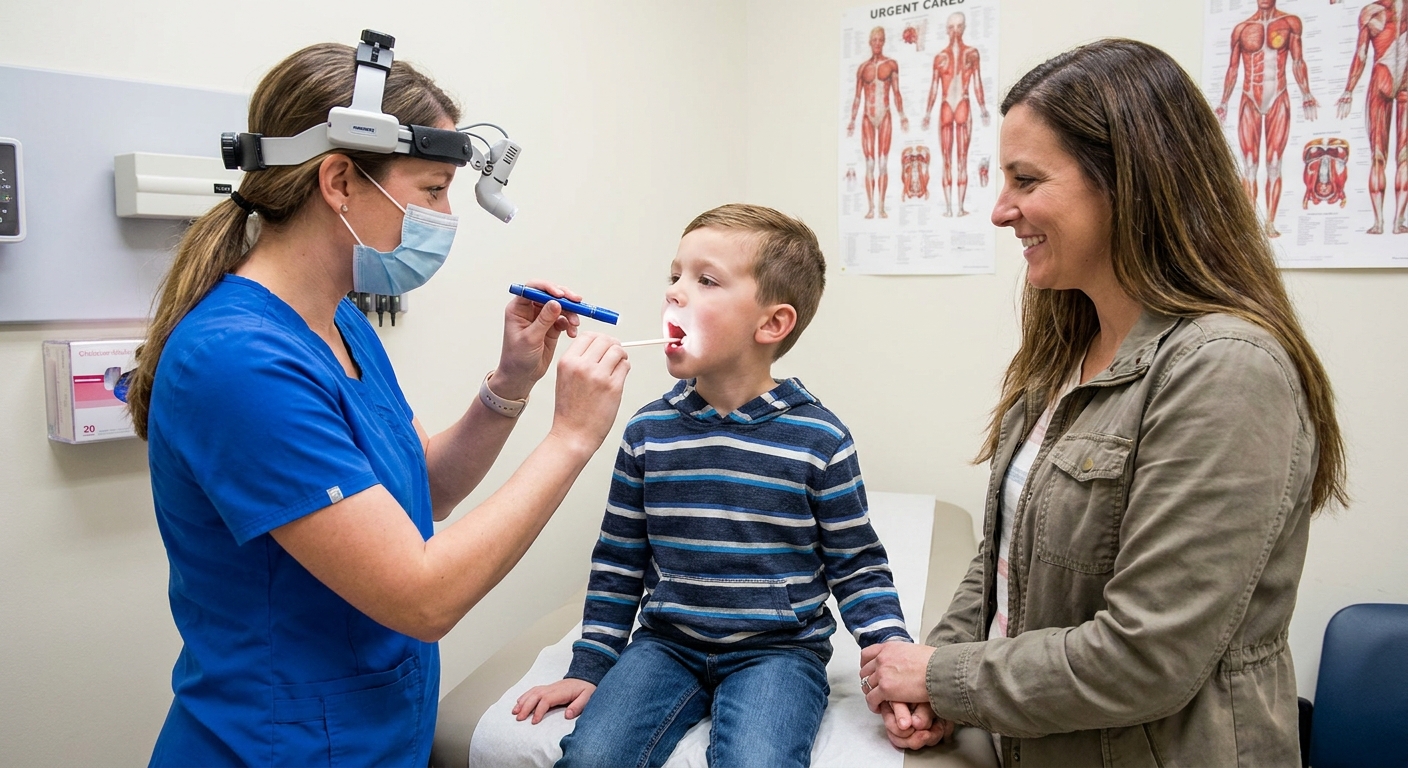
A peritonsillar abscess is a pocket of pus that forms near one tonsil, usually as a complication of tonsillitis (often from strep or similar bacteria). The infection can spread into the tissue next to the tonsil and cause swelling that crowds the back of the throat.
It is most common in older children, teens, and young adults, but younger kids can get it too.
Why parents should care: this is not just “a really bad sore throat.” It can cause dehydration because swallowing is so painful, and in some cases it can affect the airway. It needs same-day medical evaluation.
Key symptoms
Peritonsillar abscess often has a few red-flag features that stand out from a typical sore throat.
Common signs
- Severe throat pain on one side (often much worse than the other side)
- Fever and looking very ill or wiped out
- Muffled “hot potato” voice (sounds like they are talking with a mouth full of food)
- Drooling or refusing to swallow saliva
- Trouble opening the mouth (jaw stiffness called trismus)
- Ear pain on the same side even though the ear itself is fine
- Swollen, tender neck glands
- Bad breath
What you might see in the mouth
Not every parent can or should force a throat check. If your child is drooling, struggling to breathe, or fighting you, stop and get medical care. Clinicians often see:
- One tonsil much larger than the other
- Swelling of the soft palate near the tonsil
- The uvula (the dangling part) pushed toward the other side
Strep vs viral vs abscess
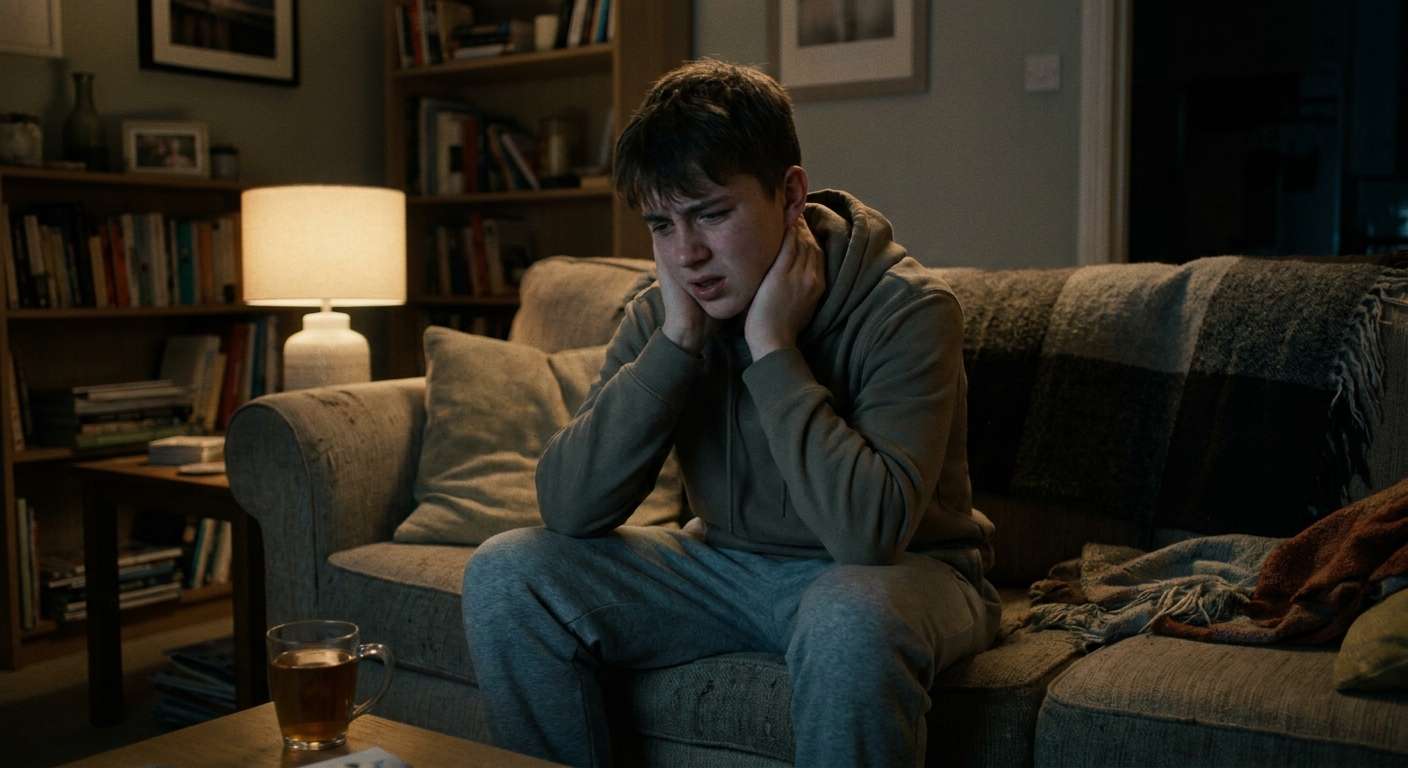
Parents often tell me, “It looks like strep but worse.” That is a helpful instinct, but no single symptom can diagnose this at home. Unilateral pain can happen with strep and viral infections too.
Strep throat
- Often pain on both sides of the throat, but it can feel worse on one side
- Fever, painful swallowing, and swollen glands are common
- May have white patches on the tonsils
- Many kids can still open their mouth normally and speak normally
Viral sore throat
- Often comes with cough, runny nose, hoarseness, or pink eye
- Pain can be moderate and more generalized
- Symptoms often improve gradually over a few days
Peritonsillar abscess
- Strongly one-sided pain is a big clue, especially if it is worsening
- Muffled voice, drooling, and trouble opening the mouth are especially concerning
- Kids often look noticeably sicker than expected (toxic-appearing)
- Symptoms may worsen quickly or stop improving after several days of tonsillitis
If your child was diagnosed with strep, started antibiotics, and then develops worsening one-sided pain, drooling, or a muffled voice, call back the same day.
Urgent care vs ER
This is one of those conditions where timing matters. If you are on the fence, it is safer to be seen sooner.
Go to the ER now (or call emergency services) if your child has:
- Any trouble breathing, noisy breathing, or looks like they cannot get comfortable
- Drooling with inability to swallow
- Stridor (a harsh sound when breathing in)
- Neck swelling that is rapidly getting worse
- Severe dehydration (for example, very little or no urine for 8 to 12 hours depending on age, very dry mouth, no tears, dizziness, or lethargy)
- Blue lips or face, or extreme sleepiness or confusion
Seek same-day urgent care or pediatric evaluation if your child has:
- Severe one-sided throat pain plus fever
- Muffled “hot potato” voice
- Trouble opening the mouth
- Refusal to drink because swallowing hurts
- Ear pain on the same side as the throat pain
Practical triage tip: If your child cannot drink enough to stay hydrated, the safest place is usually the ER, because IV fluids, imaging, and specialist support are available if needed.
Important: Drooling and stridor can also happen with other emergencies like epiglottitis or deep neck infections (such as retropharyngeal abscess). Severe allergic swelling can also affect breathing. You do not need to figure out which one it is. You just need to go in.

How it is diagnosed
Diagnosis is primarily based on history and exam. A clinician will look at the tonsils, the uvula position, and how well your child can open their mouth. They will also assess hydration and breathing.
Depending on your child’s age and symptoms, the team may:
- Do a rapid strep test or throat culture
- Order bloodwork to evaluate infection and dehydration
- Consider imaging if the diagnosis is unclear or to check for deeper neck infection (some centers use ultrasound, but many use CT with contrast when imaging is needed)
If your child is very uncomfortable, the first priority is often pain control and hydration, because it is hard to assess a throat when a kid cannot swallow or open their mouth.
What happens at the visit
Families often ask what to expect. Here is the usual flow:
- Vitals and airway check, including how well your child is breathing and handling saliva
- Pain medicine early, because pain control helps kids drink and helps the exam go better
- Testing as needed (often strep testing, sometimes labs)
- ENT consult in many cases, especially if an abscess looks likely or drainage may be needed
- Observation after medication or drainage to make sure your child can swallow and is stable
- Possible transfer to a children’s hospital if specialist care, sedation, imaging, or inpatient monitoring is needed
Treatment
Treatment depends on severity, age, and whether there is a clear collection of pus. Your child’s clinician will decide the safest approach.
1) Antibiotics
Because peritonsillar abscess is typically bacterial, kids usually need antibiotics that cover common throat bacteria. Sometimes they are given by mouth, but if your child cannot swallow well or is very sick, they may be given IV antibiotics.
2) Drainage when needed
If there is a true abscess (a pocket of pus), many children need it drained by an experienced clinician, often an ENT specialist. This can be done with a needle aspiration or a small incision in a controlled setting. The goal is to relieve pressure, reduce pain, and help antibiotics work better.
3) Steroids and pain control
Some kids receive a dose of steroid medicine to reduce swelling and pain. Pain control matters a lot here. If swallowing hurts less, kids drink more, and everyone has a better night.
4) Fluids
Dehydration is common because swallowing is miserable. Oral rehydration is great when possible, but some children need IV fluids.
5) Hospital care for some kids
Children who are very young, have significant swelling, cannot drink, or need IV meds may stay in the hospital for monitoring.
Will my child need their tonsils out? Not usually for a single episode, but ENT may discuss tonsillectomy if there are recurrent abscesses or frequent severe tonsillitis.
What to do while heading in
Home care is not a substitute for evaluation if you suspect an abscess, but it can help your child tolerate the trip to urgent care or the ER.
- Do not force food. Focus on fluids.
- Offer small sips often: water, oral rehydration solution, diluted juice, popsicles, or ice chips if age-appropriate.
- Pain relief: Use acetaminophen or ibuprofen if your child can swallow and you know their correct dose. Avoid aspirin.
- Keep them upright if drooling is present.
- Do not poke, scrape, or try to drain anything at home. This can cause bleeding, choking, or worsening swelling.
- Skip “throat numbing” sprays unless your child’s clinician recommended them. In some kids they can increase choking risk.
If your child is drooling and refusing all liquids, that is your sign to choose the ER.
Common parent worries
“Did I miss something? Should I have come in earlier?”
Peritonsillar abscess can evolve out of what looks like ordinary tonsillitis. You did not cause this by waiting a few hours or by missing a “perfect” moment. The right move is what you are doing now: recognizing something is not adding up and seeking care.
“Is it contagious?”
The abscess itself is not something kids “catch,” but the infection that led to it can be. Good hand hygiene helps, and siblings with sore throat symptoms should be evaluated as recommended by your pediatrician.
“When can my child go back to school?”
Follow your clinician’s instructions. If strep is part of the picture, a common rule is returning after 24 hours of antibiotics and when fever-free and feeling well enough to participate. If your child needed drainage, IV meds, or hospital observation, the timeline may be longer.
“Can my child choke in their sleep?”
Most kids will not, but any signs of breathing difficulty, persistent drooling, or worsening swelling belong in the ER. Trust your instincts here.
After treatment
After your child is treated, call their clinician promptly if:
- Fever returns after improving
- Throat pain rapidly worsens again
- They cannot keep down fluids or antibiotics
- Drooling or trouble opening the mouth returns
- You notice new neck stiffness, swelling, or breathing changes
Finish antibiotics exactly as prescribed, even if your child seems dramatically better within 24 to 48 hours. That “bounce back” is common once swelling and pain start to improve.
Bottom line: Severe one-sided throat pain plus muffled voice, drooling, or trouble opening the mouth is not a wait-and-see sore throat. Same-day evaluation is the safest choice.
Quick checklist
- One-sided throat pain that is severe
- Hot potato voice
- Drooling or refusing to swallow
- Trouble opening mouth
- Fever and looks quite ill
- Ear pain on the same side
If you checked more than one, get your child seen today.
Medical note: This article is for education and cannot diagnose your child online. If you think your child may have a peritonsillar abscess or is struggling to swallow or breathe, seek urgent medical care.
Sarah Mitchell
Sarah Mitchell is a Registered Pediatric Nurse and a mother of three who has spent over a decade helping families navigate the beautiful, chaotic early years of childhood. She combines evidence-based medical knowledge with real-world parenting experience to offer practical, compassionate advice. At Awesome Parent, Sarah's mission is to help exhausted parents find solutions, trust their instincts, and finally get some sleep.