A sudden limp can be scary. Here’s how to check for simple causes, what symptoms suggest something serious, and exactly when to call your doctor or go to u...
Perthes Disease in Kids: Hip Pain and Limping

Sarah Mitchell
Sarah Mitchell is a Registered Pediatric Nurse and a mother of three who has spent over a decade helping families navigate the beautiful, chaotic early years of childhood. She combines evidence-based medical knowledge with real-world parenting experience to offer practical, compassionate advice. At Awesome Parent, Sarah's mission is to help exhausted parents find solutions, trust their instincts, and finally get some sleep.
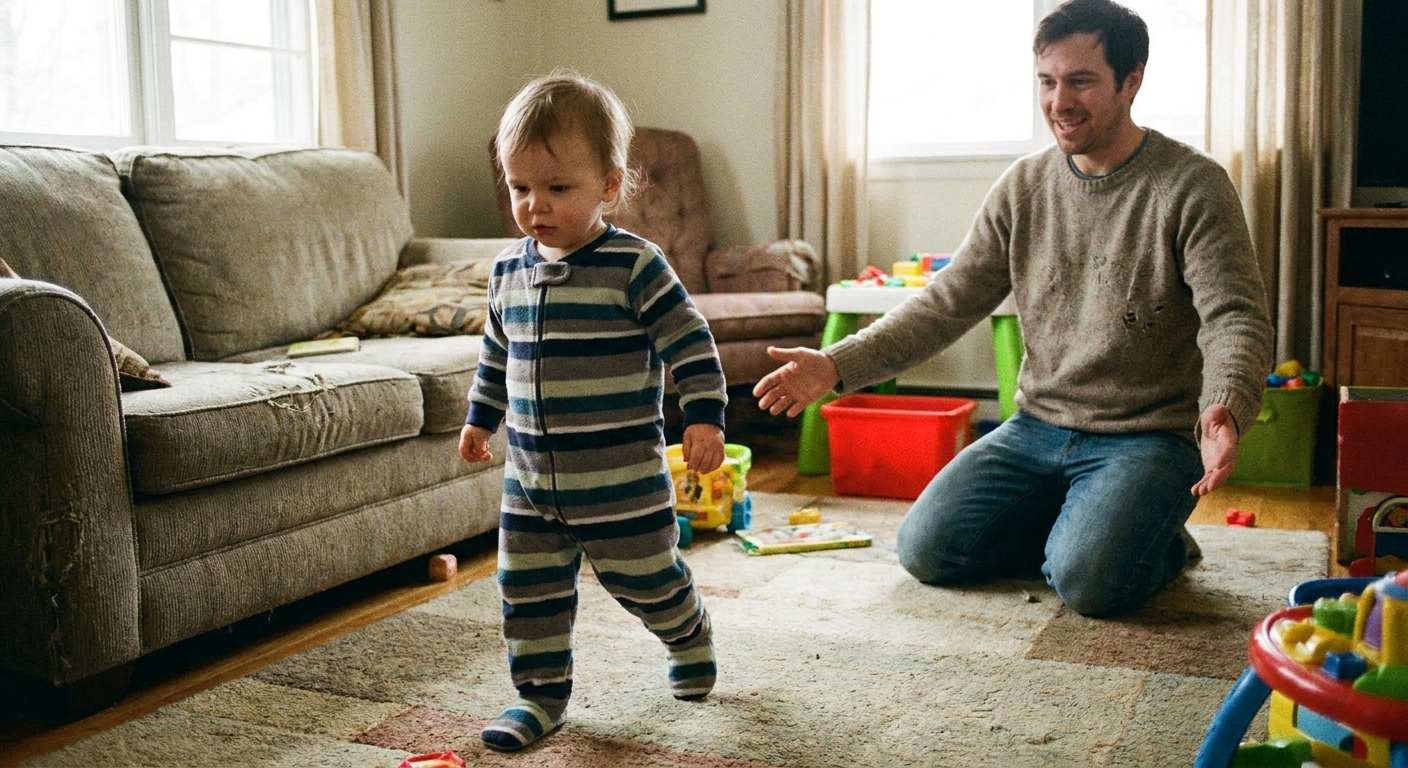
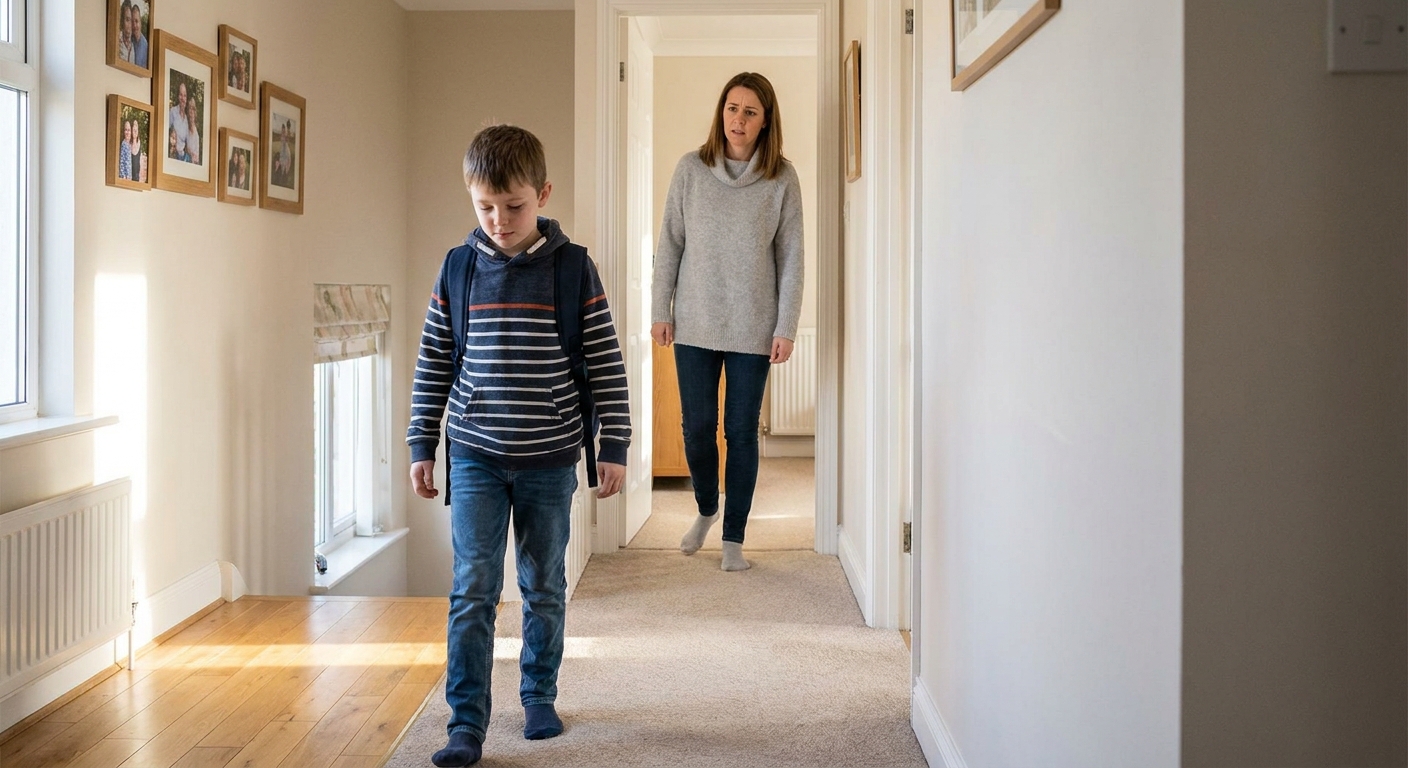
If your child starts limping out of the blue, or keeps pointing to their knee when your parent gut says the issue might be higher up, it can be unsettling. As a pediatric nurse and a mom, I will tell you what I told families in triage: many childhood limps are not emergencies, but some do need same-day care, and any limp that sticks around deserves a real evaluation.
One condition that can show up as a slow, gradual limp is Legg-Calvé-Perthes disease (often shortened to Perthes). The name sounds intimidating, but what you need most is a clear plan: recognize the pattern, know what red flags look like, and get the right follow-up so your child can protect their hip long-term.
What is Perthes?
Perthes is a condition where the blood supply to the top of the thigh bone (the femoral head, which sits in the hip socket) temporarily decreases. Bone is living tissue, so when blood flow is reduced, that area of bone can weaken and change shape for a period of time.
Over months to a couple of years, the body gradually replaces the weakened bone with new bone. The goal of treatment is to help the hip heal in the best shape possible so it can move smoothly for decades.
Who gets it?
- Most common age: roughly 4 to 10 years old, with many cases clustering around the early school years (it can happen outside this range).
- More common in boys, but girls can absolutely get it too.
- Usually affects one hip, but in a smaller number of kids it can affect both at different times.
Parents often ask, “Did they do something to cause it?” In most cases, no. Perthes is usually not caused by normal playground activity or a single minor fall. Many kids are active and healthy right up until the limp appears.
What it looks like at home
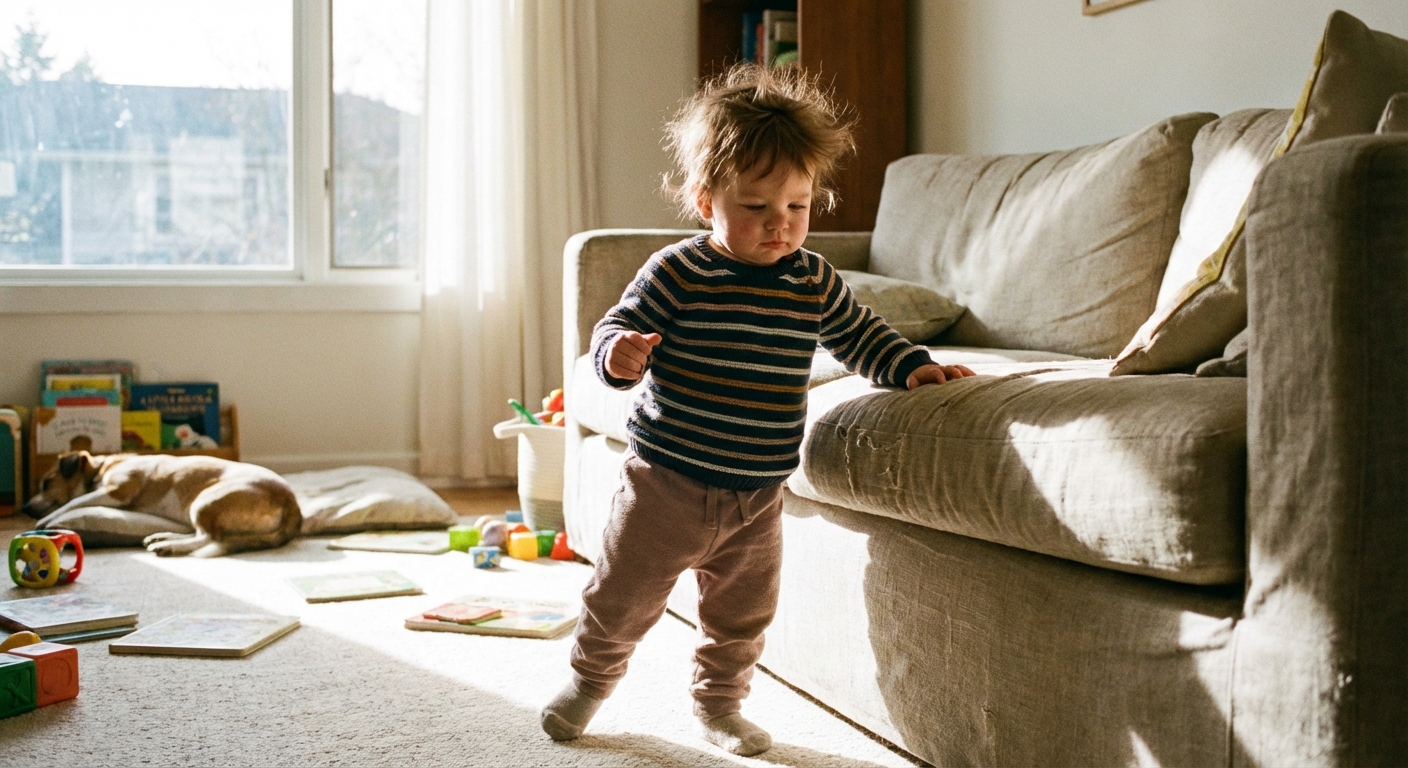
Perthes often creeps in gradually. You may notice a subtle limp at first, then realize it has been hanging around for weeks.
Common symptoms
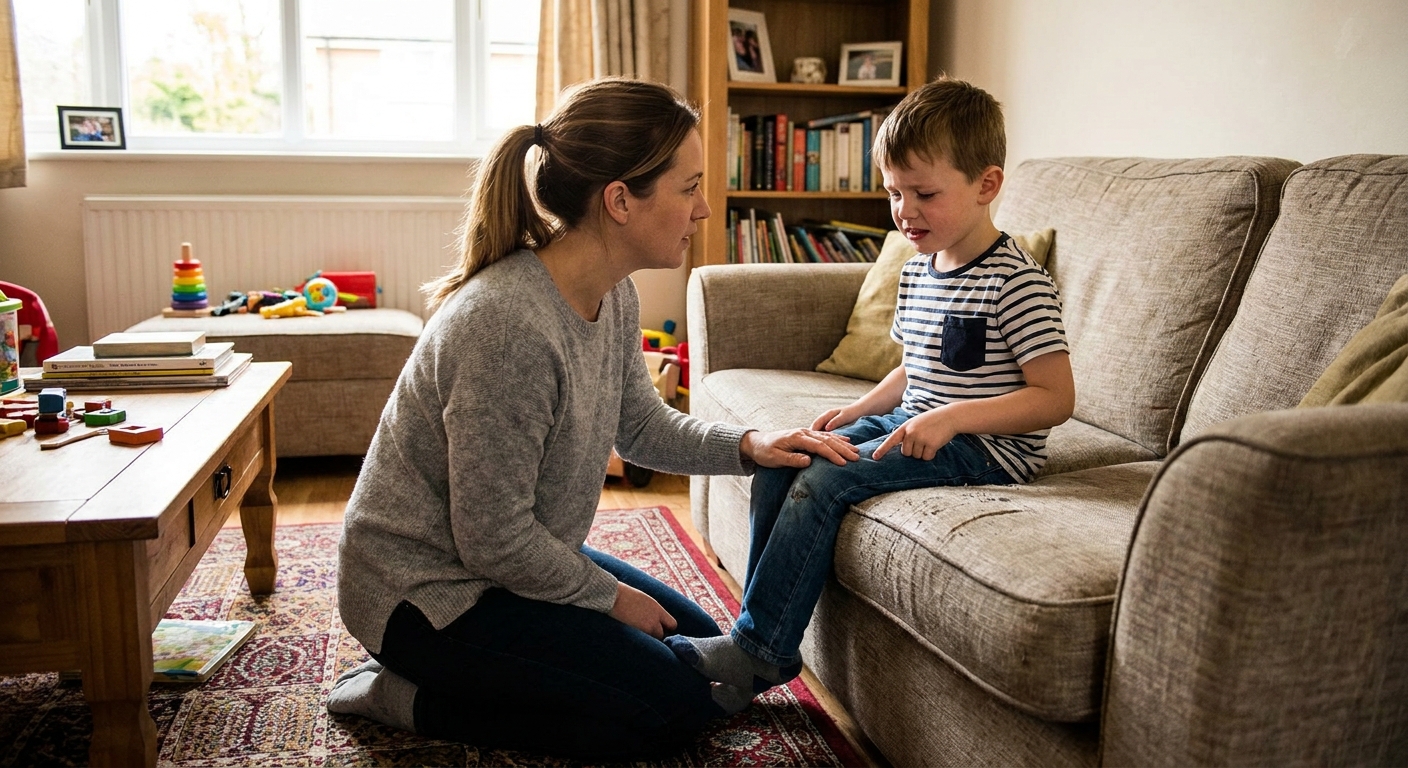
- Limping that is worse after activity and better after rest.
- Hip pain, groin pain, or pain in the front of the thigh.
- Knee pain with a normal-looking knee. This is very common because hip problems can “refer” pain to the knee.
- Stiffness, especially reduced ability to rotate the hip inward.
- Activity changes: your child runs less, wants to be carried, avoids sports, or tires sooner.
- Muscle soreness around the hip or buttock from walking differently.
Some kids complain of pain. Others just limp and insist they feel “fine,” which can make parents second-guess themselves. Trust what you are seeing.
Perthes vs other common causes
A lot of limps get labeled as “growing pains”, especially if your child is otherwise cheerful. Here is a simple way to sort common possibilities. Keep in mind that only an in-person exam can diagnose the cause.
Growing pains
- Timing: often in the evening or at night, can wake kids up.
- Location: typically both legs, often calves or shins.
- Daytime function: kids usually run and play normally during the day.
- Limp: typically no persistent limp.
Transient synovitis
Transient synovitis is inflammation in the hip joint, often after a viral illness. Kids can limp and have hip or thigh pain, sometimes suddenly.
- Timing: often more sudden onset than Perthes.
- Course: many kids improve noticeably over several days to a couple of weeks with rest and anti-inflammatory medicine, as advised by a clinician.
- Important: it can look similar early on, so follow-up matters if symptoms are not clearly improving after about a week, or if the limp keeps returning.
Perthes
- Timing: gradual limp and pain over weeks to months.
- Activity link: often worse after running or sports.
- Course: does not fully resolve quickly and tends to linger or slowly progress.
- Exam clues: limited hip motion, especially rotation and abduction.
If your child was told it is transient synovitis but they are not clearly improving within about 7 to 14 days, or symptoms keep cycling back, it is reasonable to ask about repeat evaluation and whether additional imaging is needed.
How clinicians evaluate a limp
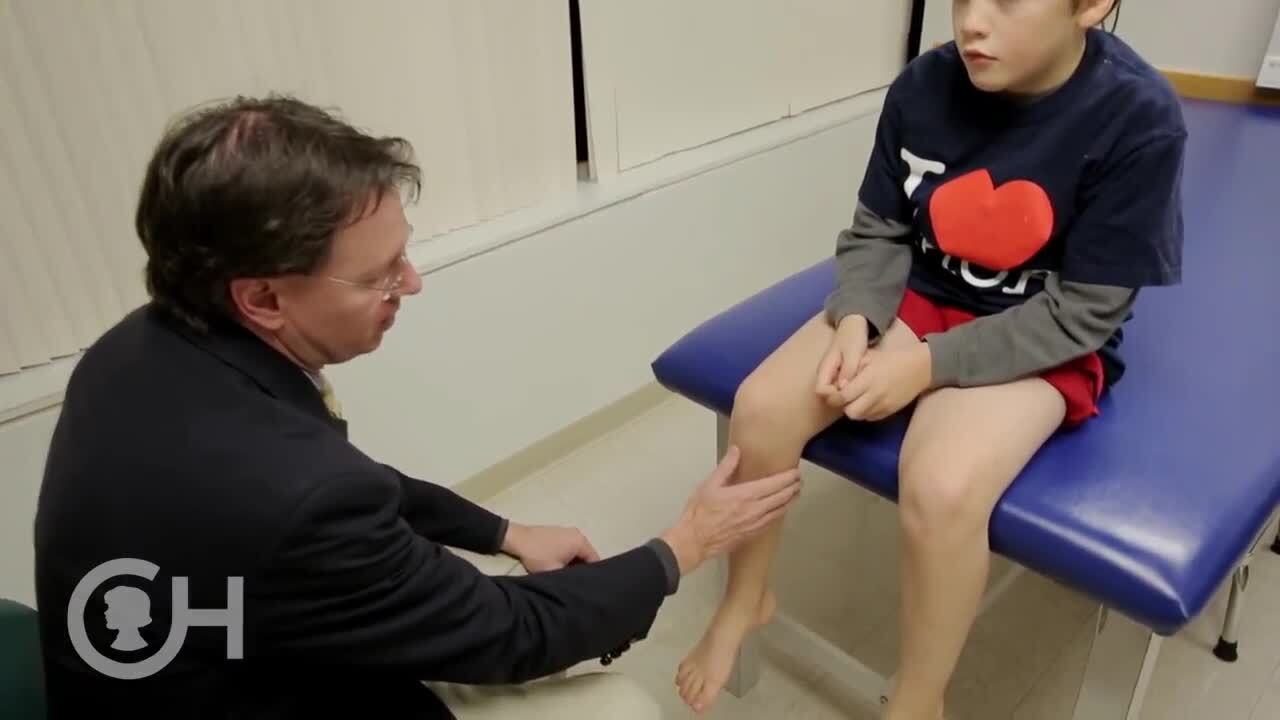
In clinic or urgent care, the first step is a careful history and a full exam, including watching your child walk. Parents are often surprised that the clinician will examine the hips even when the complaint is knee pain. That is a common and appropriate step.
Questions you may be asked
- When did the limp start, and is it getting worse?
- Any fever, recent viral illness, or recent injury?
- Does pain wake them at night?
- Can they still bear weight?
- Any weight loss, fatigue, bruising, or appetite changes?
What the exam focuses on
- Hip range of motion, especially internal rotation.
- Leg length and muscle strength.
- Gait pattern and whether the limp is pain-related.
- Joint swelling or tenderness elsewhere.
Imaging basics
If Perthes is on the list of possibilities, imaging is usually the next step. Here is the parent-friendly translation of what you might hear.
X-rays
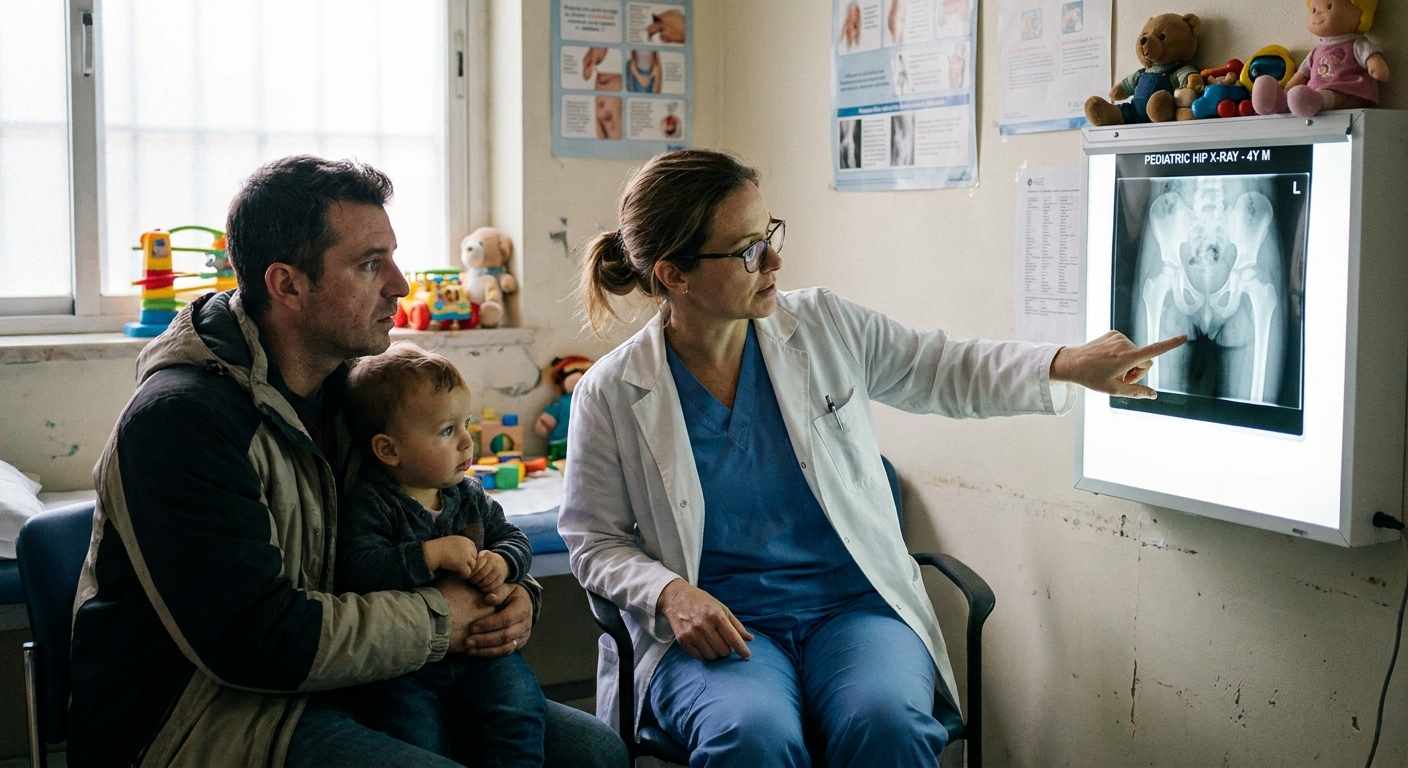
Hip X-rays are typically the first test. Early in Perthes, X-rays can sometimes look normal, which is frustrating. If symptoms persist, repeat imaging may be needed.
MRI
An MRI can show earlier changes in the femoral head and surrounding tissues, sometimes before they are obvious on X-ray. It gives more detail, but it takes longer and some younger kids need sedation to stay still.
Ultrasound
An ultrasound can show fluid in the hip joint, which can be useful when transient synovitis is suspected. It does not diagnose Perthes by itself.
One important note: if your child has knee pain and the knee exam is normal, clinicians often still order hip imaging. They are being thorough, because hip issues commonly masquerade as knee pain.
Why orthopedic follow-up matters
Perthes is treatable, and many children do very well. Orthopedic follow-up is emphasized because the hip is a “shape matters” joint. During healing, the goal is to keep the femoral head as round as possible and well-seated in the socket.
The goals
- Protect motion, especially keeping the hip flexible.
- Reduce stress on the healing femoral head.
- Keep the ball in the socket as much as possible while the bone remodels. You may hear this called “containment.”
Treatment can include
- Activity modification: limiting impact activities like running and jumping for a period of time.
- Pain control as recommended by your child’s clinician.
- Physical therapy to maintain hip motion and strength.
- Crutches or a walker temporarily if weight-bearing is painful.
- Bracing in some cases to help position the hip.
- Surgery in select children, often based on age, severity, and hip shape.
Parents often worry that “orthopedics” automatically means surgery. It does not. Many visits are about monitoring, preserving motion, and deciding if and when more intensive treatment is truly needed.
What to expect next
If Perthes is suspected or diagnosed, the process is usually a marathon, not a sprint.
- First visit: exam, imaging (often X-ray), and a plan for activity and pain control.
- Follow-ups: repeat exams and imaging over time to track how the femoral head is healing.
- Plan adjustments: activity restrictions, therapy, bracing, or surgery decisions may change depending on your child’s age, how much of the femoral head is involved, and how well the hip stays positioned.
In simple terms, prognosis is often better when kids are younger and the femoral head stays rounder during healing. That is why keeping appointments and protecting hip motion is such a big deal.
Red flags: when it is urgent
Some causes of hip pain and limping need same-day evaluation. If you see any of the following, contact your child’s clinician urgently or seek emergency care.
- Fever with hip pain or limp.
- Refusal to bear weight or your child cannot walk.
- Severe pain, especially pain that is worsening quickly.
- Significant swelling, redness, or warmth over a joint.
- Night pain that is persistent or wakes your child repeatedly, especially with other symptoms.
- Recent significant injury or concern for fracture.
- Child looks very unwell: lethargy, dehydration, unusual sleepiness.
- Concerning systemic symptoms: unexplained weight loss, unusual bruising, persistent fatigue.
In urgent settings, we worry about conditions like septic arthritis (joint infection), osteomyelitis (bone infection), certain fractures, and more rare but serious causes like malignancy. These are different from Perthes and need prompt treatment.
What you can do at home
If your child is stable, walking, and you are waiting for clinic or orthopedic follow-up, a few practical steps can help.
- Scale back high-impact activity for now. Think bikes and gentle play instead of trampolines and sprints.
- Keep a simple symptom log: which leg, where the pain points to, what makes it worse, and whether there is morning stiffness.
- Use pain medicine only as directed by your child’s clinician. Do not exceed dosing instructions.
- Do not force stretching that causes sharp pain. Gentle motion is fine, but pain is a stop sign.
- Take a short video of the limp on your phone. In real life, kids often walk differently in clinic than they do at home.
And yes, it is okay to ask for clarification. If you leave an appointment thinking, “Wait, was that the hip or the knee?” call back. You are not bothering anyone. You are parenting.
Questions to ask
- Do you think the pain is coming from the hip even if my child points to the knee?
- What diagnoses are you considering, and why?
- Do we need hip X-rays today? If X-rays are normal, when should we recheck?
- Should my child limit running, sports, or gym class right now?
- What symptoms would make you want to see us sooner?
- If this is Perthes, what stage or severity are we dealing with, and what is the plan for monitoring?
- Are there other causes you are watching for based on my child’s age, like slipped capital femoral epiphysis or juvenile arthritis?
Bottom line
A persistent limp, especially with hip, thigh, or knee pain that comes and goes with activity, is worth taking seriously. Legg-Calvé-Perthes disease is one possible cause, and while it can be a longer journey, steady follow-up and the right activity choices can make a real difference.
If your gut is telling you this is not “just growing pains”, you are not overreacting. You are paying attention. Let your child’s clinician and, when needed, an orthopedic specialist help you sort out the cause and protect that hip for the long run.
Medical note: This article is for education and cannot diagnose your child. If you are concerned about a limp, especially with fever, severe pain, or inability to bear weight, seek in-person medical care promptly.

Sarah Mitchell
Sarah Mitchell is a Registered Pediatric Nurse and a mother of three who has spent over a decade helping families navigate the beautiful, chaotic early years of childhood. She combines evidence-based medical knowledge with real-world parenting experience to offer practical, compassionate advice. At Awesome Parent, Sarah's mission is to help exhausted parents find solutions, trust their instincts, and finally get some sleep.