Honey-crusted sores, quick spread, and lots of parent worry. Here’s how to recognize impetigo, treat it safely, prevent reinfection, and know when it’s okay ...
Recurrent Impetigo in Kids: Nasal Staph and Household Spread

Sarah Mitchell
Sarah Mitchell is a Registered Pediatric Nurse and a mother of three who has spent over a decade helping families navigate the beautiful, chaotic early years of childhood. She combines evidence-based medical knowledge with real-world parenting experience to offer practical, compassionate advice. At Awesome Parent, Sarah's mission is to help exhausted parents find solutions, trust their instincts, and finally get some sleep.
The first time your child gets impetigo, it is usually a straight line story: a scrape, some honey-crusted sores, antibiotics, and it often starts improving within a few days. The second or third time, it starts to feel like you are living in a never-ending game of whack-a-mole.
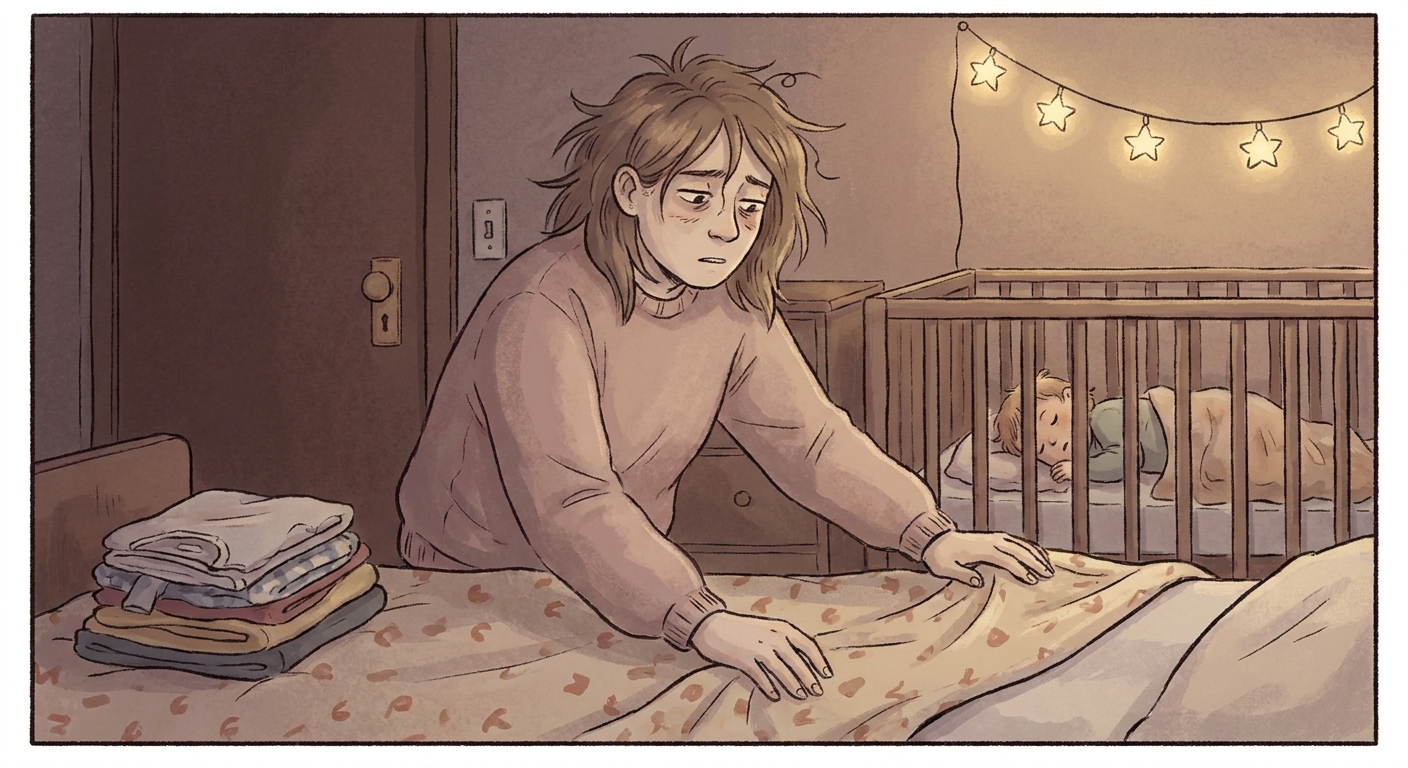
When I am on the triage line, recurrent impetigo is one of those calls where parents sound tired in a way I can almost hear through the phone. And I get it. You cleaned. You treated. You washed the sheets. So why is it back?
Most repeat impetigo is not because you did something wrong. It is usually because the bacteria that cause it are still hanging around in predictable places: little noses, under fingernails, on irritated skin, and occasionally in other family members who do not have obvious sores.
Why impetigo can come back
Impetigo is most commonly caused by Staphylococcus aureus (staph) and also commonly by group A strep. Antibiotics can clear the active skin infection, but there are a few reasons new lesions can pop up soon after.
One important distinction: sometimes families are seeing new spots (reinfection or spread), and sometimes they are seeing the original spots never fully healing (incomplete clearance, resistance, or a look-alike rash). They can feel the same in the moment, but the plan can differ.
1) Reinfection from bacteria living in the nose or on the skin
Many kids (and adults) carry staph on their skin or in their nose without any symptoms. If a child is a nasal carrier, they can essentially re-seed their own skin, especially when they rub their nose and then scratch a bug bite or eczema patch.
2) Ongoing skin breaks from eczema, bites, or chapping
Staph and strep love compromised skin. In real life, the “doorway” is often:
- eczema flare-ups
- scratches and scrapes
- bug bites
- chapped lips and drool rash
- thumb-sucking irritation around the mouth
If the skin barrier is not improving, impetigo can keep finding a place to start even if you treated correctly.
3) Too short a course, the wrong medication, or missed doses
Sometimes repeat sores are from the original infection not fully clearing. Common reasons include:
- topical treatment applied too thinly or not long enough (typical courses are often 5 to 7 days)
- oral antibiotic doses missed (totally common in busy families, and oral courses are often around 7 days)
- the bacteria being resistant to the first antibiotic
- the rash not actually being impetigo (for example, herpes near the mouth can look deceptively similar early on)
4) Household spread and ping-pong reinfection
Impetigo spreads through close contact and shared items. In families, it often “ping-pongs” between kids (and sometimes a parent) when there is:
- shared towels or washcloths
- siblings bathing together
- shared bedding
- shared sports gear or helmets
- close wrestling and roughhousing
What impetigo usually looks like
Parents often describe impetigo as “a weird rash that turned into crust.” That is pretty accurate.
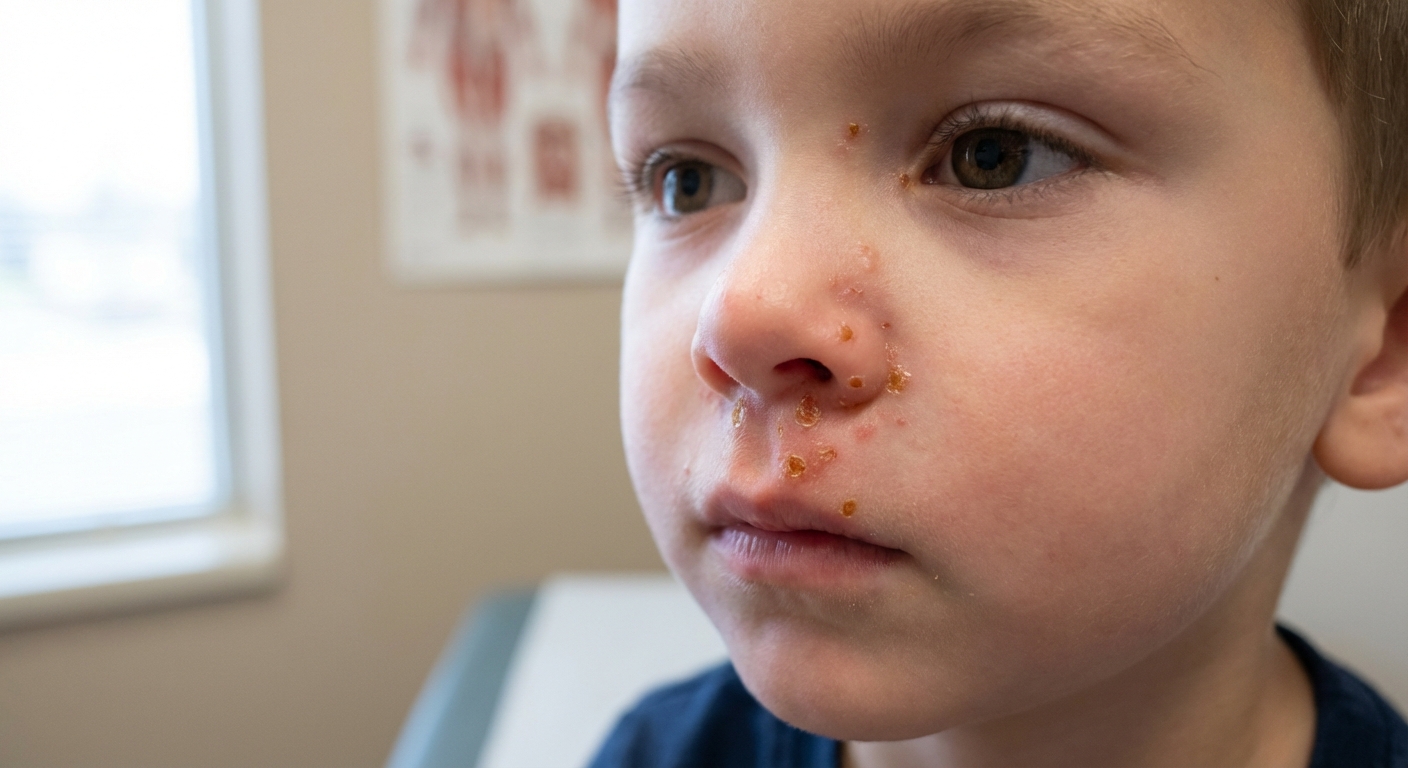
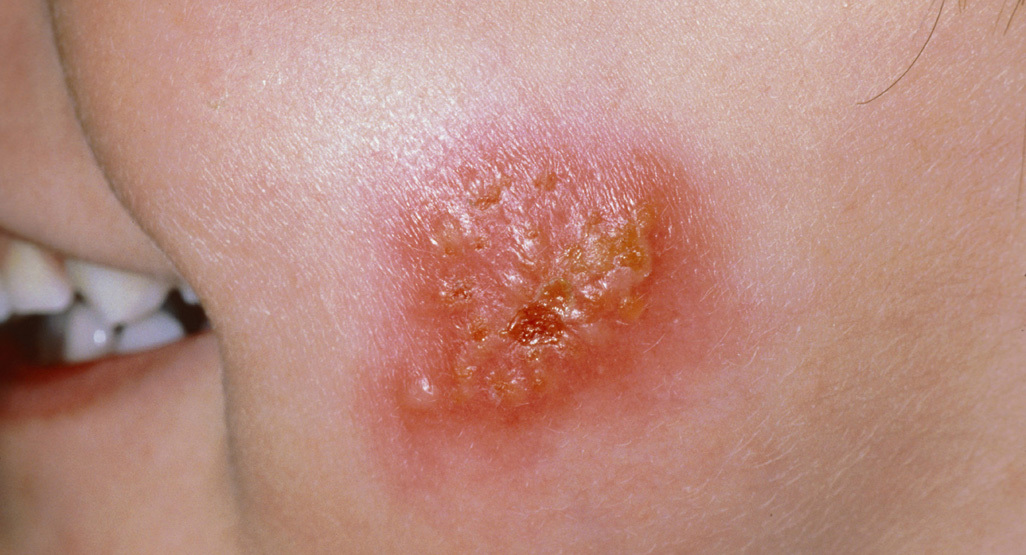
- Nonbullous impetigo (the most common) often starts as small red spots or pimples that break open and form honey-colored crust. It can be itchy and kids scratch it, which spreads it.
- Bullous impetigo tends to cause larger fluid-filled blisters that can pop and leave raw-looking patches.
Impetigo often clusters around the nose and mouth, but it can show up anywhere there is a break in the skin.
What nasal staph carriage means
Nasal staph carriage means staph bacteria are living in the nose without causing an obvious infection. The inside of the nose is warm and moist, which makes it a cozy home base.
Carriage is common. It does not mean anyone is dirty. It does mean that when a child:
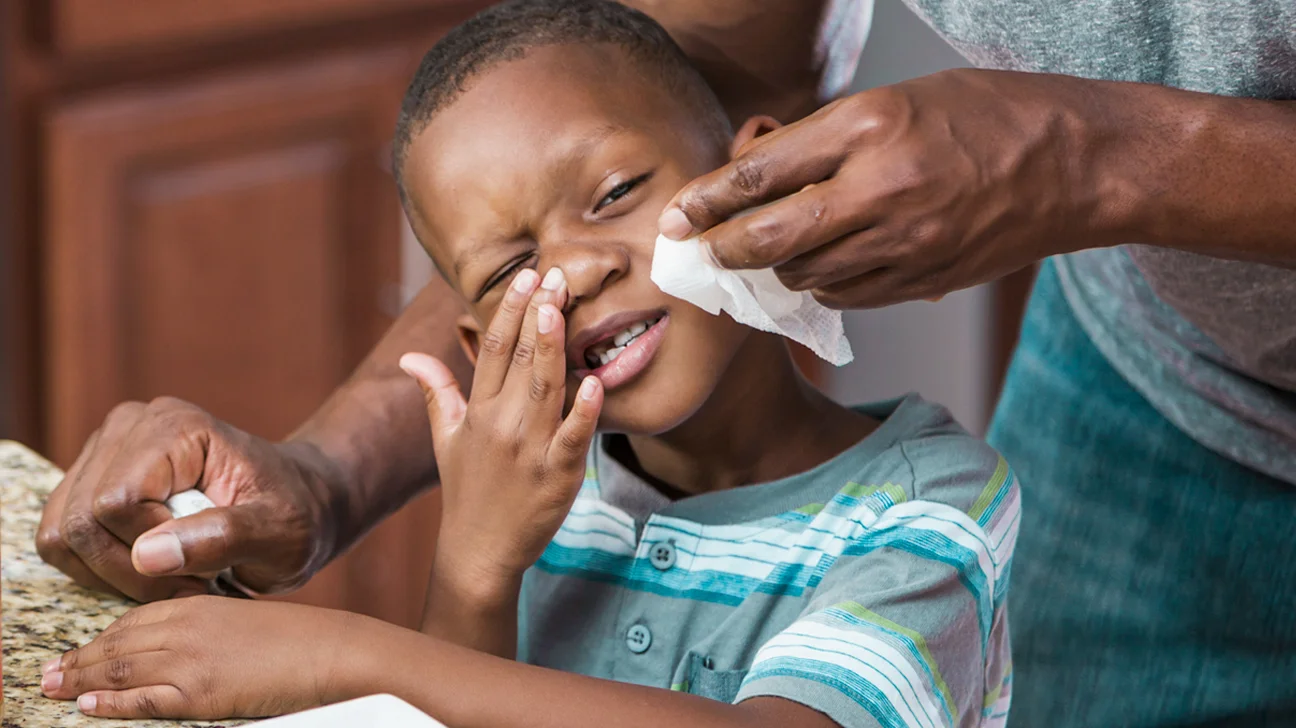
- wipes or picks their nose
- rubs their face
- scratches an itch
they can transfer bacteria from the nose to the skin. If the skin is broken or irritated, those bacteria can set up shop and cause impetigo again.
Clinicians may talk about carriage more when impetigo is recurrent, when multiple family members get it, or when the infections seem to cluster around the nose and mouth.
One outbreak vs recurrent
For one outbreak
If it is the first time (or it happens once every couple of years), most clinicians focus on:
- confirming it looks like impetigo
- prescribing topical antibiotic for small areas or oral antibiotics for more widespread cases
- basic hygiene to reduce spread
- school or daycare guidance
In many cases, no culture is needed for a first uncomplicated episode.
For recurrent outbreaks
If sores keep returning in the same child or moving through siblings, clinicians may think about:
- nasal carriage
- other silent carriers in the home
- shared items and routines that keep reintroducing bacteria
- underlying skin conditions like eczema that need better control
- whether the bacteria might be resistant (including MRSA in some communities)
Which contacts might be checked
This varies a lot by clinic, local patterns of resistant bacteria, and how severe or frequent the infections are. Not every family needs this step. But when impetigo keeps coming back, clinicians sometimes consider whether someone else in the household is acting as a reservoir.
Household members who may be considered
- Siblings, especially if they have any skin irritation, eczema, or recurring “mystery” pimples or crusted spots
- Parents and caregivers, especially if they have frequent skin infections, work in healthcare, or have close skin-to-skin contact (think: carrying a toddler on your hip all day)
- Anyone with recurring boils, abscesses, or “spider bites” (those are often staph)
- Contact sports participants in the home (wrestling, football) where skin infections can spread more easily
Testing, when done, may involve a swab from the nose and sometimes from affected skin. Again, this is not automatic. It is a step clinicians think about when the pattern suggests repeated re-seeding.
If you have a baby in the house, mention that to your clinician. Babies have delicate skin and tend to be touched a lot, so it matters for prevention planning even if no one is suggesting testing the baby.
School and daycare return
For one outbreak
Most schools and child care settings follow a version of this rule:
- Return after starting effective antibiotic treatment (often after 24 hours), and
- lesions should be covered when possible
Your child’s clinician or school may have a specific policy, so always check. The big goals are reducing direct contact with draining sores and encouraging hand hygiene.
As a general rule, contagiousness drops a lot once effective treatment is underway and lesions are drying and covered, but “drying and improving” matters more than any single clock in a real household.
For recurrent outbreaks
When impetigo is recurring, the school return rule usually does not change, but the home plan often needs to get more intentional for a couple of weeks. That is when I suggest families think in terms of a short “containment sprint.”

The home plan that helps
If you are dealing with recurrence, you want to interrupt the cycle in three places: skin, hands and nails, and shared items.
Skin: protect the barrier
- Treat eczema aggressively with your clinician’s plan. Impetigo loves eczema.
- Moisturize dry skin (especially around the mouth and nose in winter).
- Cover active sores with a nonstick dressing if practical, especially if your child scratches in their sleep.
Hands and nails: the sneaky superhighway
- Keep nails short and clean. Under-nail bacteria is a real thing.
- Handwashing before meals and after nose wiping is more important than constant disinfecting.
- Wash hands after applying ointment (yours and your child’s, if age-appropriate).
- Try nighttime itch control if scratching is a big issue. Ask your clinician what is safe for your child’s age.
Shared items: temporarily stop the family sharing economy
For about 1 to 2 weeks during and after an outbreak:
- Do not share towels or washcloths. Assign one per person.
- Change pillowcases frequently (every 2 to 3 days can help during an active cluster).
- Wash bedding in warm or hot water per fabric instructions, and dry thoroughly. If the fabric tolerates it, higher heat in the dryer can help.
- Do not share razors (older kids and adults).
- Wipe high-touch bathroom surfaces routinely (faucet handles, light switches).
- Clean items that touch the face like reusable masks, sports chin straps, and helmet liners.
You do not need to bleach your whole house. The goal is to reduce repeat contact with contaminated fabrics and surfaces during the window when bacteria are most likely to spread.
What not to do
- Do not share prescription topical antibiotics between siblings, even if the rash looks the same.
- Do not use leftover oral antibiotics from a prior illness.
- Do not let kids pick at crusts (I know. Easier said than done). If crusts are stuck, your clinician may suggest gentle soaking, but avoid aggressive scrubbing.
- Do not treat it like a scrub-the-house emergency. Focus on hands, nails, skin barrier, and the couple of high-yield shared items.
When a culture helps
If you are on episode number two, three, or “I lost count,” it is reasonable to ask whether your clinician wants to culture the sores.
A culture can be helpful when:
- the rash is not responding as expected to treatment
- the sores keep returning quickly after treatment
- multiple household members are getting infected
- there is concern for resistant bacteria (including MRSA)
- the diagnosis is uncertain
Culture results can guide antibiotic choice and help decide whether discussing a decolonization plan makes sense.
When to discuss decolonization
Decolonization means trying to reduce staph carriage in places like the nose and on the skin to prevent repeat infections.
This is not a DIY project. It is something you do with a clinician because the details matter, including who should do it, for how long, and which products are appropriate for your child’s age and skin.
It is also worth saying out loud: evidence is mixed, and even when families do everything “right,” recurrence can still happen. The goal is fewer infections and less household spread, not perfection.
Clinicians are more likely to consider decolonization when:
- a child has recurrent impetigo or other recurrent staph infections
- multiple family members are affected
- there are repeated infections despite good hygiene steps
- there is a history of MRSA or resistant infections
What clinicians may recommend
Plans vary, but often include some combination of:
- Nasal antibiotic ointment for a short course
- Antiseptic skin cleansing for a limited time period
- Targeted household hygiene during the same window to prevent immediate re-seeding
Sometimes clinicians recommend doing this for the child only. Sometimes they recommend treating close household contacts at the same time if everyone is passing it back and forth. That decision is individualized.
If you are feeling hesitant, you are not alone. In my experience, the best decolonization conversations include a frank talk about expected benefits, skin sensitivity, and how realistic the plan is for your household.
Questions to ask
- Does this look like impetigo again, or could it be something else?
- Are these new lesions, or are the old ones not fully healing?
- Should we culture this lesion to confirm the bacteria and antibiotic sensitivity?
- Given the repeat pattern, do you think nasal staph carriage could be contributing?
- Should we consider a decolonization plan? If yes, who in the household should participate?
- Do you see signs of eczema or another skin condition that needs its own treatment plan?
- When can my child return to school or daycare, and should lesions be covered?
- Do we need to pause contact sports, swimming, or wrestling until this is improving?
When to seek urgent care
Most impetigo can be managed through your pediatrician, but get urgent medical advice if:
- your child has fever, looks ill, or the redness is rapidly spreading
- there is significant swelling, pain, or warmth suggesting deeper infection
- the infection is near the eye, especially with eyelid swelling
- your child is a newborn or young infant with suspicious skin lesions
- your child has immune system problems or significant chronic illness
- you notice dark urine, puffiness around the eyes, or unusual swelling after a recent strep skin infection (ask promptly, as this can be a sign of a rare complication)
A calm bottom line
When impetigo keeps returning, it is usually not because the first treatment “failed.” It is usually because the bacteria have a home base, often the nose, irritated skin, or another close contact in the household, and they keep getting reintroduced.
If you are stuck in a repeat cycle, that is the moment to talk with your child’s clinician about whether a culture and a decolonization discussion make sense, alongside a short, focused household hygiene reset. You deserve an approach that is effective and realistic, not one more impossible checklist at 3 AM.
Sarah Mitchell
Sarah Mitchell is a Registered Pediatric Nurse and a mother of three who has spent over a decade helping families navigate the beautiful, chaotic early years of childhood. She combines evidence-based medical knowledge with real-world parenting experience to offer practical, compassionate advice. At Awesome Parent, Sarah's mission is to help exhausted parents find solutions, trust their instincts, and finally get some sleep.