A parent-friendly guide to Kawasaki disease symptoms like 5+ days of fever, red eyes, rash, swollen hands and feet, and strawberry tongue, plus incomplete Ka...
Toddler Fever Lasting More Than Five Days: What It Can Mean and What to Do

Sarah Mitchell
Sarah Mitchell is a Registered Pediatric Nurse and a mother of three who has spent over a decade helping families navigate the beautiful, chaotic early years of childhood. She combines evidence-based medical knowledge with real-world parenting experience to offer practical, compassionate advice. At Awesome Parent, Sarah's mission is to help exhausted parents find solutions, trust their instincts, and finally get some sleep.
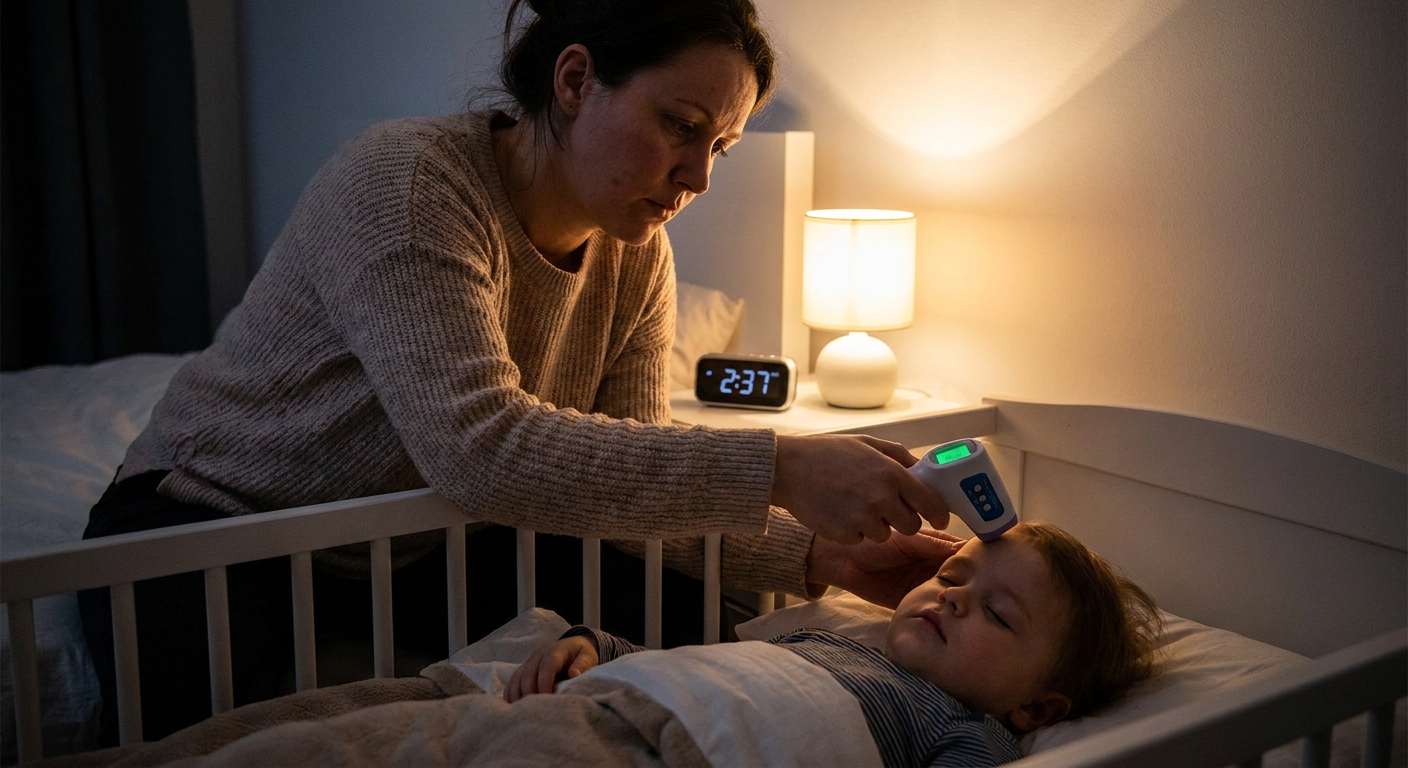
In triage, one of the most common phrases I heard from anxious, exhausted parents was, “It’s been days. When does a fever stop being normal?” Now that I’m a mom of three, I can tell you that question hits different at 2:47 a.m. when your toddler is hot, clingy, and refusing water like it’s a personal insult.
Here’s the reassuring truth: lots of toddler fevers are caused by everyday viruses and can last several days. But once you get to around day five of fever, most pediatric clinicians start thinking a little differently. Not because it is automatically an emergency, but because the duration changes the workup. We want to make sure we are not missing something that needs treatment, and we want to catch dehydration early.
First, make sure it is really a fever
Before we label this “day six,” double-check the basics:
- Use a reliable thermometer. Rectal temperatures are the most accurate, but for many toddlers an oral temperature (if they can reliably keep their mouth closed around the thermometer) is a practical go-to. Underarm (axillary), forehead (temporal), and ear (tympanic) readings can be convenient, but they are more likely to read low or vary with technique.
- Know the usual threshold. In most pediatric settings, fever is 100.4°F (38°C) or higher. If you are using an underarm or forehead thermometer, ask your clinician what cutoff they want you to use, because the “fever number” can be interpreted a little differently by method and device.
- Count fever days as calendar days. If your child had a fever every day, even if it comes and goes with medicine, that is still multiple days of fever. If they were fever-free for 24 hours and then spiked again, that can be a new pattern worth mentioning.
If you are not sure your readings are accurate, bring the thermometer to your appointment. We genuinely appreciate a parent who shows up with the thermometer and a few notes.
Why 5+ days changes things
Early on, a well-appearing toddler with a runny nose, cough, or mild diarrhea often fits a viral illness. By day five or six, we start widening the lens. (And to be clear, clinicians vary a bit here depending on age, immunizations, medical history, and how your child looks.)
In clinic or urgent care, the goals usually shift to:
- Confirm the pattern (is the fever truly persistent, or recurring?)
- Look for a new focus of infection (ears, lungs, throat, skin, urinary tract)
- Assess hydration and breathing (these can quietly worsen over time)
- Decide what testing is useful today versus what can be watched with close follow-up
Duration alone does not diagnose anything. But it does raise the bar for how confident we need to be that this is still an uncomplicated viral course.
What clinicians look for
When you bring in a toddler with fever past day five, your clinician is usually doing two things at once: listening to your story and watching your child’s behavior minute by minute.
Questions you will get
- Highest temp you have seen and how you took it
- How often it spikes (all day vs mostly evenings)
- Response to fever medicine (not a dosing discussion, but whether your child perks up at all)
- Fluids and peeing (how many wet diapers or trips to the toilet)
- New symptoms: cough getting worse, ear pain, sore throat, belly pain, vomiting, diarrhea, rash, limping, mouth sores
- Sick contacts, daycare outbreaks, travel, bug bites, animal exposures
- Immunization status and any chronic conditions
Exam clues that matter
We are looking at breathing effort, hydration signs, throat and ears, lung sounds, belly tenderness, skin changes, and how interactive your child is. A toddler who is miserable during the fever but pops up to argue about stickers once the fever drops is giving us helpful information.

Why urine tests come up
If I had to pick one test that gets discussed a lot once fever drags on, it is a urine test.
Why? Because urinary tract infections can show up in toddlers as fever without obvious localizing symptoms. Some kids do complain of pain with peeing or tummy pain, but many do not. And a UTI is one of the more common bacterial infections in this age group that we do not want to miss, because treatment matters.
When urine testing is more likely
- Fever lasting several days with no clear source on exam
- History of UTI or kidney issues
- Pain with urination, new accidents, very frequent urination, foul-smelling urine
- Lower belly pain, back pain, or vomiting along with fever
- Higher fever without much cough or congestion
Urine testing usually starts with a urinalysis (quick screening) and may include a culture (to see what grows). Depending on age and toilet-training status, collecting the sample can be easy or very not easy. In younger toddlers, clinics may recommend a clean-catch method or a catheterized specimen because bag samples can contaminate cultures. Your clinic will guide you through the least miserable option that still gives a trustworthy result.
Other tests you might hear about
Parents sometimes assume day six means “full lab work, chest X-ray, the works.” Sometimes we do need broader testing. Often we do not, especially if your child has clear viral symptoms and is otherwise stable.
Depending on the story and exam, your clinician may consider:
- Viral testing in certain settings, mainly when it changes isolation guidance or next steps
- Strep testing if symptoms and age fit
- Chest X-ray if breathing findings suggest pneumonia
- Blood work if your child looks more ill, has persistent high fever without a source, or has concerning symptoms
A good pediatric visit is not about doing everything. It is about doing what is most likely to help today, with a clear plan for what happens if things do not improve.
Prolonged fever conditions to know
Most of the time, a 5+ day fever still ends up being a virus with a slow exit. But there are a couple of diagnoses clinicians are trained to keep in mind once a fever goes long.
Kawasaki disease
Kawasaki disease is uncommon, but it matters because treatment can reduce the risk of heart complications. It is typically flagged when a child has fever for 5 days or more plus some combination of:
- Red eyes (without gooey discharge)
- Red, cracked lips or a “strawberry” tongue
- Rash
- Swollen hands or feet or peeling skin later
- Swollen neck lymph node
If this pattern sounds even a little familiar, that is a same-day call and usually a same-day evaluation.
MIS-C
MIS-C is also uncommon, and it is not something to assume, but persistent fever plus significant belly pain, vomiting or diarrhea, a new rash, red eyes, unusual fatigue, or new breathing issues is another reason to call your clinician promptly. If your child looks very ill, go in.
Hydration matters more over time
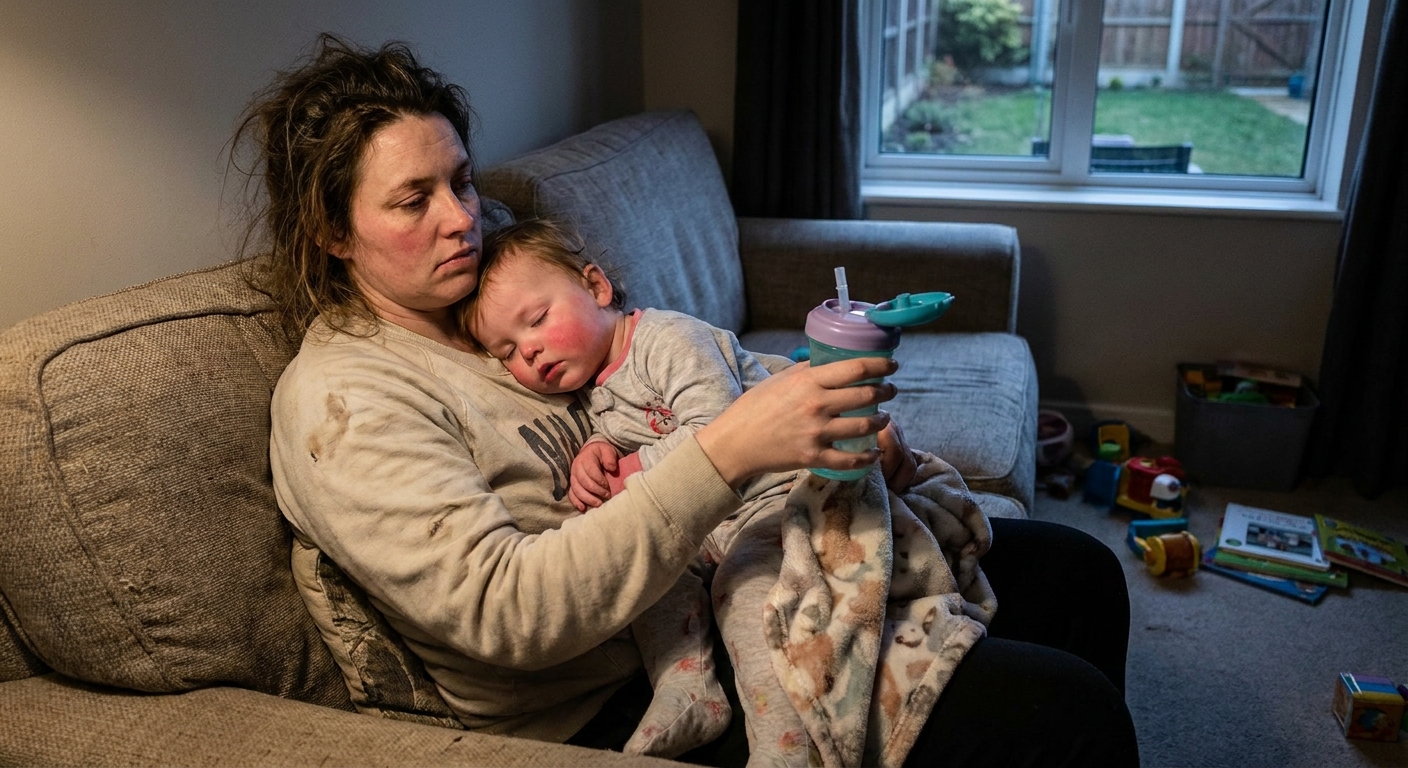
Fever itself increases fluid needs. Add mouth breathing from congestion, decreased appetite, and the toddler stubbornness of “No drink, only crackers,” and dehydration can sneak up.
Signs hydration is slipping
- Fewer wet diapers or bathroom trips than usual
- No urine for about 8 hours (or a marked drop from their normal), especially with poor intake
- Very dark urine
- Dry lips and mouth
- No tears when crying
- Sunken eyes (can be nonspecific, but it can be a clue with other signs)
- Unusually sleepy or hard to rouse
- Dizziness or weakness in an older toddler
Toddler-friendly hydration moves
- Small, frequent sips beat big cups that overwhelm them.
- Offer fluids by routine: a sip after the bathroom, a sip after a book, a sip after one song.
- Try oral rehydration solution if vomiting or diarrhea are in the mix, or if water intake is poor.
- Use what works: water, milk, diluted juice, popsicles, broth, smoothies. The “best” drink is the one your child will take and keep down.

Same-day call triggers
A toddler fever that lasts 5+ days is a reasonable reason to call for same-day guidance, even if your child is not in crisis. That is especially true if you do not have a clear explanation (like a typical cold that is steadily improving).
Seek same-day evaluation if any of these apply:
- Fever for more than five days, especially without a clear source
- Your child is notably less responsive, unusually sleepy, or very irritable and cannot be consoled
- Breathing looks hard: fast breathing, working to breathe, ribs pulling in, grunting, or you are worried
- Signs of dehydration: very low urine output, no urine for about 8 hours, dry mouth, no tears, cannot keep fluids down
- New rash that concerns you, widespread bruising-like spots, or purple dots
- Persistent vomiting or severe diarrhea
- Ear pain, significant throat pain, or belly pain that is worsening
- Limping or refusing to walk
- Possible Kawasaki disease signs (fever 5+ days plus red eyes, mouth changes, rash, swollen hands or feet)
- Possible MIS-C pattern (persistent fever plus significant GI symptoms, rash, red eyes, unusual fatigue)
- Your child has a weakened immune system or significant medical history
If your parent gut is screaming that something is off, trust it. You do not need a perfect script to get help.
Go now
These are “do not wait” situations:
- Difficulty breathing, blue or gray lips, or pauses in breathing
- Seizure
- Stiff neck, severe headache, or extreme light sensitivity (in a child old enough to express this)
- Uncontrolled lethargy, hard to wake, or confusion
- Signs of severe dehydration (no urine for a long stretch, very dry mouth, very sunken eyes, unable to keep any fluids down)
- A fever with a rapidly spreading purple rash or petechiae (tiny non-blanching dots)
- If your child is under 3 months old with a fever (different rules apply)
If you are on the fence, call your local nurse line or pediatric on-call service. That is what they are there for.
Prep for the visit
When you are sleep-deprived, it is hard to remember details on the spot. A few notes on your phone can really help.
- Day fever started and the highest temps you have seen
- How you took temps (forehead, ear, oral, underarm, rectal)
- Key symptoms by day: cough started day 2, vomiting day 4, rash day 6, etc.
- Fluid intake estimate and how often your toddler peed in the last 24 hours
- Any recent antibiotics, travel, tick exposure, or known sick contacts
Bring a comfort item, a snack, and an extra diaper or set of clothes. If a urine sample is likely, you will be glad you did.
What improvement looks like
Even if the fever is still popping up, you want to see at least one of these trends over time:
- Lower peak temperatures
- Longer stretches fever-free
- Improving energy between fevers
- Better drinking and peeing
- Symptoms that are not escalating (for example, cough not worsening and breathing staying easy)
If the fever persists and nothing is trending in the right direction, that is another reason to recheck, even if your child was seen recently.
FAQ
Can a virus cause fever past day five?
It can, especially with certain viruses. But 5+ days is also a common point where clinicians become more cautious and consider whether there is a secondary infection, dehydration, or a different diagnosis. “Possible” is not the same as “ignore it.” Call your pediatrician for guidance.
On and off fever, does that count?
If your child has had at least one true fever each day, most clinicians count that as persistent fever days, even if it comes down with medication. If there was a full 24 hours with no fever and then a new fever started, tell your clinician. That pattern can change the thinking.
No appetite, is that okay?
Appetite often drops with fever. Hydration matters more than food in the short term. Focus on fluids and urine output. If drinking is poor or peeing is dropping, get seen.
Should I wake my child to check temps?
If your toddler is sleeping comfortably and breathing normally, sleep is healing. You do not have to wake them just to chase a number. Check when they wake naturally, and prioritize hydration once they are up.
A calm next step
If you are on day six, you are not failing. You are doing exactly what good parents do: noticing the pattern and asking for the next right step.
Call your pediatrician for same-day advice and be ready for a focused exam, questions about hydration, and possibly urine testing. Most of the time we still land on a reassuring plan. But the 5+ day milestone is a good moment to stop white-knuckling it at home and get another set of eyes on your kid.
Sarah Mitchell
Sarah Mitchell is a Registered Pediatric Nurse and a mother of three who has spent over a decade helping families navigate the beautiful, chaotic early years of childhood. She combines evidence-based medical knowledge with real-world parenting experience to offer practical, compassionate advice. At Awesome Parent, Sarah's mission is to help exhausted parents find solutions, trust their instincts, and finally get some sleep.