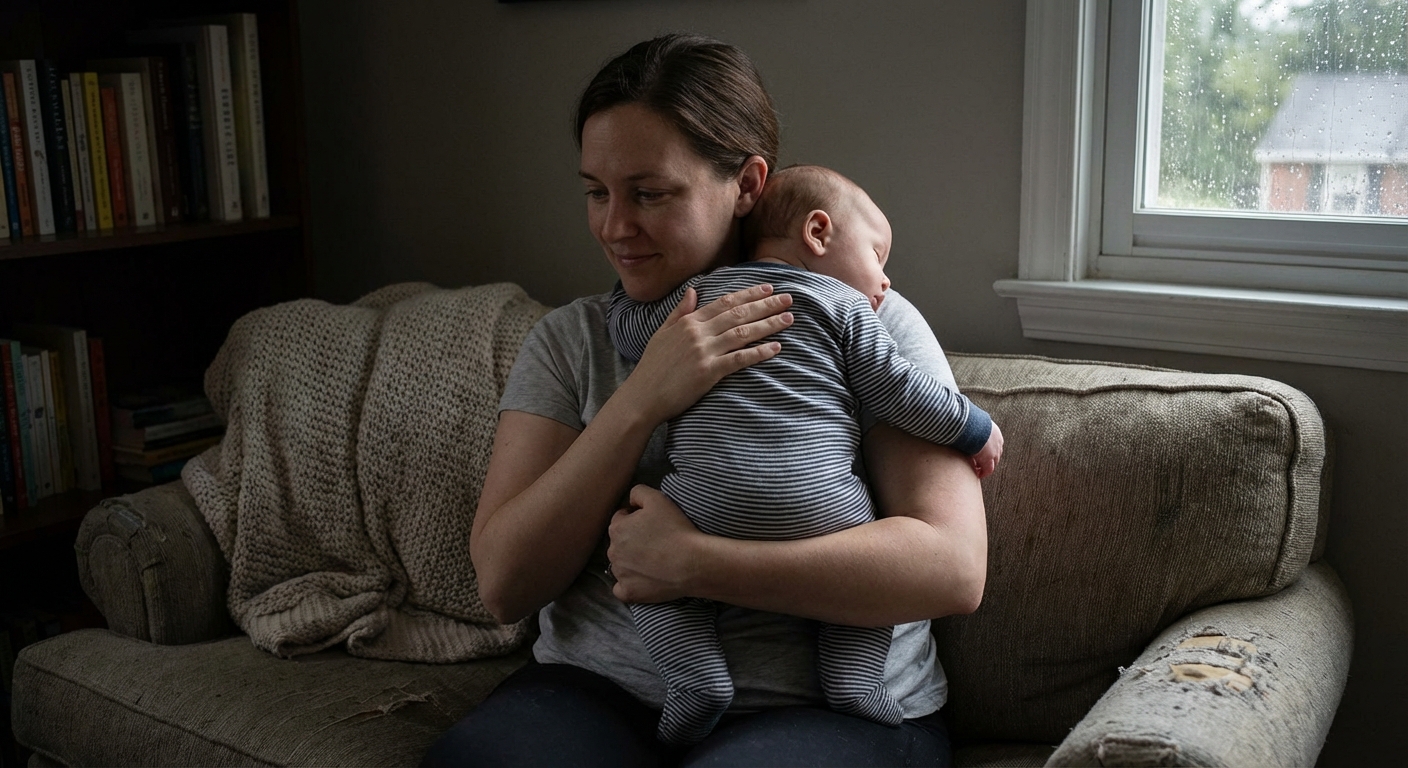
That squeaky newborn breathing is often laryngomalacia and usually improves with time. Here’s what to listen for, how it’s diagnosed, what helps at home, and...
Tracheomalacia in Babies

Sarah Mitchell
Sarah Mitchell is a Registered Pediatric Nurse and a mother of three who has spent over a decade helping families navigate the beautiful, chaotic early years of childhood. She combines evidence-based medical knowledge with real-world parenting experience to offer practical, compassionate advice. At Awesome Parent, Sarah's mission is to help exhausted parents find solutions, trust their instincts, and finally get some sleep.
One of the most common worries I heard as a pediatric triage nurse sounded like this: “My baby breathes so loudly. It’s like a rattle or a wheeze. Is she okay?” And as a mom, I get it. When it’s 2:30 a.m. and your newborn sounds like a tiny accordion, your brain goes straight to worst-case scenarios.
Tracheomalacia is one possible explanation for noisy breathing in babies, often when the sound is more noticeable on the exhale. The good news is that many babies do well with time, some positioning tweaks, and extra caution during colds. The important part is knowing what’s normal for your baby, what tends to make symptoms flare, and which signs mean it’s time for an airway evaluation.
One quick reminder before we dive in: you cannot diagnose tracheomalacia by sound alone. Newborns can be noisy for lots of reasons, including nasal congestion, reflux, bronchiolitis, and other upper airway issues. If you are worried, bring it up. You are not being dramatic. You are being appropriate.

What tracheomalacia is
Tracheomalacia means the trachea (windpipe) is softer or floppier than usual. In babies, the airway cartilage is still developing. In tracheomalacia, the walls of the windpipe can partially collapse during breathing, especially when your baby is breathing out, crying, coughing, or working harder to breathe.
This can cause:
- Noisy breathing
- A “rattly” or “wheezy” sound that does not always act like asthma
- Coughing spells or a harsh, persistent cough
- Breathing that seems more effortful during colds
Tracheomalacia can be present at birth (congenital). It can also happen after prolonged breathing support (such as intubation) in the NICU, or when something presses on the airway. Sometimes the “something pressing” is related to blood vessels around the airway (such as a vascular ring or sling). The details matter, so your pediatrician may ask questions about birth history, feeding, and past respiratory support.
What it sounds like
Parents describe tracheomalacia sounds in lots of ways:
- Rattling
- Low-pitched wheeze
- “Like mucus stuck in the chest”
- Noisy breathing that is louder during crying or active play
A common clue is that the noise is often more noticeable on the exhale. That is because the airway can narrow more when air is pushed out, especially when your baby is coughing or upset. But sound patterns are not perfectly reliable. Some babies have mixed or variable sounds, and other conditions can mimic it.
Another pattern I see: the sound may be present most days, then suddenly get much louder with a cold. That can be scary, but it is also very typical for floppy airway conditions.
Tracheomalacia vs laryngomalacia
These two diagnoses get mixed up a lot, and honestly, the names do not help.
Laryngomalacia
This is a floppy larynx (voice box), higher up in the airway. The classic sound is stridor, a squeaky or high-pitched noise that is usually worse when breathing in (inspiratory). Many babies with laryngomalacia are louder when lying on their back or when excited.
Tracheomalacia
This is a floppy trachea (windpipe), lower down. The sound is often worse when breathing out (expiratory), and can come with a harsh cough or a vibrating, congested chest sound during colds.
If your baby’s symptoms seem croup-like (barky cough, noisy breathing that sounds higher-pitched, or a lot of “upper airway” drama), that can be a sign of overlapping upper-airway issues. It is worth flagging to your pediatrician because some babies have more than one airway problem at the same time.
Important note: symptoms can overlap. If you are not sure what you are hearing, you are not failing. You are parenting.
How feeding can affect symptoms
Feeding takes coordination. Babies have to breathe, suck, and swallow in a tight rhythm. When the airway is extra flexible, feeding can sometimes make symptoms more noticeable.
Common feeding-related issues families report with tracheomalacia include:
- Coughing or choking during feeds
- Noisy breathing that ramps up while eating
- Spitting up or reflux (reflux is common in many babies, but it can be a bigger deal when breathing is already a little compromised)
- Fatigue with feeding (taking a long time to finish, falling asleep mid-bottle or mid-nursing)
- Poor weight gain in more significant cases
Sometimes the issue is that milk is going “down the wrong pipe” (aspiration). Sometimes it is that reflux is irritating the airway. Sometimes it is just that eating is hard work.
One more nuance for accuracy: aspiration can be “silent”, meaning there is not always obvious choking or dramatic coughing. If feeding is consistently stressful, your baby sounds wet or gurgly after feeds, or you keep seeing respiratory symptoms tied to eating, it is worth asking about a feeding evaluation or swallow study even if it does not look severe in the moment.

Why viruses can cause setbacks
If your baby has tracheomalacia, a basic cold can feel unfairly intense. Here is why:
- Swelling and mucus make the airway narrower.
- Coughing increases airway collapse and irritation.
- Faster breathing with fever or congestion makes the work of breathing higher.
In clinic, I used to tell parents: with floppy airways, you can have a baby who is fine most days, then sounds dramatically worse during illness. That does not automatically mean “emergency,” but it does mean you should have a low threshold to check in with your pediatrician, especially for young infants.
What usually happens over time
Many babies with mild to moderate tracheomalacia gradually improve as the cartilage strengthens. In plain language, the airway gets sturdier with growth.
A common timeline is improvement over the first 12 to 24 months, but it varies based on severity and whether there are other factors involved (prematurity, reflux, or airway compression, for example). Some children continue to have symptoms beyond toddlerhood, and a smaller number need more intensive support. Follow-up is usually guided by how your baby is feeding, growing, and handling illnesses.
What usually helps at home
Always follow your pediatrician’s guidance for your specific baby, but these are common supportive strategies for mild cases:
Feeding and positioning
- Keep feeds calm and unhurried. If your baby gulps when they are very hungry, try offering feeds a bit earlier.
- Use upright positioning during and after feeds when recommended.
- Paced bottle-feeding or a slower-flow nipple may help some babies.
- Smaller, more frequent feeds can reduce reflux and fatigue.
Illness support
- Saline and gentle suction for nasal congestion, especially before feeds and sleep.
- Humidified air can make breathing more comfortable for some babies.
- Keep up with hydration and watch diapers during illness.
Sleep safety reminder
I know noisy breathing makes parents want to try creative sleep positions. Please stick with safe sleep guidance unless your baby’s medical team has given you a specific, prescribed alternative: baby on their back, on a firm flat surface, with no loose bedding.

When to get an airway evaluation
Some babies with suspected tracheomalacia do fine with routine pediatric follow-up. Others need a closer look by a pediatric ENT (ear, nose, throat specialist) and or a pediatric pulmonologist.
Bring it up promptly and ask about an airway evaluation if you notice:
- Struggling to breathe, visible pulling in at the ribs or base of the neck, nasal flaring, or persistent fast breathing
- Blue, gray, or dusky color around lips or face, or oxygen levels flagged as low
- Pauses in breathing or episodes that scare you
- Frequent choking, coughing, or gagging with feeds
- Suspected aspiration, such as wet, gurgly breathing after feeds or recurrent pneumonias
- Poor weight gain or tiring out during feeds
- Recurrent croup-like episodes or a chronic, harsh cough
- Noisy breathing that is progressively worsening rather than gradually improving
If your baby is working hard to breathe, looks blue or very pale, is unusually sleepy and difficult to wake, or cannot safely feed, that is an urgent situation. Seek emergency care.
How doctors confirm it
Diagnosis depends on the story you tell and what clinicians see on exam. Sometimes the pattern is clear. Other times, testing is needed to confirm what level of the airway is involved and how significant it is.
Possible next steps your child’s team may discuss include:
- ENT clinic evaluation, sometimes including an awake flexible scope exam to assess the upper airway if laryngomalacia is suspected
- Pulmonology evaluation if symptoms point to lower airway involvement or ongoing respiratory issues
- Airway evaluation with a tiny camera (often called bronchoscopy when looking into the trachea and bronchi). This is typically done with sedation or anesthesia.
- Imaging in select cases to look for external compression of the airway (for example, certain blood vessel patterns)
- Feeding evaluation or a swallow study if aspiration is a concern
Not every baby needs all of this. The goal is to match the intensity of the workup to your baby’s symptoms and growth.
What treatment can look like
For many infants, tracheomalacia improves as the airway cartilage strengthens with age. Treatment depends on severity and what problems it is causing.
Supportive care
- Positioning and feeding adjustments
- Managing reflux when it is contributing to symptoms
- Extra monitoring during respiratory infections
Medical support
Some babies benefit from inhaled medications in specific situations, but it is not a one-size-fits-all “wheeze equals albuterol” situation. Tracheomalacia sounds can mimic wheezing. Also, in some children with airway malacia, certain bronchodilators may not help much and can occasionally make airway collapse seem worse. This is one of those areas where your clinician’s guidance matters.
Hospital-level support
In more significant tracheomalacia, babies may need oxygen, breathing support, or specialty interventions. Those cases are less common, but they are exactly why we take red flags seriously.
Living with noisy breathing
Noisy breathing is stressful because it is so constant. You cannot ignore it, and you cannot “see” what is happening inside the airway. If you take nothing else from this article, take this:
- You are not overreacting by asking about it.
- Patterns matter. When is it worse: feeding, crying, lying flat, illness?
- Growth and feeding are huge clues. A loud baby who feeds well and gains weight is a very different situation from a loud baby who struggles.
- You deserve a plan for colds. Ask your pediatrician what to watch for and when to call.
And yes, sometimes the right plan is simply time and follow-up. But you should never feel brushed off if you are seeing breathing effort, feeding problems, or frightening episodes.
Quick FAQ
Will my baby outgrow tracheomalacia?
Many babies improve as they grow and the airway stiffens. A lot of families notice progress over months, often by 12 to 24 months, but the timeline varies. Your pediatrician can give a better estimate based on severity, feeding, growth, and whether your baby has other medical factors.
Is tracheomalacia the same as asthma?
No. The sounds can overlap, but the cause is different. Tracheomalacia is a structural floppiness of the airway, not airway inflammation and spasm like typical asthma.
Can reflux make it worse?
It can. Reflux can irritate the airway and increase cough and congestion. If reflux symptoms are significant, talk to your pediatrician about feeding adjustments and whether further evaluation is needed.
When should I call right away?
Call urgently or seek emergency care for blue or gray color, significant work of breathing, pauses in breathing, poor responsiveness, dehydration, or if your baby cannot feed safely.
Sarah Mitchell
Sarah Mitchell is a Registered Pediatric Nurse and a mother of three who has spent over a decade helping families navigate the beautiful, chaotic early years of childhood. She combines evidence-based medical knowledge with real-world parenting experience to offer practical, compassionate advice. At Awesome Parent, Sarah's mission is to help exhausted parents find solutions, trust their instincts, and finally get some sleep.