A calm, practical plan for introducing a sippy cup at 6–9 months, choosing the right cup, handling pushback, and weaning off bottles around age one.
When Should Kids Stop Using Sippy Cups?

Sarah Mitchell
Sarah Mitchell is a Registered Pediatric Nurse and a mother of three who has spent over a decade helping families navigate the beautiful, chaotic early years of childhood. She combines evidence-based medical knowledge with real-world parenting experience to offer practical, compassionate advice. At Awesome Parent, Sarah's mission is to help exhausted parents find solutions, trust their instincts, and finally get some sleep.
I love a good sippy cup. It feels like parenting magic: less mess, fewer puddles, everyone stays hydrated. But sippy cups are meant to be a short bridge, not a forever cup. In my years as a pediatric triage nurse (and now as a mom of three), I have seen the same pattern again and again: toddlers do great moving off the bottle, then get stuck on the sippy for years because it is easy.
The good news: most kids can transition to a straw cup or open cup much earlier than many families think, and you can do it without turning every drink into a power struggle.
Quick answer: when to stop sippy cups
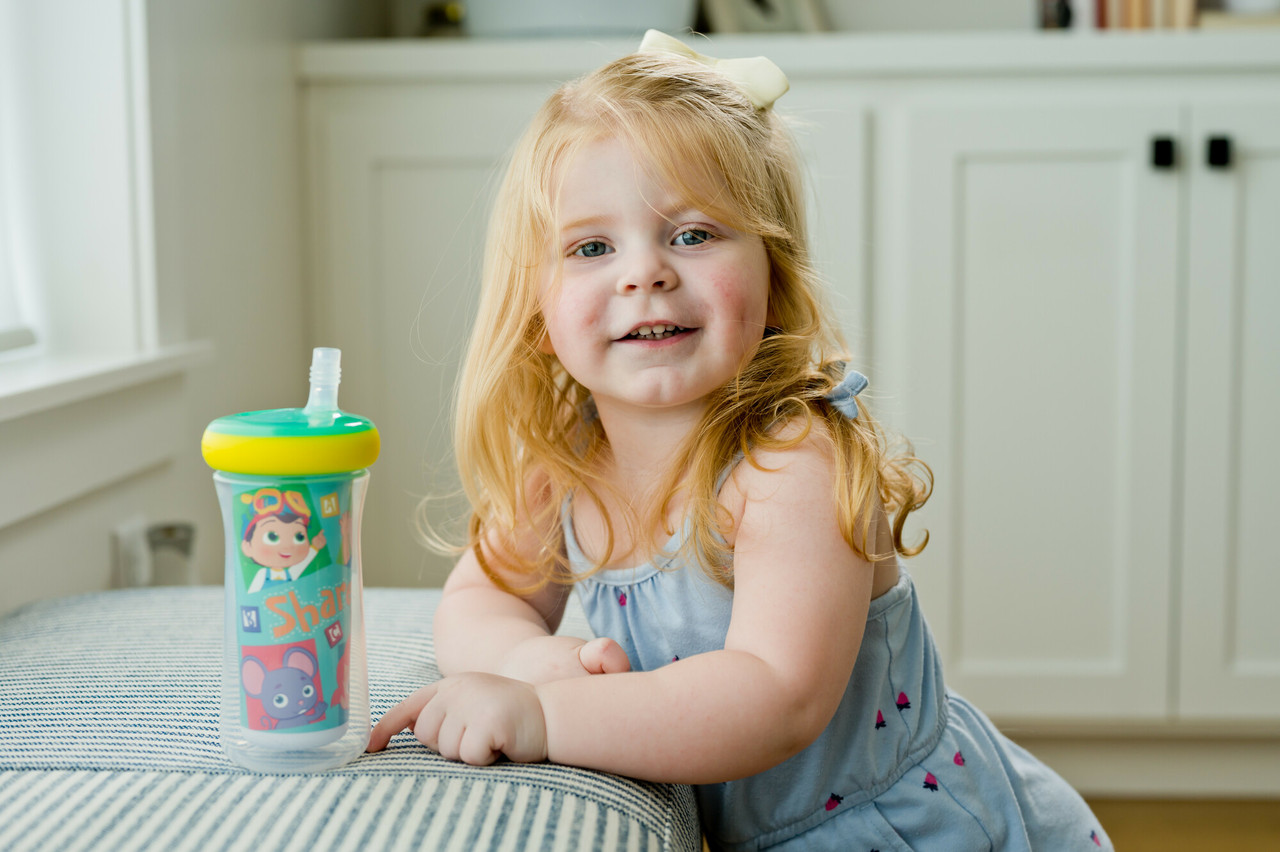
Many pediatric dentists and feeding specialists suggest aiming for a straw cup or open cup as the main way to drink by around 18 months, and phasing out spouted sippy cups by around age 2 for most kids.
- By 12 months: Many babies can handle a straw cup with help and practice. Some can start learning open cup skills, too.
- 12 to 18 months: A great window to make straw cups or small open cups the default at meals.
- 18 to 24 months: Most toddlers can drink well from a straw cup and are ready for more open cup practice.
- After age 2: Occasional use (like travel) is fine, but regular all-day sipping from a spouted sippy is when concerns tend to increase.
If your child has developmental delays, oral motor challenges, a history of prematurity, or is in feeding therapy, ask your pediatrician, dentist, or speech-language pathologist for individualized timing.
Why it matters
Sippy cups were created to reduce spills while kids learn. The issue is that some designs, especially spouted sippy cups, can keep a toddler in a sucking pattern longer than they need. This does not mean a sippy cup will “ruin” your child. It just means that once a toddler is capable of a straw cup or open cup, those options tend to support more mature skills.
1) Drinking skills and oral development
Some spouted sippy cups encourage a suck similar to a bottle. In some kids, that can make it harder to practice skills like:
- Lip closure and tongue placement needed for an open cup
- Controlled sipping rather than continuous sucking
- Coordinated cheek and tongue movements used for eating and, over time, speech
Think of it as opportunity cost. If your child spends most drinking time on a spout, they get fewer reps with the skills they need for the long-term cups.
2) Teeth and cavities
Prolonged sucking habits and having a firm spout in the mouth for long stretches may contribute to bite changes in some children. For most families, though, the bigger and better-supported concern is dental health: sippy cups make it easy to sip constantly.
The biggest risk is not the cup itself, it is what is in it and how often it is used. Common cavity traps:
- Carrying a sippy cup around all day with milk, juice, sweet tea, sports drinks, or flavored water
- Using a sippy cup at bedtime (anything other than water after brushing is a red flag)
- Refilling without rinsing, especially with milk
Practical rule in my house: water between meals, milk at meals. Juice is occasional, and if we do it, it is in a regular cup with a snack, not a “wander around the house and sip” situation. And yes, even with water, I have found that constant sipping can become a habit some kids lean on for comfort, not thirst.
Straw cup vs open cup
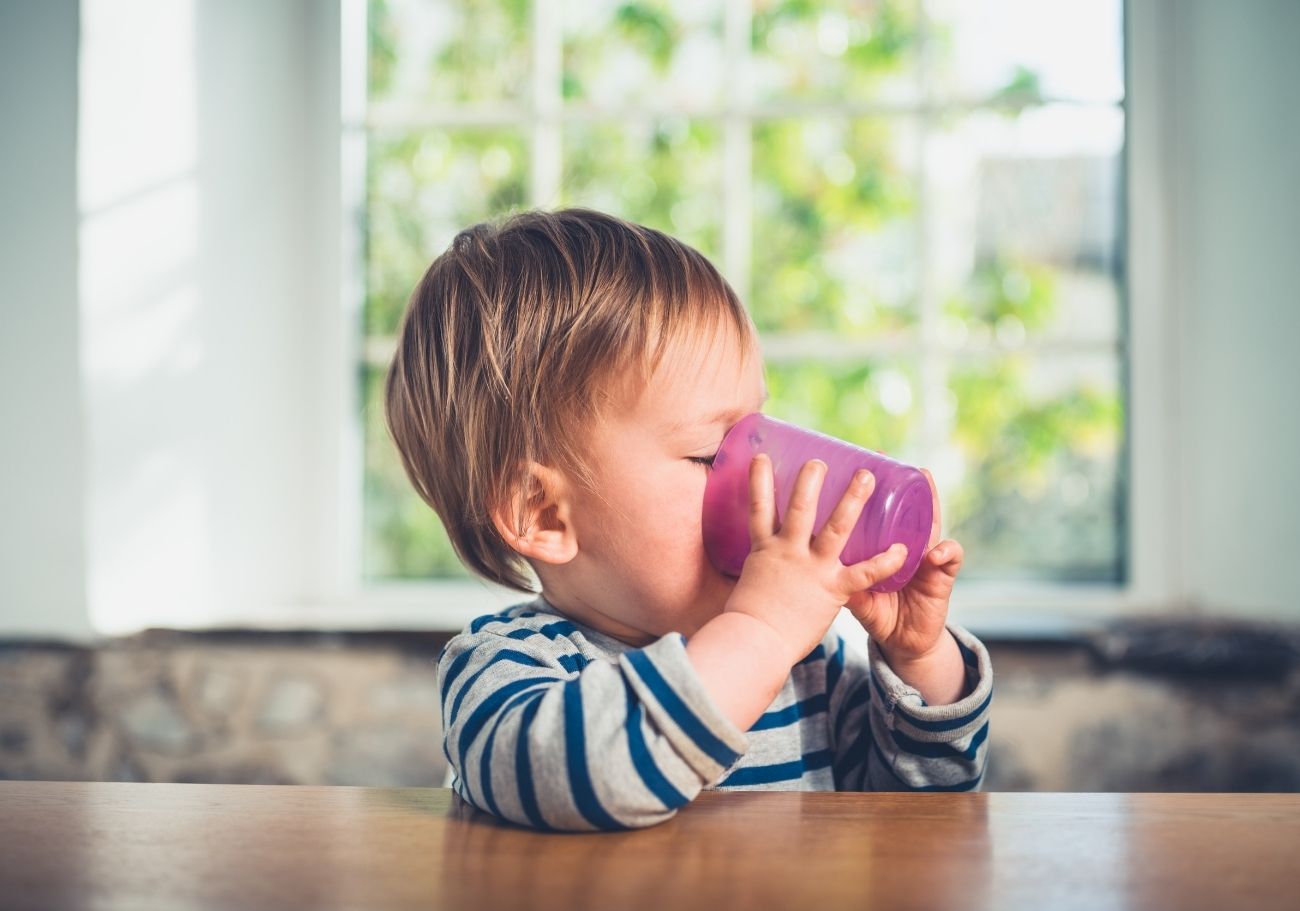
You do not have to choose only one. Most toddlers do best with a mix: straw cup for everyday use, open cup for practice.
Straw cups
- Best for: toddlers who want independence, families who want less mess, car rides and daycare
- Why parents like them: less spilling than open cups, easier transition from sippy
- What to look for: a soft or silicone straw, easy-to-clean parts, and a size your child can lift
Open cups
- Best for: meals at the table, skill building, and kids who are ready for a challenge
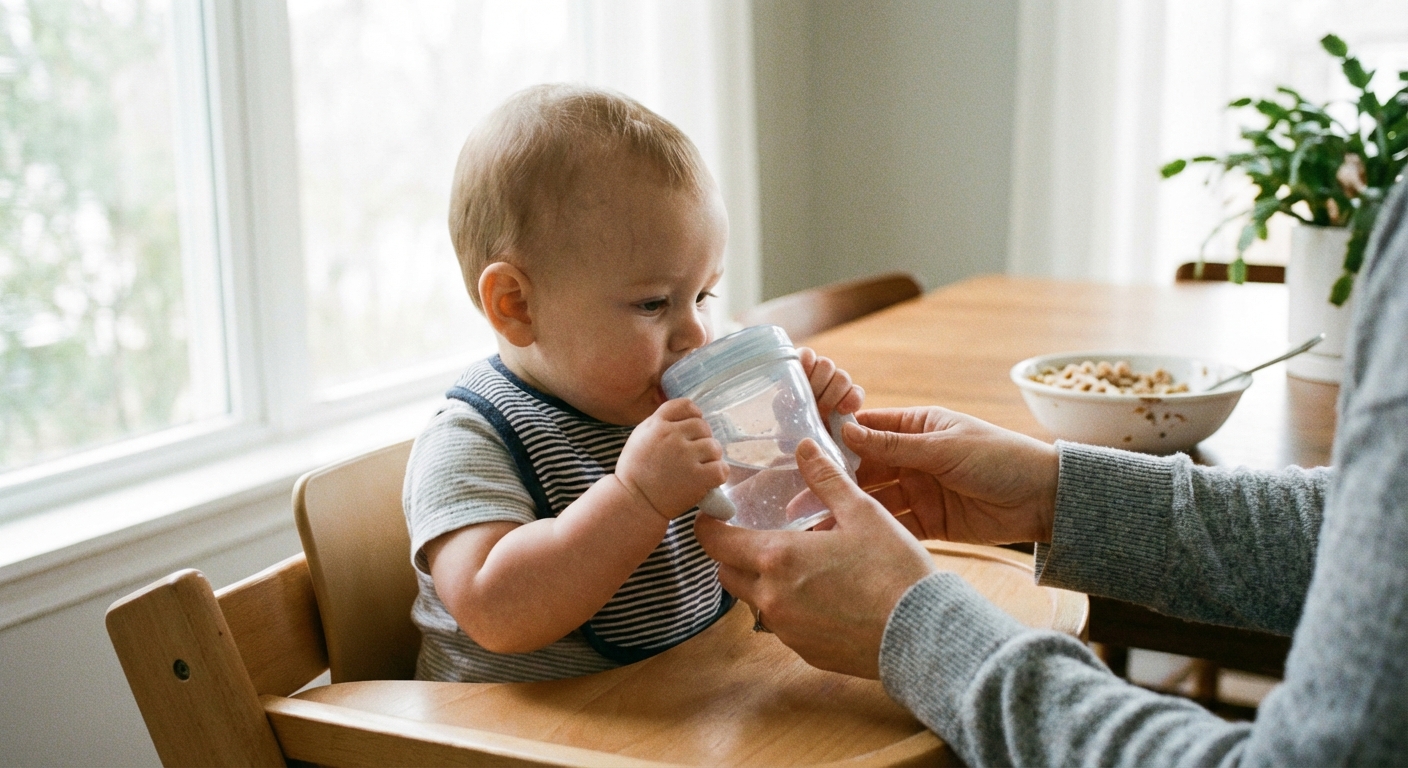
- Start small: a tiny training cup with just a small amount of water
What about 360 cups?
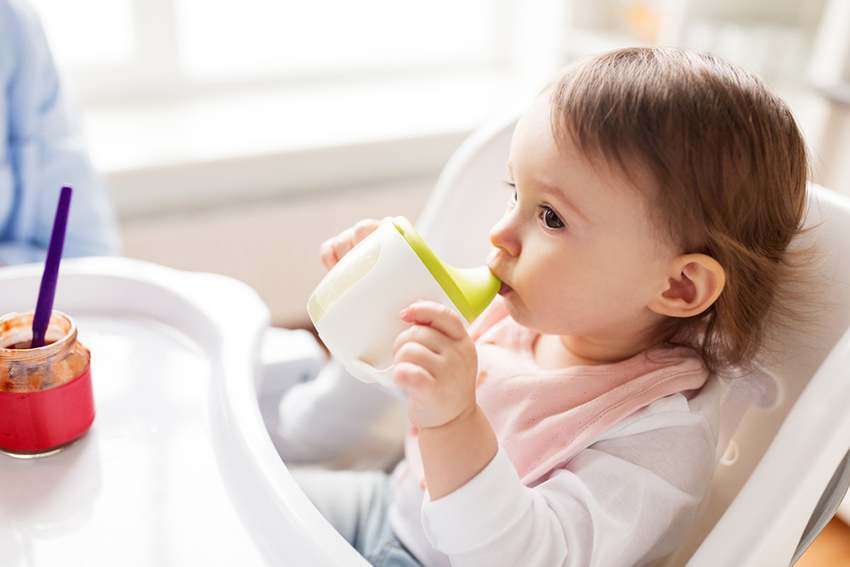
360 cups can be a helpful stepping stone because they reduce spills and encourage sipping. They are not the same as a traditional spout, but they still use a valve that changes how drinking feels. Many families use them temporarily on the way to open cups and straw cups, which is a reasonable plan.
Signs your child is ready
- Your child can drink from a straw cup without coughing or leaking constantly.
- They can take small sips from an open cup when you hold it or when it is filled just a little.
- They are walking around with a sippy cup mainly out of habit, not need.
- They chew well and manage different textures of food.
- The “everything goes in my mouth” phase is easing up, which often starts improving sometime after 12 months.
If your toddler gags, coughs, or seems to struggle with thin liquids, bring it up with your pediatrician. Occasional coughing happens, but consistent difficulty is worth checking.
A simple transition plan
If your child has already given up the bottle, you are halfway there. Here is a low-drama plan I recommend to parents and use at home.
Step 1: Pick a default cup
Choose one straw cup style for water and one open cup for meals. Consistency helps. If you keep switching cup types, toddlers get confused and cling to the familiar one.
Step 2: Start with meals
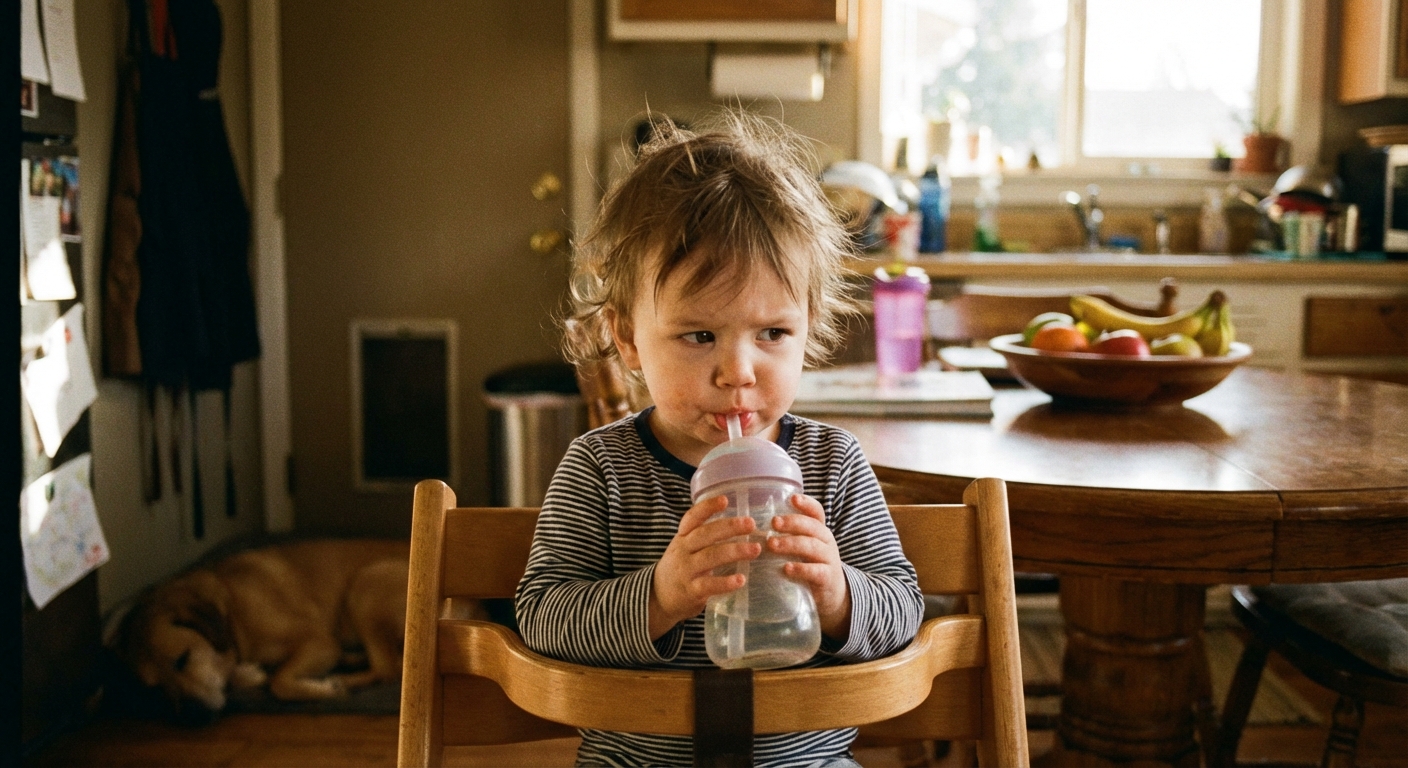
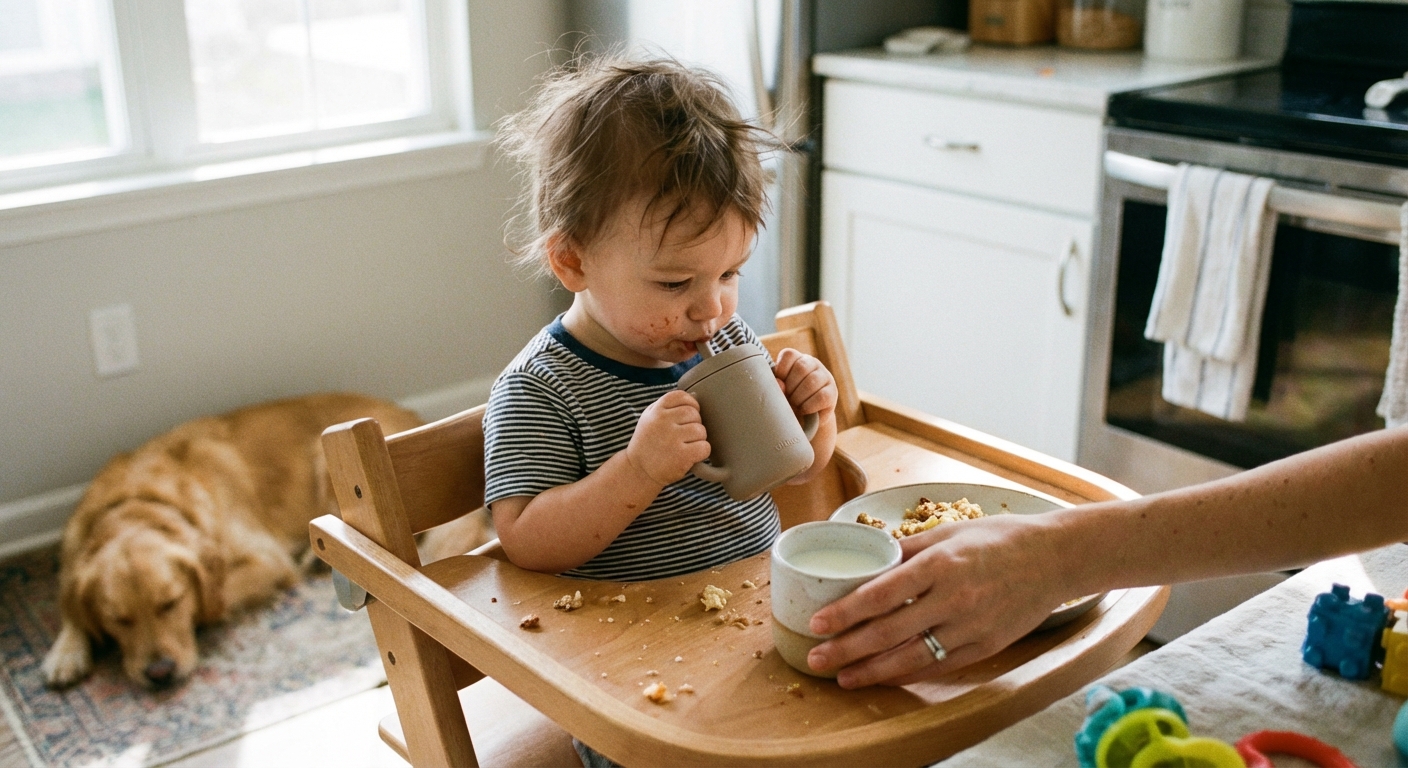
At breakfast, lunch, and dinner, serve drinks in the straw cup (or open cup if you are feeling brave). Keep the sippy cup out of sight during meals.
If your child protests, stay calm and matter-of-fact: “Sippy cups are all done. This is your cup.” You can validate feelings without changing the plan.
Step 3: Keep water boring and available
Offer water between meals in the straw cup. When kids are truly thirsty, they practice the new skill.
Step 4: Keep one sippy time, then drop it
If you are not ready to go cold turkey, pick one time when spills would be a nightmare, like:
- long car rides
- stroller walks
- bedtime routine while teeth are being brushed (water only)
After 1 to 2 weeks, replace that last remaining sippy time with a straw cup.
Step 5: Add a tiny open-cup practice
Make it short, predictable, and low-stakes:
- Pour just 1 to 2 ounces of water.
- Practice at the table once a day.
- Expect spills. Put a towel down and call it “learning water.”
Step 6: Expect a messy stretch
Most families see a spike in spills for a week or two, then it improves quickly. If you quit the moment it gets messy, your toddler learns that protesting works and you lose the momentum.
Common mistakes
- Using sippy cups like a security object. If your child carries it everywhere, it becomes comfort, not just a cup.
- Filling it with milk or juice and letting them graze. This encourages constant sipping and can increase cavity risk.
- Only practicing open cups when you are in a hurry. That is when you will quit. Practice when you have time.
- Offering the sippy at the first sign of frustration. It is okay for kids to be annoyed while they learn.
If your toddler refuses
Low-pressure tricks
- Model it. Take a sip from your own straw cup and hand it to them.
- Teach the straw with a “pipette” method. Dip the straw, hold your finger on top to trap liquid, then let them sip it from the bottom end.
- Start with smoothies or yogurt drinks in a straw. Thicker liquids move slower and feel easier for some kids. Then switch back to water.
- Offer choice within limits. “Blue straw cup or green straw cup?” not “Sippy or straw?”
- Keep the cup size small. Heavy, overfilled cups are harder to manage.
If your child is older and attached
For kids over 2.5 who have had a sippy for a long time, a gradual approach is often kinder:
- Make sippy cups water-only.
- Keep them in the kitchen, not portable.
- Move to straw cups everywhere else.
- After 2 weeks, remove the sippy cups entirely.
Cleaning and safety tips
One quick practical note from the real world: straw cups can get gross fast if you do not stay on top of them.
- Disassemble daily (straw, valve, lid) and let parts dry fully to reduce mold risk.
- Do not let milk sit in any cup. Rinse promptly, then wash.
- Inspect silicone straws for wear or tears and replace if they start looking rough.
What if we are still on bottles?
If you are still weaning from bottles, you can absolutely skip the “long sippy phase.” Many families move from bottles to straw cups, with some open-cup practice at meals. If your child seems to need a bridge, use it briefly and treat the sippy like training wheels, not the new normal.
When to call the pediatrician or dentist
Most cup transitions are bumpy but normal. Get professional guidance if you notice:
- Frequent coughing or choking with drinking
- Ongoing drooling or difficulty managing liquids beyond what seems typical
- Speech delays paired with feeding challenges
- Teeth discoloration, white spots near the gumline, or visible cavities
- Using a sippy cup with milk or sweet drinks at bedtime
And if you have not yet scheduled it, most children should have their first dental visit by age 1 or within 6 months of the first tooth erupting. That early visit is great for prevention and practical tips.
FAQ
Are sippy cups bad?
Sippy cups are not “bad.” They are a tool. They become a problem mainly when they replace straw or open cups for years, encourage constant sipping, or are used with sugary drinks or at bedtime.
Is a straw cup better than a sippy cup?
For many toddlers, yes. Straw cups often encourage a more mature sipping pattern than spouted sippy cups and are a great everyday option with less mess than open cups.
Can my child use a sippy cup for water at night?
If your child truly needs access to water overnight, water is the safest choice. That said, many toddlers do not need a cup in bed once the habit is gone. If they are waking for a drink out of routine, slowly reducing the bedtime sips can help.
What is the best cup for daycare?
Many daycares require or prefer a leak-resistant straw cup labeled with your child’s name. Choose one that disassembles easily for cleaning and has minimal small parts.
Bottom line
Aim to make straw cups and open cups the norm between 12 and 24 months, with spouted sippy cups fading out by around age 2 for most kids. If your toddler is attached, you do not need to rip the bandage off overnight. Pick a default cup, be consistent at meals, keep water available, and practice open cups in tiny, low-pressure doses. Most kids catch on faster than you expect, especially when you are calmer than they are.
Sarah Mitchell
Sarah Mitchell is a Registered Pediatric Nurse and a mother of three who has spent over a decade helping families navigate the beautiful, chaotic early years of childhood. She combines evidence-based medical knowledge with real-world parenting experience to offer practical, compassionate advice. At Awesome Parent, Sarah's mission is to help exhausted parents find solutions, trust their instincts, and finally get some sleep.