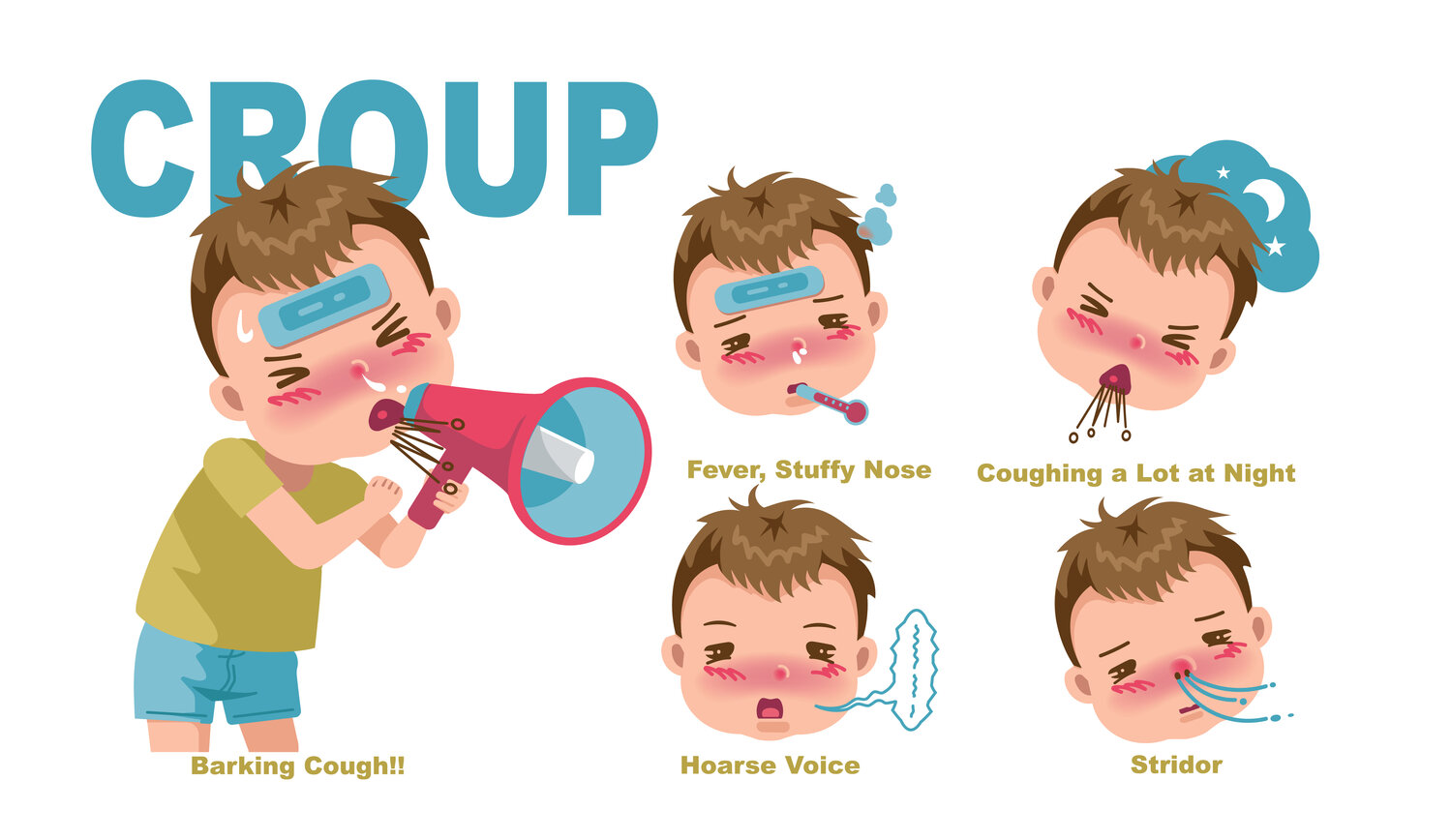
A calm, practical guide to croup in young infants: what the noises mean, why stridor at rest matters more, bronchiolitis overlap, and when to seek urgent or ...
Bacterial Tracheitis in Kids: When a Croup-Like Illness Gets Worse

Sarah Mitchell
Sarah Mitchell is a Registered Pediatric Nurse and a mother of three who has spent over a decade helping families navigate the beautiful, chaotic early years of childhood. She combines evidence-based medical knowledge with real-world parenting experience to offer practical, compassionate advice. At Awesome Parent, Sarah's mission is to help exhausted parents find solutions, trust their instincts, and finally get some sleep.
There is a specific kind of midnight parenting panic I will never forget from my triage-nurse years: a parent calling about “croup” who sounded calm at first, then suddenly said, “Wait… he is getting worse while I’m on the phone.”
Most of the time, croup is scary-sounding but manageable at home with close watching and the right guidance from your pediatrician. Bacterial tracheitis is different. It can start like ordinary viral croup, then take a sharp turn into high fever and dangerous airway blockage. If you remember one thing from this page, let it be this: croup that rapidly worsens, especially with a high fever and a very sick-looking child, needs emergency evaluation.
What it is
Bacterial tracheitis is a bacterial infection of the trachea, the windpipe. The lining of the trachea gets inflamed and can produce thick, sticky secretions that narrow the airway. Kids have smaller airways than adults, so a little swelling or mucus can make breathing much harder.
It is not the same thing as routine viral croup. Sometimes it appears after a viral upper respiratory infection, including a croup-like illness, and then bacteria take advantage of that irritated airway.
The bacteria most commonly reported include Staphylococcus aureus (including MRSA in some communities), and can also include Streptococcus species (such as group A strep), Streptococcus pneumoniae, Haemophilus influenzae, Moraxella catarrhalis, and others. The exact germ matters less to you at home than recognizing the pattern and getting urgent care.
The classic story
Many kids with bacterial tracheitis follow a familiar timeline:
- Day 1 to 3: runny nose, hoarse voice, barky cough, worse at night. Fever may be absent or low-grade, and it can look like typical croup.
- Then a turn: fever spikes higher, the child looks more ill, and breathing becomes more difficult or noisy.
- Worsening obstruction: noisy breathing can happen at rest, the child may tire out, and symptoms do not improve the way you would expect with typical croup care.
This shift is what raises red flags in triage. Viral croup often peaks and then gradually improves. Bacterial tracheitis tends to escalate.

Croup vs bacterial tracheitis
Croup is usually caused by a virus and leads to swelling around the voice box area, creating that classic barky cough and hoarse voice. Many cases are mild and can be monitored at home after you speak with your child’s clinician, especially if your child is otherwise acting fairly normal and breathing comfortably between coughs.
Typical croup often looks like
- Barky cough and hoarseness that are worse at night
- Often no fever to low-grade fever, although some kids run a moderate fever with viral croup too
- Child may be upset by the cough but still has some periods of comfort
- Breathing noise may happen when crying or coughing, but settles at rest
- Symptoms often improve after clinic or ER treatment like a steroid, and sometimes a breathing treatment if needed
Bacterial tracheitis is more likely when
- Higher fever and a child who looks much sicker than you would expect with viral croup
- Stridor at rest that is persistent or worsening. Stridor is a harsh, squeaky sound, usually when breathing in.
- Increasing work of breathing (pulling in at the ribs or base of the neck, fast breathing, struggling to speak or cry normally)
- Thick secretions and a cough that may sound harsh, with less relief from typical measures
- Not responding as expected to standard croup treatment
If your gut is telling you, “This is not just croup,” I want you to listen to that instinct.
When it is an emergency
Because bacterial tracheitis can cause significant airway blockage, it is not a “wait and see overnight” situation when red flags are present.
Call 911 now if your child
- Is struggling to breathe, gasping, or cannot catch their breath
- Has skin, lips, or tongue turning blue, gray, or very pale
- Has severe chest retractions (the skin sucking in between ribs or at the neck)
- Is very sleepy, hard to wake, confused, or unusually limp
- Cannot speak or cry normally due to breathing trouble
Go to the ER urgently if
- “Croup” symptoms are worsening instead of improving, especially over hours
- Your child has high fever with noisy breathing
- Stridor is present at rest
- Your child looks very ill, meaning weak and not interacting normally
- You are seeing signs of dehydration because breathing is so hard they cannot drink
Also treat these as emergencies, but they suggest a different cause than croup: drooling with trouble swallowing or a child sitting forward to breathe, a sudden choking episode, or hives and facial swelling with breathing trouble.
If you are on the fence, I would rather you get checked and be told “It is viral croup” than stay home with a child who is quietly tiring out.
What the ER might do
Parents often ask me what to expect, because walking into an emergency department with a child who is struggling to breathe is terrifying.
Care teams focus on airway and oxygen first. Depending on severity, evaluation and treatment may include:
- Monitoring oxygen levels and breathing effort
- Oxygen if needed
- IV antibiotics to treat the bacterial infection
- Fluids if your child is dehydrated or working too hard to drink
- A trial of typical croup treatments early on (like steroids or nebulized epinephrine) if the diagnosis is not yet clear. Lack of improvement can be an important clue.
- Imaging (like a neck or chest X-ray) and lab work in some cases
- Suctioning or airway support if thick secretions are blocking airflow
- Bronchoscopy in more severe cases, where specialists look into the airway and clear thick material
- Hospital admission for close observation, and sometimes ICU-level monitoring in more serious cases
Some children need help keeping the airway open while the infection and swelling calm down. That is why emergency care matters. It is not about scaring you. It is about having the right equipment and team immediately available if things change.

What to do while getting help
If you are heading to urgent care or the ER, these steps can help in the meantime:
- Keep your child upright. Sitting up often makes breathing easier.
- Keep them as calm as possible. Crying can worsen noisy breathing. Your calm voice and steady presence genuinely matter here.
- Do not force food or drinks if your child is working hard to breathe. Small sips are fine if they can safely manage them.
- Avoid poking at the throat. No trying to “look” deep in the throat if breathing is compromised.
- If your child has an inhaler for asthma, use it only if your clinician has told you to, but understand that asthma medicines typically do not fix upper-airway obstruction.
And a practical note: bring whatever comforts your child. A lovey, a tablet, your phone charger. Anything that helps them stay calmer can also help their breathing.
FAQ
Is it contagious?
The viruses that commonly trigger croup are contagious, and the usual respiratory germs can spread through coughs, sneezes, and hands. Bacterial tracheitis usually develops as a complication after a viral illness rather than being something that spreads as one clear-cut “diagnosis” from child to child. Practically speaking, use good hygiene: handwashing, avoid sharing cups, and keep sick kids home.
Can it happen in toddlers?
Yes. It can occur in young children, including toddlers and preschoolers, which is part of why it can become dangerous quickly. Smaller airways leave less room for swelling and thick secretions.
Will my child always have a barky cough?
Not always. Many kids start with that croupy, barky cough, then the picture can shift to a harsher cough with worsening breathing and a higher fever. The key clue is the overall trajectory: getting sicker rather than slowly improving.
Does steam or cold air fix it?
Those home measures may temporarily soothe mild viral croup symptoms for some children, but they are not a treatment for bacterial tracheitis. If your child is getting worse, do not rely on home remedies to carry you through the night.
What is the biggest difference to remember?
Typical croup often stays mild and tends to improve with time and standard treatment. Bacterial tracheitis more often looks like croup that is escalating, with a higher fever, a sicker-looking child, and worsening airway obstruction.
A final word
If your child has a barky cough and seems otherwise okay, I am not here to send you into a spiral. Most kids with croup do fine.
But if you see that turn, the high fever, the worsening breathing, the child who looks truly unwell, that is your cue to stop debating and get help. I have talked many parents through this in triage, and I have been the mom on the couch counting breaths in the dark. You are not overreacting by treating breathing trouble seriously. That is just good parenting.
Sarah Mitchell
Sarah Mitchell is a Registered Pediatric Nurse and a mother of three who has spent over a decade helping families navigate the beautiful, chaotic early years of childhood. She combines evidence-based medical knowledge with real-world parenting experience to offer practical, compassionate advice. At Awesome Parent, Sarah's mission is to help exhausted parents find solutions, trust their instincts, and finally get some sleep.