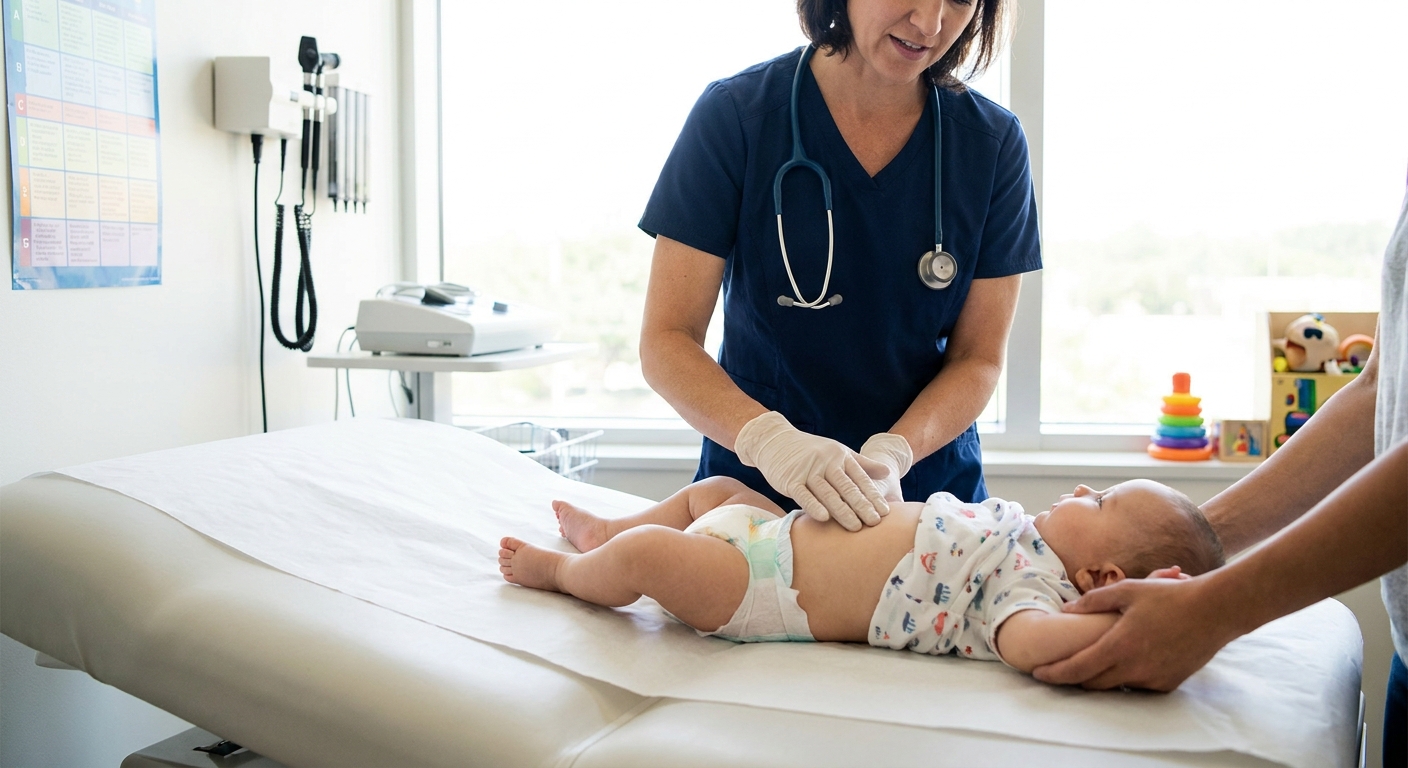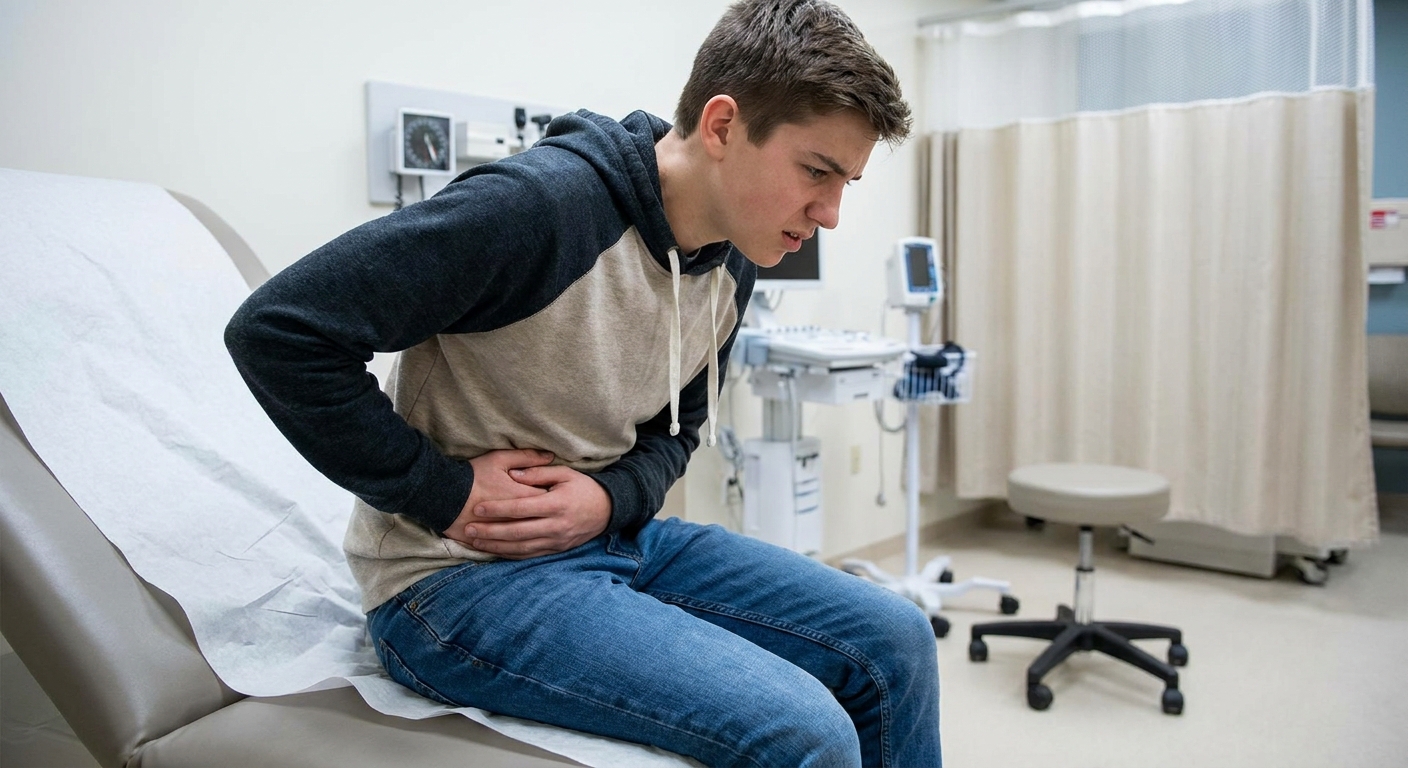
Severe, sudden testicle or scrotal pain with swelling or nausea can be torsion. Do not wait. Get to the ER now. Here are the symptoms and common look-alikes ...
Epididymitis in Boys: Gradual Scrotal Pain and Swelling

Sarah Mitchell
Sarah Mitchell is a Registered Pediatric Nurse and a mother of three who has spent over a decade helping families navigate the beautiful, chaotic early years of childhood. She combines evidence-based medical knowledge with real-world parenting experience to offer practical, compassionate advice. At Awesome Parent, Sarah's mission is to help exhausted parents find solutions, trust their instincts, and finally get some sleep.
In pediatric triage, few complaints make parents pale faster than, “His testicle hurts.” And honestly, that reaction makes sense. Anything involving the scrotum is scary, and the internet tends to shout worst-case scenarios.
Here is the calm, practical way I think about it as a pediatric nurse and mom: pain and swelling that builds gradually over hours to days is more suggestive of inflammation or infection in the epididymis (called epididymitis) or nearby structures. Pain that is sudden, severe, and escalating is a different category and can be a surgical emergency.
One important nuance: families do not always experience “gradual” and “sudden” the same way clinicians describe it. Torsion can be atypical (waxing and waning pain, or pain that started earlier and then suddenly worsened), and epididymitis can feel “sudden” if a child only mentions it once it is really hurting. If you are unsure, treat it as urgent and get an exam.
What is epididymitis?
The epididymis is a small, coiled tube that sits along the back side of each testicle. Its job is to store and carry sperm in older teens and adults, but kids can still get inflammation there.
Epididymitis simply means the epididymis is irritated, inflamed, or infected. In boys, it can happen for different reasons depending on age, including:
- Bacterial infection (more likely if there are urinary symptoms or a urinary tract infection)
- Viral illness or post-viral inflammation
- Urine irritation or reflux toward the epididymis (in some cases, this can be associated with straining, constipation, or anatomic factors)
- Trauma (even minor bumps can trigger swelling that worsens later)
Sometimes we never find a single clear cause, but we can still treat the symptoms and rule out the dangerous stuff.
A quick age note: in sexually active teens, clinicians also think about sexually transmitted infections as a possible cause. In younger boys, it is more often tied to urinary issues, inflammation after illness, constipation, or anatomy, but every child needs an individualized evaluation.
Typical symptoms
Parents often tell me the pain started as a vague ache and then became more noticeable later that day or the next. That pattern can fit epididymitis, but it still needs a timely exam because other conditions can look similar early on.
Common signs
- Scrotal pain that starts mild and worsens over time
- Swelling on one side more than the other (sometimes both)
- Tenderness to touch
- Redness or warmth of the scrotal skin
- Pain with walking or running, or a child holding the scrotum when moving
- Lower belly or groin discomfort
Symptoms that may happen, but not always
- Pain or burning with urination
- Needing to pee more often or urgency
- Fever
- Cloudy or foul-smelling urine
- Nausea (usually mild if present)
If your child has scrotal swelling and also seems constipated, mention that too. In real life, constipation and urinary issues can travel together in kids, and it can change how the clinician thinks about the cause.
Sudden severe pain is different
This is the part I want you to remember at 3 AM.
Testicular torsion is when the testicle twists and cuts off its own blood supply. That is a time-sensitive emergency. It can sometimes be hard to tell torsion from epididymitis based on symptoms alone, especially early on, and torsion does not always read like a textbook case.
Go to the ER now if any of these are true
- Sudden, severe testicular or scrotal pain
- Pain that is rapidly getting worse
- Nausea or vomiting along with scrotal pain
- A high-riding testicle or one that looks positioned differently than usual
- Rapidly enlarging or tense swelling, especially with severe pain
- Your child cannot walk or is inconsolable from the pain
- Scrotal pain after injury with significant swelling, bruising, or ongoing severe pain
You might see clinicians check something called the cremasteric reflex (a normal reflex that often disappears with torsion). I do not want parents trying to test this at home. Just know that the exam includes specific findings that help guide urgency.
Even if you suspect epididymitis, if the pain is abrupt and intense, do not wait it out and do not try to “see if it settles.” This is one of those times when being overly cautious is the right move.
What the exam is checking
When a clinician examines a boy with scrotal pain and swelling, the goal is not to embarrass anyone or rush to antibiotics. The goal is to quickly rule out emergencies and then figure out what is most likely causing the symptoms.
What we are trying to distinguish
- Testicular torsion (emergency)
- Epididymitis or epididymo-orchitis (inflammation that may or may not be bacterial)
- Torsion of the testicular appendage (common in kids, very painful, not usually dangerous like true torsion but can look similar at home)
- Inguinal hernia (a bulge from the groin into the scrotum, sometimes urgent)
- Hydrocele or varicocele (fluid or enlarged veins, often not urgent but needs evaluation)
- Trauma (including injuries kids may minimize)
- Skin infection or irritation (less common, but possible)
What the clinician will usually do
- Vitals: temperature, heart rate, overall stability
- Pain control early: we want kids more comfortable while we evaluate
- History: when it started, how fast it progressed, fever, urinary symptoms, recent illness, constipation, injuries, sports, and in teens, sexual history when appropriate and private
- Physical exam: checking tenderness, swelling pattern, scrotal skin, testicle position, and groin for hernia
- Urine testing: to look for signs of infection or inflammation
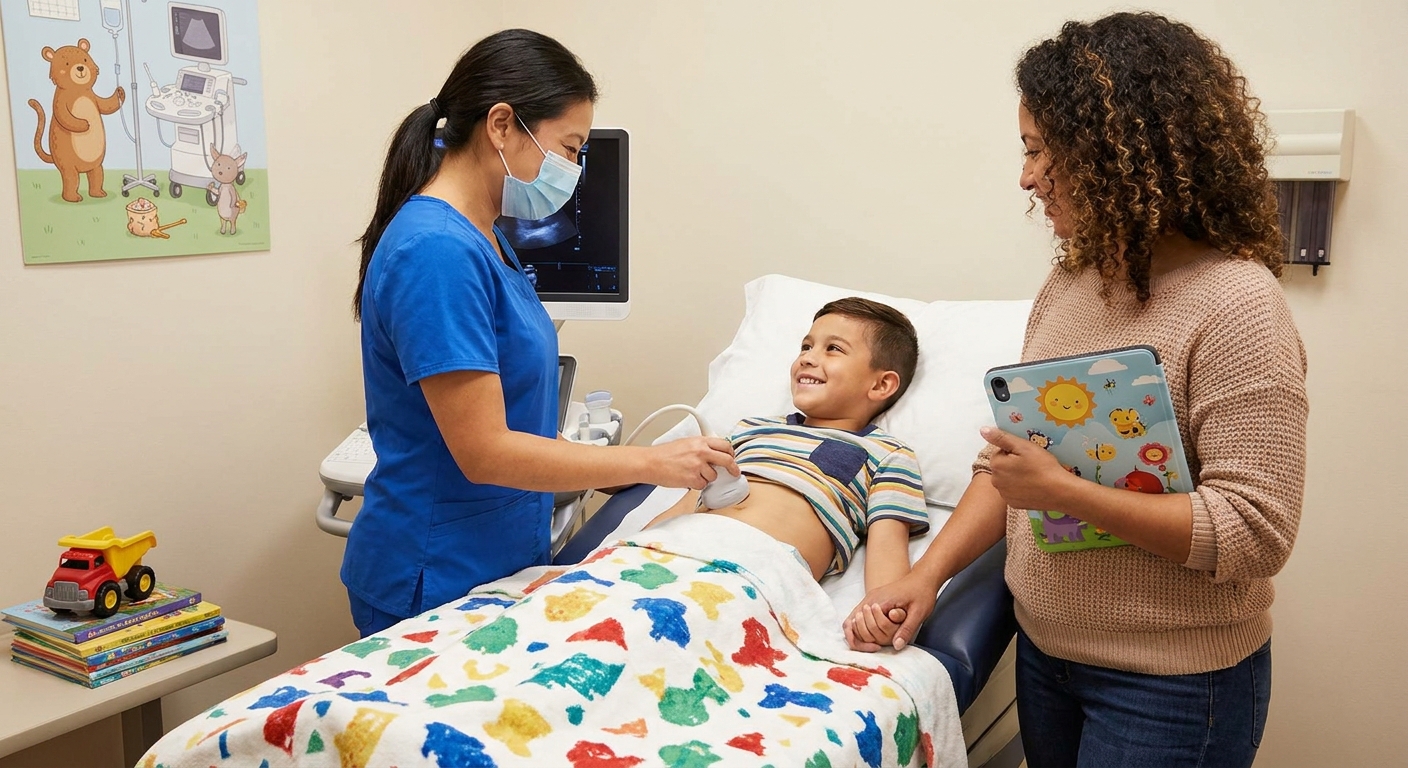
- Scrotal ultrasound with Doppler: commonly used when torsion needs to be ruled out or the diagnosis is unclear. This looks at blood flow and structures inside the scrotum.
Parents sometimes worry an ultrasound is “overkill.” In pediatrics, it is often the fastest way to confirm blood flow and avoid missing torsion.
If it is epididymitis
Treatment depends on what the evaluation shows. Epididymitis can be bacterial, but it can also be inflammatory after a virus or related to urine irritation. That is why urine testing and exam findings matter.
What care may include
- Pain control with age-appropriate medication recommended by your child’s clinician
- Rest and avoiding sports until pain improves
- Scrotal support (snug underwear can help older boys feel less pulling)
- Cool compresses for short periods if they feel soothing. Avoid extremes of temperature.
- Antibiotics if there is evidence of a bacterial infection or high suspicion based on age, symptoms, urine test, or culture
Many kids start feeling noticeably better over a few days once the right plan is in place, but the swelling can take longer to fully settle.
What you can do at home
If your child’s symptoms are mild and gradual, and they are otherwise stable, you can take a few steps while you contact your pediatrician or head to urgent care.
- Keep activity low: no running, jumping, or sports.
- Offer supportive underwear if your child is old enough and willing.
- Use a cool compress wrapped in cloth for comfort. Avoid extremes of hot or cold.
- Do not force a “check” repeatedly. One gentle look is enough. Frequent poking makes everyone more upset and does not improve diagnosis.
- Write down timing: when it started, any fever, any burning with urination, injuries, and whether pain was sudden, worsening, or coming and going. This helps your clinician a lot.
A quick note as a triage nurse: if you are on the fence between urgent care and the ER and the pain is significant, worsening, or hard to interpret, it is reasonable to choose the ER. The main priority is ruling out torsion and other urgent problems.
Where to go
Call your pediatrician the same day (or their on-call line) if
- Pain and swelling came on gradually and your child is comfortable at rest
- There are mild urinary symptoms but your child looks generally well
- You suspect constipation is playing a role and there is no severe pain
Go to urgent care or the ER if
- Pain is moderate to severe
- Swelling is increasing
- There is fever plus scrotal pain
- Your child looks ill, is unusually sleepy, or is hard to console
- You cannot get a same-day exam
Go to the ER now if
- Sudden severe pain, especially with nausea or vomiting
- Any concern for torsion, even if the pain comes and goes
- Significant trauma with swelling or bruising
Common parent questions
Can epididymitis happen in little boys, or is it only teens?
It can happen at different ages. In teens, infection causes are more likely to be considered, including sexually transmitted infections if they are sexually active. In younger boys, clinicians also think about urinary tract issues, recent viral illness, constipation, or anatomic factors. The exam and urine testing help guide the next steps.
Will my child need an ultrasound?
Often, yes, especially if torsion cannot be confidently ruled out based on history and exam. Ultrasound can help check blood flow and look for signs pointing toward inflammation.
Is scrotal pain ever “just growing pains”?
Not in the way we use that phrase for legs. Scrotal pain deserves a real evaluation because the stakes are different.
Could this be from a bump during sports?
Possibly. Minor injuries can cause pain that worsens later, and kids do not always connect the dots. Mention any sports, roughhousing, bike riding, or playground falls, even if it seemed small at the time.
How long does it take to get better?
Many boys improve over a few days once the cause is treated and they rest, but some residual tenderness or swelling can linger longer. If pain is not improving as expected, worsens, or returns after getting better, follow up.
When to go back
After your child is evaluated and you have a plan, seek re-evaluation urgently if any of the following happen:
- Pain is worsening instead of improving
- New fever, vomiting, or your child seems more ill
- Redness is spreading, or the scrotum is becoming more swollen and tense
- Your child cannot pee, or peeing becomes very painful
- Symptoms are not clearly improving within 24 to 48 hours of starting the recommended treatment plan
- Recurrent episodes of scrotal pain (especially pain that comes and goes)
The bottom line
Gradual scrotal pain and swelling can fit epididymitis, especially if there are urinary symptoms or recent illness, but it still needs a timely exam because some urgent conditions can look similar early on.
Sudden severe pain is different and should be treated as an emergency until proven otherwise. If your gut is telling you something is off, trust that. I have never regretted a parent bringing a child in to be checked.
Sarah Mitchell
Sarah Mitchell is a Registered Pediatric Nurse and a mother of three who has spent over a decade helping families navigate the beautiful, chaotic early years of childhood. She combines evidence-based medical knowledge with real-world parenting experience to offer practical, compassionate advice. At Awesome Parent, Sarah's mission is to help exhausted parents find solutions, trust their instincts, and finally get some sleep.