A calming, practical guide to HFMD: what the rash looks like, mouth sores, typical 7 to 10 day timeline, contagious period, home care tips, daycare return, a...
Fingernails Falling Off After Hand, Foot, and Mouth Disease

Sarah Mitchell
Sarah Mitchell is a Registered Pediatric Nurse and a mother of three who has spent over a decade helping families navigate the beautiful, chaotic early years of childhood. She combines evidence-based medical knowledge with real-world parenting experience to offer practical, compassionate advice. At Awesome Parent, Sarah's mission is to help exhausted parents find solutions, trust their instincts, and finally get some sleep.
A few weeks after hand, foot, and mouth disease (HFMD) has finally left your house, you think you are in the clear. Then you notice it. Your child’s fingernail looks like it is peeling, lifting, or about to pop off like a tiny trap door.
I have taken plenty of panicked calls about this as a pediatric triage nurse, and I have also had the exact same moment as a parent: “Wait. Are their nails… falling off?”
The good news is that nail shedding after HFMD is a known, usually harmless after-effect. It can look dramatic, but most kids do not need treatment, isolation, or anything more intense than a little nail TLC and time.
Why nails can shed weeks after HFMD
HFMD is caused by a group of viruses (often coxsackievirus). During the illness, the body is under stress, and the nail matrix (the growth center under the cuticle) can temporarily slow down or pause nail production.
When nail growth pauses and then restarts, the older nail plate can separate or develop a ridge. As the new nail grows in from the base, it can push the older portion forward, which may look like peeling, splitting, or a nail “falling off.”
This delayed timing is the part that throws parents. The nail changes often show up about 4 to 8 weeks after the fever, mouth sores, and rash are gone, though some kids can show changes a bit earlier or later.
If you want the medical term to put to your late-night searching, it is called onychomadesis, which simply means nail shedding.
Which nails peel or fall off?
It can vary a lot from child to child.
- Fingernails are often more noticeable than toenails, but toes can be involved too.
- One nail or several nails can shed. Some kids lose just a corner; others lose most of the nail plate.
- Nails that had more inflammation nearby (for example, blisters around the fingertips) may look worse, but nail shedding can also happen even if the hand rash was mild.
One thing I like to reassure families about: it is very common for the child to act completely unbothered while the parent is understandably horrified.
Also, not everything that looks like “HFMD nail” actually is. Nail biting, door-slams, frequent picking, and thumb-sucking irritation can all lift nails. So can infections like paronychia (skin infection around the nail) or, less commonly in young kids, fungus.
What Beau lines look like
A classic post-illness nail change is a Beau line. This is a horizontal groove or ridge that runs across the nail from side to side.
Here is how parents usually describe it:
- A dent or line across the nail that was not there before
- A “step” where the nail looks uneven
- A pale band or groove that slowly moves toward the tip over time
Beau lines are basically a timestamp showing that nail growth slowed down for a bit. As the nail grows, the line migrates outward and eventually gets trimmed off.
Beau lines by themselves do not mean infection. Infection signs are more about redness, warmth, swelling, drainage, and increasing pain.
Is it still HFMD?
Late nail peeling or nail loss does not mean your child is actively contagious again. This is a delayed growth effect, not a new outbreak.
One nuance that can be helpful to know: kids can shed HFMD viruses in stool for weeks after they feel better, but that is true whether or not their nails peel, and it typically does not change daycare or school policies.
If your child feels well and the original symptoms have resolved, nail shedding alone is not a reason to keep them home.
If there is a brand-new fever, fresh mouth sores, or a new widespread blister rash, that is a different situation and worth a call to your child’s clinician.
How long does regrowth take?
Nails grow slowly, and tiny kid nails still take time. You will often see cosmetic improvement before the nail is fully replaced.
- Fingernails: often look much improved within 6 to 12 weeks, with full replacement commonly taking 3 to 6 months.
- Toenails: can take longer, sometimes 6 to 12 months for full regrowth.
You might see the nail look rough, thin, or ridged as it grows in. That is usually normal. The new nail should gradually become smoother as it continues to grow.
What you can do at home
Most care is about protecting the new nail growth and preventing snagging and infection.
1) Do not pull the loose nail off
I know it is tempting. If part of the nail is detached, pulling can tear skin underneath and raise the risk of infection. Let it come off on its own, or have a clinician trim it if it is hanging by a thread and causing problems.
2) Trim and file sharp edges
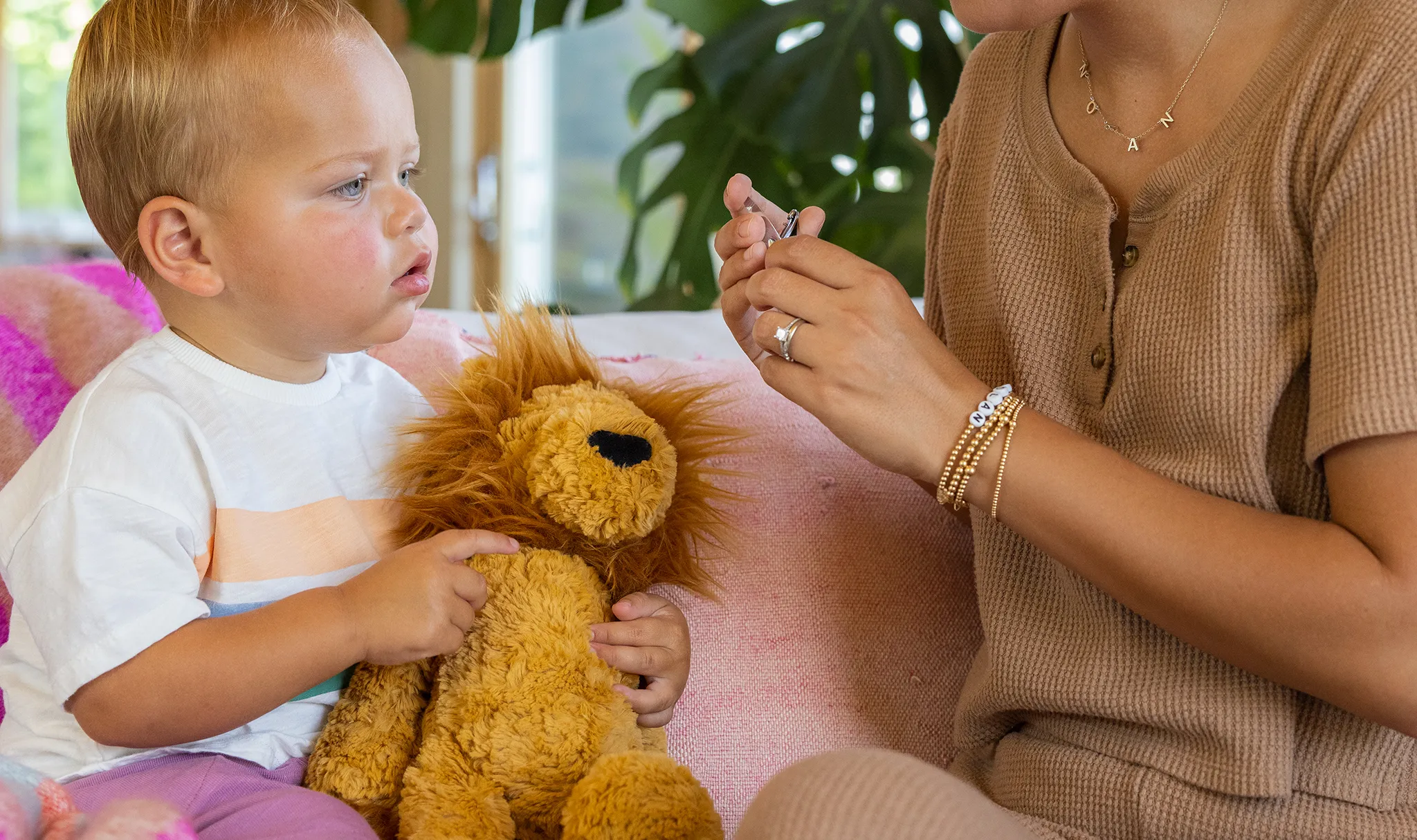
If the nail is lifting, gently trim only the part that is fully detached, then file the edge so it does not catch on pajamas, blankets, or hair. Use clean clippers, and wash hands before and after.
3) If the nail is mostly off
Keep the area clean and dry. A small bandage can protect the tender skin underneath during play. Change it if it gets wet or dirty, and keep an eye out for increasing redness or pain.
4) Protect it during play and sleep
- If your child keeps snagging the nail, you can use a small bandage for short periods during the day.
- At night, if scratching is a problem, consider snug cotton mittens for babies or reminding older toddlers to keep hands out of their mouth.
5) Moisturize
A simple fragrance-free moisturizer on hands and cuticles can help with dryness and peeling skin around the nails.
6) Skip “nail hardeners” and harsh chemicals
Most kids do not need anything beyond basic care. Avoid strong products that can irritate skin.
When nail changes need a clinician
Post-HFMD nail shedding is usually benign, but there are a few situations where I want you to pick up the phone.
Call your child’s clinician the same day if:
- The skin around the nail is getting more red, warm, swollen, or painful
- There is pus, drainage, or a bad smell
- Your child has a fever along with worsening finger or toe pain
- Redness is spreading up the finger or toe
- The nail area looks like a deep open sore or is bleeding and will not stop
- Your child is immunocompromised or has a chronic skin condition and you are seeing significant nail breakdown
Make an appointment soon (non-urgent) if:
- The nail changes are spreading and do not match the timing of a recent illness
- Multiple family members have persistent nail issues (could suggest fungus, eczema, psoriasis, or repeated trauma)
- Nails are thickening, crumbling, turning yellow-brown, or the problem is mainly toenails and keeps recurring
- You see a dark brown or black streak in the nail that is new or widening
Trust your gut here. If your child seems unusually uncomfortable, is limping because of toe pain, or you are struggling to keep the area clean and protected, a quick check is absolutely reasonable.
Normal vs not normal
Usually normal after HFMD
- Nail peeling or lifting that starts weeks after the illness
- A nail that partially or fully sheds without much pain
- Horizontal ridges (Beau lines)
- New nail growth that looks bumpy at first
More concerning
- Increasing pain, swelling, warmth, or pus
- Redness spreading up the finger or toe
- A child who cannot use the finger or toe normally
- Nail changes plus systemic symptoms like fever or lethargy
Will the nail grow back normally?
In most cases, yes. The nail matrix usually recovers fully, and the new nail grows in normally over time.
Occasionally, kids will have a nail that looks a little ridged for a while, especially if they are also picking at it or if the fingertip skin is still recovering. Keeping nails short and discouraging picking helps a lot.
Quick FAQ
Can HFMD cause toenails to fall off, too?
Yes. It is less common than fingernails, but it happens. Toenails also take longer to regrow.
Does nail shedding mean my child has a vitamin deficiency?
Not usually. The timing after HFMD strongly points to temporary nail growth disruption from illness. If your child has poor growth, persistent fatigue, hair loss, or multiple ongoing symptoms, that is a separate conversation to have with your clinician.
Should we use antibiotics?
Not for nail shedding itself. Antibiotics are only used if there are signs of a bacterial skin infection around the nail, which your clinician would diagnose.
Can my child go back to daycare or school if their nail is peeling?
If they are otherwise well and past the acute illness, nail peeling alone is not a reason to stay home. Cover a sharp edge with a bandage if it is snagging and remind your child not to pick at it.
The bottom line
Nails peeling or falling off weeks after HFMD is a surprisingly common late effect. It is usually temporary, it is typically painless, and it almost always resolves with time as the nail grows out.
If you are seeing increasing redness, swelling, pus, significant pain, or a child who seems sick again, that is when a clinician should take a look. Otherwise, keep the nail trimmed, protect it from snagging, moisturize, and take a deep breath. You are not alone, and your child’s nails are very likely to recover just fine.
Sarah Mitchell
Sarah Mitchell is a Registered Pediatric Nurse and a mother of three who has spent over a decade helping families navigate the beautiful, chaotic early years of childhood. She combines evidence-based medical knowledge with real-world parenting experience to offer practical, compassionate advice. At Awesome Parent, Sarah's mission is to help exhausted parents find solutions, trust their instincts, and finally get some sleep.