Croup can sound scary at night. Learn what the barky cough and stridor mean, what you can do at home, how long it lasts, and when it’s an emergency.
How Long Is Croup Contagious in Toddlers?

Sarah Mitchell
Sarah Mitchell is a Registered Pediatric Nurse and a mother of three who has spent over a decade helping families navigate the beautiful, chaotic early years of childhood. She combines evidence-based medical knowledge with real-world parenting experience to offer practical, compassionate advice. At Awesome Parent, Sarah's mission is to help exhausted parents find solutions, trust their instincts, and finally get some sleep.
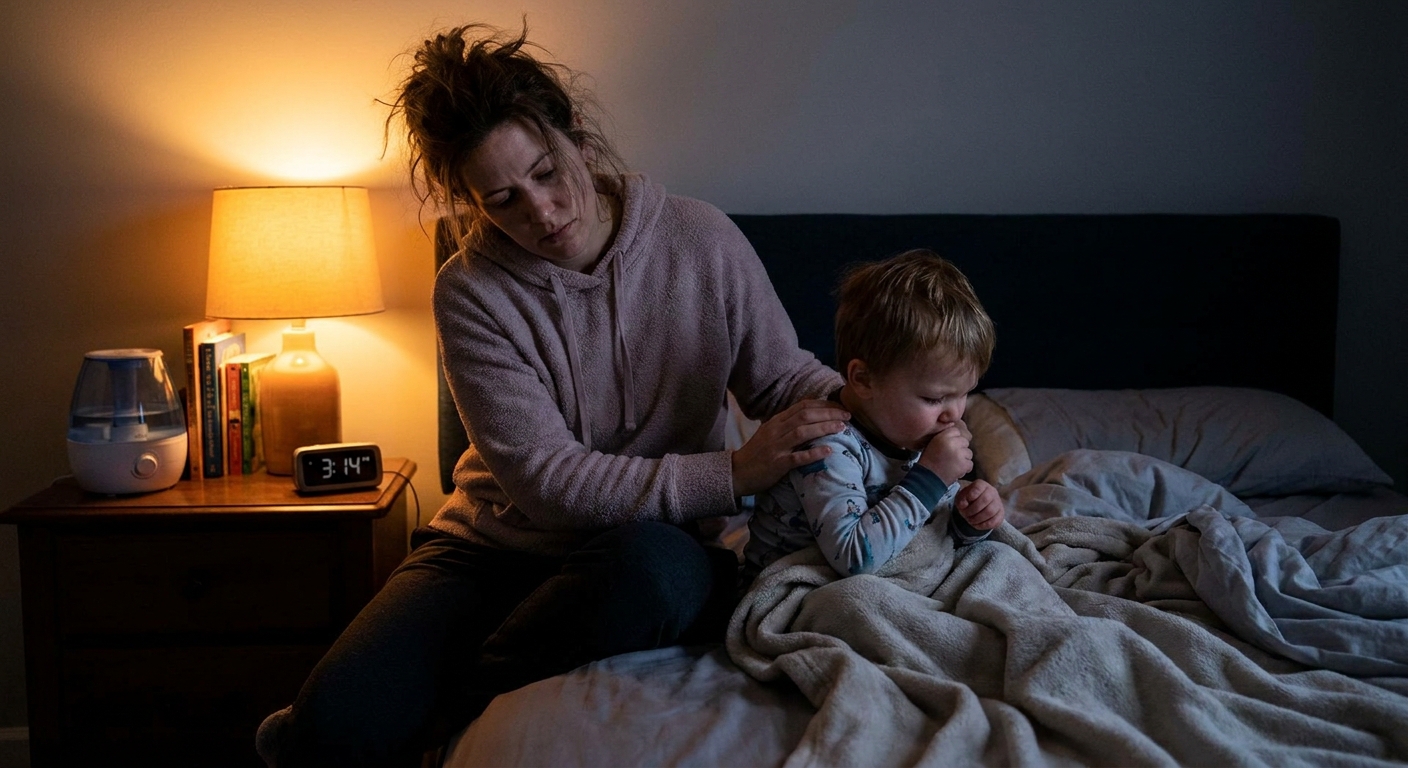
If you are reading this at an ungodly hour while your toddler sounds like a tiny seal barking in the next room, I am right there with you. Croup is common, usually caused by a virus, and it spreads the same way most toddler germs do: fast, enthusiastically, and with very little respect for personal space.
The tricky part is that croup symptoms (that barky cough and noisy breathing) do not perfectly match the contagious window. Your child can be highly contagious before the cough peaks, and they can keep coughing after they are no longer very contagious.
Quick answer: how long is croup contagious?
Most viral croup is often contagious for about 3 to 7 days, with the highest spread risk in the first few days (often days 1 to 3 of symptoms).
- Most contagious: early on, when cold symptoms start (runny nose, mild fever, scratchy throat). This is often one of the most contagious periods.
- Contagiousness can continue: while symptoms are active, especially with lots of runny nose, sneezing, and a wet cough.
- Often less contagious: once they are fever-free, breathing comfortably, and back to mostly normal energy, even if a barky cough lingers (but it is not a guarantee).
Important: “Croup” is a symptom pattern (swollen upper airway causing a barking cough). The exact contagious period depends on the virus behind it (parainfluenza is common, but RSV, flu, adenovirus, COVID, and others can do it too). Some viruses, and some kids, can stay contagious longer than a week.
Day-by-day contagious timeline (viral croup)
This is a realistic, parent-useful timeline for a typical toddler with viral croup. Think of it as a weather forecast, not a stopwatch.
Before symptoms: incubation period
If your child is exposed to a virus that can cause croup, it typically takes about 2 to 6 days for symptoms to show up. During that window, kids can look totally fine and then suddenly sound very not fine at bedtime.
Day 0 to 1: Cold symptoms start (very contagious)
- What you see: runny nose, mild cough, crankiness, maybe a low fever
- Contagious level: very high for many viruses
- Why it spreads: lots of close contact, lots of secretions, kids touch everything
If your toddler is headed to daycare during this stage, it is prime time for the whole room to “mysteriously” develop the same cold a few days later.
Day 2 to 3: Barky cough shows up (still contagious)
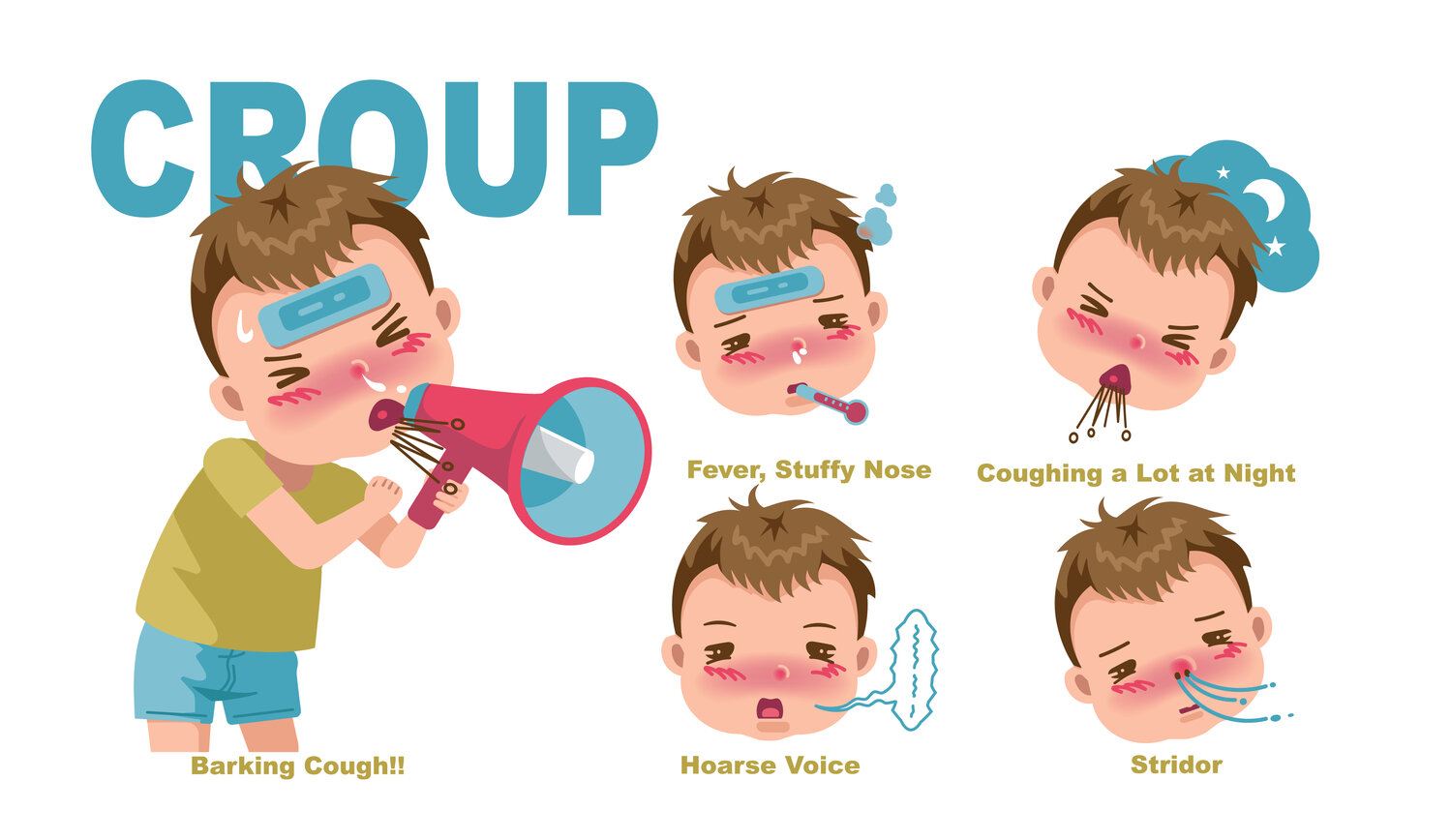
- What you see: barking cough, symptoms often worse at night, possible hoarse voice
- Contagious level: often still high
- Daycare note: if there is fever, they stay home
This is also when parents tend to panic (understandably). If your child has stridor (a harsh, high-pitched sound when breathing in), especially at rest, trouble breathing, blue or gray lips, or is struggling to speak or drink, do not use this page as your guide for what to do next. Jump to our red-flag checklist here: Croup symptoms (when to call the doctor or go to the ER).
Day 4 to 5: Improving (risk dropping)
- What you see: less bark, more “regular” cough, improving congestion
- Contagious level: often moderate to lower, especially as symptoms ease
Many toddlers are safe to return to daycare in this window if they meet typical “back to school” criteria (more on that below). Still, remember that contagiousness does not follow a perfect schedule.
Day 6 to 7: Mostly better (often low)
- What you see: lingering cough, maybe a little hoarseness
- Contagious level: usually lower, though some viruses and some kids can shed longer
A leftover cough alone is common. Coughing can linger for 1 to 2 weeks after a viral illness because the airway is still a bit irritated.
After a week: lingering cough is not always contagious
If your toddler seems well but is still coughing, they are often past the peak contagious stage. That said, if they worsen again after improving, develop a new fever, or have significant fatigue, it is worth checking in with your pediatrician.
Not all croup is contagious
Most croup is viral, which means it can spread. But there are less common “croup-like” situations where contagiousness is not really the point, such as:
- Spasmodic croup: sudden nighttime barky cough, often with minimal cold symptoms
- Irritant-triggered symptoms: smoke, very dry air, reflux, or allergies irritating an already sensitive airway
If there is no runny nose, no fever, and no obvious illness, ask your clinician whether this fits spasmodic croup or another cause, and what that means for daycare and siblings.
How croup spreads in daycare and to siblings
Viral croup spreads the same way most respiratory viruses spread:
- Droplets and short-range aerosols: coughing, sneezing, close talking in toddler-face proximity
- Hands and surfaces: mucus on hands, shared toys, table edges, doorknobs, remote controls (why is it always the remote?)
Why daycare outbreaks happen
Kids share air, share toys, share snacks, share emotional support stuffed animals, and share germs with breathtaking efficiency. A child can be contagious before the barky cough even begins, so by the time “croup” is obvious, the virus may have already made the rounds.
Why siblings catch it so easily
At home, you cannot truly isolate a toddler without turning your living room into a very loud negotiation. Siblings also tend to get the highest exposure dose, especially with shared bedrooms, shared baths, and all that sweet face-to-face play.
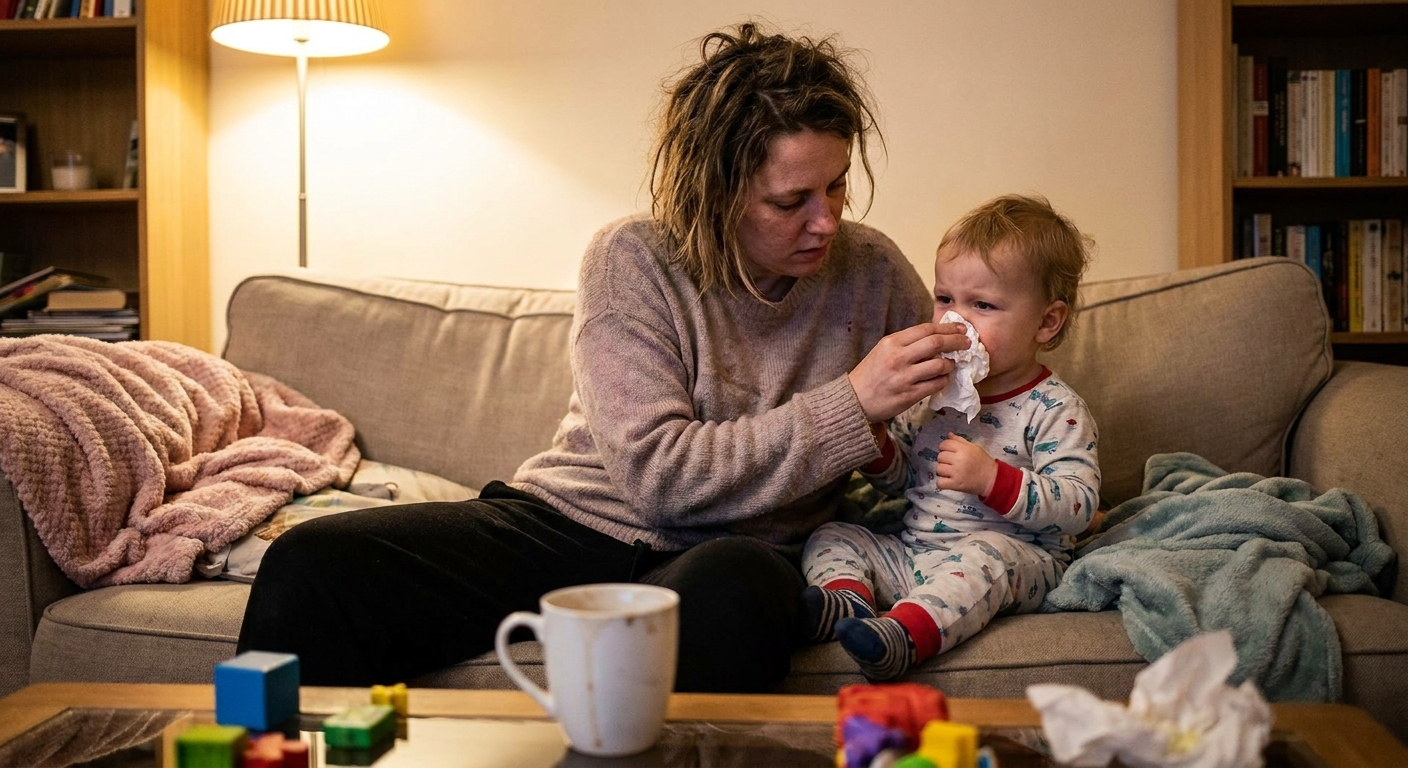
When can my toddler go back to daycare?
Most childcare centers use “function and fever” rules because they are practical and safer than trying to diagnose every cough. Policies vary, so your center may be stricter about noisy breathing or certain diagnoses.
In general, toddlers can return when:
- Fever-free for 24 hours without fever-reducing medicine (no acetaminophen or ibuprofen masking it)
- Breathing comfortably at rest (no persistent stridor at rest, no working hard to breathe)
- Energy is reasonably back (they can participate in normal activities, not needing 1:1 care)
- Hydration is okay (drinking enough and peeing normally for them)
Is a barky cough alone a reason to stay home?
Usually no, not by itself, if your child is otherwise well and fever-free. A lingering cough, even one that still sounds a bit barky, can hang around after the most contagious phase. Many schools accept a residual cough as long as the child can make it through the day comfortably.
When the cough blocks return
- Fever is present or returns after it was gone
- Stridor at rest (noisy breathing when calm and not crying)
- Labored breathing, chest pulling in, or your toddler cannot talk, drink, or sleep due to breathing
- Coughing is so constant they cannot participate or it disrupts the whole classroom
- Center policy excludes for stridor even without fever (some do)
If you are unsure, use the red flag list here: Croup symptoms (when to call the doctor or go to the ER).
Hygiene steps that help
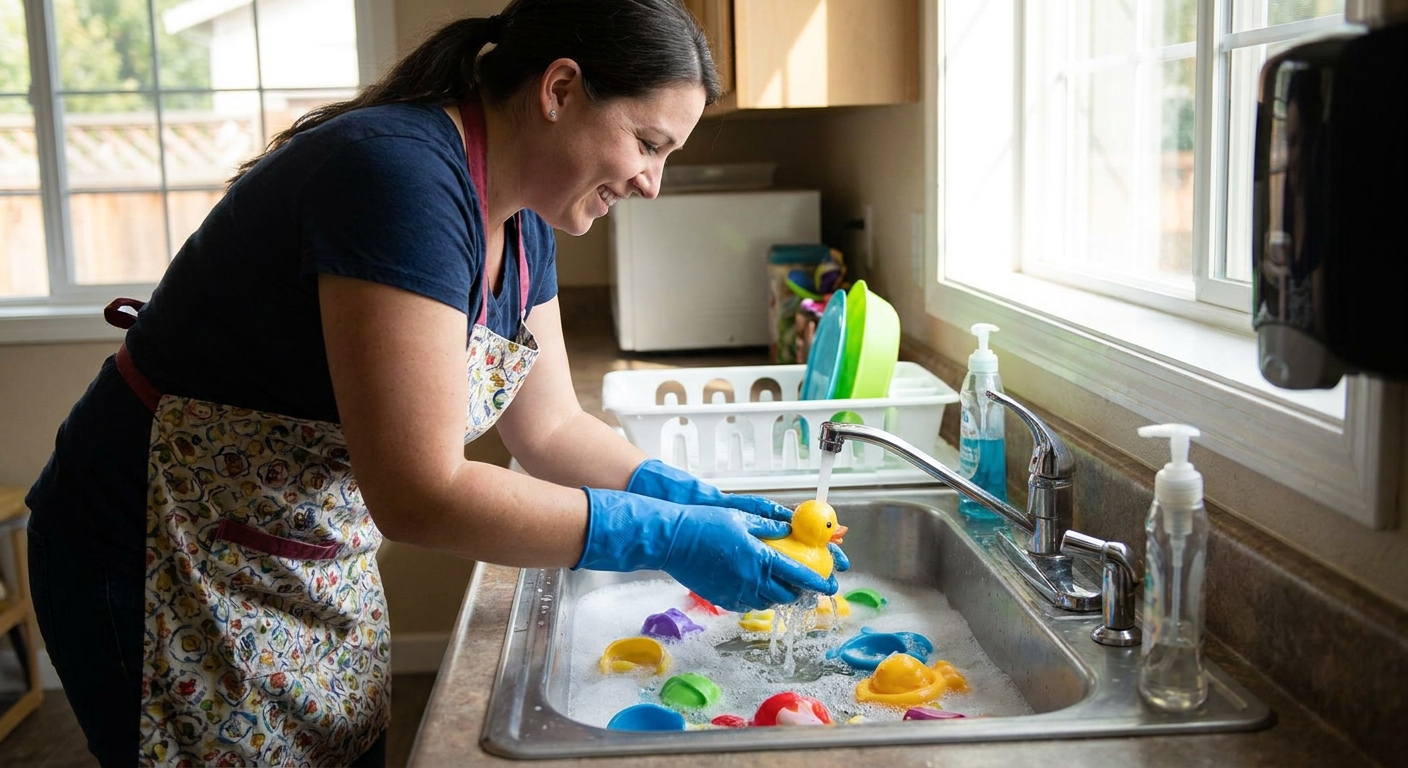
You do not need to sanitize your home like a surgical suite. You do need a few consistent habits, especially during the first few days.
At home
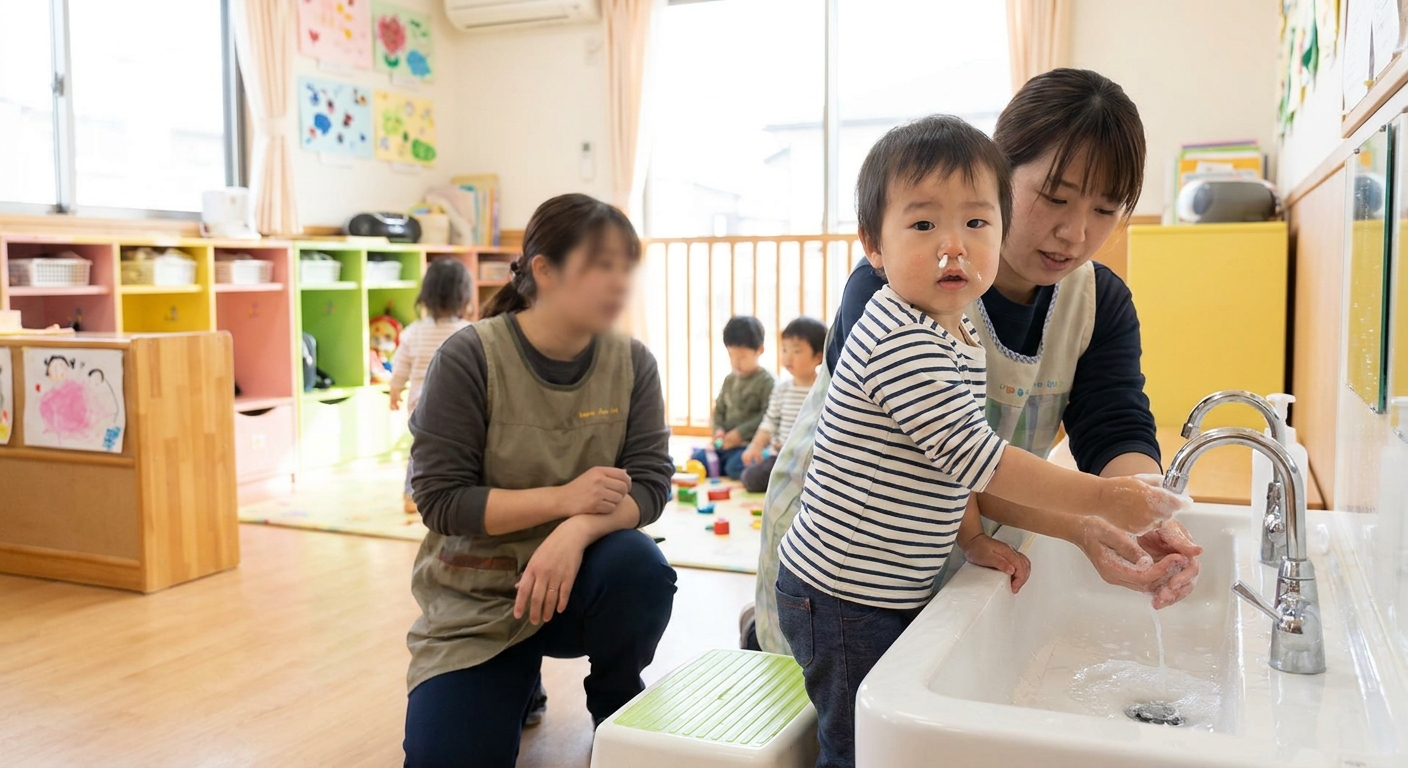
- Handwashing: before meals, after wiping noses, after bathroom trips, after coming home from daycare
- Teach “cough into elbow”: it is not perfect, but it beats the full open-mouth approach
- Separate cups and utensils: yes, even from the sibling who insists they “do not mind germs”
- Wipe high-touch surfaces once daily: doorknobs, light switches, faucet handles, tablet and phone screens, remotes
- Fresh air when possible: opening windows for a bit can reduce stuffiness and helps many families feel better, even if it is not magic
In daycare or preschool
- Tell them it is likely viral croup: so they can watch for breathing issues and tighten cleaning routines
- Send tissues and a backup shirt: runny noses turn into wet collars quickly
- Ask about sick policies: some centers require a certain number of fever-free hours or exclude for stridor
FAQs parents ask at 3 AM
Is croup contagious before symptoms?
It can be. Many viruses that cause croup spread right before and right as symptoms begin. Also, symptoms may not show up until 2 to 6 days after exposure.
How long is croup contagious after steroids?
Medicines that reduce airway swelling can help your child breathe and sleep better, but they do not instantly stop a virus from spreading. Contagiousness still follows the virus timeline: typically highest early, then dropping over several days. Some viruses and some kids can remain contagious longer.
Can my toddler catch croup again?
Yes. Croup can happen more than once because many different viruses can trigger it, and kids get a lot of viruses in the toddler years.
Can adults catch it?
Adults can catch the virus and may get a regular cold, sore throat, or cough. Adults have larger airways, so they usually do not get classic croup symptoms, but they can still be sick and contagious.
Do we need testing to know what virus it is?
Usually no. Croup is often diagnosed based on symptoms. That said, if flu or COVID is suspected, or your child is at higher risk, your clinician may recommend testing or specific guidance. When in doubt, follow your pediatrician and daycare rules.
When to worry
Most croup is manageable at home, but breathing problems are never something to tough out.
For a clear list of ER and urgent care red flags, including stridor at rest, trouble breathing, drooling, or blue coloring around lips, head here: Croup symptoms (when to call the doctor or go to the ER).
Parent-to-parent reminder: you are not overreacting by paying close attention to breathing. That is exactly what you are supposed to do.
Sarah Mitchell
Sarah Mitchell is a Registered Pediatric Nurse and a mother of three who has spent over a decade helping families navigate the beautiful, chaotic early years of childhood. She combines evidence-based medical knowledge with real-world parenting experience to offer practical, compassionate advice. At Awesome Parent, Sarah's mission is to help exhausted parents find solutions, trust their instincts, and finally get some sleep.