Most young boys cannot retract the foreskin yet, and that is usually normal. Learn what to expect by age, how to care for it gently, and the red flags that n...
How to Clean an Uncircumcised Baby Without Retracting the Foreskin

Sarah Mitchell
Sarah Mitchell is a Registered Pediatric Nurse and a mother of three who has spent over a decade helping families navigate the beautiful, chaotic early years of childhood. She combines evidence-based medical knowledge with real-world parenting experience to offer practical, compassionate advice. At Awesome Parent, Sarah's mission is to help exhausted parents find solutions, trust their instincts, and finally get some sleep.

The first time a new parent asks me, "Do I need to pull the foreskin back to clean it?" I can almost hear the panic under the question. So let me be the calm voice you deserve at 3 AM: no. For babies and young boys, the foreskin is usually still attached to the head of the penis and it is not meant to retract yet. Your job is simple: keep the outside clean, change diapers often, and leave the foreskin alone.
As a pediatric triage nurse and a mom of three, I have talked families down from so many well-meaning but outdated tips. This is one of those areas where doing less is actually the safest, healthiest care.
What is normal for an intact baby
In newborns and infants, it is typical for the foreskin to not pull back at all, or to move only a tiny bit. There is a wide range of normal, and for many boys the foreskin stays non-retractable through early childhood because it is still naturally fused to the glans (the head of the penis). Over time, it gradually separates on its own.
In other words, a non-retractable foreskin in a baby is expected, not a problem to fix.
- Normal: Foreskin does not retract, or retracts only slightly.
- Normal: A little redness from diaper friction once in a while.
- Normal: Occasional white, waxy bits under the foreskin as your child grows (more on this below).
- Not normal: Forceful retraction, bleeding, significant swelling, worsening redness, fever, or trouble peeing.
Daily cleaning basics
For routine care, treat an uncircumcised penis like a finger in a loose sleeve. Wash what you can see. Do not try to get under the sleeve.
In the bath
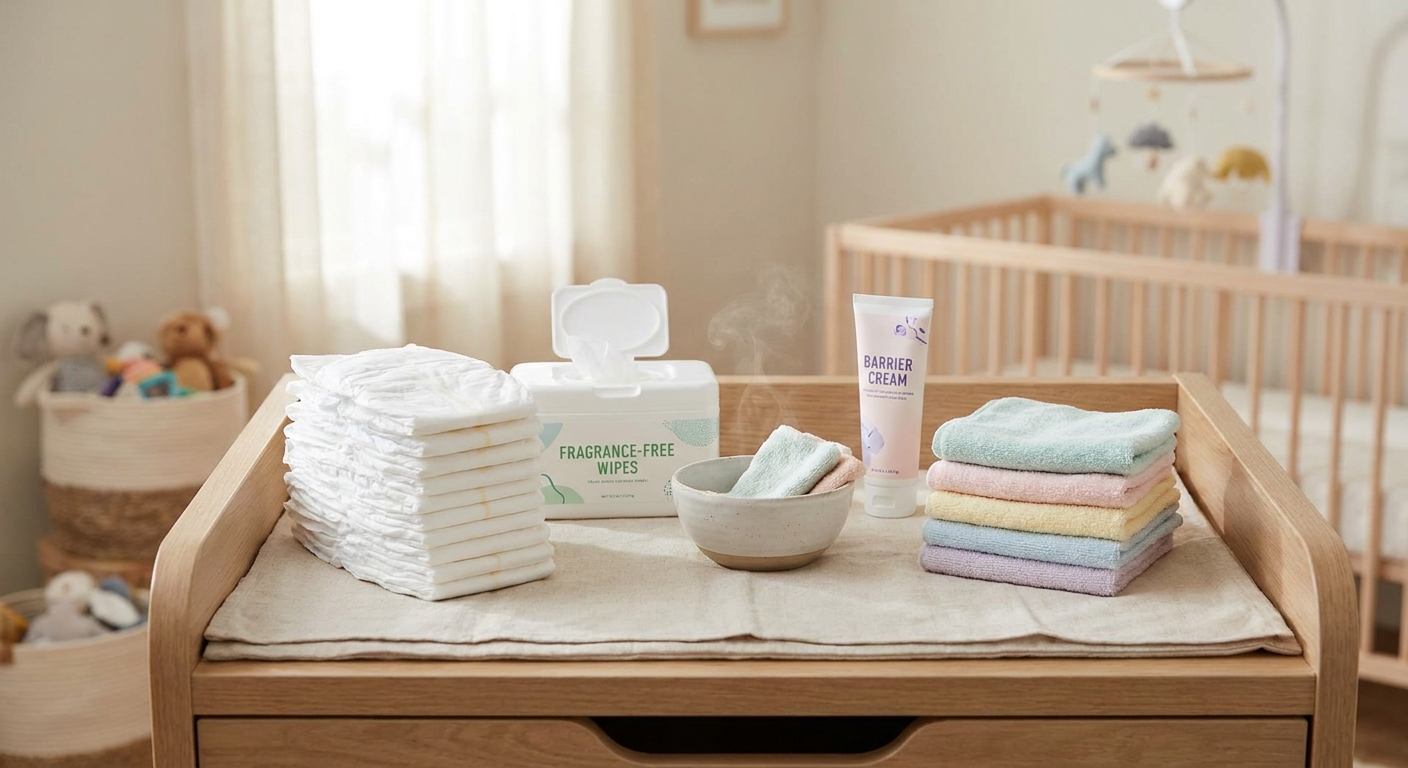
- Use warm water and your hand or a soft washcloth.
- If you use soap, choose a mild, fragrance-free soap and keep it to the outside skin. A little goes a long way.
- Gently wash the penis, scrotum, and skin folds, then rinse well.
- Pat dry. No scrubbing.
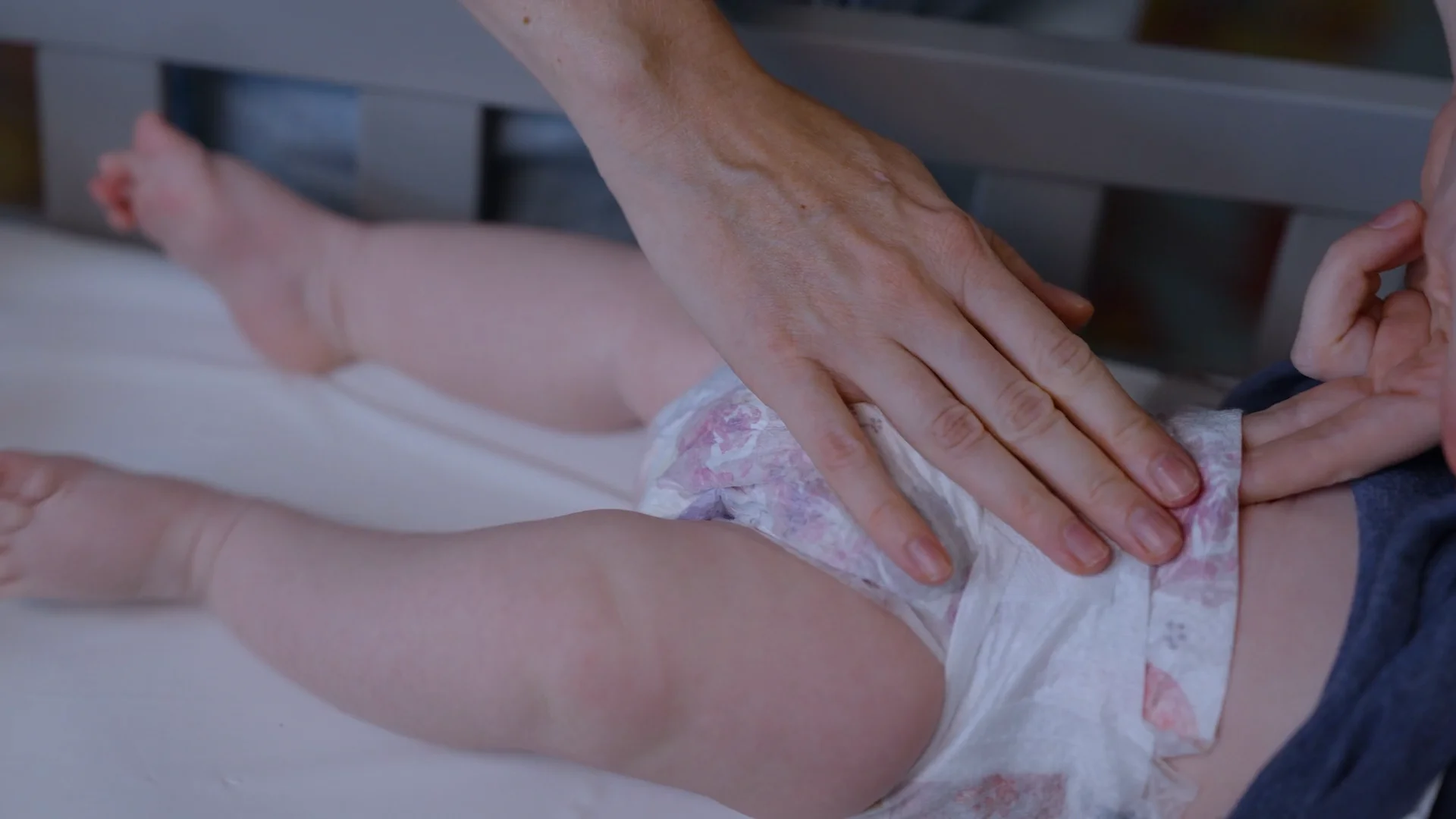
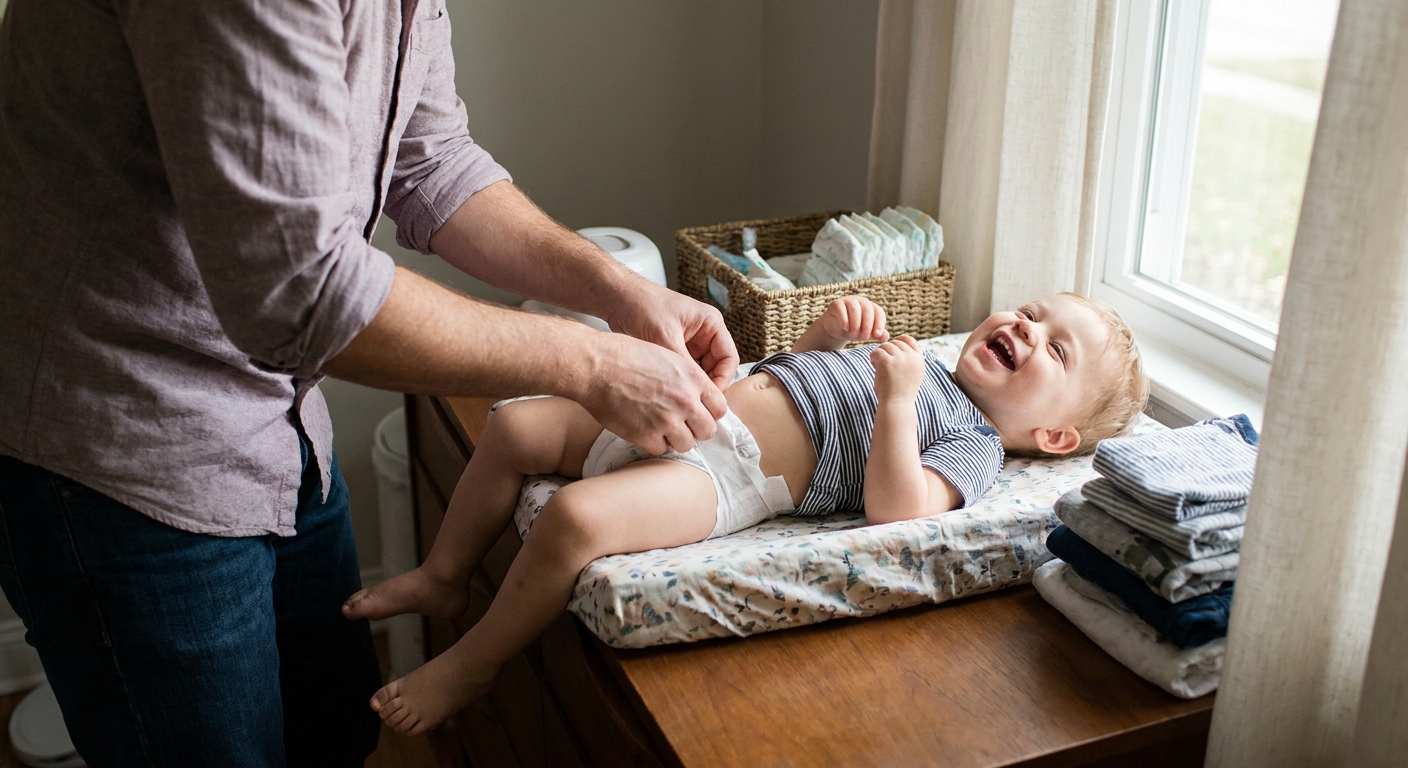
During diaper changes
- Wipe gently, generally away from the urethral opening and toward the diaper area.
- Clean the outside of the penis and the surrounding diaper area.
- If stool gets on the penis, wipe it off gently with water or a wipe, then dry.
- Apply a thin layer of diaper cream to the diaper area if your baby is rash-prone. You do not need to put cream under the foreskin.

Why you should not retract
This is the big one. The foreskin is delicate, and in babies it is commonly still attached to the glans. Pulling it back "to clean" can cause:
- Tiny tears in the skin (painful, and a doorway for infection).
- Bleeding or raw irritation.
- Inflammation and swelling.
- Scar tissue, which can actually make future retraction harder.
- Paraphimosis, a situation where a retracted foreskin gets stuck behind the glans and cannot be pulled forward again. This is an urgent medical issue.
If anyone, including a well-meaning relative, tells you to "just pull it back a little each bath," you have full permission to ignore that advice.
White stuff under the foreskin
Parents often notice little white or yellowish bits under the foreskin or a small, firm "pearl" under the skin and assume it is infection. Most of the time, it is smegma, which is a normal mix of shed skin cells and natural oils.
In intact boys, smegma can show up as the foreskin gradually separates from the glans. These little collections are common and usually harmless. It is basically the body’s own gentle unsticking process.
What to do if you see it
- Do nothing special. Keep up normal bathing and diaper changes.
- Do not try to squeeze it out or retract the foreskin to remove it.
- If your child is older and the foreskin retracts easily on its own, then rinsing with water during a bath is usually all that is needed.
When it might not be smegma
If the white material is accompanied by foul odor, increasing redness, swelling, pain, or fever, that is different. Those signs can point to irritation or infection, and it is worth a call to your pediatrician.
Common parent worries
Diaper rash around the penis
Very common. Focus on diaper basics: frequent changes, gentle wiping, air time, and a barrier cream on the skin that touches the diaper. If a rash is bright red with small satellite dots, especially in skin folds, ask your pediatrician about yeast rash treatment.
A little redness at the tip
Often from friction, wipes, or soap. Switch to warm-water cleaning for a couple of days, keep diapers dry, and avoid scented products. If redness spreads or your baby seems uncomfortable, check in with your child’s clinician.
Ballooning while peeing
Mild ballooning can happen in some intact boys as the opening gradually loosens. If your baby is otherwise peeing normally with a good number of wet diapers, it is often not urgent.
That said, persistent ballooning, ballooning with recurrent irritation, or ballooning paired with a weak stream, straining, or discomfort is worth discussing at a visit.
When to call the doctor
You never have to wait it out if your gut says something is off. Here are signs that deserve medical input.
Call within 24 hours if your baby has:
- Worsening redness that is not improving with gentle care
- Swelling of the foreskin or tip of the penis
- Discharge that looks like pus or smells bad
- Persistent tenderness or crying with diaper changes
- A new rash you suspect could be yeast or an allergic reaction
Go now or seek urgent care if you see:
- Trouble peeing: straining, crying with urination, very weak stream, or fewer wet diapers than usual
- No urine output for an unusual stretch for your baby’s age (especially with vomiting, lethargy, or signs of dehydration)
- Fever in a young infant, especially a rectal temperature of 100.4°F (38°C) or higher in babies under 3 months, or any fever your pediatrician has told you to treat as urgent for your child
- The foreskin is pulled back and becomes stuck behind the glans and looks swollen (possible paraphimosis)
- Rapidly spreading redness, significant swelling, or your baby seems very ill
If something looks dramatically swollen or your baby cannot pee, it is always appropriate to treat it as urgent. You are not overreacting.
As kids get older
At some point in childhood, the foreskin may start to retract on its own. The timeline varies a lot. Some boys retract earlier, some later, and many are not fully retractable until later childhood or early adolescence.
The general rule I share with parents is:
- Adults should not retract a child’s foreskin.
- When the child can retract comfortably himself, teach a simple routine: retract gently, rinse with warm water, then pull the foreskin back to its normal position.
A quick clarification that can ease worry: in childhood, a non-retractable foreskin is often physiologic phimosis (normal and expected). What raises concern is pathologic phimosis, which can involve scarring (sometimes a tight white ring), pain, recurrent infections, or urinary symptoms. If any of that is showing up, bring it up at a well visit so your clinician can guide you.
Quick FAQ
Do I need special soap?
No special product is required. Warm water is often enough. If you use soap, pick mild and fragrance-free, and rinse well. Too much soap can dry and irritate sensitive skin.
Should I clean inside with a cotton swab?
No. Anything that involves going under the foreskin is essentially retraction, and it can irritate or injure the tissue.
It looks gunky after a poop. Is that dangerous?
Not usually. Gently wipe off what you can see, rinse in the bath if needed, and keep diaper changes frequent. Avoid scrubbing.
A caregiver retracted it by mistake. What now?
It happens. Do not panic. If the foreskin pulled back easily, make sure it is brought gently forward to its normal position. If it cannot be brought forward, or if you notice bleeding, increasing swelling, worsening redness, or trouble peeing, seek urgent care or call your pediatrician right away.
The bottom line
Cleaning an uncircumcised baby is wonderfully straightforward: wash the outside only, do not retract, and keep diapers clean and dry. Most of the scary-looking things parents notice, like a non-retractable foreskin or small white smegma pearls, are normal parts of development.
If you are ever unsure, take a quick photo for your own reference (not to post online), jot down when it started, and call your pediatrician. You deserve clear answers, not late-night internet spirals.
Sarah Mitchell
Sarah Mitchell is a Registered Pediatric Nurse and a mother of three who has spent over a decade helping families navigate the beautiful, chaotic early years of childhood. She combines evidence-based medical knowledge with real-world parenting experience to offer practical, compassionate advice. At Awesome Parent, Sarah's mission is to help exhausted parents find solutions, trust their instincts, and finally get some sleep.