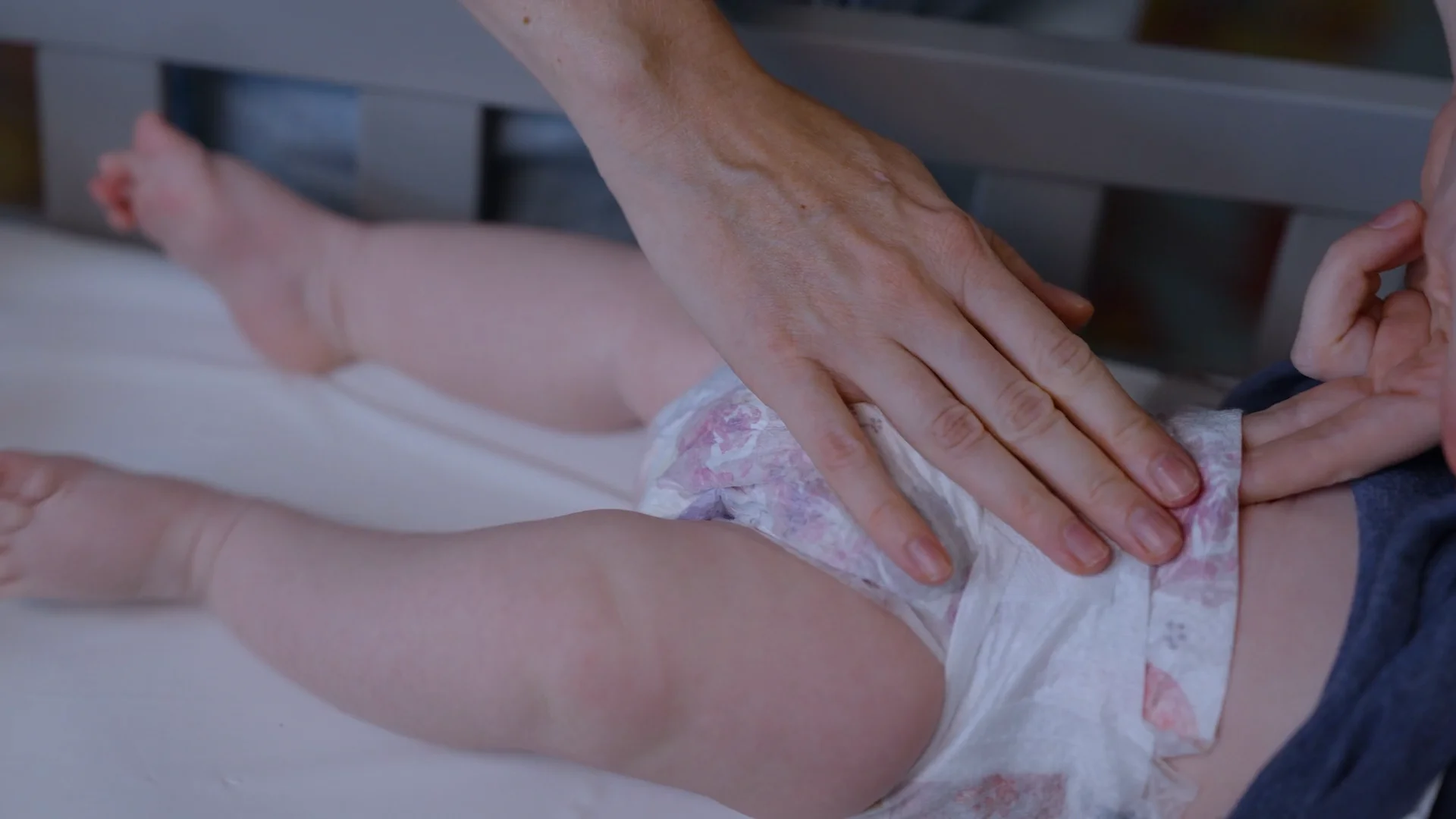
Shaft skin stuck to the head after circumcision can be a mild adhesion or a true skin bridge. Here is what to watch for, gentle care that may help, and urgen...
Smegma Pearls on a Baby Boy’s Penis

Sarah Mitchell
Sarah Mitchell is a Registered Pediatric Nurse and a mother of three who has spent over a decade helping families navigate the beautiful, chaotic early years of childhood. She combines evidence-based medical knowledge with real-world parenting experience to offer practical, compassionate advice. At Awesome Parent, Sarah's mission is to help exhausted parents find solutions, trust their instincts, and finally get some sleep.
The first time a parent points out “little white beads” on their baby boy’s penis, you can practically hear the panic behind the question. I get it. Anything unusual in the diaper area feels urgent, and Google at 2 a.m. is not exactly soothing.
Most of the time, those small white or yellow spots are smegma pearls, sometimes also described as smegma collections or a smegma cyst. They look strange, but they are usually harmless and temporary. In this article, I will walk you through what they are, what they are not, and the specific signs that mean it is time to get your pediatrician involved.

What are smegma pearls?
Smegma pearls are small collections of shed skin cells (keratin) mixed with natural skin oils. Think of them like tiny “skin cell plugs” that get trapped under a fold of skin.
In baby boys, they are often noticed:
- Along the edge of the head of the penis (glans)
- In the groove behind the head (the coronal sulcus)
- Under the foreskin in uncircumcised babies, sometimes becoming more noticeable as the foreskin loosens naturally over time
- Near mild adhesions (skin lightly stuck to skin), including after circumcision as healing and skin movement evolve
They can look like a single pearl or a few tiny white or yellow dots. They are typically not painful and do not cause fever or a change in urination.
Why do they happen?
Skin sheds constantly, even in newborns. In the diaper area, there is also moisture, friction, and lots of normal skin-to-skin contact. When a small pocket forms between skin layers, shed cells can collect and look like a little pearl under the surface.
Smegma pearls are more likely when:
- There is a natural fold of skin that can trap debris
- There are penile adhesions (common in infants and toddlers)
- A baby has a buried or partially hidden penis from a chubby pubic fat pad (also very common and usually temporary)
Importantly, smegma pearls are not caused by poor hygiene. You did not “miss” something.
What they look like
Most parents describe one of these scenarios:
- A tiny white or pale yellow bump under a thin layer of skin
- A small, smooth, pearl-like dot near the rim of the head
- A little “grain of rice” appearance that does not wipe away
Smegma pearls usually:
- Are not open sores
- Do not ooze
- Do not smell foul
- Do not cause obvious pain when you gently clean the outside
One helpful “what to expect” note: you may notice the pearl shift position, shrink, or look closer to the surface before it disappears.
If you are tempted to squeeze it: please do not. In clinic, we see irritated, infected skin far more often from picking than from the pearl itself.
Pearl vs pus
This is the big worry, so let’s make it practical.
More consistent with smegma
- A closed, smooth bump under the skin
- No spreading redness around it
- No warmth or rapidly increasing swelling
- Baby is acting like himself, feeding normally, and peeing normally
More consistent with infection
- Thick yellow or green drainage that is wet or sticky
- The area looks like a pimple or blister that is actively oozing
- Redness that spreads beyond a small spot
- Increasing swelling or the skin looks tight and shiny
- Bad odor
- Fever or baby seems unusually uncomfortable
If you see drainage plus swelling, or your baby seems unwell, that is a same-day call to your pediatrician. If your baby is under 3 months and has a temperature of 100.4°F (38°C) or higher, seek urgent care the same day.
Pearl vs circumcision healing
After circumcision, it is common for babies to develop a thin yellowish film or coating on the healing area. Parents often worry it is pus, but it is usually part of normal healing tissue on the surface.
Typical healing film
- Flat or patchy rather than a round “bead”
- On the surface of the healing skin
- Not a distinct bump under intact skin
Smegma pearls
- Localized and “ball-like”
- Under a thin layer of skin
- Often along an edge or near a small adhesion
If your baby was circumcised recently and you are unsure whether you are seeing healing tissue or a new bump, a photo message through your pediatrician’s portal (if offered) can save you a lot of worry.
Adhesion vs skin bridge
These get mixed up a lot because they can occur in the same general area.
Penile adhesion
An adhesion is when the shaft skin lightly sticks to the head of the penis. In babies, this can happen as fat pads shift and skin naturally moves. Adhesions can trap smegma, which is why a pearl sometimes shows up right at the edge.
- Looks like: skin “stuck” where you expected to see a clean line between shaft and head
- May come with: a small white or yellow collection at the edge
Skin bridge
A skin bridge is a thicker, more permanent band of skin that connects the shaft skin to the head. It does not look like a little bead. It looks like a strip or band.
- Looks like: a visible band of skin tethering one area to another
- May cause: pulling, changes in how the skin sits, or recurring irritation
If you think you are seeing a skin bridge, schedule a non-urgent visit with your pediatrician. Sometimes these need a referral to pediatric urology, especially if they are thick or causing problems.
What to do at home
For a typical smegma pearl, the safest plan is usually the most boring one: leave it alone.
- Do not squeeze, pop, or pick at it. This is how tiny issues become infected, painful ones.
- Clean only what you can see during normal baths or diaper changes.
- Do not force the foreskin back in uncircumcised babies. Retraction should be gentle and only as far as it naturally moves.
Most pearls resolve on their own as skin separates naturally and the trapped material works its way out.
Also worth knowing: not every white bump or spot in the diaper area is smegma. Diaper rashes can have small pustules, yeast can cause bright red irritation with satellite spots, and other skin bumps exist. If you are unsure, it is completely reasonable to have your pediatrician take a look.
When to call the pediatrician
Call your pediatrician promptly if you notice any of the following:
- Spreading redness onto the shaft, scrotum, or lower belly
- Increasing swelling of the penis
- Warmth, tenderness, or baby cries sharply when the area is touched
- Foul-smelling discharge or thick yellow or green drainage
- Fever, poor feeding, unusual sleepiness, or your baby just seems “off”
- Bleeding that is more than a small smear
Get care today for pee problems
Urination red flags are always worth taking seriously in babies. Seek same-day care if:
- Your baby has no wet diapers in the time frame your pediatrician has told you is expected for his age
- He strains repeatedly with little or no urine
- The urine stream is very weak, spraying abnormally, or clearly painful
- The tip looks extremely swollen or the opening seems blocked
If your baby seems unable to pee at all, that is an urgent evaluation.
What to expect by age
I see smegma collections in infants and toddlers most often.
- Uncircumcised children: smegma can be part of the normal separation process between the foreskin and glans over months and years. You do not need to help it along.
- Circumcised children: mild adhesions are common as the skin heals and shifts, and small trapped collections can show up along those edges.
What your pediatrician may do
In most cases, the visit is straightforward and quick. Depending on what they see, your pediatrician may:
- Do a visual exam and reassure you it is a benign smegma collection
- Check for signs of balanitis (inflammation) or cellulitis if there is redness, swelling, or drainage
- Discuss gentle routine care and what not to do at home
- If adhesions are present, recommend observation or, in select cases, a plan to address them over time
- Refer to pediatric urology if there is a suspected skin bridge, recurring problems, or anything atypical
Common questions
Is smegma a sign of infection or poor hygiene?
No. Smegma is made of normal shed skin cells and oils. A smegma pearl is usually just that material collected in one small spot.
Can an uncircumcised baby get smegma pearls?
Yes. In fact, smegma under the foreskin can be part of the normal, gradual separation process as a child grows. You may not see it early on, and you should not try to pull the foreskin back to “check.”
Will it hurt my baby?
Typically, no. If your baby seems uncomfortable, or if you see redness and swelling, that is when we start thinking beyond a simple pearl.
How long will it last?
There is a wide range. Some resolve within days or weeks, others linger longer and then disappear as the skin shifts and releases the trapped material. If you are seeing growth, increasing irritation, or repeated redness, check in with your pediatrician.
The bottom line
Smegma pearls are one of those “looks alarming, usually harmless” baby body quirks. If what you are seeing is a small, smooth white or yellow bump under the skin with no spreading redness, no swelling, and normal peeing, it is often safe to watch and wait.
Trust your gut, though. If something is changing quickly, your baby seems uncomfortable, or there is any trouble urinating, you are not overreacting by calling. That is exactly what we are here for.
Sarah Mitchell
Sarah Mitchell is a Registered Pediatric Nurse and a mother of three who has spent over a decade helping families navigate the beautiful, chaotic early years of childhood. She combines evidence-based medical knowledge with real-world parenting experience to offer practical, compassionate advice. At Awesome Parent, Sarah's mission is to help exhausted parents find solutions, trust their instincts, and finally get some sleep.