A calm, practical overview for parents on measles symptoms, rash progression, contagious timeline, isolation basics, vaccine protection, and what to do after...
Measles in Pittsburgh: Symptoms, Exposure, and the MMR Schedule

Sarah Mitchell
Sarah Mitchell is a Registered Pediatric Nurse and a mother of three who has spent over a decade helping families navigate the beautiful, chaotic early years of childhood. She combines evidence-based medical knowledge with real-world parenting experience to offer practical, compassionate advice. At Awesome Parent, Sarah's mission is to help exhausted parents find solutions, trust their instincts, and finally get some sleep.
If you live in the Pittsburgh area, the recent measles news connected to a local hospital probably made your stomach drop. That reaction makes sense. Measles is one of those “old” diseases many of us grew up thinking was basically gone, and it feels jarring when it shows up close to home.
Here is the steady, practical truth from a pediatric nurse who has talked families through a lot of scary-sounding headlines: measles is very contagious, but it is also very preventable. What matters most right now is knowing (1) what symptoms actually look like, (2) what to do if your child might have been exposed, and (3) how to make sure your family’s MMR protection is up to date.
One quick note: details about local cases can change fast. For the most up-to-date information for Allegheny County, check the Allegheny County Health Department and the Pennsylvania Department of Health, or follow your child’s school or childcare updates.

Why measles is showing up again
When local health officials report a measles case connected to a hospital or community setting, it naturally raises concern, especially for families with babies, pregnant people, or medically fragile kids at home.
This local worry sits inside a wider pattern: measles resurfaces in pockets where vaccination rates have slipped below the level needed to prevent spread.
Public health experts often cite around 95% community coverage as the benchmark that helps stop measles from gaining traction. (That number can vary a bit by setting and it assumes two-dose protection, but it is a helpful rule of thumb.) When communities fall below that, measles can move quickly, especially in schools, childcare settings, health care facilities, and crowded indoor spaces.
Globally, public health agencies have also warned that when routine childhood vaccinations lag, outbreaks tend to rebound. That matters locally because viruses do not respect county lines or airport terminals.
Measles basics, in parent language
How measles spreads
Measles spreads through the air when an infected person breathes, coughs, or sneezes. It is so contagious that people can get sick even after the infected person has left the room. In enclosed spaces, the virus can linger in the air for up to about 2 hours (a commonly cited CDC figure).
When someone is contagious
People with measles are contagious before the rash appears. The classic window is about 4 days before to 4 days after rash onset. This is one reason outbreaks can feel like they come out of nowhere.
Why it can be serious
Measles is not “just a rash.” It can lead to complications like ear infections, pneumonia, and in rare cases brain inflammation. The highest-risk groups include babies, pregnant people, and anyone with a weakened immune system.
Measles symptoms: what to look for
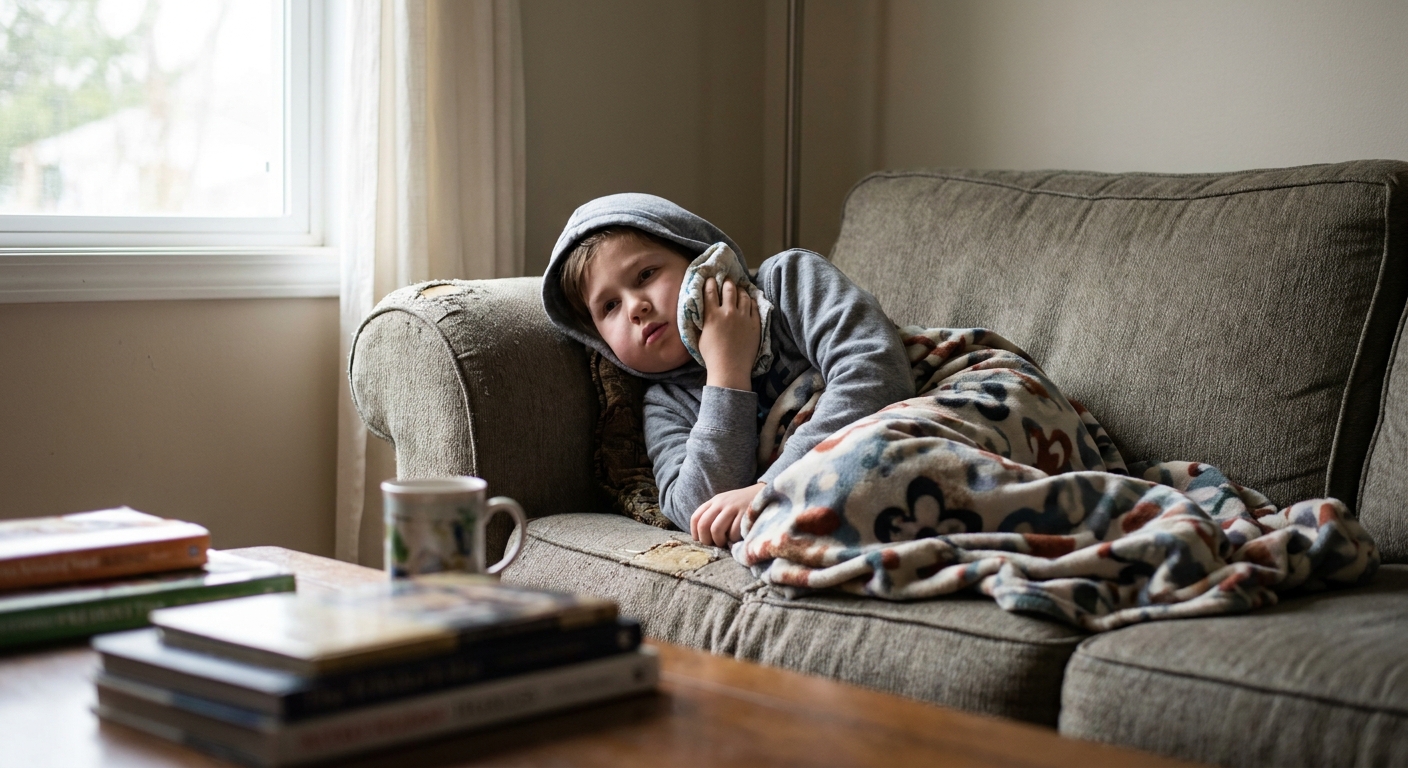
Measles usually starts like a rough viral illness before you ever see a rash. Many parents assume the rash is the first sign, but it is often the later sign.
Early symptoms (often first)
- Fever (often high)
- Cough
- Runny nose
- Red, watery eyes (conjunctivitis)
- Extreme tiredness, decreased appetite
Koplik spots (a classic clue)
Some kids develop Koplik spots, which are tiny white spots inside the mouth, often on the inner cheeks. They can show up a day or two before the body rash. Not every parent will notice them (and not every child has obvious ones), but if you see them along with fever and cold-like symptoms, it is worth a call.
The rash (often later)
The measles rash typically appears after a few days of fever and other symptoms. It often starts on the face or hairline and then spreads downward over the body.
What else it could be
Many viruses cause fever and rashes, especially in young kids. Roseola, hand-foot-and-mouth disease, and other viral rashes are common. The difference is that measles tends to pair a significant fever with the classic cough, runny nose, and red eyes, and it is highly contagious. If measles is a possibility, do not “wait and see” in a waiting room. Call first.
If you think your child was exposed
This is the part parents need most, and it is also where you can make the biggest difference for your child and your community.
Step 1: Check vaccination status
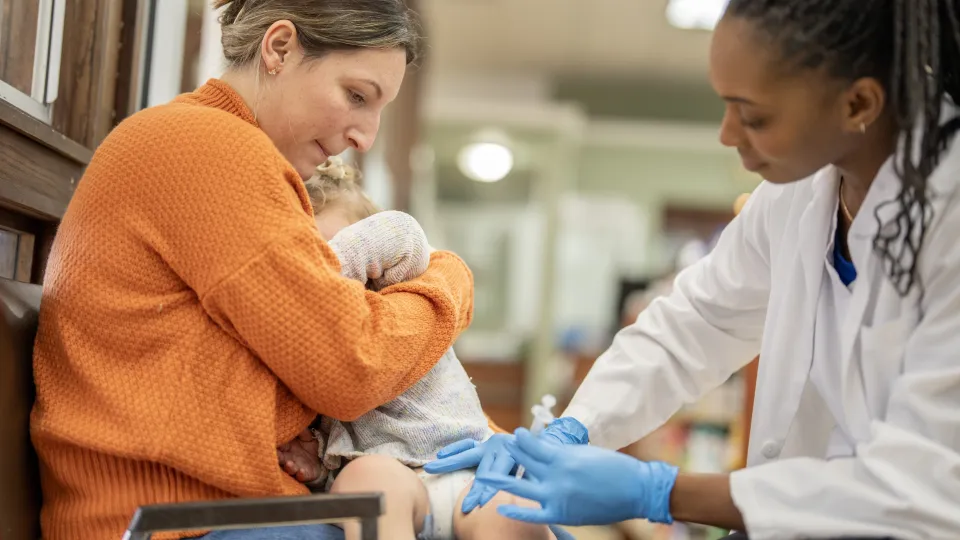
Look in your child’s immunization record for MMR (measles, mumps, rubella). If you cannot find it quickly, your pediatrician, your child’s school, or your state immunization registry can usually help.
Step 2: Call before you show up
If there is a credible exposure or symptoms suggest measles, call first. Clinics and emergency departments can arrange a safe way to evaluate your child without exposing vulnerable infants or pregnant patients in the waiting room.
If your child is old enough, able to tolerate it, and your clinician advises you to come in, ask about masking and a separate entrance or room. That simple step protects other families.
Step 3: Know the watch window
Measles does not usually show symptoms the next day. After exposure, symptoms can begin anywhere from about 7 to 21 days, most often around 10 to 14 days. Fever may show up first, and the rash often follows a few days later.
Step 4: Ask about post-exposure protection
Depending on age, health, and timing, clinicians may recommend post-exposure prophylaxis:
- MMR vaccine within 72 hours of exposure can prevent or lessen illness for some people who are not fully protected.
- Immune globulin within 6 days of exposure may be recommended for certain high-risk people (for example, infants too young for routine MMR, pregnant people without immunity, or some immunocompromised patients).
These are time-sensitive decisions, so it is worth calling promptly.
Step 5: Keep your circle small while you sort it out
If your child is symptomatic or you are awaiting guidance after a confirmed exposure, avoid playdates, crowded indoor activities, and especially contact with infants and pregnant people until you have a clear plan.
Step 6: Loop in the right people
If there is a confirmed exposure connected to school, daycare, or a health care facility, your pediatrician and local health department can help with next steps, including whether your child needs to stay home and for how long.

MMR schedule and catch-up
The MMR vaccine is highly effective and has a long track record of safety. In the U.S., the routine schedule is:
- First dose: 12 to 15 months
- Second dose: 4 to 6 years
Can my child catch up?
Yes. If your child missed a dose or you are unsure, your pediatrician can use a catch-up schedule. In clinic, I see this all the time: records get lost, families move, life happens. There is no shame in being behind. The goal is simply to get protected.
What about babies under 12 months?
Babies are the group that makes pediatric nurses go into full “protect at all costs” mode, because they are both vulnerable and too young for the standard first dose. If there is increased local risk or travel, pediatricians sometimes recommend an earlier dose for certain infants. Do not guess on this one. Call your child’s clinician so guidance is tailored to your baby’s age and the current situation.
Who should not get MMR today?
MMR is a live vaccine, so there are a couple of big exceptions. In general, people who are pregnant or severely immunocompromised should not receive MMR right now. This is exactly why it is so important that the rest of the household and close contacts are up to date, to create a protective buffer around them. If you are unsure, your clinician can walk you through it.
What about teens and adults?
If you are a parent who is unsure of your own measles immunity, bring it up with your primary care provider. If you work in health care, work around kids, are planning pregnancy, or are pregnant, it is especially worth confirming. Sometimes the next step is simply checking your vaccine record. Sometimes it is a blood test (titers). Your clinician can guide you.
A gentle word about misinformation
If your head is spinning from conflicting posts online, you are not alone. When you are making choices for your child, you deserve clear answers from people who know your kid and your community. Your pediatrician and your health department are a solid place to land.
School and daycare questions
One reason measles resurges is that vaccination policies and exemptions can be confusing and vary by state. When rules are unclear, families get mixed messages, schools struggle to enforce requirements consistently, and immunity gaps can grow.
If your child attends school or childcare, this is a good moment to:
- Confirm your child’s immunizations are documented with the school or center.
- Ask what the illness and exclusion policies are if a case occurs.
- Make a plan for backup childcare, because exclusions can happen quickly during outbreaks.
Even if your child is fully vaccinated, outbreaks can still disrupt routines. Having a plan now saves you from scrambling later.
Protecting high-risk family members
In real life, many households include someone who is more vulnerable: a newborn, a grandparent, a pregnant parent, or a child on immune-suppressing medication. If that is you, you are not overreacting by being extra cautious.
Practical layers of protection
- Make sure everyone eligible for MMR is up to date (siblings, caregivers, extended family who visit often).
- Skip visits when anyone is sick, even if it is “just a cold.” Early measles can look like a cold.
- Choose outdoor get-togethers when possible during periods of increased community transmission.
- Call your clinician early if a vulnerable family member may have been exposed.

When to seek urgent care
If your child might have measles, call your pediatrician right away for instructions. Seek urgent medical care now (and call ahead) if your child has:
- Difficulty breathing, fast breathing, or working hard to breathe
- Signs of dehydration (very dry mouth, no tears, significantly fewer wet diapers, lethargy)
- A fever in a young infant, or a fever that is very high or not improving as expected
- Seizure, confusion, severe headache, or a child who is hard to wake
And one more nurse-y note: if you are heading to care for possible measles, ask where to enter and whether your child should wear a well-fitting mask if they can tolerate one. That simple step protects other families.
Quick FAQ
Is measles really that contagious?
Yes. Measles is among the most contagious viruses we deal with in pediatrics. That is why a single case can prompt a big public health response.
If my child has two MMR doses, are we safe?
Two doses offer very strong protection. No vaccine is perfect, but being fully vaccinated dramatically reduces your child’s chance of getting measles and helps protect vulnerable people around you.
Should I keep my child home from school right now?
Most families do not need to pull kids from school solely because there is a reported case in the region. What you should do is verify vaccines are up to date, watch for symptoms if there was a known exposure, and follow guidance from your school and local health department if specific exclusions are recommended.
What if my kid is unvaccinated and we want to start now?
Call your pediatrician and ask for a catch-up plan. You will not be the first family to make that call, and you deserve a clinician who treats you with respect while keeping your child safe.
A calm next step for Pittsburgh parents
If you do one thing after reading this, let it be this: check your family’s MMR records today. It takes five minutes, and it replaces that vague, 3 AM anxiety with a concrete plan.
And if your gut is telling you your child might have been exposed or is showing symptoms, trust that instinct and call your pediatrician before you go anywhere. We can handle scary things. We just do it better when we do it early and together.
Sarah Mitchell
Sarah Mitchell is a Registered Pediatric Nurse and a mother of three who has spent over a decade helping families navigate the beautiful, chaotic early years of childhood. She combines evidence-based medical knowledge with real-world parenting experience to offer practical, compassionate advice. At Awesome Parent, Sarah's mission is to help exhausted parents find solutions, trust their instincts, and finally get some sleep.