A calm, practical overview for parents on measles symptoms, rash progression, contagious timeline, isolation basics, vaccine protection, and what to do after...
Measles vs Scarlet Fever in Kids

Sarah Mitchell
Sarah Mitchell is a Registered Pediatric Nurse and a mother of three who has spent over a decade helping families navigate the beautiful, chaotic early years of childhood. She combines evidence-based medical knowledge with real-world parenting experience to offer practical, compassionate advice. At Awesome Parent, Sarah's mission is to help exhausted parents find solutions, trust their instincts, and finally get some sleep.
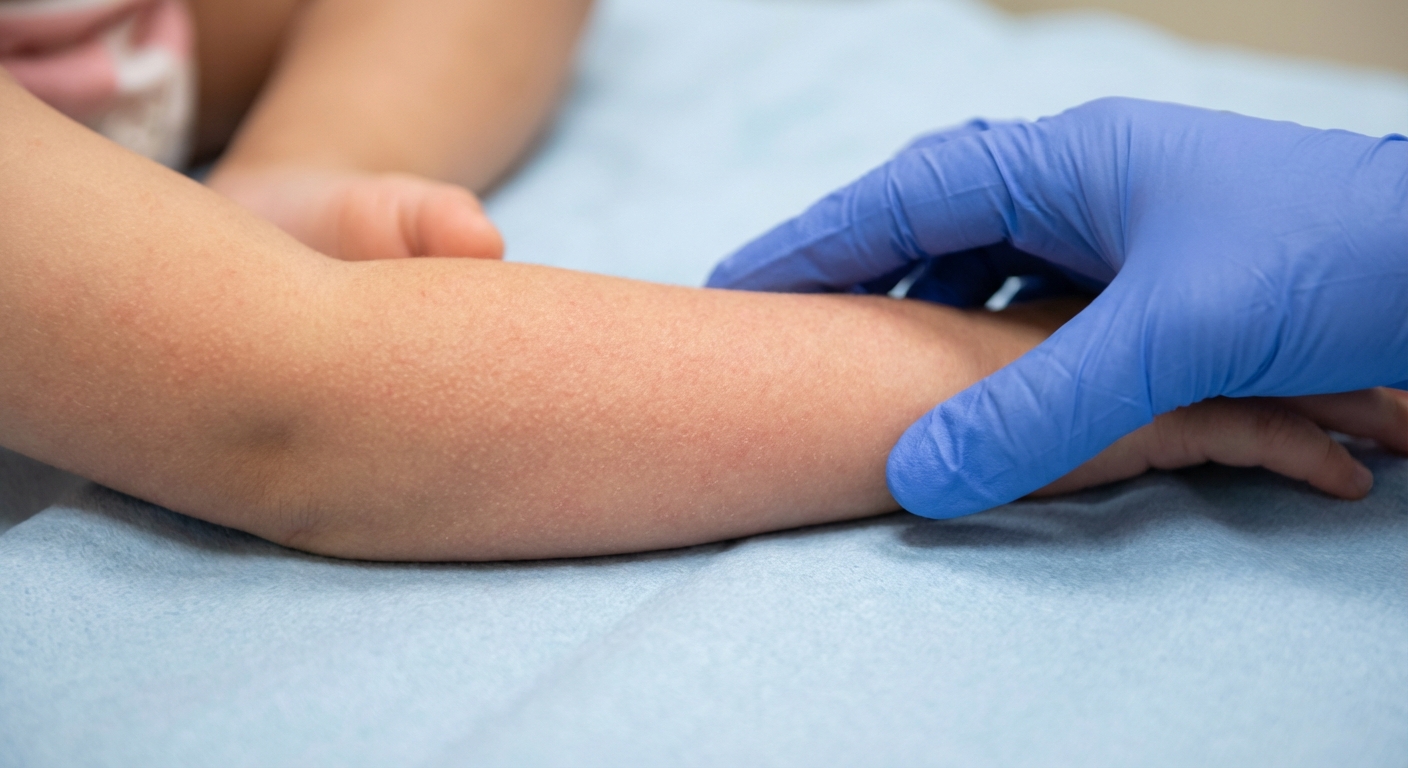
I have had more than a few parents show me a phone photo at the clinic front desk and whisper, “Is this measles?” Meanwhile their kid is sitting there, bright-eyed, with a raging sore throat and a rash that feels like a tiny cat tongue. So yes, this mix-up is common, especially at 2 a.m. under bathroom lighting.
What helps most is not trying to diagnose from the rash alone. Instead, look at the order of symptoms and the overall pattern. Measles has a very specific early “three C’s” vibe before the rash. Scarlet fever is usually a strep-throat story first, with a sandpaper rash following close behind.

The two patterns at a glance
If you remember nothing else, remember this: suspected measles is public-health urgent. It is typically a reportable illness and it requires immediate isolation and phone-ahead precautions. Scarlet fever is urgent too, but it is usually a same-day pediatrician call rather than public-health-level precautions starting at home.
Pattern that fits measles more
- High fever plus the “three C’s”: cough, coryza (runny nose), and conjunctivitis (red, irritated eyes)
- Child often looks quite ill and wiped out
- Cold-like symptoms usually come first, then a rash (often about 3 to 5 days into the illness)
- Rash starts at the hairline/face, then spreads downward over the next day or two
- Rash tends to be flat to slightly bumpy and becomes more widespread, often blending together
Pattern that fits scarlet fever more
- Sore throat (often sudden), pain with swallowing, and fever
- May have headache, belly pain, nausea, or vomiting, especially in younger kids
- Rash feels like sandpaper and is commonly most noticeable on the chest, neck, and trunk first
- Strawberry tongue and a flushed face can happen, sometimes with a paler area around the mouth
Start with the first 24 to 48 hours
When I am triaging a rash call, I usually ask parents to rewind the tape. “What came first?” That answer is often the biggest clue.
Measles starts like a miserable cold
Measles typically begins with fever and those classic upper respiratory symptoms: cough and runny nose (coryza), plus red eyes that look irritated and watery. Parents often say their child seems unusually sensitive to light and just generally unwell. The rash usually shows up after a few days of this, and the fever can climb again around the time the rash appears.
Scarlet fever starts like strep throat
Scarlet fever is caused by group A strep toxins. The early story is usually a sore throat, fever, and “my kid won’t eat or drink because it hurts.” Some kids also get tender neck glands. The cough and runny nose combo is less typical for strep and, if present, makes me consider viral causes more strongly.
One practical note: scarlet fever is not diagnosed by vibe alone. If it sounds like strep, clinicians confirm it with a rapid strep test and sometimes a throat culture, because plenty of viruses can cause a sore throat and a rash too.

Rash clues: where and how it feels
Rashes are tricky because many look similar once they spread. But two features can really help: starting location and texture.
Measles: face first, then downward
With measles, parents often notice redness or spots near the hairline, on the forehead, or behind the ears, then it moves down the body. By the time it reaches the trunk and legs, it can look more “connected” or blotchy.
Scarlet fever: sandpaper, often in skin folds
Scarlet fever rash is famous for how it feels. Many parents describe it as rough, like fine sandpaper. It can be more prominent in warm areas and creases, like the armpits, groin, and elbow creases. If your child’s rash feels rough and your child’s throat is the main complaint, scarlet fever jumps higher on the list.
Mouth and eye clues
Parents are often surprised by how helpful a quick look at the eyes and mouth can be.
Measles: red, irritated eyes and possible Koplik spots
Red eyes with watery discharge, light sensitivity, and a child who looks like they want to keep their eyes closed can fit measles much more than scarlet fever.
There is also a classic measles clue called Koplik spots, tiny white or bluish dots inside the mouth (often on the inner cheeks) that can show up before the rash. They are easy to miss, and not seeing them does not rule measles out, but if you notice them, mention it when you call.
Scarlet fever: strawberry tongue and a very sore throat
Scarlet fever can cause a tongue that looks red and bumpy (strawberry-like) and a throat that looks very inflamed. Some kids have a pale coating on the tongue early on that then peels away, leaving the red, bumpy appearance.
Risk clues that change how worried we are
Two kids can have similar rashes, but their risk is not always the same. When you call, it helps to mention:
- MMR vaccination status (unvaccinated or under-vaccinated raises concern, but vaccinated kids can still rarely get measles)
- Known exposure to someone with measles, or a school or community outbreak
- Recent travel, especially international travel or travel to an outbreak area
- High-risk household contacts like infants too young for routine MMR, pregnant people, or anyone immunocompromised
Which one needs isolation and a same-day call?
This is the part I want you to read twice.
If the pattern fits measles: isolate and call same day
If your child has a high fever plus cough, runny nose, and red eyes, followed by a rash that begins at the hairline/face and spreads downward, treat it as possible measles until a clinician tells you otherwise.
- Keep your child home. Do not go to school, daycare, birthday parties, or playgroups.
- Do not walk into an urgent care or pediatric office without calling first. Offices need to protect newborns and immune-compromised patients. Call and say “possible measles exposure or symptoms” so they can arrange safe entry.
- Call your pediatrician the same day.
- Be ready for public health involvement. Suspected measles is typically reportable, and your clinic may coordinate with your local health department the same day for testing guidance and contact tracing.
If the pattern fits scarlet fever: keep home and get same-day evaluation
Scarlet fever (strep with rash) also deserves prompt attention because antibiotics reduce contagiousness and prevent complications.
- Keep your child home until they have been evaluated.
- Call your pediatrician for a same-day appointment for a strep test if symptoms fit.
- If strep is confirmed and antibiotics are started, many schools and daycares allow return after at least 12 to 24 hours of antibiotics, fever-free status, and symptoms improving, but follow your local policy and your clinician’s guidance.
Bottom line: The pattern that needs immediate isolation plus same-day phone-ahead precautions is suspected measles.
When to get urgent help now
Regardless of which illness you suspect, these are reasons to seek urgent care or emergency care.
- Trouble breathing, rapid breathing, or ribs pulling in with breaths
- Blue or gray lips or face
- Severe sleepiness, difficult to wake, confusion, or a stiff neck
- Dehydration signs: very dry mouth, no tears when crying, markedly fewer wet diapers than usual (for many infants, around 6 to 8 hours without a wet diaper is concerning), or very little peeing in older kids
- Seizure
- Fever in an infant under 3 months, or any child who looks seriously ill
- A rapidly spreading purple or bruised-looking rash
What to do while you wait
I am a huge fan of “do the basics well” while you are waiting to be seen or waiting for a call back.
- Hydration first. Small, frequent sips. Popsicles count. For toddlers, a medicine syringe with 5 to 10 mL every few minutes can work surprisingly well.
- Fever comfort measures. Use fever reducers only as directed by your clinician and based on your child’s age and weight. Avoid giving aspirin to children.
- Keep them comfortable, not overheated. Light clothing and a reasonable room temperature.
- Limit contact with others. If measles is even on the table, minimize exposure in the household too, especially around infants and anyone with immune suppression or who is pregnant.

Quick checklist
More like measles if you see:
- High fever
- Cough + runny nose + red eyes
- Rash begins at hairline/face and moves down
- Child appears very ill
- Possible exposure, travel, outbreak, or not fully vaccinated
More like scarlet fever if you see:
- Sore throat is the main issue
- Rash feels rough, sandpapery
- Strawberry tongue or very red throat
- Rash often strongest on trunk and in skin creases
And a gentle reality check: lots of childhood rashes are neither of these. Roseola, other viral rashes, hand-foot-and-mouth, and allergic rashes can all confuse the picture. That is why the timeline and the whole pattern matter so much.
FAQ
Can scarlet fever start with a cough and runny nose?
It can, but it is less typical. A prominent cough and runny nose often point toward a viral illness. If your child has the three C’s plus fever and then a rash that starts at the hairline/face and spreads downward, call your pediatrician right away and mention measles concerns so they can advise you on safe next steps.
Can measles look like a sandpaper rash?
Parents sometimes describe many rashes as “rough,” especially if skin is dry. But true scarlet fever often has a very distinctive sandpaper feel and usually comes with a sore throat and mouth findings. If the overall pattern feels measles-like, trust that instinct and call.
My child has a rash and a sore throat. Should I assume it is scarlet fever?
Not automatically. Lots of viruses cause both. The reason clinicians care about scarlet fever is that it is typically strep-related and antibiotics matter. If sore throat is prominent and the rash is sandpapery, call for same-day testing.
What should I say when I call the pediatrician?
Give a tight timeline: highest temperature, whether there is cough, runny nose, and red eyes, whether there is sore throat, where the rash began, and how fast it spread. Mention MMR status, travel, and any known exposures. If you suspect measles, say that clearly and ask how they want you to come in, if at all.
Sarah Mitchell
Sarah Mitchell is a Registered Pediatric Nurse and a mother of three who has spent over a decade helping families navigate the beautiful, chaotic early years of childhood. She combines evidence-based medical knowledge with real-world parenting experience to offer practical, compassionate advice. At Awesome Parent, Sarah's mission is to help exhausted parents find solutions, trust their instincts, and finally get some sleep.