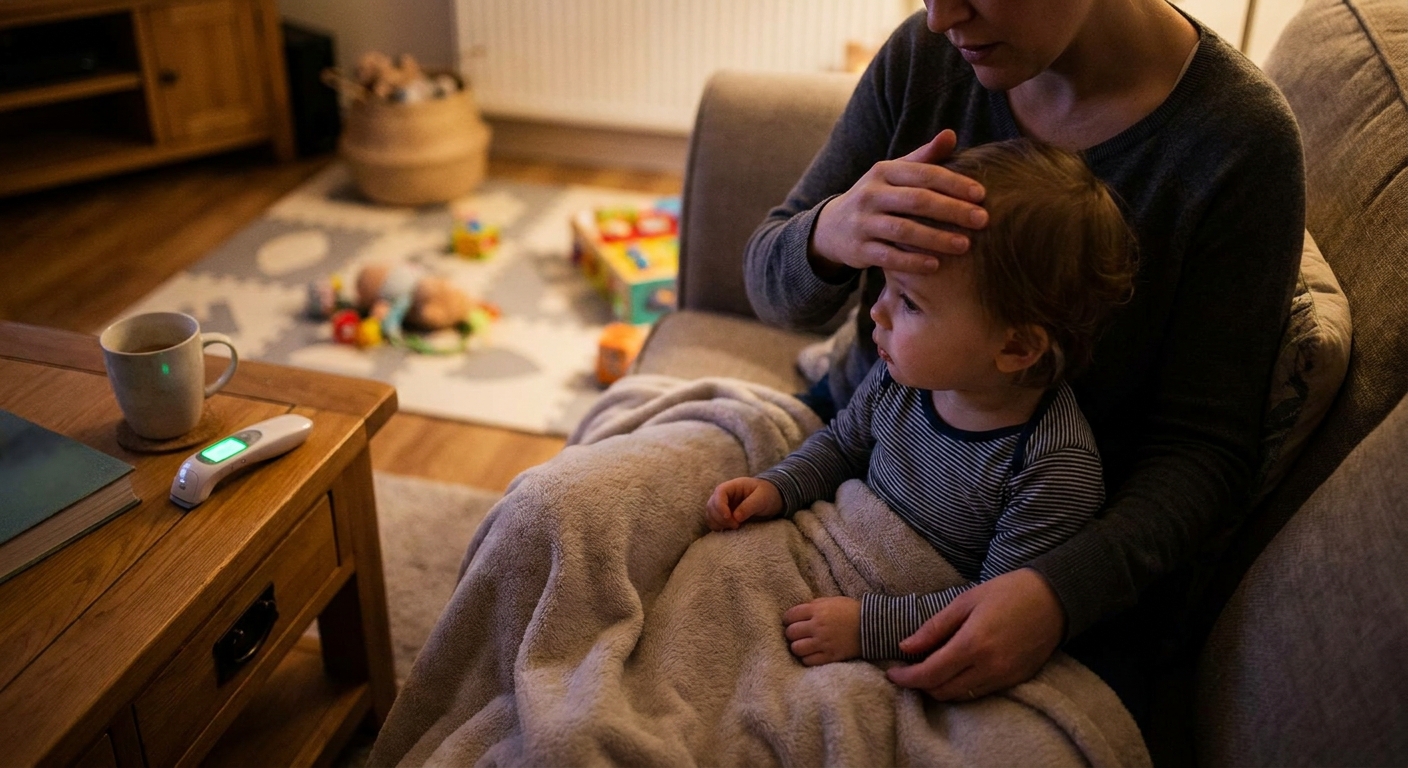
High fever for days, then a rash after the fever breaks? That classic pattern is often roseola. Here’s how to tell, how long it lasts, comfort tips, and when...
Roseola vs. Measles: How to Tell the Difference

Sarah Mitchell
Sarah Mitchell is a Registered Pediatric Nurse and a mother of three who has spent over a decade helping families navigate the beautiful, chaotic early years of childhood. She combines evidence-based medical knowledge with real-world parenting experience to offer practical, compassionate advice. At Awesome Parent, Sarah's mission is to help exhausted parents find solutions, trust their instincts, and finally get some sleep.
As a pediatric triage nurse, I took more calls about “mystery rashes” than I can count. And as a mom of three, I can tell you that a fever plus a rash has a special way of showing up at bedtime, right when your brain is least interested in calm logic.
Two common possibilities parents worry about are roseola and measles. They can both cause fever and a rash, but they tend to follow very different patterns. The goal here is not to turn you into a rash detective, it is to help you spot the few clues that truly matter, especially if there is measles activity in your community.
The key pattern difference
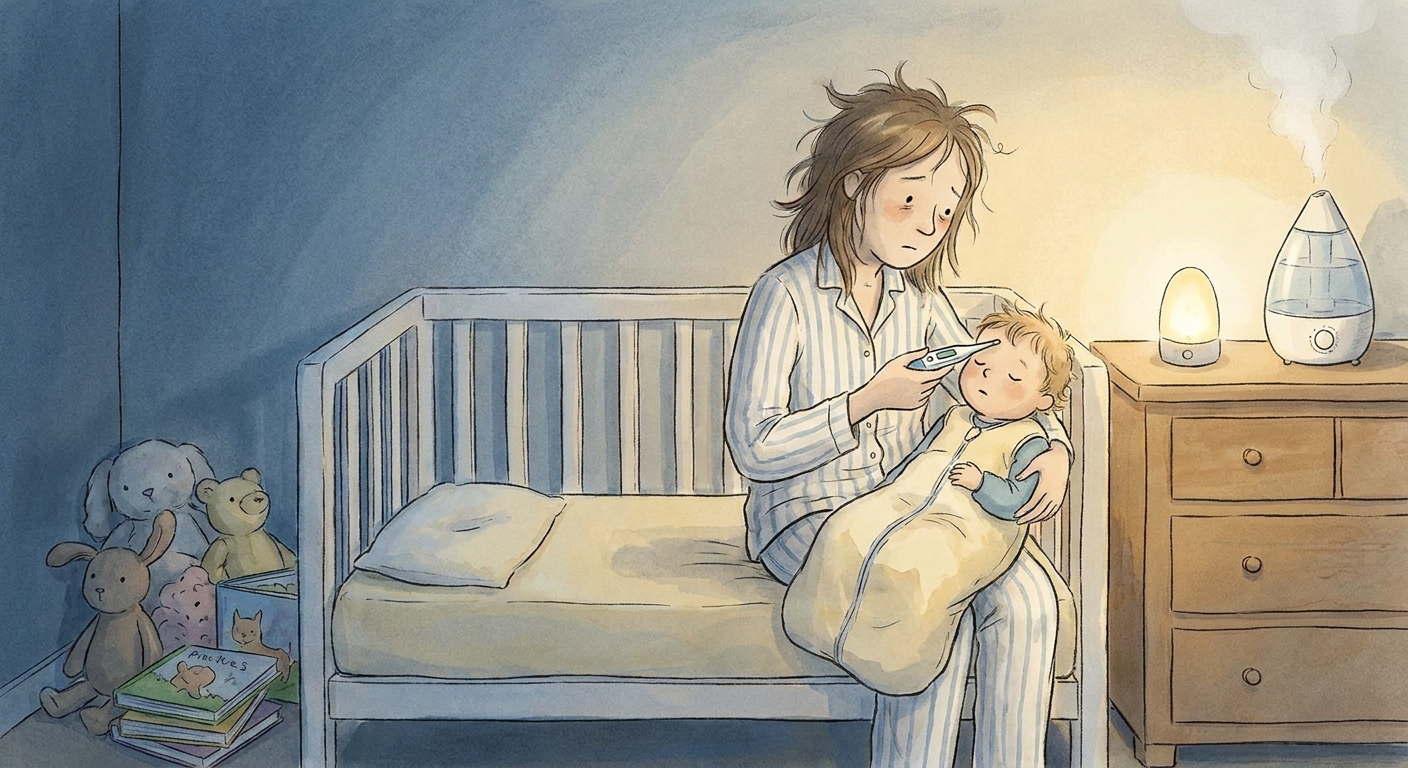
Roseola: fever first, then your child perks up, then the rash shows up
Roseola is famous for this sequence: a sudden high fever for a few days (often up to about 103 to 105 F, but it varies), sometimes with mild cold symptoms, and then the fever breaks. Only after your child’s temperature drops does the rash appear. Parents often tell me, “They finally seemed better and then the spots showed up.” That is classic roseola.
The rash itself is often pink with small flat or slightly raised spots (macules or papules). It is typically not very itchy and it often blanches (lightens) when you press on it.
Measles: sick first, and the rash starts while they are still ill
With measles, the rash usually shows up after a few days of fever and worsening respiratory symptoms (often around 3 to 5 days), and kids typically still feel quite unwell when it appears. The rash is part of the overall illness, not the “grand finale after recovery.”
Clues that point to measles
If I could bottle the triage version of “trust your gut,” it would be this: measles tends to look like a big, miserable respiratory illness plus a rash.
- Cough that is persistent
- Runny nose
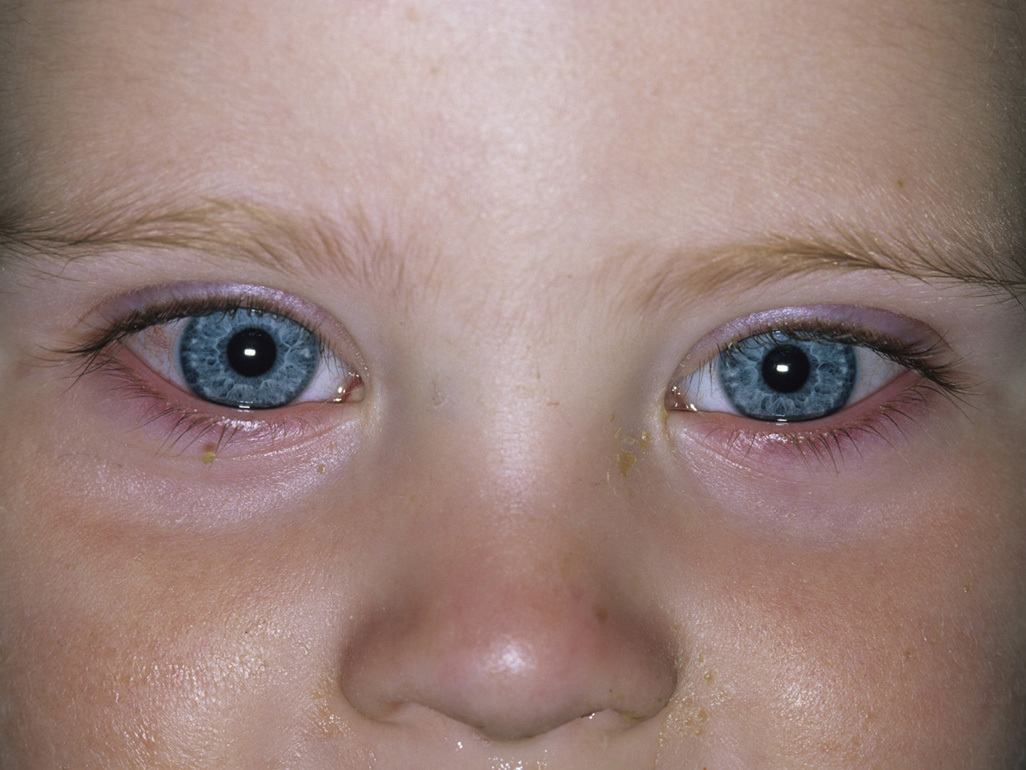
- Conjunctivitis (red, watery eyes, often with light sensitivity)
- High fever; your child often appears very ill or wiped out
- Rash that starts on the face/hairline and then spreads downward over the body
- Koplik spots (tiny white or bluish-white spots inside the mouth) can show up early, often before the rash, but many parents will never notice them
Not every child reads the textbook, but if you’re seeing a combination of cough + red eyes + face-first rash, measles needs to be taken seriously.
Clues that point to roseola
Roseola often hits kids (most commonly under age 2) with a high fever that can look dramatic on the thermometer, but the rest of the symptoms may be surprisingly mild.
- High fever for 3 to 5 days with few other symptoms
- Possible mild runny nose, mild cough, mild diarrhea, or swollen eyelids
- Rash appears after the fever resolves
- Rash often starts on the trunk (chest/back) and spreads to the neck/arms
- Rash is typically not very itchy, and many kids act fairly okay when it shows up
A very common roseola story is: “My baby had a scary fever, then woke up happy, and by lunch there was a pink rash on the torso.”
Quick comparison
| What you notice | More like roseola | More like measles |
|---|---|---|
| Timing of rash | Rash starts after fever breaks | Rash starts while still quite sick |
| How your child seems when rash appears | Often perking up | Usually very ill, tired, uncomfortable |
| Cold symptoms | Often mild or minimal | Prominent cough, runny nose |
| Eyes | Not a standout feature | Red, watery eyes and light sensitivity are common |
| Where rash starts | Usually trunk first | Often face/hairline first, then down |
How contagious are they?
This is one reason I take measles so seriously on the phone. Measles spreads through the air very easily, and people can be contagious around 4 days before the rash starts through around 4 days after it appears. If measles is a possibility, ask your clinician for exact guidance based on your situation and local public health advice.
With roseola, kids are often contagious before the rash shows up, which is why it can sweep through households and daycare rooms before anyone realizes what it is.
When to call same day
If measles is circulating locally, I want you to have a lower threshold for calling, because early guidance can help protect your child and others.
Call your child’s doctor or nurse line the same day if:
- Your child has fever plus rash and any of these: cough, runny nose, red watery eyes, or light sensitivity
- The rash started on the face or hairline or is spreading quickly and your child looks very ill
- Your child has been exposed to someone with suspected or confirmed measles
- Your child is not vaccinated for measles yet, is under-vaccinated, or you are not sure
- Your child is an infant (especially under 12 months) with fever and rash
- Your child has a weakened immune system or takes immune-suppressing medication
Important: If measles is a possibility, call before you go in. Clinics and emergency departments may give you special instructions (like a different entrance or rooming plan) to reduce exposure to other families.
When it is urgent now
Regardless of whether this is roseola, measles, or something else, get urgent care or emergency care now if your child has:
- Difficulty breathing, ribs pulling in, grunting, or bluish lips/face
- Signs of dehydration (very dry mouth, no tears, significantly fewer wet diapers/urination, extreme sleepiness)
- A seizure (including a febrile seizure) or your child is hard to wake
- A non-blanching rash (purple, bruise-like, or tiny red-purple dots) that does not fade when you press on it
- Severe headache, stiff neck, confusion, or persistent vomiting
- A fever in a baby under 3 months (call urgently for guidance)
What to do at home
While you are watching symptoms or waiting on a call back:
- Focus on comfort and hydration. Offer frequent fluids. Popsicles count. Breast milk or formula counts.
- Treat fever if needed for comfort, using the dose your pediatrician has recommended for your child’s weight and age.
- Keep them home. Fever plus rash is not a “power through preschool” situation.
- Avoid new medications you have not used before unless your clinician advises it. New meds can muddy the rash picture.
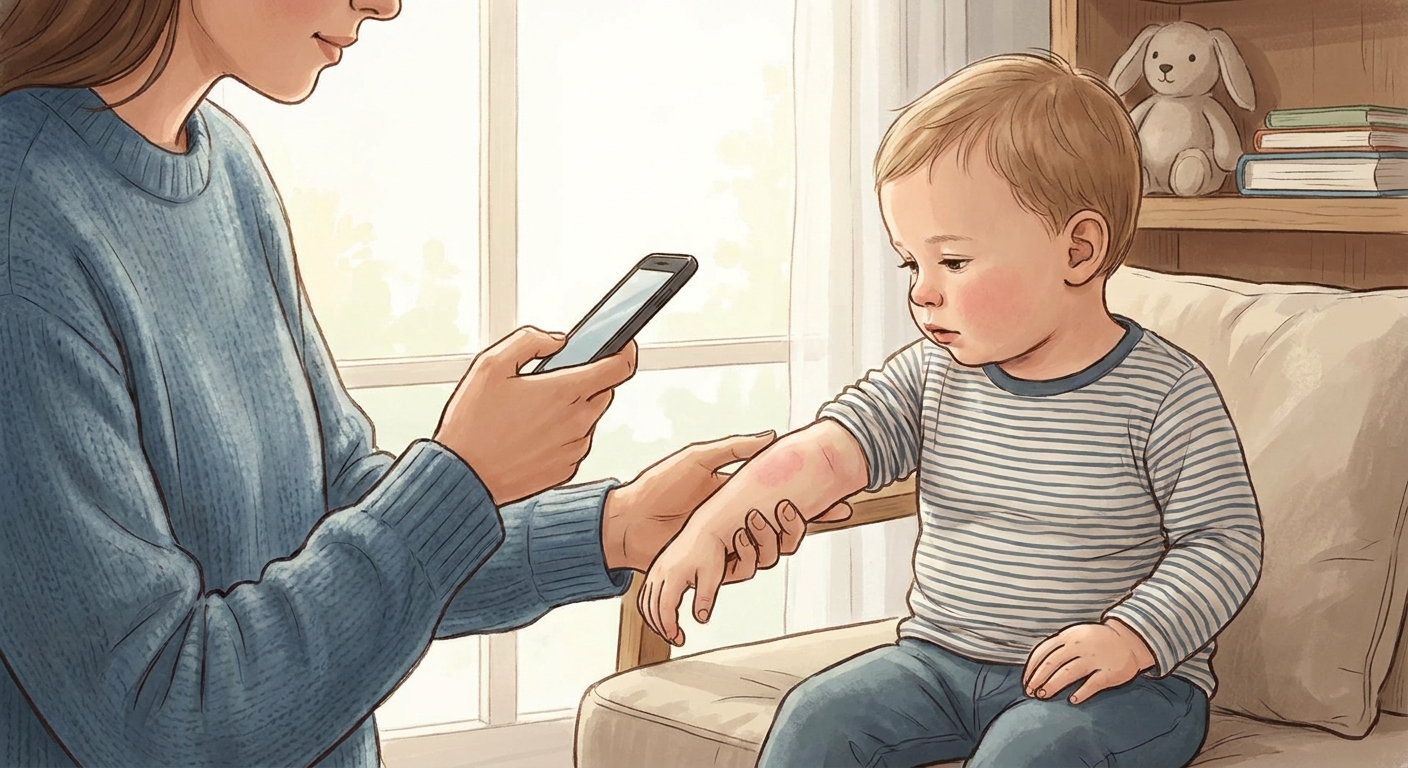
- Take a few clear photos of the rash in natural light. This is incredibly helpful for clinicians, especially if the rash changes quickly.
Common questions
Can roseola look scary even if it is usually mild?
Yes. The fever can be high and fast, which is why roseola causes a lot of late-night panic. The rash itself often looks worse than it feels. The main risk with roseola is the fever, including the possibility of a febrile seizure in some kids.
Can a child with measles have a fever that goes down and then a rash?
Measles tends to build, not resolve. If your child clearly improves and then the rash arrives after the fever breaks, that leans more roseola. But during an outbreak, any fever plus rash with cough or red eyes deserves a same-day call.
If my child is vaccinated, can it still be measles?
Vaccination dramatically lowers the risk, but no vaccine is perfect. Also, “breakthrough” measles in a vaccinated child can sometimes look milder or a bit atypical. A vaccinated child with classic measles symptoms, or any measles exposure, still warrants medical advice.
When do kids get the MMR vaccine?
In many places, the first MMR dose is typically given at 12 to 15 months, with a second dose later in childhood. If there is an outbreak or travel risk, recommendations can change, so it is worth asking your pediatrician what is advised for your area and your child’s age.
Should I keep siblings apart?
Real-life answer: do what is feasible. If measles is on the table, try harder, because it spreads very easily through the air. If it seems more like roseola, many households are already sharing germs before the rash shows up. When in doubt, call your pediatrician for tailored guidance.
The bottom line
If you remember just one thing: roseola is usually fever first, rash after your child starts acting better. Measles is usually cough and red eyes, and the rash starts while your child still looks very sick.
And if measles is circulating where you live, it is completely reasonable to make a same-day call for fever plus rash, especially with cough or eye redness. You are not overreacting. You are doing what smart, protective parents do.
Sarah Mitchell
Sarah Mitchell is a Registered Pediatric Nurse and a mother of three who has spent over a decade helping families navigate the beautiful, chaotic early years of childhood. She combines evidence-based medical knowledge with real-world parenting experience to offer practical, compassionate advice. At Awesome Parent, Sarah's mission is to help exhausted parents find solutions, trust their instincts, and finally get some sleep.