
Wheezing, nighttime cough, or breathing trouble during play? Here are toddler asthma warning signs, how diagnosis works, treatments (including spacers), and ...
Nebulizer Treatments for a Wheezing Toddler

Sarah Mitchell
Sarah Mitchell is a Registered Pediatric Nurse and a mother of three who has spent over a decade helping families navigate the beautiful, chaotic early years of childhood. She combines evidence-based medical knowledge with real-world parenting experience to offer practical, compassionate advice. At Awesome Parent, Sarah's mission is to help exhausted parents find solutions, trust their instincts, and finally get some sleep.
The first time someone hands you a nebulizer setup for your toddler, it can feel like you have been promoted to “respiratory therapist” with zero training. There is a machine. There is a little medicine cup. There is a tiny mask that your child immediately treats like a personal insult.
I get it. I spent years as a pediatric triage nurse teaching families how to use these devices, and I still had a steep learning curve the first time I tried to do a treatment with my own kid on my lap at bedtime.
Let’s walk through what everything is, how to set it up, how long it usually takes, how to clean it, and what to do when your toddler cries or rips the mask off. I’ll also explain how nebulizers compare with an inhaler plus spacer so you can make sense of why different families are prescribed different devices.

What a nebulizer does
A nebulizer turns liquid medicine into a fine mist that your toddler breathes in through a mask or mouthpiece. That mist carries medication down into the airways.
Most commonly, nebulizers are used to deliver quick-relief medicine that helps open tight airways during wheezing episodes. Sometimes they are also used for other inhaled medicines depending on your child’s treatment plan.
Important note: this page is about the device and how to use it, not about diagnosing asthma or deciding which medicine your child should be on. Always follow the dosing instructions you were given by your child’s clinician.
The parts
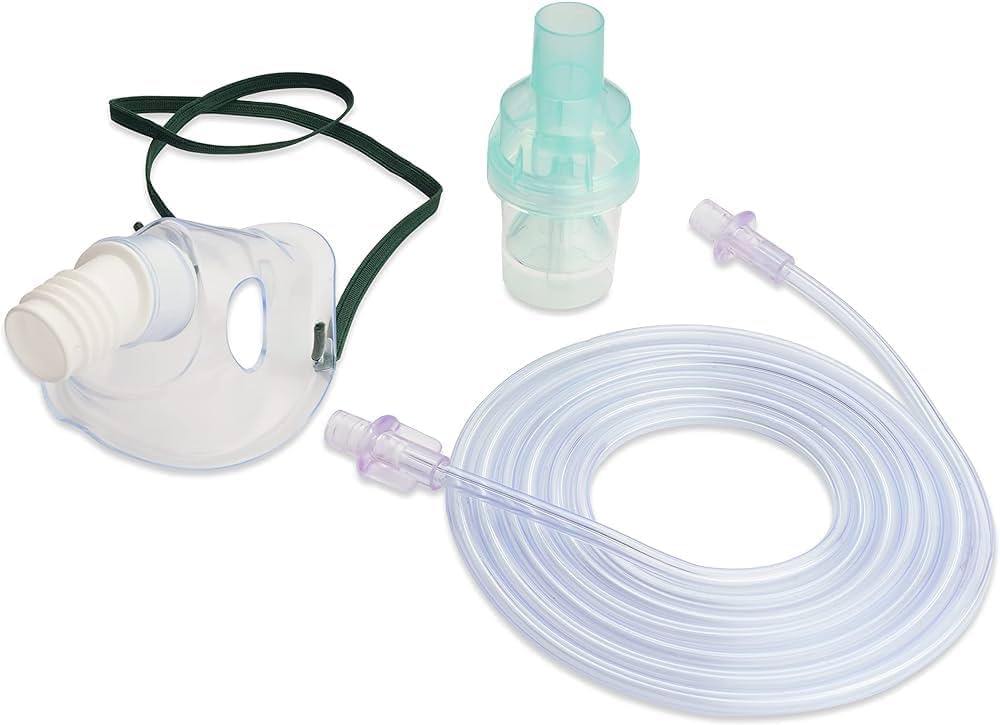
Most home nebulizer kits have the same basic pieces:
- Compressor machine: the motor that pushes air through the tubing.
- Air tubing: connects the compressor to the medicine cup. This is typically not washed. If it gets wet inside, visibly dirty, or your manufacturer says to clean it, follow those instructions. If there is condensation you cannot get out, it is usually safer to replace the tubing.
- Nebulizer cup (medicine cup): where the liquid medication goes. This is what turns the liquid into mist.
- Top piece and baffle: small internal parts that help create the mist. Some cups come pre-assembled.
- Mask: fits over nose and mouth for toddlers. Some kits also include a mouthpiece for older kids.
- Filter: usually on the compressor. Some are replaceable.
If anything looks cracked, cloudy, sticky, or misshapen, ask your pharmacy or medical supply company about replacing it. A worn cup or mask can make treatments slower and more frustrating.
Quick note on mask vs mouthpiece: a mouthpiece can improve delivery for older or very cooperative kids, but most toddlers do better with a mask because “keep this between your lips for 10 minutes” is a big ask.
How to set it up
1) Wash your hands
Quick but important, especially when you are handling the medicine cup and mask.
2) Put the machine on a stable surface
Use a table or counter near an outlet. Keep it upright with vents unblocked. Try not to run it on a bed or couch where airflow can be restricted.
3) Connect the tubing
Plug one end into the compressor and the other end into the bottom of the nebulizer cup.
4) Add the medication to the cup
Use exactly what was prescribed. Many quick-relief meds come in small pre-measured plastic vials. Twist or pop the top, squeeze the liquid into the cup, and close the cup tightly.
- Some prescriptions are unit-dose vials. Others are measured in mL with a syringe or dropper. If you are not 100 percent sure which you have, call your pharmacist or clinician before you start.
- Do not “top off” a dose with leftover medicine from a prior treatment.
- If your instructions say to use saline, use the type and amount your clinician recommended. If they specify sterile saline, do not use homemade salt water.
- Do not mix medicines unless you were specifically told it is OK.
5) Attach the mask or mouthpiece
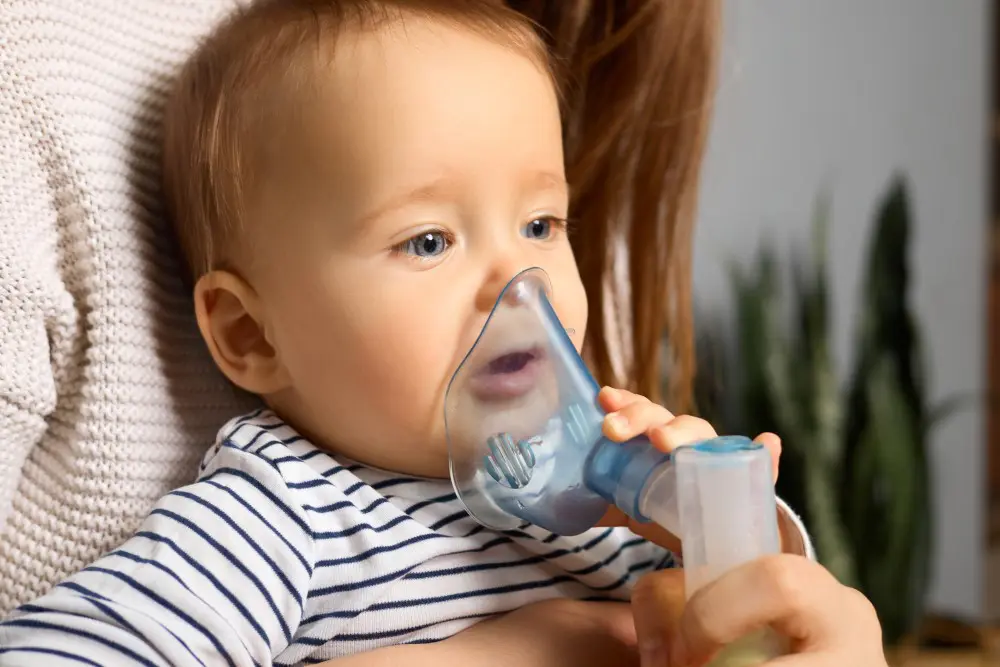
Connect the mask to the top of the nebulizer cup. Check the fit. It should cover both nose and mouth.
6) Turn it on
You should see a visible mist coming out of the mask once it is running. If you do not see mist, double-check that the cup is closed tightly, the tubing connections are snug, the cup is upright, and the top piece and baffle are seated correctly.
7) Hold the mask gently but snugly
For toddlers, a perfect seal is not always realistic. Aim for “close enough to breathe in most of the mist.” Keep your child sitting up if you can.
How long it takes
A toddler nebulizer treatment often takes about 5 to 20 minutes. It depends on:
- The amount of medicine in the cup
- The specific nebulizer cup design
- How well the mask stays on
- Your machine’s airflow and whether the filter is clean
You will usually know it is done when the mist slows way down and the cup starts to sputter a bit. Some cups will still have a few drops left at the end. Do not keep running it forever trying to get every last drop.
If your clinician or device instructions recommend it, you can gently tap the cup once or twice near the end to keep the mist going. No shaking gymnastics needed.
If treatments suddenly start taking much longer than usual, check for loose connections, a clogged cup, a filter that needs to be replaced, or a compressor that is losing airflow over time. Old machines can get weaker.
Mask battles
This is incredibly common, especially in the beginning. You are not doing anything wrong. Toddlers hate anything that feels restrictive, and the sound of the compressor can be startling.
Does crying ruin it?
Crying does not automatically mean the treatment is a total loss, but it can reduce how much medicine actually gets delivered, especially if the mask is off, the seal is poor, or the session ends early. Some medicine may still get in during breaths between protests, so do not panic, just keep aiming for a decent seal and a full treatment.
Ways to make it easier
- Let them play with the mask first when it is off. Put it on a stuffed animal. Let them hold it. Toddlers do better when they feel some control.
- Do practice runs for 10 to 30 seconds with the machine on and no medicine, just to get used to the sound.
- Use distraction that actually holds attention: a favorite short show, a special “nebulizer-only” book, bubbles, or a simple game like “Can you fog up the mask?”
- Try positioning: sitting upright on your lap facing outward, or in a high chair with a toy on the tray. Some toddlers tolerate it better if they are not facing you.
- Use a calm script: “This helps your breathing. You can be mad. I’m right here.” Reassurance plus boundaries is the sweet spot.
- Offer choices that do not change the goal: “Do you want the blue mask or the clear mask?” “Do you want to hold the cup or should I?”
- Set a tiny timer for the first minute. Once they survive one minute, many kids can tolerate the rest.
If they keep ripping it off
Sometimes you have to aim for “good enough.” Hold the mask close to the face, try to cover nose and mouth, and keep bringing it back gently. If your child is so upset that the treatment is impossible, pause for 30 to 60 seconds, reset, and try again.
If every treatment is a wrestling match, tell your child’s clinician. This is one reason some families do better with an inhaler and spacer, which is faster.
Cleaning and disinfecting
Cleaning matters because moist equipment can grow germs over time. The good news is the routine is simple once you do it a few times.
One big rule: follow your specific kit’s manufacturer instructions when you have them. Brands vary, and some clinicians prefer certain methods for higher-risk kids.
After each treatment
- Turn off the machine and unplug it.
- Disconnect the mask and medicine cup from the tubing.
- Tubing is typically not washed. Replace it if it gets wet inside, visibly dirty, or your manufacturer says otherwise.
- Wash the mask and nebulizer cup parts (the parts that touched medicine) with warm water and mild dish soap, then rinse well.
- If your instructions specify sterile or distilled water for rinsing, use that.
- Shake off excess water and air-dry on a clean paper towel or drying rack.
Disinfecting
Different brands have different rules, so use the manufacturer instructions if you have them. Many families are told to disinfect the reusable parts daily when using the nebulizer frequently, or a few times per week for occasional use.
Common options include:
- Boiling (only if your parts are labeled as boil-safe): often about 5 minutes, then air-dry.
- Steam disinfection (only if manufacturer-approved): some parts can be disinfected in a microwave steam bag or a baby-bottle steam sterilizer.
- Soaks: some families are told to use a vinegar and water soak, but I only recommend this if your clinician or manufacturer specifically OKs it. Otherwise, stick with a method your kit approves.
A dishwasher is only appropriate if the manufacturer states the parts are dishwasher-safe, and even then, drying fully matters.
Machine, filter, and storage
- Wipe the outside of the compressor with a clean, damp cloth as needed.
- Keep the vents dust-free so airflow stays strong.
- Check the filter regularly. If it looks gray, dusty, or clogged, follow your device instructions for replacing it.
- Store parts only when they are completely dry. Wet parts sealed in a bag or container are a recipe for funk.
- Store medicines the way the label says (room temp vs refrigerator) and keep them out of reach of kids.
Common problems
No mist
- Make sure the machine is plugged in and turned on.
- Check that the tubing is connected on both ends.
- Make sure the cup is assembled correctly, closed tightly, and held upright.
- Confirm the top piece and baffle are seated correctly.
- Check the filter for clogging.
It takes forever
- Look for cracks in the cup or mask that can reduce airflow.
- Replace an old nebulizer cup if it is worn.
- Confirm you are using the correct medicine volume as prescribed.
- If the compressor seems weaker than it used to be, ask your medical supply company about testing or replacing it.
Medicine leaks out
- Keep the cup upright. Tipping can cause spills.
- Tighten the cap and connections.
Nebulizer vs spacer
Both methods can deliver inhaled medicine effectively when used correctly. The best choice often comes down to your child’s age, cooperation level, and what your clinician prescribed.
Nebulizer
- Pros: Less timing coordination required. Useful when a child is too young or too uncomfortable to cooperate.
- Cons: Takes longer. Requires a machine and outlet or batteries. Equipment needs regular cleaning. Mask resistance is common.
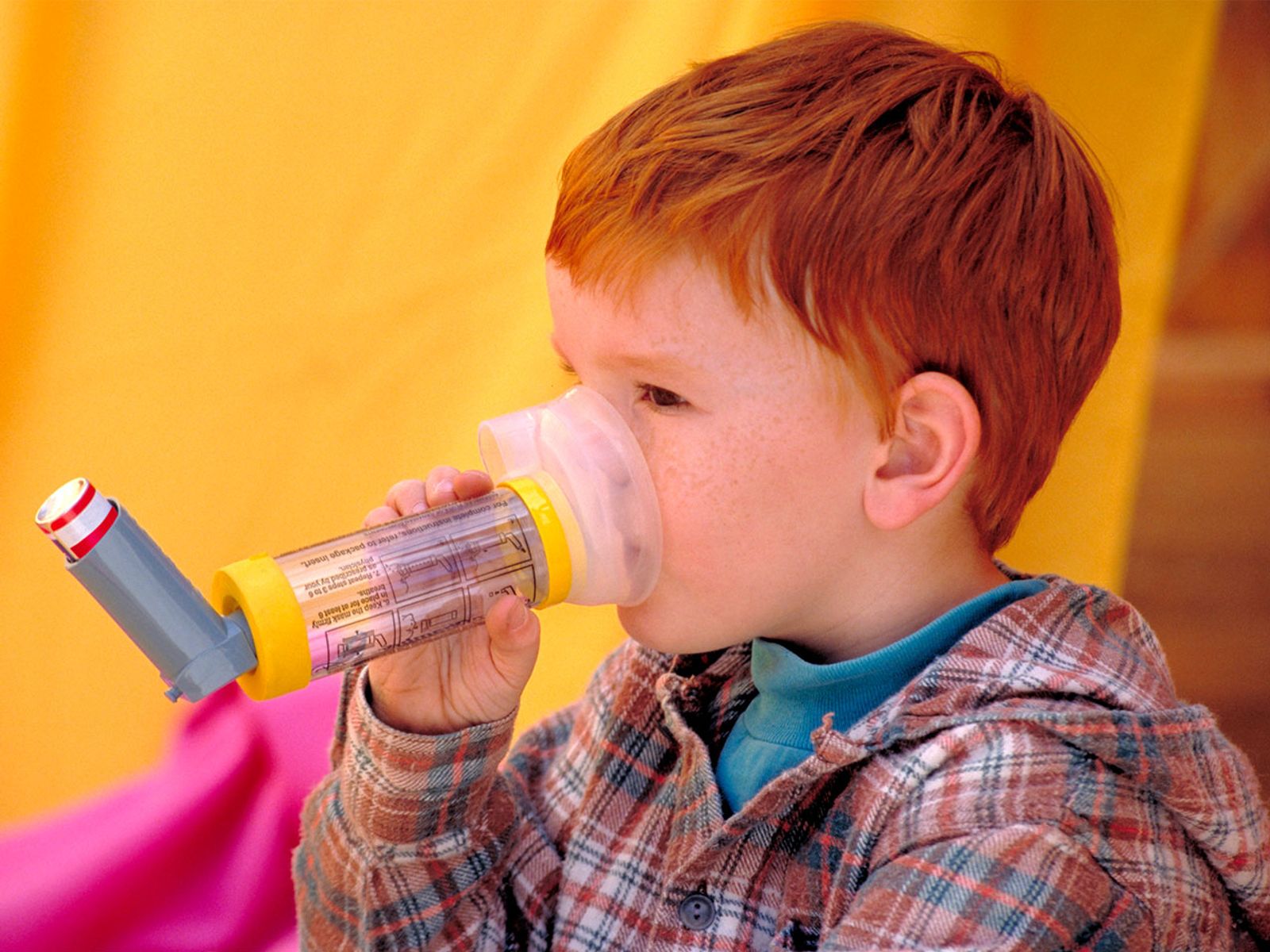
Inhaler plus spacer
- Pros: Fast (often under a minute). Portable. Less cleanup. Great for daycare, travel, and on-the-go symptoms when a child can tolerate the spacer mask.
- Cons: Technique matters. If the seal is poor or the timing is off, less medicine reaches the lungs. Some toddlers still fight the spacer mask.
If you are wondering whether your toddler can switch from nebulizer to inhaler with spacer, that is a great conversation to have with your child’s clinician. Many kids can, and some families prefer it for speed and convenience.
Safety notes
- Use only the medication prescribed for your child, in the prescribed dose.
- Stay with your child during treatments. Toddlers and tubing are a risky combo, especially for strangulation or entanglement if they twist, climb, or wander.
- Do not share nebulizer parts between siblings unless your clinician specifically instructs you how to do this safely. Each child should have their own mask and cup whenever possible.
- Do not add essential oils or other non-prescribed substances to the nebulizer.
When to get urgent help
Nebulizer treatments are common, but wheezing can become serious quickly in little kids. Seek urgent medical care right away if your child has any of the following:
- Breathing looks hard even at rest, or they are working to breathe (ribs pulling in, belly breathing, nostrils flaring)
- They cannot speak, cry, or drink normally because of breathing difficulty
- Lips or face look blue or gray
- They seem unusually sleepy, limp, or hard to wake
- Your child is getting worse quickly, or you have a gut feeling something is not right
If your clinician gave you specific “go in now” instructions for your child, follow those.
Quick FAQ
Can my toddler do a treatment while sleeping?
Some toddlers will tolerate it better when drowsy, but many will wake up and fight the mask. Effective delivery is also harder if the mask is loose. If you are considering sleep treatments regularly, talk with your clinician about whether an inhaler with spacer might be a better fit.
Can I hold the mask near their face instead of strapping it on?
Yes, and many families do. A snug seal helps, but forcing straps can backfire. Aim for the best seal you can get while keeping your child reasonably calm and breathing the mist.
What if we miss a dose or the treatment ends early?
Follow your clinician’s plan. If your child is still wheezing or struggling, do not just guess extra doses. Call your pediatrician or nurse line for guidance.
Do we need a new cup or mask sometimes?
Often, yes. Over time, parts can wear out, crack, or get cloudy. If treatments take longer than they used to, you notice damage, or the fit is poor, ask about replacement parts.
Sarah Mitchell
Sarah Mitchell is a Registered Pediatric Nurse and a mother of three who has spent over a decade helping families navigate the beautiful, chaotic early years of childhood. She combines evidence-based medical knowledge with real-world parenting experience to offer practical, compassionate advice. At Awesome Parent, Sarah's mission is to help exhausted parents find solutions, trust their instincts, and finally get some sleep.