
Support your child through OCD rituals without getting pulled into reassurance loops. Practical phrases, calm limits, safety caveats, and how to step back wi...
OCD Rituals at School: What to Tell the Teacher

Sarah Mitchell
Sarah Mitchell is a Registered Pediatric Nurse and a mother of three who has spent over a decade helping families navigate the beautiful, chaotic early years of childhood. She combines evidence-based medical knowledge with real-world parenting experience to offer practical, compassionate advice. At Awesome Parent, Sarah's mission is to help exhausted parents find solutions, trust their instincts, and finally get some sleep.
If your child has OCD, the school day can feel like a marathon of decisions for them and for you. Do I let them go to the bathroom again? Do I answer the “Are you sure?” question one more time? Do I email the teacher or will that make me “that parent”?
I’ve been on both sides of the desk, as a pediatric triage nurse listening to worried families, and as a mom trying to get three kids out the door with matching shoes. The good news is this: most teachers want to help. They just need clear, simple guidance on what OCD looks like in your child and what support helps without turning school into one long ritual.

This article will help you communicate practical supports for common school-based rituals like repeated bathroom trips, rewriting, checking, and reassurance-seeking. I will also talk about when it’s worth having a 504 conversation. What I will not do is give an exposure plan. That belongs with a licensed therapist who treats OCD, usually using CBT with ERP.
Start with a simple OCD explanation
Teachers do not need a deep dive into every thought your child has. They need a short description that helps them interpret behavior correctly and respond consistently.
Here is a teacher-friendly explanation you can copy into an email:
“My child has obsessive-compulsive disorder (OCD). At school, it can show up as getting stuck on certain actions or questions. These are not choices or attention-seeking behaviors. They are anxiety-driven rituals that can bring brief relief in the moment, but often grow if they get repeated or reassured. We’re working with a therapist, and it helps if school responses are calm, consistent, and don’t turn into repeated reassurance.”
If your child has specific triggers (contamination worries, fear of making mistakes, needing things to feel “just right,” harm worries), add one sentence. More than that can overwhelm a busy teacher.
One more thing I like to say out loud, especially in elementary school: some reassurance-seeking and perfectionism is developmentally typical. What we are watching for is intensity, impairment, and getting stuck.
What helps without feeding rituals
One of the trickiest parts of OCD support at school is that the things that calm a child in the moment can accidentally strengthen OCD long-term. The goal is not to be cold or punitive. The goal is to be kind, neutral, and consistent about rituals.
General principles to share
- Stay calm and neutral. Big emotional reactions, even very caring ones, can make OCD feel more important.
- Use predictable language. Short scripts reduce negotiations.
- Praise brave behavior, not perfect work. Teachers can notice effort, flexibility, and returning to task.
- Limit special rules that revolve around the obsession. Accommodations should help access learning, not build a bigger ritual.
- Coordinate with parents and therapist. Consistency across adults matters.
- Avoid punishment for symptoms. Loss of recess or public call-outs tend to add shame and can intensify rituals. Neutral redirection is usually more effective.
If you remember nothing else, remember this: we support the child, not the OCD.
Bathroom trips and toileting rituals
Repeated bathroom requests are a common school pattern families report. Sometimes it is contamination fear, sometimes it is a “just in case” worry (fear of an accident), and sometimes it is a mental checking loop that only quiets down after they try again.

What to tell the teacher
- Share the pattern. For example: “He asks to go every 10 minutes during writing,” or “She goes, then returns asking to go again right away.”
- Ask for a consistent plan. Inconsistency fuels bargaining and anxiety.
- Emphasize dignity. The goal is to avoid shaming while also avoiding unlimited ritual trips.
A simple script teachers can use
Offer the teacher a short phrase that acknowledges feelings but does not provide reassurance:
“I hear you. You can use your scheduled bathroom time. Then we come right back to learning.”
Or, if your child already went:
“You already tried. I know it feels urgent. We’re going to wait five minutes and then check in.”
When bathroom access is a safety issue
If your child has constipation, urinary symptoms, diabetes, a history of UTIs, or any medical reason that requires freer bathroom access, tell the school and loop in the pediatrician. OCD can coexist with medical needs. The plan should reflect both.
Rewriting and stuck perfectionism
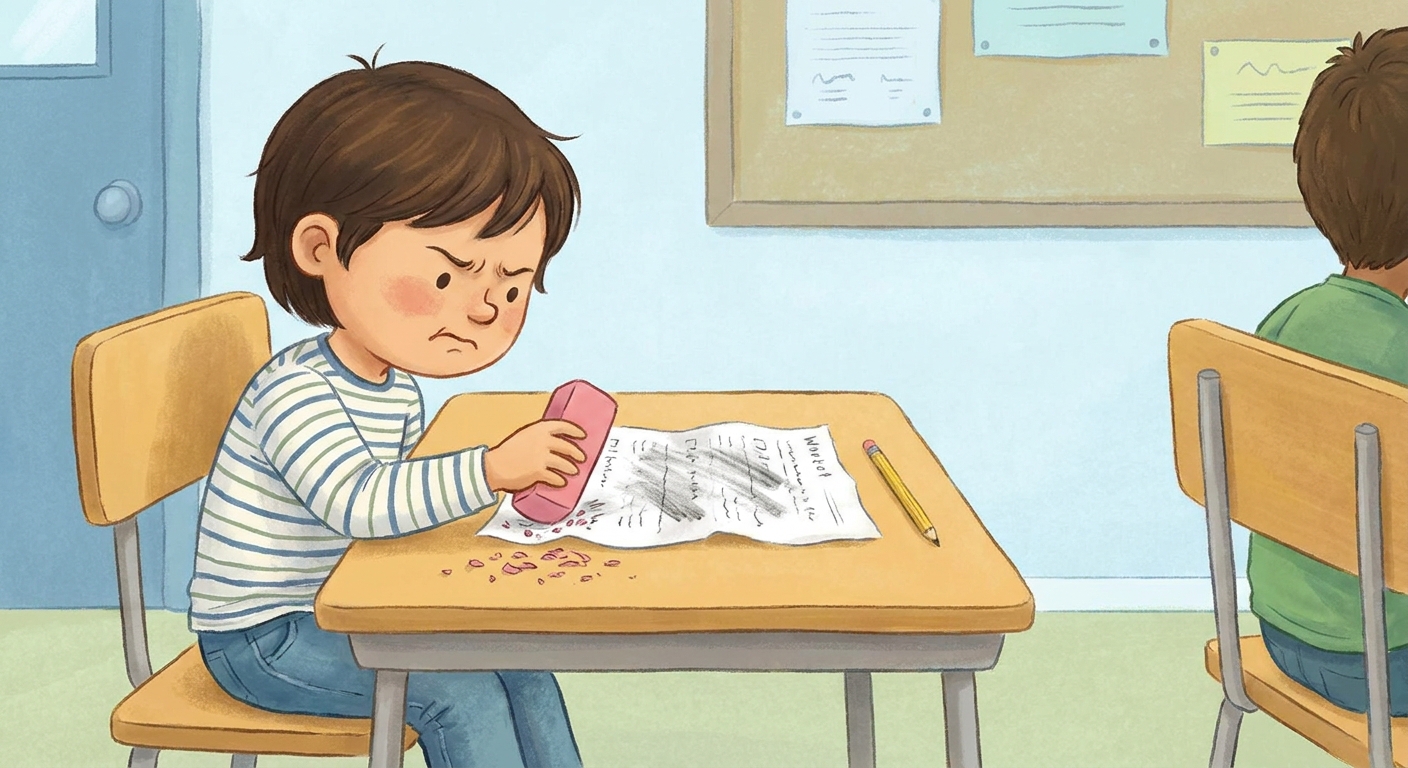
OCD can make a child feel like they must rewrite until it feels “right.” They might erase repeatedly, restart assignments, or refuse to turn in work that is complete but does not feel perfect.
What helps in class
- Time limits and good-enough rules. Example: “You get 10 minutes, then you turn in what you have.”
- Single rewrite policy. If rewriting is the ritual, limit the number of restarts.
- Alternate response options. Typing instead of handwriting, or using a pen to reduce erasing loops, can help some kids. For others, pen increases panic. This is very individual.
- Grading accommodations when appropriate. Sometimes separating content knowledge from presentation (for example, not grading handwriting neatness) reduces the ritual fuel.
Teacher script for rewriting loops
“I can see you’re stuck. Pick your best answer and move on. We’re practicing finishing.”
This is firm, supportive, and does not invite a debate about whether the work is “really OK.”
Repeated questions and reassurance
OCD loves to recruit adults into a loop. A child may ask:
- “Are you sure I didn’t cheat?”
- “Did I do that correctly?”
- “Are you mad at me?”
- “What if I accidentally hurt someone?”
In the moment, reassurance can soothe anxiety. For many kids, the doubt returns quickly, louder than before, and the questions multiply. At school this can eat up teacher attention, disrupt learning, and embarrass the child.
What to ask the teacher to do instead
- Answer once, then pivot. One brief response, then redirect to the task.
- Use a standard phrase. Predictable language reduces the payoff.
- Offer a reassurance limit. For example: “I will answer one time.”
Teacher scripts that feel classroom-natural
- For “Are you sure?” “I answered that. Now we’re moving on.”
- For “Did I do it right?” “Check the directions and use your best judgment.”
- For “Are you mad at me?” “I’m your teacher and I’m here to help you learn. Let’s get back to the assignment.”
These phrases can feel unnatural at first, especially to warm teachers who love to reassure. You can tell them that discomfort is normal and that consistency is what helps over time.
Checking loops and transitions
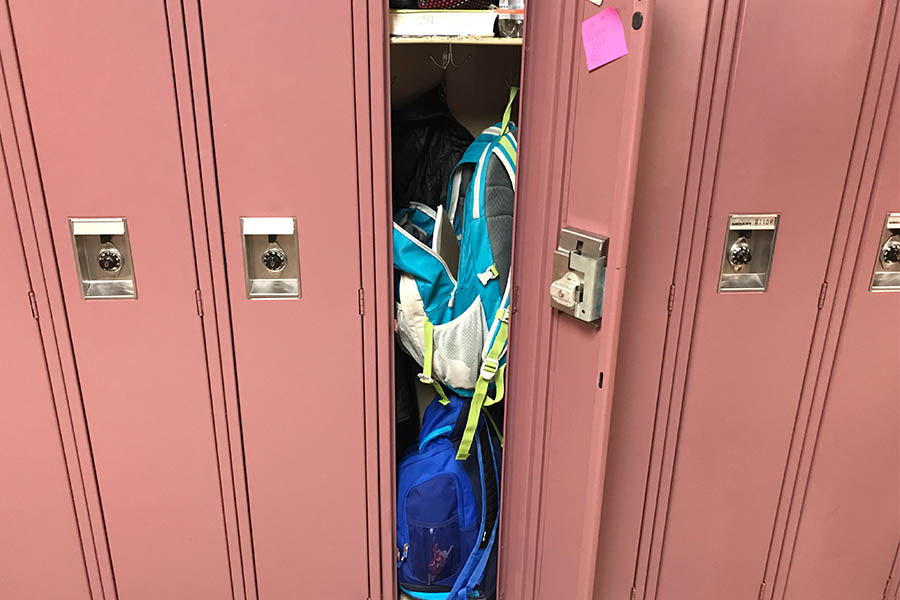
Some kids get stuck checking zippers, locks, homework folders, or whether they turned something in. It can look like lateness, “dawdling,” or refusal to transition.
Supports that often help
- One-check routine. “Check once using the list, then close the locker.”
- Visual checklist. A small list taped inside a binder or locker can reduce mental checking. The list should be short.
- Transition warnings. A 2-minute heads-up before switching activities gives time to complete the routine without panic.
- Adult stance. Calmly prevent the 10th check without shaming: “You already checked. Time to go.”
Middle and high school tweaks
What works in elementary school often needs a privacy and autonomy upgrade as kids get older. Between class changes, lockers, multiple teachers, and social pressure, OCD can flare in different places.
- Keep scripts private. A quiet cue at the desk beats calling it out in front of peers.
- Pick one point person. Older students do better when one counselor or case manager coordinates, rather than every teacher improvising.
- Plan for hall transitions. Checking rituals and bathroom loops can spike between classes, so a clear routine matters.
Testing and exam days
Tests, quizzes, and standardized exams can be a perfect storm for OCD, especially with fears of mistakes, rereading, checking, and needing things to feel “just right.” If this is a problem area for your child, it is worth naming directly.
Supports to consider
- Proctor script. One calm phrase like: “Do your best and keep moving.”
- Reduced reassurance. Answer procedural questions once, then redirect.
- Location options. A quiet room can help some kids focus, but for others it increases rumination. Individualize.
- Time decisions on purpose. Extended time can be helpful when OCD slows output. It can also create more room to ritualize. This is a great place to coordinate with your child’s clinician and the school team.
What not to ask the teacher to do
I know this part can sting because many of these requests come from a place of trying to keep your child comfortable. But comfort-only strategies can accidentally train the OCD brain that school is unsafe without rituals.
- Unlimited bathroom access with no plan (unless medically necessary).
- Repeated reassurance on the same question (“Yes, you’re fine” 20 times).
- Allowing endless rewrites or restarts to chase the “just right” feeling.
- Helping a child avoid all triggers (like never touching shared supplies). Some reasonable health boundaries are fine, but total avoidance is rarely sustainable.
- One-on-one soothing that makes the ritual bigger (long comforting conversations every time the obsession spikes).
Instead, aim for: compassionate limits, predictable scripts, and quick return to learning.
When to talk about a 504 plan
A 504 plan can help when OCD substantially impacts school functioning. This is not about labeling a child. It is about removing barriers so they can access learning.
One practical note: eligibility is determined by the school’s 504 team. They may request documentation, and they will look at how symptoms limit a major life activity (like learning, concentrating, thinking, or communicating).
Signs a 504 conversation may help
- Your child is missing instruction due to rituals (bathroom, checking, reassurance).
- They cannot complete work on time because of rewriting or perfectionism loops.
- They have frequent meltdowns or shutdowns at school related to OCD.
- School avoidance is building during the day (frequent visits to the nurse, calling home, asking to be picked up).
- Teachers are responding inconsistently because there is no formal plan.
Examples of accommodations that can fit
Accommodations should be individualized. The best ones support learning without turning into ritual fuel.
- Extended time for tests or assignments when OCD slows output, with guardrails so it does not become unlimited time to ritualize.
- Reduced homework volume to demonstrate mastery without hours of compulsions.
- Alternate format (typed work, oral responses) when handwriting triggers severe rewriting rituals.
- Preferential seating to reduce distractions if OCD thoughts derail focus.
- Planned breaks (brief, scheduled) rather than escape-based breaks every time anxiety spikes.
- A single designated staff check-in (counselor, psychologist) using a short, consistent protocol.
Important: A 504 is not a substitute for OCD treatment. It is scaffolding so your child can learn while they are getting appropriate care.
Confidentiality and your child’s comfort
Even young kids usually have an opinion about who knows what. When possible, ask your child what they are comfortable sharing. Then keep school communication focused on symptoms that affect learning and the response plan, not private details.
If your child is older, you can frame it like this: “We can tell your teachers what helps you at school without telling your whole story.”
How to write the email
Teachers appreciate clarity and brevity. If you want a structure that tends to land well, keep it to five parts.
A parent email that works
- One sentence about the diagnosis and what it looks like at school.
- Two or three specific rituals you’re seeing.
- What responses help. (Scripts, limits, routines.)
- What responses to avoid. (Repeated reassurance, repeated bathroom trips.)
- Next step. A quick call, a meeting with counselor, or a plan to revisit in 2 to 3 weeks.
Example you can personalize:
“Hi Ms. Rivera, I wanted to share that my child has OCD, and it shows up at school as repeated bathroom requests, getting stuck rewriting, and asking for reassurance that work is correct. We are working with a therapist. It helps when adults respond calmly and consistently, answer once and redirect, and use simple limits like a scheduled bathroom break and a one-rewrite rule. What tends to make things worse is repeated reassurance or allowing multiple restarts. Could we set up a quick time to align on a plan with the school counselor? Thank you so much for your support.”
Loop in the right school people
Depending on your child’s needs, you may want to include:
- School counselor, psychologist, or social worker: to support coping skills and coordinate plans.
- School nurse: especially if the rituals involve health complaints or frequent nurse visits.
- Special education coordinator or 504 case manager: if you’re considering formal accommodations.
- Principal or assistant principal: if logistics require administrative support (bathroom policies, testing accommodations).
Ask for one point person so you are not managing five separate conversations.
When to involve a therapist
OCD is highly treatable with evidence-based care, but it is also very specific. A therapist trained in OCD, often using CBT with ERP, can help your child learn to tolerate distress and reduce rituals.
What you can ask the therapist for, without asking school staff to run exposures:
- General guidance for school responses to reassurance-seeking, rewriting, checking, and bathroom rituals.
- Recommended scripts teachers can use.
- Suggested accommodations that support learning without feeding rituals.
- Permission to collaborate (a signed release) so the therapist can talk with the school if needed.
School staff can be supportive partners. Treatment planning belongs in the therapy room.
Red flags to take seriously
Most OCD rituals are not emergencies, but some situations warrant a faster response.
- Talk of self-harm or suicide or statements like “I can’t do this anymore.”
- Severe aggression or panic during rituals or when limits are set.
- Sudden, dramatic change in functioning (for example, a rapid shift in anxiety, rituals, eating, sleep, handwriting, or mood) that is out of character. It is worth checking in with your pediatrician to rule out medical issues alongside mental health support.
- School refusal that escalates quickly or your child cannot stay in class most days.
If any of these are present, contact your pediatrician and mental health provider promptly. If you believe your child is in immediate danger, seek emergency help.
FAQ
Should I tell the teacher my child has OCD?
If OCD is affecting the school day, sharing the diagnosis, or at least the pattern of symptoms, usually helps. Teachers tend to respond better when they understand this is anxiety-driven, not defiance.
Will limiting reassurance make my child’s anxiety worse?
In the short term, it can. That does not mean it is harmful. With a calm tone and consistent scripts, many kids adjust over time, especially when they’re also in evidence-based therapy.
What if the teacher thinks my child is being manipulative?
Use simple, concrete language: “This is a symptom pattern. It often spikes with stress and transitions. The goal is compassionate consistency.” If needed, involve the school counselor or psychologist to support staff education.
Can a teacher do ERP at school?
Teachers can support a student in ways that align with treatment, but they should not be asked to design or run an exposure program. That belongs with a trained OCD therapist in collaboration with the family and school.
The bottom line
Your child does not need a perfect school day. They need adults who understand what’s happening and respond in a steady, predictable way. When you talk to the teacher, focus on observable behaviors, simple scripts, and a plan for consistency. If OCD is significantly interfering with learning, a 504 plan can be a helpful next step. And if you have not already, getting connected with an OCD-trained therapist can make a world of difference.
And from one tired parent to another: you’re not overreacting. You’re advocating. There’s a difference.
Sarah Mitchell
Sarah Mitchell is a Registered Pediatric Nurse and a mother of three who has spent over a decade helping families navigate the beautiful, chaotic early years of childhood. She combines evidence-based medical knowledge with real-world parenting experience to offer practical, compassionate advice. At Awesome Parent, Sarah's mission is to help exhausted parents find solutions, trust their instincts, and finally get some sleep.