Worried about a rash and sore throat? Learn how scarlet fever relates to strep, what the rash can look and feel like, how long kids are contagious, and when ...
Peeling Palms and Soles After Scarlet Fever

Sarah Mitchell
Sarah Mitchell is a Registered Pediatric Nurse and a mother of three who has spent over a decade helping families navigate the beautiful, chaotic early years of childhood. She combines evidence-based medical knowledge with real-world parenting experience to offer practical, compassionate advice. At Awesome Parent, Sarah's mission is to help exhausted parents find solutions, trust their instincts, and finally get some sleep.
If your child had scarlet fever and now their fingertips look like they are shedding in little sheets, take a breath. I have gotten this exact worried phone call more times than I can count, and I have also stared at my own kid’s peeling hands thinking, wait, are we sick again?
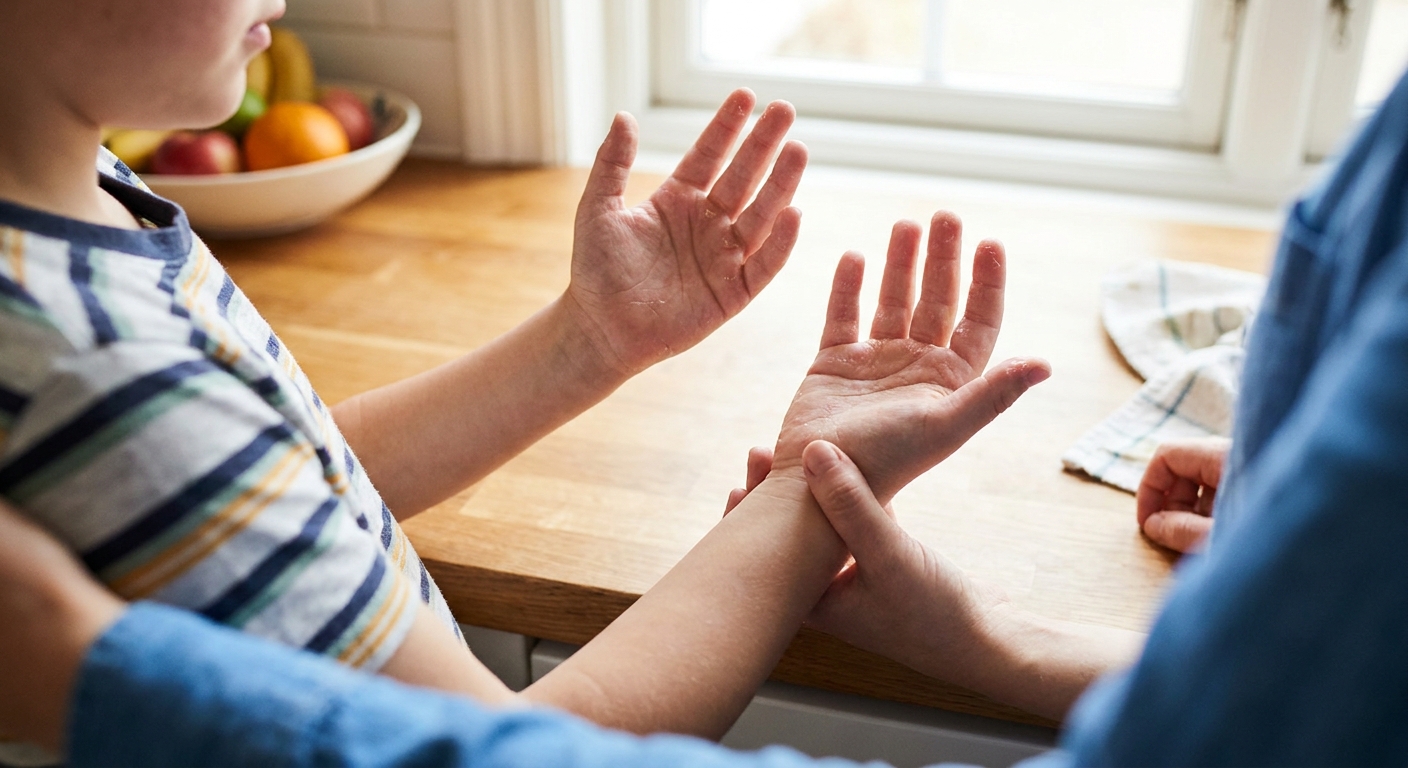
That sheet-like peeling on the fingers, palms, and sometimes the soles is a well-known “late” recovery change after scarlet fever. It often shows up after the rough, sandpaper rash has already faded, which is why it can feel so confusing.
Why peeling happens
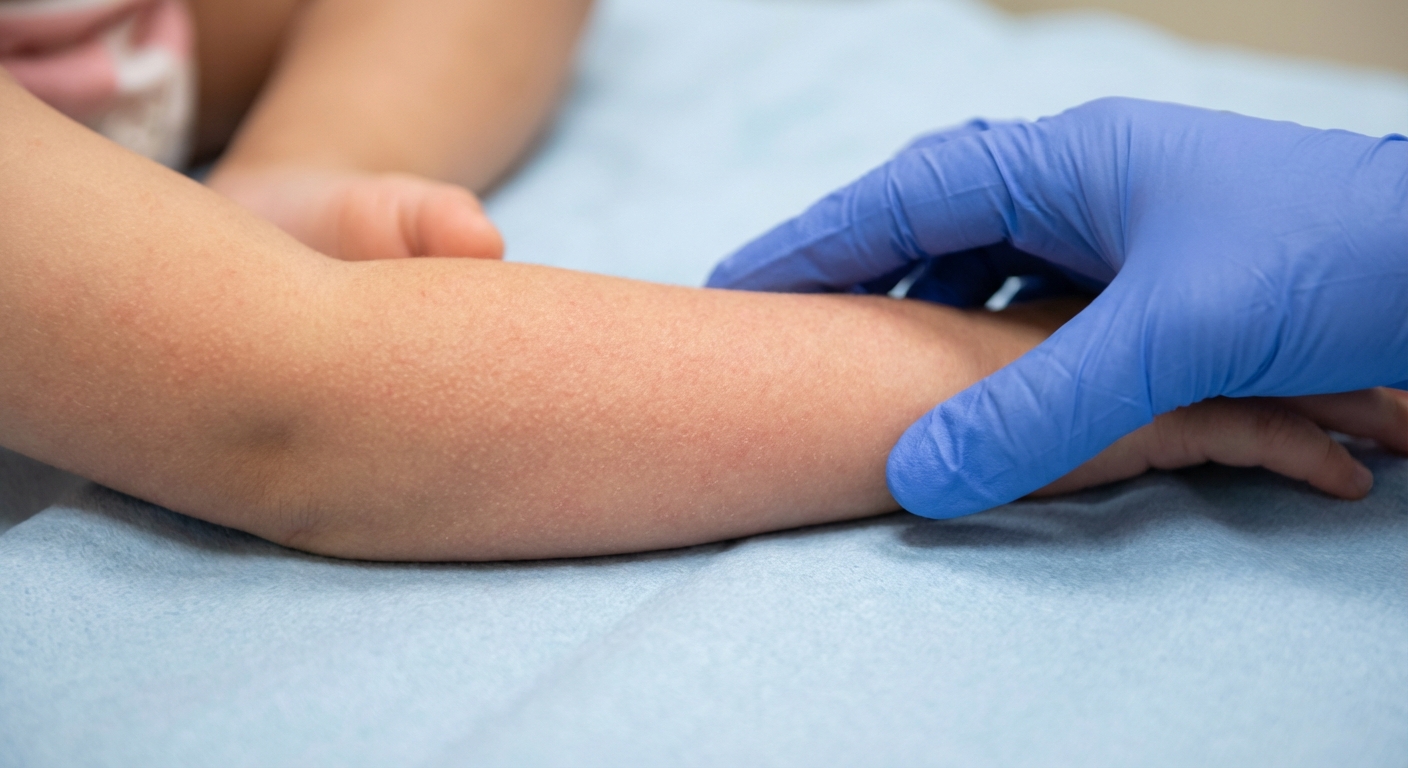
Scarlet fever is caused by strep bacteria (group A strep) that produce a toxin responsible for the classic sandpaper-like rash. Even after the rash improves and your child feels better, the outer layer of skin that was irritated by that toxin can start to loosen and lift.
That’s why peeling often looks:
- Sheet-like or flaky, especially at the fingertips
- Most noticeable on fingers, palms, and toes
- More dramatic after baths or handwashing
This peeling is called desquamation, and it is a common part of the skin’s “reset” after scarlet fever.
When peeling shows up
Many families notice peeling about a week or two after the rash starts improving. It may begin around the nails and fingertips and then move onto the palms. Some children also peel on the soles or between the toes.
It can last several days to a couple of weeks, and in some kids it can linger longer, especially on the feet.
Normal or something new?
Here is the practical way I separate “normal recovery peeling” from “we need to think about something else.”
Peeling that usually fits recovery
- Happens after the child’s sore throat and rash are improving
- Child is otherwise acting like themselves (energy and appetite coming back)
- No new widespread rash is spreading
- Peeling is mostly on fingertips, palms, toes, soles
- Skin underneath looks pink and tender but not wet, oozing, or crusted
Signs it may be something else
Call your child’s clinician if you see:
- New fever after they were improving
- A new rash that is widespread, very itchy, blistering, or looks like purple or bruised-looking spots (especially if they do not fade when you press on them)
- Honey-colored crusting or pus (could suggest a skin infection like impetigo)
- Peeling with painful raw areas, especially if the skin looks wet, shiny, or is sloughing off easily
- Peeling that involves lips, eyes, or inside the mouth
Scarlet fever peeling is usually dry and superficial. If your child looks truly ill, has mouth or eye involvement, or the skin seems to “slide” with gentle rubbing, that can point to a different, more serious skin condition (for example, staphylococcal scalded skin syndrome or a medication-related reaction) and needs prompt evaluation.
How to help at home
The goal is comfort and protecting the new, tender skin underneath.
What helps
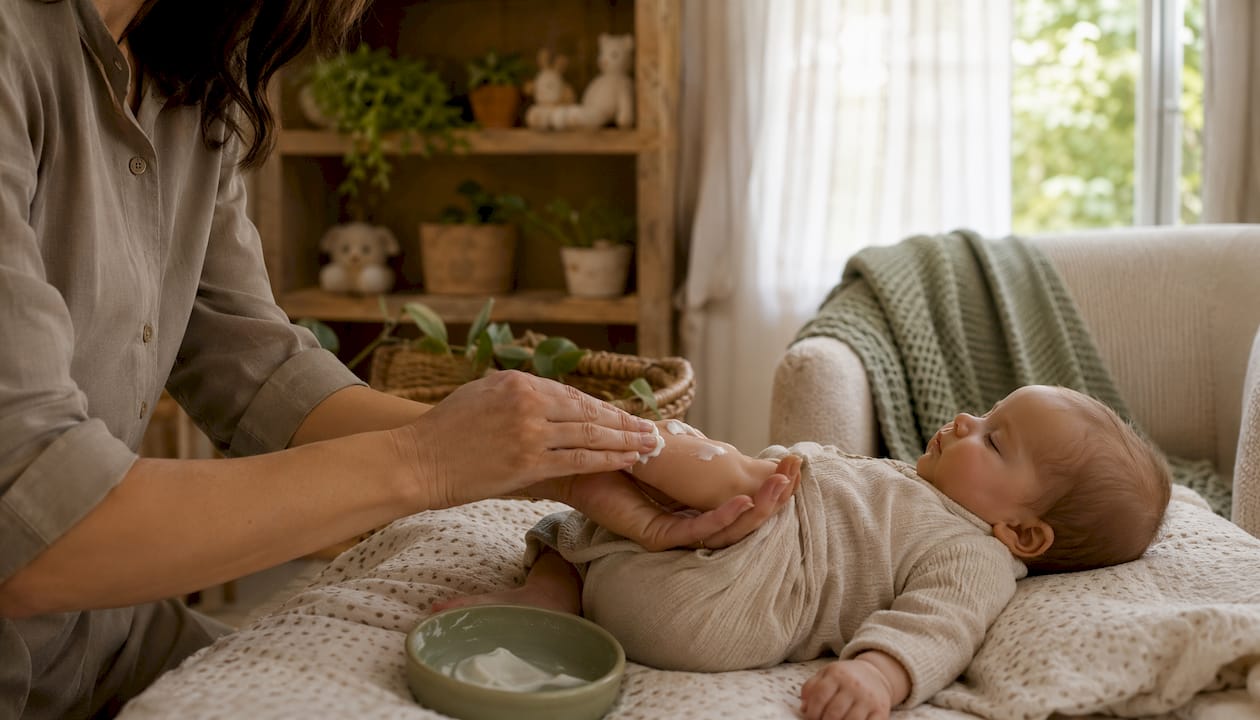
- Moisturize often: Use a thick, fragrance-free cream or ointment after handwashing and at bedtime.
- Gentle washing: Lukewarm water, mild soap, and pat dry.
- Protect cracks: If fingertips split, a small amount of ointment plus a bandage can reduce stinging.
- Socks at night: For peeling soles, a layer of ointment and clean cotton socks can help.
What to avoid
- Do not peel it off: Let loose skin shed on its own. Pulling can cause bleeding and infection.
- Avoid harsh exfoliants or acids on kids’ skin.
- Skip heavily scented lotions if the skin is irritated.
If your child complains that it stings, that is common when new skin is exposed. Moisturizer before school and after bathing usually makes a noticeable difference within a day or two.
Antibiotics and contagiousness
No. Peeling does not mean treatment failed, and it does not automatically mean your child is contagious again.
With scarlet fever, antibiotics treat the strep infection. The peeling is the skin’s delayed response to earlier toxin exposure and inflammation. It can happen even when the infection is clearing exactly as expected.
In general, children with strep are considered much less contagious after 24 hours on appropriate antibiotics and when they are fever-free and feeling better. Follow your school’s rules and your clinician’s guidance.
If symptoms of strep return (especially sore throat with fever), it is worth a call because reinfection can happen.
One more basics reminder: if your child was told they have scarlet fever, make sure they finish the antibiotic course exactly as prescribed. If no strep test was done, or your child never started treatment, call your clinician to make sure the diagnosis and plan are solid.
When to call the doctor today
Most post-scarlet-fever peeling is benign. But scarlet fever is a strep illness, and a small number of kids can develop complications in the weeks after a strep infection. Peeling alone is not one of those dangerous complications. The symptoms below are the ones that make me want families to call the same day.
Same-day call for any of these
- Fever that returns after your child was improving
- Dark urine that looks cola-colored, tea-colored, or bloody
- Swelling of the face (especially puffy eyelids), hands, or feet
- New joint pain or joint swelling, especially if it moves from one joint to another
- Chest symptoms that are new or worsening, like chest pain, trouble breathing, fainting, an unusual fast heartbeat, or extreme fatigue that is out of proportion (these are uncommon, but important)
- Severe headache, persistent vomiting, stiff neck, or your child seems much more ill than expected
Those symptoms can point to post-strep complications that need prompt evaluation. If your child is struggling to breathe, very lethargic, or you are worried they are getting worse quickly, seek urgent care or emergency care.
FAQs
How long does the peeling last?
Often a few days to a couple of weeks. In some kids, especially with feet, it can last longer.
Can my child go to school with peeling hands?
Usually, yes, if they otherwise feel well and meet the usual return guidelines (commonly at least 24 hours after starting antibiotics and fever-free). Peeling itself is not a reason to stay home.
If the skin is cracking and stinging, sending a small fragrance-free moisturizer and a couple of bandages in the backpack can make the day a lot more comfortable.
Should I put antibiotic ointment on the peeling areas?
Usually no. Plain moisturizer is enough. Use antibiotic ointment only if your clinician recommends it, or if there are clear signs of infection such as spreading redness, pus, warmth, or increasing pain.
Is peeling a sign of an allergic reaction to antibiotics?
Typically, no. Medication allergies more often cause hives (raised itchy welts), facial swelling, or a new widespread rash that appears while taking the medicine. If your child developed a new rash during treatment, or has lip or face swelling, or trouble breathing, contact a clinician urgently.
Bottom line
Sheet-like peeling of the fingertips, palms, and soles in the week or two after scarlet fever is usually a normal part of recovery. Focus on comfort care, keep the skin moisturized, and try not to pick.
What I do want you to watch for is not “more peeling,” but return of fever, dark urine, new joint pain, or any chest symptoms. Those deserve a same-day call to your child’s clinician.
Sarah Mitchell
Sarah Mitchell is a Registered Pediatric Nurse and a mother of three who has spent over a decade helping families navigate the beautiful, chaotic early years of childhood. She combines evidence-based medical knowledge with real-world parenting experience to offer practical, compassionate advice. At Awesome Parent, Sarah's mission is to help exhausted parents find solutions, trust their instincts, and finally get some sleep.