The scary terms are everywhere, but the facts are calmer. Here is what happens after a water scare, which symptoms matter, when to go to the ER, and how to p...
Pool and Water Safety for Toddlers

Sarah Mitchell
Sarah Mitchell is a Registered Pediatric Nurse and a mother of three who has spent over a decade helping families navigate the beautiful, chaotic early years of childhood. She combines evidence-based medical knowledge with real-world parenting experience to offer practical, compassionate advice. At Awesome Parent, Sarah's mission is to help exhausted parents find solutions, trust their instincts, and finally get some sleep.
In the pediatric clinic, the scariest stories were often the quiet ones. No screaming, no big splash, no dramatic movie moment. Just a toddler who slipped under while adults were nearby. Drowning is often fast and silent, and that is exactly why prevention has to be boring, consistent, and a little bit strict.
This page is your prevention playbook for pools, bathtubs, and open water for toddlers and preschoolers. We will cover supervision rules that actually work, life jacket basics, drain entrapment awareness, realistic swim lesson expectations, and what to do in the first minutes after a submersion scare (plus what to watch for afterward).
The most important rule: touch supervision
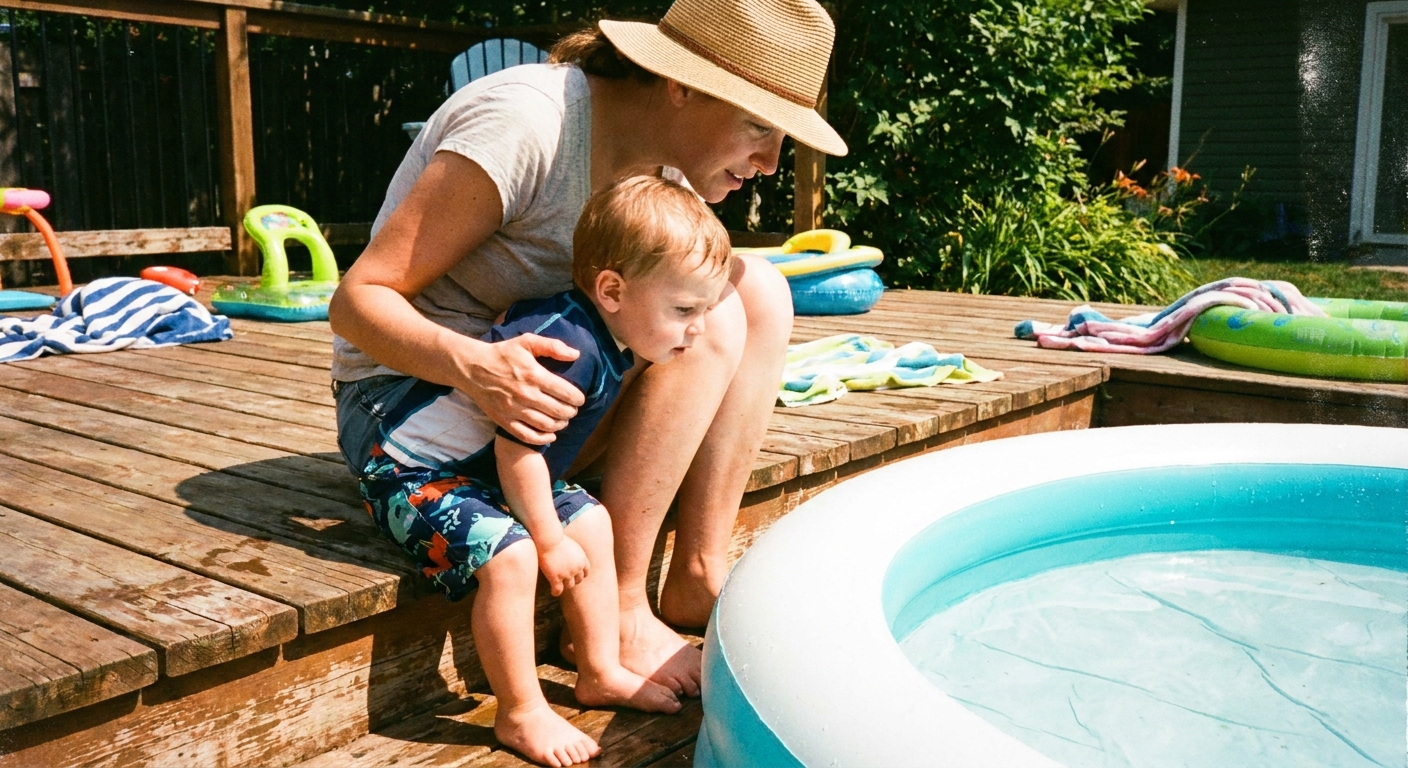
If you remember one thing, make it this: toddlers need touch supervision around water. That means an adult is within arm’s reach, eyes on the child, with no other job. It is the single best way to reduce drowning risk, and it works even when every other layer fails.
What touch supervision looks like
- Within arm’s reach at the pool, splash pad, lake edge, or beach shoreline.
- Eyes on the child, not “listening while I answer a text.”
- No multitasking: not grilling, not chatting with your back turned, not scrolling, not running inside “just for a second.”
- In the water with them if they cannot swim independently.
Use a Water Watcher system
When there are multiple adults, everyone assumes someone else is watching. Fix that with a simple system:
- Assign one adult as the Water Watcher for 15 minutes.
- Set a phone timer (on loud) for the switch.
- That adult stays phone-free, sober, and close enough to grab.
- Then verbally hand off: “You’re Water Watcher now.”
- In parties, consider a lanyard, hat, or wristband the watcher wears so it is obvious.
Harsh truth: “There are lots of adults here” is not a safety plan.
Layers of protection
Supervision is non-negotiable. But barriers catch the moment real life happens, like a doorbell, a sibling fight, or you blinking at the wrong time.
Backyard pool barriers
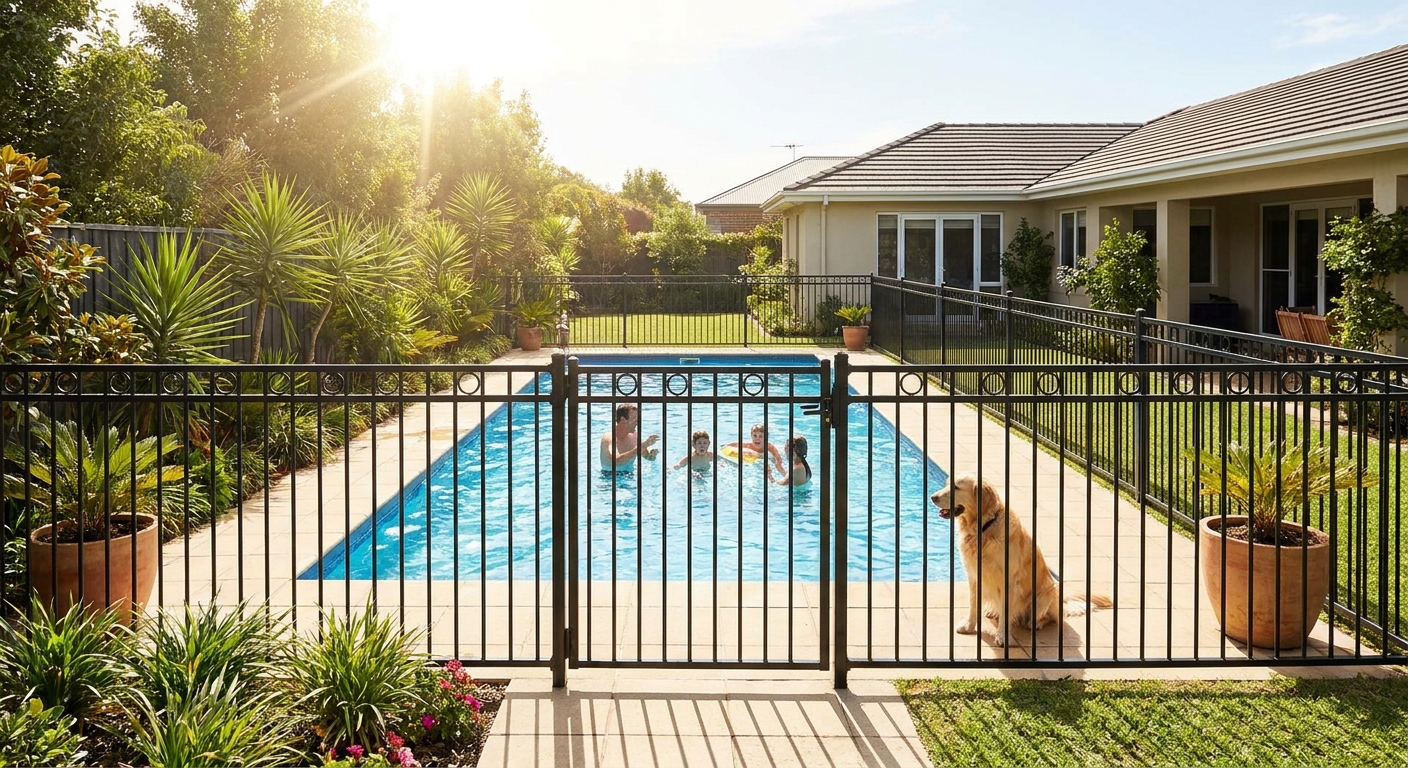
- Four-sided fencing around the pool is the gold standard. Many pediatric safety guidelines recommend it be at least 4 feet (1.2 meters) high. House walls and sliding doors are not as reliable as a dedicated fence.
- Self-closing, self-latching gate, with the latch high enough that kids cannot reach it.
- Keep toys out of the pool when not in use. Toys attract kids back to the water.
- Alarms help: door alarms, gate alarms, and pool alarms can add an extra layer. Do not use them as a replacement for fencing and supervision.
Door and window safety
- Put high locks or childproof devices on doors leading to the pool.
- Add door chimes so you hear any exit.
- For toddlers who wander, consider nighttime barriers like baby gates outside bedrooms plus door alarms.
Hot tubs and above-ground pools
- Keep hot tubs locked and covered when not in use.
- For above-ground pools, remove ladders or secure access when the pool is unattended.
Life jackets
Puddle jumpers and floaties are fun, but they can give a false sense of security. For open water and boating, you want a real life jacket.
When toddlers should wear one
- Any time near open water: lakes, rivers, ocean, docks, and marinas.
- On boats and near moving water, even if the child “stays right by me.”
- At homes with unfenced water access (for example, a lake house) when outside.
How to choose and fit one
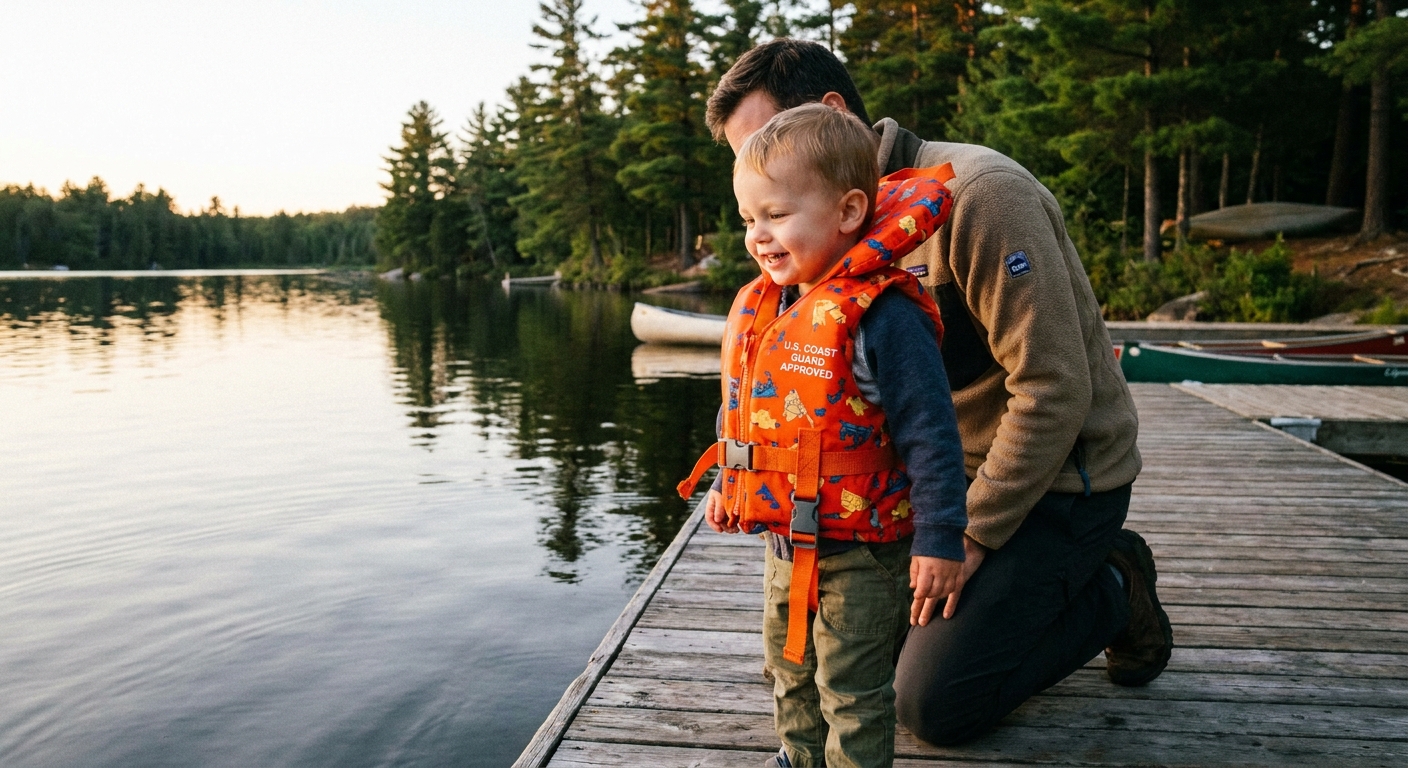
- Use a U.S. Coast Guard-approved life jacket (or your country’s equivalent approved standard).
- Choose the correct weight range on the tag.
- For toddlers, look for a secure fit with a crotch strap. Some models may include a head support collar for added stability.
- Do a quick fit check: zip and buckle it, then lift the jacket at the shoulders. If it rides up to the ears or chin, it is too loose.
Important: a life jacket is not a permission slip to stop supervising. It is a backup for when prevention fails.
Bathtub safety
The bathtub feels controlled, familiar, and indoors. That is exactly why it can catch parents off guard. Toddlers can drown in even a few inches of water, and it can happen quickly.
Bathtub rules that prevent accidents
- Stay within reach the entire bath. If you must leave, take your child with you, even if they protest.
- No “quick sibling baths” unless you are right there and the older child understands safety rules. Many incidents happen when a parent steps out.
- Prep first: towel, pajamas, diaper, lotion, everything within reach before the water goes in.
- Drain the tub immediately when done. Do not leave standing water.
- Skip bath seats as a safety device. They can tip, and they do not replace hands-on supervision.
Toilets and buckets
- Use toilet locks if you have a toddler who explores.
- Empty buckets and coolers right away. Store them upside down.
- Keep bathroom doors closed when possible.
Open water rules
Open water adds current, waves, drop-offs, poor visibility, slippery rocks, and cold shock. Kids who “do fine” in a pool can get overwhelmed fast.
What to do
- Life jacket on near the water, not after you get worried.
- Hold hands on shorelines. Toddlers get knocked over by a single wave.
- Skip river currents with little kids, even shallow ones. Moving water is powerful.
- Choose designated swim areas with lifeguards when possible.
- Watch the water, not just the child: rip currents, sudden drop-offs, boat traffic.
Visibility tip that helps in pools and open water: dress your child in a bright, neon swimsuit (think highlighter colors). Blue, gray, and pastels can disappear against pool water and shadows.
Drain entrapment
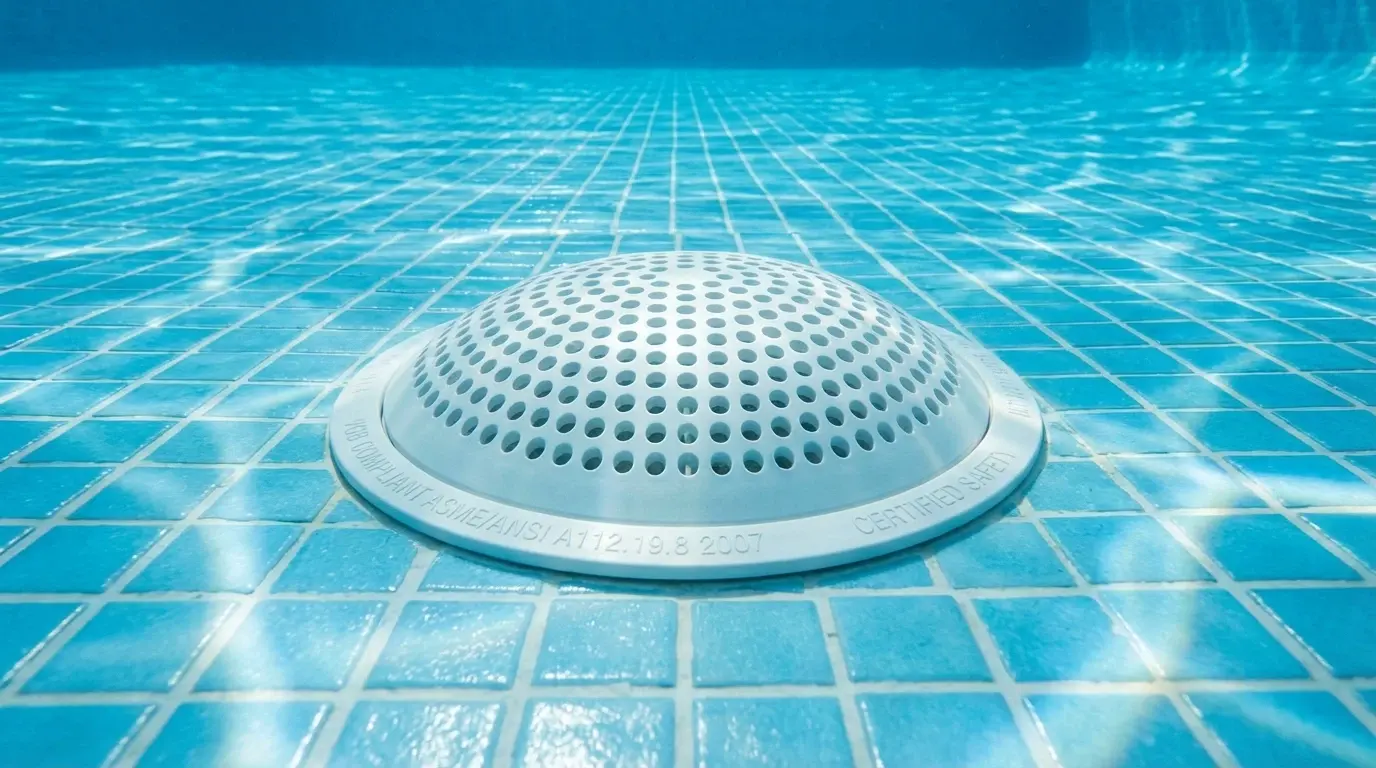
Pool and hot tub drains can create suction strong enough to trap hair, clothing, or a body against the drain. This is uncommon, but serious.
How to reduce the risk
- Avoid sitting on or playing near drains in pools and spas. Make it a family rule.
- Keep long hair tied up and avoid loose strings on swimsuits.
- Use pools that have proper drain covers that are intact and secure. If a cover is broken or missing, do not get in.
- Be extra cautious in spas and hot tubs, where tight spaces and strong pumps can increase risk.
If you manage a home pool, have a qualified professional verify that drain covers and suction systems meet current safety standards.
Swim lessons
Swim lessons are a great layer of protection, but they do not make a toddler drown-proof. Think of lessons like teaching your child to look both ways. Helpful, important, and still not a substitute for holding hands in a parking lot.
What to expect
- Babies (under 1 year): water familiarization and parent-child classes can build comfort. Do not expect independent safety skills.
- Toddlers (1 to 3 years): some can learn basic skills like floating, blowing bubbles, getting to a wall, and climbing out. Progress varies widely.
- Preschoolers (3 to 5 years): many children can start learning coordinated strokes and breathing, plus safer entries and exits. They still need close supervision.
How to choose a program
- Look for instructors trained in child water safety and CPR.
- Small class sizes help. Toddlers learn best with high attention and lots of repetition.
- Ask what they teach about reaching the wall, rolling to the back, and climbing out.
Even strong swimmers can panic, cramp, get cold, or misjudge a drop-off. Supervision stays the same.
Pool rules for kids
These are simple, repeatable rules that reduce chaos and prevent common injuries:
- No running on the pool deck.
- No dunking or holding anyone underwater, even “playing.”
- No breath-holding contests.
- Feet first unless an adult says it is safe to jump.
- Ask before getting in, every time.
Pool day checklist
- Designate a Water Watcher and set a timer for 15 minutes.
- Phone away or on airplane mode if you are the watcher.
- Avoid impairment: no alcohol or substances for the active watcher.
- Life jacket on for open water and boating.
- Gate latched and doors alarmed before and after swimming.
- No toys left in the water after play.
- CPR knowledge: at least one adult present who knows child CPR is ideal.
- Emergency plan: address posted, rescue equipment accessible, everyone knows who calls 911.
If your child goes under
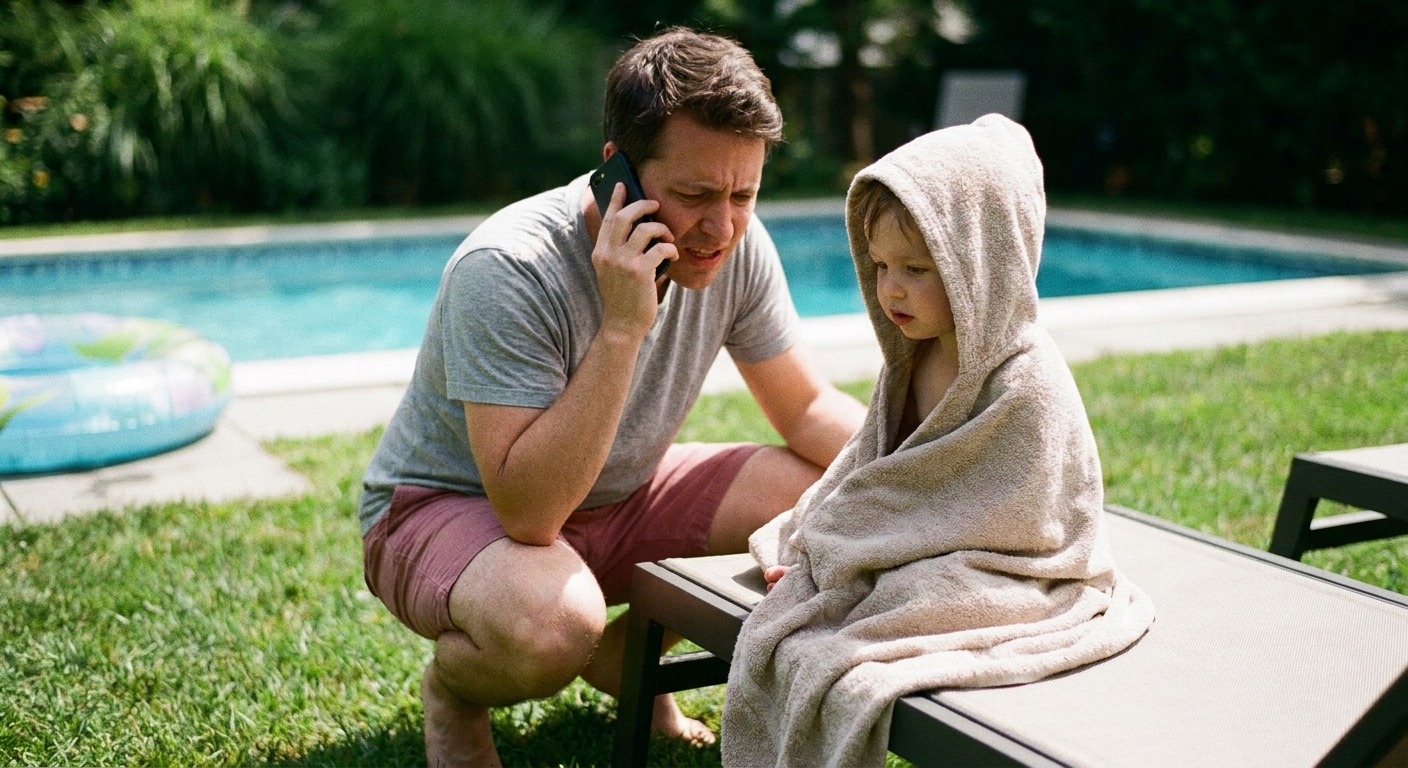
This is the part no parent wants to read, but every parent should. If a child is submerged or you are not sure how long they were under, treat it as an emergency and act fast.
What to do
- Get the child out of the water immediately.
- Shout for help so someone else can call 911 while you stay with your child.
- Check responsiveness and breathing.
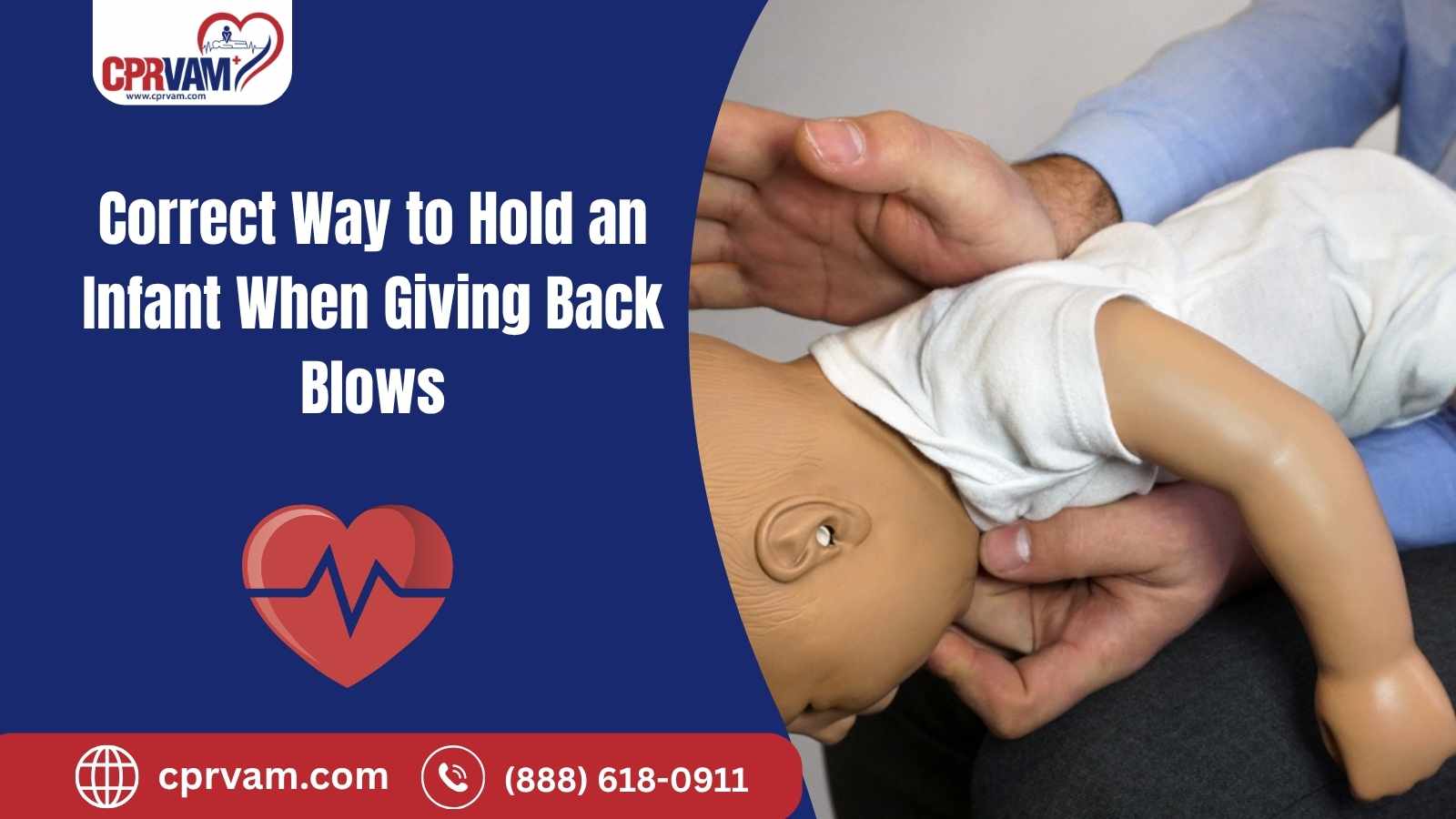
- If your child is not breathing or only gasping, start CPR right away and have someone call 911 (or call on speaker while you start CPR if you are alone). If a dispatcher gives instructions, follow them.
- If your child is breathing, keep them warm, stay with them, and get medical guidance. In many cases, clinicians recommend evaluation after a submersion event, even if a child seems okay at first. When in doubt, call your local emergency number or seek urgent care guidance.
Red flags after a scare
Get emergency help right away if you notice any of the following in the hours after a submersion event:
- Worsening or persistent cough
- Fast, noisy, or labored breathing (including chest pulling in between ribs)
- Blue or gray lips or face
- Chest pain
- Vomiting with breathing concerns
- Unusual sleepiness, confusion, or trouble waking
- Fever or behavior that feels “off” to you
What not to do
- Do not waste time trying to “get water out” first. Breathing and circulation come first.
- Do not assume coughing means they are fine. Coughing can mean the airway was irritated and they may need assessment.
- Do not drive yourself if your child is struggling to breathe, very sleepy, or hard to wake. Call 911.
Extra safety that pays off
Learn CPR
Knowing child CPR is one of those skills you hope you never use and will never regret having. Many community centers, hospitals, and the Red Cross offer courses online and in person.
Keep rescue tools visible
- A shepherd’s hook or reaching pole
- A life ring or throw flotation device
- A clearly visible address sign for emergency responders
Talk about water like you talk about cars
Not scary. Not casual. Just consistent:
- “Water means a grown-up is close enough to touch you.”
- “We ask before we go near the pool.”
- “Feet first, hold my hand.”
The calm, firm takeaway
You do not need to be a perfect parent to reduce drowning risk. You need a few clear rules that you follow every single time, especially when you are tired, distracted, or hosting people.
If you want the simplest mantra to tape to your brain for summer: Fence. Life jacket in open water. Touch supervision always.
Sarah Mitchell
Sarah Mitchell is a Registered Pediatric Nurse and a mother of three who has spent over a decade helping families navigate the beautiful, chaotic early years of childhood. She combines evidence-based medical knowledge with real-world parenting experience to offer practical, compassionate advice. At Awesome Parent, Sarah's mission is to help exhausted parents find solutions, trust their instincts, and finally get some sleep.