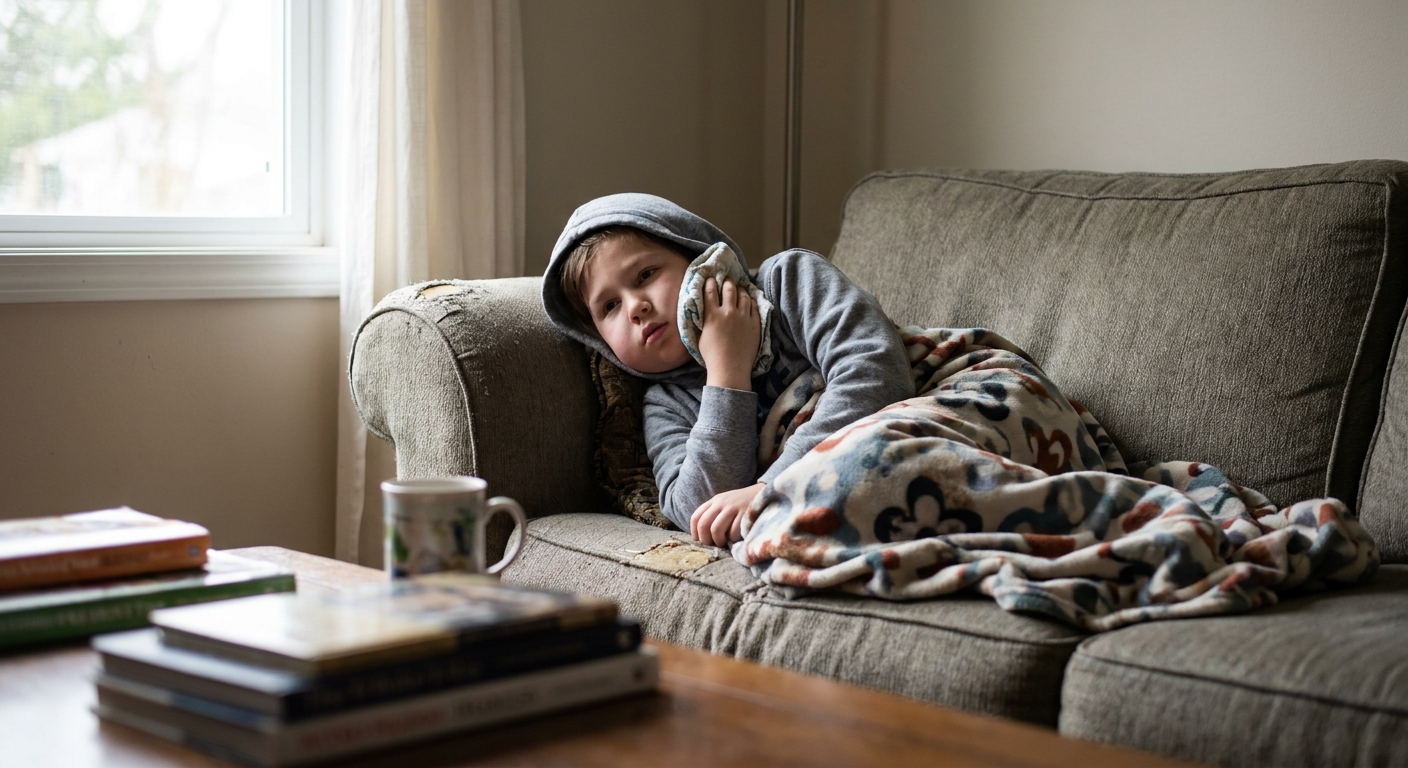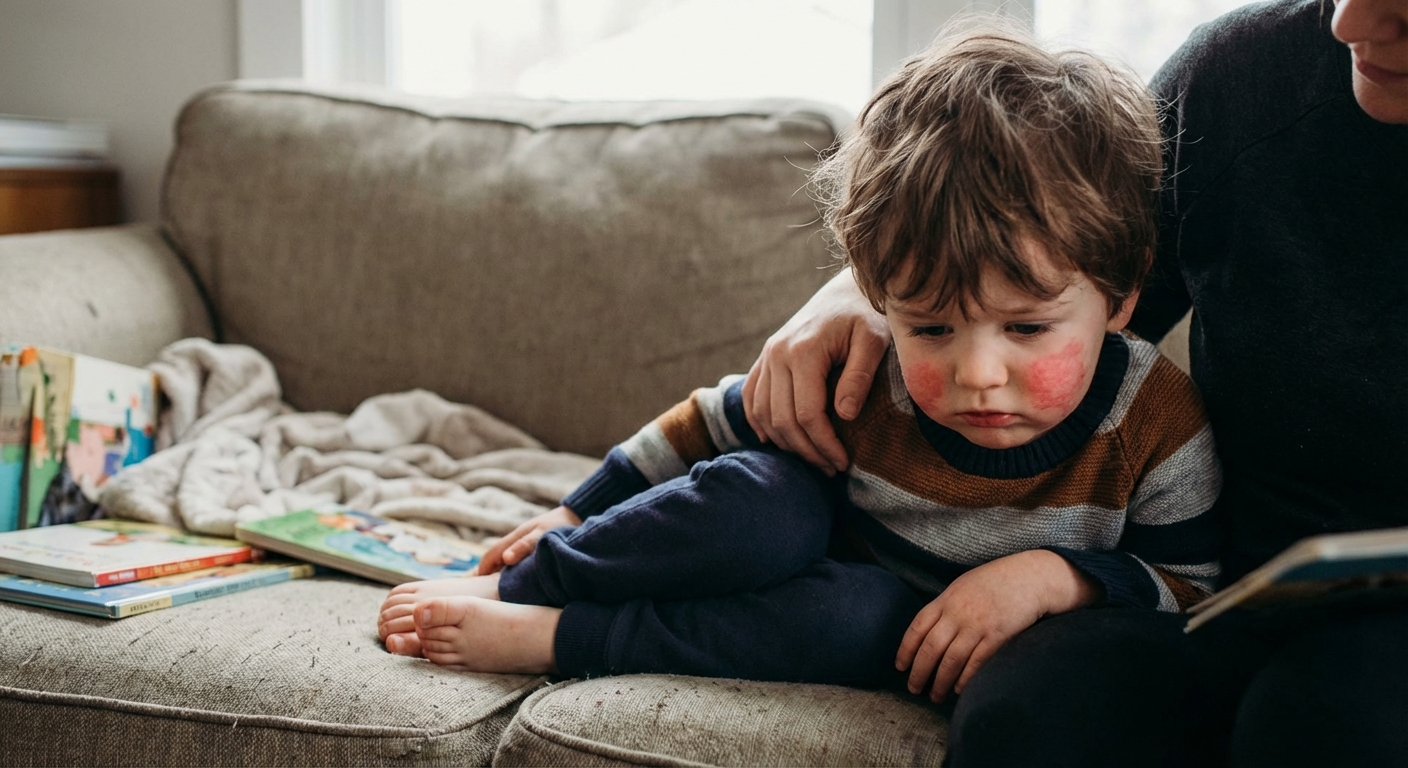
A calm, practical overview for parents on measles symptoms, rash progression, contagious timeline, isolation basics, vaccine protection, and what to do after...
Rubella (German Measles) in Kids: Symptoms, Contagious Period, and MMR Protection

Sarah Mitchell
Sarah Mitchell is a Registered Pediatric Nurse and a mother of three who has spent over a decade helping families navigate the beautiful, chaotic early years of childhood. She combines evidence-based medical knowledge with real-world parenting experience to offer practical, compassionate advice. At Awesome Parent, Sarah's mission is to help exhausted parents find solutions, trust their instincts, and finally get some sleep.
If you have ever gotten a daycare message that says something like, “Possible rubella exposure,” your brain does what brains do at 2 a.m. It jumps straight to worst-case scenarios.
Here is the reassuring truth: rubella (German measles) is usually a mild illness in children, and thanks to routine vaccination, it is now uncommon in many places. The bigger concern with rubella is not usually the school-age kid with a rash. It is rubella exposure in pregnancy, because infection during pregnancy can seriously harm a developing baby.
Let’s walk through what rubella looks like, how long it spreads, what to do if your child is exposed, and when you should call your pediatrician.
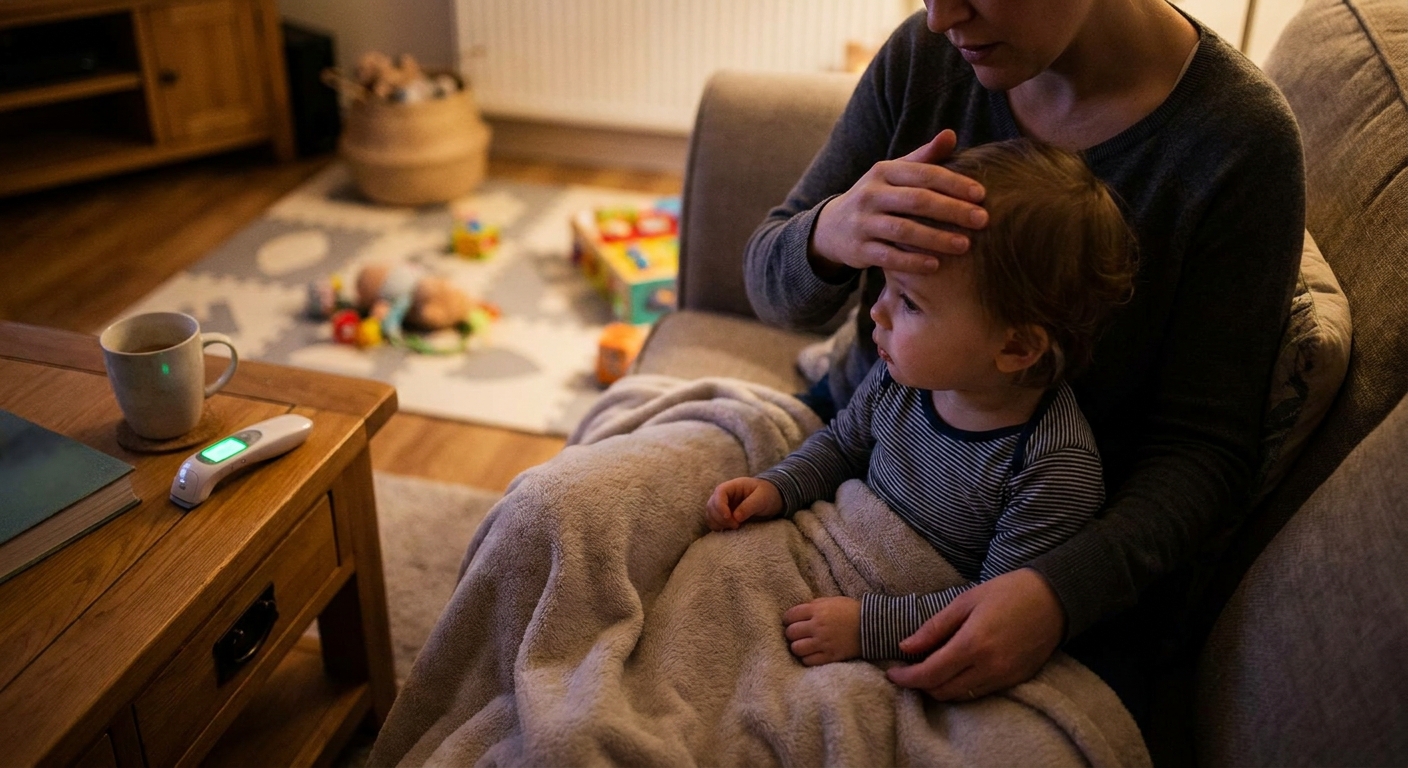
What is rubella (German measles)?
Rubella is a viral infection. It is not the same virus as measles, even though the names sound confusingly similar. Many kids who get rubella have mild symptoms, and some have no symptoms at all.
Rubella used to be more common, but widespread use of the MMR vaccine (measles, mumps, rubella) has dramatically reduced cases in many countries.
Rubella symptoms in kids
Rubella symptoms can be subtle, especially in children. When symptoms show up, they often include:
- Mild fever (or no fever)
- Pink, fine rash that often starts on the face and spreads downward
- Swollen lymph nodes, especially behind the ears and at the back of the neck
- Cold-like symptoms like a runny nose or mild cough
- Red or irritated eyes (sometimes)
- Feeling tired or generally “off”
In older kids and teens, rubella can also cause joint aches, more commonly in girls.
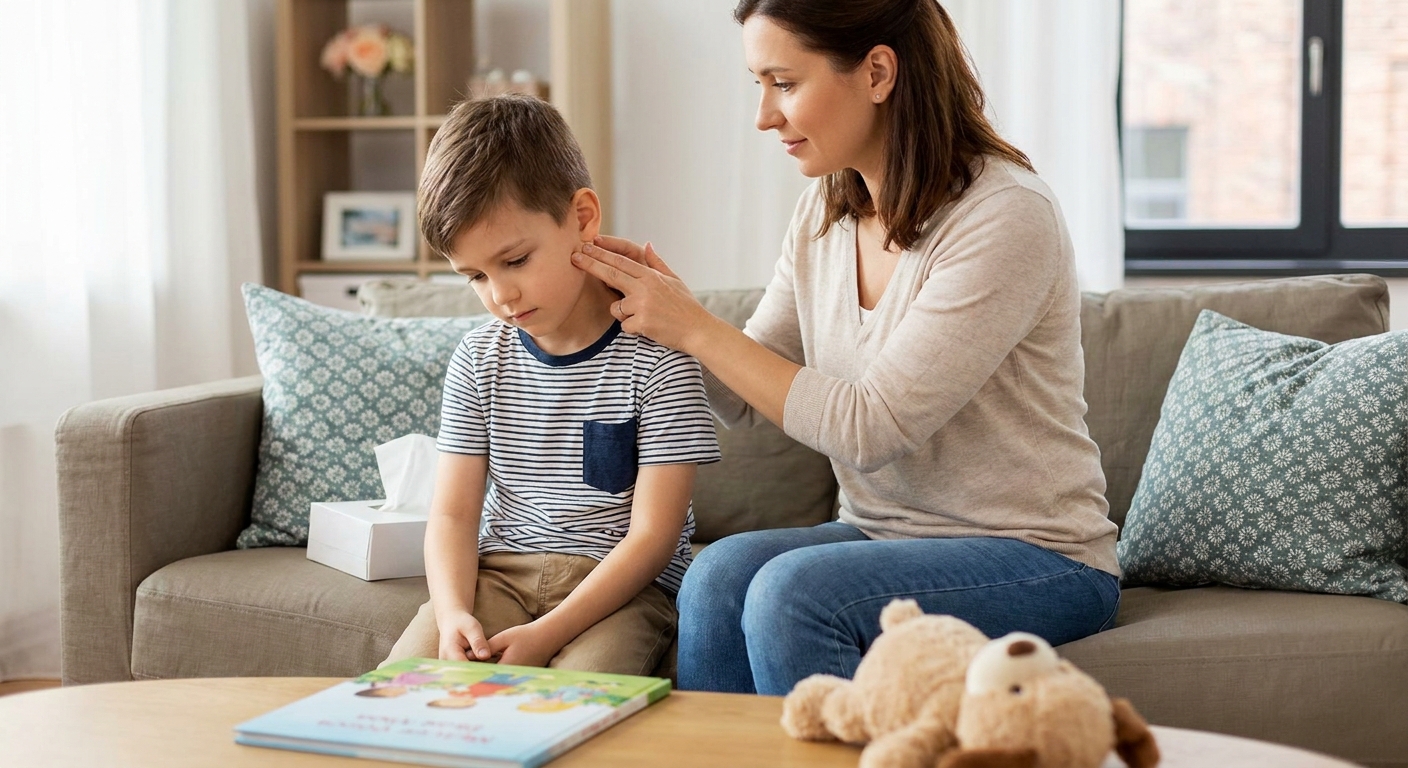
What the rash looks like
Parents often describe rubella as a light pink, spotty rash. The spots may be small and close together, giving the skin a slightly flushed look. Compared with some other viral rashes, rubella’s rash is often milder and less dramatic.
A few practical notes from the clinic world:
- A photo online rarely settles it. Many childhood viruses can cause similar-looking rashes.
- The rash can be easy to miss on some skin tones, where it may look more like subtle warmth or faint small bumps.
- Not every child with rubella gets a clear rash.
How long rubella is contagious
Rubella can spread before anyone realizes a child is sick.
In general, a person with rubella can be contagious:
- About a week before the rash appears
- Through about a week after the rash appears
Infectiousness is often highest around the time the rash shows up. If rubella is suspected or confirmed, follow your pediatrician and local public health guidance about staying home. This matters most for protecting pregnant people and anyone who is immunocompromised.
Rubella vs measles vs roseola
Most parents are not trying to win a “rash identification” contest. You just want to know if your child is okay and if anyone else is at risk. Here is a simple, parent-friendly comparison.
Rubella vs measles
- Rubella is usually milder, with a lighter pink rash, mild fever, and noticeable swollen lymph nodes behind the ears or along the neck.
- Measles tends to make kids feel much sicker overall, often with higher fever and more intense respiratory symptoms. Measles is also extremely contagious.
If you suspect measles or rubella, call ahead before you go in so the clinic can use the right infection-control precautions to protect other patients, especially pregnant patients.
Rubella vs roseola
- Roseola most often affects babies and toddlers. A classic pattern is a few days of fever, then the fever resolves and a rash appears as the child starts acting more like themselves.
- Rubella often comes with swollen glands and mild cold symptoms. Fever may be mild or absent.
There is overlap, and that is why clinicians rely on the whole story, vaccination status, exposure history, and sometimes testing rather than rash alone.
MMR vaccine and rubella protection
The MMR vaccine is excellent protection against rubella. In the United States, the routine schedule is:
- First dose at 12 to 15 months
- Second dose at 4 to 6 years
Here is the nuance that can be reassuring during an exposure: one dose is already highly effective against rubella. Two doses are part of the standard schedule and help ensure long-lasting community protection.
If your child is not vaccinated yet because they are under 12 months, or if they are behind on vaccines, talk with your pediatrician about catch-up options. (And if you are reading this with mom-guilt swirling in your chest, take a breath. My job is to help you make a plan from today forward, not judge yesterday.)
Why pregnancy exposure matters most
This is the part I always slow down for in triage. Rubella is usually mild for the child who has it, but rubella infection during pregnancy can cause severe problems for a developing fetus, known as congenital rubella syndrome. That can include hearing loss, heart defects, cataracts, and other serious complications.
So if there is a known or suspected rubella case in your child’s school or daycare, the key question is often:
- Is anyone in close contact with your child pregnant, trying to conceive, or possibly pregnant?
If yes, notify that person promptly so they can contact their OB or midwife (and follow any public health instructions). Immunity questions are often handled with a blood test (rubella IgG). If exposure happened and the person is not immune, post-exposure options may be limited, which is why quick medical guidance matters.
What to do after an exposure
If you hear about a rubella exposure, here is a calm checklist.
1) Check MMR vaccine status
- If your child has had both doses, the risk of rubella is very low.
- If your child has had one dose, they still have strong protection. Your pediatrician can tell you when the second dose is due, and whether any schedule adjustments make sense.
- If your child is unvaccinated or under 12 months, call your pediatrician for guidance.
2) Watch for symptoms for 2 to 3 weeks
Rubella symptoms can show up about 14 to 21 days after exposure. If your child develops a rash, swollen glands, or fever, call your pediatrician and mention the exposure.
3) Protect pregnant people
If there is any chance your child could be contagious, avoid contact with pregnant family members and friends until you have spoken with your child’s clinician or your local public health team.
What public health may do next
Exposure notices can feel vague and unsettling. Here is what often happens behind the scenes when rubella is suspected in a school or daycare:
- Case investigation and testing coordination to confirm whether it is truly rubella.
- Notifications to families and staff who may have had close contact.
- Vaccine record review and guidance for children who are unvaccinated or under-vaccinated.
- Exclusion guidance for suspected or confirmed cases, and sometimes for unvaccinated contacts, depending on local rules and the situation.
- Extra protection steps for pregnant staff or families, including recommendations to check immunity with their prenatal provider.
Specific policies vary by location. Your pediatrician and local health department are the best sources for what applies to your child’s setting.
Who is at higher risk for complications
Most healthy children do fine with rubella. When clinicians worry more, it is usually because:
- The child is immunocompromised.
- The patient is an older teen or adult, where joint pain and illness can be more intense.
Rare complications can happen (like low platelets or brain inflammation), but they are uncommon. If your child seems unusually ill, worsening, or “not like themselves,” call your clinician.
When to call the doctor right away
Call your pediatrician promptly (and mention “possible rubella” up front) if:
- Your child has a rash and you know of a rubella exposure
- Your child is not fully vaccinated and develops a suspicious rash
- There is a pregnant person in close contact with your child
- Your child has a weakened immune system
Seek urgent care immediately if your child has trouble breathing, signs of dehydration (very dry mouth, no tears, peeing much less), extreme sleepiness, or you simply feel something is not right. Parent instinct counts.
How rubella is diagnosed
Because many viral rashes look alike, healthcare providers may use a combination of:
- Symptom history and physical exam
- Vaccination history
- Exposure information (school notices, travel, known cases)
- Lab testing (blood tests and sometimes a swab), often guided by public health recommendations
If rubella is suspected, clinics often take extra precautions to protect pregnant patients. Calling ahead helps your clinic plan safely.
Treatment
There is no specific antiviral medicine for rubella. Treatment is supportive, meaning we focus on comfort:
- Fluids and rest
- Fever reducers like acetaminophen or ibuprofen (follow age and dosing guidance from your pediatrician)
- Comfort care for mild cold symptoms
Aspirin should be avoided in children and teens with viral illnesses due to the risk of Reye syndrome.
School and daycare rules
If rubella is suspected or confirmed, kids should stay home to reduce spread, especially because pregnant people can be exposed in everyday settings.
A common standard is exclusion until 7 days after rash onset, but the right answer for your child depends on local public health recommendations and your school or daycare policy.
Rubella FAQ
Is rubella dangerous for kids?
For most healthy children, rubella is mild and complications are uncommon. The major risk is rubella infection during pregnancy.
Can you get rubella if you had the MMR vaccine?
Breakthrough infections are possible but uncommon. Vaccination greatly lowers the risk of getting rubella and spreading it to others.
Should I keep my child away from pregnant relatives if there is a rash going around?
If rubella is suspected or there was a known exposure, yes, avoid contact with pregnant people until your child has been assessed. If it is a generic mild viral rash with no known rubella exposure, the risk is usually lower, but it is still reasonable to be cautious and check in with your pediatrician.
Does rubella itch?
It can, but many kids do not complain of itching. If your child is itchy, ask your pediatrician what is safe to use for their age.
The bottom line
Rubella in kids is often a mild illness with a light pink rash and swollen lymph nodes, and many children recover with basic comfort care. Because kids can be contagious before the rash appears, exposure notifications can feel alarming. The good news is that MMR vaccination offers excellent protection, and for most school-age kids, rubella is not a major medical emergency.
The situation changes if pregnancy exposure is in the picture. If rubella is suspected, call ahead, mention the exposure up front, and take extra care to protect anyone who is pregnant.
Sarah Mitchell
Sarah Mitchell is a Registered Pediatric Nurse and a mother of three who has spent over a decade helping families navigate the beautiful, chaotic early years of childhood. She combines evidence-based medical knowledge with real-world parenting experience to offer practical, compassionate advice. At Awesome Parent, Sarah's mission is to help exhausted parents find solutions, trust their instincts, and finally get some sleep.